 Iranco Magazine Team
Technical specs, natural vs alkalized grades, COA, Iran standard 383, HS 180500 and applications in dairy and compound chocolate
Specialist guide · Quality & standards
Industrial Cocoa Powder: Bulk Purchasing Guide for Food Manufacturers
Technical specs, natural vs alkalized grades, COA, Iran national standard 383, HS 180500, dairy and compound chocolate use — Iranco Magazine.
Cocoa powder is a core imported ingredient for chocolate, dairy, biscuits and confectionery. Variations in physicochemical indices directly affect flavour, texture and shelf stability. Professional buyers must understand pH behaviour, particle size, residual cocoa butter, heavy metals, microbiology and customs clearance — not only broker prices.
1. Supply geography and chain
Over 60% of global beans come from Côte d’Ivoire and Ghana; pressing and milling concentrate in the Netherlands, Germany, Spain, Malaysia and Indonesia. Iranian plants source via Shahid Rajaee SEZ, Tehran customs and the Turkish land border. Long-term contracts, origin diversification and line-matched COAs reduce disruption risk.
2. Natural vs alkalized (Dutch process)
Alkalization with food-grade potassium carbonate or sodium hydroxide lowers acidity, softens bitterness and darkens colour. Natural powder (pH 5.0–6.0) retains more antioxidants but is hydrophobic in cold liquids; alkalized grades dissolve faster and colour beverages and coatings more reliably.
| Type | pH | Colour | Sensory / liquid phase |
|---|---|---|---|
| Natural | 5.0–6.0 | Light brown | Acidic, astringent; fast sedimentation |
| Light alkalized | 6.2–6.8 | Medium brown | Milder bitterness |
| Standard | 6.8–7.4 | Dark brown | Excellent milk suspension |
| Dark / reddish | 7.4–8.0 | Red-brown | High colour yield |
| Black | 8.0–8.8 | Charcoal black | Dark sandwich biscuits |
3. Certificate of analysis (COA)
| Parameter | 10–12% grade | 20–22% grade | Method |
|---|---|---|---|
| Fat | 10–12% | 20–22% | Soxhlet / refractometry |
| Moisture | Max 5% | Max 5% | 105°C oven |
| pH (10% aqueous) | 5.0–8.2 | 6.5–7.8 | pH meter |
| 200 mesh pass | ≥99.5% | ≥99.5% | Wet sieve |
| Acid-insoluble ash | ≤0.2% | ≤0.2% | HCl digestion |
| Shell content | ≤1.75% | ≤1.75% | Colourimetry / sterols |
4. Industrial applications
| Segment | Grade | Fat | pH |
|---|---|---|---|
| UHT chocolate milk | Medium alkalized | 10–12% | 6.8–7.2 |
| CBS compound coating | Standard alkalized | 10–12% | 7.0–7.6 |
| Leavened sponge cake | Natural | 10–12% | 5.3–5.8 |
| Dark biscuits | Strong / black | 10–12% | 7.5–8.4 |
| Premium ice cream | Light alkalized, high fat | 20–22% | 6.5–7.0 |
In CBS systems, free cocoa butter in the fat phase should stay near 5% maximum — see our cocoa butter substitute (CBS) buying guide.
5. Hygiene and contaminants (standard 383)
| Test | Limit |
|---|---|
| Salmonella | Negative in 25 or 375 g |
| E. coli | Negative in 1 g |
| TPC | 5,000–10,000 CFU/g |
| Cadmium | ≤0.6 mg/kg |
| Total aflatoxin | ≤10 µg/kg |
6–8. Origins, logistics and pricing
- Netherlands: batch consistency; Spain: dark alkalized; Turkey: 5–10 day trucking; Malaysia/Indonesia: competitive FCL with strict COA monitoring.
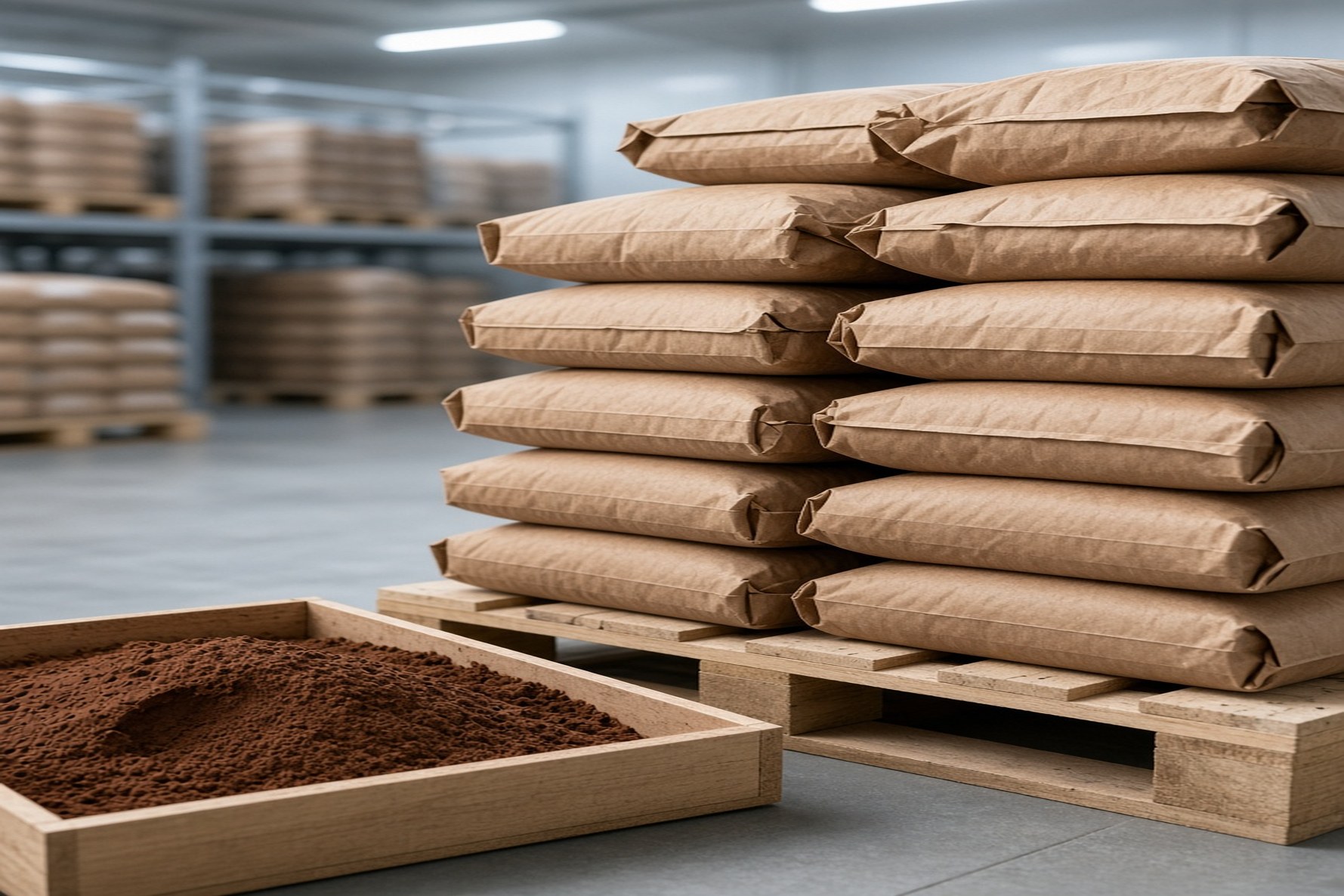
- 25 kg kraft + PE liner; reefer 15–18°C in Gulf summer; store at 15–20°C, RH <60%.
- Powder price tracks bean futures × powder ratio, plus FOB, reefer freight, duties and FDA lab time.
9. Customs HS codes
| Code | Description | Duty |
|---|---|---|
| 18050090 | No sugar, pack >10 kg | 2–4% |
| 18050010 | No sugar, <10 kg | ~5% |
| 18061000 | With sugar / beverage mixes | ~32% |
10. Sampling checklist
- COA aligned with standard 383 and batch ID
- Contractual pH and fat tolerances
- Moisture cap 4.5–5% and lump rejection clause
- 375 g Salmonella-negative health certificate
- Cd/Pb and aflatoxin reports
- Pilot run before full container orders
- Reefer clause for hot-season transit
- Product code 18050090 matched to production licence
FAQ
Natural vs alkalized in baking?
Natural reacts with baking soda for CO₂ and open crumb; alkalized in the same formula yields dense, soapy notes.
Why 10–12% fat with CBS?
Cocoa butter triglycerides are incompatible with lauric CBS; excess causes bloom and soft texture.
Warehouse lumps?
High RH or temperature swings above ~23°C melt and recrystallize fat into hard agglomerates.
Critical customs test?
Salmonella negative in 375 g per national standard 383.
Shelf life?
Up to 24 months sealed at 15–20°C, protected from moisture and odours.
Featured Products


Related Articles



