 Iranco Magazine Team
Value chain, cut classification, veterinary standards, packaging, logistics and target markets
Export Guide · Specialty Protein · Middle East
Iranian Ostrich Meat: Wholesale Purchasing, Standards, and Export Trade
Production geography, primal cuts, quality control, packaging, customs documentation, cold chain, and target markets — published in the Iranco magazine.
Ostrich meat is a lean red protein with elevated omega‑3 fatty acids and high protein content. Over the past decade it has gained share in luxury restaurants, hotels, health-oriented retail, and further processing in the Middle East and Russia. This guide explains the technical framework for wholesale frozen Iranian ostrich meat, with emphasis on veterinary standards, organoleptic control, export packaging engineering, and refrigerated logistics for procurement managers, importers, distributors, and export traders.
Export success requires understanding how ostrich differs from beef, lamb, and chicken: dark red muscle, very low fat, high sensitivity to temperature breaks, and stricter cut and pack specifications. Minor post-mortem pH deviation, incorrect HS classification, or cold-chain failure can cause rejection at destination customs or during third-party inspection.
1. Production Geography and Ostrich Farming Hubs in Iran
Industrial ostrich farming in Iran concentrates in semi-arid provinces with managed feed and water access. These regions combine farm infrastructure, approved slaughter establishments, and experience supplying Gulf export markets.
Semnan — historic, export-oriented hub
Semnan has long-standing ostrich production and is a leading source of frozen carcass cuts for domestic and export orders. Farms are typically close to industrial slaughterhouses, shortening live transport and pre-slaughter stress — critical for stable pH and organoleptic quality.
Isfahan and Yazd — scalable, consistent output
Large farms in Isfahan and Yazd use standardized feeding and weight monitoring to deliver 50–55% dressing yields and uniform primals. Proximity to Persian Gulf ports (via transit to Bushehr and Bandar Abbas) supports road and sea export lanes.
Fars and South Khorasan — growth and product diversity
Fars combines strong veterinary networks and domestic HORECA demand with southern export corridors. South Khorasan offers wide farm footprints and trim/industrial product capacity for Iraq and regional buyers.
- Semnan: export experience, slaughter proximity, premium cuts for UAE and Oman.
- Isfahan: high volume, typical hot carcass live weight 90–110 kg.
- Yazd: feed and water management, suited to long-term wholesale contracts.
- Fars: luxury domestic demand plus southern land export.
- South Khorasan: breeding supply and industrial trim programs.
Commercial birds reach export carcass weight in roughly 10–12 months. After removal of skin, fat, bone, and offal, typical lean red meat yield is about 35–45 kg per bird at optimal live weights.
2. Tariff Classification (HS) and Export Document Alignment
Ostrich meat may be declared under poultry-related lines or “other meat” headings depending on destination customs practice. Importers must confirm the preferred code and clearance procedure with a local broker before issuing purchase orders.
- 0207.55 / 02075520: frozen or chilled cuts of specific birds (including ostrich in Iran’s national tariff)
- 0208.90: other edible meat and meat offal (common for ostrich cuts and trim in several destinations)
- Further-processed products (sausage, mince) may fall under separate chapters — COA and veterinary certificates must match the declared code.
3. Dressing Yield, Nutrition, and Comparison with Beef, Lamb, and Chicken
Industrial dressing yield typically ranges from 50% to 55% of live weight. Intramuscular fat in selected fillets is often below 1.5%, supporting health-positioned and hotel menus. Protein exceeds 21.5% in lean cuts while cholesterol tends to be lower than many traditional red meats.
High heme iron content contributes to the dark cherry-red color and bioavailable iron profile — a B2B selling point in Gulf and Eastern European retail.
| Indicator (per 100 g raw) | Ostrich | Beef (lean) | Lamb | Chicken breast |
|---|---|---|---|---|
| Protein (g) | 21.5–22.5 | 20.0–21.5 | 17.0–19.0 | 21.0–22.5 |
| Total fat (g) | 1.2–1.6 | 3.5–6.0 | 12.0–18.0 | 1.5–2.5 |
| Intramuscular fat | < 1.5% (fillet) | 3–8% | 4–10% | 1–2% |
| Cholesterol (mg) | 55–60 | 75–85 | 90–100 | 70–80 |
| Iron (mg) | 3.0–3.5 | 2.0–2.5 | 1.5–2.0 | 0.8–1.1 |
| Energy (kcal) | 95–105 | 135–160 | 230–280 | 110–120 |
| Unsaturated fatty acids (% of total fat) | 60–66% | 45–50% | 35–40% | 50–55% |
4. Commercial Anatomy: Fan Fillet, Tenderloin, Rump, Round, and Trim
Ostrich carcass anatomy differs from cattle and poultry: breast yield is negligible and muscle mass concentrates in the hindquarter. International contracts must specify Latin cut names, bone-in or boneless status, and net weight per pack.
- Fan fillet: premium outer-thigh muscle (~1.5–2 kg per side), uniform lean, top steak cut.
- Tenderloin / medial fillet: softest texture, medallion and fine-dining applications.
- Rump / round: higher volume, firm lean steaks and catering packs.
- Trim (95CL / 90CL): sausage, premium burger, and minced product raw material.
| Trade cut | Approx. pack weight (kg) | Channel | Price tier |
|---|---|---|---|
| Frozen fan fillet | 2–6 (vacuum) | Hotels, steakhouses | Premium |
| Tenderloin | 1–3 | Fine dining | Premium |
| Rump steak | 3–8 | Retail, restaurants | Mid to high |
| Round / leg meat | 5–15 (carton) | Catering, processing | Mid |
| 95CL trim | 10–20 (block) | Sausage plants | Economy |
5. Organoleptic Quality Control and Post-Mortem pH
Quality depends on pre-slaughter stress management, bleeding, and chilling. Professional importers evaluate appearance, odor, texture, purge, and laboratory COA at receipt.
- Ultimate pH: after 24 h chilling, muscle pH should be 5.8–6.2.
- Color: uniform dark cherry red; gray or brown patches suggest oxidation or DFD risk.
- Odor: neutral and fresh; sour or ammonia notes are grounds for rejection.
- Purge: free liquid should not exceed ~3% of net weight in vacuum packs.
Export lots should originate from farms and plants that enforce lairage rest and low-stress handling. pH above 6.2 indicates DFD-prone meat unsuitable for long-distance frozen trade.
6. Veterinary and Sanitary Requirements (GSO 1870 and Destination Rules)
Export plants must hold valid operating licenses and Iran’s export establishment (IR) code. Slaughter occurs in industrial lines with segregated evisceration, washing, and chilling to prevent cross-contamination.
For GCC markets, product alignment with GSO 1870 (chilled and frozen ostrich meat) covers hygiene, halal slaughter oversight, antibiotic withdrawal, and heavy-metal limits.
- International veterinary health certificate from origin competent authority
- Slaughterhouse listing on importer country approved establishment register
- Salmonella negative in 25 g sample where required
- TVN in frozen meat typically capped around 25 mg N/100 g
- Halal certificate for Islamic destination markets
| Test / document | Purpose | Note |
|---|---|---|
| GSO 1870 | Slaughter hygiene alignment | GCC import baseline |
| Laboratory COA | pH, microbiology, residues | Attach to invoice and B/L |
| Health certificate | Customs clearance | Official DVS stamp |
| Halal certificate | Religious compliance | SMIIC / GSO 993 |
7. Vacuum Packaging, MAP, and Export Carton Engineering
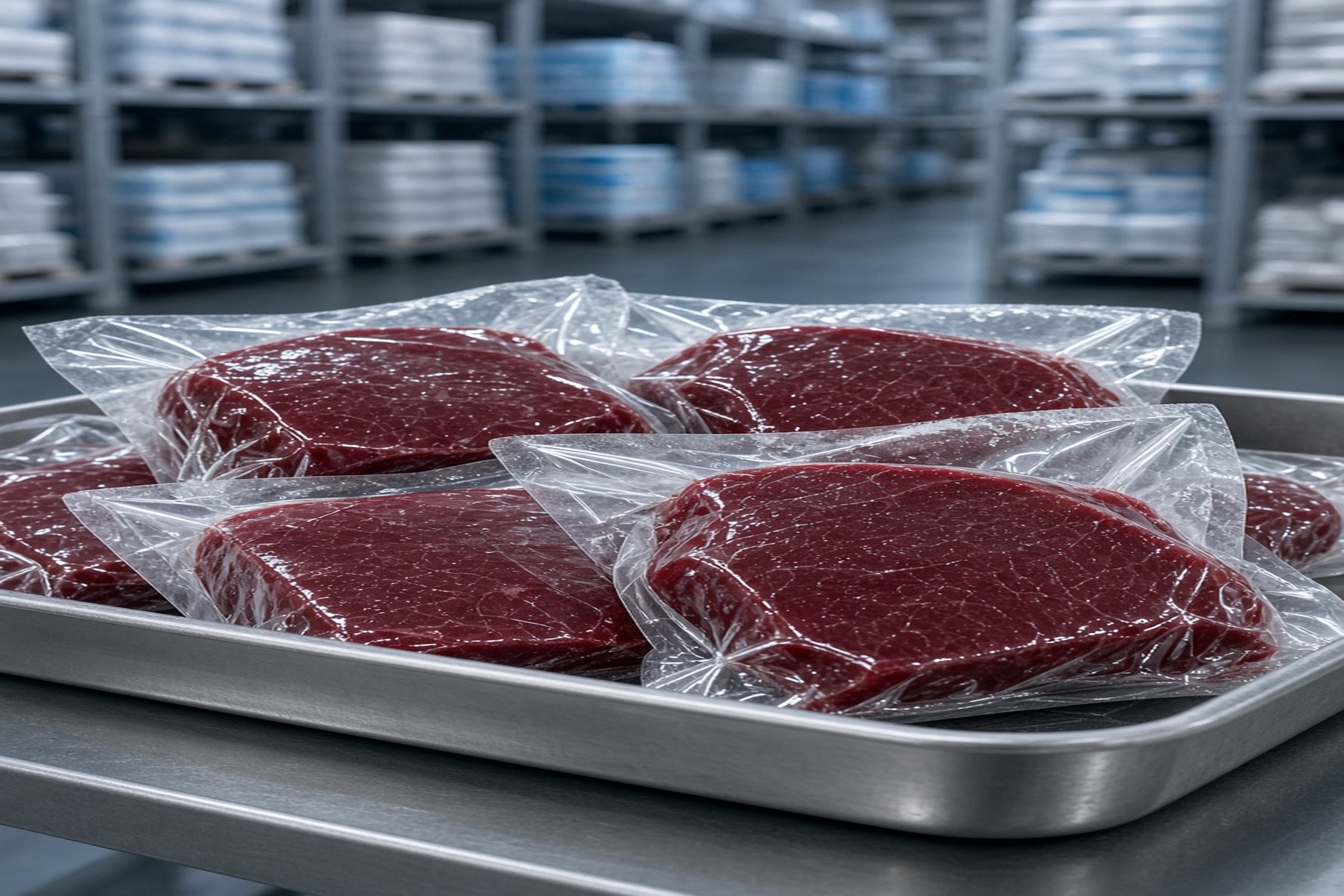
Low intramuscular fat increases oxidation and freezer-burn risk. Export packs need oxygen barriers, puncture resistance at −18°C, and bilingual labeling.
- Vacuum shrink: 70–80 µm PA/PE with EVOH for primals; industrial vacuum to limit drip loss.
- MAP: retail trays — high O₂/CO₂ blends for color vs N₂/CO₂ for longer chilled transit where approved.
- Master cartons: 10–12 kg net typical; 5–7 ply moisture-resistant board.
- Pallets: heat-treated wood, stretch wrap, max stack height ~2.4 m in cold store.
Iranian veterinary rules require deboning and standard cut-up before blast freezing — whole carcass freezing is not permitted for export processing.
8. Customs Documentation and Broker Coordination
- Proforma / contract with precise Latin cut descriptions
- Commercial invoice
- Packing list matched to carton marks
- Bill of lading (sea/air) or CMR (road)
- Veterinary health certificate and COA
- Certificate of origin when required
- CIF insurance policy if applicable
- Cold-chain logger report for sensitive lanes
9. Cold Chain: Air, Road, and Sea Logistics
Target temperature throughout transit: stable −18°C (prefer −20°C setpoint in reefers). Blast freezing should bring the geometric center of the thickest cut to −18°C within 24–36 hours.
Air freight
Ideal for high-value vacuum fillets to Dubai, Doha, and Muscat from Imam Khomeini International Airport. Chilled lanes use 0–2°C with gel packs; frozen air cargo uses insulated pallets. Economical air rates typically start around 500 kg–1 t net per shipment.
Road
Refrigerated trailers serve Iraq and regional neighbors (24–48 h transit) with pre-cooled units and multiple data loggers.
Sea
40 ft reefer FCL from Bandar Abbas to Jebel Ali, Sohar, or Russian ports; ~22–26 t capacity; closed air vents; dual loggers per container.
10. Target Markets, Demand Patterns, and Pricing
| Country | Preferred cuts | Channel | Regulatory note |
|---|---|---|---|
| UAE | Fan fillet, tenderloin | HORECA, luxury retail | ZAD, approved plants |
| Oman | Rump, round | Distribution, restaurants | GSO 1870, COA pH |
| Qatar | Vacuum fillets | Hypermarket, catering | Ministry of Public Health |
| Iraq | Trim, round cartons | Processing, food service | Border HC, broker alignment |
| Russia | Frozen blocks, trim | Industry, wholesale | EAEU, Rosselkhoznadzor listing |
Reference FOB/CIF wholesale pricing for standard frozen cuts in 2025–2026 is often reported in the USD 10–15 per kg range depending on cut, volume, inspection, reefer rates, and Incoterms. Fan fillet and tenderloin sit at the top of the range; trim and round at the lower end.
11. Industrial Uses and Importer Checklist
Industrial applications
- Health-positioned sausage and deli with >21% protein and <1.5% fat
- Premium diet burgers from 95CL trim blends
- MAP-ready marinated rump and shank for retail kitchens
- Edible fat/oil streams from by-products (separate tariff and COA path)
Pre-order checklist
- Define cuts (fan fillet / rump / trim) and weight tolerances per pack
- Confirm HS code with destination customs broker
- Contract pH 5.8–6.2 on COA with rejection limits
- Require GSO 1870 alignment and approved establishment status
- Specify vacuum vs MAP and label languages (Arabic, English, Russian)
- Set Incoterms, port/airport, and reefer insurance
- Cap drip loss (e.g. ≤3% under reference thaw test)
- Confirm cut-up-only frozen product (no whole carcass freeze)
- Mandate data loggers and pre-shipment inspection if needed
- Align payment, claims, and production/shipment schedule
12. Information Required for Firm Pricing
- Chilled vs frozen specification and cut list with tonnage per item
- Primary pack net weight (500 g, 1 kg, 2 kg, or bulk vacuum)
- Total order volume (kg, pallets, or 40 ft reefer count)
- Packaging type and secondary carton requirements
- COA limits, GSO 1870, and destination establishment rules
- Label language and buyer brand artwork if any
- Delivery point and Incoterms (EXW, FOB, CFR, CIF, CPT)
- Third-party inspection (SGS / Bureau Veritas) if required
13. Direct Supply of Frozen Iranian Ostrich Meat via Iranco
Iranco connects international importers with approved ostrich farms and export-slaughter establishments across Semnan, Isfahan, Yazd, Fars, and South Khorasan. Buyers can register cut specifications, tonnage, packaging, and veterinary requirements for consolidated sourcing and quotation.
14. Conclusion
Iranian ostrich meat export is a growing niche for lean red protein in the Gulf and Russia when technical discipline is maintained: 50–55% dressing, IMF below 1.5% in fillets, pH 5.8–6.2, −18°C storage with up to 9 months commercial life, and documentation aligned with GSO 1870. Cut selection (fan fillet vs rump) and vacuum/MAP design drive margin and end-consumer satisfaction.
Frequently asked questions
1. Why is ostrich classified as red meat although it is a bird?
Ostriches are ratites with slow-twitch, myoglobin-rich muscle fibers, producing dark red meat marketed alongside beef and lamb rather than white poultry.
2. What is the standard shelf life of frozen ostrich meat?
Under continuous −18°C storage and proper vacuum packing, commercial shelf life is typically up to 9 months from slaughter/freeze date; beyond that requires organoleptic and COA review.
3. What is the practical difference between fan fillet and rump in contracts?
Fan fillet is the outer thigh (fan-shaped) premium cut with the highest price. Rump/round delivers higher volume for steaks and catering at lower unit cost. Each must be named in Latin with weight ranges on the proforma.
4. Which parameters drive the USD 10–15/kg price band?
Cut type, lean percentage, shipment size, Incoterms, inspection fees, reefer freight, and FX. Prime fillets trend above the band; industrial trim near the floor.
5. Which health certificates are required for clearance?
Origin veterinary health certificate, COA (pH and microbiology), matching invoice and packing list, and for many GCC destinations GSO 1870 alignment plus approved establishment listing.
6. Is export of frozen whole ostrich carcasses allowed?
Iranian veterinary rules require cut-up and deboning before blast freezing; whole-carcass freezing is prohibited. Many importers accept only standardized frozen primals or chilled cuts.
7. How can drip loss be controlled contractually?
Blast freeze at −35°C, EVOH vacuum film, stable −18°C transit, and initial pH 5.8–6.2. Contracts may cap weight loss after a reference thaw protocol.
8. What is the minimum tonnage for economical air freight?
Competitive Gulf air rates usually require at least 500 kg up to ~1 t net (one standard pallet); below that, per-kg freight rises unless using an LCL consolidator.
Featured Products


Related Articles



