 فريق مجلة إيرانكو
دليل شامل للمواصفات الفنية والمعايير الصحية والتعبئة الصناعية ومتطلبات الأسواق المستهدفة وإدارة العقود التجارية
دليل التصدير · الاستزراع والروبيان
تصدير روبيان إيران؛ الأسواق العالمية ومعايير الجودة لدى المستوردين
دليل شامل للمواصفات الفنية والمعايير الصحية والتعبئة الصناعية ومتطلبات أسواق الوجهة وإدارة العقود التجارية لروبيان الفانامي المستزرع والروبيان المحلي الإيراني الموجّه إلى الصين وروسيا والإمارات والاتحاد الأوروبي.
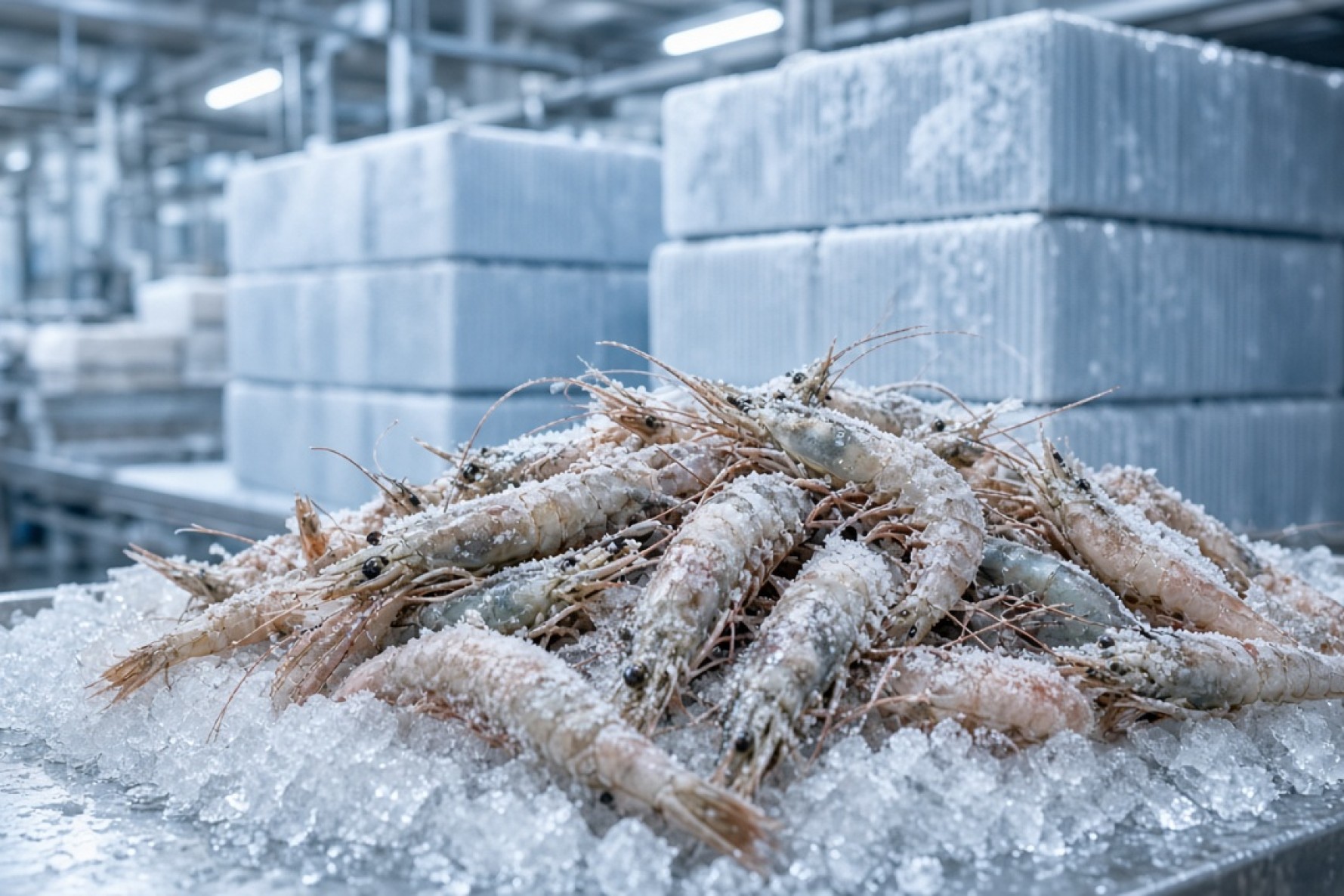
أصبح روبيان المزارع في الجمهورية الإسلامية الإيرانية خطاً استراتيجياً في سلة الصادرات غير النفطية. فالسواحل الجنوبية الطويلة والأحواض المبطّنة بالجيوميمبرين وقاعات التجهيز الأولي الحديثة تزوّد بعض أكبر مستوردي الروبيان في العالم بمنتج برأس أو بدون رأس. لا يُقاس نجاح هذه التجارة بسعر المزرعة وحده: يقيّم المشترون شفافية القشرة وتوحيد الحجم وبقايا الكبريتيت ونزاهة التزجيج وسلامة سلسلة التبريد عند −18 °C دون انقطاع من الحصاد حتى تحميل الحاويات المبردة.
يُكتب هذا الدليل لمديري المشتريات الدولية وتجّار السلع ومدققي الجودة الذين يحتاجون مرجعاً واحداً عن جغرافيا الإنتاج الإيراني والأنواع التجارية ومصطلحات التجهيز وحدود القبول المخبرية وخيارات التعبئة وممرات اللوجستيات وقواعد أسواق الوجهة وديناميكيات تسعير FOB والتصنيف الجمركي ومراقبة العيوب قبل الشحن — مع قوائم عملية للتعاقد وطلبات الأسعار.
1. بيئة المزارع وجغرافيا الإنتاج والقدرة الإقليمية
يتركّز استزراع الروبيان في إيران حيث تدعم التبخر المرتفع وساعات الشمس الطويلة والوصول إلى المياه الجوفية المالحة أو مياه المد والجزر الثقافة المكثفة في الأحواض. تدير المزارع عادةً من دورتين إلى ثلاث في الجنوب ودورة إلى دورتين على هامش بحر قزوين. تُزرع يرقات ما بعد اليرقة (PL) عند ملوحة مضبوطة (15–35 جزءاً في الألف)، مع التهوية وبرامج البروبيوتيك وأسوار الأمن الحيوي للحد من تفشي اللطخ الأبيض ومتلازمة الوفاة المبكرة.
محافظات الإنتاج الرئيسية
- بوشهر: نواة تاريخية لاستزراع الفانامي الصناعي؛ تجمعات أحواض كثيفة قرب بندر گناوه وبندر ریج ودلوار مع مفارخ متكاملة وقاعات تعبئة موجهة للتصدير.
- هرمزگان: مزارع واسعة على طول مضيق هرمز وجزيرة قشm؛ لوجستيات قوية إلى محطات الحاويات المبردة في بندرعباس وجاسk.
- خوزستان: مزارع تغذيها مياه كarون وبهمنشير في مناطق المصب؛ قرب ميناء الإمام خmينi للتصدير بالحاويات.
- گلستان: أحواض مياه مالحة شمالية تستهدف السوق المحلي والإقليمي؛ حجم تصدير أصغر لكن خطوط HLSO والمقشرة في نمو.
- سيستان وبلuchistan: مواقع ساحلية ناشئة قرب منطقة چابهار الحرة؛ استراتيجية للعبور إلى جنوب آسيا ومراكز إعادة التصدير.
تفتح نوافذ الحصاد للفانامي الجنوبي عادةً في أواخر الصيف (سبتمبر) وتستمر حتى ديسمبر، بما يتوافق مع تخزين ما قبل رأس السنة الصينية وحملات التجزئة الشتوية الروسية. إفراغ الأحواض والفرز على طاولات مهتزة والغمر الفوري في ثلج مخلوط عند 0–4 °C أمر حاسم للحد من السواد قبل وصول المنتج إلى خط التجهيز.
| المحافظة / المركز | نوع الاستزراع السائد | موسم الحصاد المعتاد | حصة الإنتاج الوطني | أقرب منافذ التصدير |
|---|---|---|---|---|
| بوشهر | فانامi واسع وشبه مكثف | Sep–Dec (رئيسي); Mar–May (محصول ثان) | ~35–40% | ميناء بوشهر، طريق بندرعباس |
| هرمزگان | أحواض مبطّنة مكثفة، مزارع جزرية | Sep–Jan | ~30–35% | بندرعباس، جاسk |
| خوزستان | فانامi في مصبيات الأنهار | Oct–Dec | ~10–15% | الإمام خmينi، بندر ماهشهر |
| گلستان | أحواض مالحة، تجارب أصناف مختلطة | Jun–Sep; فجوات شتوية محلية | ~5–8% | بندر ترkmen، أمير آباد |
| سيستان وبلuchistan | مناطق توسع ساحلية | Sep–Nov (قيد التطور) | ~3–5% | چابهار |
2. الأنواع التجارية: البيولوجيا والدور السوقي وحصة التصدير
رغم هيمنة الفانامi على حجم التصدير، لا يزال المشترون والمصنّعون الإيرانيون يتعاملون مع أنواع محلية وصيد مخلفات من فصيلة البenaeidae لأسواق متخصصة. معرفة هوية النوع تمنع ادعاءات سوء التصنيف في الوجهة.
روبيان أبيض المحيط / الفانامi (Litopenaeus vannamei)
عمود فقرات تصدير الروبيان الإيراني: نمو سريع، تحمل تقلبات الملوحة، وكفاءة في تحويل العلف. اللحم متماسك، حلو عند الطبخ، ومناسب لصيغ HOSO وHLSO والمقشر. هذا النوع يغطيه HS 0306.17 في معظم إقرارات التصدير المجمد.
روبيان نمر أخضر (Penaeus semisulcatus)
نوع بري وشبه مستزرع من صيد الخليج الفارسي بالجر وبالفخ. خطوط خضراء–بنية مميزة على القشرة؛ مطلوب في تجزئة الخليج للأحجام الكبيرة. حجم التصدير أصغر من الفانامi لكنه يحصل على أسعار premium في الإمارات وعُمان عند الحفاظ على سلامة الرأس.
روبيان موزي (Fenneropenaeus merguiensis)
هبوطات عرضية وتجارب استزراع؛ جسم شاحب وأرجل مائل للاحمرار. يُستخدم في عبوات مختلطة أو تجارة طازجة إقليمية؛ برامج تصدير مجمد مخصصة محدودة مقارنة بالفانامi.
روبيان دهني الظهر (Metapenaeus affinis)
penaeid صغير الجسم من صيد الخليج الساحلي. مورد محلي وموجه لsurimi أساساً؛ يُصدّر ككتلة مجمدة لمستخدمين صناعيين في جنوب و جنوب شرق آسيا عند الفرز والتجميد السريع فوراً.
3. Processing styles: HOSO, HLSO, peeled lines, and butterfly cuts
Processing form drives yield, labour cost, and the FOB price ladder. Iranian export plants are equipped for manual and semi-automatic peeling lines, metal-detector gates, and plate or tunnel freezers.
- HOSO (Head-On, Shell-On): whole shrimp with head, shell, and tail — standard for China retail and banquet trade; head attachment and shell gloss are primary quality signals.
- HLSO (Headless, Shell-On): heads removed; body shell and tail fan retained — common for Russia, EU food service, and hotel supply.
- PUD (Peeled, Undeveined): shell removed, dorsal vein left in place — used in value-added nuggets and some Asian processing lines.
- PD (Peeled and Deveined): fully peeled with vein removed — premium retail and catering SKU.
- PTO (Peeled, Tail-On): peeled meat with last segment and tail fan — popular in battered quick-service chains.
- Butterfly: dorsal split with vein removed, shell off, tail attached — skewer and grill programmes in the Middle East and Europe.
| Product form | Sizing unit | Common export grades | Uniformity rule | Typical markets |
|---|---|---|---|---|
| HOSO | pcs / kg | 20/30, 30/40, 40/50, 50/60, 60/70 | Max ratio 1.3 (10 largest : 10 smallest) | China, Vietnam re-export |
| HLSO | pcs / lb (or pcs / kg) | 16/20, 21/25, 26/30, 31/40, 41/50 | Same uniformity; head-off yield stated | Russia, EU, UAE |
| PD / PTO | pcs / lb or count per pack | U15, 16/20, 21/25, 26/30 | ±1 size band per master carton | USA-oriented traders, EU retail |
| Butterfly | pcs / kg | 31/40, 41/50 | Split depth and vein removal visual standard | Gulf food service, EU grill trade |
4. Physicochemical quality control: TVB-N, pH, sulphite, and sensory panels
Export lots are released only after composite sampling from each production batch. Iranian veterinary authorities and destination buyers align on biochemical ceilings that proxy muscle freshness and treatment compliance.
Key indices
- Total volatile basic nitrogen (TVB-N): primary spoilage marker; export acceptance typically ≤30 mg/100 g muscle; 30–35 mg warns of pre-freeze delay; above 35 mg triggers rejection.
- pH: fresh vannamei muscle commonly 6.8–7.2; elevated post-mortem pH with off-odour suggests inadequate icing or extended pond-hold time.
- Sulphite / SO₂: residual from sodium metabisulphite anti-melanosis dips; contractual ceiling usually 100–150 mg/kg as SO₂ in edible tissue.
- Sensory evaluation: panel scoring for odour (fresh sea/brine), shell colour (no black spot at cephalothorax), texture (firm, not mushy after thaw), and absence of ammonia notes.
| Parameter | Typical limit | Method | Failure consequence |
|---|---|---|---|
| TVB-N | ≤ 30 mg / 100 g | Kjeldahl / distillation | Lot hold; certificate withheld |
| Muscle pH | 6.6–7.4 (species baseline) | pH meter on homogenate | Investigate harvest-to-freeze time |
| SO₂ residue | 100–150 mg / kg | Monier-Williams / optimised methods | EU / strict buyer rejection |
| Sensory (shell) | No melanosis >5% of pieces | Trained panel / visual AQL | Downgrade or re-sort |
| Moisture / glaze | Per contract (±2%) | Differential weighing after dip | Commercial claim on net weight |
| Histamine | ≤ 100 mg / kg | HPLC | Health risk; import ban |
5. Laboratory protocols, drug residues, and heavy metals
Every export container should be backed by a Certificate of Analysis (COA) from an accredited or veterinary-approved laboratory. Sampling plans follow composite rules: multiple cartons per lot, homogenised muscle, and parallel retention samples for dispute arbitration.
Veterinary drug and banned substance screening
Farm antibiotics (fluoroquinolones, tetracyclines, sulphonamides) and banned aquaculture dyes must test below method detection limits. Chloramphenicol, nitrofuran metabolites, malachite green, and leucomalachite green are under zero tolerance in the EU and Eurasian Economic Union. A single positive trace invalidates the veterinary health certificate for that lot.
Heavy metals and environmental contaminants
- Mercury (Hg): typically ≤0.5 mg/kg in shrimp muscle for general food safety frameworks.
- Lead (Pb) and cadmium (Cd): limits aligned with Codex and EU EC 1881/2006 (commonly 0.3 mg/kg Pb and 0.05–0.1 mg/kg Cd depending on matrix).
- Microbiology: Salmonella absent in 25 g; Listeria monocytogenes within destination limits; total plate count and E. coli as buyer-specified indicators.
Analytical techniques include LC-MS/MS for drug residues, ICP-MS for metals, and ISO-referenced microbiological culture. Importers should request raw chromatograms for any borderline sulphite or antibiotic result.
6. Packaging, freezing technology, and glaze management
Freezing method and pack configuration determine thaw drip loss, carton strength, and retail presentation. Iranian plants deploy contact plate freezers for blocks, spiral or tunnel IQF lines for individual pieces, and hybrid Semi-IQF systems for layered retail bags.
- Block freeze: shrimp pressed in 1–2 kg moulds on −40 °C plates; ideal for industrial users and China bulk trade; requires clear layer separation paper.
- IQF (Individual Quick Freezing): single-piece freeze in air blast; pieces remain free-flowing in poly bags inside master cartons.
- Semi-IQF: partial agglomeration for controlled cluster size in retail packs; declare on label to avoid “single-piece IQF” disputes.
- Glazing: post-freeze dip or spray in potable ice water; standard 5–10%; declare net weight NW and glazed weight GW; glazes above 20% risk fraud allegations.
| Freeze type | Inner pack | Master carton | Common net weight | Label must show |
|---|---|---|---|---|
| Block | PE liner, 1×2 kg blocks | 5-ply corrugated, 10–12 kg | 10 kg NW typical | Species, size, IR / CIFER code, dates |
| IQF | Vacuum or PE bag | 10 kg export carton | 1×1 kg retail or bulk 10 kg | Glaze %, HOSO/HLSO/PD, origin |
| Semi-IQF | Tray or bag with clusters | Retail-ready or food-service | 500 g–2 kg bags | “Cluster” or semi-frozen statement |
| Peeled retail | Interleaved or vacuum | 12×500 g or 20×400 g | 6–8 kg per case | EU allergen / lot traceability |
7. Logistics: −18 °C cold chain, reefers, and transit corridors
Shrimp muscle quality is irreversibly compromised if core temperature rises above −18 °C for more than brief intervals. Export logistics from Iranian ports rely on pre-cooled 40 ft high-cube refrigerated containers, validated stuffing protocols, and sealed data loggers.
- Setpoint: reefer thermostat −22 to −25 °C to maintain product core ≤−18 °C despite door openings and ambient heat.
- Stuffing: palletised cartons with airflow under T-bar floors; never exceed container load line; dual logger placement mid-stack and rear door zone.
- Corridors: Bandar Abbas and Bushehr to China (Shanghai, Qingdao, Ningbo); overland rail/road to Russia and Central Asia via northern borders; Jebel Ali transhipment for UAE and African re-export; Chabahar routes for South Asian buyers.
- Documentation: temperature records accompany veterinary certificates; buyers increasingly require downloadable logger files at discharge.
8. Destination markets: China, Russia, UAE, and the European Union
Each geography imposes distinct registration, labelling, and size preferences. Iranian exporters succeed when product grade is matched to channel — not when a single “export mix” is pushed to every port.
People’s Republic of China
Largest volume buyer; emphasis on HOSO visual grade, head firmness, and plant registration in CIFER (GACC Decrees 248/249). Peak import demand ahead of Lunar New Year. Block and IQF both move; sulphite and glaze audits are strict at entry inspection.
Russian Federation and EAEU
Strong demand for HLSO and medium counts (30/40, 40/50). Compliance with TR EAEU 040/2016 and Rosselkhoznadzor plant listing. Overland cold chain from southern Iran through transit states requires bonded reefer monitoring.
United Arab Emirates and Gulf
Premium large sizes (10/20, 20/30), Halal certification, and GSO alignment. Dubai and Jebel Ali serve as re-export hubs to Africa and neighbouring states. Air-freight peeled lines for high-end catering during peak seasons.
European Union
Smaller but high-value niche: strict SO₂, antibiotic, and labelling rules (EC 178/2002, allergen declaration for crustaceans). Approved establishment lists and catch/freeze documentation; peeled and butterfly packs for retail private label.
| Market | Preferred form & size | Registration / standard | Channel | Quality hot spots |
|---|---|---|---|---|
| China | HOSO 30/40–50/60; blocks | CIFER / GACC | Wholesale markets, processors | Head on, shell shine, glaze |
| Russia / EAEU | HLSO 30/40–50/60 | TR EAEU 040/2016 | Retail chains, distributors | Uniformity, drip loss, metals |
| UAE / GCC | Large HOSO/HLSO, peeled premium | GSO, Halal | Hotels, hypermarkets, re-export | Size, presentation, Halal docs |
| European Union | PD, butterfly, retail IQF | EU approved establishments | Retail private label, food service | SO₂, antibiotics, traceability |
9. FOB pricing dynamics and global supplier competition
Iranian shrimp FOB quotes are built from farm gate cost, processing yield (especially on peeled lines), energy for freezing, carton and glaze specification, and the size premium ladder. Quotes are usually valid 48–72 hours because global shrimp commodity markets move on Ecuador and Indian offer sheets.
- Size premium: each step from 50/60 toward 20/30 can add double-digit percentage on FOB per kilogram.
- Form premium: PD and PTO reflect labour and yield loss versus HOSO.
- Glaze adjustment: price on net weight ex-glaze; misaligned glaze assumptions are a top source of post-arrival claims.
- Incoterms: FOB Iranian port most common for containerised reefers; CFR/CIF when seller books ocean freight.
| Origin | Volume & scale | Cost / price lever | Quality reputation | vs. Iran |
|---|---|---|---|---|
| Ecuador | Global price setter; massive output | Low farm cost; mechanised farms | Uniform sizing; strong IQF | Iran competes on proximity to Gulf/Russia and HOSO grade |
| India | Very large peeled export sector | Labour cost; export incentives | Variable; antibiotic scrutiny in EU | Iran offers alternative supply diversification |
| Vietnam | Integrated processing & logistics | Efficient value-added lines | Strong retail peeling reputation | Iran raw HOSO feeds China alongside ASEAN origins |
| Iran | 35k–60k t farmed; growing capacity | Energy and pond cost advantage | Sweet flesh; visual HOSO grade | Logistics and registration are key constraints |
10. HS codes and export documentation set
Correct tariff classification avoids customs reassessment and origin disputes. Frozen farmed vannamei is most often declared under heading 0306 for crustaceans, subheading for frozen shrimp.
- 0306.17 — frozen shrimp and prawns, shell on or off (verify national 8–10 digit extensions with your broker).
- 0306.35 — live, fresh, or chilled shrimp (rare in long-distance export).
- Veterinary health certificate — issued by Iran Veterinary Organization per consignment.
- Certificate of origin — chamber or authorised issuer for preferential or customs purposes.
- Commercial invoice, packing list, bill of lading — weights must match glazed/net declarations.
- COA — laboratory results for TVB-N, SO₂, microbiology, and residues.
- Halal certificate — for GCC consignments where required.
- Plant registration proof — IR code, CIFER number, or EU list reference on labels.
11. Common defects and pre-shipment inspection
Third-party inspection at stuffing (SGS, Bureau Veritas, or buyer-appointed surveyors) is standard for first-time suppliers. Inspectors score random cartons against the signed specification annex.
- Melanosis (black spot): cephalothorax and segment staining — indicates delayed chilling or insufficient metabisulphite process control.
- Broken / loose heads (HOSO): mechanical damage or weak bonding; downgraded in China.
- Soft shell / mushy texture: often pre-harvest stress or partial thaw refreeze.
- Wrong count or mixed sizes: uniformity ratio failure; economic claim.
- Excess glaze or water weight: verify with defrost test on sample bags.
- Foreign material: metal detector logs required on peeled lines.
12. Twelve-point importer checklist before firm order
- Confirm processing plant IR code and destination registry (CIFER, EAEU, EU list).
- Lock species (Litopenaeus vannamei) and form (HOSO/HLSO/PD) in the contract annex.
- Define size grade, count unit (per kg or per lb), and maximum uniformity ratio 1.3.
- Specify glaze percentage and net weight definition (ex-glaze).
- Set biochemical limits: TVB-N ≤30 mg/100 g, SO₂ within agreed band, histamine ≤100 mg/kg.
- Require zero-tolerance drug residue panel aligned with EU/EAEU where applicable.
- Agree freezing type (IQF, block, or semi-IQF) and inner/master pack weights.
- Mandate label language, lot code, production/freeze date, and shelf-life at arrival (minimum 12–18 months remaining).
- Book pre-shipment inspection and sampling protocol for loading.
- Require dual data loggers and temperature file handover at destination.
- State Incoterms, port of loading, and payment instrument (LC, CAD, or agreed terms).
- Retain parallel retention samples and COA for dispute windows (typically 30–45 days).
13. Information required for an accurate export quotation
Incomplete enquiries produce unreliable FOB numbers and wasted negotiation cycles. Provide the following in a single structured request:
- Species and scientific name; farmed vs. wild if relevant
- Processing form and any butterfly or tail-on specification
- Size grade and allowed size mix per container
- Target glaze % and freezing technology
- Total quantity (metric tonnes or number of 40 ft reefer FCL)
- Port of loading preference (Bandar Abbas, Bushehr, Imam Khomeini, Chabahar)
- Destination country and final port for sanitary code alignment
- Incoterms (FOB, CFR, CIF) and shipment window
- Inspection level (self-inspection vs. third party) and COA test panel
- Label artwork requirements and language
14. توريد روبيان إيران التصديري عبر إيرانكو
Shrimp import programmes fail when grade, glaze, and certificate details are ambiguous at origin. Iranco connects international buyers to Iranian aquaculture processors that hold export sanitary registrations and can meet destination-specific documentation.
Submit a structured purchase request with size, form, glaze, volume, and target market. Iranco’s trade team routes enquiries to qualified suppliers, supports sample coordination, and helps align contract language with veterinary and customs requirements — reducing rejection risk at destination ports.
الخلاصة
Iran’s farmed shrimp sector combines favourable production geography, competitive pond economics, and growing industrial freezing capacity. Importers who treat shrimp as a specification-driven commodity — not a generic “frozen seafood” line — capture value through correct size selection, honest glaze terms, and registry-compliant documentation.
Global competition from Ecuador, India, and Vietnam sets the price floor, but Iranian supply remains relevant for buyers diversifying origin risk and serving China, Russia, the UAE, and EU niches that reward shell-on presentation and tight biochemical control. Pairing technical contracts with −18 °C logistics discipline and pre-shipment inspection is the baseline for repeatable trade.
الأسئلة الشائعة
١. ما أهم أنواع الروبيان المستزرع والمصدّر في إيران؟
يخصّص أكثر من ٩٠٪ من حجم الصادرات لروبيان الفانامي الأبيض الغربي (Litopenaeus vannamei). يتميز بنسيج متين وقشرة رقيقة ومردود لحمي مرتفع؛ وبفضل ملوحة مزارع الجنوب يكون طعمه ألذ وثباته في الطهي أفضل من روبيان المياه العذبة.
٢. كيف تتم معايرة أحجام الروبيان؟
يُقاس حجم HOSO بعدد القطع لكل كيلوغرام (مثل ٢٠/٣٠ و٣٠/٤٠). أما HLSO أو PD فيُحسب عادة بعدد القطع لكل رطل (٤٥٣٫٦ غرام) مثل ١٦/٢٠ و٢١/٢٥.
٣. ما النسبة القياسية للتغطية الثلجية (Glazing)؟
تتراوح نسبة الطبقة الثلجية القياسية بين ٥ و١٥٪. تمنع الطبقة تماس الهواء مع اللحم وتحمي من حروق التجميد. في العقود الرسمية يكون الوزن الأساس هو الوزن الصافي بعد التصريف.
٤. ما متطلبات دخول الروبيان إلى روسيا والاتحاد الأوراسي؟
يُسمح بالإرسال فقط من مصانع حاصلة على رمز الرقابة لدى روسيلخوزنادزور. ويُشترط غياب بقايا المضادات الحيوية والسلامة الميكروبية واختبارات المعادن الثقيلة وفق ضوابط EAEU.
٥. ما الفرق بين التجميد القالبي وIQF؟
في التجميد القالبي يُجمّد الروبيان مع الماء في قالب معدني ككتلة واحدة مناسبة للجملة والنقل الطويل. أما في الطريقة السريعة فيُجمّد كل روبيان على حدة خلال دقائق في نفق هواء بارد وهو مناسب لتعبئة التجزئة.
٦. ما أقصى درجة حرارة مسموحة لحاويات التبريد؟
يجب ضبط نقطة الضبط على −٢٠ إلى −٢٢ درجة مئوية حتى لا تتجاوز حرارة عمق النسيج −١٨ درجة أبداً. أي تذبذب حراري يُتلف البروتين ويخفض الجودة بشدة بعد الإذابة.
٧. كيف يمكن توريد الروبيان التصديري من المنتجين الإيرانيين؟
يبدأ الشراء بتحديد الدرجة وشكل التجهيز والوزن الصافي ونسبة التغطية والتعبئة وإنكوترمز. يمكن للمشترين إرسال هذه التفاصيل عبر إيرانكو لمراجعة خيارات التوريد بين المصانع ذات التراخيص السارية.
٨. ما المعلومات اللازمة للحصول على سعر اليوم؟
يجب إدراج النوع وشكل التجهيز وتوزيع الأحجام ونوع التجميد ونسبة التغطية ومواصفات الكرتون وحجم الحاوية وميناء التفريغ في الاستعلام. في إيرانكو يُبنى تقدير السعر على هذه المتغيرات الفعلية.
منتجات مميزة










مقالات ذات صلة



