 Iranco Magazine Team
International trade guide: seed calibration, quality assessment, target markets, customs standards and supply-chain management
Export Guide · Pulses
Iranian Kabuli Chickpeas; Commercial Specs and Export Selection Guide
International trade guide: seed calibration, quality assessment, target markets, customs standards and supply-chain management
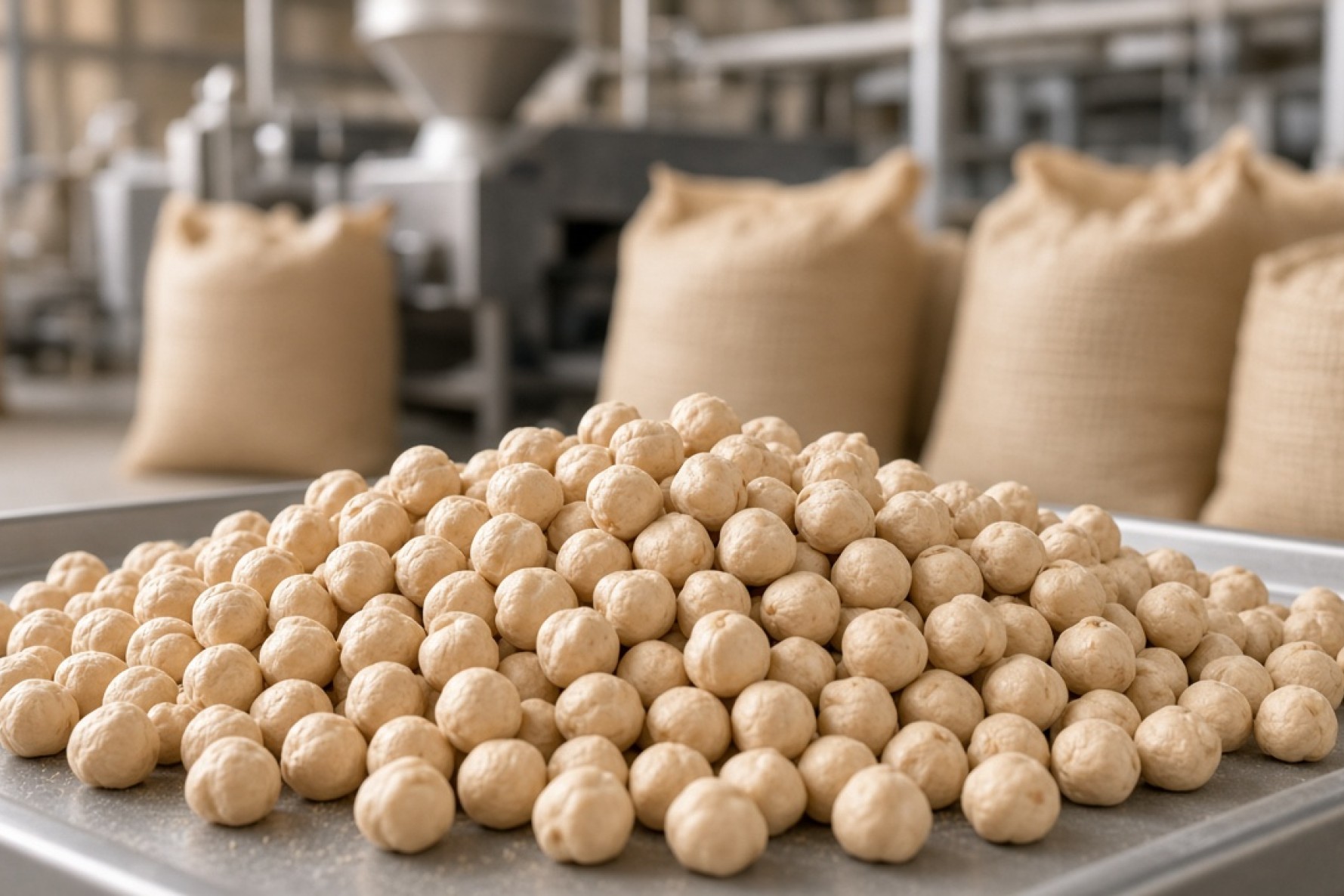
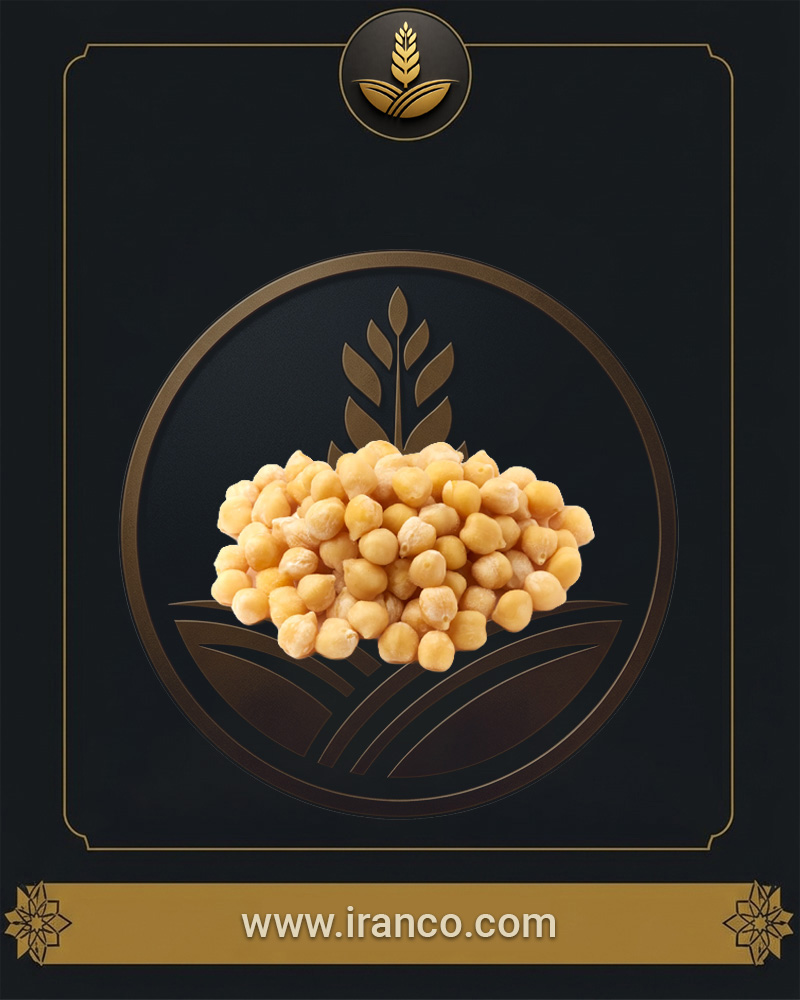
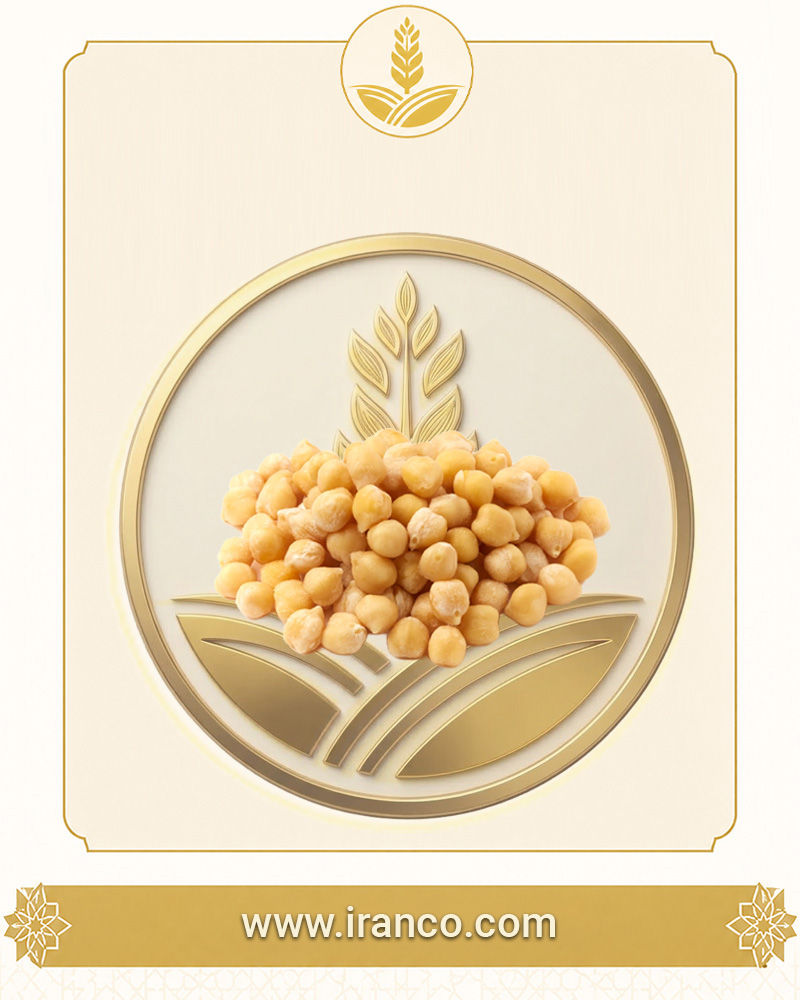
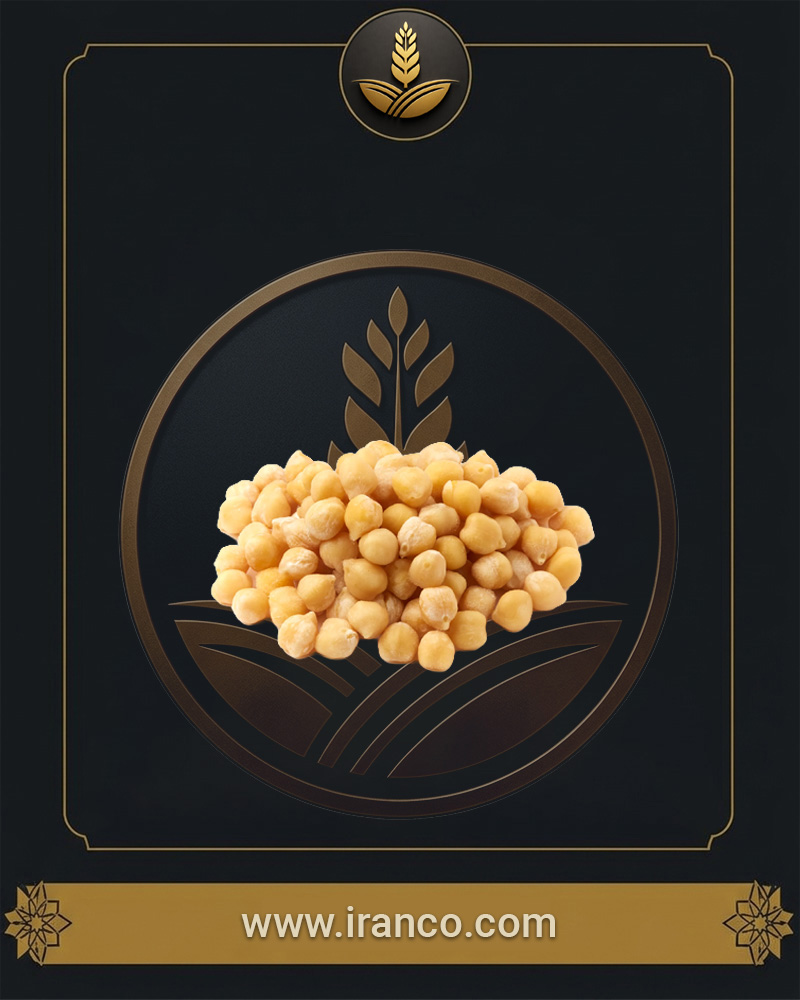
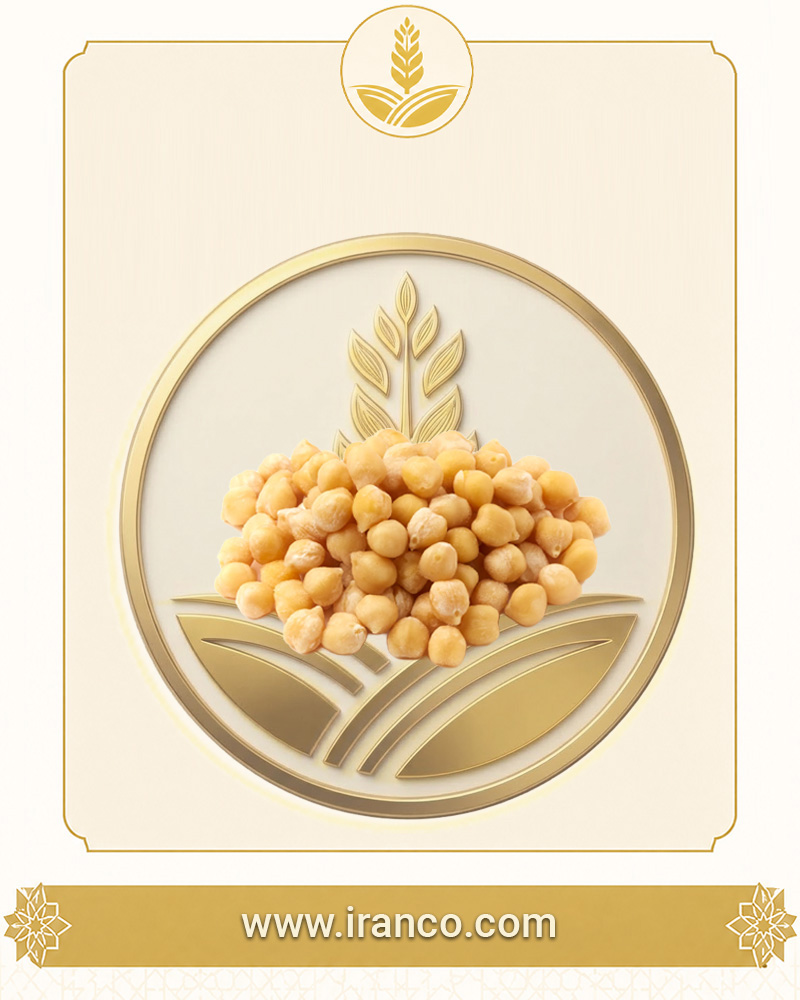
Iranian Kabuli chickpeas (Cicer arietinum, Kabuli type) hold a distinctive place in regional pulses and food processing thanks to cream colour, very thin skin, meaty cooked texture and short cook time. Rich traditional flavour, fast hydration without skin rupture and uniform starch behaviour suit household cooking, canning, hummus and industrial falafel lines.
| Key indicator | Value / technical note |
|---|---|
| National annual output | About 300,000 tons (270–300k range) |
| Customs HS code | 071320 |
| Commercial / storage moisture | 10–12% (standard ceiling up to 14%) |
| Export calibre range | 5–10 mm |
| Main production hub | Kermanshah — nearly 35% of national output |
Export success means moving from unspecified bulk sales to millimetre calibration, valid COA, optical cleaning and packaging that resists moisture and storage pests. This guide gives procurement managers, traders and exporters a practical framework.
1. Geoeconomics and climate of Kabuli production in Iran
Kabuli production is concentrated in rainfed western and north-western Zagros. Roughly 550–600 thousand hectares are planted annually for about 270–300 thousand tons; Kermanshah alone covers nearly 35%. Kuzaran, Ravansar, Mahidasht, Dalahoo, Sonqor and Biounij in Kermanshah, plus Delfan and Selseleh in Lorestan, Kurdistan, East and West Azerbaijan, Zanjan and Hamedan form a network of thin-skinned, high-starch, large-calibre seed.
Kermanshah — quality Kabuli hub
Ravansar and Kuzaran plains, Sonqor and Mahidasht elevations, and Dalahoo–Biounij drylands deliver translucent cream colour and fast cooking — the base for cleaning, vibrating screens and optical sorting plants in western Iran.
Lorestan, Kurdistan and other provinces
Delfan and Selseleh supply balanced grade for three-khan and four-khan mixes. Kurdistan, East/West Azerbaijan, Zanjan and Hamedan add genetic diversity and a wider harvest window for multi-lot export programmes.
Mamaghan — split-pea and broken hub
Mamaghan (East Azerbaijan) is Iran’s national hub for split peas and broken chickpeas: dehulling lines, under-5 mm separation, and feed into dal, animal feed and protein extraction — complementing large-seed Kabuli from the west.
Commercial varieties and cook behaviour
- Biounij: Kermanshah landrace; translucent cream, ultra-thin skin, fast cook, premium flavour — strong export demand.
- Hashem: Erect plant, mechanised harvest; large seeds, high hundred-seed weight into double-khan and single-khan.
- Arman: Ascochyta resistance; uniform round seed for canning sterilisation.
- Azad: Drought resilience; economical three-/four-khan output.
- Ata: Stable temperate performance; good optical sortability.
- Nosrat: Yield–appearance balance for three-khan export blends.
Planting calendar: autumn vs spring
- Autumn (modern): Sowing late Aban; harvest early Khordad — seasonal rain; typical 1,500–2,000 kg/ha in suitable Zagros climates.
- Spring (traditional): Sowing from Esfand; harvest Tir — summer supply window; typical 500–700 kg/ha.
Globally, Kabuli (cream, smooth skin, large) is separated from Desi (smaller, darker, split-pea oriented). Iran’s Kabuli volume exceeds domestic use and holds a steady agri-export share.
2. Commercial classification and seed calibration
Seed diameter (calibre) drives price and end-use. After cleaning, seed passes rotary screens; trade terms single-khan (tek-khan), double-khan (dokhan), three-khan (sekhan), four-khan and falafel are standard in wholesale and export.
- Single-khan: Typically 10 mm — luxury packs and GCC retail.
- Double-khan: 8 and 9 mm — top export grade for Iraq and UAE.
- Three-khan: 7, 8 and 9 mm — usually 50–60% size 8 — high regional and catering volume.
- Four-khan: 6, 7 and 8 mm — price/appearance balance for wholesale.
- Falafel grade: 5 and 6 mm — hummus, industrial falafel, ready meals.
- Broken / under 5 mm: Split pea, feed, Mamaghan processing.
| Market grade | Calibre | 100-seed wt | Physical purity | Typical mix | Use / market |
|---|---|---|---|---|---|
| Super single-khan | 10 mm (tol. 9) | 42–48 g | ≥99.5% | ≥90% size 10 | Premium packs, Arab export |
| Export double-khan | 8–9 mm | 36–42 g | ≥99.2% | 50% 8 + 50% 9 | Iraq, supermarket, household |
| Three-khan | 7, 8, 9 mm | 32–40 g | ≥98.8% | 50% 8 + 25% 7 + 25% 9 | Wholesale, HORECA |
| Four-khan | 6, 7, 8 mm | 28–36 g | ≥98.5% | Balanced three sizes | General / economy packs |
| Falafel | 5–6 mm | 22–28 g | ≥98.0% | Mix 5 and 6 | Falafel, hummus, industry |
| Broken / split | <5 mm | N/A (pieces) | ≥97.0% | No standard calibre | Mamaghan split, feed, isolate |
Pure single-size orders (e.g. uniform 8 mm) are achievable on modern sorting lines; contracts should state weight-% per size on the sieve tower.
3. Technical specs, COA and international standards
Bulk contracts follow Iranian National Standard 2905 (chickpeas) and Codex Stan 171-1989 (CXS 171). COA must come from an ISO/IEC 17025 lab and match the proforma specs.
- Moisture: Commercial ceiling 10–12% for export and sea freight; above 13% mould/container-sweat risk; below 9% brittle skins.
- Organic extraneous matter: Straw, pods, weeds — max 0.5–1% on premium lots.
- Mineral extraneous matter: Sand, stone, soil — max 0.25% grade-A export; near-zero stones for filling lines.
- Crude protein: Typically 21–24.5% dry basis — Biounij and Hashem advantage.
- Crude fat: 4.5–6% — freshness and flavour stability.
- Aflatoxin: Common ceilings 10 ppb total / 5 ppb B1 for strict markets; HPLC on export COA.
- Post-fumigation phosphine: <0.01 mg/m³ in sealed pack headspace.
- Heavy metals: Lead and cadmium per Codex / destination — on extended COA.
| Parameter | Commercial limit | Method | Buyer relevance |
|---|---|---|---|
| Moisture | 10–12% (IS 2905 up to 14%) | ISO 24557 (105°C) | Spoilage, sweat |
| Apparent purity | ≥98.5% | ISO 605 | Cook uniformity |
| Organic impurities | ≤1% | Hand / sieve | Safety & look |
| Mineral impurities | ≤0.25% | Wash, magnet | Equipment protection |
| Crude protein | 21–24.5% | Kjeldahl / Dumas | Nutrition |
| Crude fat | 4.5–6% | Soxhlet | Flavour stability |
| Aflatoxin total / B1 | 10 / 5 ppb | HPLC | Clearance & safety |
| Phosphine | <0.01 mg/m³ | Detector tube | Worker & port safety |
| Lead / cadmium | Codex / destination | ICP-MS | Import rules |
| 16 h hydration | 2.1–2.3× dry weight | Soak 25°C | Canning & falafel |
4. Commercial defects, sensory tests and operational control
- Bruchid (Callosobruchus): Pinholes in skin — storage activity; max ~1% insect-damaged on export COA; periodic fumigation required.
- Ascochyta blight: Brown/black field spots; remove by optical sort — Arman has better genetic resistance.
- Hard-to-Cook: Age, high moisture or Ca–pectin crosslinking; seeds stay firm after long boiling.
- Dull seeds: Lost cream gloss — often old crop or poor storage; lower pack appeal and uneven cook.
- Hydration index: After 16 h soak at 25°C — 2.1–2.3× dry weight for premium industrial lots.
- Sieve tower: Sample floor, mid and wall of the lot; record % per calibre.
- Mattson cooker: Full cook typically 60–90 minutes (atmospheric) for premium Kabuli.
The most common sample-vs-cargo dispute is a higher share of smaller sizes than agreed — state weight-% per calibre in the contract.
5. Target export markets
Thin skin and fast cook drive steady demand in Iraq, Afghanistan, Pakistan and the GCC. Wholesale, Dubai re-export and falafel/hummus industries dominate distribution.
| Destination | Grade / calibre | Packaging | Channel | Entry sensitivity |
|---|---|---|---|---|
| Iraq | Double-khan 8–9 + falafel 5–6 | PP 25/50 kg | Wholesale, falafel | Border phytosanitary |
| Afghanistan | Three-khan, economy bulk | 50 kg traditional | Wholesale | Transit, variable QC |
| Pakistan | Three-/four-khan | 25–50 kg | Bulk & dal | AU/RU competition |
| UAE & GCC | Single-/double-khan laser | Laminated 25 kg | Retail, re-export | EN/AR label, zero stain |
Mehran, Khosravi and Parvizkhan borders enable 24–48 h road delivery into central Iraq and the Kurdistan Region.
6. Competitive position vs global suppliers
| Country | Strength | Constraint | Price level | Cook / calibre |
|---|---|---|---|---|
| Iran | Flavour, thin skin, proximity | Occasional export friction | Competitive | 8–9 mm dominant |
| Turkey | Brand, advanced sorting | High input costs | Premium | EU standard |
| Canada | Tight calibre, defects <0.5% | Long sea freight | Global / high | 9–11 mm |
| Russia | Volume, low price | 6–7 mm, harder skins | Economy | Higher HTC risk |
| Australia | QC stability, phytosanitary | Distance to MENA | Mid–high | PK/IN oriented |
7. Customs, HS codes, phytosanitary and labelling
- Phytosanitary certificate (free of live storage pests)
- COA, inspection CoC, chamber of commerce certificate of origin
- Aluminium phosphide fumigation under sheet with official certificate — 72–96 h exposure typical above 20°C
- Bilingual label: product name, net weight, production/expiry, country of origin (Iran), importer name
8. Export packaging
- Laminated PP bags: 25 and 50 kg — rain/dust barrier; double chain stitch.
- 1-ton jumbo bags: Bottom spout for canneries and split lines — lower stuffing labour.
- MAP / vacuum: 400 g–9 kg with ≥99% nitrogen — retail shelf life up to 24 months.
Warehousing
- 15–18°C; RH <60%; pallet clearance ≥15 cm from floor.
- Max 12–15 bags per pallet to avoid crushing.
9. Logistics, containers and TIR transit
Road TIR trailers (24–25 t) serve Iraq and Turkey; FCL sea freight for distant markets. Container sweat on hot-to-cool routes is managed with desiccants and dry timber pallets.
| Mode | Net load | Advantage | Critical control |
|---|---|---|---|
| 20ft loose stuffed | 22–24 t | Max tonnage | Moisture ≤12%, desiccant |
| 20ft palletised | 18–20 t | Airflow, inspection | PE wrap on top rows |
| Road TIR | 24–25 t | 24–48 h to Iraq | Sound waterproof curtain |
| Rail–road | Wagon variable | Central Asia | Wagon sealing |
10. Cost structure, seasonality and Incoterms
Professional buyers registering technical specs on Iranco can compare quotes by real grade (double-khan, three-khan, falafel) and delivery term.
11. Industrial uses and grade matching
- Canning: 7–8 mm; shape retention at 121°C — Arman and Biounij.
- Hummus & falafel: 5–6 mm; hydration and low bitterness.
- Mamaghan split / broken: Under 5 mm; dehulling and dal feed.
- Protein isolate: Clean low-moisture split for gluten-free extraction.
| Industry | Suggested grade | Technical priority | Wrong-grade risk |
|---|---|---|---|
| Brine canning | Sorted 7–8 mm | Shape after sterilisation | Cloudy liquor |
| Industrial hummus | Falafel 5–6 | Uniform texture | Hard-to-cook seed |
| Split / dal | Broken <5 mm | Purity, moisture | Stone in line |
| Protein isolate | High-split share | Protein ≥20% | Aflatoxin |
| Roasted chickpea snack | 6–8 mm | Roast uniformity | Ascochyta stain |
Importer checklist (12 items)
- Define grade and calibre range with mix % on the proforma.
- Moisture ceiling 10–12% (or agreed max) in the contract.
- Stone/soil tolerance under 0.25%.
- Max 2% broken/split for premium lots.
- Stain, wrinkle and discolouration tolerances per IS 2905.
- Sealed counter-sample from the loading lot.
- Aflatoxin and pesticide MRL per destination.
- Laminated PP bag type and strong stitch.
- Origin aluminium phosphide fumigation certificate (72–96 h).
- EN/AR label with net weight and dates.
- Independent inspection at stuffing.
- Incoterms 2020, payment path and defect remedies.
What information is needed for an accurate price?
Generic inquiries yield unreliable quotes. A complete RFQ includes:
- Grade: single-, double-, three-, four-khan or falafel
- Millimetre calibre and % per size
- Processing level: air cleaning, vibrating screen, optical sort
- Max moisture and broken/stained tolerances
- Total volume and delivery-lot schedule
- Packaging: 25/50 kg, 1 t jumbo or vacuum retail
- Bag print / private label
- Delivery term and port or border
- Destination sanitary certificates and extra tests
Sourcing Kabuli chickpeas from Iranian producers via Iranco
Consistency between sample and delivered cargo is traders’ main concern. Iranco bridges bulk buyers and equipped sorting plants in western Iran (Kermanshah, Kurdistan, Lorestan): technical specs, sealed samples, calibre monitoring at loading and customs document coordination.
Conclusion
Sustainable Iranian Kabuli trade rests on precise 5–10 mm calibration and Codex / IS 2905 hygiene standards. Western Iran’s climate advantage — thin skin, fast cook, premium flavour — positions Iran above many Russian sources and more economical than Canada for MENA. Matching grade to market (double-khan for Iraq and Gulf, falafel for industry), 10–12% moisture, 72–96 h fumigation, laminated packs and anti–container-sweat logistics underpin durable export margins.
FAQ
What is the best Iranian Kabuli size for retail packs?
Double-khan 8–9 mm offers the best look/price balance; premium shelves favour laser-sorted single-khan 10 mm.
How does double-khan differ from three-khan?
Double-khan is only 8 and 9 mm; three-khan mixes 7, 8 and 9 mm — typically 50–60% size 8 — so size 7 lowers average weight and price.
What moisture is allowed for export?
10–12% is advised for sea freight and hot destinations; IS 2905 / Codex allow up to 14% — higher risk of mould and container sweat.
What stops a shipment at destination customs?
Live insects, out-of-spec moisture, high stone/soil, aflatoxin or illegal MRL, and defective bag labels.
How to buy premium Kermanshah chickpeas directly?
After defining grade, calibre, volume and packaging, register the order on Iranco to connect with accredited western sorting plants.
What is standard shelf life?
At 15–18°C and RH <60% with periodic fumigation, 18–24 months; MAP extends retail life.
What is an economical export lot size?
Road: one trailer 24–25 t; sea: fill a 20ft (22–24 t loose or 18–20 t palletised).
What data is needed for a price quote?
Grade, calibre, packaging, total volume and Incoterms — the same RFQ basis used on Iranco.
What is the HS code for dried Kabuli chickpeas?
071320 (dried shelled chickpeas); national lines such as 07132090 for whole Kabuli and 07132010 for split/broken — confirm with the importer’s broker.
Featured Products
Related Articles



