 Iranco Magazine Team
Comprehensive analysis of technical specs, lab standards, packaging methods, logistics and export opportunities
Export Guide · Confectionery · Quality Control & Logistics
Qom Sohan: Wholesale Buying, Quality, and Export Guide
A comprehensive review of technical specifications, laboratory standards, packaging methods, logistics, and export opportunities — published in the Iranco magazine.
This specialist guide examines the technical dimensions, quality indicators, formulation, standard requirements, and commercial mechanisms of wholesale purchase and export of Qom sohan. Traders, procurement managers, and food importers who study this report gain practical data on laboratory testing, methods to control oxidative spoilage, selection of optimal transport chains, and drafting international contracts.
Qom sohan ranks among the most distinctive products of Iran’s traditional confectionery and pastry industry. Its nutrient-dense formulation, wheat germ, pure animal fat, saffron, and tree nuts give it a unique position in Middle Eastern food markets. The shift from a traditional item to an internationally traded product has exposed the supply and processing chain to strict sanitary rules, laboratory quality control, and shelf-life engineering challenges. Geographic concentration of sohan workshops and factories in Qom has created substantial added value in related agriculture and livestock sectors, widespread artisan employment, and a specialized industrial cluster. Even so, the high sensitivity of double bonds in animal fat to oxidation, vulnerability of the brittle crystalline texture to dynamic transport stresses, and differing import standards in destination countries call for an engineering and commercial approach to wholesale purchase and export. This analytical report provides a comprehensive roadmap for quality assessment, packaging selection, logistics management, and mitigation of commercial risks for Qom sohan.
1. Commercial Position of Qom Sohan and Production Structure
Qom sohan forms a major part of Iran’s traditional confectionery identity, with historical roots going back more than a century. Based on assessments by the Sohan Makers’ Union and industrial bodies in Qom Province, more than 700 to 800 licensed workshop and factory units operate in this sector, supplying the market with annual capacity exceeding 50,000 tons. The industry is concentrated mainly around the Tehran–Qom transport corridor and industrial zones such as Shokouhiyeh. Proximity to the capital, direct access to north–south transit networks, and location in a hub for livestock and grain inputs create a durable advantage for supply-chain stability.
Over the past two decades, sohan production has transitioned from traditional cooking to industrial and semi-industrial processing lines. In traditional lines, cooking takes place in open copper kettles with direct flame, where temperature control depends on the master craftsperson’s skill; in advanced industrial units, indirect pressurized steam systems, double-jacketed kettles with continuous stainless stirrers, and automated cooling and molding lines are used. This modernization has improved texture consistency, adherence to formulation tolerances, and elimination of thermal errors—fundamental conditions for fulfilling large export orders.
Sohan production follows a distinct seasonal pattern. In autumn and winter, lower ambient temperatures provide optimal conditions for uniform solidification and crystallization of animal fat, and demand peaks in domestic and regional markets. In warm seasons, environmental cooling in packaging lines and storage warehouses is required so the product’s crystalline structure is not damaged by premature melting. Customs data indicate that sohan exports have trended upward in recent years, with more than 23 countries as buyers of the product.
2. Typology and Commercial Varieties of Sohan in the Wholesale Market
In the wholesale market, sohan is classified into several commercial categories based on shaping method, nut content, and base formulation. Each type has specific rheological properties and serves a defined target market.
Gol Sohan (Classic Flat Disc)
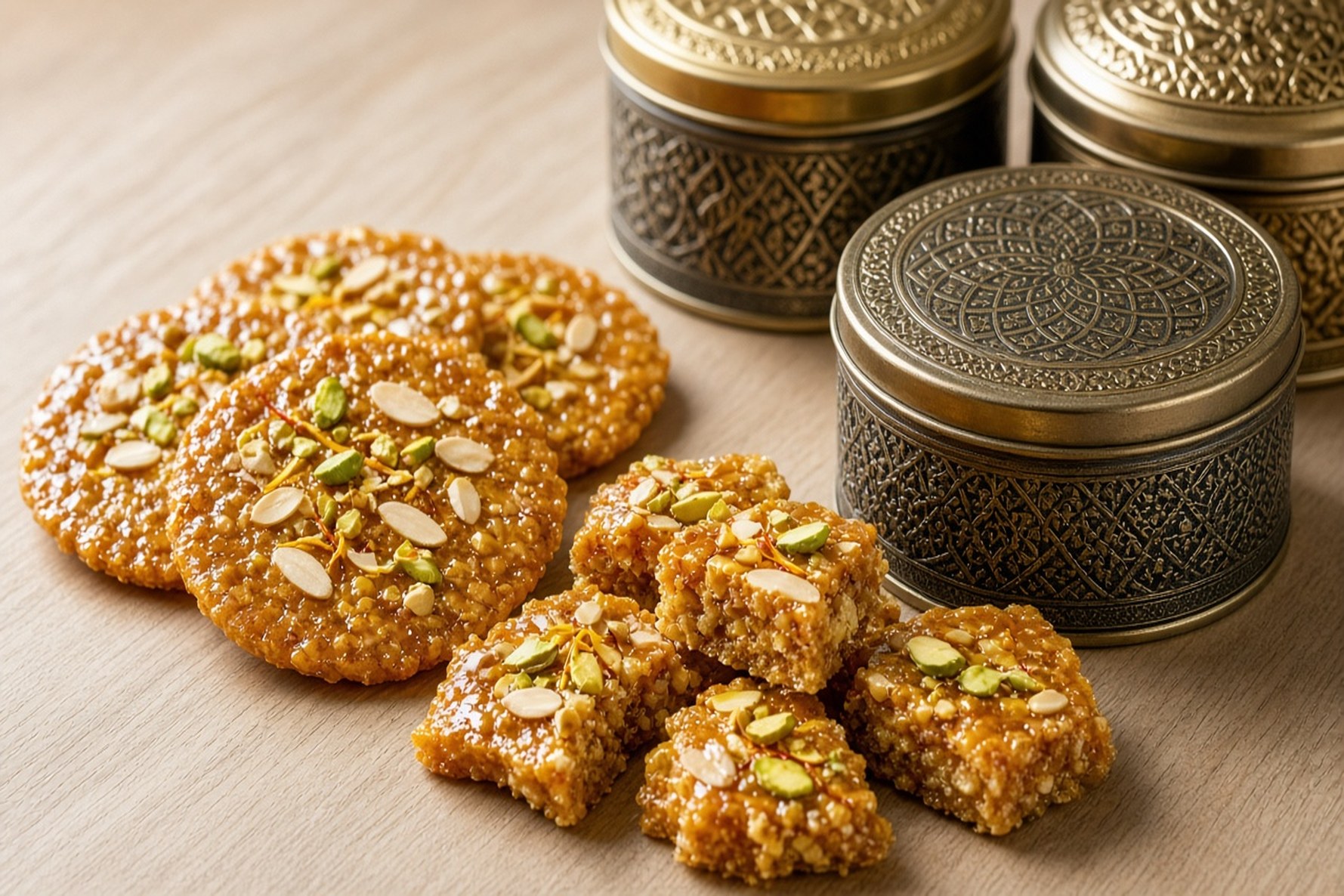
Gol sohan is the most traditional form, packed as thin flat discs in metal tins. The surface is covered with slivered nuts and the texture is brittle and porous. Because of its high surface area, gol sohan is highly vulnerable to dynamic pressure and sudden shocks in transit; breakage rates in international shipments are high. This type is favored mainly in traditional regional markets and premium retail channels.
Lozenge (Bite-Size) Sohan
Lozenge sohan consists of a dense central core of pistachio or almond slivers surrounded by a thin, crisp, caramelized sohan shell. It has the highest bulk density among sohan types and, due to its compact structure, shows exceptional mechanical resistance to transport impacts. Lozenge sohan is regarded as the preferred option for export to distant destinations and can be individually wrapped (cellophane).
Cube (Habbe) Sohan
This product is cut into small, regular cubes with uniform geometric dimensions. The cube shape allows hygienic portioning without manual breaking. Arranging cube sohan in modified-atmosphere packaging significantly reduces trapped air volume inside the pack and improves oxidative stability during warehousing. It is widely used in hotel chains, airlines, and corporate catering.
Gaz-Sohan and Baklava-Style Sohan
Gaz-sohan combines a layer of saffron sohan with authentic white gaz (nougat). The textural contrast between soft gaz and crisp sohan shell makes this product attractive in international markets. Managing water activity between the two layers is critical; without precise control, moisture migrates from the gaz phase into the sohan phase and destroys the outer crispness. Baklava-style sohan has a diamond shape and higher density of ground pistachio in the matrix than classic models.
| Commercial Sohan Type | Appearance and Physical Texture | Typical Nut Percentage | Mechanical Resistance in Transit | Priority Target Market |
|---|---|---|---|---|
| Gol sohan | Wide disc, brittle, glass-like fracture | 15% to 25% | Low (high fragility) | Traditional Persian Gulf markets and domestic souvenirs |
| Lozenge sohan | Nut-filled pillow, dense and compact | 25% to 40% | Very high | European countries, Canada, modern retail |
| Cube sohan | Regular, uniform geometric cubes | 15% to 30% | Very high | Airlines, cafés, corporate and institutional catering |
| Gaz-sohan | Two-layer; chewy gaz plus crisp sohan | 10% to 20% in gaz phase | Medium | Iraq, Central Asia, value markets |
| Baklava-style sohan | Dense diamond with ground tree nuts | 30% to 45% | High | Corporate gifts, specialty luxury hypermarkets |
3. Specialist Formulation and the Role of Ingredients in Quality Stability
Qom sohan is a complex glassy matrix based on sugars, fats, wheat-germ polypeptides, and volatile botanical essences. Final physical behavior and shelf life depend directly on the purity and type of raw materials used in cooking.
Wheat Germ Flour and Enzymatic Transformations
Wheat germ flour is the cornerstone of sohan texture and flavor. During controlled germination, wheat grains activate enzymatic systems such as alpha- and beta-amylases, which break long starch chains into maltose and dextrins. During extended cooking, Maillard reactions between reducing sugars and amino acids develop deep caramel color and the characteristic sohan taste without synthetic colors. Germ flour should be freshly milled and its fat acidity index must remain below the permitted limit so stale or enzymatic bitterness does not appear in the product.
Animal Fat Sources and Thermal Behavior
Fat comprises 25 to 35 percent of total sohan weight. The fat source defines a sensitive balance between sensory qualities and storage stability:
- Pure animal tallow (yellow fat): Extracted from cow or sheep butter with a rich traditional aroma. Because of its low melting point (about 32 to 35 °C), it melts in the mouth and creates a pleasant mouthfeel. However, due to double bonds in fatty acids, it is highly prone to photo- and thermal oxidation.
- Clarified butter: Contains short-chain fatty acids and offers relatively better oxidative stability than bulk animal oils. Butter must be fully clarified before use so the aqueous phase and casein are separated and fat hydrolysis in the kettle is prevented.
- Hydrogenated oils and vegetable substitutes: These oils resist heat well and reduce oxidative spoilage risk, but increased trans fatty acids and a waxy mouthfeel mean they are not accepted in premium and export grades by professional buyers.
Sweeteners and Control of Crystalline Bloom
White sugar (sucrose) and refined industrial glucose syrup form the continuous texture matrix. Sucrose contributes brittle fracture, while glucose moderates viscosity and prevents unwanted sugar crystallization and surface bloom. The weight ratio of liquid glucose to white sugar is tightly controlled in industrial cooking; excess glucose yields a taffy-like texture, while deficiency leads to rapid collapse and powdering of the sohan.
Saffron, Cardamom, and Botanical Extracts
In premium export formulations, only saffron stigma or negin grade with coloring strength (crocin) aligned with National Standard 259 is used. Freshly ground cardamom and first-grade rose water with high essential-oil content supply the product’s volatile aroma. Any use of non-natural chemical colors such as tartrazine or synthetic essences conflicts with Iran’s national standard and destination-country sanitary requirements.
Tree Nut Safety Standards
Pistachio kernels and almond slivers are main components of premium sohan. Moisture in these nuts must be below 5 percent before mixing. Tree nuts, because of unsaturated fats, have high potential to accelerate oxidation. Accurate testing for mycotoxins, especially total aflatoxin and aflatoxin B1, in pistachio lots before cooking is mandatory to meet international sanitary requirements.
4. Technical Specifications Expected by Wholesale Buyers and Contract Parameters
Wholesale buyers, distribution plants, and importers should define technical parameters quantitatively and transparently in purchase requests and proforma documents. Relying on general qualitative descriptions increases the risk of commercial disputes.
| Technical Parameter | Permitted Range or Standard | Commercial Importance and Product Effect |
|---|---|---|
| Base fat type | 100% animal tallow / pure butter | Authentic aroma, brittle texture, desirable melt-in-mouth |
| Fat peroxide value | Maximum 2 milliequivalents per kg fat | Defines shelf life and absence of oxidative rancidity |
| Extracted fat acidity | Maximum 0.5% as oleic acid | Indicates no fat hydrolysis and sound oil raw material |
| Total moisture | Maximum 3.0 to 4.0% by weight | Maintains brittleness; prevents bacterial and mold activity |
| Coloring agent | Natural saffron only (no synthetic color) | Port health approvals and nutritional value stability |
| Nut aflatoxin limit | Below 4 to 10 ppb (destination-dependent) | EU quarantine rules; prevents cargo rejection |
| Pack atmosphere type | Inert nitrogen gas injection (MAP) | Stabilizes pack atmosphere; blocks oxygen contact with fat bonds |
| Residual pack oxygen | Less than 1.0% by volume | Long shelf life under ambient retail storage |
5. Laboratory Tests, Quality Control, and ISIRI 2612
Iran National Standard No. 2612, titled “Edible Sohan — Characteristics and Test Methods,” is the primary reference for quality alignment and export inspection certificates. Deviation from any of these indicators can lead to rejection at quality control checkpoints.
Physicochemical Tests
- Peroxide value (Peroxide Value): Peroxides indicate the degree of primary oxidation in the lipid matrix. Per the standard, extracted fat from sohan must not exceed 2 milliequivalents of active oxygen per kg fat. Higher values signal onset of triglyceride breakdown and fat rancidity.
- Extracted oil acidity: This index shows free fatty acids formed by hydrolysis, expressed as percent oleic acid by weight. The limit in fresh sohan is a maximum of 0.5% by weight.
- Kreis test (Kreis Test): Used to trace secondary compounds from oxidative spoilage such as epihydrin aldehydes; result must be fully negative in sound product.
- Moisture percentage: Total sohan moisture is measured by vacuum oven or distillation; the standard ceiling is 4% by weight. Excess moisture destroys the glassy texture and enables fatty-acid hydrolysis.
- Synthetic color screening: Chromatography checks for artificial colors such as tartrazine, Sunset Yellow, or Quinoline Yellow; the standard declares these compounds unauthorized.
Microbiological Tests
Intense heat during sohan cooking (above 110 °C) eliminates surface bacterial load; however, adding raw nuts after cooking or secondary contamination during manual packing can introduce microorganisms. Official microbiological criteria include:
- Bacillus cereus: A spore-forming bacterium that may survive via wheat germ flour; limit is a maximum of 10² CFU per gram of sample.
- Salmonella: Must not be detected in 25 g of product (absolute negative).
- Enterobacteriaceae: An index of process hygiene and workers; count must be below 10 CFU per gram.
- Mold and yeast: Multiply in humid storage; permitted ceiling is 100 CFU per gram.
| Quality Control Index | Reference Test Method | ISIRI 2612 Limit | Technical and Quality Effect of Deviation |
|---|---|---|---|
| Peroxide value | Iodometric titration of fat phase | Maximum 2 meq/kg | Stale odor and rancidity, bitter taste, product spoilage |
| Fat acidity | Acid–base titration with alkali | Maximum 0.5% as oleic | Throat burn sensation, reduced heat stability |
| Moisture percentage | Dean–Stark drying / oven | Maximum 4.0% by weight | Softening, sticky texture, secondary microbiological spoilage |
| Kreis test | Colorimetry with phloroglucinol reagent | Negative | Definite fat spoilage; unfit for consumption |
| Artificial colors | Thin-layer chromatography (TLC) | Free of any synthetic color | Non-clearance at port of entry; food safety violation |
| Bacillus cereus | Culture on mannitol agar | Maximum 100 CFU per gram | Food poisoning risk; supply prohibition |
| Salmonella | Selective enrichment in 25 g | Negative | Definite quarantine breach; cargo rejection |
6. Sensory Evaluation, Grading, and Common Commercial Defects
Organoleptic evaluation at the factory or delivery warehouse is the fastest way to verify shipment quality before container loading. High-quality sohan has distinctive sensory signatures that distinguish it from substandard samples.
Sensory and Textural Indicators of Sound Sohan
- Brittleness and glass-like break: Premium sohan breaks with a clean, dry snap when bitten. It must not stick to teeth or have a chewy, gum-like texture. Stickiness indicates high moisture, undercooked dough, or excessive liquid glucose.
- Melt-in-mouth behavior: Pure animal fat softens and melts at 37 °C oral temperature, releasing saffron and cardamom flavor. A waxy fat feel, a persistent slippery coating on the palate, or clumping suggests hydrogenated vegetable oils or cheap fats.
- Organic aroma: Pleasant saffron, dairy butter, and cardamom should be perceptible immediately upon opening the container. Sharp stale oil, intense oxidation odor, or heavy chemical essence is a clear low-quality warning.
Common Commercial Defects and Technical Causes
- Surface oiling: Oil accumulation on the surface indicates poor emulsion stability during cooking or storage above 25 °C.
- Sugar bloom (Bloom): White sucrose crystals in the matrix from imbalance of sugar to liquid glucose or humidity fluctuations.
- Haze and abnormal darkening: Browning toward burnt coffee color from overheating in direct-flame traditional kettles or use of stale germ flour.
- Excessive crumbling and powdering: Caused by overly dry texture (moisture below 1.5%), poor molding, or physical transport stress.
7. Export Packaging Technologies and Oxidative Spoilage Control
Fundamental sohan spoilage stems from autoxidation of animal fatty acids and ingress of ambient water vapor. In the presence of oxygen and light, double bonds in fatty acids undergo radical breakdown and hydroperoxides form, later converting to pungent aldehydes and ketones. Packaging engineering is therefore the key determinant of export sohan shelf life.
Evolution of Metal Tins and Hermetic Sealing
Metal tins are classic sohan packaging because they block ultraviolet light and resist impact well. However, ordinary tins with simple press-fit lids allow gas exchange with the surrounding atmosphere. Advanced export lines increasingly use metal tins with heat-sealed aluminum foil and easy-open features. This foil layer creates an impermeable barrier and prevents moisture and oxygen ingress.
Modified Atmosphere Packaging (MAP)
Modified atmosphere packaging is the most effective technical mechanism to preserve sohan freshness for distant markets. After placing sohan in high-barrier multilayer packs, headspace air is evacuated and ultra-pure nitrogen (99.9%) is injected. This reduces oxygen level below 0.5% and drives fat oxidation rate near zero. With MAP, shelf life of animal-fat sohan rises from 2 to 3 months to more than 9 to 12 months.
Active Oxygen- and Moisture-Absorbing Sachets
In packs without gas flushing, food-grade iron-powder oxygen absorber sachets inside metal tins consume trapped interstitial oxygen completely. Simultaneously, desiccant pads keep relative humidity inside the tin below the thermodynamic equilibrium point and prevent bloom and texture softening.
Export Master Carton Specifications
Sohan has high bulk weight. Export master cartons should be five-ply, high grammage, and moisture-resistant. Carton compression strength must be calculated to withstand four pallet tiers in transit warehouses and prevent crushing and denting of metal tins.
| Packaging Technology | Protection Mechanism | Shelf Life | Pack Cost Index | Optimal Trade Application |
|---|---|---|---|---|
| Metal tin with traditional wrap | Physical barrier to light and impact | 2 to 3 months | Basic and economical | Fast overland transport to neighboring markets |
| Metal tin with heat-sealed foil | Complete air and moisture seal | 5 to 7 months | Medium | Export to Persian Gulf countries and Iraq |
| Modified atmosphere (nitrogen) injection | Oxygen removal; oxidation halt | 9 to 12 months | Medium to high | Sea freight and retail to Europe and Canada |
| Individual vacuum thermoforming | Piece separation and moisture control | 8 to 10 months | High | Airline catering and modern hypermarkets |
8. Transport Requirements, International Logistics, and the Cold Chain
Sohan is classified as temperature-sensitive. Animal fat in the product undergoes structural change and phase separation above 22 °C, releasing free oil that damages product texture.
Reefer Container Temperature Conditions (Reefer Containers)
For sea transport to ports in the UAE, Oman, Qatar, and export cargoes to Europe and North America, refrigerated containers are mandatory. Optimal container temperature should be set and maintained between 15 and 20 °C. Excessive cooling toward sub-zero causes crystalline fat to freeze; after discharge and exposure to ambient temperature, condensate on the sohan surface leads to surface bloom. Relative humidity in the container must not exceed 50%. Installing data loggers to record continuous temperature and humidity throughout the voyage provides decisive evidence for cargo condition assessment at discharge.
Overland Transport and Mechanical Stress Control
In road transport by covered transit trucks to destinations such as Iraq, Turkey, and the Russian Federation, restraining physical movement is the priority. Master cartons must be strapped with standard tension bands and the full pallet stabilized with multilayer stretch film. Compressed cardboard corner protectors on pallets prevent outer carton collapse on road curves.
Air Freight
For low-tonnage luxury shipments and exhibition orders in warm seasons, air freight guarantees the shortest transit time (under 72 hours) and reduces risk of dwell in high-temperature customs warehouses to near zero.
| Transport Mode | Required Temperature Range | Permitted Relative Humidity | Risk Mitigation Measures | Matching Target Markets |
|---|---|---|---|---|
| Refrigerated sea container | 15 to 20 °C | Below 50% | Temperature data logger, standard pallet stacking | Persian Gulf ports, Europe, North America |
| Refrigerated transit truck | 12 to 18 °C (reefer) | Below 55% | Secure strapping, vibration damping | Iraq, Turkey, Azerbaijan, Armenia |
| Air cargo | Cool airport environment | Below 60% | Thermal insulation during loading dwell | Germany, United Kingdom, Switzerland, Canada |
9. Export Target Market Analysis and Demand Structure
International demand for sohan depends on demographic structure, shared food culture, and sanitary standards in destination countries.
Persian Gulf Country Markets
The UAE, Kuwait, Qatar, and Oman are among the most traditional and profitable markets for premium Qom sohan. Consumers in these countries prefer saffron, cardamom, and rich animal fat profiles. Dubai serves both direct consumption and re-export hub functions for the wider region. In this zone, gol and lozenge sohan with 100% animal fat and high pistachio content in luxury gold-design metal tins see the highest demand. Halal certification and Arabic labeling are baseline entry requirements.
Iraq Market
Because of religious ties and pilgrim traffic, Iraq is the largest buyer by volume of Qom sohan. The market splits into a luxury segment demanding premium lozenge sohan and a high-volume general segment favoring economical 500 to 1,000 g packs at competitive prices. Smooth clearance at Mehran and Khosravi borders requires rapid coordination with border health inspection.
European Markets
Germany, Switzerland, and the United Kingdom are valuable sohan markets driven largely by Middle Eastern diaspora demand. Access to European retail chains requires strict compliance with pistachio aflatoxin ceilings (below 4 ppb) and confirmation of zero synthetic colors. Lightweight packs (200 to 350 g) with modified atmosphere and accurate calorie and allergen tables are favored in these markets.
North American Markets
Iranian communities in Toronto, Montreal, Los Angeles, and Vancouver sustain stable import demand. Because of long sea transit, product sent to these destinations must be nitrogen-flushed to preserve quality. Labeling requirements of Canadian and US food and drug agencies must appear on tins.
| Destination Country or Region | Preferred Grade and Format | Preferred Packaging | Main Distribution Channels | Risks and Regulatory Barriers |
|---|---|---|---|---|
| United Arab Emirates | High-nut lozenge with animal fat | Decorative metal tin, foil seal | Modern hypermarkets, luxury confectioners | High port temperatures and hot urban distribution |
| Iraq | Lozenge, gaz-sohan, economical disc types | 500 g and 1,000 g tins, bulk cartons | Wholesale markets in Baghdad, Najaf, and Erbil | Long dwell at border terminals |
| Germany and wider Europe | Cube and less-sweet lozenge | Metallized cardboard boxes, gas flushing | Ethnic stores, organic markets | Strict pistachio aflatoxin and pesticide residue limits |
| Canada | Premium lozenge with superior cardamom | Impact-resistant metal tins with MAP | Asian supermarket chains and online distribution | Long distance; bilingual English–French rules |
Importers can submit their requirements—product type, nut percentage, pack weight, order volume, and destination country—through Iranco so matching supply options can be reviewed.
10. Customs Procedures, Export Documents, and Market Entry Requirements
Exporting Qom sohan requires accurate commercial, sanitary, and customs documentation so clearance proceeds without delay.
Customs Tariff Code (HS Code)
Under the Harmonized Commodity Description and Coding System, sohan falls in Chapter 17 of export and import regulations. Tariff code 17049010 is registered under “Traditional confectionery including gaz and sohan.” All customs declaration procedures, export permits, and destination duty inquiries are based on this eight-digit tariff line.
Mandatory Documents for Declaration and Clearance
- Commercial Invoice (Commercial Invoice): Buyer and seller identity, detailed goods description, net and gross weight, and Incoterms.
- Packing List (Packing List): Carton breakdown, tins per carton, pallet serial numbers, and physical dimensions.
- Certificate of Origin (Certificate of Origin): Endorsed by the Chamber of Commerce, Industries, Mines and Agriculture.
- Health Certificate (Health Certificate): Issued by the Food and Drug Deputy of the Ministry of Health.
- Veterinary Certificate (Veterinary Certificate): Confirms sanitary soundness of animal fat and butter used in the product.
- Laboratory analysis report (COA): Official report of moisture, peroxide, acidity, and microbiological load tests.
- Standard conformity certificate: Document confirming product compliance with Iran National Standard No. 2612.
- International Halal certificate: Legal requirement for entry into Islamic country markets.
International Labeling and Marking Requirements
Pack labels must be in English or the official language of the destination country and clearly show:
- Trade name and full address of manufacturer and importer
- Exact production and expiry dates in the Gregorian calendar
- Full ingredient list in descending weight order
- Nutrition information table per 100 g or per serving
- Clear allergen warnings (contains wheat gluten, pistachio, almond, and egg)
- Storage conditions: dry, cool place away from direct sunlight
- Production health number, standard mark, and product tariff code
11. Cost Structure and Factors Affecting Wholesale Pricing
Wholesale Qom sohan price is the sum of multiple formulation and market input variables:
- Volatility of pure animal fat prices: Animal tallow and pasteurized butter account for a major share of formulation cost. Price difference between 100% animal sohan and vegetable-oil sohan can exceed two to three times. Seasonal changes in raw milk and dairy fat prices directly swing premium sohan base rates.
- Share of pistachio and saffron: Pistachio is the costliest weight component in high-nut sohan (over 30% nuts). Exchange-rate shifts and pistachio commodity price swings transform lozenge and baklava-style sohan landed cost. Authentic stigma saffron versus essences and substitute colors creates a fundamental price gap.
- Packaging technology and atmosphere control: Lithographed tinplate with multi-color oven printing, easy-open aluminum foil, five-ply export cartons, and nitrogen flushing represent 10 to 15 percent of unit sohan cost. Although these raise initial price, they are fully justified by preventing oxidative spoilage and buyer damage claims.
- Order volume and international delivery terms: Full-container (FCL) orders offer more competitive pricing than less-than-container (LCL) loads by optimizing inland haulage, inspection, laboratory testing, and port formalities. Incoterms (EXW, FOB, or CIF) directly allocate transport risk and container freight volatility between buyer and seller.
Importer Checklist Before Placing an Order
- Define exact physical sohan type (gol, lozenge, cube, or gaz) with thickness and dimensions
- State fat source in contract text (100% animal tallow, pasteurized butter, or vegetable formula)
- Specify weight percentage of pistachio or almond slivers and particle size
- Set numeric ceiling for fat peroxide index (maximum 1.0 meq/kg at factory delivery)
- Request laboratory certificate of pistachio freedom from mycotoxins and total aflatoxin
- Define pack atmosphere system (sealed tin mandatory or nitrogen MAP injection)
- Verify export master carton strength and crush resistance under pallet weight and humidity
- Align label design and nutrition table with destination customs and health regulations
- Explicitly require refrigerated container at controlled 15 to 20 °C on the bill of lading
- Review daily production capacity and exact expiry date relative to transit time to destination
- Agree random sampling framework per standard methods before official loading
- Agree Incoterms and designate a third-party reference laboratory for dispute resolution
What Information Should Be Sent for an Accurate Quote?
- Product type: gol, lozenge, cube, gaz, or baklava-style sohan
- Requested fat grade: pure animal tallow, clarified butter, or blended vegetable oil
- Nut percentage: plain, 15%, 25%, or 40% premium pistachio and almond
- Color and aroma purity: guarantee of 100% stigma saffron without essences or unauthorized food colors
- Pack type and dimensions: round metal tin, square, crystal-style, or individual retail pack
- Net unit weight: 250 g, 500 g, or 1,000 g packs
- Atmosphere technology: heat-sealed foil, simple vacuum, or inert nitrogen flushing
- Total order volume: number of master cartons and total weight in kg or tons
- Commercial delivery terms: factory gate (EXW), Bandar Abbas (FOB), or destination port (CIF)
- Destination country and city: for label rules, toxin limits, and Halal documentation alignment
In export orders, precise product specification matters greatly. On Iranco you can register a purchase request with product, packaging, and destination details so supplier review follows the same basis.
Export Supply of Qom Sohan to Buyer Specifications with Iranco
In international Qom sohan trade, price differences stem from raw-material quality, fat authenticity, tree-nut percentage, and packaging method. Indirect purchase or cooperation with workshops lacking modern sanitary lines risks failure of laboratory tests and early fat spoilage.
Iranco is a specialist platform in Iran’s food-industry supply chain, connecting international wholesale buyers and importers directly with reputable Qom sohan producers. Wholesale buyers can submit desired technical specifications in a price inquiry so matching supply options from licensed sanitary plants with standard certificates can be evaluated. Iranco supports coordination of commercial samples, alignment of laboratory analysis sheets with ISIRI 2612, and verification of nitrogen flushing and MAP lines. If you need premium Qom sohan for your target market with guaranteed technical specs and standard packaging, specify sohan type, required volume, packaging type, and commercial destination in your Iranco purchase request for assessment.
Analytical Summary
Qom sohan has moved beyond a local traditional souvenir to a product capable of competing in international confectionery markets. Realizing this commercial potential without controlling food-engineering variables is impossible. Pure animal fats create distinctive flavor but also high oxidation vulnerability. Controlling oxidative spoilage through modified-atmosphere technology and cold-chain control during container transport are inseparable conditions for sohan survival on international retail shelves.
Success for wholesale buyers and trade managers depends on a quantitative approach to sourcing, precise laboratory indices in purchase documents, use of ISIRI 2612 standard tests, and selection of impact-resistant, gas-impermeable packaging models. Direct links with industrial producers and transparent supply evaluation platforms create a safer path to risk reduction and sustainable export of this traditional confection.
Frequently Asked Questions
Which sohan type is best for export to distant destinations?
Nut-filled lozenge sohan is regarded as the top export option. Because of high geometric density, a concentrated nut core, and less surface area than flat gol sohan, it shows the least physical breakage in road and sea transit. Individual cellophane wrapping also makes it well suited for international retail chains.
What is the useful shelf life of export sohan?
Traditional sohan in ordinary tins with plastic wrap lasts 2 to 3 months. With heat-sealed aluminum foil tins and modified-atmosphere packaging (inert nitrogen) plus storage at controlled 15 to 20 °C, shelf life extends to 9 to 12 months without flavor loss or rising peroxide index.
Why does sohan flavor change and develop a sharp odor over time?
This change indicates autoxidation of fatty acids in animal tallow or butter. Contact with atmospheric oxygen, storage above 22 °C, and light exposure break fat bonds; hydroperoxides then form aldehydes and ketones that create sharp aroma and biting taste.
Does sohan entry into the European Union face sanitary restrictions?
Yes. European countries strictly monitor maximum permitted mycotoxins in tree nuts. Pistachio used in sohan must carry total aflatoxin certification below 4 ppb. Any artificial color or chemical essence is a violation and the shipment will be returned.
What is the customs tariff code for sohan in international trade systems?
Iranian export sohan is declared and cleared under tariff line 17049010, titled “Traditional confectionery including gaz and sohan.”
How is wholesale Qom sohan price determined?
Wholesale price is calculated from fat type (pure animal tallow versus vegetable fats), pistachio and almond percentage and quality, saffron purity, packaging technology (ordinary tin versus modified atmosphere), and total order volume. On Iranco, price requests can be registered with the same information so suitable suppliers can be compared to your specifications.
How can Qom sohan be sourced directly from Iranian producers?
Buyers can specify technical requirements including sohan type, fat type, nut percentage, packaging style, tonnage volume, and destination. Traders can send these requirements through Iranco as a purchase request so available supply options in Iran are reviewed against their needs.
What are optimal temperature conditions for container transport of sohan?
Sohan transport, especially in warm seasons or on Persian Gulf sea routes, must use refrigerated containers at 15 to 20 °C and relative humidity below 50% to prevent softening and phase separation of animal fat.
What does the Kreis test on a sohan analysis report indicate?
The Kreis test is a qualitative laboratory method to identify aldehydic compounds from advanced fat oxidation. A negative result indicates fully sound fat and absence of rancidity and stale oil in the product.
Featured Products



Related Articles



