 Iranco Magazine Team
Quality criteria, rheology, modified grades and B2B ordering for food manufacturing lines
Quality standards · Iranco
Potato starch buying guide for sauce, soup and ready-meal lines
Technical specs, E-grade selection, ISIRI 381-4, packaging, trade analysis and procurement checklist — Iranco Magazine.
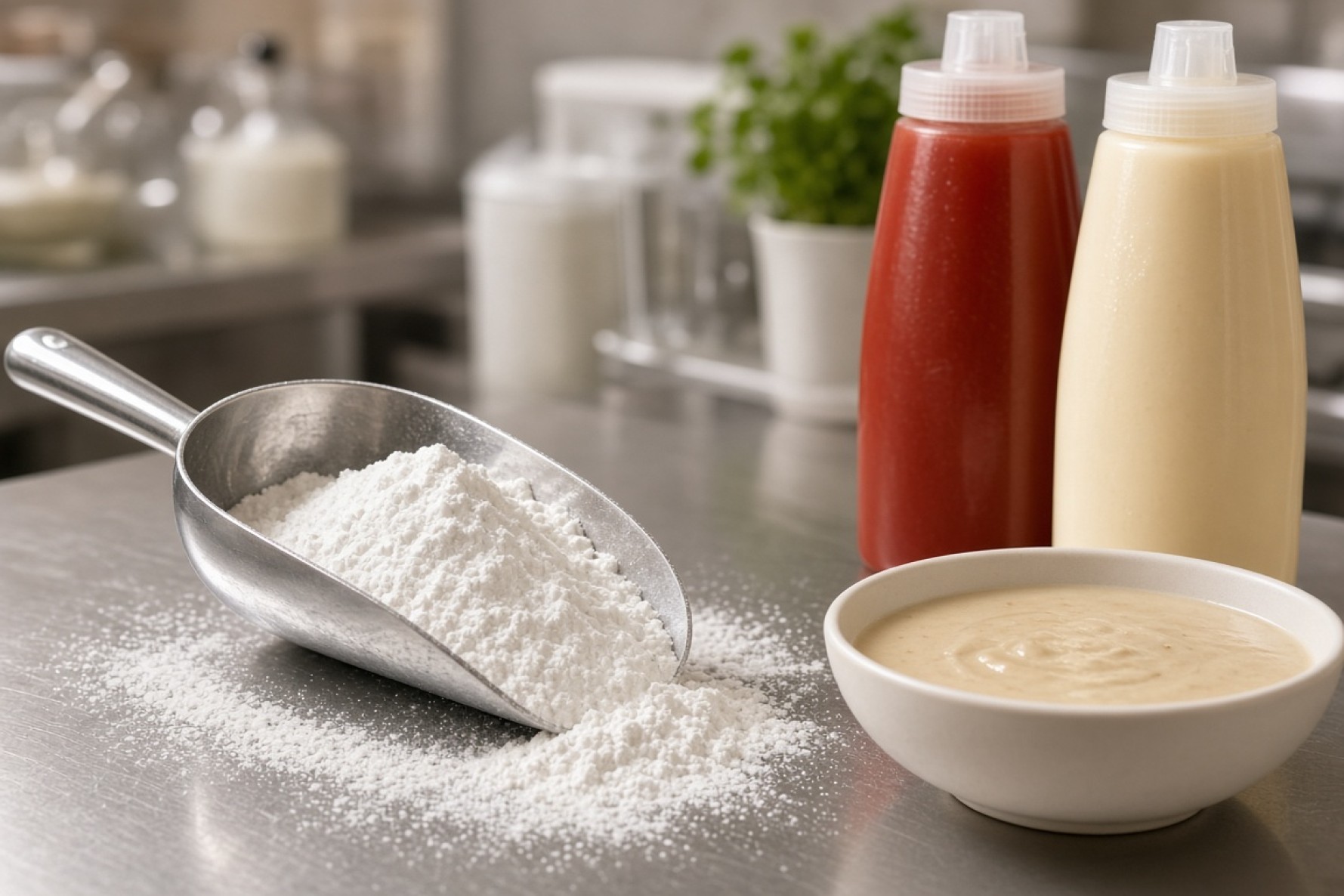
Potato starch is a key natural hydrocolloid in sauces, soups, ready meals and meal kits: large granules, high phosphorus and gelatinization below corn temperatures deliver creamy mouthfeel and glossy clarity in cream dressings and soup thickeners. Procurement, R&D and QC must align COA, RVA and modified grades with real line conditions (pH, shear, retort).
This Iranco quality-standards guide unifies structured RFQs, origin comparison (Germany, Poland, China, Iran) and contracting with moisture caps and pilot trials.
1. Why potato starch in sauces and soups?
In mayonnaise, salad dressings, ketchup and dry soup or one-step powders, potato starch’s high peak viscosity and gel clarity make it an economical partial replacement for gums. Wrong grade choice causes syneresis, sauce turbidity and poor mouthfeel after freeze–thaw.
2. Potato vs corn, wheat and tapioca starch
Base starch choice depends on cook temperature, acidity, mechanical shear and freeze–thaw cycles; the table is a quick reference for sauce and soup lines.
| Parameter | Potato | Corn | Wheat | Tapioca |
|---|---|---|---|---|
| Granule size | Large (5–100 µm) | Medium | Bimodal (A/B) | Small, uniform |
| Gelatinization temp. | 58–65°C | 62–72°C | 58–64°C | 59–65°C |
| Peak viscosity (RVA) | Very high | Medium | Lower | Medium–high |
| Gel clarity | Clear, glossy | Opaque to semi-clear | Opaque | Clear |
| Granule lipid | 0.1–0.5% | 0.5–1% | 0.8–1.5% | Negligible |
| Phosphorus (bonding) | High; soft gel | Low | Medium | Low |
| Mouthfeel | Creamy, smooth, glossy | Starchy, dull | Sticky | Gel-like, elastic |
3. Granule structure and gelatinization
Potato starch has larger granules and higher phosphorus than corn; phosphate ester bonds limit swelling and yield softer gels. Gelatinization is typically 58–65°C — lower than corn — suitable after full hydration through 85–95°C pasteurization.
RVA shows lower pasting temperature and higher peak viscosity than native corn; align suppliers to target sauce viscosity.
4. Commercial grades: native, E1422, E1442, pregelatinized
Native suits controlled heat and dry soups with a boil step. E1422 (acetylated adipate) targets acid sauces and retort; E1442 (cross-linked) resists high-speed mixers and freeze–thaw. Pregelatinized grades serve instant powders without full granule cooking.
| Grade | E-number | Process | Main use |
|---|---|---|---|
| Native starch | — | Wet/dry separation | Dry soup, mild heat thickening |
| Acetylated adipate | E1422 | Acetylation + adipate | Ketchup, acid sauces pH<4, retort |
| Cross-linked | E1442 | Phosphate cross-link | Cream sauces, high shear, freeze–thaw |
| Pregelatinized | — | Drum drying | One-step powders, instant soup, dry RTE |
5. Grade selection by product
Each line has different limits; use this matrix in your RFQ.
- Ketchup and tomato sauce (pH 3.8–4.2): E1422 or E1442; avoid plain native on retort lines.
- Dry soup and meal kits: pregelatinized or native with defined RVA; cold solubility and lump-free texture matter.
- Cream sauces: native or E1442 for gloss and shear stability.
- Retort RTE and canned meals: E1422 with heat clause in COA; pilot at 121°C.
- Frozen meals: E1442 or waxy corn blends to limit syneresis.
6. Laboratory specs and standards
Each lot COA must align with ISIRI 381-4 (food potato starch), ISIRI 2843 hygiene limits and, where applicable, Codex Stan 152 and JECFA monographs for modified starches. Premium sauce buyers often tighten moisture, SO₂ and whiteness beyond the national minimum.
| Parameter | Typical COA | ISIRI 381-4 | Codex / JECFA | Premium sauce/soup |
|---|---|---|---|---|
| Moisture | 12–18% | Max 20% | Grade-based | ≤14% |
| Total ash | ≤0.4% | ≤0.5% | Limited | ≤0.2% |
| Protein | ≤0.5% | ≤0.6% | — | ≤0.3% |
| pH 1% solution | 5.0–7.0 | 5.0–7.5 | — | 5.5–6.5 |
| Residual SO₂ | ≤50 ppm | ≤50 ppm | JECFA | ≤30 ppm |
| Microbiology | Per COA | INSO 2843 | Codex GHP | Salmonella neg. 25 g |
7. Process parameters: pH, shear and heat
Thicken after reaching ≥85°C or per pregel protocol so granules fully hydrate. Below pH 4.5 native starch thins rapidly; use cross-linked grades at 3000–5000 rpm mixers.
Retort hold time and cooling rate affect retrogradation; pull viscosity samples from can centre after processing.
8. QC, sampling and microbiology
Creamy white to bright white colour, neutral odour and minimal black specks are incoming visual criteria. Sample mid-pallet bags and multiple FIBC loops; rapid moisture at warehouse receipt.
- Whiteness ≥90 for sauce grade.
- Total aerobic count and yeast/mould per ISIRI 2843.
- Aflatoxin and heavy metals on export COA or ICP request.
9. Iran supply chain and potato production
Iran produces about 5.5 million tonnes of potatoes annually, supporting domestic native starch for internal use and neighbour exports. Plants use wet separation and flash drying; modified grade variety is narrower than EU imports — early Iranco sourcing helps.
10. Packaging, warehouse and transport
Starch is hygroscopic; ambient humidity causes caking and silo bridging. Explosion-proof electrics are required in milling and powder stores.
| Type | Weight | Advantages | Storage note |
|---|---|---|---|
| Kraft multi-layer + PE bag | 25 kg | Easy handling, sampling | RH<65%, palletized |
| FIBC / big bag | 500–1000 kg | Lower freight cost | Dust-proof loop, desiccant |
| PP/PE laminate | 1–5 kg | Industrial retail, R&D | Batch code on label |
11. Trade competitors and origins
International buyers compare Germany/Poland for consistency and China for price; Iranian supply shortens lead time and can simplify riyal settlement.
| Origin | Strengths | Challenges | Target market |
|---|---|---|---|
| Germany | Stable COA, precise RVA | High price | EU, Middle East |
| Poland | High volume, native grades | Harvest seasonality | CEE, export |
| China | Competitive price | Quality spread | South-East Asia |
| Iran | Proximity, FX, logistics | Limited modified grades | Domestic, neighbours |
12. Pricing factors and contracts
Native price tracks industrial potato feedstock and drying energy; chemical modification (E1422) may cost two to four times native.
| Driver | Effect | Typical swing |
|---|---|---|
| Raw potato price | 60–70% of cost | Seasonal |
| Grade (native vs E1422) | 2–4× native | Contract |
| Drying energy | 15–20% | Power/gas |
| FX and freight | 5–15% | FOB/CIF |
| Packaging and pallets | 3–8% | Fixed |
| Certs (halal, ISO) | 2–5% | Per order |
13. Ten-step pre-contract checklist
Attach this list to contracts and Iranco RFQs.
- Define application (ketchup, dry soup, cream sauce, retort RTE) and line pH/heat limits.
- Select grade: native, E1422, E1442 or pregelatinized; state E-number on label and contract.
- Contract moisture cap (prefer ≤14% for sauces) with quality penalties.
- Require per-batch COA: moisture, ash, protein, pH, SO₂ and whiteness index.
- RVA or agreed peak viscosity window for lot acceptance.
- Spear sampling from FIBC; retain reference sample 6 months.
- Micro clause per ISIRI 2843 and Salmonella negative in 25 g.
- Bag type (25 kg kraft or 1000 kg FIBC) and warehouse <25°C, RH<65%.
- Incoterms (EXW plant, FOB port, DAP buyer plant) and cargo insurance.
- 5–20 kg pilot on actual line before bulk order; name referee lab.
14. Iranco inquiry and supplier matching
In Iranco’s contact form state grade type, monthly volume, RVA window, packaging and delivery point for vetted suppliers. Iranco does not replace your final QC but accelerates pilot COA alignment.
Frequently asked questions
How does potato starch differ from corn in acid sauces?
Native potato starch breaks down below pH 4 and under high shear; E1422 or E1442 on the right base are designed for ketchup and hot sauces.
What is the maximum moisture under ISIRI 381-4?
The national food potato starch standard typically allows up to 20% moisture; industrial sauce buyers often contract ≤14%.
What is the HS code for potato starch?
International trade uses 11081300 for potato starch; modified grades may be classified elsewhere depending on modification degree.
Why does RVA peak viscosity matter in procurement?
Peak viscosity links to final sauce/soup thickness and resistance to thinning after pasteurization; drift suggests grade or moisture change.
Is native starch suitable for retort ready meals?
At 121°C and acid, native is usually insufficient; E1422/E1442 or hydrocolloid support is recommended.
What are requirements for 1000 kg FIBC?
FIBC needs PE liner, anti-static loop, batch label and production date; use desiccants and prevent container rain in ocean freight.
How does Iran’s potato crop affect supply?
With about 5.5 million tonnes annual production, domestic native starch is feasible; state seasonal quality and modified grade needs in Iranco inquiries.
How does Iranco help buyers?
Iranco matches qualified suppliers to your COA targets, coordinates pilot samples and seasonal continuity via the contact form.
Featured Products


Related Articles



