 Iranco Magazine Team
Regional harvest patterns, standard technical specs, cleaning and optical sorting tech, quarantine requirements and international marketing strategies
Export Guide · Pulses · Mung Beans
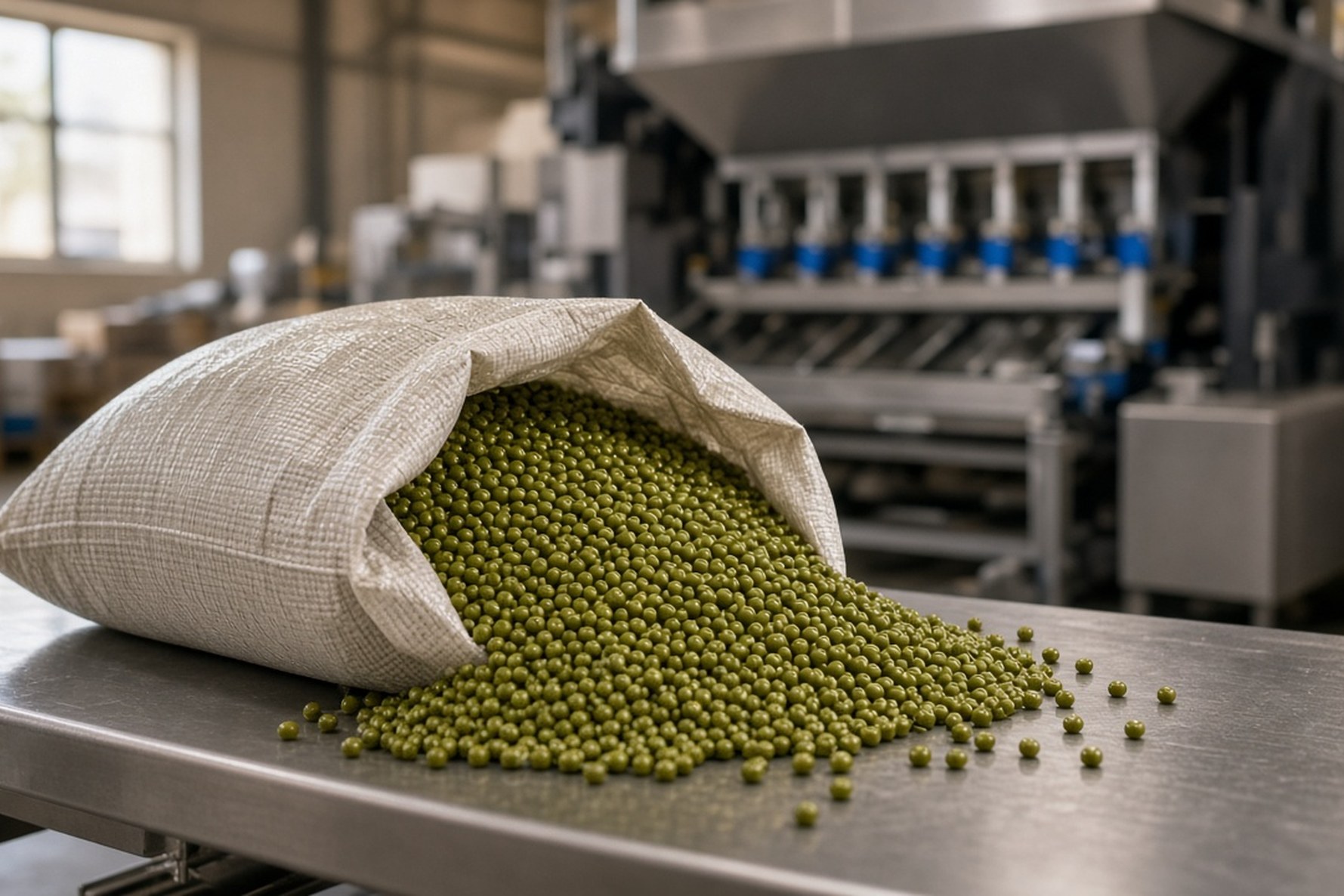
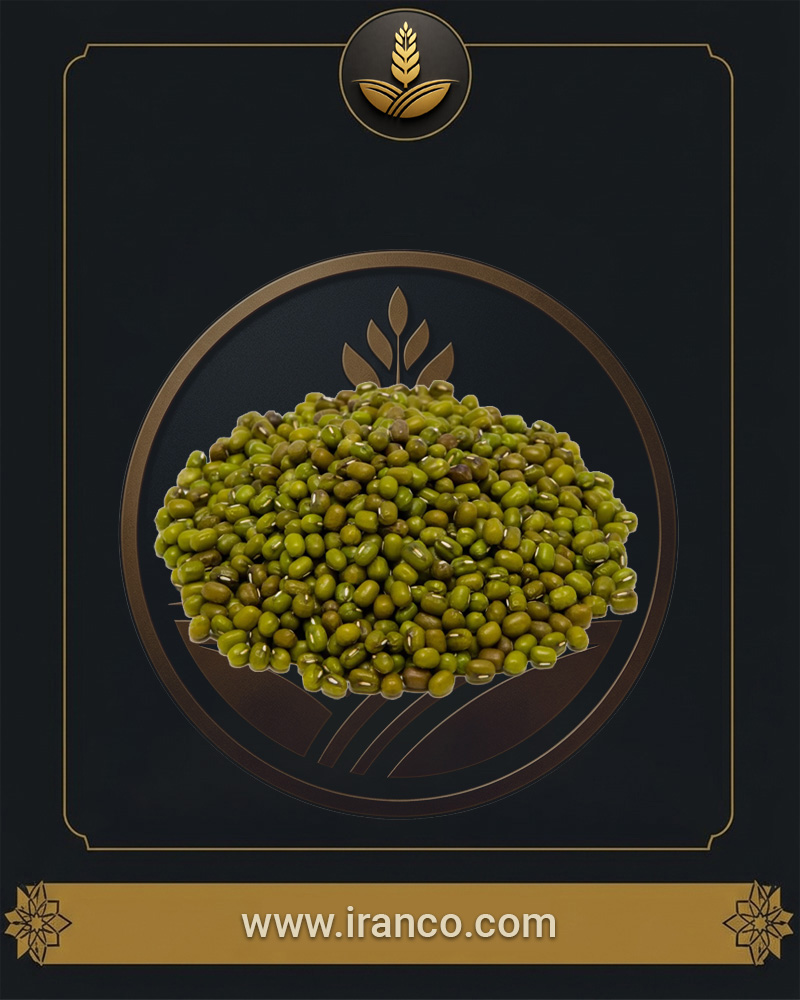
Iranian Mung Beans; Wholesale Buying, Sorting and Export Guide
A comprehensive analysis of regional harvest patterns, standard technical specifications, cleaning and optical-sorting technology, quarantine requirements and international marketing strategies.
This specialist guide examines Iran’s mung bean value chain, quality criteria, industrial processing and pricing variables. Trade managers, processing-plant operators and international importers can use the indicators presented here to manage cargo quality risks and steer sourcing, laboratory evaluation and export contracting with technical confidence.
| Key indicator | Value or technical note |
|---|---|
| International HS code | HS 071331 |
| National quality standard | ISIRI 99 (mung bean characteristics and test methods) |
| Max commercial moisture tolerance | Maximum 12.0% |
| Min physical purity — super sort | 99.8% |
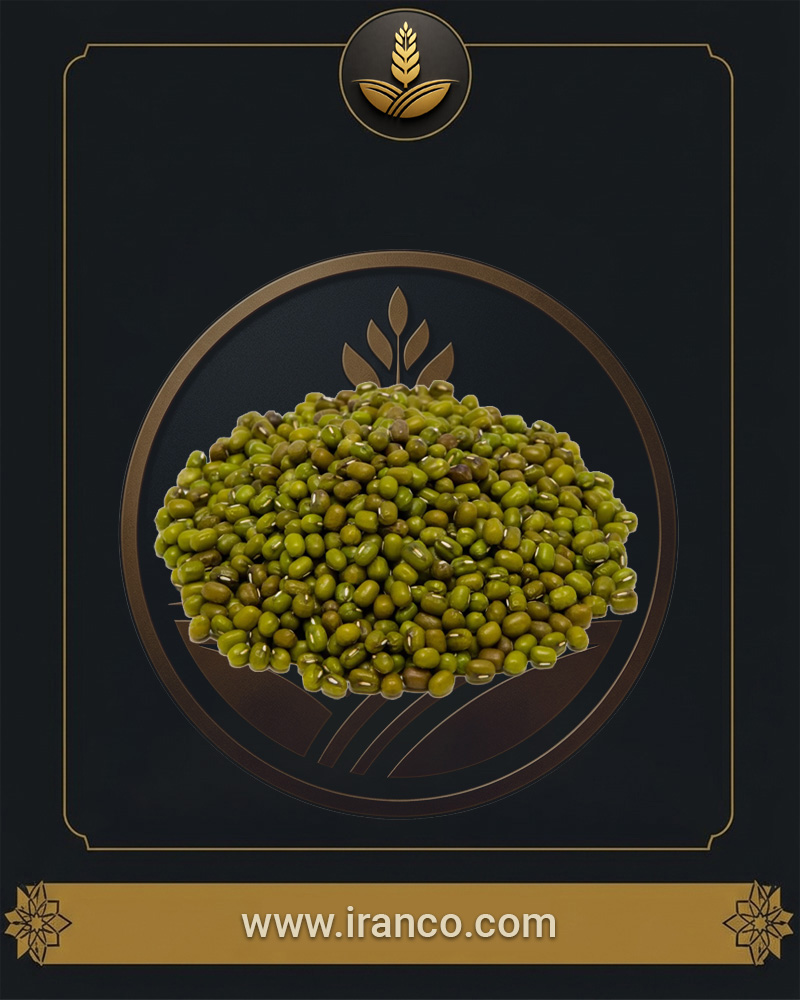
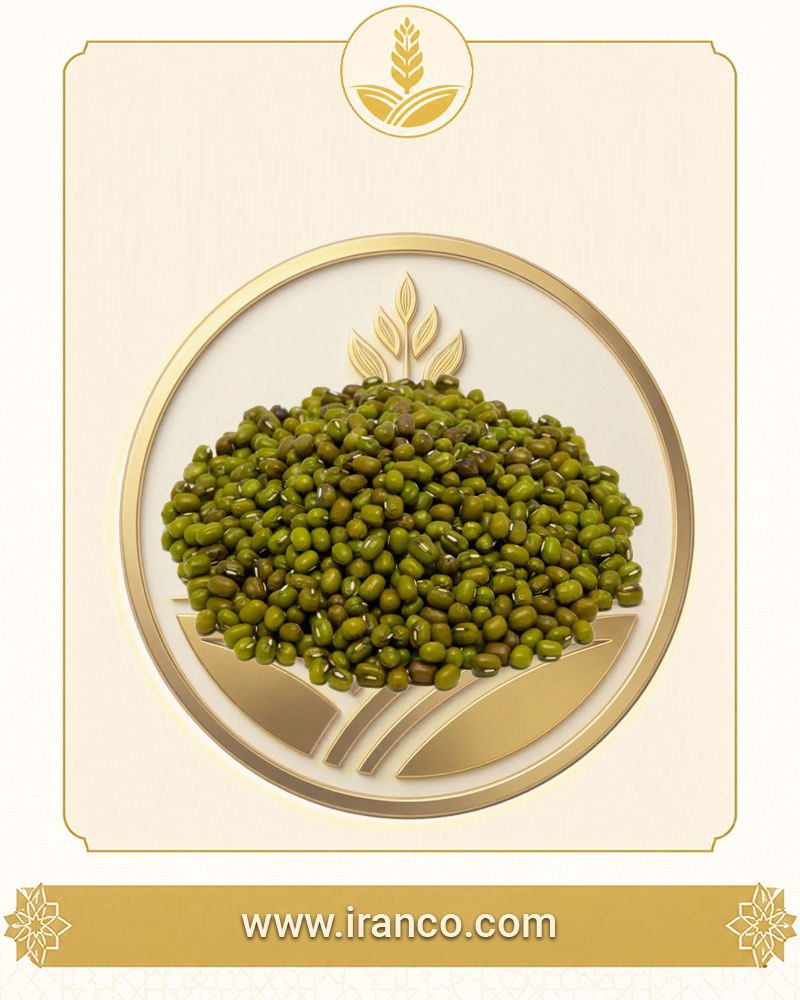
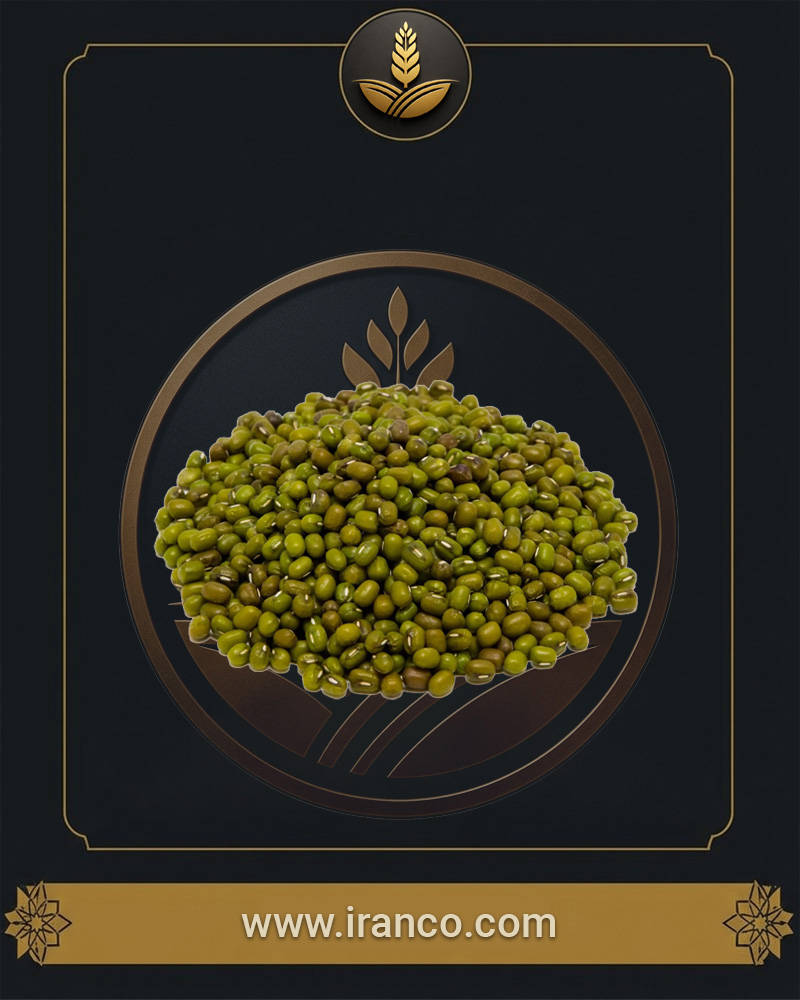
Mung bean (Vigna radiata) is one of the most strategic pulses in international markets thanks to its nutritional value, high plant-protein density and stable amino-acid profile. In Iranian agriculture, its short growth cycle and physiological fit with hot climates make it a key summer rotation crop after cereals. Beyond biological nitrogen fixation, it generates strong commercial demand in domestic markets, the Persian Gulf littoral and Central Asia.
Modern pulse trade rests on strict standards, size uniformity, seed-coat lustre and control of microbial and chemical contaminants. Cargoes that enter customs without industrial preparation, precise mechanical cleaning and optical Sortex separation face price cuts, heavy penalties and clearance rejection. Understanding physicochemical traits, post-harvest processing, plant-quarantine rules and clearance regulations is a prerequisite for foreign-trade actors, wholesale buyers and packaging industries.
1. Production geography in Iran, growing zones and climatic advantages
Mung bean farming in Iran is closely tied to summer water management and temperature patterns. The crop is mainly grown on well-drained loam–clay soils; its high heat requirement during pod fill defines distinct commercial production regions.
Khuzestan and the Karun basin
Khuzestan ranks first nationally in planted area and production volume. Fertile plains around Shushtar, Dezful, Gotvand, Ahvaz, Shush and Bavi are the main hubs. Seed is sown immediately after wheat and barley harvest from late June to mid-July. Intense sunlight and high summer temperatures drive rapid, dense solids accumulation in the cotyledon. Harvest runs from late September into mid-November. Khuzestan lots typically show dark green colour, a thicker waxy cuticle and good resistance to breakage during processing. A large share of Iraq-bound export demand is supplied from Khuzestan.
Fars plains and foothill zones
Fars is Iran’s second mung bean production belt. Marvdasht, Kazerun, Firuzabad and Darab dedicate large areas to summer plantings. Day–night temperature swings in moderate elevations improve seed size and raise thousand-seed weight. Harvest usually runs from early October through end of November. Larger calibration and a softer starch texture make Fars lots popular with retail packers and premium food distributors.
Northern and western areas and seasonal supply calendar
In Golestan and Mazandaran plains, mung bean is mostly sown after wheat and canola as an autumn or spring crop. Northern lots have a very thin, translucent coat and cook quickly; however, high relative humidity at harvest raises initial moisture, so industrial dryers must be used immediately to prevent fungal spoilage. Ilam, Lorestan, Kohgiluyeh and Boyer-Ahmad, Sistan and Baluchestan and Hormozgan are additional local growing areas. Climatic spread keeps fresh Iranian mung bean flowing into the supply chain for about four months from late summer through end of autumn.
2. Commercial types and calibration classification
In pulse-market language, mung beans are split into two commercial types by cuticle traits, light reflectance, physical calibre and cook-texture response.
Oily (glossy) green mung
This type has a glossy, smooth, translucent coat with a natural wax layer. Brightness comes from uniform light reflection off the cuticle — never from synthetic oils. It is the first choice for luxury packers, hypermarkets and Gulf importers. Dense cell structure yields the lowest cotyledon splitting and breakage during transport and mechanical processing.
Matte green mung
This type has a matte, non-reflective coat with a relatively rough texture. The thinner outer layer is rich in plant microfibres and absorbs water faster in soaking and cooking. Matte mung is preferred for industrial sprouting, canning plants and milling for flour and starch; hydration coefficient in the first 20 minutes of soaking is about 18% higher than oily types.
Commercial calibration
- Fine calibre (diameter under 3.2 mm): thousand-seed weight 32–38 g; sprouting lines, starch and fortified dietary formulations.
- Medium calibre (3.2–3.6 mm): thousand-seed weight 39–48 g; the most common household grade and the largest share of bulk Iraq exports.
- Large / super jumbo (above 3.6–3.8 mm): thousand-seed weight 50–62 g; highest commercial value in Gulf markets.
| Commercial trait | Oily green | Matte green | Large (jumbo) |
|---|---|---|---|
| Surface lustre | Fully glossy, glassy, light-reflective | Dull, matte, no surface shine | Medium to high gloss |
| Coat thickness | Thick, high tissue continuity | Thin and porous | Medium to thick |
| Water uptake | Gradual uptake, even cooking | Very fast uptake and volume expansion | Standard soak time |
| Split rate in sorting | Under 0.5% | About 1–1.5% | Under 0.3% |
| Thousand-seed weight (g) | 42–50 | 38–45 | 52–60 |
| Primary market use | Luxury retail packs, UAE export | Sprouts, canning, milling | HORECA and premium chains |
3. Technical specs, lab indicators and reference standards
Quality assessment requires precise physical, chemical and hygienic measurements to confirm full compliance with national and international standards.
Iran national standard No. 99 (ISIRI 99)
This standard defines mung bean physical and chemical characteristics and test methods. Beans are graded premium, grade one and grade two, with defect thresholds by mass percent.
Codex criteria (CXS 171-1989)
The Codex standard for whole dry pulses is the main acceptance basis in global trade. It insists on absence of abnormal taste/odour, no live insects, limits on organic and mineral foreign matter, and moisture control.
Analytical tests and COA requirements
- Moisture (max 12% — oven method at 105°C)
- Physical purity (min 99.5% after optical separation)
- Heavy metals (lead < 0.2 ppm, cadmium < 0.1 ppm)
- Mycotoxins (total aflatoxin < 10 ppb, B1 < 5 ppb)
- Pesticide residues (MRLs for phosphine, malathion, chlorpyrifos)
- Microbiology (Salmonella absent; E. coli < 10 CFU/g)
Pesticide residues and mycotoxin tolerances
Common field pesticides such as malathion, deltamethrin and chlorpyrifos must be checked before export against Iran national standard 13116 and destination MRLs. Residual phosphine from storage fumigants must not exceed 0.01 mg/kg. Under national standard 5925, total aflatoxin is limited to 10 µg/kg and aflatoxin B1 to 5 µg/kg. Under standard 12968, maximum lead is 0.2 mg/kg and cadmium 0.1 mg/kg.
| Test variable | Grade 1 limit | Premium / super-sort limit | Method / reference |
|---|---|---|---|
| Moisture | Max 12.0% | Max 10.5–11.0% | 105°C oven (ISIRI 99) |
| Physical purity | Min 98.5% | Min 99.8% | Weight separation & sieves |
| Mineral foreign matter | Max 0.1% | Zero tolerance | Washing & destoning |
| Organic foreign matter | Max 0.2% | Max 0.05% | Air separation |
| Insect-damaged seeds | Max 0.5% | Max 0.1% | Visual count |
| Broken / split seeds | Max 1.5% | Max 0.3% | Slotted sieve |
| Discoloured / spotted | Max 1.0% | Max 0.2% | Optical / IR Sortex |
| Immature / shrivelled | Max 2.0% | Max 0.5% | Gravity screening |
| Total aflatoxin | 10 µg/kg | 5 µg/kg | HPLC |
| Lead | 0.2 mg/kg | < 0.1 mg/kg | Graphite-furnace AAS |
| Cadmium | 0.1 mg/kg | < 0.05 mg/kg | Atomic absorption |
4. Processing engineering: cleaning, polishing and optical sorting
Converting raw farm lots into export-grade product requires a multi-stage mechanised line. Incomplete execution of any stage can cut visual quality and raise buyer rejection rates.
- Stage 1 — Pre-cleaning and dust removal: Centrifugal suction fans remove airborne dust, plant pollen and chaff; screens eject coarse trash and fine soil.
- Stage 2 — Gravity destoning: A vibrating air bed separates stones and clods of similar diameter by density.
- Stage 3 — Gravity table: Insect-damaged and immature seeds of lower specific gravity are stratified and removed.
- Stage 4 — Mechanical polishing: Felt brushes or soft cotton rollers remove mineral films and even out natural cuticle oils.
- Stage 5 — Optical / laser Sortex: Colour and infrared cameras eject spotted, discoloured seeds and foreign particles with compressed-air pulses.
- Stage 6 — Vibrating calibration sieves: Split, broken or out-of-spec calibre seeds are removed for a fully uniform lot.
5. Seed defects, quality loss and cargo QC methods
Pulse beetle and standard fumigation
The cowpea weevil (Callosobruchus maculatus) is the main threat to mung bean cargoes, especially in warm seasons. Females lay eggs on the seed coat; larvae tunnel into the cotyledon and feed on starch.
- Proper fumigation with aluminium phosphide (phosphine) tablets in sealed quarantine stores.
- Typical dose: 2–3 tablets per cubic metre for at least 5–7 days above 20°C with full sealing.
- Forced aeration after fumigation until residual phosphine is below 0.01 ppm.
Hard-to-cook (impermeable) seeds
Extreme field heat during ripening or rapid direct-heat drying hardens the outer layer and blocks water uptake. If after 18 hours immersion in distilled water at 20°C more than 1.5% of seeds remain unhydrated, the lot fails premium-grade quality standards.
Spotting, discoloration and fungal decay
Storage above 65% relative humidity or loading above 12% moisture accelerates mould growth. Infrared Sortex systems plus strict pre-pack moisture control are the practical commercial prevention path.
6. Target export markets for Iranian mung beans
Iran’s geography enables access to high-consumption neighbouring destinations at economical transit cost. Export success requires understanding demand structure, consumer behaviour and administrative rules in each market.
Iraq
- Border channels: Mehran and Khosravi (Baghdad/central); Shalamcheh and Chazabeh (Basra, Najaf, Karbala); Parvizkhan, Bashmaq and Tamarchin (Kurdistan Region).
- Requirements: Certificate of Conformity (CoC) from accredited inspection firms; Arabic and English labels with product name, grade, production/expiry dates, exporter and origin.
United Arab Emirates
Jebel Ali port in Dubai is the Middle East re-export hub for grade-one and super-sort mung beans. Dubai food-safety standards demand moisture below 11%, no live insects and Gulf GSO compliance. Lots are typically received palletised in new 25 kg bags.
Russia and the Eurasian Economic Union
Demand is rising for industrial sprouting, dietary foods and starch. Russian buyers check germination above 93% and phytosanitary certificates aligned with Eurasian Customs Union rules. Shipping runs via northern Iranian ports to Astrakhan or overland through Azerbaijan.
| Indicator | Iraq | UAE | Russia & EAEU |
|---|---|---|---|
| Demand volume | Very high, daily consumption | High; consumption + re-export | Growing; health foods |
| Preferred grade | Clean grade one or standard Sortex | Laser super-sort oily | Sprouting grade, unbroken |
| Dominant pack | PP 30 & 50 kg bags | Laminated 25 kg on pallet | 25 kg multi-layer moisture-barrier |
| Label languages | Arabic & English | Arabic & English | Russian & English |
| Main transport | Curtain trailers via land borders | 20 ft FCL sea containers | Caspian sea or multimodal road |
7. Customs HS codes, clearance rules and trade documents
The six-digit HS heading for mung beans is 071331, covering dried shelled pulses of Vigna mungo and Vigna radiata.
- 07133190: Edible whole or broken mung beans excluding certified seed for human consumption.
- 07133210: Improved, cleaned mung bean seed with official seed certificate.
Required Iranian export documents (EPL)
- Commercial Invoice
- Packing List
- Certificate of Origin (Chamber of Commerce endorsed)
- Phytosanitary Certificate
- Fumigation Certificate
- Pre-shipment inspection certificate (COI) from international inspection firms
8. Packaging engineering and logistics protocols
- Woven polypropylene (PP) bags: 25 and 50 kg; for humid routes use an inner PE liner.
- Big bags: 1–1.2 tonne packs with bottom discharge spout for industrial lines.
- MAP packaging: Nitrogen flush in multi-layer vacuum bags to keep oxygen below 0.5%.
- Container palletising: 120×100 cm pallets, 10 cm headspace from the roof, and desiccant packs (silica gel or calcium chloride) to control container rain.
9. Cost structure, wholesale price drivers and competitors
- Harvest calendar: October–November peak supply from Khuzestan and Fars yields the year’s lowest base price; winter–spring storage and pest control lift prices 25–40%.
- Cleaning loss factor: 5–10% weight loss to reach Sortex grade.
- Germination index: Sprouting lots with >93% germination typically trade 10–15% higher.
| Competitor | Core advantage | Main challenge | Price level | Main markets |
|---|---|---|---|---|
| Myanmar | High volume and large-scale storage | Average quality, seasonal volatility | Cheap to mid | India, China, Indonesia, UAE |
| Australia | Large seed size, grade integrity | High cost and ocean freight | Premium | Japan, EU, India |
| Uzbekistan | Summer output, low labour cost | No free-port access | Mid | China, Russia, Kazakhstan |
| Iran | Fine flavour, fast cook, natural gloss, port proximity | Uneven post-harvest mechanisation | Competitive with value-add | Iraq, UAE, Oman, Russia |
10. Industrial uses in processing and plant-protein chains
Sprout production
Seeds must have completed natural dormancy, never seen dryer temperatures above 45°C, and be free of pathogens such as Salmonella.
Starch, glass noodles and protein isolate
Mung starch’s high gelation and clarity suit glass-noodle lines. Protein isolate above 75% purity — free of soy and egg allergens — is a strategic input for plant-based burgers and sports dietary drinks.
11. Importer checklist before placing an order
- Specify calibre in millimetres with reference laboratory sieves.
- State grade explicitly (cleaned, grade one, optical super-sort).
- Cap moisture at 11.5–12%.
- Require COA from ISO 17025 accredited labs.
- Mandate zero live insects, larvae, pupae or bruchid damage.
- Measure hard-seed percent via 24-hour soak test.
- Define packaging layers (PP with PE liner).
- Require origin phosphine fumigation certificate.
- Engage an international inspection firm for random sampling and pre-shipment COI.
- Align bag-label draft with destination customs rules.
- Set Incoterms, route risk allocation and cargo insurance.
12. What information should be sent for an accurate price?
- Type: oily green or matte green.
- Processing grade: double-cleaned, mechanical sort, or full optical super-sort.
- Calibration: fine (<3.2), medium (3.2–3.6) or jumbo (>3.6 mm).
- Volume: metric tonnes or container count.
- Packaging type and buyer-brand print needs.
- Delivery terminal and Incoterms (EXW, CPT/FCA, FOB/CIF).
- Special quarantine or germination requirements.
International buyers can submit purchase specifications through Iranco so inquiry and supply evaluation are managed against the stated criteria. Submit a purchase request
Export supply of mung beans to buyer specs with Iranco
In international mung bean trade, proforma prices are only one dimension of the deal. Calibration uniformity, true post-storage moisture, freedom from hidden pests, coat clarity and quarantine documentation underpin stable commerce. Iranco, as a specialist platform in Iran’s agri-food supply chain, enables review and registration of mung bean purchase requests matched to buyers’ technical indices.
Iranco facilitates sample-to-lot matching, in-process technical inspections, bagging-standard oversight and official document preparation so bulk purchases close with transparency and efficiency.
Summary
Iranian mung beans — thanks to climatic diversity in Khuzestan and Fars, short cook times and natural lustre — hold a competitive commercial edge across the Middle East and West Asia. Profitable export entry requires engineered post-harvest processing: mechanical cleaning, polishing, gravity destoning and optical Sortex for physical purity above 99.5%. Observing ISIRI 99, keeping moisture under 12% and standard fumigation against pulse beetles are conditions for quality assurance in international logistics.
Frequently asked questions
1. What is the main commercial difference between oily and matte green mung?
Oily green has a natural wax layer and glossy coat preferred by Gulf retailers; matte green is duller but more permeable and ideal for sprouts, canning and milling.
2. Why must container moisture stay at or below 12%?
Above 12% moisture in hot containers accelerates seed respiration, heating, mould growth and aflatoxin formation, leading to cargo rejection.
3. How does optical Sortex raise commercial purity?
Colour and IR cameras detect discoloured, shrivelled, insect-holed seeds and foreign particles and eject them with air pulses to push purity above 99.8%.
4. What variables matter for sprouting industries?
Germination should exceed 92–95%; seeds must avoid direct dryer heat and heavy fumigation; Salmonella and E. coli absence must be lab-proven.
5. How is the pulse beetle controlled in export storage?
Phosphine fumigation for 5–7 days, moisture-barrier liners and storage below 15°C curb pest reproduction.
6. What calibre and packaging does Iraq prefer?
Mostly medium 3.2–3.6 mm grade-one green in sturdy 30 and 50 kg PP bags with Arabic and English labels.
7. How do we request an accurate export price?
Specify type, calibre, processing grade, tonnage, bags, labels and Incoterms, then register them in Iranco’s purchase-request form.
8. When is the best buying window for the lowest base price?
October and November, coinciding with peak harvest in Khuzestan and Fars, offer the year’s lowest base rates.
Featured Products
Related Articles



