 Iranco Magazine Team
Strategic analysis of milling capacity, temporary admission customs mechanisms, quality specs, neighbour-market preferences and logistics cost models
Export Guide · Milling & Grains
Iran Wheat Flour Export: Regional Markets, Standards and Logistics Costs
Strategic analysis of milling capacity, temporary-admission customs mechanisms, quality specifications, neighbour-market preferences and logistics cost models
Iran’s flour milling industry — backed by modern roller mills and surplus processing capacity versus domestic demand — is well placed to help close grain deficits across the Middle East and Central Asia. This analytical report explains the legal process for temporary wheat admission, laboratory indicators, destination-specific standards and border logistics patterns for traders and food manufacturers.
Analytical introduction
Over two decades of modernisation, Iran’s milling sector has moved toward full automation, advanced roller lines and silo storage technology. Roughly 384 flour mills operate nationwide. Potential milling capacity is estimated at 25–27 million tonnes of wheat per year, while domestic demand for traditional breads plus artisan and industrial use runs about 11.5–12.5 million tonnes. At least 15 million tonnes of idle processing capacity is a rare chance to position the country as a regional flour production and transit hub.
Neighbouring markets — especially Iraq, Afghanistan and Syria — face limited arable land, water stress and infrastructure damage. Iraq allocates large annual budgets to bakery and industrial flour imports. Afghanistan, a major eastern consumption destination, sources most bakery flour from neighbouring suppliers.
Because most domestic wheat is subsidised, flour export is legal only under temporary wheat admission (Article 51 of the Customs Affairs Law). Raw wheat arrives from Caspian suppliers such as Russia and Kazakhstan, is milled in Iran’s advanced plants, then shipped to export destinations. Commercial success depends on physicochemical literacy, international inspection rules and land/sea logistics management.
1. Processing capacity and transit position of Iran’s milling industry
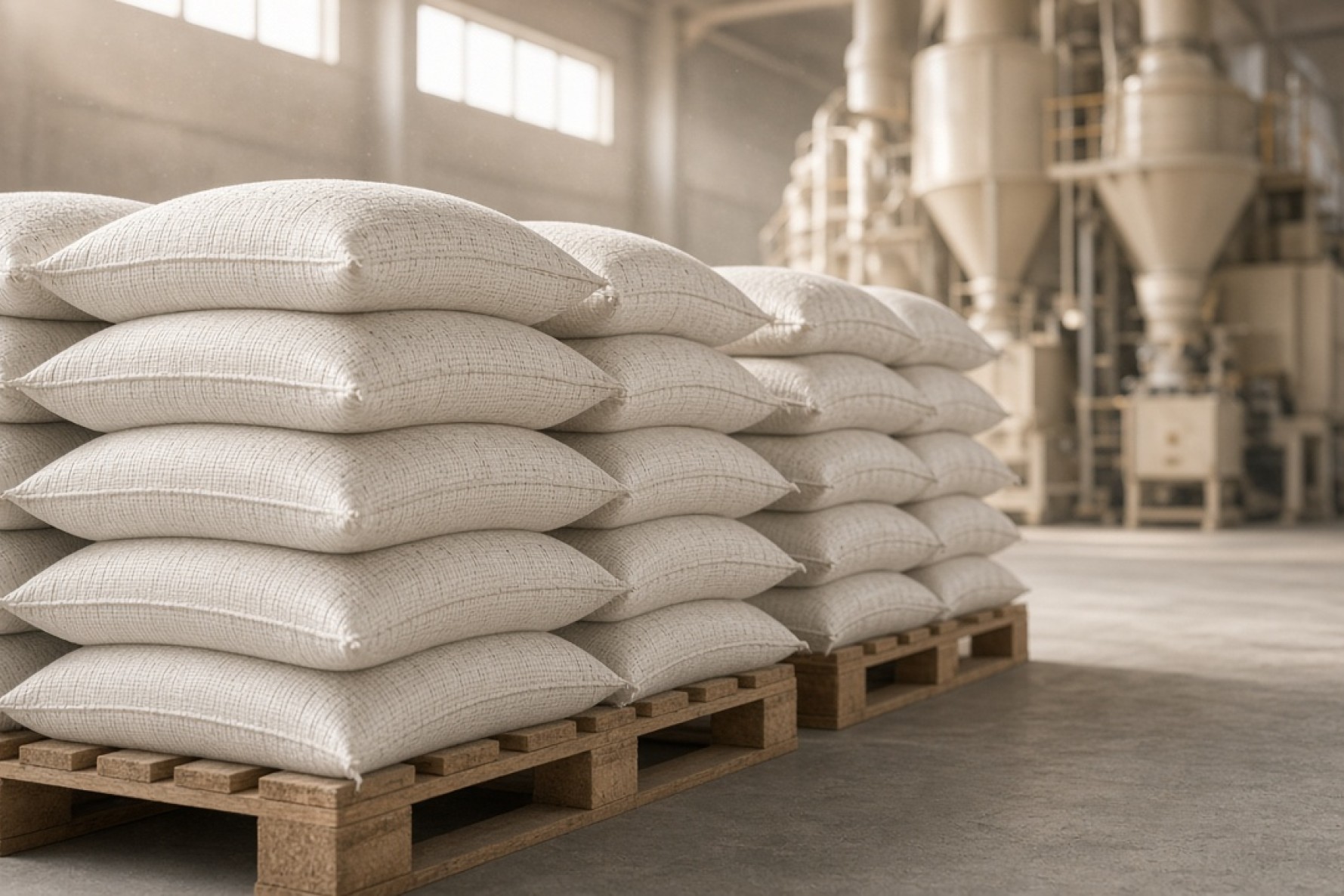
European mill technology (Bühler Switzerland, Ocrim Italy and peers) supports precise bran separation, particle-size control and endosperm protein preservation. Mill density across the country creates a practical logistics lattice: plants near Amirabad, Nowshahr and Anzali receive Caspian bulk wheat; western and eastern mills sit close to land border terminals.
Direct access to the North–South Corridor shortens grain supply time and cost. Caspian bulkers discharge at northern ports into mechanised mill silos. Lower energy and labour costs versus regional rivals widen milling margins.
A decisive economic factor is Iran’s deep domestic market for wheat bran. Active livestock feed buyers settle bran purchases in cash, offsetting cleaning and milling costs. Iranian mills can therefore quote competitive EXW/border prices per tonne of export flour.
2. Legal framework: temporary wheat admission (Article 51)
To protect foreign-exchange reserves and stop leakage of subsidised wheat, export of flour milled from domestic wheat is banned under market-regulation rules. Exporters must operate solely under Article 51 (temporary admission for processing). Skipping defined administrative steps triggers heavy regulatory penalties.
Licensing through government platforms
Applicants — mills or trading companies with firm toll-milling contracts — file temporary-admission requests in the Comprehensive Trade System and customs portals. The Ministry of Agriculture’s trade development unit and the State Trading Company of Iran review mill technical files and free nominal capacity. After eligibility confirmation and lodging of customs guarantees (bank guarantee or cash deposit equal to import duties), temporary-admission release is issued without payment of definitive duties.
Conversion rates, extraction yields and bond release
Iranian Customs monitors wheat-to-flour and bran conversion factors. For standard wheat, each 100 tonnes input typically yields 75–82 tonnes of export flour by grade; the balance is feed bran plus useful and non-useful loss. After definitive exit at border terminals and transit documentation, papers return to the entry customs house and the guarantee is released. Working with mills that already hold valid temporary-admission permits and open quotas sharply shortens lead time. International buyers can register technical specs and tonnage on Iranco so coordination with permit-holding mills proceeds quickly.
3. Specialist classification: export flour types and grades
Wheat flour is graded by grain origin (hard, semi-hard or soft), bran extraction, ash and particle size. Neighbour bakeries and processors need different grades; correct product selection is the foundation of buyer satisfaction.
Premium null flour (pastry, cake and biscuit)
Null flour is the highest central-endosperm extraction, free of bran particles, with very low ash, bright white colour and soft, homogeneous texture. It is widely used in regional biscuit, sponge-cake, croissant and confectionery lines.
Star flour (pan bread and baguette)
Star flour is typically produced at about 18–21% bran extraction. Its protein network offers high extensibility and tensile strength with desirable water absorption — ideal for sandwich bread, baguette, toast and pizza in dense urban markets.
Bakery / traditional flour (regional flatbreads)
Processed at lower bran extraction (about 12–15%), this grade retains fibre, minerals and aroma. Iraqi tandoor bakeries (samoon) and traditional Afghan bakeries are steady buyers.
Semolina (pasta and macaroni)
Semolina is milled from hard durum wheat. Particles are coarser and amber-yellow; strong gluten keeps pasta dough intact in boiling water. Regional pasta plants are the primary buyers.
| Grade / type | Bran extraction (%) | Total ash (d.b. %) | Min. protein (%) | Wet gluten (%) | Main use |
|---|---|---|---|---|---|
| Premium null | 27–30 | max 0.45 | 12.0–13.0 | min 28 | Cake, layered pastry, yufka |
| Standard null | 23–26 | 0.46–0.55 | 11.5–12.5 | min 27 | Fancy baguette, halva, sugar goods |
| Star | 18–21 | 0.56–0.68 | 11.0–12.0 | min 26 | Toast, baguette, pizza, sandwich |
| Traditional bakery | 12–15 | 0.69–0.85 | 10.5–11.5 | min 24 | Tandoor, Iraqi samoon, lavash, taftoon |
| Wholegrain | < 7 | 1.20–1.60 | 10.5–12.0 | min 22 | Diet, bran and sangak breads |
| Durum semolina | Variable | 0.70–0.90 | min 12.5 | min 28 | Macaroni, pasta, vermicelli |
4. Technical specs buyers expect on laboratory sheets
International customs clearance typically requires a Certificate of Analysis (COA) from ISO 17025–accredited labs. Professional buyers should lock numeric ranges into the contract:
- Moisture: max 14.0% at loading; 12.5–13.5% recommended on hot/humid routes.
- Wet gluten: above 26–28% for pan bread; often 22–24% for biscuits.
- Gluten index: 70–90% indicates stable dough; below 50% means weak gluten.
- Falling number: bakery standard 250–350 s; below 200 yields sticky dough.
- Farinograph: stability above 8–10 minutes suits automated industrial lines.
- Contaminants: total aflatoxin max 10 µg/kg; lead max 0.15–0.2 and cadmium max 0.1 mg/kg.
| Parameter | Acceptance range | Reference method | Buyer relevance |
|---|---|---|---|
| Final moisture | 12.5%–13.8% | Oven drying at 130 °C | Shelf life; mould control |
| Total ash (null) | 0.40%–0.50% | Ashing at 900 °C | Whiteness & bran level |
| Wet gluten | 26%–30% | Machine wash with salt water | Loaf volume & oven spring |
| Gluten index | 75%–90% | Glutomatic centrifuge | Shape retention under shear |
| Falling number | 250–330 s | Perten hydrolysis method | Fermentation & stickiness |
| Fat acidity | < 0.05% | Free fatty-acid assay | Freshness; oxidation control |
| Lead / cadmium | < 0.15 / 0.1 | Plasma optical spectrometry | Border sanitary release |
5. Quality analysis and flour defect detection
Sound flour smells of clean wheat, has no bitter or sour taste, and shows grade-appropriate colour from bright white to natural cream. Combine sensory checks at the lot with laboratory tests.
- Caking: long storage, over-stacking or high moisture at bagging.
- Sourness / acidity: fat oxidation from poor warehouse temperature.
- Dark spots: worn sieves or burnt bran entering the stream.
- Weak dough at dividing: often sunn-pest damaged wheat and proteolytic enzymes.
To prevent sample-versus-shipment disputes, require final sampling at the mill warehouse with an independent inspector present, and state physical/chemical tolerances in contract annexes. Buyers can route requests through Iranco for coordinated lab sampling and agreed-spec control.
6. Iraq market entry rules (COSQC)
With about 43 million people, Iraq is one of the Middle East’s largest flour importers. State distribution covers part of staple grain needs, but biscuit, cake and samoon bakeries rely heavily on free-market imports.
Iraq Standard No. 37 (IQS 37)
- Flour moisture must never exceed 14.0%.
- Chemical bleaching agents such as benzoyl peroxide or potassium bromate are banned.
- Fortification with iron and folic acid is mandatory for bakery flours.
Certificate of Conformity (COC) and border gates
Entry at Iraqi border terminals requires a Certificate of Conformity from inspection companies contracted by Iraq’s standards body. Inspectors attend origin loading, check packing, production dates and bag stitching, and send samples to accredited labs.
- Mehrán (Zurbatiyah): fastest access to Baghdad and central governorates.
- Shalamcheh & Chazabeh: southern route toward Basra and Nasiriyah.
- Parvizkhan, Bashmaq & Tamarchin: Kurdistan Region (Sulaymaniyah, Erbil, Duhok).
Bags must carry printed Arabic and English data: product name (طحین حنطة), manufacturer, “صنع فی إیران”, net weight, production and expiry dates in day/month/year Gregorian format, licence and batch numbers. Sticky paper labels are not accepted.
7. Afghanistan market: eastern gates and consumption patterns
Dry climate and limited milling infrastructure create persistent flour import demand. Traditional breads (khasa, panjakash, chapati) sustain wheat-flour pull. Buyers are highly sensitive to bright white colour — high-extraction star flour without visible bran sells strongly in Herat, Kabul, Kandahar and Mazar-e Sharif. The market standard is the 50 kg polypropylene bag.
- Dogharoun (Taybad): main corridor to Herat; shortest path for Khorasan and Golestan mills.
- Mahiroud (Mile 78): primary route toward Farah province.
- Milak: access to Nimroz and south-western Afghanistan.
Iranian trailers often do not enter Afghanistan; cargo is transhipped onto Afghan trucks at the border yard. Buyer oversight of manual handling and bag damage at this stage is essential.
8. Other regional markets: Syria, Caucasus and the Gulf
Syria is mainly supplied by sea containers to Latakia or Tartus. Armenia buys seasonally via Norduz and must meet Eurasian Economic Union physico-chemical rules. Oman, Qatar and the UAE show steady demand for specialty pastry flour, semolina and 1–5 kg retail packs — requiring GSO compliance and mechanised palletising.
| Country | Demand level | Preferred grades | Packaging | Incoterms | Main barrier |
|---|---|---|---|---|---|
| Iraq | Very high | Star, bakery, null | 50 & 25 kg bags | FCA border | COSQC inspection |
| Afghanistan | Very high | White star & null | 50 kg PP bags | FCA border | Border transhipment |
| Syria | High | Bakery & null | 50 kg bags | CIF Latakia | FX & sea freight volatility |
| Oman & Qatar | Medium specialty | Premium null & semolina | 1–5 kg retail | FOB Bandar Abbas | GSO requirements |
| Armenia | Limited seasonal | Industrial null & star | 25 or 50 kg laminated | Norduz delivery | EAEU residue testing |
9. Competitive analysis: Iran vs Turkey, Kazakhstan and Russia
Turkey’s large-scale inward-processing regime holds a big share of the Iraqi market, but energy and wage inflation have eroded its edge. Kazakhstan offers high natural protein but long distances and wagon shortages slow delivery. Iran benefits from short hauls to Iraq and western Afghanistan, cheap energy and strong domestic bran demand.
| Country | Strengths | Weaknesses | Price level | Market reach |
|---|---|---|---|---|
| Iran | Cheap energy, border access, bran sales | Temporary-admission bureaucracy | Highly competitive | Iraq, Afghanistan, Syria, Oman |
| Turkey | Scale, branding, banking networks | Energy & inland freight spikes | Mid to high | Iraq, Yemen, Horn of Africa |
| Kazakhstan | High protein, traditional taste | Rail dependence, slow wagons | Medium | Afghanistan, Uzbekistan, Tajikistan |
| Russia | Abundant cheap raw wheat | Distance to southern markets | Low on bulk vessel | Africa, Middle East, CIS |
10. Packaging, shelf life and labelling
Standard export bags are woven polypropylene at 70–85 g/m². For long hauls or humid climates, outer laminate or an inner PE liner is essential. Bag mouths should be double-stitched with polyester thread; paper crease tape over stitch holes limits flour leakage.
Useful shelf life is typically 6–12 months when stored on pallets in ventilated warehouses away from direct sun, below 60% relative humidity and under 25 °C, with bags at least 30 cm from walls.
11. Logistics, transport modes and cost optimisation
Freight is a large share of delivered flour price. Road transport is the most flexible option for Iraq and Afghanistan (useful load about 24–25 t). Covered rail wagons at 55–65 t are cheapest for very large volumes. Sea export usually uses 20 ft dry containers (~24–25 t floor-loaded); container rain is controlled with calcium-chloride desiccants, kraft liners and flour moisture below 13% at stuffing.
| Mode | Equipment | Useful capacity | Gateways | Notes |
|---|---|---|---|---|
| Direct road | Curtain / tautliner trailer | 22–25 t | Mehrán, Khosravi, Shalamcheh | Double nylon cover |
| Border road | Curtain trailer | 24–25 t | Dogharoun, Mahiroud, Milak | Supervise reloading |
| Rail | Covered wagon | 55–65 t | Sarakhs, Jolfa | Seal wagon joints |
| Sea | 20 ft dry container | 24–25 t | Abbas, Imam Khomeini, Bushehr | Desiccants & liner |
12. Pricing structure, Incoterms and importer checklist
EXW cost drivers include CIF foreign wheat at Iranian entry ports, milling fees (about USD 20–35/t), bagging and print (USD 10–15/t), credit from domestic bran sales, and inland haul to the zero line. Common terms: FCA border for Iraq/Afghanistan, CPT/CIP for warehouse delivery, and FOB for Bandar Abbas sea cargo.
Pre-order checklist
- Lock grade and bran-extraction percentage (null, star, bakery or semolina)
- State minimum wet gluten and gluten-index range in the contract
- Cap moisture at 13.5–14% and falling number at 250–350 s
- Specify PP bag GSM and waterproof laminate or PE liner
- Approve bilingual print artwork and Gregorian/Hijri dates
- Confirm destination tariffs and border openness
- Verify the mill’s active temporary-admission permit
- Appoint an independent inspector for COC sampling
- Define unloading mode and fleet type (direct vs border transfer)
- Document list: invoice, packing list, certificate of origin, phytosanitary, heavy metals
Sourcing export flour from Iran with Iranco
Iranco connects international importers with advanced Iranian flour mills. Buyers submit grade, COA targets, bag type, volume and exit terminal; options are screened among mills with active temporary-admission permits, modern lines and accredited laboratory results — reducing quality and customs risk.
Analytical summary
Iranian flour export is a high value-added trade built on wheat supply-chain control, advanced milling capacity and mastery of neighbour sanitary rules. At least 15 million tonnes of idle capacity becomes a geo-economic asset when activated through Caspian temporary-admission corridors. Clear lab parameters in contracts, impermeable bags, pre-loading inspection and disciplined border transit protect capital and market share.
Frequently asked questions
1. Is flour milled from Iranian domestic wheat exportable?
No. Flour from domestic subsidised wheat is absolutely banned for export. All export lots must be milled from foreign wheat under Article 51 temporary admission.
2. Where do sample vs shipment quality disputes arise most?
Moisture shift at loading, wet-gluten swings from wheat blend changes, and colour/ash drift. Fix numeric tolerances in the contract and require an independent inspector at loading.
3. How is an Iraq COC obtained?
Coordinate with a COSQC-approved international inspector; sample at the Iranian mill against IQS 37; receive the COC for border clearance.
4. Which documents are required for Afghanistan clearance?
Iran exit declaration, commercial invoice, packing list, chamber certificate of origin, phytosanitary certificate and a valid lot-matched COA.
5. How can buyers source directly from reputable Iranian mills?
Document grade, analysis, bag weight and delivery gate, then submit a purchase request via Iranco for evaluation of permit-holding mills.
6. What inputs are needed for a precise price inquiry?
Grade, minimum gluten, maximum ash, bag type/GSM, total tonnage and Incoterms delivery point.
7. Why does domestic bran sale help the flour buyer?
About 20% of wheat weight becomes feed bran; strong cash demand from Iranian livestock farms offsets milling cost and keeps export flour prices competitive.
8. Best practice against container rain?
Keep flour moisture below 13%, line walls/ceiling with kraft paper, and install enough calcium-chloride desiccant bags.
Featured Products
Related Articles



