 Iranco Magazine Team
From saffron, licorice and damask rose to Shirazi thyme, asafoetida and plant gums — quality, standards, packaging and professional buying criteria
Medicinal herbs · Export · HS 121190
Iranian Medicinal Plants: Types, Differences & Export Markets
From saffron, licorice and damask rose to Shirazi thyme, asafoetida and plant gums — product differences, quality specs, export markets, standards, packaging and professional buying criteria.
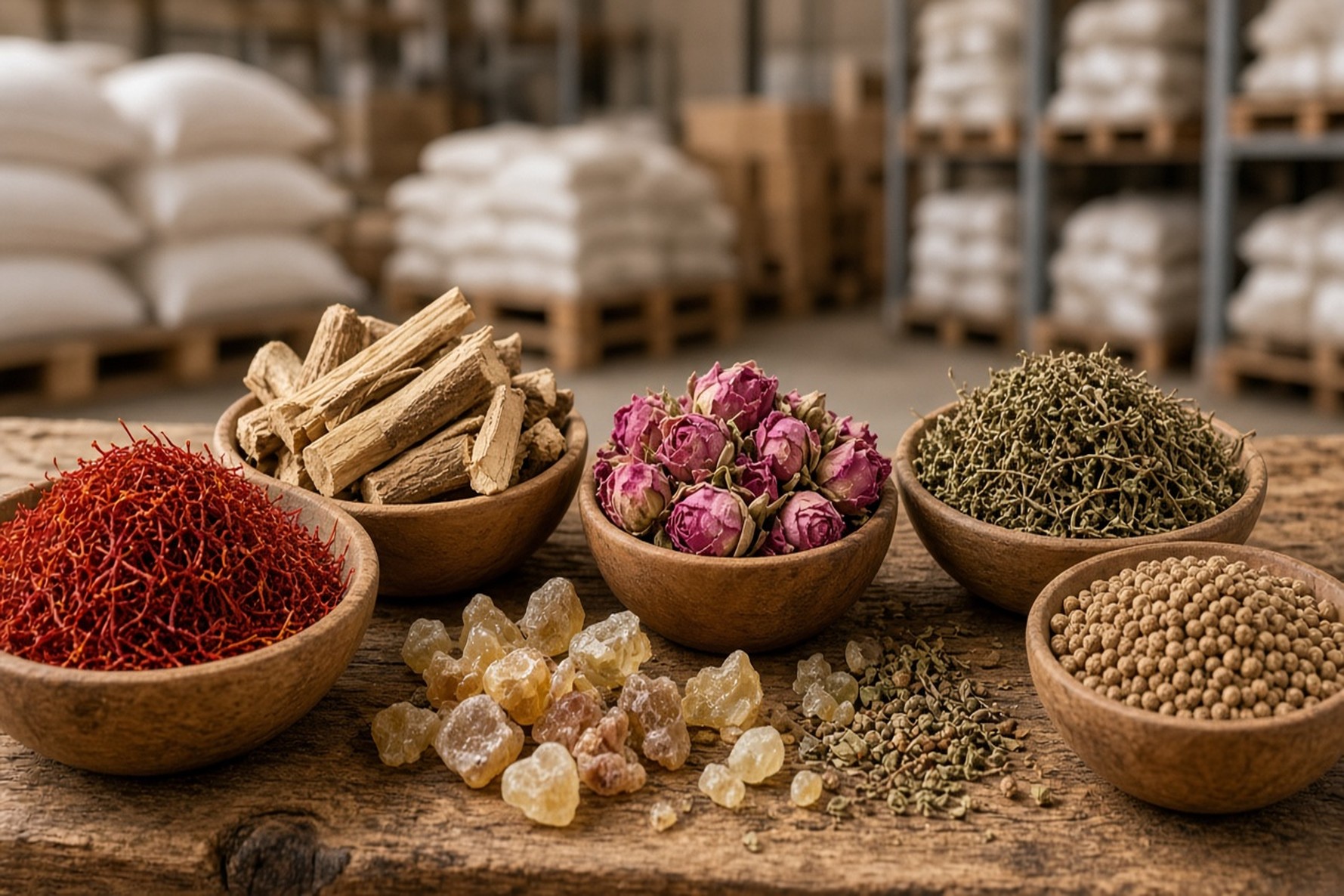
Iran has significant diversity in medicinal and aromatic plants, but commercial value depends on species, plant part, active compounds, harvesting, processing and destination market. "Iranian medicinal herb" is not enough for a professional buyer — licorice buyers focus on glycyrrhizin content, thyme buyers on species ID and oil profile, and damask rose can be dried bud, petals, rosewater, oil or extract.
1. Iran's position in diversity and production
Iran sits in one of West Asia's most important biodiversity zones. Lamiaceae, Fabaceae and Apiaceae families dominate native medicinal diversity; Irano-Turanian, Zagros, Alborz, Azerbaijan and Khorasan regions are key centres.
Biodiversity does not equal export capacity. Commercial groups include flowers (saffron, rose), leaves (thyme, mint), roots (licorice), seeds (cumin, coriander), gums (tragacanth, galbanum, asafoetida), essential oils, extracts and semi-processed powders.
Khorasan is the main saffron hub; Fars, Kerman and Isfahan matter for aromatic herbs. Licorice grows in several regions with Fars as a key processing centre. For wild-harvested herbs, harvest location strongly affects aroma, oil and actives.
2. Key Iranian medicinal plants and their differences
Do not compare herbs by common name alone — plant part and active chemistry define industrial use.
| Product | Plant part | Trade forms | Buyer criterion | Main use |
|---|---|---|---|---|
| Saffron | Stigma | Threads, powder, extract | Colour strength, aroma, purity | Food, extract, supplements |
| Licorice | Root | Whole, cut, powder, extract | Botanical ID, glycyrrhizin | Pharma, food |
| Damask rose | Flower & bud | Dried bud, petals, rosewater, oil | Aroma, oil profile | Fragrance, food, cosmetics |
| Shirazi thyme | Aerial parts | Dried, powder, oil | Oil profile, cleanliness | Food, pharma |
| Asafoetida | Oleo-gum resin | Lump, tear, powder | Odour, resin, purity | Spice, pharma |
| Galbanum | Oleo-gum resin | Raw & refined gum | Purity, odour, resin profile | Fragrance |
| Tragacanth | Astragalus gum | Ribbon, flake, powder | Colour, swelling, viscosity | Pharma, food |
| Green cumin | Seed | Whole & powder | Purity, aroma | Food & extract |
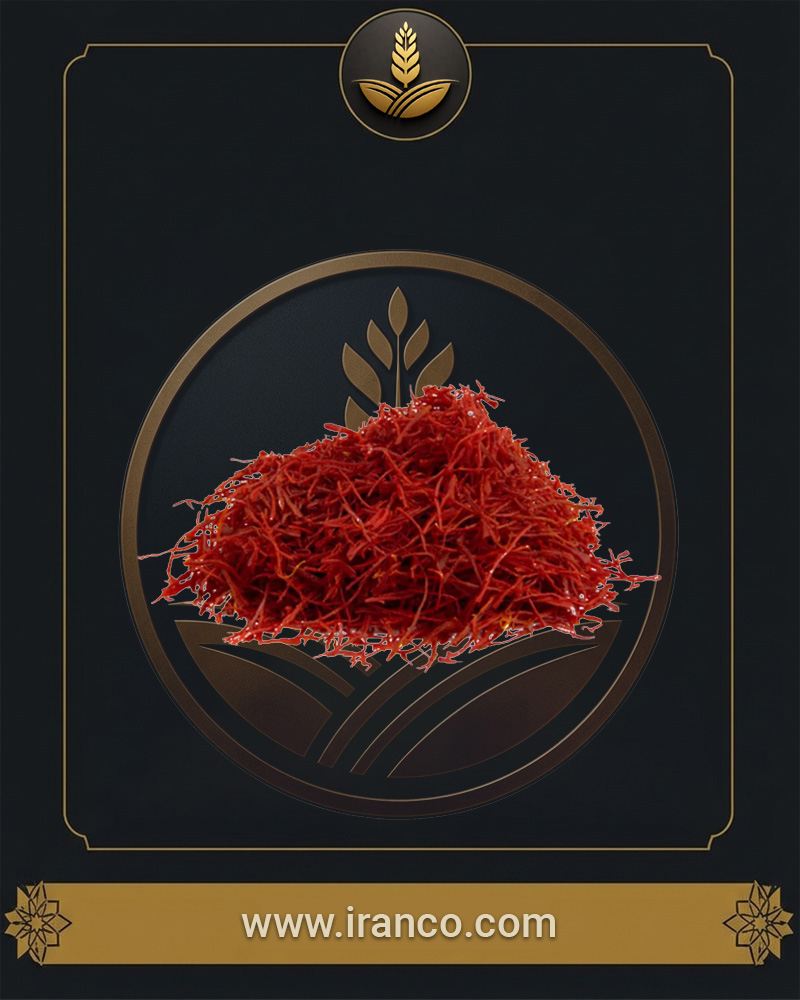
Saffron: lab indices for colour, aroma, bitterness, moisture and authenticity matter; ISO 3632 is the reference and HS code is 091020. In 2024 Spain imported ~39.6 tonnes of Iranian saffron.
Licorice (Glycyrrhiza glabra): glycyrrhizin is the marker; raw root and extract are different markets. Damask rose: dried bud, petals, rosewater and oil are four distinct products.
Shirazi thyme (Zataria multiflora) is not Thymus — scientific name must be on the order. Asafoetida, galbanum and tragacanth are judged on gum purity, odour, resin profile and swelling behaviour.
3. What should foreign buyers request from suppliers?
Terms like "premium thyme" or "export tragacanth" are not enough for international contracts. Quality must become measurable specifications.
Scientific name is the buyer's first line of defence; local names can mislead. For pharma-grade material, appearance is secondary — glycyrrhizin in licorice, colour/aroma compounds in saffron, and oil profile in aromatic herbs.
| Parameter | Example spec | Importance |
|---|---|---|
| Plant name | Common & scientific name | Prevent species mix-up |
| Plant part | Leaf, root, flower, seed, gum | Define product identity |
| Source | Cultivated or wild-harvested | Traceability & sustainability |
| Product form | Whole, cut, powder, extract | Define end use |
| Moisture | Per product standard | Mould control |
| Foreign matter | Botanical & non-botanical | Purity assessment |
| Active compounds | Species-specific | Industrial value |
| Pesticide residues | Per destination market | Safety & clearance |
4. How is export quality evaluated?
Quality control starts with botanical identification. High moisture increases mould risk — contracts should state maximum moisture, not just "dry".
Foreign matter includes unauthorised stem, weeds, soil, sand and insect parts. Pesticides, heavy metals and microbiology depend on destination and end use.
EU rules for dried food herbs set 10 µg/kg aflatoxin and 10 µg/kg benzo[a]pyrene limits — these do not apply identically to all herbal uses.
5. Which countries import Iranian medicinal plants?
It depends on the product. For HS 121190 in 2023 India imported ~USD 2.23M, Turkey ~USD 879K and Germany ~USD 824K from Iran. Pakistan reported over 1 million kg in this line.
Saffron follows a different pattern: in 2024 Spain, China, Italy, Kuwait, Germany and Qatar were recorded buyers. Spain sourced over 89% of its saffron import value from Iran.
Germany is a high-standard market with strict contaminants and documentation; India is both producer and importer — Iranian product needs a clear species, chemistry or gum advantage.
| Market | Product group | Demand profile |
|---|---|---|
| India | Herbs & plant parts | Processing & raw trade |
| Turkey | Dried herbs & parts | Regional market |
| Germany | Medicinal herbs & gums | High QC requirements |
| Pakistan | Dried herbs & seeds | Regional bulk trade |
| Spain | Saffron | Repacking & trade hub |
| China | Saffron & botanicals | Consumption & processing |
6. HS codes — why there is no single code
A common mistake is using one tariff code for all medicinal herbs. Dried herb, extract and essential oil of the same plant may have three different classifications.
Before quoting, define scientific name, plant part, physical form, processing level, food vs pharma use and packaging.
| Product group | HS code | Description |
|---|---|---|
| Saffron | 091020 | Saffron |
| Medicinal herbs & plant parts | 121190 | Perfumery, pharma & similar uses |
| Natural gums & resins | 130190 | Natural gum, resin & gum-resin |
| Plant extracts | 130219 | Other vegetable saps & extracts |
| Essential oils | Chapter 3301 | Essential oils |
7. Standards and market entry requirements
Rules depend on end use. Food/tea imports follow food safety including pesticide MRLs and Regulation 2023/915.
Pharma API imports trigger stricter buyer specs. EMA published a revised GACP guide in 2025.
Phytosanitary certificates depend on product and destination; EU Regulation 2016/2031 sets the framework.
8. Export packaging
Packaging must protect product, prevent contamination and preserve actives. Dried thyme packaging differs from rose oil.
| Product form | Suitable packaging | Main risk |
|---|---|---|
| Whole dried herb | Bag or carton with inner liner | Moisture & breakage |
| Dried leaf & flower | Low-pressure protective carton | Breakage & colour loss |
| Dried root | Multi-layer industrial bag | Soil & moisture |
| Herbal powder | Moisture-barrier multi-layer bag | Moisture uptake |
| Gum/resin | Food/pharma grade bag or carton | Impurity & moisture |
| Essential oil | Impermeable container | Light, air & reaction |
Damask rose buds must not be over-compressed. Powders absorb moisture faster and are harder to identify visually. Essential oils are sensitive to light, oxygen and heat.
Batch labels should include product name, scientific name, plant part, net weight, batch number, production date, origin and storage conditions.
9. Transport and storage — hidden quality loss
Three main risks: moisture, heat/light, and odour absorption. Aromatic herbs exchange odour with the environment easily.
Dry containers work for dried herbs if condensation is managed. Road freight suits Turkey and Pakistan. Air freight suits saffron and commercial samples.
10. What drives Iranian medicinal herb prices?
No valid export price exists without product specs. Licorice root and licorice extract are priced as different commodities.
Raw vs processed: extracts add extraction, standardisation and testing cost but deliver material closer to industrial use.
| Factor | Price impact |
|---|---|
| Botanical species | Defines identity and raw value |
| Plant part | Root, flower, leaf, seed & gum differ in value |
| Active compounds | Critical for industrial buyers |
| Purity & moisture | Affects real dry weight & processing cost |
| Product form | Whole, cut, powder, extract |
| Testing & certificates | Full panel adds cost |
| Order volume & Incoterms | Affects prep & freight cost |
11. Iran vs main competitors
Compare product by product. India leads processing/extracts; China in raw diversity and industrial processing; Turkey in aromatic herb exports; Egypt in bulk dried herbs; Bulgaria in rose oil.
Iran's strengths: native diversity, specialty gums, saffron, rose tradition, licorice and Ferula habitats. Natural advantage becomes economic value only with standardisation, traceability and processing.
12. From raw herb to industrial raw material
Global buyers want more than "dried herb". Value chain: cleaned raw → sorted → standard cut → powder → oil/extract → standardised extract → formulation input.
Pharma plants need batch uniformity; supplement makers need standardised powder or extract; food industry prioritises aroma, taste and food safety.
Importer checklist before placing an order
- Record exact plant name and scientific name.
- Specify plant part (root, flower, leaf, seed or gum).
- Define source (cultivated or wild-harvested).
- Specify form (whole, cut, powder, extract or oil).
- Obtain a representative sample.
- Define required actives or chemical profile.
- Put moisture and foreign-matter limits in the contract.
- List required tests (pesticides, metals, microbiology).
- Set acceptance limits for breakage and impurities.
- Require a certificate of analysis per batch.
- Specify packaging type and net weight.
- Verify batch numbering and traceability.
- Assess supplier's annual capacity.
- Align HS code with destination customs broker.
- Check destination phytosanitary rules.
- For large orders, sample before loading.
- Define delivery terms with Incoterms.
- Submit a purchase request on Iranco with these specs.
What information is needed for an accurate quote?
- Product name and scientific name
- Plant part and product form
- Grade, moisture and expected actives
- Foreign-matter limits and required tests
- Order quantity, packaging and destination country
- Delivery port, shipping mode and Incoterms
FAQ
Which Iranian medicinal herbs export most?
No single ranking exists due to different HS codes. Saffron, licorice, rose products, cumin, natural gums and dried herbs are all visible in trade.
How does export product differ from domestic market?
Mainly standardisation: scientific name, controlled moisture, limited foreign matter, traceability, proper packaging and test results.
Which countries buy Iranian medicinal herbs?
HS 121190: India, Turkey, Germany, Pakistan; saffron: Spain, China, Italy, Gulf states.
Are all herbs under HS 121190?
No. Saffron is 091020; gums, extracts and oils fall in other chapters.
What matters for licorice quality?
Species and part, root cleanliness, moisture, foreign matter and glycyrrhizin for industrial use.
Key tests for EU export?
Botanical ID, pesticides, heavy metals, microbiology; GACP and pharmacopoeial specs for pharma API.
Wild-harvested vs cultivated?
Neither is universally better; wild may have chemistry advantages but weaker traceability; industry buyers want batch consistency.
How to source from Iran?
Define purchase specs, review sample and COA, submit request on Iranco.
Summary
The value of Iran's ~2,300 medicinal and aromatic species becomes real in international trade through standardisation. Professional buyers want clear botanical identity, measurable specs, controlled contaminants and repeatable supply.
Featured Products




Related Articles



