 Iranco Magazine Team
From pistachios, saffron and dates to seafood, apples, citrus and kiwi — market analysis, product access, China standards, producer registration, packaging, QC and practical entry paths
Export Guide · China · Pistachio · Saffron · Fruit · Seafood
Iran Food Exports to China: Market Opportunities for Agricultural and Food Products
From pistachios, saffron and dates to seafood, apples, citrus and kiwi — market analysis, product access, China standards, producer registration, packaging, quality control and practical entry paths.
China is one of the world's largest food import markets, but market size alone does not create a contract for Iranian exporters. Each shipment must pass product and origin access rules, overseas facility registration with China Customs (GACC), GB standards, plant or veterinary quarantine, labelling, HS classification, routing and real landed-cost structure.
In 2025 China's agricultural imports were about $207.4 billion. Fruit, dried fruit and nuts alone were near $19.44 billion. Pistachio imports in 2024 were about 133,744 tonnes (~$869M); Iran supplied roughly 40,721 t (~31% share) as the second-largest origin.
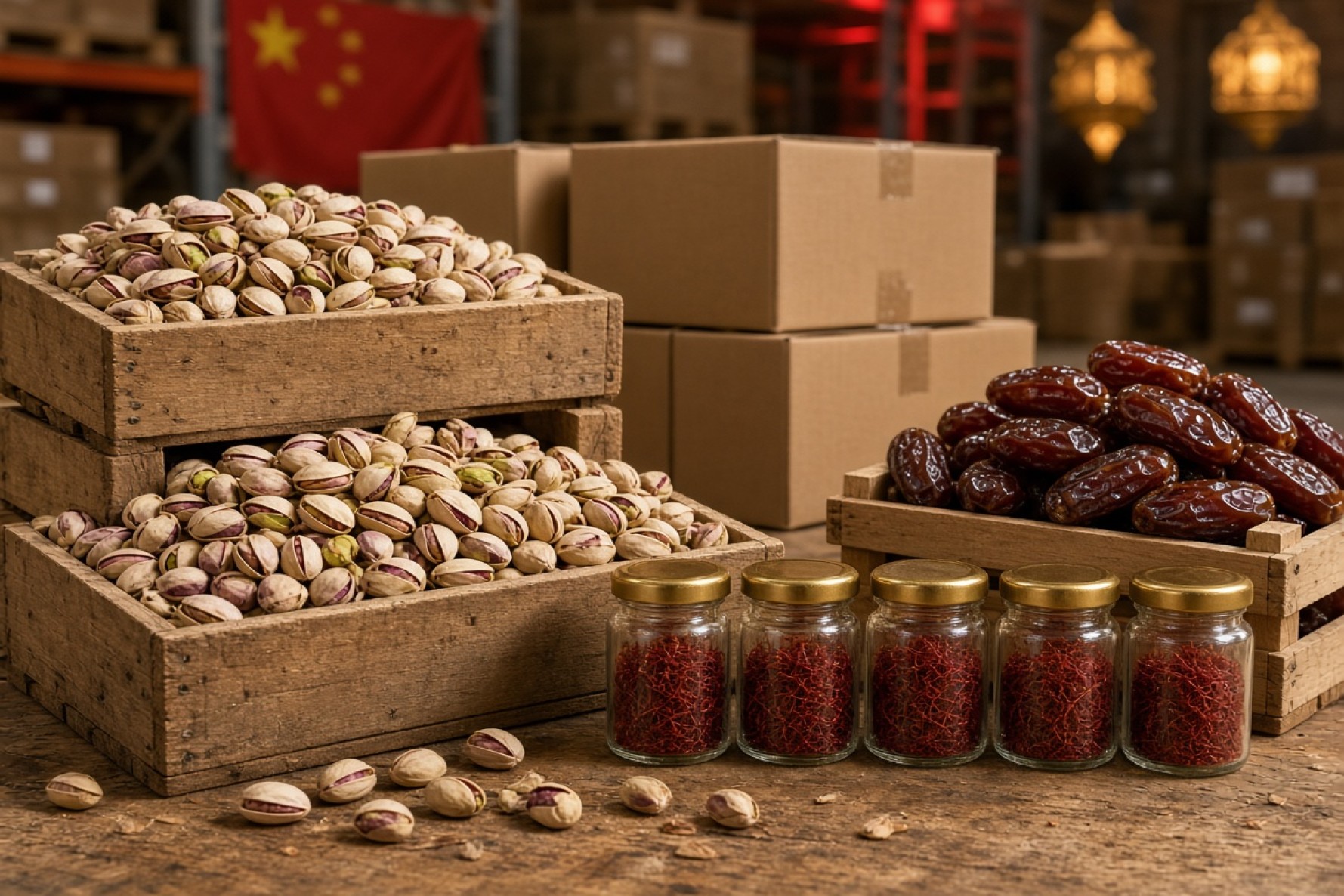
Iran also has established trade in saffron, dried figs and dates, and from late 2025 fresh Iranian kiwi entered under a formal phytosanitary protocol. Alongside nuts and spices, frozen seafood, citrus, apples and other cold-chain fruit offer niche opportunities where buyers understand protocols and reefer logistics.
This guide is written for professional exporters and importers: demand size and Iranian positioning, buyer structure, sea and land routes, GACC and GB rules, quarantine and cold treatment, contract QC, packaging, logistics, HS codes and competitors — plus a 20-step checklist, RFQ list and sourcing via Iranco.
Analytical introduction
Exporting Iranian food to China is not a simple neighbouring overland market. Import controls are product-specific: pistachios hinge on aflatoxin and factory registration; fresh fruit on variety access, registered orchards, packinghouses and cold treatment; seafood on veterinary recognition and approved plants.
A professional Chinese buyer first asks whether legal entry is possible, then whether the seller can repeat the same specification across shipments. Phrases like 'export grade' without numbers, tests and acceptance rules carry little weight in serious negotiation.
Iran's edge in pistachios, saffron, dates and dried fig is established trade more than absence of competition. In pistachios the US, Turkey and others compete hard; in saffron purity and pack matter; in fresh fruit shelf life and protocol compliance can outweigh farm-gate price.
1. Size of China's import market and links to Iran
China imports feed inputs, grains, fruit, nuts, meat, seafood, dairy, spices and retail packs. 2025 agricultural import value was about $207.4B; much is soy and grains, but fruit, nuts, meat and seafood are separate highly regulated channels.
The right question is not 'Does China import?' but 'Which Iranian product, which grade, which route, under which GACC registration and GB label can be sold?'
| Indicator | Value / reference | Note for Iran exports |
|---|---|---|
| China ag imports 2025 | ~207.4B USD | Huge but product-specific |
| Fruit, nuts & dried 2025 | ~$19.44B | Pistachio, dates, saffron, reefer fruit |
| China pistachio imports 2024 | 133,744 t | Size, AFC, price competition |
| Iran pistachio share 2024 | 31% · 40,721 t | Established; QC decisive |
| China saffron imports 2024 | ~42.4 t · ~$16.4M | Iran ~all recorded volume |
| Iran fresh kiwi | From 18 Nov 2025 | Registered orchard & packhouse |
2. Which Iranian foods have a real position in China?
Each product must be assessed separately. Pistachios and saffron have strong trade history; dates and dried figs serve wholesale and industry; kiwi, apple, citrus and seafood depend on access lists, protocols and cold chain.
| Product | China status | Competition axis | Regulatory sensitivity |
|---|---|---|---|
| Pistachio | Large market; Iran ~31% | Size, AFC, uniformity, price | GACC reg, aflatoxin |
| Saffron | Iran dominates recorded imports | Purity, colour, pack | Authenticity, GB label |
| Dates | Iran among top origins | Variety, moisture, size | Pests, moisture |
| Dried fig | Established trade | Colour, moisture, size | Pests, residues |
| Seafood / shrimp | High import demand | Species, frozen, COA | Veterinary, plant reg |
| Citrus & apple | Many competing origins | Calibre, cold store, shelf life | Protocol, cold treatment |
| Fresh kiwi | Newer formal access | Sorting, registered orchard | Phytosanitary |
Pistachios — core of Iran–China food trade
China imported about 133,744 t pistachios in 2024; Iran shipped ~40,721 t (31%). Buyers focus on size, kernel yield, open shell, moisture, colour, aflatoxin (AFC) and lot uniformity. US origin competes on some grades; Iranian differentiation must be defined grade plus provable QC.
Saffron, dates and dried figs
Saffron is high value and low volume — air or sea in protective packs can work. Dates and dried figs are typically containerised; moisture, pests and packing define acceptance.
Fresh fruit, citrus, apple and kiwi
Iranian kiwi has a formal pathway from late 2025; apples and citrus depend on protocol, orchards and cold treatment. Align registered orchards and facilities with the importer before signing.
3. Structure of food buyers in China
China is not one retail market. A 20-ton pistachio importer, a retail saffron buyer and a kiwi cold-store importer may be three different companies.
Specialist importers hold licences and customs networks. Guangzhou, Shenzhen and Shanghai wholesalers and food factories buy bulk nuts and inputs.
| Buyer type | Focus | Expectation from Iran | Deal risk |
|---|---|---|---|
| Specialist nut importer | Pistachio, nuts, dates | Stable AFC & grade | Customs rejection |
| Spice / saffron importer | Retail & bulk | Purity, COA, label | Adulteration, moisture |
| Fresh fruit wholesaler | Cold chain fruit | Protocol, PL match | Sort dispute |
| Food manufacturer | Industrial inputs | Technical spec, volume | Supply gap |
| Modern retail | Consumer pack | GB 7718 design | Label failure |
4. GACC, Decrees 248/249 and overseas facility registration
Legal entry for many foods requires registration of the foreign factory or processing site in China Customs' GACC system. Updated rules (replacing Decree 248, under Decree 280 from 1 June 2026) set five-year registration validity and require the registration number on pack.
Without valid registration, even a willing buyer risks port holds.
- Check whether the product is on the GACC registration list
- Confirm factory / orchard / packinghouse registration
- Match English registered name on documents and labels
- Plan renewal before the five-year expiry
- Keep COAs aligned with product category
- Do not confuse food channel with drug / TCM channel
| Stage | Key question | Typical document |
|---|---|---|
| 1 | Is product & origin allowed? | Access list, protocol |
| 2 | Is producer registered? | GACC number, updated list |
| 3 | Is importer qualified? | Import licence, ICQ |
| 4 | Are documents complete? | CI, PL, CO, health cert |
| 5 | GB label compliant? | GB 7718, Chinese text |
| 6 | Did inspection pass? | Customs report, sampling |
Pistachios may face AFC sampling at customs; fresh fruit needs phytosanitary certificates and cold-treatment records.
5. GB standards, food safety and labelling
Pre-packaged food must meet Chinese label rules. As of 2026, GB 7718-2011 is the current general standard; GB 7718-2025 becomes mandatory from 16 March 2027. Packs planned for 2027 should align with the new text now.
Buyers care about MRLs, heavy metals, mycotoxins, micro, additives and nutrition facts — not only pack design.
Saffron needs purity and colour index; pistachios AFC and size; fresh fruit botanical name and origin must match COA and label.
6. Quarantine, cold treatment and pest control
میوه تازه بدون پروتکل رسمی وارد نمیشود. cold treatment برای برخی آفات کarantin اجباری است. کیوی ایران مشروط به باغ، بستهبندی و تأسیسات ثبتشده است.
- Match botanical product name to protocol
- Register orchard and packhouse on GACC lists
- Pre-harvest spray and inspection programme
- Pre-cooling and loading temperature records
- Cold-treatment report per protocol
- Do not mix unauthorised grades on one packing list
For seafood, veterinary health certificates, approved freezing plants and frozen temperature traceability matter.
7. Quality control and contract specifications
QC باید عددی باشد: اندازه، رطوبت، AFC، درصد شکستگی، وزن خالص، تلرانس، روش نمونهبرداری و معیار پذیرش/رد.
| Group | Contract parameters | Test reference |
|---|---|---|
| Pistachio | Size, AFC, moisture, kernel% | GB / buyer + COA |
| Saffron | Colour, purity, moisture | ISO 3632 / lab |
| Dates / fig | Moisture, size, pests | COA + visual grade |
| Fresh fruit | Calibre, Brix, defect% | Protocol + pre-shipment |
| Seafood | Species, glaze%, net weight | Veterinary + lab |
8. Export packaging for the China channel
بسته باید همزمان از فیزیک، کیفیت و قانون GB محافظت کند. پسته: چندلایه / وکیوم؛ زعفران: محافظ نور؛ میوه: کارتن تهویهدار و زنجیره سرد.
| Product | Export pack | Main risk |
|---|---|---|
| Pistachio | Multi-layer bag / vacuum, master carton | Moisture, AFC, pests |
| Saffron | Light/moisture barrier | Moisture, fraud |
| Dates | Carton with inner liner | Crush, insects |
| Fresh fruit | Strong ventilated carton | Pressure, heat |
| Seafood | Frozen IQF carton | Broken cold chain |
| Retail SKU | Final GB-compliant pack | Label |
Mass printing labels before Chinese importer approval is high risk.
9. Logistics, routing and landed cost
برای خشکبار کانتینری، بنادر جنوب ایران و ادامه دریایی به شرق/جنوب چین مبنای مقایسه است. زعفران و نمونهها میتوانند هوایی باشند. ریل/ترکیبی برای برخی محمولهها قابل بررسی است.
هزینه تمامشده شامل حمل داخلی مبدأ، اسناد، بیمه، حقوق ورودی، VAT، ترخیص، بازرسی، سردخانه بندر و حمل داخلی چین است — مقایسه دو پیشنهاد فقط بر اساس FOB مزرعه گمرا است.
انتخاب بندر چین باید با شهر خریدار همخوان باشد: واردکننده شرق چین ممکن است شانگهای یا نینگبو را ترجیح دهد؛ خریدار جنوب چین گوانگژو یا شنژن را.
| Route | Suited to | Advantage | Limitation |
|---|---|---|---|
| Sea container | Pistachio, dates, fig | Unit cost at volume | Transit time |
| Sea + reefer | Fruit, seafood | Quality retention | Reefer cost |
| Air | Saffron, samples | Speed | Freight cost |
| Rail / multimodal | Some dry goods | Mid transit time | Transfers |
10. HS codes, duty and import VAT
تعرفه واحد برای «مواد غذایی» وجود ندارد. HS دقیق، مبدأ، سهمیه و VAT (۹٪ یا ۱۳٪) باید قبل از قیمتگذاری محاسبه شود.
- Chapter 08 — fruit and nuts (pistachio, dates, figs, kiwi)
- Chapter 09 — saffron and spices
- Chapter 03 — frozen seafood
- Chapter 20 — some processed fruit
Confirm HS with a Chinese broker — misclassification adds cost and delay.
11. Competitors and positioning Iranian product
در پسته، آمریکا و ترکیه رقیب جدی هستند. در خرما، مصر و عراق حضور دارند. تمایز ایرانی باید گرید، AFC، مبدأ و ثبات تأمین باشد — نه شعار.
| Origin | Product | Advantage | Challenge for Iran |
|---|---|---|---|
| USA | Pistachio | Large grade, brand | Price & policy |
| Turkey | Dates, dried fruit | Proximity, logistics | Price |
| Egypt | Dates | Volume | Grade differentiation |
| Chile / NZ | Fruit | Longstanding protocols | Shelf life |
| Iran | Pistachio, saffron | Track record, quality | Registration, QC, logistics |
Professional buyers compare three quotes on identical specs, not three country names.
12. How a Chinese importer evaluates an Iranian seller
قیمت آخرین معیار است. ابتدا قابلیت ورود قانونی، سپس ثبت GACC، نمونه، COA، ظرفیت تأمین و سابقه ترخیص بررسی میشود.
| Step | Buyer question | Evidence |
|---|---|---|
| 1 | Do you have GACC registration? | Registration ID |
| 2 | Does sample = shipment? | Sampling method |
| 3 | Is COA valid? | Accredited lab |
| 4 | Repeatable volume? | Production plan |
| 5 | GB-compliant pack? | Label artwork |
'Grade A' without numbers is not an acceptance clause in China.
What information is needed for an accurate price?
A request for 'pistachio price' without grade is not enough for commercial comparison.
- Exact product name and HS if known
- Grade, size, AFC, moisture
- Net weight and pack type
- Order volume and FCL count
- Iran load port and China destination port
- Reefer or frozen temperature need
- GB consumer label or bulk
- Proposed Incoterms
Iranco can record the same fields in a purchase request to screen viable Iranian supply options.
20-step importer checklist before placing an order
- Confirm legal import access for product and origin
- Verify GACC registration of producer / orchard / plant
- Confirm registration number on label before print
- Fix exact HS code with Chinese broker
- Check duty rate, VAT and quota for current year
- Match phytosanitary protocol for fruit / seafood
- Obtain representative sample and approve specs
- Define acceptance, rejection and sampling method
- COA with agreed parameters
- Review GB 7718 and path to GB 7718-2025
- Approve export pack and net weight
- Plan cold treatment where required
- Choose entry port suited to destination city
- Quote reefer or dry freight for same week
- Set Incoterms and inspection cost split
- Document list: CI, PL, CO, health / phytosanitary
- Check supplier's real capacity
- Loading window and readiness date
- Insurance and transit risk cover
- Quality dispute and post-entry claim clause
فهرست اطلاعات RFQ برای استعلام از ایرانکو
The more precise the product definition, the faster and more comparable price and feasibility answers will be.
- Product name (local / English / botanical)
- Form: raw, roasted, dried, frozen, fresh
- Grade and size range
- AFC / moisture / purity where relevant
- Pack type and net weight
- GB label or bulk
- Total tonnage and FCL count
- Iran load port
- China destination city / port
- Cold chain requirement
- Incoterms
- Target delivery date
- Sample and COA need
- Use: retail, bulk, industrial
- Private label if needed
- Origin or grade limits for end buyer
- Proposed payment terms
- Label language
- Who owns GACC registration in chain
- Protocol-specific questions (fruit / seafood)
Iranco's contact form covers these fields; completing them accurately saves negotiation time.
Supplying China-bound food through Iranco
Two offers differ by more than $/kg: GACC registration, COA, GB label, pack and supply capacity may make one side unworkable.
Iranco lets traders register purchase requests with measurable specs so pistachios, saffron, dates, fruit, seafood and other Iranian lines can be screened on the same basis.
State destination city in China, sales channel (bulk / retail / industrial) and end-buyer QC limits to shorten sourcing.
Summary
China's ~$207.4B ag import market includes ~$19.44B fruit and nuts. Iran holds real share in pistachios (~31%), saffron and dates; fresh kiwi gained formal access from late 2025.
Success follows: legal access, GACC registration, GB labelling, numeric QC, packaging, reefer when needed, HS/VAT and the right buyer.
Exporters who complete the technical file before selling outperform those who only send a pretty sample.
Frequently asked questions
Is China the largest food import market for Iran?
It is among the largest globally. For Iran, pistachios and saffron are the main recorded lines; other products depend on access lists and protocols.
Is GACC 248/249 registration required for all products?
For listed categories, overseas producer registration is mandatory. Updated 2026 rules (Decree 280) use five-year validity.
Which label standard applies now?
GB 7718-2011 is current; GB 7718-2025 mandatory from March 2027.
What is Iran's pistachio share in China?
About 40,721 t of 133,744 t imports in 2024 (~31%).
When was Iranian kiwi authorised?
From 18 November 2025 under a phytosanitary protocol with registered orchards and packhouses.
Is pistachio usually shipped by air?
Bulk trade is normally sea container; air suits saffron and samples.
Is cold treatment required for all fruit?
Depends on the protocol for that product and origin — confirm before contracting.
How do I submit a purchase request to Iranco?
Use the contact form with product specs, volume, QC, China destination port and pack type.
Featured Products












Related Articles



