 Iranco Magazine Team
Technical specs, quality analytics, processed derivatives, export markets, international standards and commercial logistics engineering
Wholesale buying guide · Damask rose · Export
Iran Damask Rose: Wholesale Buying Guide for Food, Fragrance Industries and Export
Expert coverage of technical specifications, quality analytics, processed derivatives, target export markets, international standards and commercial logistics engineering
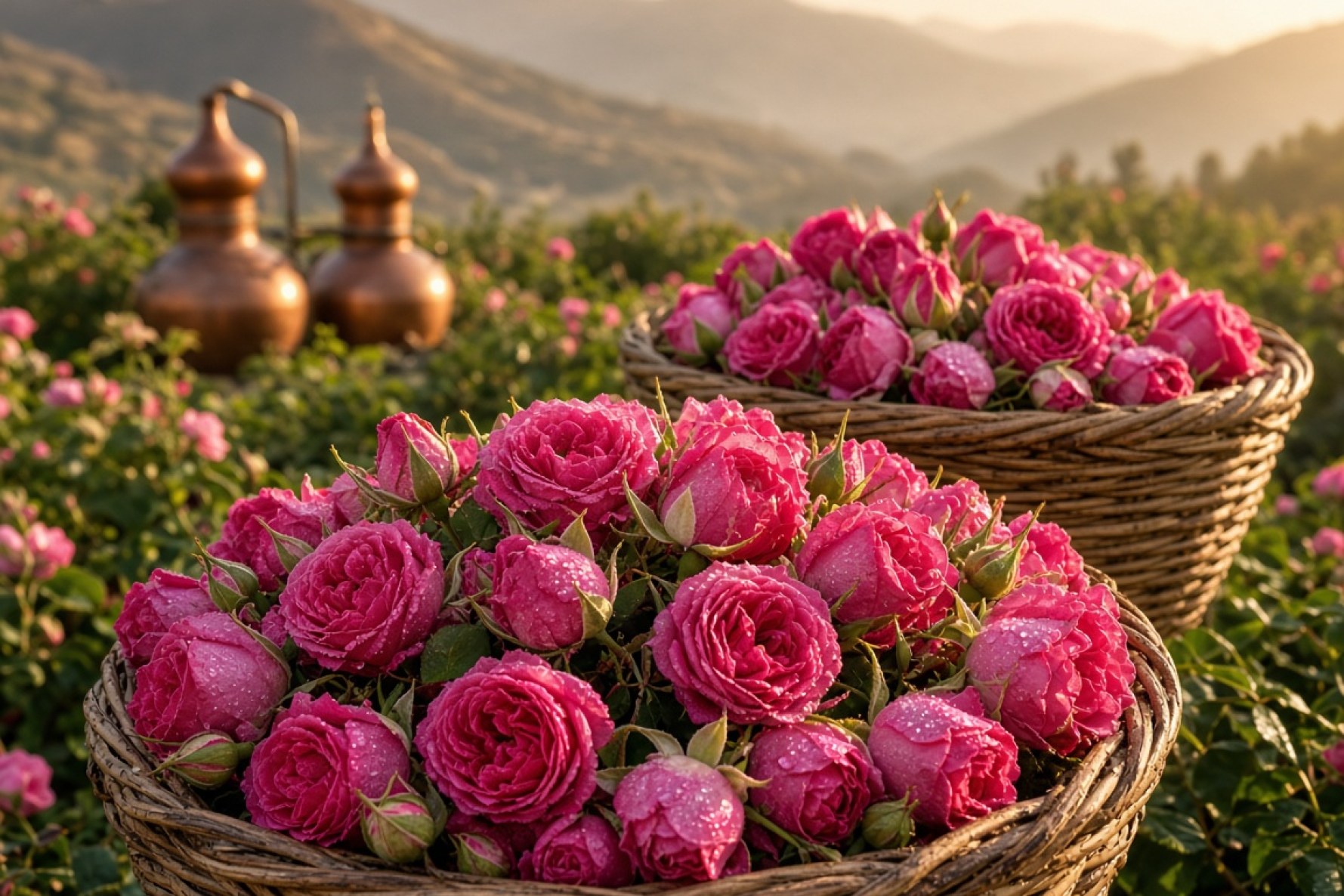
With roughly 71% of global damask rose (Rosa × damascena Miller) production, Iran is the largest supplier of this aromatic cultivar to food, perfumery and pharmaceutical chains. Industry estimates put annual fresh-flower volume near 68,000 tonnes during the harvest window (roughly May–June), converted into dry petals, leaves, light and heavy rose water, Rose Otto, concrete and absolute. For B2B bulk buyers, contract success depends not only on FOB price but on customs classification (e.g. HS 12119091 for dried aromatic botanicals), controlled moisture of 8–12%, GC-MS profile and phytosanitary paperwork. This guide maps specialist procurement for food plants, fragrance houses, export distributors and importers in China, the European Union and the Gulf Cooperation Council — with an Iranco sourcing path at the end.
1. Geography and harvest calendar — Iranian damask rose
Iran’s climate diversity shapes four main production blocks; each differs in sensory profile, harvest timing and processing capacity. Bulk buyers must fix origin in the contract — “Iranian damask rose” without province and drying method is insufficient for European and Chinese QC.
Fars — Dashtestan, Darab, Meymand
Historic production hub with scattered farms and traditional and industrial rose-water stills. Fars flowers often show strong aroma and higher moisture at harvest; suited to light rose water and premium dry-petal export when picked early morning (before volatile oils evaporate). Peak-season volume stresses cold chain and drying — purchase planning must align with the harvest calendar.
Isfahan / Kashan — Qamsar, Natanz, Kashan
Global brand for Rose Otto and heavy rose water. Steam distillation in Qamsar and surrounds sets the gold standard ISO 9842 for fragrance export. Luxury fragrance buyers often request Kashan origin on the COA.
Kerman — Lalehzar
Highland production with distinct day–night temperature and radiation; Lalehzar rose water and dry petals can target greener notes and lower relative humidity in storage. Economical for industrial blends and high volume.
East Azerbaijan — Osku
Northwestern block with logistics access to the Turkish border and Caucasus markets; for buyers who care about origin mix and freight to Eastern Europe. Quality is variable — pre-contract sampling is mandatory.
| Region | Harvest start (solar Hijri) | Production peak | Season end | Buyer note |
|---|---|---|---|---|
| Kashan / Qamsar | Late Ordibehesht | 1–15 Khordad | Mid Khordad | Rose Otto; reserve distillation capacity |
| Fars / Darab | Ordibehesht | 10 Ordibehesht – 10 Khordad | Mid Khordad | High volume; dry petals and rose water |
| Lalehzar, Kerman | Mid Ordibehesht | 25 Ordibehesht – 5 Khordad | Late Khordad | Relatively later; seasonal pricing |
| Osku | Late Ordibehesht | 1–20 Khordad | Mid Tir | Longer season; regional QC |
2. Commercial damask rose derivatives and conversion ratios
The value chain from fresh flower to finished product follows several paths. Bulk buyers must align contract form (dry petals vs rose water vs essential oil) with supplier processing capacity and final HS code.
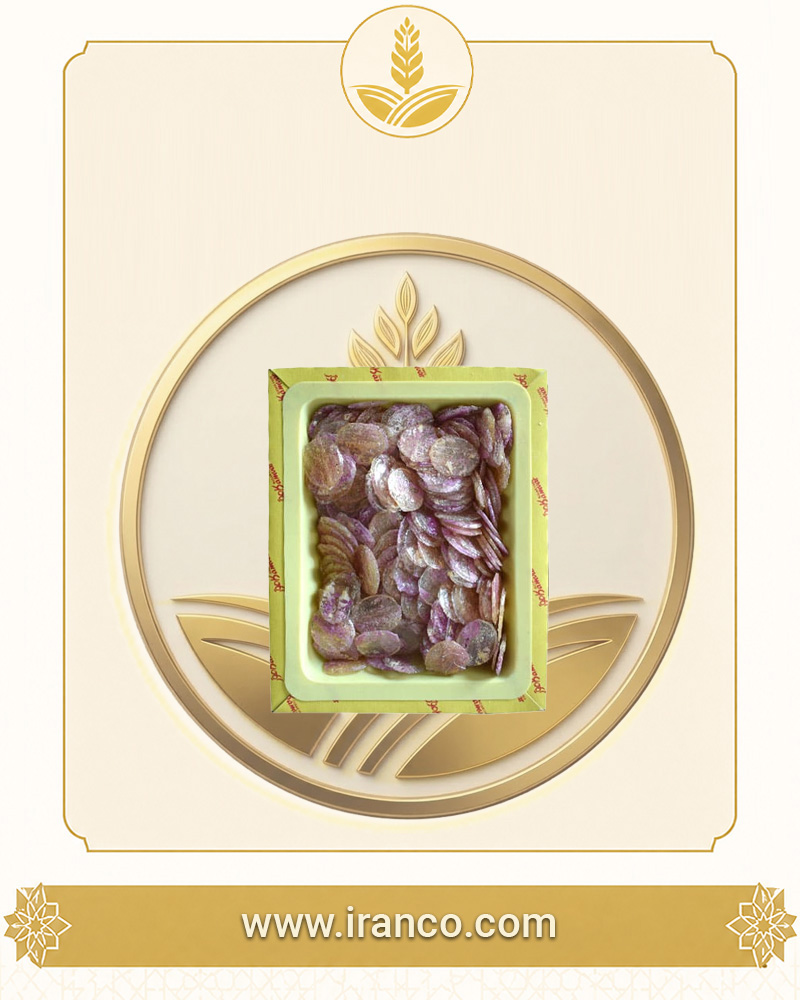
- Dry petals (buds / leaves) — Shade or forced-air drying; 8–12% moisture; vacuum or food-grade bag packing.
- Damask rose leaves — Separated from buds; for herbal tea and food; sensitive to breakage and oxidation.
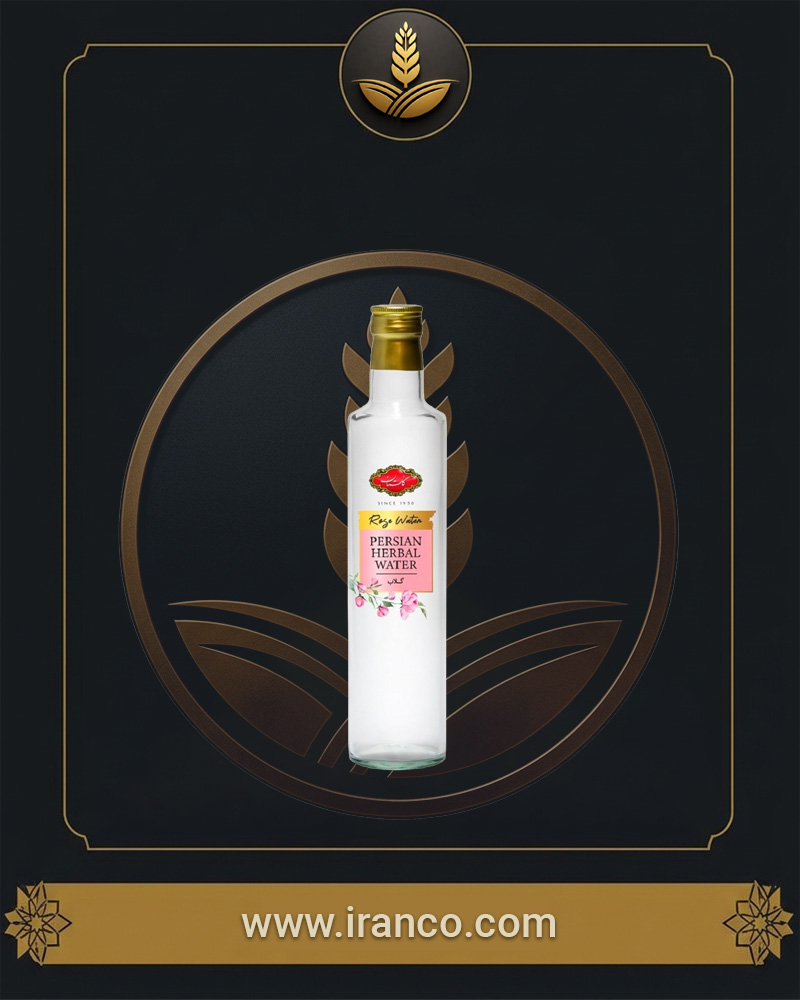
- Light rose water — First distillation; cooking, confectionery and beverages; high volume, milder aroma.
- Heavy rose water / double distillation — Higher 2-phenylethanol and suspended volatiles; closer to raw fragrance for cosmetics and premium food.
- Rose Otto — Steam distillation; high-value product; ISO 9842 compliance.
- Concrete — Solvent extraction (e.g. hexane) from fresh flowers; intermediate for absolute.
- Absolute — Alcohol extraction from concrete; perfumery and cosmetics; solvent residue control.
| Output product | Fresh flower input | Approx. yield | Sample HS |
|---|---|---|---|
| Dry petals | 3–4 kg fresh | 1 kg dry | 12119091 |
| Light rose water | 3–4 kg fresh | 1 litre | 330290 |
| Heavy rose water | 10–15 kg fresh | 1 litre | 330290 |
| Rose Otto | 3,000–4,000 kg fresh | 1 kg oil | 330129 |
| Concrete | 350–450 kg fresh | 1 kg | 330129 |
| Absolute | From concrete | ~50–65% of concrete weight | 330129 |
Ratios depend on cultivar, harvest weather, flower age and still equipment — define min/max yield in annual contracts.
3. Technical specifications for bulk buyers
The table below lists parameters professional food, fragrance and pharmaceutical buyers request on the COA and technical spec sheet. Ranges combine market practice and reference standards — make contractual limits explicit per shipment.
| Parameter | Dry petals (aromatic) | Rose Otto (ISO 9842) | Test method |
|---|---|---|---|
| Moisture | 8–12% | — | Oven / Karl Fischer |
| Total ash | ≤ 8% | — | Gravimetric |
| Acid-insoluble ash | ≤ 1% | — | Ph. Eur. style |
| Density (20 °C) | — | 0.848–0.862 g/cm³ | ISO 9842 |
| Optical rotation | — | −4° to −1° | Polarimeter |
| Freezing point | — | 16–23 °C | ISO 9842 |
| Citronellol + geraniol + nerol | — | 35–55% (total) | GC |
| R ratio (citronellol / geraniol) | — | 1.25–2.5 | GC-MS |
| 2-Phenylethanol (PEA) | — | 1–3% | GC-MS |
| Dry petal appearance | Uniform pink–violet | — | Sensory inspection |
| Foreign matter | ≤ 1% | — | Sieve / manual |
4. Quality control, chromatography and safety limits
International buyers expect a full QC dossier: botanical identity, compositional profile, chemical and microbial contaminants. For Rose Otto, ISO 9842:2024 is the primary reference for key constituents and physicochemical properties.
- GC-MS — Identification and quantification of monoterpenes, nitrile alcohols and PEA; detection of adulteration with palm oil or reconstituted oil.
- ISO 9842 profile — Citronellol, geraniol, nerol, esters and residual hydrocarbons within standard ranges.
- Pesticide MRL — For dry petals and food-grade rose water, Regulation (EC) 396/2005 or destination equivalent; multi-residue panel GC-MS/MS / LC-MS/MS.
- Microbiology — For food materials: TPC, coliforms, E. coli, yeasts and moulds per buyer spec (often <10⁴ CFU/g for dried botanicals).
- Heavy metals — Pb, Cd, As, Hg by ICP-MS for EU and China export.
- Laboratory certificate — Preferably ISO/IEC 17025; right to retest at destination is common in large contracts.
5. Quality defects and product pathology
Recognising common defects before delivery reduces return risk and grade downgrade.
- Browning — Polyphenol oxidation from high-temperature drying, direct light or post-harvest delay; destroys aromatic value and herbal-tea appearance.
- Over-drying — Moisture below 6%; brittleness, leaf shatter and loss of surface oils; delivered weight below buyer expectation.
- High moisture — Above 14%; yeast growth, wrinkled packs and contract spec breach.
- Contamination and admixture — Stems, soil, insects; industrial screening and cleaning before packing.
- Fraud and blending — Mixing damask rose with other cultivars or synthetic aroma in rose water; only GC-MS and where needed chiral GC / IRMS secure authenticity.
- Fortified or diluted Rose Otto — Added synthetic geraniol or carrier oil; deviation from ISO 9842 profile.
6. Target export markets
Iranian damask rose exports flow mainly to three hubs: China (volume and rose water), the European Union (quality and essential oil), and Gulf Cooperation Council countries (rose water, herbal tea, gifting). Each market expects a different document set and QC sensitivity.
- China — Imports of dry petals, rose water and fragrance raw materials; GACC registration for some food products; sensitivity to FOB price and moisture.
- European Union (France, Germany) — Luxury Rose Otto, organic dry petals and extracts; REACH for essential oils, strict MRL, air freight preferred for oils.
- GCC (UAE, Saudi Arabia, Qatar) — Rose water, dry petals, gifts and confectionery inputs; halal and phytosanitary certificates; Jebel Ali and Dubai as distribution hubs.
| Market | Main products | QC focus | Preferred logistics |
|---|---|---|---|
| China | Dry petals, rose water, essential oil | Moisture, metals, COA | Sea + land |
| France / Germany | Rose Otto, absolute, organic petals | ISO 9842, MRL, REACH | Air |
| UAE / Saudi Arabia | Rose water, dry petals, herbal tea | Halal, phytosanitary | Sea FCL |
| Turkey (transit / consumption) | Dry petals, rose water | Price competition with local production | Land border |
7. Competitive comparison: Iran, Turkey and Bulgaria
Iran leads in volume and depth of rose water and Rose Otto chains; Turkey and Bulgaria offer EU customs access and the “European damask rose” brand. Global buyers often blend origins for formulation and price.
| Criterion | Iran | Turkey | Bulgaria |
|---|---|---|---|
| Global production share | ~71% | Limited / regional | Small; fragrance quality |
| Signature product | Rose water, dry petals, Rose Otto | Dry petals, rose water | EU Rose Otto |
| FOB Rose Otto price | Competitive with Kashan premium | Mid-range | High (EU) |
| EU export paperwork | Complete with QC cost | Simpler (customs union) | Native EU |
| Bulk dry petal volume | Very high | Medium | Low |
| Fragrance profile | Deep, distinct PEA | Milder | Classic European |
8. Customs, HS codes and export documents
Misclassification triggers penalties, re-inspection and clearance delay. Confirm the 10-digit code with the destination forwarder.
| Code | Description |
|---|---|
| 1211.90 / 12119091 | Plants and parts of plants (dried aromatic damask rose) |
| 3301.29 | Non-citrus essential oils (damask rose Rose Otto) |
| 3302.90 | Odoriferous mixtures and odoriferous substance solutions (industrial rose water) |
Typical documents per shipment
- Phytosanitary certificate — For dry petals and raw botanical materials.
- Certificate of analysis (COA) — Batch, production date, contractual parameters.
- Health / sanitary certificate — For rose water and food materials per destination.
- MSDS / SDS — For Rose Otto, concrete and absolute.
- Certificate of Origin — Tariff preference in some markets.
- Halal certificate — For GCC and some Asian importers (oils and alcohol-free rose water where halal is claimed).
- Commercial invoice, packing list, bill of lading — Consistent with weight and lot code.
9. Packaging, warehousing and cold chain
Dry damask rose is sensitive to moisture, light and temperature; Rose Otto to heat and oxygen. Packaging engineering is part of the technical specification.
- Dry petals — Multi-layer food-grade or vacuum bags; dry corrugated cartons; metal drums with liner for bulk; lot code and date on each unit.
- Rose water — Glass or food PET bottles; light protection for premium grades; palletising and segregation from odorous goods.
- Rose Otto — Dark glass or aluminium cans; tamper evidence; nitrogen headspace if requested.
- Warehouse — 15–22 °C, 45–55% RH for dry petals; away from direct sun.
- Sea freight — Dry container with desiccants; for sensitive dry petals, Reefer on hot routes (Gulf, South Asia) is recommended.
- Air freight — Oils and QC samples; UN packaging for oil quantities per airline rules.
10. Industrial applications
Food industry
Rose water in confectionery, beverages, ice cream, natural colour and flavour; dry petals in herbal tea, aromatic rice and premium spices. Microbial specs and MRL govern EU and China.
Fragrance and cosmetics
Rose Otto, absolute and heavy rose water in oriental-floral perfumes, lotions and serums; ISO 9842 and IFRA volatile allergen compliance in finished goods is the brand’s responsibility, but raw buyers want a clean profile.
Pharmaceutical and traditional
Dry petals and rose water in herbal formulations, aromatherapy and supplements; GACP and pharmacopoeial monographs may apply by destination.
11. Cost structure and price drivers
Bulk damask rose pricing is seasonal and product-specific. Main drivers:
- Harvest season — Peak Khordad lowest fresh-flower price; off-season only warehouse stock or dry petals.
- Origin and grade — Kashan and grade-one without browning command premium; industrial grade for extraction.
- Distillation labour and energy — Rose Otto sensitive to gas/electricity and seasonal wages.
- QC and laboratory — Full MRL + metals + micro panel is fixed cost per batch.
- Packaging and logistics — Vacuum, Reefer, insurance and destination port.
- FX and payment terms — Seasonal prepayment vs letter of credit on large export deals.
12. Importer checklist before ordering
- Define finished product (dry petals / rose water / essential oil) and destination HS code
- Written technical spec with moisture, ash limits and, for oils, ISO 9842 profile
- Pre-shipment sample and sensory / laboratory approval
- Supplier peak-season capacity and warehouse plan B
- Document list: phytosanitary, COA, halal if required
- Payment terms, Incoterms (FOB Bandar Abbas / CFR / CIF)
- Cargo insurance and quality-defect liability
- Third-party inspection right (SGS / Bureau Veritas) at origin
- Label and destination-language alignment
- Six-month retain sample for batch disputes
13. Information needed for accurate pricing
For FOB or CFR quotes from a supplier or Iranco, send the following together:
- Product type and grade (food / fragrance / industrial)
- Annual volume or shipment size (kg / litres / kg oil)
- Preferred origin (Kashan, Fars, no preference)
- Packaging (5 kg bag, 25 kg drum, 1 L bottle, etc.)
- Destination port or city
- Required lab panel (standard / EU full panel)
- Extra certificates (organic, halal)
- Delivery timing (harvest season or off-season)
14. Damask rose sourcing with Iranco
Iranco (iranco.com) connects international buyers with vetted dry-petal producers, rose-water workshops and Rose Otto distillers in Kashan, Fars and Kerman — with integrated QC, packaging and export documentation workflow:
- Needs definition — Product, volume, target market and contractual technical spec.
- Supplier audit — Seasonal capacity, drying / distillation equipment, historical samples.
- Sample and laboratory — COA from 17025 lab; match to ISO 9842 or dry-petal spec.
- Contract and seasonal prepayment — Harvest capacity reservation when needed.
- Packing and loading — Food-grade, lot code, desiccants or Reefer.
- Export and logistics — Phytosanitary, origin, MSDS; FCL coordination to China, EU and GCC.
- Post-shipment support — Customs queries and buyer re-inspection response.
Summary
Bulk purchase of Iranian damask rose is a chance to source at global scale with outstanding fragrance depth, provided origin, 8–12% moisture, chromatographic profile and customs dossier are defined in the contract from day one. Food industries focus on clean rose water and dry petals; perfumery on Rose Otto aligned with ISO 9842; exports to China and the GCC balance price and volume with defensible QC. With the importer checklist, comparison of Iranian origin against Turkey and Bulgaria, and a clear Iranco path, harvest-season and quality-defect risk can be managed.
Frequently asked questions
Why should dry petal moisture be between 8% and 12%?
Below 8% increases brittleness and shatter; above 12% raises yeast risk and contract breach. This band balances warehouse stability and retention of surface aromatic oils for export.
What is the difference between light and heavy rose water in bulk buying?
Light rose water is first-distillation output with high volume and mild aroma for industrial cooking. Heavy or double-distilled rose water has higher volatile concentration and suits premium confectionery and some cosmetics — price and pack coding differ.
How do we verify authenticity of Iranian Rose Otto?
Physicochemical match to ISO 9842 (density, optical rotation, freezing point), GC-MS profile including R ratio and PEA, and in strict contracts chiral GC or IRMS to reject synthetic blending.
What is the HS code for dried damask rose at customs?
Common reference 1211.90 (plants and parts of plants) with national extensions such as 12119091 for dried aromatic rose. Rose Otto is usually 3301.29 — always confirm with the destination forwarder.
Is organic certification required for export to Europe?
Only if you market the product as organic. Then COI and a recognised body certificate (e.g. Ecocert, Control Union) and farm traceability are mandatory. Non-organic product can still export with full MRL testing and COA.
When is the best time for an annual dry-petal contract?
Before harvest season (Farvardin–early Ordibehesht) to reserve capacity and seasonal price. Off-season warehouse purchase may include storage cost and re-checking moisture.
Is Reefer transport necessary for dry petals?
Recommended on high-temperature, humid sea lanes (Gulf summer, South Asia). On northern Europe routes, dry container with desiccants and vacuum packing is often sufficient.
What does Iranco offer for bulk damask rose purchase?
Connection to audited suppliers, sample and COA coordination, export packaging, phytosanitary and origin issuance, and logistics support to destination port. Start via the Iranco site contact form or the contact button in this article.
Featured Products


Related Articles



