 Iranco Magazine Team
Technical specs, hygiene and halal requirements, cold chain and commercial strategies for Middle East markets and international trade
Export Guide · Animal Protein · Middle East
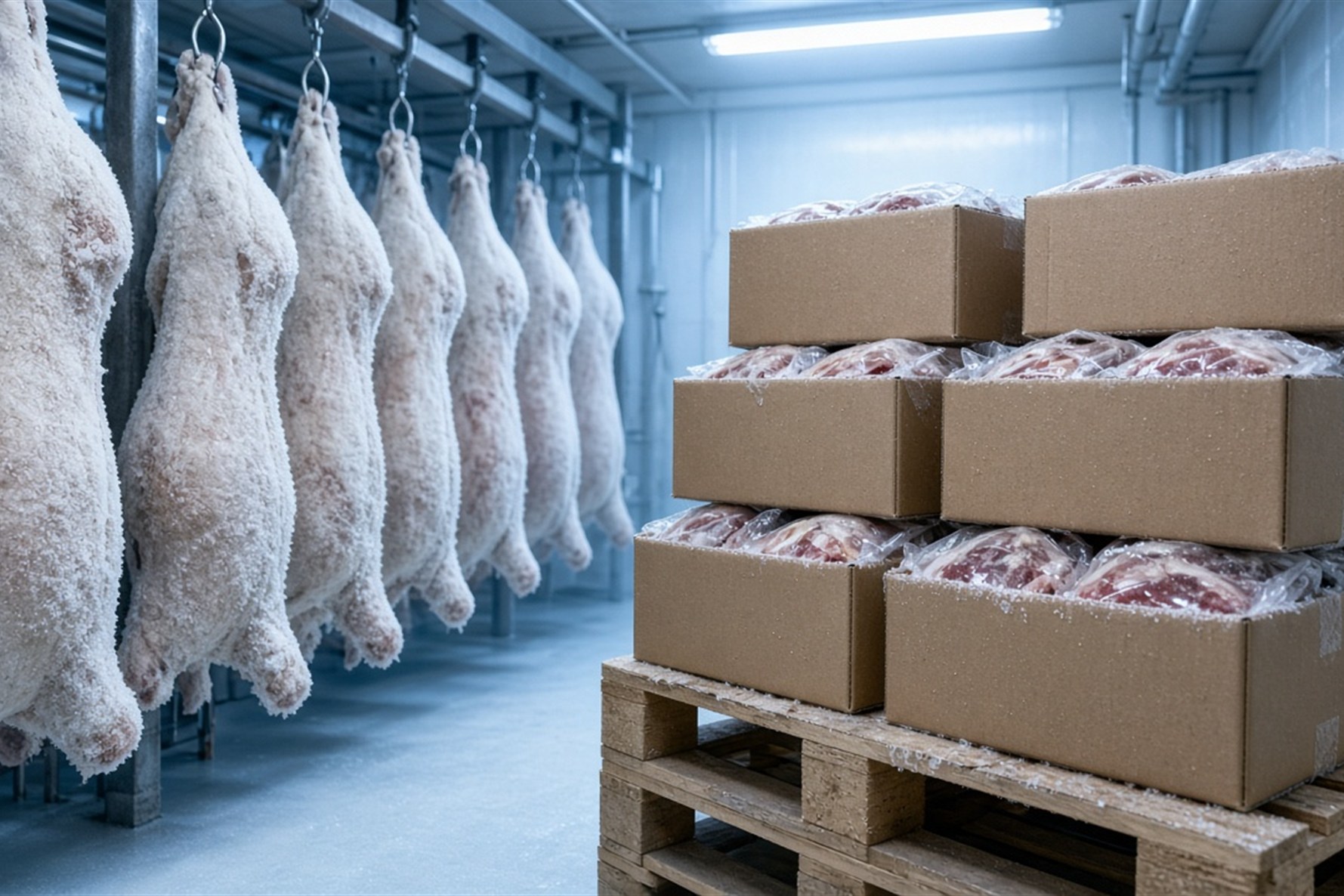
Frozen Lamb Meat: Wholesale Purchasing and Export Trade Guide
Technical specifications, halal and sanitary requirements, cold-chain logistics, and commercial strategy for Middle East and international trade — published in the Iranco magazine.
This specialist guide provides a comprehensive review of trade fundamentals, wholesale purchasing terms, and export requirements for frozen lamb meat. Traders, procurement managers, distributors, and international importers gain in-depth insight into carcass grading, microbiological and halal certification standards, packaging engineering, landed-cost variables, and cold-chain management.
Growth in international trade in animal protein has established lamb as a strategic commodity in Middle East and Central Asian commerce. Sustained demand for quality red meat and traditional consumption patterns in Gulf Cooperation Council (GCC) member states have created a broad market for pasture-raised livestock. Countries including the United Arab Emirates, Oman, Qatar, Kuwait, and Iraq record among the highest per capita sheep meat consumption globally. Native Iranian plateau breeds occupy a distinct commercial position thanks to balanced intramuscular fat, tender muscle fiber, and flavor profiles aligned with Middle Eastern preferences.
Despite rising demand, success in wholesale sourcing and sustainable entry into export channels requires full mastery of technical and commercial detail. Minor temperature deviations in the cold chain, anatomical cuts that do not match buyer specifications, or failure to meet strict halal certification and microbiological limits can halt a commercial investment.
1. Strategic Position of Lamb and Middle East Trade Flow Analysis
International trade in sheep and lamb meat is organized through two main channels: chilled fresh shipments and frozen consignments. Frozen product, owing to biological stability and extended shelf life, serves the bulk of strategic stockholding, further processing, large-scale catering, food service, and hypermarket supply chains. Gulf markets structurally depend on imported animal protein because of arid climates and limited feed production capacity. Young lamb consistently commands the highest unit value in trade compared with meat from older animals, due to tender texture and superior sensory attributes.
Demand flows in the UAE and Iraq
UAE demand is split between luxury hotel-restaurant consumption and regional re-export. International hotels and hospitality outlets in Dubai and Abu Dhabi require clean, boneless cuts with precise trimming, while migrant labor engaged in infrastructure projects drives steady demand for more economical cuts.
Iraq, by contrast, is a traditional buyer of whole carcasses and bone-in sides. Culinary continuity and geographic proximity make the Iraqi market prefer fat-tailed pasture lambs for high cooking yield in local dishes. Export consignments to Iraq mainly enter through western border crossings such as Khosravi, Mehran, and Parviz Khan and are distributed directly to wholesale markets in Baghdad, Basra, and Erbil.
Markets in Oman, Qatar, and Kuwait
Oman and Qatar apply stringent import controls. Commercial preference among Omani and Qatari importers tends toward lighter carcasses with thin fat cover. Kuwait, supported by national consumer cooperative networks (jamiyyat), is a bulk buyer of medium-weight frozen carcasses and cuts packed in standard master cartons.
Seasonal demand across these countries correlates directly with the Islamic calendar—Ramadan, Eid al-Fitr, and other religious occasions—making supply timing in the months before these events critical.
Transition from live sheep exports to processed frozen product
Iran is a producer of quality light livestock thanks to genetics and mountain pasture conditions. A significant share of trade in past decades moved live animals by dhow to neighboring ports. Challenges including transit mortality, border disease risk, and lost slaughter-chain value added have shifted policy toward exported, processed frozen product. Modern industrial slaughter at origin, Codex-based dressing, and cartonized primal packing raise export efficiency and reduce quarantine volatility associated with live trade.
2. Customs Tariff Classification and Harmonized System (HS Code) Structure
Accurate HS code assignment is mandatory for customs clearance of meat protein shipments. The code defines administrative valuation bases, import duty calculation, and veterinary document alignment. Sheep and lamb products are classified internationally under heading 0204.
- 0204.10: Carcasses and half-carcasses of lamb, fresh or chilled
- 0204.21: Carcasses and half-carcasses of other sheep (excluding lamb), fresh or chilled
- 0204.22: Other bone-in cuts of sheep or lamb, fresh or chilled
- 0204.23: Boneless cuts of sheep or lamb, fresh or chilled
- 0204.30: Carcasses and half-carcasses of lamb, frozen
- 0204.41: Carcasses and half-carcasses of other sheep (ewes and rams), frozen
- 0204.42: Other bone-in cuts of sheep or lamb, frozen
- 0204.43: Boneless cuts of sheep or lamb, frozen
Legal distinction between lamb and mature sheep
The technical difference between subheading 0204.30 (frozen lamb carcass) and 0204.41 (frozen carcass of other sheep) lies in age at slaughter and skeletal structure. Under international standard definitions and customs inspection rules, lamb is an animal under 12 months of age, with no permanent incisors in the lower jaw, and spinal articulations that have not fully ossified.
3. Biochemical Traits, Iranian Plateau Breeds, and Carcass Yield
Frozen lamb quality specifications depend on pre-slaughter physiology and breed genetics. Native Iranian plateau sheep belong to fat-tailed breeds. The tail fat depot adapts metabolism so intramuscular fat distributes evenly through muscle tissue—preserving natural water-holding capacity and flavor tenderness after thawing.
Biochemical kinetics of muscle-to-meat conversion
Frozen meat quality is strongly affected by pre-slaughter stress management and initial chilling. Tired, dehydrated, or physically stressed animals deplete muscle glycogen. After bleeding, insufficient lactic acid develops in tissue and final pH does not fall adequately.
Optimal lamb carcass pH after 24 hours in pre-chill rooms at 0–4°C should stabilize in the range 5.5 to 5.8. pH above 6.0 indicates dark, firm, dry (DFD) meat. Such tissue loses interstitial water during freeze-thaw cycles due to reduced protein-water binding and is prone to early spoilage in distribution.
Comparative analysis of native meat breeds
- Afshari: Mountain regions of Zanjan, Azerbaijan, and Kurdistan; heavy hindquarter and loin; hot carcass yield about 48–51%; suited to bulk food-service cuts.
- Shal: Buin Zahra plain, Qazvin; fine bone structure and broad muscle; yield 49–52%; premium choice for prime cuts.
- Qezel: Sahand ranges, Azerbaijan; soft fiber and light pink-red color; yield 48–50%; strong Gulf market demand.
- Moghani: Moghan plains; cohesive muscling; yield about 49–51%; suited to retail carton portioning.
- Baluchi: Eastern Iran; lighter, less fat-tailed carcasses; yield 45–49%; suited to markets preferring lower weights.
| Technical attribute | Afshari | Shal | Qezel | Moghani | Baluchi |
|---|---|---|---|---|---|
| Carcass yield (%) | 48–51 | 49–52 | 48–50 | 49–51 | 45–49 |
| Subcutaneous fat thickness | Medium to thick | Medium | Thick | Balanced | Thin |
| Marbling index | High | High | Very high | Medium | Medium |
| Muscle color | Light cherry red | Light red | Pink-red | Light red | Medium red |
| Meat-to-bone ratio | 4.5 : 1 | 4.8 : 1 | 4.3 : 1 | 4.4 : 1 | 4.0 : 1 |
| Average finished carcass weight | 16–22 kg | 18–24 kg | 16–20 kg | 15–20 kg | 12–16 kg |
4. Commercial Cut Anatomy, Carcass Breakdown, and Grading Systems
Standard cut nomenclature underpins international contracts. Codes under the UNECE sheep meat standard and the Australian AUS-MEAT system are widely accepted frameworks that prevent anatomical definition disputes.
Six-way wholesale cut anatomy
Frozen lamb wholesale supply is typically offered as whole carcass or six-way breakdown. In the six-way method, the carcass is sawn along the midline into two symmetrical sides, then each side is divided into three primal sections:
- Bone-in leg: Gluteal and biceps femoris muscles with femur, shank, and tail vertebrae through the hock joint; highest lean density.
- Bone-in forequarter: Shoulder, arm muscles, and 4–5 fore ribs; becomes tender after slow cooking.
- Loin and rack: Mid-spine and longissimus dorsi; highest-value portion and source of steaks, fillet, and French racks.
Carcass fat scoring (Fat Scoring)
Carcass fat cover under the global AUS-MEAT standard is measured at the GR site (110 mm from the carcass midline over the 12th rib) and ranked in five technical classes:
- Score 1 (very lean): 0–5 mm; prone to freezer burn.
- Score 2 (lean, muscular): 6–10 mm; preferred in premium and modern retail.
- Score 3 (balanced, ideal): 11–15 mm; top commercial grade for Middle East export.
- Score 4 (fat): 16–20 mm; may require trimming.
- Score 5 (very fat): over 21 mm; mainly industrial and further-processed uses.
| Commercial cut | Weight range (kg) | Optimal fat score | End-use channel |
|---|---|---|---|
| Whole frozen lamb carcass | 12–18 | Score 2–3 | Wholesale markets, traditional butchers |
| Bone-in leg | 2.2–3.5 | Score 2 | Catering, household, traditional kebab |
| Bone-in forequarter | 1.8–3.0 | Score 3 | Premium stews, slow industrial cooking |
| Bone-in loin | 1.2–2.2 | Score 2–3 | Steaks, restaurant kebab and shish |
| Bone-in neck | 0.8–1.5 | Score 3–4 | Rich soups, broth |
| Boneless shoulder | 1.0–2.0 | Score 3–4 | Burgers, sausages, kofta |
| Boneless leg center | 1.5–2.5 | Score 1–2 | Hotels, luxury vacuum packs |
5. Sanitary Frameworks, Microbiological Safety, and Halal Slaughter Requirements
Compliance with sanitary standards and Islamic slaughter rules are inseparable conditions for meat clearance in Muslim markets. Destination food and drug authorities evaluate shipments using laboratory tests against international criteria.
Halal slaughter principles under regional standards
Halal standards—especially OIC/SMIIC 1:2019 and Gulf livestock slaughter regulation GSO 993—impose strict slaughterhouse requirements:
- Slaughterer qualification: Direct slaughter by a Muslim adult knowledgeable in Sharia, under supervision of an authorized religious representative.
- Cut method: Single-pass sharp stainless-steel knife cut across the throat; severing trachea, esophagus, and both carotid and jugular vessels without decapitation.
- Tasmiyah: Pronouncing the name of God at the moment of cut.
- No pre-death stunning: Prohibition of mechanical or chemical stunning that stops the heartbeat before bleeding.
- Complete bleeding: Minimum 6–8 minutes suspension on the line for blood drainage.
Microbiological quality control criteria
Under GCC food microbiological standard GSO 1016:2015, microbiological limits for frozen lamb are assessed via defined sampling plans. Pathogens (Salmonella and STEC) must be absolutely negative in all 25 g samples. Any pathogen colony triggers rejection or destruction of the entire container load.
| Microbiological or chemical test | Test basis | Limit / acceptance |
|---|---|---|
| Total aerobic count | ISO 4833 | Per GSO sampling plan |
| Enterobacteriaceae | ISO 21528 | Slaughter hygiene indicator |
| Non-pathogenic E. coli | ISO 16649 | Within m and M limits |
| Salmonella in 25 g | ISO 6579 | Negative (zero)—not acceptable if positive |
| E. coli O157 in 25 g | ISO 16654 | Negative (zero)—not acceptable |
| Antibiotic residues | Chromatographic screening | Below Codex MRL—zero tolerance |
| Heavy metals (Pb, Cd) | Atomic absorption | Above standard range = full rejection |
6. Freezing Engineering, Advanced Packaging, and Cold-Chain Logistics
Physical freezing is the fundamental biochemical method to halt enzymatic reactions and fully suppress microbial growth. Final meat quality after thawing depends entirely on ice crystal size formed during freezing. Slow freezing produces large, irregular extracellular crystals that rupture muscle cell membranes—leading to extensive drip loss on defrost and leathery texture.
Chilling phases and blast-freeze kinetics
- Initial chill (pre-chill): 0–2°C, 85–90% relative humidity, 18–24 hours until leg core below 4°C and rigor completed without cold shortening.
- Blast-freeze tunnel: Air at −35 to −40°C and airflow 3–5 m/s; target geometric center of thickest cut to −18°C within 24–36 hours, then storage at −18 to −22°C.
Export packaging and film engineering
- Thermoplastic vacuum shrink bags: Polyamide, polyethylene, and EVOH layers; near −1 bar vacuum and 1–2 s dip in 85–90°C water for heat shrink.
- Pure cotton stockinette bags: For whole and half carcasses with thin polyethylene underliner.
- 5- and 7-ply moisture-resistant cartons: Heavy kraft with water-resistant adhesive; telescopic boxes stack-stable to 2.4 m at −18°C.
Reefer container settings
- Refrigeration unit set to −20°C to offset door openings and coil defrost cycles.
- Fresh-air vents 100% closed for frozen meat.
- Observe top air-gap loading line; do not block floor channels.
- Minimum two calibrated digital data loggers—center pallet and near container door.
7. Gulf Import Market Structure and Consumption Patterns
| Country | High-demand format | Preferred weight | National standards | Peak demand season |
|---|---|---|---|---|
| UAE | Boneless cuts, loin and fillet | 10–20 kg vacuum cartons | ZAD system, Dubai Municipality rules | Nov–Apr and Ramadan |
| Iraq | Whole carcass, bone-in six-way | 16–22 kg fatter carcass | Border inspection, veterinary certificate | Muharram, Safar, Ramadan, Eids |
| Oman | Light carcass in stockinette, bone-in leg | 10–14 kg lean carcass | Ministry of Agriculture, GSO 1016 | Ramadan, Eid al-Adha |
| Qatar | Light carcass, telescopic cartons | 11–15 kg carcass | Ministry of Public Health, GSO 993 | Winter and religious holidays |
| Kuwait | Whole carcass and bone-in portion cuts | 12–16 kg carcass | Kuwait Food and Nutrition Authority | Shaaban, Ramadan, pre-Adha |
8. Comparative Analysis of Major Exporters and Iran’s Competitive Position
Global sheep and lamb trade is multipolar, with Australia and New Zealand managing a large share of volume. Iranian plateau pasture lamb, however, offers distinct organoleptic traits that differentiate it from industrial Oceania production.
Major lamb and mutton supply flows to the Middle East
├── Australia & New Zealand ── Mass production, electronic traceability, lean texture, long transit
├── India (goat & sheep) ──── High volume, low price, very lean carcass, limited culinary value
├── Central Asia (Kazakhstan) ─ Fat-tailed breeds, regional taste profile, slaughter infra bottleneck
└── Iranian plateau ────────── Favorable marbling, native taste fit, fast transit
Sensory differentiation and native taste advantage
Merino and European Oceania breeds produce lean meat with grassy notes. By contrast, Iranian plateau sheep grazing semi-arid foothills rich in aromatic shrubs and diverse fat-tailed genetics yield evenly marbled meat with appealing aroma—a critical advantage in authentic Middle Eastern slow cooking, stews, and kebab.
Logistics chain advantage and order management
Sea distance from Australian and New Zealand ports to the Gulf requires 20–35 days transit. Iran’s geography enables 24–48 hour sea transit from southern ports to UAE or Omani coasts and under three days overland to Iraqi cities.
| Supply country | Strengths | Challenges | Price band | Key markets |
|---|---|---|---|---|
| Australia | Scale, cut uniformity | Long haul, aroma mismatch with local taste | Mid to high | China, USA, UAE, Saudi Arabia |
| New Zealand | Strict hygiene, premium cuts | High price, heavy packaging cost | Premium | EU, UK, China, UAE |
| India | Low cost | Low sensory quality, dry texture | Economy | UAE, Kuwait, Oman (labor catering) |
| Kazakhstan / Georgia | Regionally familiar breeds | Slaughter standard volatility | Competitive mid | Iran, UAE, Russia, Uzbekistan |
| Iran | Superior flavor, logistics speed | Seasonal admin volatility, packaging upgrade needs | Competitive to premium | Iraq, UAE, Oman, Kuwait, Qatar |
9. Landed Cost Structure, Pricing Variables, and Incoterms
The final price per kilogram ready for loading reflects a chain of direct and indirect costs:
- Live animal base price at livestock markets (rainfall, feed, and seasonal demand)
- Net dressing yield (roughly 50% live weight to raw meat)
- Slaughter, sorting, trimming, sanitary inspection, and religious oversight
- Pre-chill energy, −40°C blast tunnel, and central cold store
- Export packaging (vacuum, stockinette, kraft cartons, pallets)
- Veterinary, halal, customs seal, and third-party inspection certificates
- Refrigerated logistics and cargo insurance
International commercial terms (Incoterms)
- FOB: Exporter completes customs and loads at standard temperature on board at port of shipment; ocean freight is buyer’s responsibility.
- CFR: Seller pays reefer freight to port of entry; risk transfers to buyer after loading.
- CIF: In addition to freight, valid international insurance in buyer’s favor is required; explicit cover for reefer generator failure for at least 24–48 hours is recommended.
10. Quality Indicators, Common Defects, and Cold-Store Prevention
- Surface freezer burn: Opaque, dry white or yellow-brown patches from moisture migration in non-hermetic packs or temperature swings.
- Fat oxidation and rancidity: Fat color shift from light cream to dark yellow and stale oil odor from oxygen or light exposure.
- Large ice crystals and frozen purge: Evidence of thermal abuse and partial thaw in transit.
- Dark firm dry (DFD): pH above 6.0 and purplish-brown color from pre-slaughter stress.
- Muscle bruising: Capillary rupture in fillet and loin from physical impact or non-standard stunning voltage.
11. Importer Checklist Before Placing an Order
- Define anatomical specifications per international standards (whole carcass, six-way, or boneless).
- Set permitted carcass weight range and weight tolerance.
- Specify AUS-MEAT fat score (preferably 2 or 3).
- Require valid halal certificate per OIC/SMIIC 1:2019.
- State microbiological requirements per GSO 1016:2015.
- Define packaging (vacuum, stockinette, 5- or 7-ply cartons).
- Approve bilingual Arabic and English label samples.
- Verify origin slaughterhouse health approval on destination approved-plant lists.
- Require minimum two data loggers per reefer container.
- Condition third-party inspection at origin (SGS / Bureau Veritas).
- Agree Incoterms (FOB, CFR, or CIF) and loading port.
- Define damage compensation, weight loss limits, and arbitration framework.
12. What Information Is Required for an Accurate Quote?
- Exact product and cut description (whole carcass, six-way, or specified primals)
- Quality grade and fat cover
- Weight range per unit
- Total order volume and delivery schedule (tonnage or 40 ft containers; approx. 22–26 t per container)
- Packaging format
- Required standards and certificates (halal, veterinary, COA)
- Label content and languages
- Final port or border delivery point
- Desired delivery terms and Incoterms
13. Direct Sourcing of Frozen Lamb from Iran via Iranco
In livestock product trade, a credible supply source that combines native carcass quality, international standard compliance, and a stable freezing chain creates lasting competitive advantage for bulk buyers and distributors. Pasture-finished lamb from Iranian industrial slaughter facilities—with even fat distribution, tender fiber, and favorable aroma—is well suited to protein supply chains in the Gulf and neighboring countries.
Iranco is a specialized platform for trade and supply in food-industry products, connecting international importers, distributors, hotel procurement teams, and traders directly with modern industrial slaughter and protein processing facilities in Iran. Buyers can register technical requirements—including carcass weight grade, cut specification, moisture-resistant packaging, and quarantine certificates—through a formal supply request.
14. Conclusion
Frozen lamb trade is highly profitable but demands technical discipline, livestock physiology knowledge, and committed cold-chain management. Genetic traits of Iranian plateau sheep—high dressing yield and flavorful, juicy texture—offer competitive advantage over industrial Oceania product in Middle East consumption markets. Converting that natural potential into durable commercial value requires rapid freezing at −40°C, optimal carcass pH, oxygen-barrier packaging, and documented compliance with GSO 1016 microbiological rules and halal certification SMIIC 1:2019.
Success for bulk buyers and trade managers depends on transparent contracts, international cut codes, continuous temperature monitoring in transit, and validated supply routes. Meeting these engineering and commercial requirements minimizes shipment risk and supports long-term profitability for food industry participants.
Frequently asked questions
1. What is the main difference between young lamb and mature sheep in export trade?
Lamb is a sheep under one year without permanent teeth. Lamb meat has tender muscle, light pink-red color, and mild flavor. In international markets, frozen lamb commands higher value and price than mature sheep meat.
2. What are standard blast-freeze tunnel parameters for lamb?
Blast tunnels should operate at −35 to −40°C with 3–5 m/s airflow so the deepest muscle tissue reaches −18°C within a maximum of 24 hours.
3. What are the core requirements for halal slaughter certification?
Under OIC/SMIIC 1:2019, slaughter must be performed by a Muslim slaughterer with a sharp knife, in one continuous cut severing the four throat vessels, with invocation of God’s name and complete blood drainage. Supervision by an authorized religious observer is mandatory.
4. What is the standard shelf life of frozen lamb?
Under GSO 150-1, maximum shelf life for frozen lamb stored continuously at −18°C is 12 months from date of slaughter.
5. How can freezer burn be prevented in storage?
Multi-layer vacuum shrink films with oxygen barrier, cotton stockinette on carcasses, and stable cold-store temperature at −18 to −22°C help prevent this defect.
6. What details are needed for an accurate quote and formal proforma?
Buyers should specify exact cut type, fat score, weight range, packaging standard, total order volume, destination country and port, and Incoterms. This information can be submitted via a formal request on the Iranco platform.
7. Which HS codes apply to frozen carcasses and cuts?
Subheading 0204.30 covers frozen lamb carcasses and half-carcasses. Bone-in frozen cuts are declared under 0204.42 and boneless cuts under 0204.43.
8. What causes excessive drip loss during defrost?
Slow freezing at inadequate temperatures, temperature abuse during container transit, and high pre-freeze meat pH break protein cell structure and cause extensive interstitial water loss.
Featured Products


Related Articles



