 Iranco Magazine Team
Practical guide to product selection, quality control, food safety and labelling, FoSIM import registration, customs formalities and clearance of Iranian dried figs in Malaysia
Export Guide · Dried Figs · Malaysia
Dried Fig Export to Malaysia: Import Health Rules and Port Clearance
Practical guide to product selection, quality control, food safety and labelling, FoSIM import registration, customs formalities and clearance of Iranian dried figs in Malaysia
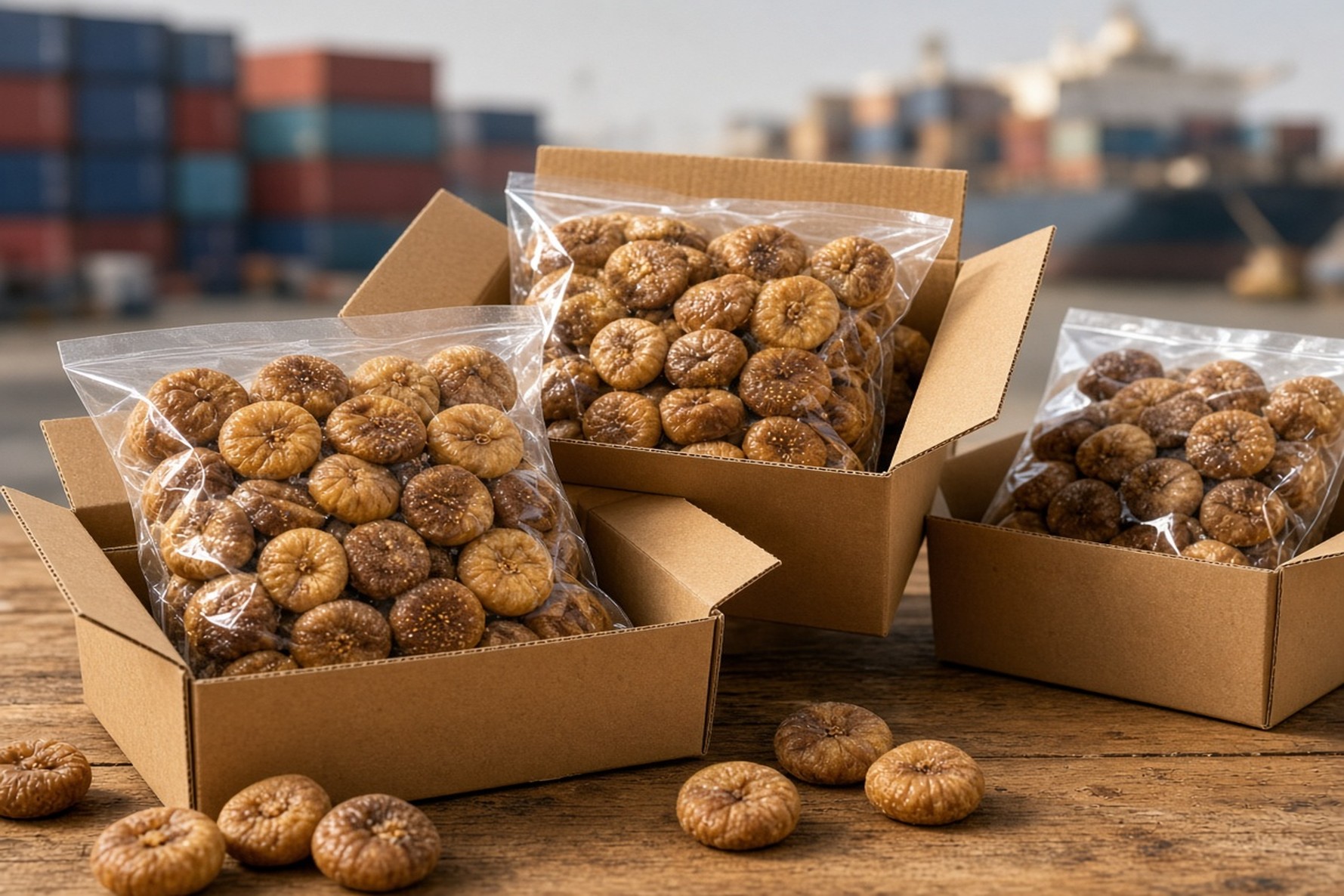
Dried figs for the Malaysian market sit between two commodity groups: ready-to-eat dried fruit for stores, e-commerce and health-focused retail, and an industrial ingredient for mixed dried fruit packs, confectionery, bakery and other food applications.
For Iranian exporters, the main advantage is the ability to supply different grades — from large, light product for retail packs to more economical grades for industrial use. The closer the product moves to retail and direct consumption, the more buyers focus on size uniformity, colour, damage, insect contamination, moisture, foreign matter, packaging quality and labelling.
From Malaysia's side, the issue is not customs alone. Imported food is controlled under the Food Act 1983 and related regulations, and commercial import is directly linked to the FoSIM food safety control system. As a processed plant product, dried figs may also face agricultural controls, shipment documentation and physical inspection at entry.
Successful export to Malaysia must therefore be designed from the end of the chain: define the sales channel first, then grade, testing, packaging and labelling on that basis — and only then finalise price, contract and shipping schedule.
1. What kind of dried figs does the Malaysian market want?
Three distinct customers must be distinguished: dried fruit importers and distributors, food repackers and industrial buyers. Acceptable specifications are not the same for all three.
In retail, product appearance matters greatly. Consumers see the pack; larger, relatively uniform, sound figs without visible mould, pest damage or mechanical injury create more value.
Retail channel
- Size uniformity
- Acceptable appearance
- Low percentage of broken or damaged fruit
- No visible contamination
- Appropriate texture — not too dry or too moist
- Packaging with adequate moisture barrier
- Label design compliant with market rules
- Option to supply under importer or private label
Export product for this channel must be defined against a purchase standard from the outset. Terms like 'grade one' or 'export quality' alone are not enough for a professional contract.
Wholesale and repacking
Some importers receive bulk packs and repack in Malaysia into smaller weights. Fig quality still matters but origin packing cost can be reduced — with clear agreement on inner bag, master carton, storage and resale timeline.
Food industry
Dried figs are used in bakery, snacks, mixed dried fruit, confectionery and other formulations. Premium appearance grade is not always economical for this customer.
| Buying channel | Main priority | Preferred pack format | Appearance sensitivity |
|---|---|---|---|
| Premium retail | Look, size and uniformity | Consumer pack | Very high |
| Dried fruit distribution | Quality–price balance | Bulk or retail pack | High |
| Repacking | Grade stability and cost | Carton or bulk bag | Medium to high |
| Food industry | Safety, moisture and price | Industrial pack | Medium |
| Chopping and processing | Safety and processability | Industrial grade | Lower |
Iranian exporters should not price retail figs and industrial figs on the same logic. Much of the price gap between offers comes from real differences in sorting and defect rates.
2. Iranian dried figs: grades and export selection criteria
In dried fig trade, the word 'variety' is often misused for what is really a commercial grade. Buyers must define grade by observable, measurable indicators.
In Iranian export dried figs, differences usually come from size, colour, eye opening, uniformity, breakage, stains, shape and cleanliness.
Size
Larger size is usually preferred in consumer packs, but 'large' alone is not a proper contract criterion. Classification method must be agreed — e.g. count per weight unit or agreed sorting system.
Colour
Iranian dried figs range from lighter to darker brown. Colour alone is not the only quality indicator. Clear retail packs need greater colour uniformity.
Shape and fruit soundness
Fruit must be checked for mould, insect contamination, foreign matter and undesirable damage. Major defects should be defined as percentages or by agreed sampling in bulk contracts.
| Attribute | Premium retail grade | Commercial grade | Processing grade |
|---|---|---|---|
| Size uniformity | High | Medium to high | Less important |
| Colour uniformity | High | Medium | Limited importance |
| Broken fruit | Must be limited | Negotiable | More acceptable |
| Whole-fruit appearance | Very important | Important | Secondary |
| Moisture and stability | Very important | Very important | Very important |
| Contamination and mould | Not acceptable per agreed spec and law | Same | Same |
| Application | Consumer pack | Wholesale | Chopping and production |
A lower grade does not mean unsafe product. Commercial grade can be fully food-safe but worth less in appearance, size or uniformity.
3. Technical specifications a Malaysian buyer should put in the order
A main cause of dispute between initial sample and final shipment is an vague purchase specification sheet.
In professional buying, at least the following should be fixed before requesting a commercial offer.
| Parameter | Agreed option or criterion | Importance to buyer |
|---|---|---|
| Product form | Whole, split, chopped or processing-specific | Defines use |
| Commercial grade | By sample and written spec | Price comparison |
| Size | Agreed classification | Appearance and price |
| Colour | Acceptable range | Retail |
| Moisture | Agreed level and test method | Shelf life and texture |
| Breakage | Acceptable ceiling | Appearance and yield |
| Foreign matter | Contract acceptance limit | Safety and cleanliness |
| Insect contamination | Rejection criterion | Safety and clearance |
| Mould and spoilage | Rejection criterion | Food safety |
| Pack type | Retail or bulk | Sales channel |
| Net weight | Weight per pack | Pricing and label |
| Testing | Per importer and regulatory needs | Risk control |
| Remaining shelf life | Buyer agreement | Inventory management |
Why should moisture be contractual?
Moisture balance in dried figs affects texture, stickiness, stability and spoilage risk.
The acceptable level and measurement method must be written in the purchase spec — not debated after arrival as 'too dry or too soft'.
Reference sample
For bulk orders, an approved sample should be registered as the commercial reference — but a physical sample alone is not enough.
This is especially important for Malaysian buyers because transit, warehousing and distribution make small initial moisture and quality differences more visible at destination.
4. Quality control and key pre-export tests for dried figs
Quality control should operate at three levels: visual inspection, physical tests and food safety tests — aligned with buyer specs and Malaysian entry requirements.
Visual inspection
- Size uniformity
- Colour
- Abnormal stains
- Signs of mould
- Insects or remains
- Foreign matter
- Mechanical damage
- Odour change
- Abnormal stickiness
- Pack condition
Aflatoxin and other mycotoxins
Dried fruit in a poor supply chain can be exposed to mould growth. Mycotoxin control must reflect real product risk and importer requirements.
Sampling method matters more than a single test certificate. Fungal contamination can be heterogeneous; a non-representative sample gives no reliable picture of the load.
Pesticide residues
If buyer or market requires pesticide residue control, the test panel must match regulations and production history — not a random long list.
Microbiological tests
For ready-to-eat product, buyers may set microbiological specifications. Test type must match end use and applicable product rules.
Sulphur dioxide and additives
Any preservative or additive must comply with Malaysian rules and label declaration. For natural dried figs, buyers should state clearly whether additive-free product is required.
Certificate of analysis
The COA must link exactly to the batch to be loaded. A common mistake is using one batch result as a general factory quality document for several shipments.
For the importer, batch number, production or packing date, test report and shipment number must be traceable together.
5. Import health rules for dried figs into Malaysia
Commercial food import control in Malaysia operates under Food Act 1983 and regulations issued under it. Food standard, safety and labelling requirements are largely set in Food Regulations 1985.
For dried fig importers, the practical outcome is clear: product must comply with Malaysian law on composition, safety, additives and labelling before entry. Fixing problems after container arrival is usually far costlier than control at origin.
Do imported foods in Malaysia need a general import permit?
Food import under Malaysia's Ministry of Health is not generally limited to one 'general food import licence'. Commercial food entry approval at the point of entry is processed through the food import control system and FoSIM.
That does not mean no other requirements exist. Some goods may need additional documents, other agency approval or agricultural inspection.
What role does FoSIM play?
FoSIM is Malaysia's Food Safety Information System used to manage and approve imported food. Importers or their representatives must have the necessary registration before related formalities.
From 1 June 2025, Ministry of Health food safety authority approval for food declared via customs form K1 is active at 71 origins or customs stations — making correct shipment data and customs declaration alignment even more important.
Inspection and sampling
Imported food may at entry undergo document review, inspection, sampling or hold pending test results under risk-based control. A COA at origin does not guarantee clearance without destination sampling.
6. Plant health requirements and dried fig control at Malaysian entry
Dried figs are food but also of plant origin. Food safety control and plant product control are not necessarily handled by one single authority.
In Malaysia's tariff and import restriction system, figs fall under 0804.20. Entry conditions for dried and processed products in this group must match the status registered for that code and product form.
Rules for entry via Kuala Lumpur or Port Klang must not be assumed to apply to Sabah and Sarawak without verification.
Phytosanitary certificate
Phytosanitary certificate need must be assessed by exact product nature, degree of processing and conditions stated for the import code. Dried processed product must not be treated like fresh fruit for quarantine rules.
This check is done before bill of lading issue — not when cargo has already reached port.
7. Labelling dried figs for the Malaysian market
Labelling is one of the most common problem points in food import. A pack designed for another market is not automatically suitable for Malaysia.
Product label must comply with Food Regulations 1985 and present information clearly and without misleading consumers.
Product name
If the product is simply dried figs, the pack name must show the true food nature. A trade name cannot replace the food name.
Ingredient list
A single-ingredient product with no additives differs from product with preservative, coating or other added material.
Net weight
Declared pack weight must match the actual pack. Pre-export weight control matters — systematic gap between declared and actual weight can create compliance problems.
Country of origin
For Iranian export figs, origin must be stated correctly. If packing or processing occurred elsewhere, presentation must not mislead about product origin.
Date and storage conditions
Date format and storage text must match regulations and product characteristics. Exporters should not simply translate a domestic Iran label template.
Label language
Malaysia label design must match language rules for imported food. Final artwork should be approved by the importer and a Malaysia label compliance specialist before printing thousands of packs.
8. Tariff code and documents required for clearance
Fresh or dried figs in the Harmonized System fall under HS Code 0804.20. Malaysian import declaration must use the full national code and accurate goods description.
The HS code is not only for duty calculation — it can determine which restrictions, permits or inspections attach to the goods.
Basic commercial documents
- Commercial invoice
- Packing list
- Bill of lading
- Malaysian import declaration K1
- Certificate of origin if commercially or tariff required
- Test documents and COA if requested
- Plant health related documents if required
- Additional documents demanded for shipment or import control programme
Alignment of product name, weight, pack count, container number and party details across documents is essential. Even a simple weight mismatch between invoice and packing list can slow review.
How to check the tariff?
Import duty rate must be checked against the current Malaysian tariff schedule, full national code and origin conditions at transaction time. Destination duty and tax responsibility under chosen Incoterms must be fully clear in export pricing.
9. Port clearance of dried figs: from vessel arrival to container exit
Port Klang is the main seaport gateway for the Klang Valley and a practical entry point for food products into Malaysia. Actual clearance path depends on port of entry, carrier, declaration type, inspection level and shipment status.
The process can be reviewed in several commercial stages.
Stage 1: Pre-arrival document submission
Importer or broker should receive documents before vessel arrival. Late final invoice, packing list or B/L is an unnecessary error in food trade. Exporters should send a complete scanned document set for importer approval before vessel departure.
Stage 2: Customs declaration
Shipment data is entered in the K1 declaration. Commodity code, description, value, country of origin, weight and other fields must match original documents.
Stage 3: Food safety control
For imported food, Ministry of Health approval is processed through FoSIM and the entry-point process. Cargo may pass document review only or be selected for inspection and sampling by risk level.
Stage 4: Plant health control
If code and product form trigger agricultural authority review, that control must also be completed. Exporters should provide documents requested by the importer for this stage in advance.
Stage 5: Payment and customs release
After required approvals and payment of duty, tax or other legal charges, customs enables release.
Stage 6: Container delivery
Even after official approval, practical exit involves settlement with shipping line, terminal, domestic haulier and delivery coordination. Delay can create detention, storage or demurrage costs.
| Stage | Main responsible party | Common risk |
|---|---|---|
| Document preparation | Exporter and importer | Document mismatch |
| K1 declaration | Importer/broker | Wrong code or description |
| FoSIM | Importer and health authority | Incomplete filing or inspection |
| Plant health control | Importer and competent authority | Missing required document |
| Inspection/sampling | Government authority | Delay until results |
| Release | Customs | Outstanding duty or incomplete approval |
| Port exit | Broker and carrier | Demurrage cost |
Clearance management should start before container movement — waiting until vessel arrival to review regulations is high-risk in food trade.
10. Packaging and sea freight of dried figs to Malaysia
Malaysia has a hot, humid climate. Dried fig packaging must protect against moisture exchange, contamination and mechanical damage throughout transport and storage.
Bulk packaging
For bulk sale, cartons with suitable inner packs can be used. Inner layer material must be chosen for moisture protection and food contact.
Cartons need sufficient strength for palletising, container transport and warehouse conditions.
Consumer packaging
For shelf-ready product, the wrap must perform technically — water vapour transmission, seal quality, puncture resistance and food-contact compatibility — not just look good.
Dry or refrigerated container?
Dried figs are not generally tied to mandatory cold chain like fresh fruit, but container type must be chosen by product moisture, packaging, season, route, dwell time and agreed conditions.
Many dried nut cargoes use dry containers with proper moisture and stowage management. The main issue is preventing water ingress, internal condensation and contact with wet container surfaces.
Pre-load container inspection
- Dry floor
- No holes or abnormal light entry
- No odour from previous cargo
- Clean interior
- No obvious contamination or pest signs
- Sound doors and gaskets
- Suitable for food cargo
Container condensation control
Day-night temperature difference and environmental change on sea voyage can create moisture on cold surfaces. Proper packaging, stable load temperature, avoiding wet cargo and managing container airspace reduce this risk.
11. How is export dried fig price to Malaysia determined?
There is no single 'export price' for dried figs. Two offers with the same name can differ sharply in real quality.
- Purchase season in Iran
- Appearance grade
- Size
- Uniformity percentage
- Breakage and defect level
- Moisture and product condition
- Manual or mechanical sorting
- Quality control level
- Required testing
- Bulk or retail packaging
- Order volume
- Private label
- Domestic haulage cost in Iran
- Port of exit
- Delivery method and terms
- Ocean freight rate
Malaysian buyers comparing offers must ensure the price basis is identical. Comparing per-kg premium retail pack price with commercial bulk carton fig is not useful.
Correct offer comparison
| Factor | Offer A | Offer B | Why it matters |
|---|---|---|---|
| Grade | Must match | Must match | Largest price gap driver |
| Size | Specified | Specified | Direct price effect |
| Defect tolerance | Specified | Specified | Defines real quality |
| Packaging | Same level | Same level | Significant cost item |
| Testing | Same | Same | Cost and risk |
| Incoterms | Same | Same | True price comparison |
| Destination | One port | One port | Freight comparison |
Buyers evaluating several Iran supply options should register exact grade, pack weight, volume and destination on Iranco so offers are reviewed on the same need — not generic 'export fig'.
Importer checklist before placing order
Before issuing purchase order, a Malaysian importer should finalise:
- Define product form: whole fig, retail grade or processing-suitable product.
- Define grade with specifications: do not use terms like premium without measurable criteria.
- Obtain a real sample: the sample must represent the shippable batch.
- Confirm size and uniformity: sorting method should be agreed between parties.
- Record target moisture in the contract.
- Set visual defect limits: breakage, stains, damaged fruit and foreign matter.
- Fix the testing plan before final production or packing.
- Link the COA to the batch number.
- Confirm tariff code 0804.20 status in the Malaysian system.
- Review Ministry of Health and FoSIM requirements before shipment.
- Confirm plant-health requirements for the exact product form.
- Review the label artwork before mass printing.
- Confirm inner pack and master carton type.
- Specify palletising or non-pallet loading conditions.
- Include delivery terms and Incoterms in the contract.
- Fix destination port and customs broker before shipment.
- Check draft shipping documents before final issue.
- Record written acceptance criteria for cargo at destination.
This checklist should be part of the buying process — not action taken after cargo arrival.
What information is needed for an accurate price quote?
In a dried fig price request for Malaysia, specify at least:
- Product form and commercial grade
- Target size
- Preferred colour or appearance range
- Target moisture if technical spec exists
- Maximum breakage and defect tolerance
- Special testing requirements
- Weight per pack
- Consumer or bulk pack
- Total order quantity or weight
- Private label requirement
- Label language and specifications
- Destination port in Malaysia
- Delivery terms
- Sea or air freight
- Approximate required delivery time
Without this information, two received prices are not necessarily comparable. Buyers can enter the same details in an Iranco purchase request.
Supply route for dried figs from Iran to the Malaysian market
In international dried fig buying, the real difference between suppliers is not price per kilo alone.
The right approach is to prepare a written purchase specification first, then compare samples and commercial offers against that sheet.
Iranco lets buyers and importers submit dried fig supply requests with grade, size, order volume, packaging and destination country so available Iran options are reviewed on that basis.
For Malaysia, the same request should specify destination port, sales model and whether product is for retail packing, repacking or industrial processing — to refine grade and pack type selection.
Summary
Dried fig export to Malaysia becomes reliable when three matters are managed together: real product quality, regulatory compliance and clearance readiness. Focus on purchase price alone can create hidden costs later as quality disputes, label rework, sampling, container detention or document mismatch.
For professional buyers, the first decision is product use. Figs chosen for clear retail packs are not the same grade as chopping or industrial use.
On regulations, Food Act 1983, Food Regulations 1985, the FoSIM process and requirements linked to code 0804.20 are the import review foundation.
Because dried figs are both food and plant-origin product, importers must verify health and agricultural control status for the exact product form and entry point before shipment.
The key practical rule is simple: clearance does not start when the container arrives — it starts when purchase specifications are set. When grade, testing, labelling, documents and commodity code are aligned before loading, supply prices become more comparable and Malaysia entry risk drops significantly.
Frequently asked questions
What is the tariff code for dried fig imports into Malaysia?
Fresh or dried figs are classified under HS Code 0804.20 in the Harmonized System. For Malaysian declaration, the full national subheading and exact product description must be checked in the customs system. The international base code alone is not enough to determine all duties, taxes and entry restrictions.
Is a health permit required to import dried figs into Malaysia?
Commercial imported foods fall under Malaysia's Ministry of Health and food safety laws. Entry approval is processed through the FoSIM mechanism. In addition to food control, plant-product rules and requirements tied to the exact commodity code must also be verified.
Is Iranian dried fig suitable for direct sale in Malaysian stores?
Yes, provided grade, packaging, safety and labelling are designed for retail sale. Larger, more uniform figs usually appeal in clear packs, but appearance alone is not enough. Moisture control, absence of spoilage and contamination, seal quality and label compliance are essential for ready-to-eat product.
Which tests matter most for export dried figs?
Tests should be set by product risk and importer request. Moisture, microbiological status, mycotoxins, pesticide residues and, where used, additives or preservatives are key review areas. For tests such as mycotoxins, representative batch sampling is critical.
What is the best packaging for shipping dried figs to Malaysia by sea?
Packaging must provide an adequate moisture barrier and remain stable in Malaysia's warm, humid conditions. Bulk orders usually use suitable inner packs in strong cartons; for retail, film quality and seal integrity matter more.
Why does moisture matter when buying dried figs?
Moisture affects texture, stickiness, stability and shelf behaviour. Very dry figs may lack consumer appeal, while excessive moisture can increase storage risk. The buyer should therefore set the target level and test method in the purchase specification.
Must dried figs be shipped in a refrigerated container?
There is no general requirement comparable to fresh fruit. Many dried-nut cargoes move in suitable dry containers if packaging, product moisture and container condition are controlled. The main risk in both cases is poor moisture and condensation management.
What information should be given to the seller when buying Iranian dried figs?
The buyer should specify grade, size, target colour, defect tolerance, moisture, pack type, pack weight, order volume, required tests, destination and delivery terms. For private-label sales, label specifications must also be included.
Is an approved sample enough for shipment quality control?
No. A reference sample is useful, but numeric and written criteria are also required. Size, moisture, breakage rate, defects, foreign matter and other key parameters must be defined in the purchase specification.
Featured Products







Related Articles



