 Iranco Magazine Team
Quality indicators, cooking behaviour, lab standards, supply chain and economics of wholesale and export for Mazandaran Tarom Amrollahi rice
Quality & Standards · Tarom Amrollahi Rice
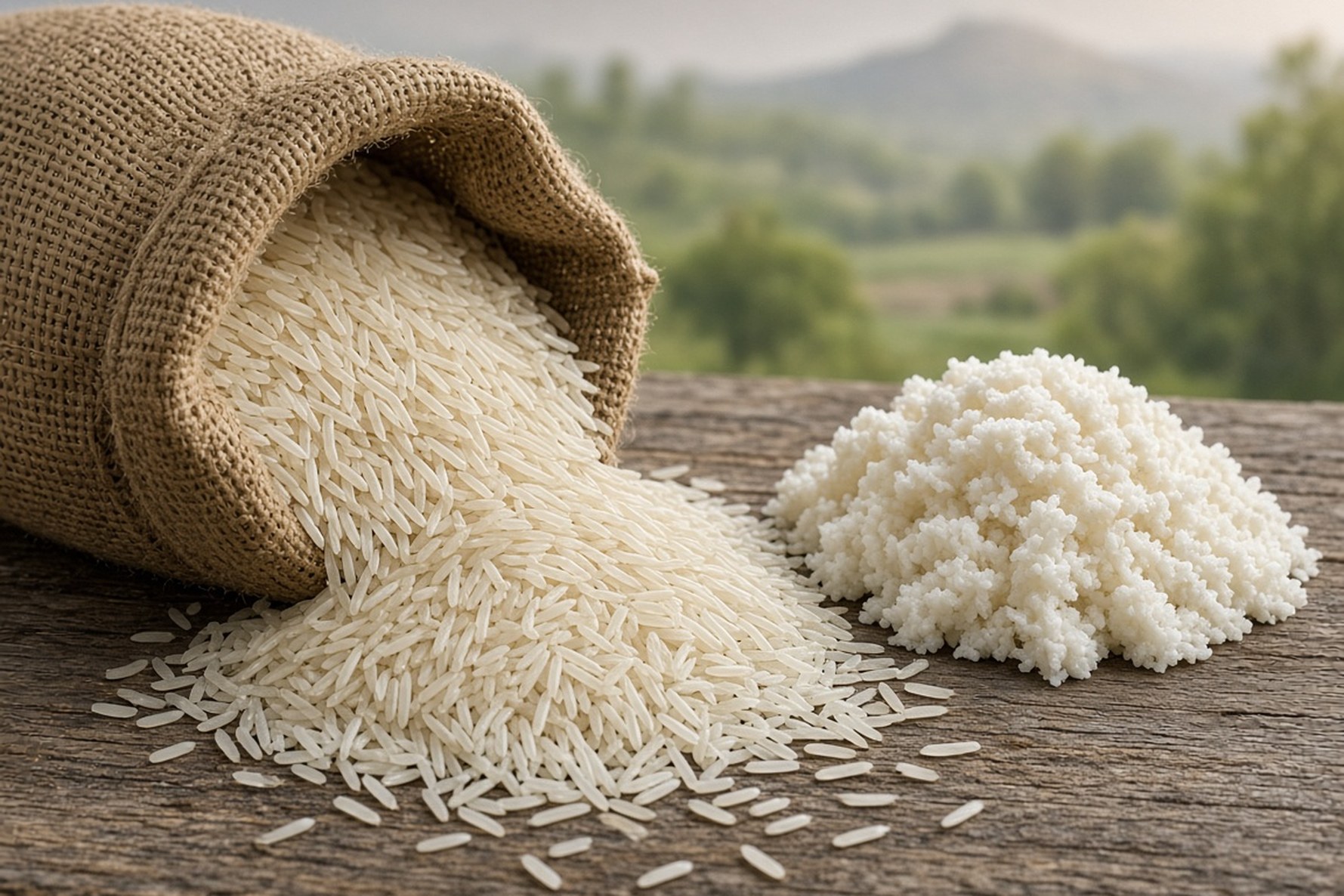
Tarom Amrollahi Rice: Quality, Price, Wholesale Buying and Commercial Supply
Monitoring quality indicators, cooking behaviour, laboratory standards, supply chain and the economics of wholesale buying and export for Mazandaran Tarom Amrollahi rice. This technical report examines physicochemical indices, first vs second crop, fraud detection, pricing, packaging, logistics and commercial contract checklists.
| Key indicator | Value | Commercial importance |
|---|---|---|
| Cooked grain length | 14–16 mm | Length increase to more than twice the raw grain |
| Amylose content | 19–22% | Medium amylose; long soft-texture retention |
| Standard moisture | Max 14.0% | Per national standard ISIRI 127 |
| Customs tariff code | HS 100630 | Whole or semi-milled white rice, polished |
Introduction
Tarom Amrollahi rice is one of northern Iran’s outstanding native products; in the autumn second crop it reaches peak aroma, elongation and soft texture. In Middle Eastern food culture and Iran’s consumer market, cooking quality, aromatic profile and cooked-grain appearance directly drive economic valuation and wholesale demand.
Thanks to favourable cold tolerance and a shorter growth cycle than some traditional types, it anchors autumn second cropping across the fertile plains of Fereydunkenar, Amol and Babol. Successful trade requires full awareness of agronomic differences, starch physicochemical analysis, modern mill processing variables, adulteration risks and domestic and export standard requirements.
1. Ecological origin, agronomy and first crop vs second crop vs ratoon
Genetically and phenologically, Tarom Amrollahi is closely related to traditional Tarom and Binam types. Plants have medium-to-tall stems and strong tillering. Growth lasts 95–110 days; that shorter cycle and early-cold resilience make it Mazandaran farmers’ first choice for second transplanting.
Geographic production hubs in Mazandaran
Commercial development centres on the central Mazandaran plain—especially Fereydunkenar, Amol, Babol, Babolsar and Joybar—benefiting from Alborz alluvial sediments, stable Caspian humidity, Haraz and Babolrood runoff, and Fereydunkenar’s wetland microclimate that reduces second-crop nitrogen fertiliser need.
Crop calendar
First crop starts with nursery sowing in early Farvardin, transplanting in Ordibehesht and harvest mid-Mordad. Grain filling in hot Tir–Mordad slightly lowers volatile aromatics. Second crop requires immediate action after first harvest; seedlings move in late Mordad and filling coincides with Mehr–Aban. Day–night autumn temperature gaps peak 2-acetyl-1-pyrroline synthesis; Aban harvest yields intense aroma and dense crystalline structure.
Second crop vs ratoon (donuj)
Ratoon skips re-ploughing and transplanting; lateral buds on remaining stubble are stimulated. Ratoon also has excellent aroma, but per-hectare volume is far below true second transplanting.
| Metric | First crop | Second crop | Ratoon (donuj) |
|---|---|---|---|
| Transplant calendar | Ordibehesht | Late Mordad | Early Shahrivar |
| Harvest | Mordad | Aban | Aban–early Azar |
| Paddy yield/ha | 4–4.5 t | 3–3.5 t | 1.2–1.8 t |
| Raw grain colour | Opaque pearl to milky | Clear crystalline with mild green tint | Light milky |
| Aroma intensity | Medium–good | Very high, lasting | Strong, natural |
| Elongation | to 12–13 mm | to 14–16 mm | to 14 mm |
| Commercial price tier | Local quality base | Top northern market tier | Near or slightly below second crop |
2. Physicochemical specs, starch structure and cooking behaviour
Food-industry and export standards require converting sensory notions of aroma and elongation into quantitative laboratory indices. Tarom Amrollahi starch behaviour follows the amylopectin–amylose ratio.
- Amylose: 19–22% — below 18% sticky/pasty; above 25% hard and brittle when cool. Medium range ensures separate grains and lasting softness.
- Gel consistency: 65–80 mm (soft gel) — high resistance to starch retrogradation on catering lines.
- Gelatinisation temperature: 70–74 °C (medium) — even core cooking without surface bursting.
Grain dimensions
- Raw length: 6.5–7.0 mm (slightly shorter than Hashemi; fuller spindle cross-section)
- Raw width: 1.9–2.1 mm · L/W ratio: 3.2–3.4 (long-grain class)
- Cooked length after proper soaking: 14.0–16.0 mm
- Elongation ratio: over 2.1–2.3×
The key volatile is 2-acetyl-1-pyrroline; Fereydunkenar second-crop samples reach maximum concentration. Flavour is fatty, sweet and natural with pleasant structural sugar release on chewing.
3. Wholesale buyer technical specs and trade standards
Wholesale buyers, packers, international hotels and exporters need clear numerical data for RFQs and supply contracts. Missing fixed metrics are the main source of disputes on heavy lots.
| Technical / trade parameter | Premium grade range | Buyer importance |
|---|---|---|
| Broken grains | Max 1.5–2.0% | Visual uniformity; prevent mushiness |
| Moisture | 12.5–13.5% (max 14.0%) | Mould control; warehouse weight stability |
| Chalky grains | Max 2.0% | Cooked grain clarity |
| Discoloured / defective | Max 0.5% | Avoid sour odour |
| Foreign matter | Max 0.1% | No re-cleaning needed |
| Sorting & sieving | Triple sieve + dual optical sort | Remove husks, half-grains, black cores |
| Mean raw length | Min 6.8 mm | Export long-grain criteria |
| Genetic purity | Min 98% | Uniform water uptake and elongation |
| Pesticide & heavy metals | Per national standard 129 | Health permit and customs clearance |
4. Laboratory standards and contaminant limits
Official QC follows Iran national standard 127 (“Rice — specifications and test methods”). On high tonnage, sensory checks alone are insufficient; physical, microbial and biochemical tests in accredited labs are mandatory.
Physical and mechanical inspection
Broken grains, tips and half-grains are measured on calibrated mechanical sieves; premium sorted lots must stay under 2%. Chalky grains are checked by image analysis or light table; elongation is measured by cooking 10 g under controlled conditions.
Heavy metals and mycotoxins
- Lead max 0.15 mg/kg · Cadmium max 0.06 mg/kg · Inorganic arsenic 0.15–0.20 mg/kg
- Aflatoxin B1 max 5 µg/kg · Total aflatoxins max 10 µg/kg
- Moisture above 14% sharply raises Aspergillus growth and toxin risk
5. Purity assessment, authenticity and commercial fraud detection
High second-crop value drives mixing with cheap, high-yield or imported types. Knowing detection methods protects buyer capital.
Common defects
- Cross cracks (banding): overheated dryer or sudden cooling; banded grains shatter in boiling water.
- Fat oxidation: long storage in warm warehouses; musty stale odour.
- Excess chalkiness: early harvest or late-season nutrient deficit.
Field and lab methods
- Palm friction — warm natural aroma vs chemical/synthetic essence smell
- Spindle morphology; glassy ultra-narrow grains signal Fajr or Pakistani mix
- 200 g cook test and texture after 12 hours cooling
- 1.7% KOH gelatinisation · GC of 2-acetyl-1-pyrroline · molecular genetic sequencing
6. Comparison with other premium Iranian and high-yield types
| Trait | Amrollahi 2nd crop | Hashemi 1st crop | Sadri Domsiah | Fajr |
|---|---|---|---|---|
| Raw length | 6.8–7.1 | 7.3–7.6 | 7.5–7.9 | 6.6–6.9 |
| Cooked length | 14.5–16.0 | 13.5–15.0 | 15.0–16.5 | 11.5–12.5 |
| Aroma profile | Very strong, penetrating | Mild, pleasant | Strong, classic | Weak–medium |
| Texture when cool | Very fatty and soft | Soft, flexible | Separate and soft | Hard, brittle |
| Yield/ha | 3–3.5 t | 4–4.5 t | 2.8–3.3 t | 6–6.5 t |
| Target use | Ultra-luxury catering | Premium home | Elite banquets | Budget cafeteria |
Hashemi is longer when raw and anchors premium home use; second-crop Amrollahi shows stronger aroma and greater volume on steaming. Sadri Domsiah elongates remarkably but low farm yield limits continuous industrial supply. High-yield types such as Fajr serve only economy catering.
7. Wholesale pricing and market drivers
Price reflects farm inputs, industrial processing loss, seasonal supply–demand and packaging. From 100 kg paddy, about 67–70 kg unclean milled rice (with breakage) is obtained; optical sorting for under 2% broken adds further weight loss and raises whole-grain cost.
- Mordad–Shahrivar (first-crop peak): annual price floor
- Aban–Azar (second-crop entry): accumulated trader demand sets new price levels
- Bahman–Esfand: organisational year-end buying and wholesale spikes
- Second crop consistently 20–35% dearer than same-year first crop
Iranco provides market analytics and order registration against daily prices from reputable Mazandaran mills.
8. Supply chain, northern terminals and commercial capacity
- Iran International Rice Trade Centre & Export Terminal, Amol: 170,000 m²; over 50,000 m² standard warehouses, trading halls, sorting and labs.
- Fereydunkenar rice market: daily reference hub and pulse of second-crop pricing.
- Iran Mercantile Exchange: Tarom warehouse receipt certificates; settlement clarity and authenticity assurance.
Mazandaran produces about one million tonnes of white rice yearly. Tarom types cover over 70% of paddies. Across both crops, Tarom Amrollahi can supply 60–80 thousand tonnes of sorted white rice annually in the Fereydunkenar–Amol–Babol–Babolsar basin.
9. Commercial packaging and industrial warehousing
- Spunbond bags: 5 and 10 kg for domestic and regional export
- Laminated PP: 20, 25 and 50 kg with PE moisture barrier
- Vacuum packs: stop grain respiration and oxidation; best for long sea freight
- MAP: nitrogen flush; aroma retained over two years
- Warehouse temperature: 15–20 °C (above 25 °C accelerates fat breakdown)
- Relative humidity: under 60–65%
- Pallet spacing at least 50 cm from walls; max 10–12 bag layers
- Pest control via aeration, light/pheromone traps and, if needed, aluminium phosphide fumigation under quarantine rules
10. Export logistics, HS codes and international carriage
- HS 100630: semi- or fully milled polished rice — main export line for premium Amrollahi
- HS 100640: broken rice (tips and half-grains)
Potential markets
- GCC (UAE, Oman, Qatar, Kuwait): highest USD value; bilingual Arabic–English labels
- EU and Canada: Asian grocery networks; strict heavy-metal tests
- Iraq and Kurdistan Region: 10 kg packs; fast truck logistics
- Russia and Central Asia: Caspian sea route via Amirabad and Anzali
Container sweat risk control
- Load moisture max 12.5–13.0%
- Sound containers, protective liners, calcium chloride desiccants (min 2 kg per 5 t)
- Pallet lashing with perforated stretch film to keep ventilation
11. Wholesale buyer checklist before order
- State crop cycle (“first crop” or “second crop”) on the invoice
- Name geographic harvest origin (Fereydunkenar, Amol, etc.)
- Broken tolerance (under 2% premium / under 4% grade one)
- Triple sealed witness samples for buyer, seller and reference lab
- Origin moisture with digital meter (under 13.5%)
- Commitment to optical sort and at least dual mechanical sieving
- Bag quality and stitching (spunbond, PP or vacuum)
- Mycotoxin, pesticide and heavy-metal COA alignment
- Field cook test of at least 5 kg (kateh and drained)
- Loading schedule and delay penalties
- Independent inspector at mill loading
- Correct marking: production/expiry dates, health permit, lot code
12. What information is needed for an accurate quote?
- Product type and crop cycle (first, second or ratoon)
- Quality grade and allowed broken % (super-premium / premium / commercial)
- Optical-sort specs and total tonnage with delivery lots
- Packaging type and size (2.5–50 kg) and private-label needs
- Delivery point (mill gate, buyer warehouse or export port)
- Requested certificates (phytosanitary, origin, residues, heavy metals)
Iranco processes purchase requests on this full matrix so price comparison stays transparent and tied to technical parameters.
13. Sourcing Tarom Amrollahi through Iranco
Industrial buying from northern mills often faces quality swings, variety mixing, missing lab certificates and unstable high tonnage. Iranco, as Iran’s agricultural and food-industry monitoring and sourcing platform, offers a professional channel to register and track Tarom Amrollahi commercial orders. Traders, distributors, retail chains and exporters can submit crop cycle, broken %, packaging, lab documents and delivery terms so reliable capacity, witness samples and supply coordination proceed to high standard.
If you need authenticated Tarom Amrollahi for organisational or international markets, register grade and approximate volume as a purchase request on Iranco. Submit purchase request
14. Management summary
Tarom Amrollahi’s cold resilience anchors Mazandaran’s autumn second-crop pattern. Medium amylose (19–22%) and soft gel balance elongation to 16 mm, soft texture and moisture retention after cooking. Separating first crop (economical, high volume) from second crop (luxury, aromatic, ceremonial) gives procurement managers portfolio flexibility. High-tonnage deals require ISIRI 127/129 testing, optical sorters, impermeable packaging and third-party origin inspection.
15. FAQ for buyers and traders
Main difference between first and second crop?
First crop is opaque milky with medium aroma; second crop is crystalline with a mild green tint, very strong aroma and elongation to 16 mm.
Why is second-crop wholesale dearer than Hashemi?
Highest 2-acetyl-1-pyrroline, exceptional elongation, limited water and lower yield versus luxury demand drive the premium.
How does texture hold after cooling?
Soft gel and 19–22% amylose slow retrogradation; texture stays soft for many hours, not rubbery.
Most reliable lab fraud test?
Molecular genetic sequencing plus 1.7% KOH gelatinisation is the most definitive purity method.
Best packaging for sea freight?
Multi-layer vacuum or nitrogen MAP plus industrial desiccants in the container best prevent spoilage and sweat.
Minimum commercial order ex-mill?
Usually one standard truckload (10–15 t) so cleaning, laser sort and testing costs justify per-kg rates.
Allowed moisture range on wholesale buy?
ISIRI 127 max 14.0%; preferred loading band 12.5–13.5%.
What to send for an Iranco purchase request?
Crop cycle, target broken %, packaging, total tonnage and destination city or port so supply capacity review can start.
Featured Products




Related Articles



