 Iranco Magazine Team
Oman import market review, Iran's onion position, tariff code, plant product import permits, phytosanitary certificates, quality control, packaging, and practical clearance requirements at Sohar and Salalah
Export Guide · Fresh Onion · Oman
Onion Export to Oman: Import Tariffs, Quarantine Documents & Clearance at Sohar and Salalah Ports
A practical guide to entering Oman’s market with fresh Iranian onions — from tariff code 07031011 and phytosanitary certificates to quality control, packaging, transport, and clearance at Sohar and Salalah
Four Key Indicators — Oman Onion Market
The statistics above are based on Oman’s 2024 foreign trade data for fresh onion classification. Oman is one of the Arabian Peninsula’s important onion import markets, and Iran — with a significant supply share — competes directly with India, Pakistan, Egypt, and the UAE. Export success depends on quality control, quarantine document compliance, and transport route selection.
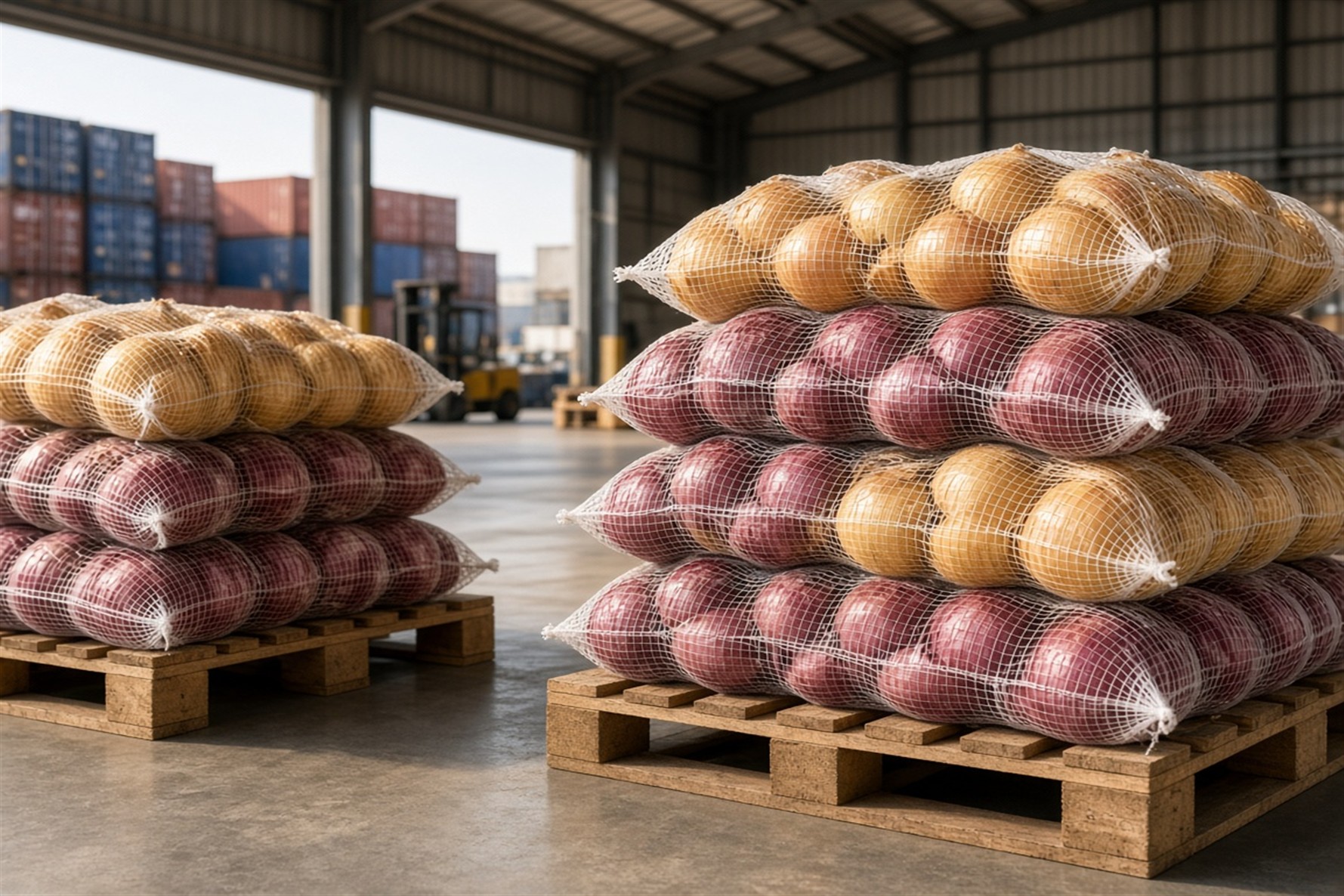
Unlike processed goods, fresh onions derive commercial value from harvest quality, neck dryness, flesh firmness, skin condition, storage conditions, transport ventilation, and full alignment of phytosanitary documents. For export to Oman, simply having product in storage is not enough. The importer must be able to trace onion type, grade, farm origin, phytosanitary certificate, plant import permit, and entry route via Sohar or Salalah through to clearance.
This guide reviews the main commercial and technical requirements for exporting onions from Iran to Oman from the perspective of exporter, importer, and quality manager — and shows what must be confirmed before pricing and final loading.
Oman is not merely a geographically close market for Iranian onion exporters. Product must pass several filters at once: buyer specification compliance, plant health status, correct tariff code, valid import permit, suitable packaging, transport ventilation, and acceptance by the Omani importer.
Onions are more sensitive than many agricultural products during harvest and loading. Excess neck moisture, mechanical damage, surface mould, early sprouting, or heat build-up in the container can sharply reduce shelf life and shipment value. Professional buyers rarely order only “Grade 1 onions”; they also specify variety, size, neck dryness percentage, packaging type, destination port, and inspection conditions.
Oman applies quarantine and phytosanitary requirements strictly for fresh plant imports. The country-of-origin phytosanitary certificate, Oman plant import permit, and alignment of shipment details with documents are preconditions for entry. The plant import permit is typically valid for six months and must be verified before the shipment leaves Iran.
For Iranian producers and exporters, the commercial opportunity appears when product is designed for export from the start. Sorting, neck drying, packaging, and documentation must be aligned with Omani importer requirements in advance.
١. سوق البصل في عُمان وموقع إيران
تعتمد عُمان بدرجة كبيرة على الاستيراد لتلبية احتياجاتها من البصل الطازج. تُظهر بيانات التجارة الخارجية لعام 2024 أن واردات البصل بلغت نحو 106.1 مليون كغ بقيمة تقريبية 75.4 مليون دولار. يدل هذا الحجم على أن البصل سلعة أساسية في السلة الغذائية العُمانية، مع استقرار الطلب طوال العام رغم تغيّر مصادر التوريد حسب الموسم والسعر العالمي.
في 2024 صدّرت إيران نحو 16.7 مليون كغ من البصل إلى عُمان، ما يجعلها أحد مصادر التوريد المهمة. القرب الجغرافي وتعدد مواسم الحصاد في إيران ومعرفة المستوردين العُمانيين بالبصل الإيراني تساعد في الحفاظ على التنافسية — لكن تقلب الجودة والمنافسة السعرية من الهند وباكستان ومتطلبات الوثائق الصارمة تبقى تحديات جدية.
النقطة التجارية واضحة: المُصدّر الإيراني لا يواجه سوقاً يقل فيه المنتج المماثل. المنافسة مع سلاسل توريد كبيرة من الهند وباكستان ومصر والإمارات — شركات تعبئتها وحجمها ووثائقها معيارية مسبقاً لسوق الخليج.
من هم العملاء المحتملون؟
للبصل الطازج للتصدير، عدة قنوات شراء ممكنة:
- مستوردون وموزّعون للأغذية الطازجة؛
- تجار جملة للفواكه والخضروات؛
- شركات تموين المطاعم وخدمات الطعام؛
- سلاسل تجزئة عند التعبئة للمستهلك؛
- موزّعون للمنتجات الاقتصادية والعبوات بالجملة؛
- صناعات غذائية تستخدم البصل كمادة أولية.
بالنسبة للمُصدّر الإيراني، البيع بالجملة لمستورد متخصص نقطة دخول أكثر منطقية من محاولة الوصول مباشرة إلى التجزئة. يتحكم المستورد المحلي بالتخزين والتخليص والتوزيع وشبكة العملاء.
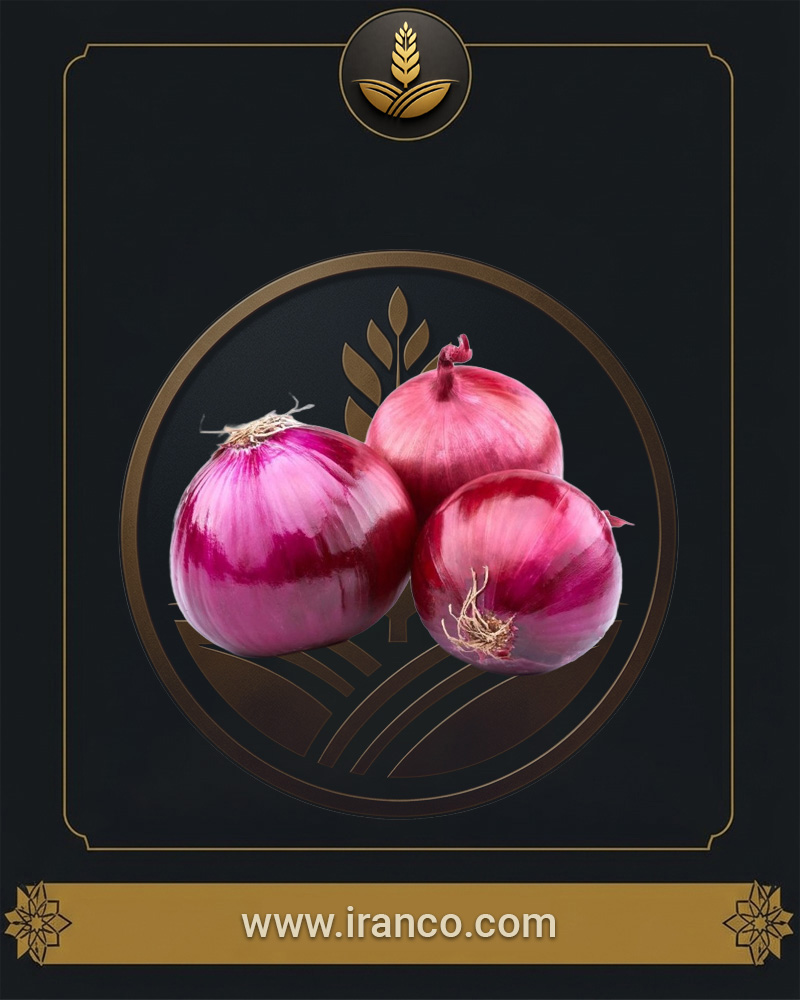
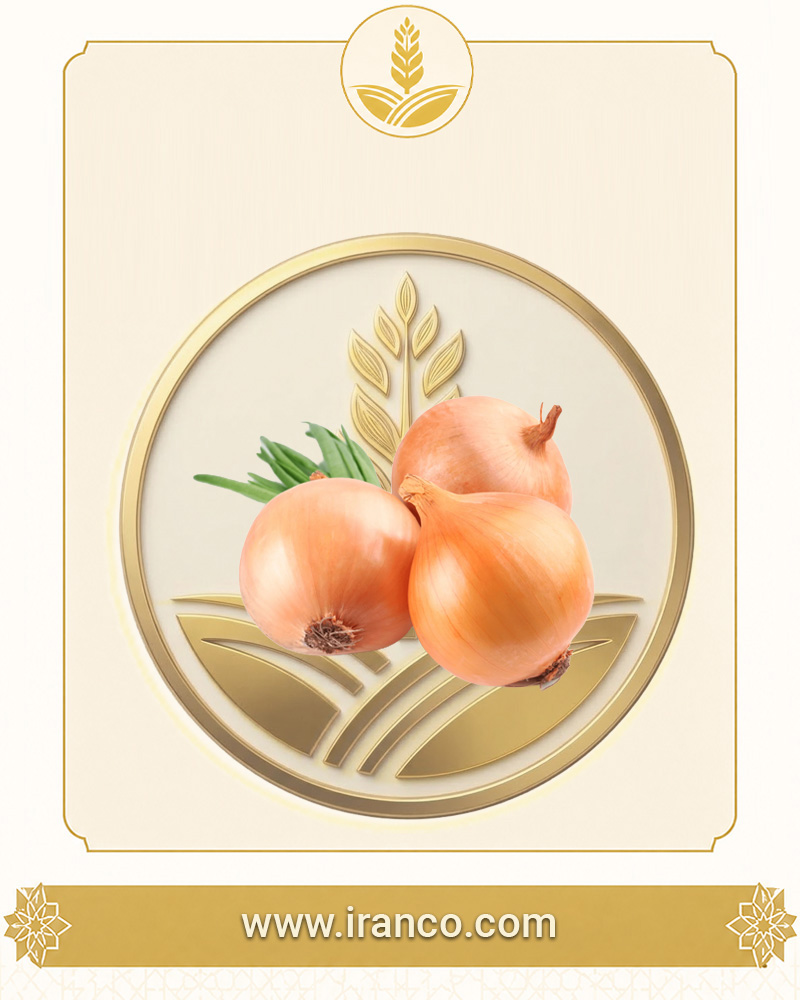
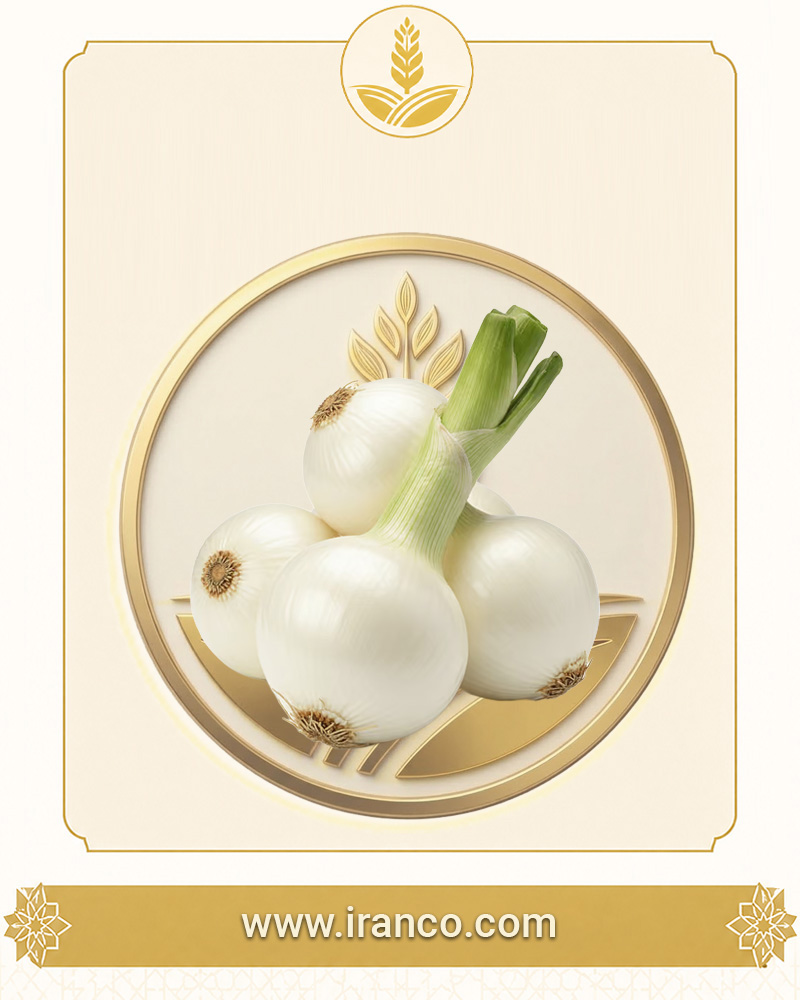
يتفاوت طلب عُمان على البصل الأصفر والأحمر والأبيض حسب الموسم والاستخدام. يحتل البصل الأصفر عادة أكبر حصة في الاستهلاك العام؛ يُفضّل الأحمر في بعض قطاعات التجزئة والمطاعم؛ يجذب الأبيض اهتماماً في بعض الاستخدامات الصناعية. فهم تفضيلات السوق قبل الحصاد أو الشراء من المزرعة مهم.
٢. أي أنواع البصل مناسبة للتصدير إلى عُمان؟
من أوائل أخطاء المفاوضات استخدام عبارة عامة مثل «بصل تصديري» دون تحديد الصنف واللون. في العقد المهني يجب تعريف نوع البصل بمواصفات فنية واضحة.
| نوع البصل | المظهر | الاستخدام في عُمان | ملاحظة تصديرية |
|---|---|---|---|
| بصل أصفر | قشرة ذهبية إلى بنية، لب صلب، عطر قوي | استهلاك عام ومطاعم وطبخ | الأكثر مبيعاً؛ حساس لجفاف العنق وتوحيد الحجم |
| بصل أحمر | قشرة بنفسجية إلى حمراء، مظهر جذاب | تجزئة وسلطات وأطباق طازجة | قيمة بصرية عالية؛ يظهر ضرر القشرة سريعاً |
| بصل أبيض | قشرة بيضاء إلى كريمية، نكهة أخف | صناعة غذائية وطبخ وبعض أسواق الجملة | يتطلب فرزاً أدق؛ حساس لرطوبة التخزين |
A contract that only states “export-grade Grade 1 onion” leaves too much room for dispute. Terms such as “Grade A” have limited contractual value without numeric or descriptive definition.
Variety selection by harvest season
Iran can supply onions across seasons due to climatic diversity. Even so, storage quality and neck dryness vary by harvest timing, post-harvest drying conditions, and storage duration. An Omani buyer may place separate orders with different specifications for each season.
Seed onion (HS 07031012) and fresh shallot (HS 07031020) have separate classifications and must not be mixed with standard fresh onion (07031011). Tariff code errors can halt clearance.
٣. المواصفات الفنية قبل الشراء — معاملات العقد
In a professional transaction, technical specifications should be fixed before the final proforma invoice is issued. The table below shows parameters commonly included in onion export contracts to Oman.
| Parameter | Contract specification | Importance |
|---|---|---|
| Product type | Yellow / red / white onion | Avoids commercial ambiguity |
| Tariff code | 07031011 | Customs clearance and duty calculation |
| Origin | Iran | Origin and phytosanitary certificates |
| Size | Defined calibre (e.g. 55–75 mm) | Pricing and market acceptance |
| Neck dryness | Fully dry and closed neck | Shelf life and spoilage prevention |
| Firmness | Firm flesh, no softening | Sensory quality and transport resistance |
| Skin | Intact, no deep cracks or mould spots | المظهر and product health |
| Sprouting | No visible sprouting | Sign of ageing or poor storage |
| Packaging | Mesh bags, cartons, or retail packs | Quality retention and distribution model |
| Net weight | E.g. 10, 15, or 25 kg per bag | Delivery control and pricing |
| Destination port | Sohar or Salalah | Transport planning and logistics cost |
| Delivery terms | FOB, CFR, or CIF | Risk and cost allocation |
| Inspection | Pre-loading by buyer or agent | Reduces destination disputes |
Each parameter should be defined in measurable or observable terms. Vague phrases such as “excellent quality” without acceptance criteria become dispute sources at delivery.
٤. مراقبة الجودة قبل التحميل
Pre-loading inspection is the last opportunity to prevent sending a shipment that will be rejected or heavily discounted in Oman. Quality control should focus on four main areas.
Neck dryness
The onion neck must be fully dry and closed. Moisture at the neck is an entry point for fungi and bacteria, and during sea transport with temperature and humidity changes, spoilage risk multiplies. Onions with green or soft necks are unsuitable for long-distance export.
Firmness
Onions should be firm under hand pressure. Softening indicates mechanical damage, storage disease, or high-temperature storage. Inspection involves random sampling from multiple bags or cartons.
Mould
Any mould spot, soft skin, or off odour must be removed during sorting. Even a small percentage of infected onions in a container can affect the whole shipment, as mould spreads under container humidity and heat.
Sprouting
Sprouting indicates the onion has exceeded acceptable storage duration or was kept above optimal temperature. Sprouted onions are usually rejected or sold at heavy discount in Oman’s fresh market.
| Control criterion | Inspection method | Action if non-compliant |
|---|---|---|
| Neck dryness | Visual inspection and hand pressure on neck | Remove or return to sorting |
| Firmness | Lateral pressure on onion body | Separate soft onions |
| Mould | Skin inspection and shipment odour check | Remove infected pieces; recheck storage |
| Sprouting | Inspect top and centre of onion | Remove or downgrade |
| Mechanical damage | Check impact, cuts, and skin cracks | Remove before final packing |
A pre-loading inspection report signed by buyer and seller representatives, with sample photographs, is strongly recommended.
٥. رمز التعريفة 07031011 والتصنيفات المرتبطة
For standard fresh export onions to Oman, the main tariff code is 07031011. Under Oman’s customs tariff, import duty on this code is 0% — a significant commercial advantage for the importer — but this does not remove quarantine or inspection requirements.
| HS code | Description | Oman customs duty |
|---|---|---|
| 07031011 | Fresh or chilled onions | 0% |
| 07031012 | Onion sets (seed) | Per applicable tariff |
| 07031020 | Fresh or chilled shallots | Per applicable tariff |
Classification errors — for example declaring seed onion instead of table onion — can halt the shipment and trigger requests for additional documents. Product description on invoice, certificate of origin, and phytosanitary certificate must align with the tariff code.
The Omani importer or customs broker should confirm the final tariff code in Oman’s customs system before the shipment moves. Minor tariff updates may apply in annual revisions.
٦. وثائق الحجر الصحي وتصاريح استيراد النباتات
Onion is a fresh plant product and cannot enter Oman without meeting plant quarantine requirements. Export should not begin with loading; the document file must be complete first.
Phytosanitary certificate
Issued by the exporting country’s plant protection authority (in Iran, the Organization for Protection of Environment and Agriculture). The certificate must show the shipment is free from quarantine pests of concern and complies with Oman import regulations. Botanical name, quantity, packaging, origin, and shipment number must appear on the certificate.
Oman plant import permit
The Omani importer must obtain a plant import permit from Oman’s Ministry of Agriculture, Fisheries and Water Resources before the shipment arrives. This permit is typically valid for six months and must match shipment details — onion type, origin, approximate quantity.
Related documents
- Certificate of origin for commercial origin verification;
- Commercial invoice and packing list;
- Bill of lading or transport document;
- Cargo insurance where CIF applies;
- Pre-shipment inspection certificate if contractually agreed.
Final versions of all documents should be aligned between exporter, importer, and customs broker before the vessel departs. Any mismatch between the phytosanitary certificate and actual shipment can lead to extended inspection or rejection.
Practical note: Phytosanitary certificate issuance time in Iran depends on inspection scheduling and administrative capacity. Exporters should factor this into loading schedules and avoid issuing certificates for shipments not yet ready.
٧. الدخول عبر ميناء صحار
Port of Sohar in northern Oman, near the UAE border, is one of the main food import gateways. For Iranian export onions, Sohar is often the natural route — shorter sea distance and logistics links to northern Oman and Muscat markets.
After vessel arrival, the shipment undergoes plant quarantine inspection. Inspectors verify the phytosanitary certificate, import permit, and physical condition. If compliant, customs clearance proceeds and goods move to the importer’s warehouse.
Advantages of Sohar entry
- Shorter sea distance from southern Iranian ports to Sohar;
- Good access to Muscat and northern Oman markets;
- Modern port infrastructure and high container capacity;
- Omani importers’ experience with the Iran–Sohar route.
Operational notes
Discharge and inspection time varies by season and port volume. The importer should prepare warehouse capacity and domestic transport in advance so onions are not left in outdoor heat after clearance. This matters more in hot months.
Port charges, demurrage, and inspection fees should be included in import economics. Contract delivery terms (FOB Iranian port vs CFR/CIF Sohar) determine which party pays these costs.
٨. ميناء صلالة والمقارنة مع صحار
Port of Salalah in southern Oman is one of the region’s largest transshipment hubs. For Iranian onions, Salalah is an option when the buyer is based in southern Oman or the chosen shipping line follows a southern route.
| Criterion | Sohar port | Salalah port |
|---|---|---|
| Location | Northern Oman, near UAE | Southern Oman, near Yemen |
| Distance from Iran | Shorter (Bandar Abbas, Chabahar) | Longer |
| Target market | Muscat, north and centre | Southern Oman and Dhofar |
| Transit time | Usually 1–3 days | Usually 3–6 days |
| Quality risk | Lower due to shorter transit | Higher; ventilation and temperature control more critical |
| Freight cost | Usually lower | Usually higher |
Port choice should be based on importer warehouse location, total freight cost, and transit time — not port tariff alone. For fresh onions, each extra day in transit increases quality loss risk.
٩. التعبئة — أكياس شبكية وكراتين وتجزئة
Export onion packaging must protect against mechanical damage and provide adequate ventilation. Poor packaging causes sweating, mould, and early spoilage.
Mesh bags
The most common bulk export packaging. Polypropylene or polyethylene bags in 10, 15, 20, and 25 kg weights. Good ventilation and quick inspection are key advantages.
Cartons
For premium or tightly sorted onions, ventilated cardboard cartons are used. Higher cost but better impact protection. Cartons must have adequate moisture resistance.
Retail packs
If the importer supplies retail chains, 1–3 kg consumer packs with retail labels are required. Labels should include product name, net weight, origin, producer/exporter name, and date.
- Each bag or carton must have a defined net weight;
- Origin label (Made in Iran) if requested by buyer;
- Container stowage must not block airflow;
- Avoid non-ventilated bag packaging.
١٠. النقل والتهوية ومراقبة الحرارة
Onions need ventilation, not freezing. Incorrect use of a reefer container can cause condensation and spoilage instead of preserving quality.
Dry container vs reefer
For fresh onions, a dry container with natural ventilation during loading and proper stowage is often more suitable than a reefer. If a reefer is used, temperature should be set above dew point — typically around 0 to +5°C — with humidity control.
Condensation risk
When warm humid air inside the container contacts the cooler surface of onion bags, water droplets form on the onions. This moisture is ideal for mould. To reduce risk:
- Onions should be cool and dry before loading;
- Avoid loading in very hot or rainy conditions;
- Maintain space between pallets for air circulation;
- Do not overfill the container;
- If using a reefer, coordinate temperature and humidity settings with the freight specialist.
Sea transit from Bandar Abbas to Sohar is usually short, but on longer routes to Salalah or with transshipment, ventilation control becomes more important.
١١. المنافسة الإقليمية — إيران مع الهند وباكستان ومصر واليمن والإمارات
Oman’s onion market is competitive. Importers choose suppliers based on price, quality, supply stability, and document compliance.
- India: World’s largest onion exporter; volume and price advantage, variable quality in some seasons;
- Pakistan: Close regional competitor with similar geography; intense price competition;
- Egypt: Important supplier in some seasons; variable quality;
- Yemen: Some trade flows to Oman via Yemen; logistics and document risks;
- UAE: Often acts as re-export hub; Indian and Pakistani onions reach Oman via the Emirates;
- Iran: Distance advantage, recognised quality in some varieties; challenges in volume stability and document compliance.
Iranian exporters must focus on consistent quality, on-time delivery, and flawless document files to retain market share. Pure price competition is not sustainable long term, as quality decline leads to returns and loss of importer trust.
١٢. عوامل السعر لتصدير البصل إلى عُمان
| Factor | Price impact | Explanation |
|---|---|---|
| نوع البصل and variety | High | Premium red and white usually cost more than bulk yellow |
| Size and uniformity | High | Uniform calibre justifies sorting cost |
| Harvest season | Medium | High supply at harvest pressures price |
| Quality and waste percentage | High | Dry neck, mould-free onions command higher value |
| Packaging | Medium | Cartons and retail packs add cost |
| Sea freight | Medium | Sohar usually cheaper than Salalah |
| Exchange rate | High | USD or local currency contracts affected by volatility |
| Document costs | Low | Phytosanitary certificate and inspection |
| Order volume | Medium | Full-container orders usually achieve better unit price |
The importer should calculate the final cost per sellable kilogram. Waste, weight shortfall, and customer returns are part of purchase cost.
١٣. قائمة تحقق من 18 بنداً للمستورد
Before issuing a purchase order, the importer or trading company should confirm at least the following:
- Define onion type (yellow, red, or white) and specific variety.
- Align tariff code 07031011 with product description.
- Record size (calibre) and permitted waste percentage in the contract.
- Define neck dryness and firmness criteria in inspectable terms.
- Obtain and evaluate a real sample from commercial production.
- Specify packaging type (mesh bag, carton, or retail).
- Define net weight per bag or carton.
- Select destination port (Sohar or Salalah) and align with warehouse.
- Clarify delivery terms (FOB, CFR, CIF).
- Obtain Oman plant import permit before goods depart.
- Verify six-month permit validity against shipping schedule.
- Match phytosanitary certificate, certificate of origin, and invoice to shipment.
- Schedule pre-loading inspection and report.
- Define container type (dry or reefer) and ventilation conditions.
- Review vessel schedule and possible transshipment delays.
- Calculate port charges, demurrage, and clearance costs.
- Review cargo insurance and quality-loss coverage if needed.
- Align final document versions with customs broker before vessel departure.
The clearer these points are before production, the lower the risk of dispute after the container arrives.
١٤. معلومات مطلوبة لعرض سعر دقيق
A proper export onion quote request should include:
- نوع البصل: yellow, red, or white;
- Required size (calibre);
- Quality and acceptance criteria (neck dryness, firmness, waste %);
- Approximate order quantity (containers or tonnage);
- Packaging type and unit weight;
- Consumer or bulk packaging requirement;
- Destination port: Sohar or Salalah;
- Preferred delivery terms;
- Purchase and loading schedule;
- Pre-shipment inspection requirement;
- Destination country: Oman.
A request stating only “price for one container of onions to Oman” is insufficient for professional comparison. Differences in onion type, calibre, packaging, and delivery terms can completely change comparison results.
١٥. التوريد عبر إيرانكو
In export onion procurement, the issue is not simply finding a farm or warehouse with product. The supplier must be able to repeat agreed specifications at commercial volume and deliver with acceptable documents.
To evaluate a supply option, create a short technical file covering onion type, calibre, packaging, order volume, destination port, and inspection requirements. Then review samples and producer documents on that basis.
إيرانكو can serve as the platform for registering purchase requests for Iranian agricultural and food products. Importers can include onion specifications, required volume, packaging, destination, and other commercial terms so suitable supply options can be reviewed.
For orders destined for Oman, phytosanitary certificate, import permit, destination port, and inspection conditions should be specified from the start of negotiations.
١٦. الخلاصة
Onion export to Oman can become sustainable trade when three areas are managed together: product quality and pre-loading control, quarantine document compliance, and appropriate transport routing.
Regulatorily, the Omani importer must obtain a plant import permit before arrival and present the country-of-origin phytosanitary certificate. Tariff code 07031011 with 0% duty creates a commercial advantage but does not replace quarantine requirements.
Technically, neck dryness, firmness, absence of mould, and no sprouting are the main quality criteria. Packaging with adequate ventilation and condensation-free transport determine shelf life.
Logistically, Sohar port is more logical for most importers in northern and central Oman; Salalah for the south. Choice should be based on warehouse location and transit time.
For Iranian suppliers, competition in Oman depends above all on repeatable quality and document credibility. Iran’s geographic proximity becomes an advantage only when product is delivered with consistent standards and a complete export file.
١٧. الأسئلة الشائعة
Is a phytosanitary certificate required for onion export to Oman?
Yes. A phytosanitary certificate from the exporting country’s plant protection authority is mandatory. It must show the shipment is free from quarantine pests of concern and complies with Oman import regulations.
What is the tariff code for fresh onions to Oman?
The main code for fresh onions is 07031011. Seed onion is 07031012 and fresh shallot is 07031020 — separate classifications.
What is the customs duty rate for onions in Oman?
For code 07031011 the import duty is 0%. This does not remove quarantine requirements or port charges.
Sohar or Salalah — which port is better for Iranian onions?
For importers in northern and central Oman, Sohar is usually more logical — shorter distance and lower freight. Salalah suits southern Oman. Choice depends on warehouse location.
What are the loading conditions for export onions?
Onions must be dry, firm, and mould-free. The neck must be fully dry. Loading in cool, dry weather is recommended. Stowage must allow ventilation.
Should a reefer container be used for onions?
A dry container with adequate ventilation is usually sufficient. Incorrect reefer use can cause condensation and spoilage. If a reefer is used, temperature and humidity must be carefully set.
Why is neck dryness important?
A moist neck is an entry point for fungi and bacteria. Onions with dry necks have longer shelf life and spoil less during sea transport.
How is export onion price to Oman determined?
نوع البصل, calibre, quality, packaging, order volume, destination port, delivery terms, and exchange rate all affect price. Two offers can only be compared with identical technical specifications.
Can onions be sourced directly from Iran for Oman?
Yes. Iran is one of Oman’s important onion supply origins. Importers can register purchase requests with precise specifications through إيرانكو.
What if the sample differs from the final shipment?
This is one of the most common commercial dispute sources. The contract should define acceptance criteria and pre-loading inspection rights. An inspection report and sample photos help prevent disputes.
Featured Products
Related Articles



