 Iranco Magazine Team
From apples, kiwi and citrus to pomegranate, grapes, peaches, plums, cherries and watermelon — product selection, QC, export markets, packaging, cold chain and import requirements
Export Guide · Fresh Fruit · Global Markets
Iran's Fresh Fruits: Types, Differences and Export Markets
From apples, kiwi and citrus to pomegranate, grapes, peaches, plums, cherries and watermelon — a professional buyer's guide to product selection, quality control, export markets, packaging, cold chain and import requirements.
Iran's fresh fruit market cannot be defined by a single product or production zone. Climate diversity from the Caspian coast to the Alborz and Zagros ranges, Azerbaijan, central provinces, Fars, Khorasan and the south creates sharply different harvest seasons and quality profiles.
In real trade, labels like 'Iranian apple' or 'Iranian kiwi' are not enough for ordering. The buyer must specify product type, size, acceptable colour coverage, ripeness at loading and intended market channel.
2024 trade data shows India is a major market for Iranian apples, Iraq buys a very diverse fruit basket, and Central Asia, the Caucasus and Gulf countries play different roles by product.
1. Iran's fresh fruit basket — what does each region offer?
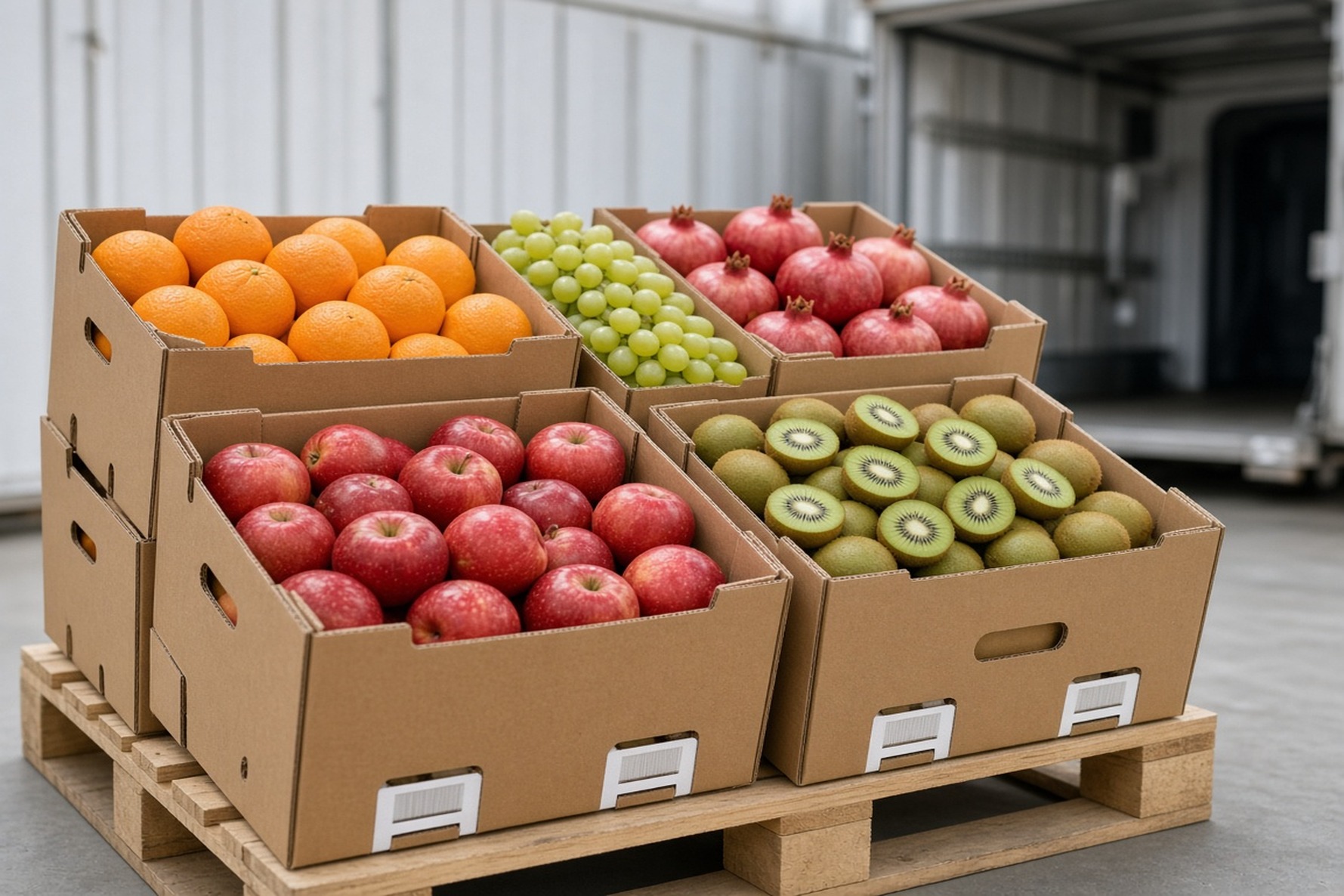
Iran produces temperate, subtropical and warm-climate fruits. Apples, pears, peaches, nectarines, plums, apricots, cherries and grapes come from mountain and temperate zones. The northern coast is a key citrus and kiwi hub. Pomegranate is important in central, Fars, Yazd, Semnan and Isfahan provinces.
West and East Azerbaijan remain major apple centres; national apple output was reported at about 4.2 million tonnes in 1405. Gilan and Mazandaran are central to the kiwi chain. Iranian pomegranate has wide genetic diversity.
This geography has three commercial effects: harvest seasons do not align across regions; colour, texture, size and shelf life depend on origin and picking time; export buying must be tied to specific orchards and lots.
- Harvest timing for one fruit is not simultaneous across all regions.
- Colour, texture, size, acidity and shelf life depend on region, orchard and picking date.
- Export purchases should be based on orchard, packing centre and specific shipment.
2. Main Iranian fresh fruit types and commercial differences
International trade requires understanding post-harvest behaviour. Storage ability, impact sensitivity, softening speed, ethylene production and industrial sorting capacity all affect export value.
| Product group | Known types | Key buyer difference | Suitable use |
|---|---|---|---|
| Apple | Red Delicious, Golden Delicious, Gala, Fuji and local varieties | Colour, sweetness, firmness and storage life differ | Wholesale, retail and cold storage |
| Kiwi | Mainly green Hayward | High firmness at harvest and post-harvest ripening | Land and sea cold chain |
| Orange | Thomson Navel, Valencia and local types | Harvest timing, juice, peel colour and shelf life differ | Fresh consumption and wholesale |
| Mandarin | Early and mid-season types | Easier peeling but usually more fragile than orange | Fast retail turnover |
| Pomegranate | Sweet Saveh, Rabab, Shisheh-Kab and regional types | Size, skin and aril colour, sweetness and acidity | Fresh and premium retail |
| Grape | White seedless, red seedless, black and seeded types | Berry size, colour, cluster attachment and sweetness | Table grapes |
| Peach & nectarine | White- and yellow-flesh types | Fast softening and impact sensitivity | Nearby markets and strict cold chain |
| Plum | Red, black, yellow and green types | Firmness, skin colour, acidity and ripeness | Wholesale and retail |
| Cherry | Light to dark red types | Higher unit value and limited commercial window | Premium markets and fast transport |
| Apricot | Early and mid-season types | Sensitive texture and short harvest window | Nearby markets or fast transport |
| Watermelon | Round and elongated types in various sizes | Weight, uniformity, flesh colour and ripeness | High-volume trade |
| Melon & cantaloupe | Many local and commercial types | Aroma, texture, Brix and cold-storage behaviour | Wholesale and retail |
| Strawberry | Field and greenhouse production | Highly sensitive to pressure, mould and heat | Fast transport and nearby markets |
Apple — volume trade and storage
Apple is one of Iran's most important export fruits. Red types have strong demand in South Asian markets.
For bulk buyers, size, firmness, colour coverage, Brix and cold-store history matter more than variety name alone.
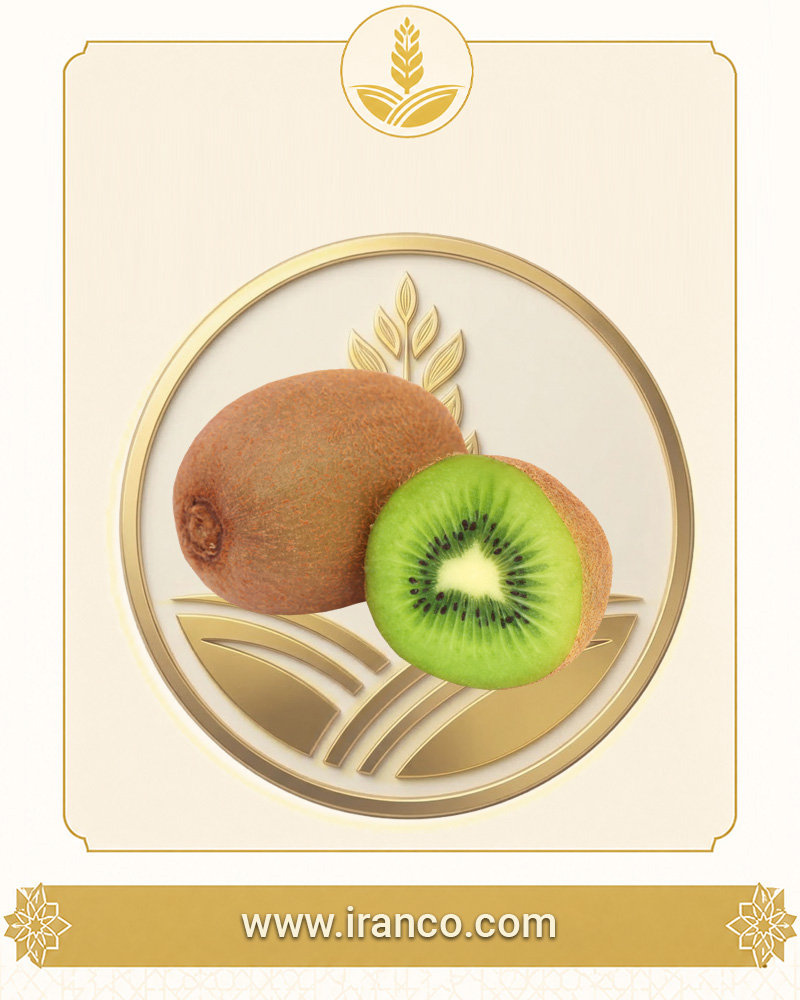
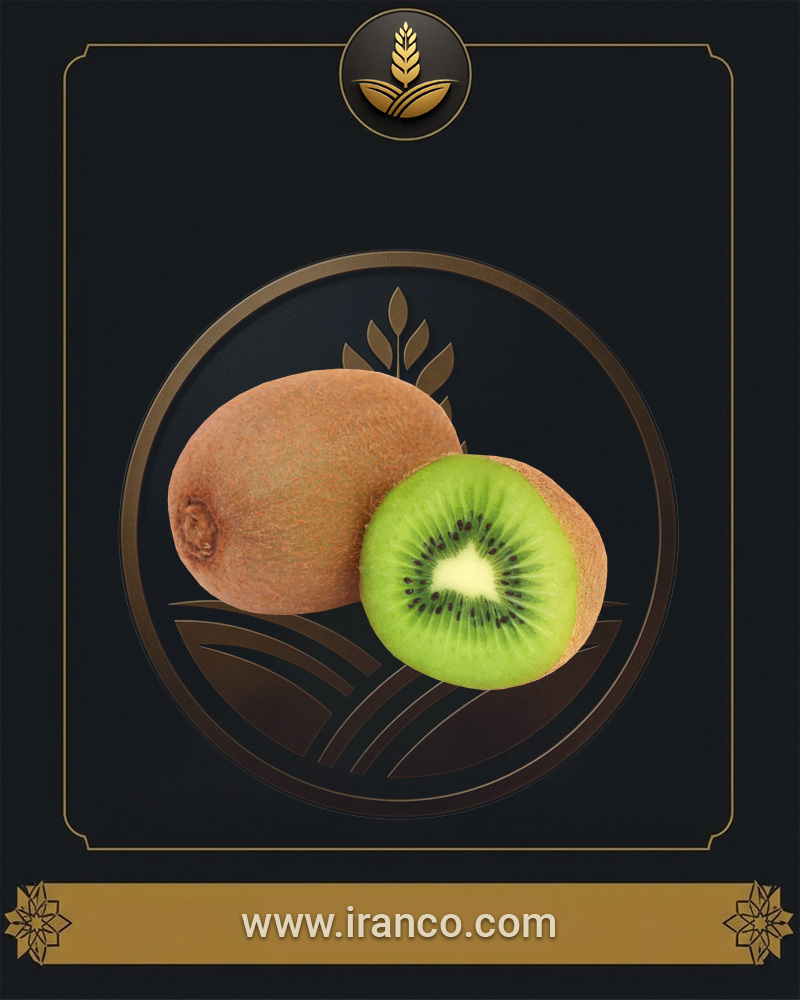
Kiwi — harvest timing is decisive
Iranian export kiwi is mainly green. UC Davis cites minimum 6.5% soluble solids for harvest.
Kiwi stores at 0°C and 90–95% RH but is highly ethylene-sensitive.
Citrus — pretty fruit vs export-grade fruit
Peel colour alone is not enough for orange and mandarin. Mandarins are usually more fragile than oranges.
Pomegranate — skin does not tell the whole story
Skin cracking, crown damage and internal decay are major risks. Cut sampling in QC is essential.
Stone fruit — high value, low error margin
Peach, nectarine, plum, apricot and cherry have shorter commercial windows. Cooling delay accelerates softening.
3. Which countries import Iran's fresh fruits?
Each fruit has a different export map. Importer-reported 2024 statistics show goods actually registered at destination.
| Product | Important markets | Sample recorded volume |
|---|---|---|
| Fresh apples | India, Iraq, Uzbekistan, Kazakhstan, Pakistan, Oman | India: ~157.1k tonnes |
| Watermelon & melon | Iraq, Oman, Turkey, Qatar, Armenia, Kazakhstan | Iraq: ~122.5k tonnes |
| Orange | Iraq, Azerbaijan, Armenia, Uzbekistan, Kazakhstan, Georgia | Iraq: ~27.8k tonnes |
| Mandarin & similar | Iraq, Armenia, Azerbaijan, Georgia, Kazakhstan | Iraq: ~4.1k tonnes |
| Fresh grapes | Iraq, Pakistan, Azerbaijan, Oman and some EU markets | Pakistan: ~4.0k tonnes |
| Peach & nectarine | Iraq, Oman, Armenia and smaller markets | Iraq: ~7.0k tonnes |
| Plum | Iraq, India, Kazakhstan, Qatar, Oman, Kuwait | Iraq: ~5.0k tonnes |
| Apricot | Iraq, Oman, Kuwait, Qatar, Kazakhstan | Iraq: ~2.1k tonnes |
| Cherry | Iraq and limited other markets | Iraq: ~552 tonnes |
| Strawberry | Iraq, Kuwait, Oman, Kazakhstan, Azerbaijan | Iraq: ~38.6 tonnes |
India — major apple market
India registered over 157,000 tonnes of fresh apples from Iran in 2024. Mazandaran kiwi exports to India have also been reported.
Iraq — the region's most diverse market
Iraq imported Iranian apples, melons, citrus, grapes, peaches, plums, apricots and cherries in 2024. Geographic proximity must not replace pre-cooling.
Central Asia and Caucasus
Uzbekistan and Kazakhstan are active in Iranian apples. Armenia, Azerbaijan and Georgia matter for citrus and melons.
Gulf countries
Oman registered over 53 million kg of Iranian watermelon and melon in 2024. High ambient heat requires tight cold chain design.
Europe — smaller volume, stricter rules
Success usually requires product planned for MRL, traceability and packaging from the start — not the same lot as regional bulk markets.
4. What should a foreign buyer specify when ordering?
A common mistake is a short request like 'quote one container of red apples'. That removes the ability to compare real offers.
| Parameter | What to define | Why it matters |
|---|---|---|
| Product type | Exact fruit name and commercial type | Affects taste, shelf life and price |
| Size | Diameter, weight or count per pack | Defines sales grade |
| Colour | Acceptable colour level or coverage | Critical for retail |
| Ripeness | Ripeness at loading | Defines remaining shelf life |
| Firmness | Agreed method and standard | Transport tolerance control |
| Brix | Where relevant | Sweetness and ripeness index |
| Surface defects | Tolerance for spots, scars, sunburn, misshape | Prevents disputes |
| Decay | Prefer zero or clear contractual limit | Whole-shipment risk |
| Net weight | Actual product weight excluding pack | Price comparison basis |
| Packaging | Material, structure, ventilation and layout | In-transit protection |
| Pallet | Dimensions, stacking and securing | Pressure prevention |
| Loading temperature | Product-specific | Preserves commercial life |
| Pesticide residues | Per destination market | Entry to strict markets |
| Phytosanitary certificate | Per destination rules | Quarantine requirement |
| Destination & delivery terms | City, port, border and Incoterms | Real landed price |
Sample approval alone is not enough. The contract must apply the same criteria to the full shipment.
For large orders, pre-loading inspection sampling method should be agreed in advance.
5. Fresh fruit quality control
QC has three layers: visual soundness, physical and chemical attributes, and destination-market compliance.
Visual inspection covers decay, bruising, cuts, cracking, pest damage, spots, sunburn, shrivelling, crown damage and foreign matter.
Firmness is a key index. Values must be reported with defined method and instrument — 'firm and export grade' is not a technical standard.
Brix reflects soluble solids. For grapes, melons, kiwi, pomegranate and citrus, acceptable limits should be written into the contract.
In strict markets, pesticide residue results can decide whether a lot is marketable. EU limits are in Regulation (EC) No 396/2005.
6. Export fruit packaging
Packaging must protect mechanically, allow heat and moisture exchange, and present the product in the format the market expects.
Apples and citrus
Cartons need adequate crush resistance. Retail may use trays or dividers.
Kiwi
Point pressure can cause hidden damage. Fruit size per carton should be uniform.
Grapes
Need ventilation and berry-drop control. Rough handling increases berry separation.
Peach, nectarine and apricot
Shallow packs with limited vertical pressure. Tight stacking causes pressure marks.
Pomegranate
Crown protection matters — damage there opens a decay pathway.
Watermelon and melon
Pallet design, top-layer pressure and load securing are critical.
7. Cold chain and transport
One of the most dangerous mistakes is assuming a single 'standard fruit temperature'. Apples and kiwi can be held near 0°C; watermelon suffers chilling injury at such temperatures.
| Product | Reference temp. | Relative humidity | Main note |
|---|---|---|---|
| Common apples | Near 0°C | 90–95% | Ethylene control and firmness retention |
| Kiwi | 0°C | 90–95% | Very high ethylene sensitivity |
| Table grapes | Near 0°C | 90–95% | Prevent stem drying and berry drop |
| Peach & nectarine | −1 to 0°C | 90–95% | Sensitive to cooling delay |
| Pomegranate | ~5°C for shorter storage | 90–95% | Water loss and chilling injury risk if stored too cold too long |
| Watermelon | ~10–15°C | 85–90% | Very low temperatures cause chilling injury |
Pre-cooling
A reefer container is not designed to pull field heat quickly. Warm fruit needs long time to reach target temperature.
Ethylene
Mixing products on temperature alone is wrong. Kiwi is sensitive to even low ethylene levels.
Temperature logging
Data loggers should be placed in the load. Data helps improve future shipments.
8. Tariff codes and entry requirements
Fresh fruits mainly fall in HS Chapter 08. Pomegranate is classified under 'other fresh fruit' with country-specific national subcodes.
| Product | HS code | Group |
|---|---|---|
| Orange | 080510 | Fresh citrus |
| Mandarin | 080521 | Fresh citrus |
| Fresh grapes | 080610 | Table grapes |
| Watermelon | 080711 | Melons |
| Other melons | 080719 | Melon and cantaloupe |
| Apple | 080810 | Temperate fruit |
| Pear | 080830 | Temperate fruit |
| Apricot | 080910 | Stone fruit |
| Sour cherry | 080921 | Stone fruit |
| Other cherries | 080929 | Stone fruit |
| Peach & nectarine | 080930 | Stone fruit |
| Plum | 080940 | Stone fruit |
| Strawberry | 081010 | Perishable berry |
| Kiwi | 081050 | Temperate fruit |
Iranian plant exports are inspected by quarantine officers and receive phytosanitary certificates when compliant. Destinations may add pest-specific conditions.
Since December 2019 most fruits entering the EU require phytosanitary certificates. From January 2025 Regulation (EU) 2023/2429 applies marketing standards for fruit and vegetables.
9. Choosing the right export market
Market fit depends on commercial life, price level and expected standard.
Strawberry, apricot and cherry suit shorter routes. Apple and kiwi tolerate longer journeys with proper cold chain.
Watermelon and melon have lower price-to-weight ratios; proximity to Iraq and Oman matters greatly.
Iran's advantage is not always lowest price — proximity, supply season and land routes can be real strengths when quality is controlled.
10. How export fresh fruit prices are set
Price cannot be compared on product name alone. Comparable pricing requires two sellers quoting the same technical specification.
| Factor | Price impact |
|---|---|
| Harvest season | Early season, peak supply and late season differ |
| Size | Some markets pay more for specific sizes |
| Uniformity | Uniform lots have higher retail value |
| Colour | Affects appeal in apple, pomegranate and others |
| Firmness & ripeness | Defines transport tolerance and selling window |
| Packaging | Carton, tray, pallet and consumer pack add different costs |
| Acceptable defect rate | Strict sorting raises sellable product cost |
| Testing | Residue tests and extra QC add cost |
| Pre-cooling & cold store | Part of real export cost |
| Order volume | Affects sorting, packing and freight cost |
| Destination | Logistics and clearance costs differ |
| Delivery terms | Ex-pack price is not comparable to delivered price |
11. Importer checklist before placing an order
- Define exact product name and commercial type.
- Specify production region and, if relevant, supplying orchard.
- Check season and approximate harvest date.
- Write size or weight range into the contract.
- Define acceptable colour and appearance criteria.
- Set firmness or ripeness at loading for sensitive fruit.
- Specify Brix limits where relevant.
- Document defect tolerances in writing.
- Review pre-purchase sample and convert criteria to contract.
- Design residue testing per destination market.
- Confirm phytosanitary and quarantine requirements before packing.
- Approve carton type and internal layout.
- Define palletisation and cargo ventilation.
- State pre-cooling and loading temperature.
- Plan temperature loggers for sensitive routes.
- Align preparation time with truck, vessel or flight departure.
- Write delivery terms and Incoterms clearly.
- Define pre-loading inspection method.
- Define destination quality dispute procedure in contract.
- Agree net weight and invoice basis from the start.
12. What information is needed for an accurate quote?
- Fruit name and commercial type
- Size or weight range
- Required colour
- Firmness or ripeness
- Target Brix
- Order volume
- Pack type and net weight per unit
- Palletisation
- Destination country
- Delivery city, port or border
- Transport mode
- Reefer container or truck need
- Required tests
- Destination standard or MRL
- Approximate delivery time
13. Sourcing Iranian fresh fruit through Iranco
In international fruit buying, two offers differ by more than price per kilo. The buyer must define the product before approaching sellers.
Iranco can register structured purchase requests so Iranian supply options are reviewed against the same specification.
If you need Iranian fresh fruit, state product name, type, size, volume, packaging and destination in your purchase request.
Summary
Iran's fresh fruits behave very differently in trade. Apple and kiwi can reach distant markets with proper cold chain. Citrus depends on sorting and post-harvest management. Pomegranate is sensitive to internal condition. Peach, nectarine, apricot, cherry and strawberry have narrow time windows.
India is highly important for Iranian apples; Iraq is a diverse buyer; Central Asia, the Caucasus and the Gulf are real markets for several product groups.
For professional buyers, 'export fruit' must be defined numerically: size, firmness, ripeness, colour, defects, Brix, pack and cold-store conditions.
Frequently asked questions
Which Iranian fresh fruits have the strongest export potential?
Apple, kiwi, citrus, pomegranate, grape, watermelon and melon are leading groups. Peach, nectarine, plum, apricot and cherry are also exported but shorter commercial life limits routes.
What is the main market for Iranian fresh apples?
In 2024 import statistics, India registered over 157,000 tonnes of fresh apples from Iran — the largest recorded market.
Is Iraq only a buyer of cheap Iranian fruit?
Iraq's market is more diverse. In 2024 it imported Iranian apples, melons, citrus, grapes, peaches, plums, apricots and cherries.
Is a phytosanitary certificate required for fresh fruit export?
For many markets yes. Destinations may add further conditions that must be checked before loading.
Can apple, kiwi and watermelon travel at one temperature?
No. Kiwi and apple are held near 0°C; watermelon suffers chilling injury at very low temperatures.
How to check export kiwi quality before buying?
Assess firmness, ripeness, Brix, uniformity, skin damage and ethylene exposure in storage.
How should Iranian export fruit prices be compared?
First align specifications between offers. Price per kg without that data is a poor decision metric.
What information is needed to source fresh fruit from Iran?
Product name, type, size, ripeness, volume, packaging, destination, transport and test requirements — registrable on Iranco.
Featured Products






Related Articles



