 Iranco Magazine Team
Target markets, technical specs, sanitary rules and standards, packaging, logistics and competitive strategies
Export Guide · Peripheral Markets · Food
Growing Iran's Food Exports to Neighbouring Countries: Iraq, Russia, UAE, Oman and Pakistan
Macro trade position, HS codes, lab specs, COSQC/EAC/GSO/Vetis rules, tariffs and border corridors, packaging, cold chain and competitor analysis for B2B buyers
Introduction
Iran shares land borders with seven countries, which cuts freight cost and delivery time versus distant origins — but that edge only sticks when the SKU is designed for the destination channel, entry documents are completed before final production, and commercial lots match the approved sample.
Recent data put Iran's agricultural and food exports at about $6.3 billion, with more than 80% flowing to fifteen neighbouring and peripheral markets. Iraq, the UAE, Russia, Pakistan and Oman lead the list; Iraq alone absorbs roughly half of Iran's processed food export value.
The Iran–EAEU free trade agreement in force since May 2025 applies zero or preferential duty on about 87% of tariff lines covering over 95% of bilateral trade volume — subject to correct HS classification, rules of origin and TR CU/EAC technical compliance.
This guide targets procurement managers and food importers: from UHT milk and cheese to aseptic paste, greenhouse tomato, apples and dates, with measurable specs, border inspection and direct factory supply paths.
1. Macro export position in peripheral markets
Iran's food exports follow two patterns: high-volume land flows to Iraq, Afghanistan and Pakistan (produce, dairy, paste, cans) and value-added flows to the Gulf and EAEU (nuts, dates, SMP, industrial paste, UHT).
Structural weakness remains seasonal broker-led orders without written specs. Sustainable growth means B2B contracts with COA, clear Incoterms and reorders within 6–12 months.
| Indicator | Approx. value | Operational takeaway |
|---|---|---|
| Agri/food export value | ~$6.3B | Focus on repeatable SKUs and margin |
| Iraq share of processed food | ~50% | COSQC, Arabic label, cold chain first |
| Dairy exports to Iraq | >50% of total | UHT, cheese, doogh — shelf life at border |
| EAEU FTA lines | 87% zero rate | Origin proof + Vetis/EAC for Russia |
2. HS codes and high-demand items
HS on proforma, insurance and destination customs must match; code mismatch triggers CoC rejection, fines or duty reassessment.
| HS | Commercial description | Typical pack | Main destinations |
|---|---|---|---|
| 0401.20 | UHT milk | Tetra 1L / 200 ml | Iraq, Oman, UAE |
| 0406.90 | White / UF cheese | 400–800 g | Iraq, Kurdistan |
| 0402.10 | Skim milk powder (SMP) | 25 kg bag | Iraq, Pakistan, Russia |
| 2002.90 | Industrial aseptic tomato paste | 220 L bag-in-drum | Iraq, Russia, Pakistan |
| 2002.10 | Canned / jar paste | 400–800 g | Iraq, UAE, Oman |
| 0702.00 | Greenhouse tomato | 5–10 kg crate | Iraq, Russia (seasonal) |
| 0808.10 | Fresh apples | 18 kg tray carton | Iraq, Pakistan, Russia |
| 0804.10 | Dates (Mazafati, Zahedi, Kabkab) | 5–10 kg carton | UAE, Oman, Pakistan |
3. Lab specifications and contract parameters
Professional buyers purchase against COA and contract limits, not marketing phrases like "export grade one".
Tomato paste (aseptic & canned)
- Brix: aseptic 36–38%; retail can 27–29%
- Acidity: 1.8–2.2% citric (industrial); 1.5–1.8% (can)
- Colour: natural red a*; uniform L* — no non-compliant dyes
- Bostwick: aseptic <6 cm/30 s; can 6–8 cm
- HMC / pectin: aligned with destination factory sauce formula
Skim milk powder (SMP)
- Protein ≥34% (DM), moisture ≤4%, fat ≤1.5%
- Insolubility index ≤1.2 ml where biscuit plants require it
- Plate count <10,000 CFU/g; coliform <10/g
Greenhouse tomato
Firmness ≥6 N/mm² (or equivalent penetrometer); 80–90% red colour; no skin cracking; Brix ≥5% for some HORECA buyers.
| Parameter | Aseptic paste | Canned paste | SMP | Greenhouse tomato |
|---|---|---|---|---|
| Brix | 36–38 | 27–29 | — | ≥5 (optional) |
| pH | 3.8–4.2 | 3.9–4.3 | — | 4.2–4.6 |
| Bostwick | <6 cm/30s | 6–8 cm | — | — |
| Protein | — | — | ≥34% | — |
| Firmness | — | — | — | ≥6 N/mm² |
4. MRL, aflatoxin, microbiology and heavy metals
Each destination sets different limits for pesticide residues (MRL), aflatoxin, Salmonella/Listeria and Pb/Cd/Hg — COA must cite test methods (ISO/EU Codex/GSO).
- Nuts & dates: total aflatoxin <10 ppb (Gulf and EAEU buyers often stricter)
- Fruit & veg: organophosphate/pyrethroid MRL per destination list
- Dairy: antibiotic residues, aflatoxin M1 in raw milk supply; total and coliform counts
- Paste & cans: botulism safety via pH and aw; metals from processing line
| Group | Critical test | Destination note |
|---|---|---|
| Pistachio/almond | Aflatoxin B1, total | UAE GSO; Pakistan SRO |
| Dates | Yeast, mould, SO₂ (raisins) | Oman/UAE physical inspection |
| Apple/tomato | MRL, surface E.coli | Iraq quarantine; Russia Vetis |
| SMP | Heavy metals, Salmonella | TR CU 021/2011 |
5. Market analysis: Iraq, Russia, UAE, Oman, Pakistan
Iraq: largest destination; dairy, paste, cans, produce and confectionery. Wholesale in Jamila and Shorja; south is price-driven, Kurdistan prefers brand and pack.
Russia: large market; fruit, veg, nuts and FTA-favoured processed goods. Russian label, EAC and Vetis declaration required.
UAE: import and re-export hub; GSO standards, global competition, traceability for dates and pistachios.
Oman: import-dependent; opportunity for UHT, canned paste, dates and fruit via Bandar Abbas/Salalah sea lanes.
Pakistan: land border; SRO 237, halal, pistachios, apples, paste and SMP for biscuit industry.
| Country | High-demand items | Dominant channel | Main challenge |
|---|---|---|---|
| Iraq | Dairy, paste, cans | Traditional wholesale | COSQC, CoC, cold chain |
| Russia | Fruit, SMP, aseptic paste | Importer + factory | EAC, Vetis, FTA origin |
| UAE | Dates, pistachio, UHT | Hypermarket, re-export | GSO, brand competition |
| Oman | Dates, paste, dairy | Local importer | Supply stability, sea leg |
| Pakistan | Pistachio, apple, SMP | Border + industry | SRO 237, layered duty |
6. COSQC, TR CU/EAC, GSO and Vetis
COSQC (Iraq): IQS 230 printed Arabic labelling; IQS 1847 shelf life; CoC before clearance for mandatory QC items.
TR CU / EAC (EAEU): TR CU 021/2011 (food safety), 022/2011 (labelling), 029/2012 (MRL); shipment notification in Russia's Vetis system.
GSO (Gulf): GSO 9 labelling; product registration in UAE/Oman/KSA as applicable; halal and origin.
- Approve destination artwork before mass print — hand stickers banned in Iraq
- Pre-shipment inspection at origin for Iraqi CoC via accredited body
- EAEU: EAC mark on pack or documents per product group rules
7. EAEU FTA, Pakistan/Iraq tariffs and border corridors
The Iran–EAEU FTA zeroed duty on most lines, but quotas and rules of origin must be checked per HS. Iraq and Pakistan rely mainly on MFN/preferential schedules — Pakistan PTA and a broader FTA remain under negotiation.
- Iraq: Mehran–Zurbatiyah, Shalamcheh, Chazabeh, Parvizkhan, Bashmaq, Khosravi, Haji Omaran
- Pakistan: Mirjaveh–Taftan, Rimdan–Gabed, Pishin–Mand
- UAE/Oman: Bandar Abbas–Jebel Ali/Sohar/Salalah (sea)
- Russia: Astara–Astara, Incheh Borun, Anzali/Amirabad ports + rail
- Turkmenistan: Sarakhs, Lotfabad, northern Incheh Borun
| Destination | Sample HS | Duty / advantage |
|---|---|---|
| EAEU (FTA) | 2002.90 paste | 0% subject to origin |
| Iraq | 0401 UHT | 5–15% CIF + QC |
| Pakistan | 080251 pistachio | CD ~11% + ST/IT |
8. Aseptic bag-in-drum, MAP and ISPM15 cartons
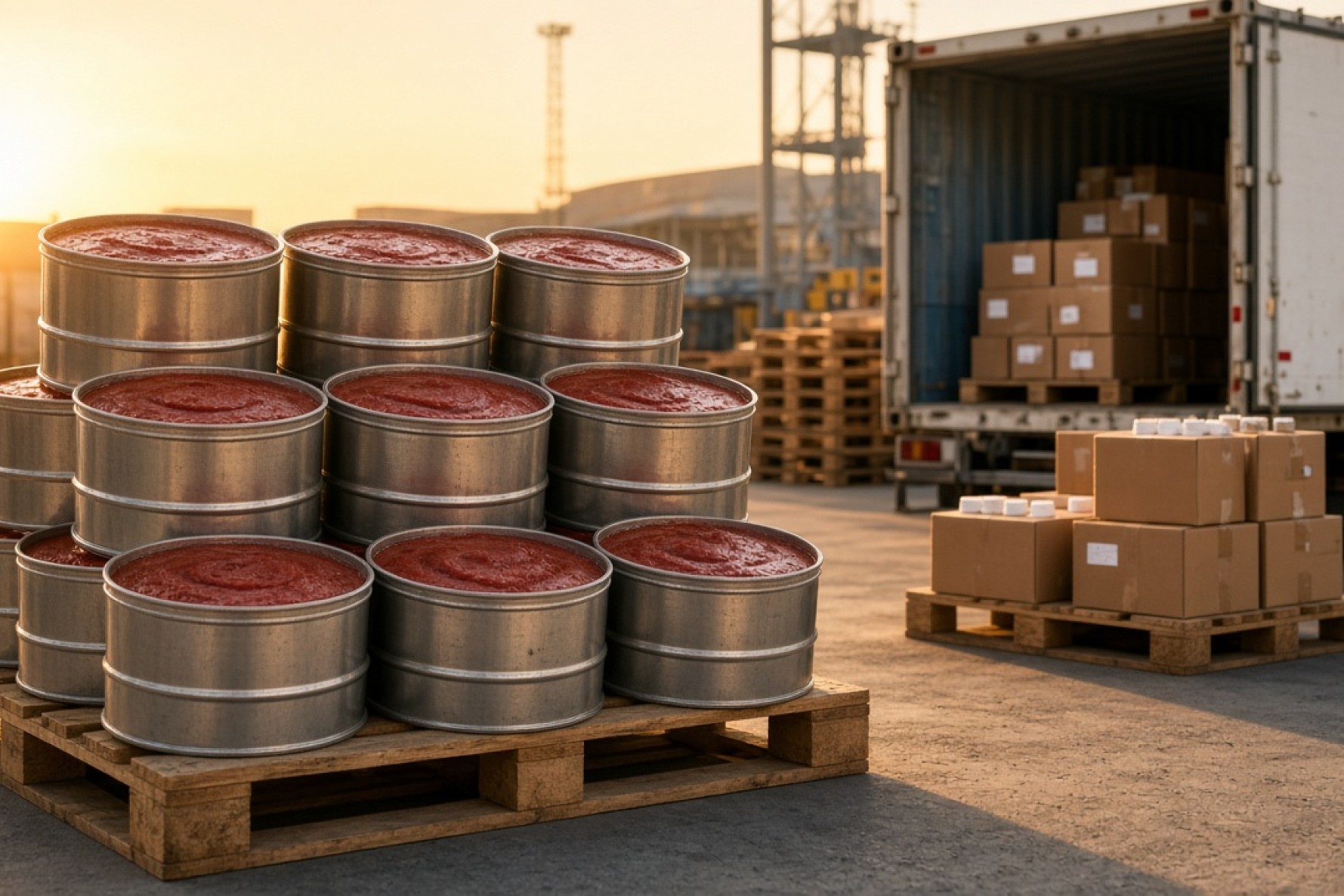
Industrial paste in aseptic aluminium bags inside 220 L steel drums is standard for Iraqi and Russian sauce plants. Cans need internal epoxy lacquer for acidity.
Nuts and dates: MAP with N₂/CO₂ to limit oxidation; export pistachios in 10 kg laminated PP.
Export wooden pallets must be ISPM15 (HT or MB) — especially UAE, Oman and Russia; use 5-ply waterproof craft cartons.
9. Cold chain temperature table
| Product | Transit temp. | Humidity / notes |
|---|---|---|
| UHT milk (packed) | 15–25 °C dry | Avoid direct sun |
| Fresh doogh/yoghurt | 0–5 °C | Max 3–5 days to Iraq border |
| Fresh cheese | 2–8 °C | Separate from ethylene fruit |
| Apples | 0–2 °C | RH 90–95% |
| Greenhouse tomato | 10–12 °C | Ventilated; <10 °C damages texture |
| Dates | 15–20 °C dry | Warehouse pest control |
| Aseptic paste | 5–25 °C | Refrigerate after opening seal |
10. Competitors: Turkey, India, Egypt and China
Iran wins on land distance and ex-factory cost; Turkey leads on pack and brand (especially Iraqi Kurdistan), China on paste and cans scale, India on spices and some dairy, Egypt on select cans and sweets.
| Country | Competitive field | Rival edge | Iran response |
|---|---|---|---|
| Turkey | Dairy, biscuits, canned paste | Brand, modern pack | Price + 48h border delivery |
| China | Paste, cans, SMP | Price, capacity | Higher Brix, FTA to Russia |
| India | Spices, rice, some fruit | Scale, Pakistan PTA | Pistachio, dates, seasonal tomato |
| Egypt | Orange, some cans | Gulf shipping | Dates, paste, UHT dairy |
11. Industrial uses (B2B)
| Iran product | Downstream industry | Key parameter |
|---|---|---|
| Aseptic paste | Sauce, ketchup, soup | Brix 36–38, Bostwick |
| SMP | Biscuit, chocolate, bread | 34% protein, solubility |
| Broken pistachio/VMD | Confectionery, ice cream | Colour, aflatoxin |
| Date paste/syrup | Beverage, energy bar | Brix, microbiology |
| Industrial tomato | Paste, HORECA salad | Firmness, uniformity |
12. Ten-point importer checklist
- 1.Written HS, grade and COA with contract acceptance limits
- 2.Destination label approval (Arabic/Russian/Urdu) before print
- 3.Remaining shelf life at border (Iraq ≥50%; Pakistan SRO 66%)
- 4.CoC / pre-shipment inspection for COSQC
- 5.Vetis and EAC for dairy/meat shipments to Russia
- 6.Border choice matched to destination city (Mehran vs Shalamcheh vs Taftan)
- 7.Temperature data logger on refrigerated loads
- 8.ISPM15 pallets and proper strapping
- 9.Incoterms and delivery point on proforma
- 10.Clause A insurance for perishables and reefers
13. LOI / RFQ fields for accurate quotes
- Exact product name, proposed HS and use (retail/industry/HORECA)
- Technical indices: Brix, moisture, protein, firmness, Bostwick, aflatoxin
- Volume (MT or TEU), order frequency, delivery window
- Pack type, net weight, units per carton, private label yes/no
- Country, city, border/port, Incoterms (EXW/FCA/FOB/CIP)
- Required certificates: CoC, halal, health, origin, EAC
- Approved sample and reference laboratory
Iranco supply path
The Iranco platform connects regional buyers directly with Iranian food and dairy factories: RFQ with technical specs, COA alignment, origin inspection, corridor choice (land/sea) and document support for COSQC, GSO and EAC — without exclusive reliance on border brokers.
- Compare multiple suppliers on one specification sheet
- Sample and lot approval before bulk orders
- Label and shelf-life alignment with final destination
Analytical summary
From a ~$6.3B agri/food export base, neighbouring markets can grow further by shifting to processed goods (Iraq's ~50% food-industry share) and using 87% zero-tariff EAEU lines — if short transit becomes stable quality, complete documents and ISPM15/MAP packaging.
Iraq and Pakistan offer instant land channels; UAE and Oman reward brand and re-export; Russia offers FTA scale with Vetis. Turkey, China and India are beaten only with contract specs and cold chain discipline.
Frequently asked questions
Can I buy directly from factories in Iran?
Yes — submit an RFQ via Iranco, match line capacity, sample and COA, and sign a B2B contract with clear Incoterms. Broker purchases without specs carry high border-rejection risk.
What information is needed for a price quote?
HS, grade, lab parameters, pack, volume, destination, border/port and Incoterms — otherwise quotes are not comparable.
Aseptic paste vs bulk/industrial paste?
Aseptic sterile bag in drum at Brix 36–38 for factories; retail cans at lower Brix. Bostwick and HMC drive industrial contracts.
Common reasons for fruit rejection at border?
MRL exceedance, live pests, spoilage from wrong temperature, wrong calibre, wet cartons and quarantine certificate mismatch with the packing list.
Requirements for dairy exports to Russia?
TR CU 021/022, Russian label, EAC where mandatory, Vetis notification, microbiology and residue COA; SMP and UHT are common lines.
How does the EAEU FTA help food exports?
About 87% of lines at zero duty — conditional on correct HS, certificate of origin and technical compliance; low duty does not replace standards.
How is Iraq CoC obtained?
For COSQC mandatory QC items, accredited pre-shipment inspection at origin and CoC before movement; IQS 230 and 1847 compliance required.
Food export supply from Iran with Iranco
Submit product specs, HS, delivery border and COA requirements for direct factory matching and neighbour-market compliance review.
Contact Irancoinfo@iranco.com · WhatsApp: +98 913 104 4182 · Telegram: @irancofood
Featured Products




Related Articles



