 Iranco Magazine Team
From product and market choice to QC, packaging, shipping, labelling rules and building a durable brand abroad
Confectionery export · Markets · Quality · Brand
Iran Confectionery & Chocolate Exports: Market Opportunities and Export Brand Building
From product and market selection through QC, packaging, shipping, labelling and building a durable export brand.
Introduction
Iranian confectionery export is not only about selling a tasty product. Lasting success requires aligned formulation, price, pack weight, design, shelf life, logistics and brand position in the destination market.
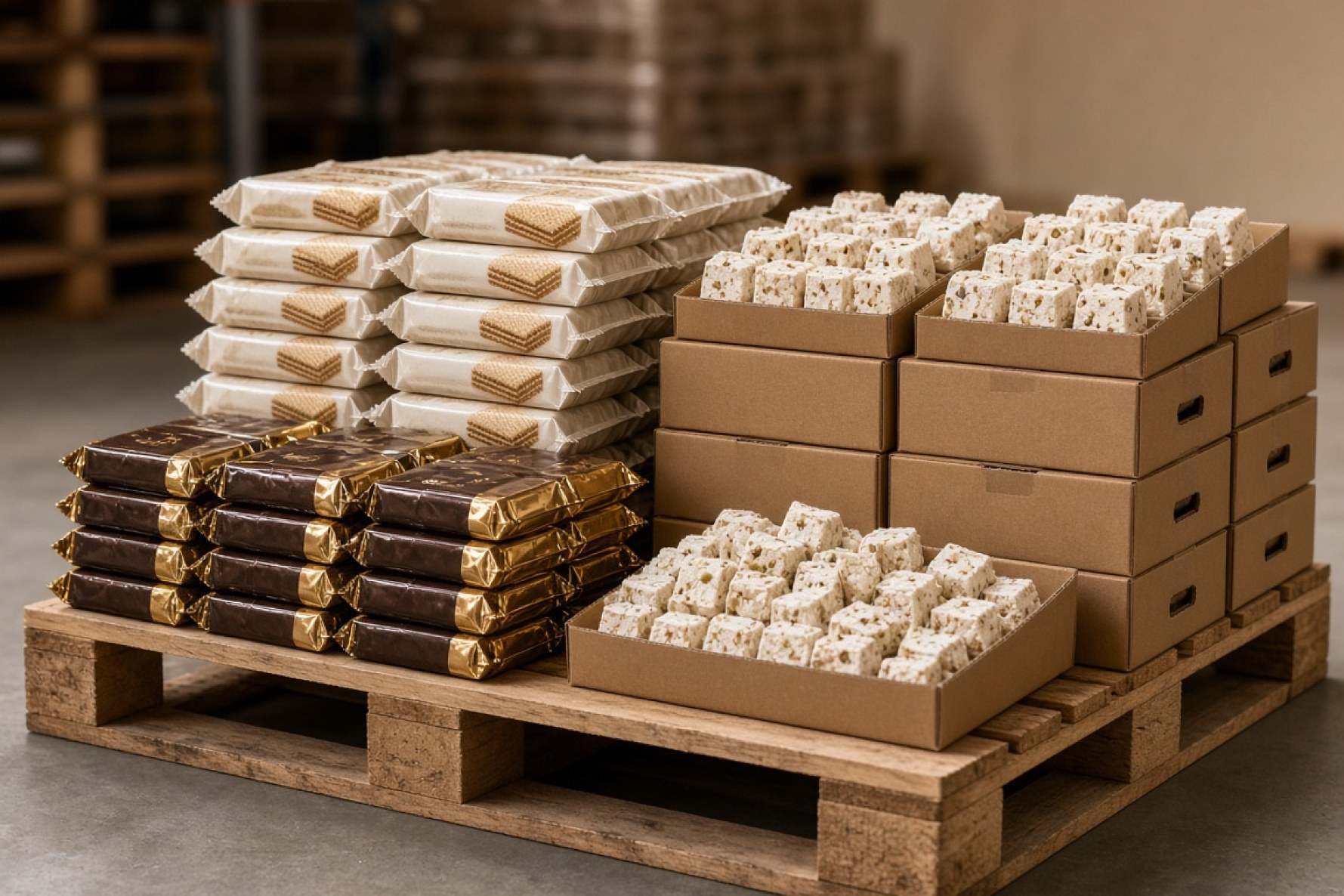
Iran can serve price-driven neighbours, regional chain retail and niche EU and Gulf markets. Biscuits, wafers, chocolate, toffee, candy, gaz, sohan and cocoa lines create value when SKUs match destination demand.
2024 data shows registered buyers in Iraq, Azerbaijan, Oman, Bahrain, Armenia, Kazakhstan and parts of Europe. Export presence is not brand building: taste stability, breakage control, pack look, label language, consumer unit size and distribution separate one-off loads from staying on shelf.
1. Defining Iran's confectionery and chocolate export basket
| Group | HS | Examples |
|---|---|---|
| Sugar confectionery | 1704 | Candy, toffee, non-cocoa white chocolate |
| Chocolate & cocoa | 1806 | Bars, filled, coated |
| Biscuits & wafers | 190530 | Biscuits, wafers, waffles |
Gaz, sohan and hybrid products must be classified by actual formula. Chocolate offers strong branding but heat sensitivity; wafers/biscuits suit daily consumption; traditional sweets need retail-grade specs for origin differentiation.
2. Key real export markets
| Group | Market | Approx. value |
|---|---|---|
| Chocolate | Iraq | ~$40.9M |
| Biscuits/wafers | Iraq | ~$75.3M |
| Sugar confectionery | Iraq | ~$6.45M |
| Multiple groups | Azerbaijan | 1704, 1806, 190530 |
| Gulf | Oman, Bahrain | Pack & label |
| Central Asia | Uzbekistan, Kazakhstan | Mid-price tier; EAEU rules differ |
| EU | Germany, Canada | Niche biscuits/wafers |
Iraq for scale and velocity; Azerbaijan for multi-SKU baskets; Gulf for pack quality and heat control; Europe via ethnic retail and specialist importers.
3. Which products fit export growth best?
| Product | Opportunity | Risk | Market |
|---|---|---|---|
| Single-serve wafer | Fast turnover | Moisture | Iraq, Azerbaijan |
| Family pack biscuit | Daily use | Price | Region |
| Chocolate bar | Brand | Heat | Gulf |
| Gaz & traditional | Origin | Nut QC | Gift, EU |
4. Professional importer order specifications
| Parameter | Definition | Importance |
|---|---|---|
| Name & HS | By actual formula | Customs clearance |
| Fat & nuts | Type & percentage | Label, price |
| Weight & pack | Unit & master carton | Logistics |
| Sensory & breakage | Reference sample | Acceptance |
| COA & batch | Each shipment | Traceability |
5. Export confectionery & chocolate QC
fat bloom and sugar bloom caused by temperature swings. wafer crispness depends on wrap and shelf-life testing on the final pack.
- Moisture and water activity
- Microbiology, Salmonella, mould and yeast
- Fat oxidation and nut quality
- Cocoa %, heavy metals, cadmium (EU)
- Aflatoxin, additives, weight, sensory, pack migration
6. Standards and market access
Codex CXS 87-1981 (chocolate) and CXS 192-1995 (additives) are key references. Cocoa-butter substitutes must not be sold as standard chocolate without checking destination naming rules.
EU 1169/2011: nutrition table, highlighted allergens, destination language. EU 2023/915: cadmium limits by cocoa solids (e.g. 0.10 mg/kg for lower-cocoa milk chocolate).
GSO 9:2022 Gulf labelling; Saudi GSO 839 and GSO 1863 for packs. Halal and gelatin origin must be settled upfront.
EAEU TR CU 021/2011 (safety), 022/2011 (labelling), 029/2012 (additives) for Kazakhstan and EAEU — not the same as Uzbekistan.
7. Packaging and shipping
Chocolate storage: about 12–18°C, dry, away from odours; high RH increases sugar bloom risk. Warm routes: technical band about 10–18°C and avoid sharp swings.
Wafers: moisture barrier wrap, strong cartons, pallet layout and realistic transit tests. Gift packs need real protection and efficient master-carton stacking.
8. Export pricing
Sugar, cocoa, fat, nuts, cream, unit weight, wrap and print, cartons, COA, volume, Incoterms, ambient vs temperature-controlled freight, importer/distributor margin and retail discounts all split price. A brand needs at least one non-price reason to buy.
9. Eight steps to build an export brand
- One market, one shopper — child/adult, gift/daily, value/premium.
- Hero SKU — one SKU with focused launch budget.
- Destination-first pack — not a sticker on the domestic pack.
- Price architecture — impulse, standard, family, premium, gift.
- Registerable, pronounceable name — before mass print.
- Distributor by real coverage — warehouse, heat handling, field sales.
- Seasonality — Ramadan, Eid, Nowruz; weight and launch timing.
- Sell-through data — SKU, city, returns, shelf competitor.
10. Own brand vs buyer private label?
| Model | Advantage | Limitation |
|---|---|---|
| Manufacturer brand | Long-term asset | Time & capital |
| Importer PL | Fast volume | Brand owned abroad |
| Hybrid | Volume + brand | More complex to run |
11. Sales channels
Traditional wholesale for large packs and fast turnover. Chain retail needs barcodes, steady supply and promo/discount budget. Ethnic retail entry path to Europe and Canada. Online retail for gift and traditional lines — packs must survive single-parcel post.
12. 24-point importer checklist
- Exact product name and category
- HS confirmed from formula
- Formula and full ingredient list
- Allergens declared clearly
- Final sample with export pack
- Unit weight and tolerance
- Colour, aroma, taste, texture criteria
- Breakage tolerance
- Destination tests before production
- Shelf life and minimum remaining at delivery
- Shipment temperature and humidity
- Wrap, box, master carton
- Units per carton and cartons per pallet
- Label artwork compliant with destination
- Required pack languages
- HACCP / ISO 22000 documentation
- COA per batch
- Batch code and traceability
- Production plan and readiness date
- Incoterms and delivery point
- Temperature control for chocolate
- Artwork ownership under PL
- Sales territory and exclusivity
- Non-conformance process
Information for a comparable quote (RFQ)
- Product group, flavour/formula, nuts, key component %
- Pack weight, units per carton, order volume
- Country, city/port, Incoterms, mode, temp control
- Pack language, brand or PL, carton type, standards/tests, shelf life, lead time
Summary
Sustainable export begins when the question shifts from “what do we make?” to “which SKU for which market?”. Iraq scales volume; the Gulf demands pack and temperature; Europe demands labels and contaminants — brands are built with a hero SKU, real distribution and batch consistency.
FAQ
What is Iran's main chocolate export market?
In 2024 data Iraq at about $40.9M (HS 1806) was the largest registered destination.
What HS code is used for chocolate?
Main heading 1806; subheading by shape, weight and formula. Non-cocoa white chocolate is 1704; some chocolate wafers are chapter 19.
What storage temperature for export chocolate?
About 12–18°C; stability matters as much as the absolute temperature.
Do Gulf exports need a reefer container?
Depends on season, route and SKU; in extreme heat, controlled transport from factory to delivery is recommended.
Key laboratory tests?
Moisture, microbiology, oxidation, allergens, metals; in the EU cadmium for high-cocoa chocolate.
How to build an Iranian chocolate brand abroad?
One focused market, one hero SKU, localized pack, distributor with real coverage, then range extension.
PL or own brand?
PL drives fast volume; own brand builds long-term equity; hybrid suits plants with spare capacity.
Why does wafer packaging matter for export?
Moisture kills crispness; wrap, seal, carton and pallet layout are critical.
How to compare export prices fairly?
Match formula, weight, pack, freight and Incoterms — not price per kg alone.
Can traditional Iranian sweets support a brand?
Yes — with fixed weight, protective pack, nut COA, full label and destination-ready design.
Featured Products


Related Articles



