 Iranco Magazine Team
Comprehensive international market analysis, microbiology standards, technical requirements and a practical import guide for Iranian herbal distillates and hydrosols
Herbal distillates · Hydrosols · ISIRI 3545 · Export packaging
Iranian Herbal Distillates Export: Global Market Potential and Packaging Requirements
In-depth analysis of international markets, microbiological standards, technical requirements and a practical guide to importing Iranian herbal distillates and hydrosols
This specialist report examines Iran’s export potential for herbal distillates, customs regulations and tariff codes, microbiological requirements under national standards, export packaging principles and cold-chain logistics. It provides international buyers, importers and trade managers with a comprehensive roadmap to reduce order risk and evaluate suppliers.
| Key indicator | Value / parameter | Commercial importance and use |
|---|---|---|
| Primary customs tariff code (HS Code) | 33019012 | International customs classification for other traditional herbal distillates |
| Global hydrosol market value | Over USD 500 million | Annual growth (CAGR) of roughly 6.5–7.2% toward 2030 |
| Maximum total microbial load (ISIRI 3545) | Maximum 200 CFU/ml | Mandatory safety and hygiene standard for herbal distillates |
| Import duty (Persian Gulf region) | 5% (+ 5% value-added tax) | Base import rate for distillates in the Sultanate of Oman and neighbouring markets |
Production of herbal distillates and natural hydrosols in Iran is one of the country’s most authentic and high-potential segments within food and pharmaceutical industries. With 11 of the world’s 13 climate zones and more than 8,000 plant species, Iran offers exceptional diversity in medicinal raw materials. Traditional and industrial distillation of aromatic plants has a multi-millennial history; today these processed goods rank among notable non-oil export drivers.
Shifting global consumption toward natural products, green cosmetics, wellness beverages and herbal pharmaceutical bases has sharply increased demand for hydrosols and herbal distillates. Markets that once knew distillates mainly as traditional flavourings now use these aqueous extracts in cosmetics and personal care, facial toners, beverages and pharmaceutical formulations.
Despite high raw-material quality and strong active-compound concentration in Iranian distillates, export success requires moving beyond traditional approaches and full compliance with hygiene rules, standard packaging and international customs regulations. International buyers and importers scrutinise contaminants, shelf life, aroma and taste stability, and packaging that resists light and oxygen ingress before placing orders. A precise reading of these requirements defines a sustainable trade path for the sector.
1. Iran’s role in production and the economic geography of herbal distillates
Iran is a leading global and regional hub for rose water and herbal distillates. Diverse geography — elevation, sunshine and soil — yields products with very high essential-oil and active-ingredient content.
The main herbal-distillate production regions in Iran include:
- Isfahan Province (Kashan, Qamsar, Niasar and Natanz): The emblematic centre of rose water and herbal distillates. Damask rose and regional distillates are internationally renowned for intense aroma and high aromatic-oil concentration.
- Fars Province (Meymand, Firuzabad and Shiraz): One of the country’s largest processing and export hubs. Meymand generates significant export revenue from rose water and distillates such as wild rose, willow and mint to GCC countries and Europe.
- Razavi Khorasan (Kashmar and Neyshabur): Major centres for industrial cultivation of medicinal plants and high-volume distillate production.
Harvest and distillation season typically begins in spring with rose water collection and continues through summer and autumn for other medicinal plants. Iran exports tens of thousands of tonnes of distillates and rose water annually, with a large share going to Arab Gulf states, Europe and East Asia. Iran’s core advantage lies in competitive raw-material pricing and high-quality natural essences; upgrading packaging and obtaining international certifications is the key to a larger share of the global addressable market.
2. Export product range, grades and industrial applications
The range of distillable medicinal plants in Iran is very broad. Each herbal distillate attracts distinct global buyers based on therapeutic properties, aroma and taste.
Leading exported Iranian herbal distillates include:
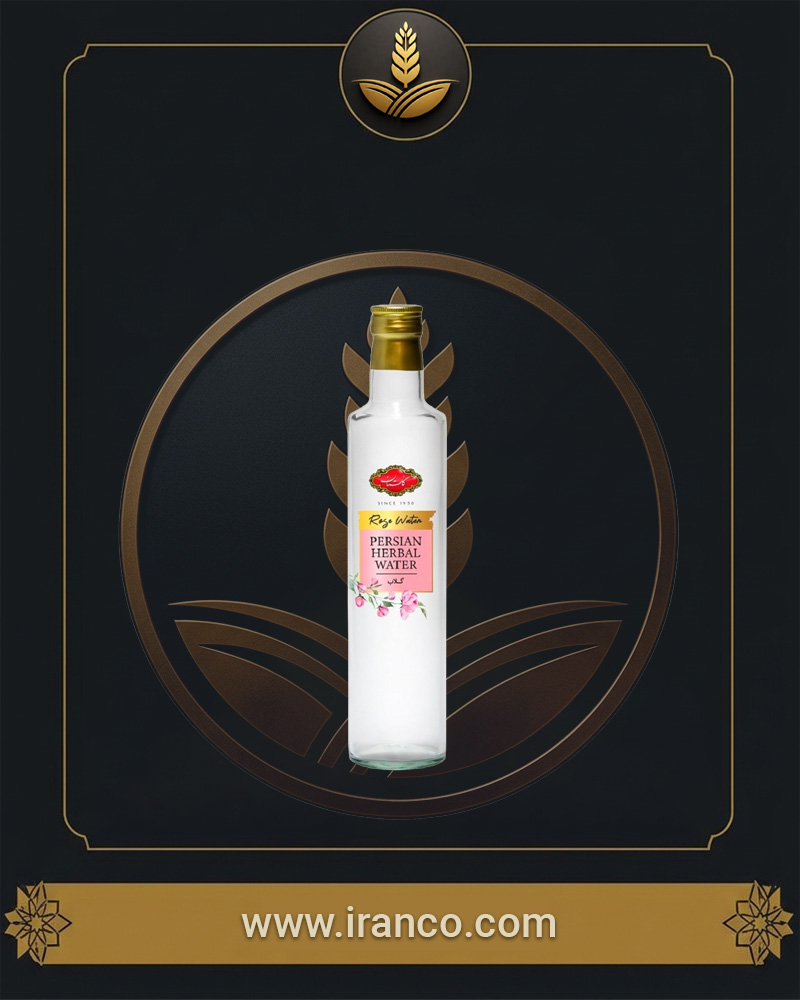
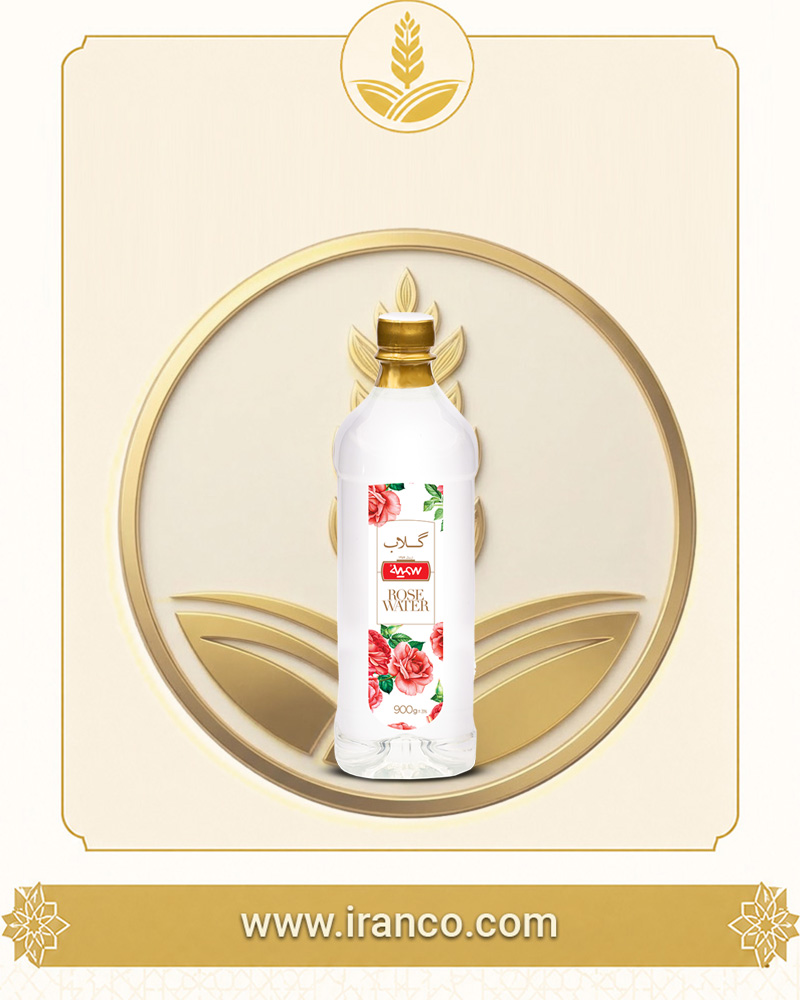
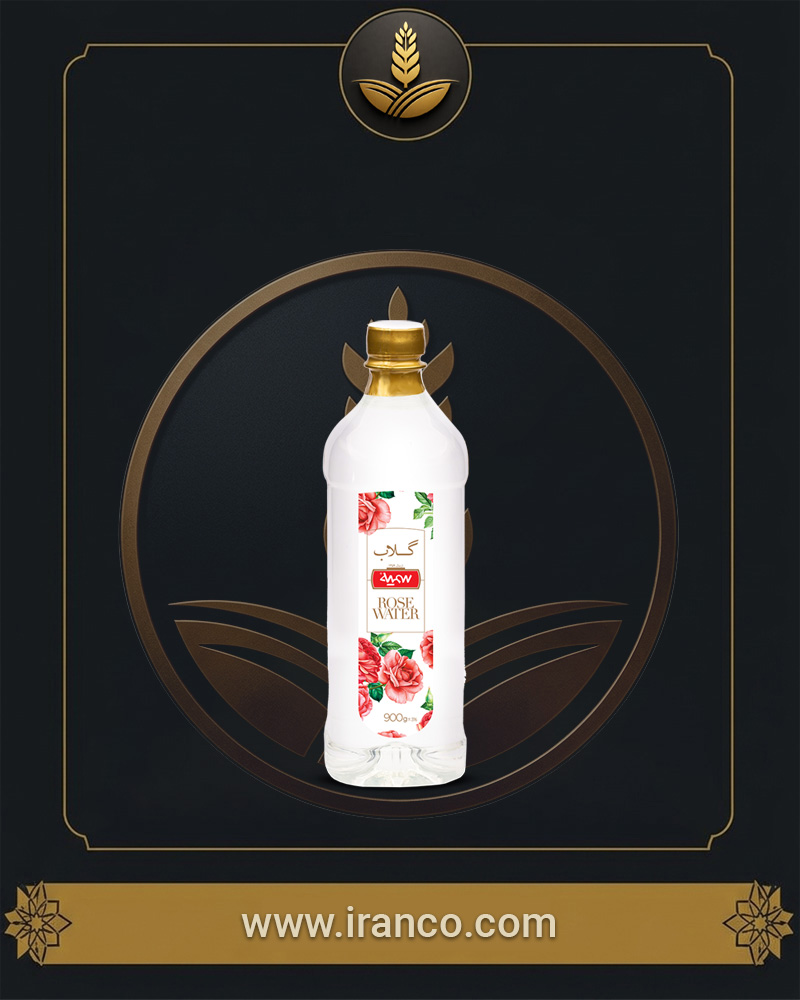
- Rose water: Iran’s best-selling distillate, in heavy, double-fired and light grades for food, cosmetic and ceremonial use.
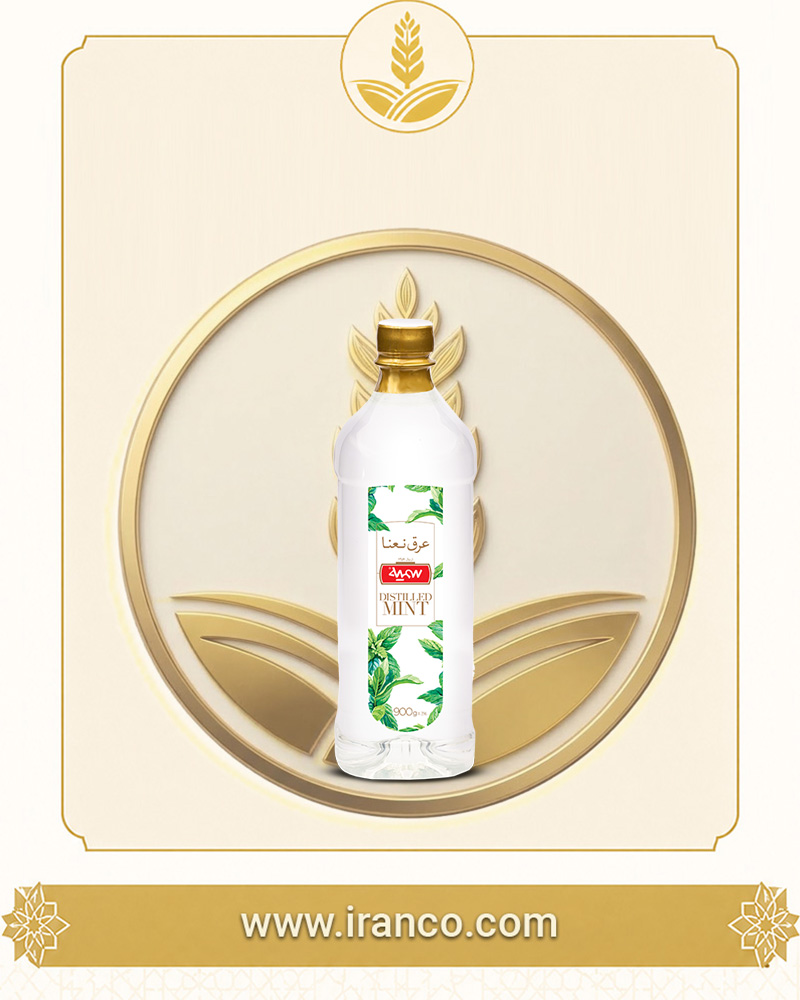
- Mint distillate: High export volumes thanks to superior digestive properties and wide use in beverages and pharmaceuticals.
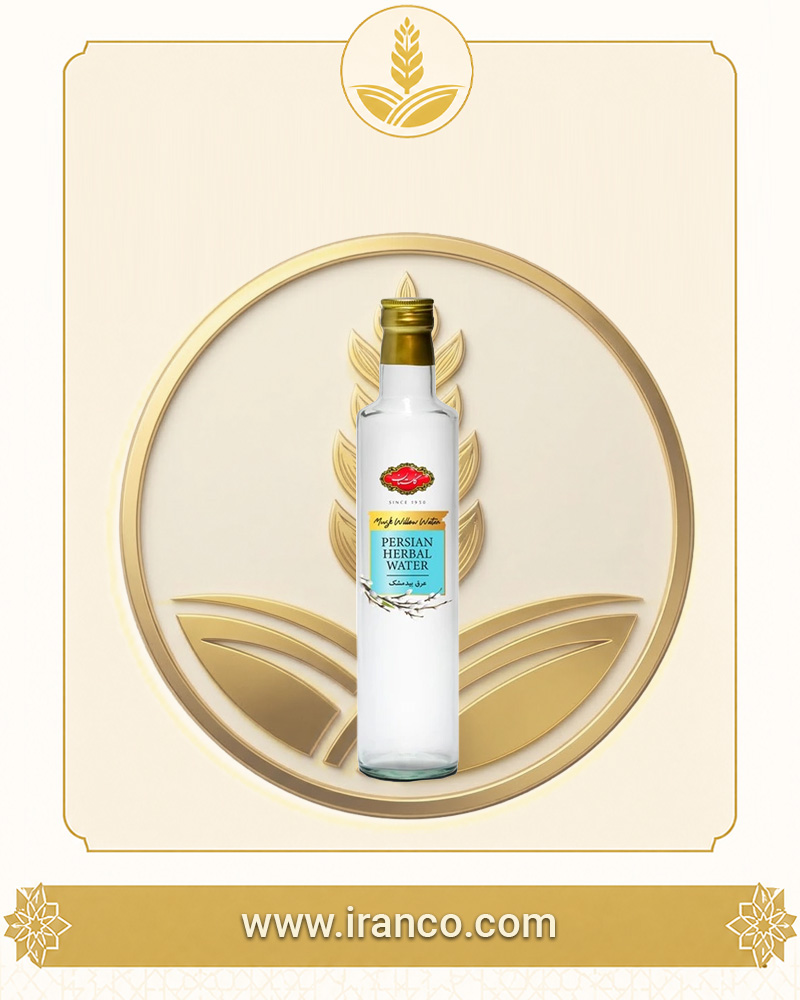
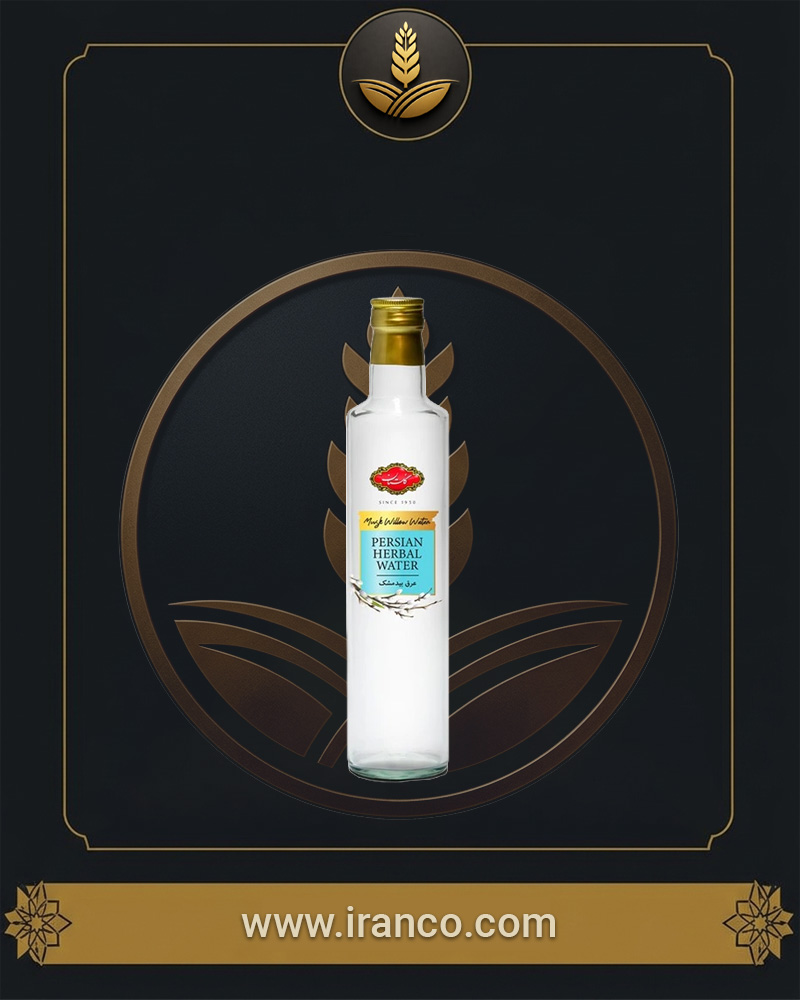
- Willow (bidmeshk) distillate: A fragrant, tonifying product for premium food and beverage applications.
- Orange blossom distillate: Strong citrus-floral aroma and calming properties; sought by fragrance, cosmetics and beverage industries.
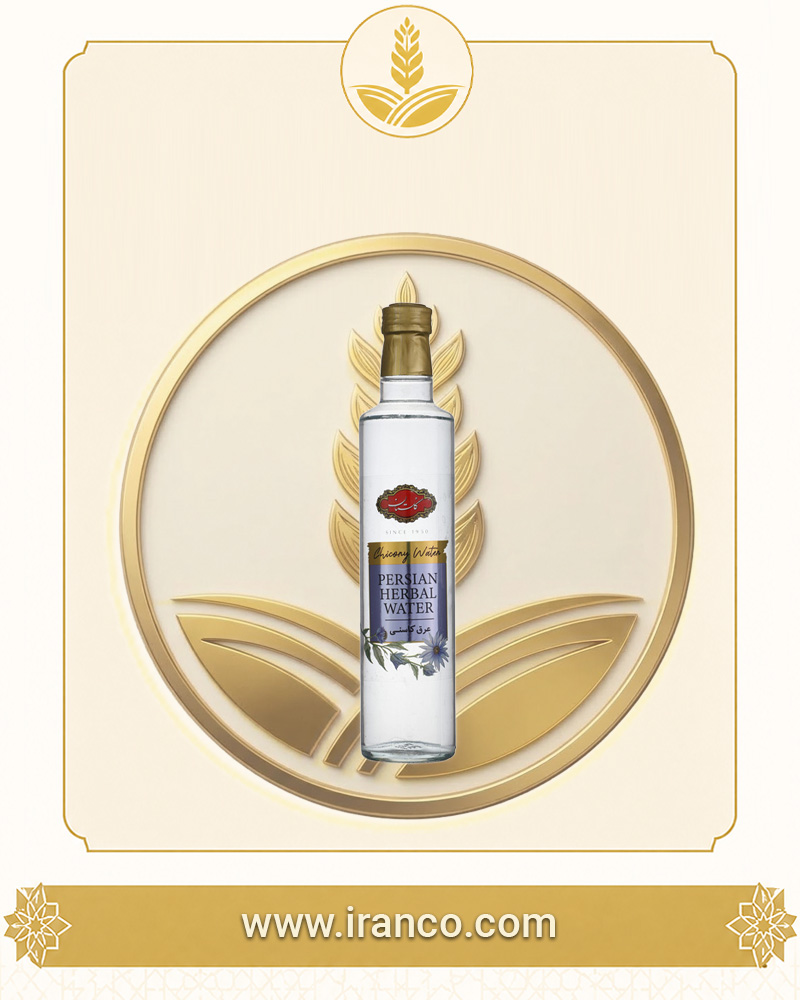
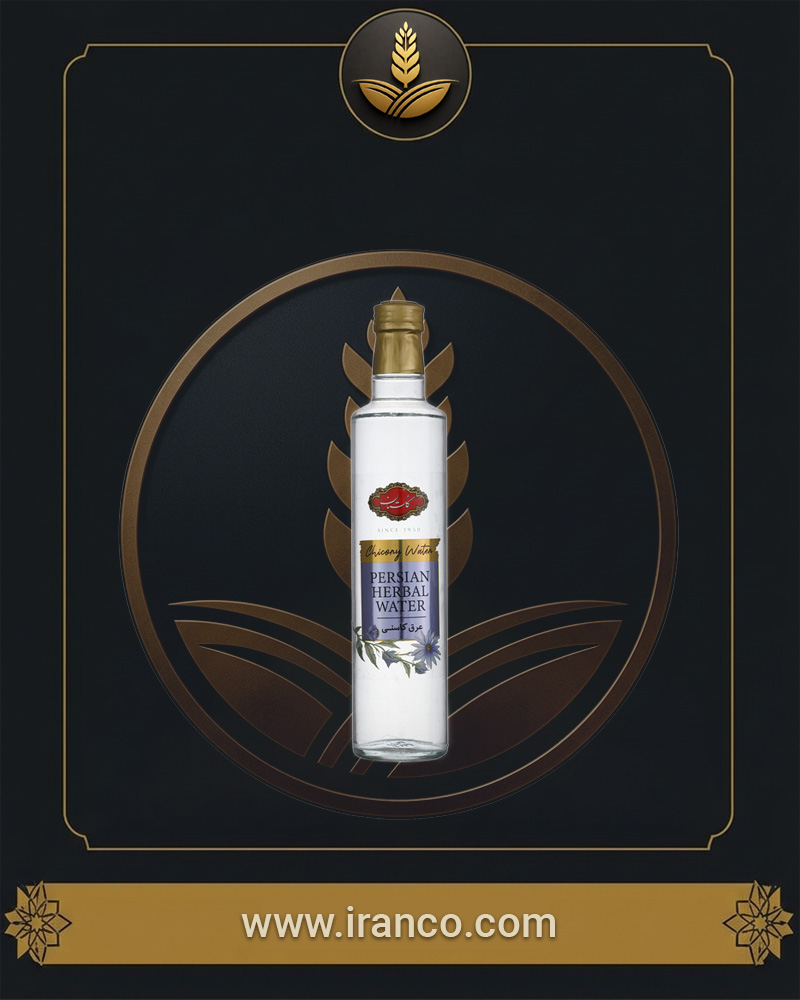
- Chicory and shatreh distillates: Used in blood-purifying herbal formulations and hygiene products.
- Thyme and kakuti distillates: Natural antiseptics and medicinal flavourings.
- Other distillates: Lavender, lemon balm, borage, olive leaf, cumin and pennyroyal.
Industrial uses of distillates and hydrosols
In international trade, bulk buyers of herbal distillates fall into three main groups:
- Food and beverage (F&B): Natural flavouring and aromatics in syrups, carbonated and still drinks, confectionery, chocolate, ice cream and dairy.
- Cosmetics, personal care and skincare: Hydrosols as aqueous bases in creams, lotions, cleansing toners and refreshing sprays.
- Pharmaceutical and traditional medicine: Herbal carriers in liquid medicines, herbal syrups and dietary supplements.
| Herbal distillate | Primary aroma and taste profile | Main industrial use | Key target markets |
|---|---|---|---|
| Export rose water | Floral, intense rose, slightly astringent | Cosmetics, pastry, beverages | Persian Gulf, Europe, East Asia |
| Mint distillate | Cooling, sharp menthol note | Pharma, digestive beverages | Arab countries, northern neighbours |
| Orange blossom distillate | Floral, citrus and blossom notes | Fragrance, cosmetics, premium syrups | Europe, Persian Gulf |
| Willow distillate | Mild herbal, aromatic | Beverages and food supplements | Arab countries and traditional markets |
| Thyme distillate | Sharp, medicinal aroma | Anti-cough syrups and hygiene products | Asian and regional markets |
3. Customs tariff codes (HS Code) and international classification
Accurate tariff codes are essential for correct customs declaration, duty calculation, lawful permits and smooth clearance at origin and destination. Herbal distillates and rose water have defined codes in the Harmonized System.
- 33019012: Declaration of “other traditional herbal distillates” and hydrosols from distillation.
- 33019000: Other essential oils, concentrates and related distillation products.
- 12119000: Dried medicinal plants and plant parts (raw materials; must not be confused with distilled products).
- 130219: Liquid or solid plant extracts and juices.
For formal export of liquid distillates, declaring goods under code 33019012 is the most common customs practice. Import duties and charges at destination are calculated on this basis. For example, the base import duty in the Sultanate of Oman is 5%, plus 5% value-added tax.
4. Technical specifications, physicochemical properties and quality assessment
International importers and procurement managers apply strict technical requirements when evaluating herbal distillates. These parameters must appear in commercial contracts and on the certificate of analysis (COA).
- Essential oil content: Oil dissolved in the aqueous phase defines grade and authenticity. For export rose water, grade is tied to flower input per still batch.
- Clarity: Premium distillate must be fully clear and free of turbidity, sediment or suspended particles — signs of poor filtration or microbial growth.
- Organoleptic profile: Aroma and taste must match the source plant. Authentic heavy grades show natural astringency and slight bitterness indicating high active content.
- pH: Typically 4–6.5 depending on plant type; stability indicates absence of spoilage.
- Methanol limits: Must be tested to national and international standards and remain below legal limits.
| Technical parameter | Standard range / target | Importance for buyers |
|---|---|---|
| Appearance and colour | Clear liquid, colourless (or very slight natural tint) | Confirms filtration and absence of contamination |
| Suspended particles | Zero (no sediment or suspended matter) | No fungal, bacterial or physical impurities |
| Aroma | Natural, strong, true to source plant, no sour off-notes | Authentic distillation, no synthetic fragrance |
| Taste | Natural, astringent with mild bitterness matching grade | Evidence of high extract and aromatic-oil concentration |
| Methanol percentage | Below legal limit (ISIRI 1487) | Consumer safety and public health |
| Total microbial load | Within ISIRI 3545 limits | No spoilage, long shelf life, hygiene approval |
5. Mandatory standards, microbiological limits and quality control (ISIRI)
Export of herbal distillates as food and hygiene products is governed by Iran National Standards (ISIRI) and Food and Drug Organization requirements. Standard mark and manufacturing health licence are preconditions for export certificates.
- ISIRI 10077: Herbal distillates — characteristics and general test methods.
- ISIRI 3545: Herbal distillates — microbiological characteristics.
- ISIRI 3270: Rose water — microbiological characteristics.
- ISIRI 1053: Drinking water used in beverages and distillates.
Microbiological tests and permissible limits
Herbal distillates are aqueous products; poor hygiene during distillation and packing encourages microbial growth. Under national standards 3545 and 3270, limits are as follows:
| Microorganism type | Maximum permitted | Reference test method |
|---|---|---|
| Total count (herbal distillates) | Maximum 200 CFU/ml | ISIRI 5272 |
| Total count (rose water) | Maximum 100 CFU/ml | ISIRI 5272 |
| Coliforms | Negative in 100 ml | ISIRI 7725-1 |
| Enterococcus | Negative in 100 ml | ISIRI 7724-2 |
| Sulfite-reducing clostridia | Negative in 100 ml | ISIRI 5353 |
| Molds & yeasts | Negative in 100 ml | ISIRI 4207 |
| Pseudomonas aeruginosa | Negative in 100 ml | ISIRI 8869 |
Beyond microbiology, export lots should be tested for pesticide residues (MRL), heavy metals (lead, cadmium, mercury) and absence of synthetic colours or essences.
6. Target export markets and buyer demand structure
Export markets for Iranian herbal distillates can be grouped into four main regions, each with distinct requirements.
Persian Gulf and Middle East
Oman, the UAE, Qatar, Kuwait, Iraq and Saudi Arabia are traditional, high-volume buyers of Iranian distillates and rose water. Demand is mainly food, household, traditional beverages and hospitality. Requirements include Arabic and English labelling, Gregorian dates, phytosanitary health certificate and Food and Drug Organization approval. In Oman, imports under 33019012 face 5% customs duty and 5% VAT; retail prices in hypermarkets often range from 1.5 to 3.5 Omani rials per litre.
European Union markets
Germany, the UK, France, Spain, Italy and the Netherlands are high-value destinations. Demand comes from cosmetics and personal care (organic skincare) and pharmaceuticals. Requirements include no pesticide or heavy-metal residues, EU packaging rules, detailed COA and organic certification where applicable.
Asian and Eurasian markets
China, India, Pakistan, Russia and Turkey fit this group. Traditional medicine (Ayurveda and TCM) and food industries buy Iranian distillates and essences in bulk or industrial packaging.
| Destination country / region | Dominant demand type | Preferred packaging | Key entry requirements |
|---|---|---|---|
| Oman and UAE | Food, household and hypermarket retail | Glass and clear PET 1 L | Arabic/English label, Gregorian dates, health certificate |
| Germany and France | Cosmetics, personal care and pharma | Aseptic bulk drums and dark glass | Zero contaminants, COA, organic certificate |
| Iraq and Afghanistan | General consumption and wide distribution | Economy PET 500 ml and 1000 ml | Competitive price, Arabic/Kurdish/English labels |
| India and China | Pharma raw materials and fragrance | Metal drums and industrial bulk tanks | Chemical safety approval, high purity, controlled methanol |
7. Legal requirements and destination-country entry regulations
Origin (Iran) permits and steps
- Operating licence and Salamat apple mark: Ministry of Health Food and Drug Organization.
- Phytosanitary certificate: Plant Protection Organization under the Ministry of Agriculture.
- Mandatory standard licence: Compliance with ISIRI 10077 and ISIRI 3545.
- Customs declaration: Accurate tariff code 33019012 plus commercial invoice, packing list and bill of lading.
Gulf entry rules (Oman case study)
- Tariff and tax: 5% base import duty plus 5% VAT.
- Local customs broker: Work with a licensed agent at destination ports (e.g. Sohar).
- Port health inspection: Sampling by food and drug inspectors to confirm microbiological safety and absence of unauthorised additives.
8. Export packaging, labelling and bilingual marking
Export packaging directly affects quality retention, microbial spoilage prevention and shelf appeal abroad. Container type depends on target market and distribution channel.
Export container types
- Glass containers: Best for premium distillates and high purchasing-power markets. Glass is inert; amber or green glass blocks UV and extends aroma shelf life.
- PET containers: Economical and lightweight for lower freight cost. Must be food-grade with sufficient wall thickness to limit oxygen ingress.
- Industrial and bulk packing: Stainless steel drums, food-grade lined drums or aseptic tanks for cosmetic and pharmaceutical bulk buyers.
Labelling and marking requirements
Failure to meet destination labelling law leads to customs holds. Mandatory information includes:
- Exact product name in English and the destination’s official language (e.g. Arabic for Oman and UAE).
- Brand name and full manufacturer and exporter details.
- Clear country of origin (Made in Iran).
- Nutrition facts and essential-oil percentage.
- Full ingredient list in descending order by weight.
- Production and expiry dates on the Gregorian calendar (Persian calendar dates are not acceptable for export).
- Batch or lot number.
- Storage conditions (away from direct sunlight, in a cool place).
- Hygiene marks, Salamat apple and applicable standard logos.
9. Supply chain, logistics and container transport conditions
Distilled plant liquids are sensitive to temperature swings, light and rough handling. Heat in transit can activate fungal spores, cloud the liquid or alter aromatic composition.
- Reefer container sea freight: For commercial volumes above roughly 5 tonnes, refrigerated containers are preferred. Optimal temperature is 15–20 °C.
- Air freight: For commercial samples, very high-value cargo or urgent orders.
- Road transport: For Iraq, Turkey and Eurasia — tarpaulin or refrigerated trucks according to season.
Master cartons should be five-ply, moisture- and stack-pressure resistant. Corner protectors, industrial stretch wrap and ISPM15-treated wooden pallets are needed to prevent physical damage during port handling.
10. Pricing structure, cost drivers and competitor analysis
Export pricing for herbal distillates depends on multiple technical and process variables:
- Grade and concentration (distillation ratio): Plant input per litre of output; double-fired or heavy rose water costs more than light grade.
- Distillation method and processing technology: All-stainless stills and aseptic packing raise cost but guarantee microbiological safety.
- Packaging type and material: Premium glass, sealed aluminium caps and metallised labels add materially to final price.
- Order volume and Incoterms: Quotes typically on FOB Bandar Abbas or CIF destination.
- Testing and certification costs: Pesticide, heavy-metal and international approvals are built into price.
Iran compared with competitors
In the global hydrosol and herbal distillate market, Iran competes with Bulgaria, Turkey and India.
| Competitor country | Main advantage | Main limitation | Quality and price level | Primary target markets |
|---|---|---|---|---|
| Iran | Plant diversity, high oil concentration, competitive raw-material price | Weaker modern packaging and international marketing | Very high quality / mid to competitive price | Persian Gulf, Asia, part of Europe |
| Bulgaria | Strong rose branding, luxury packaging, EU standards | Limited range (mainly rose and lavender) | High quality / premium price | EU, North America |
| Turkey | Strong logistics, presence in European cosmetics supply chain | Lower active content in some distillates | Mid to high quality / mid price | Europe, Middle East, Americas |
| India | High production volume, very low price | Variable quality and hygiene standards | Variable quality / low price | East Asia, Middle East, Americas |
With stronger marketing and optimised packaging, Iran can capture a larger share of premium European and Asian markets thanks to superior active concentration and botanical diversity.
11. Importer checklist before placing an order
- Define exact product type and technical grade: herbal distillate, grade (heavy, medium, double-fired) and expected oil level.
- Obtain and analyse a sample from the export batch before signing a contract.
- Confirm customs tariff code (33019012 or related codes).
- Review COA including physicochemical and microbiological tests per ISIRI 3545.
- Confirm microbiology and methanol: negative coliforms, mould, yeast and methanol within limits.
- Agree container material and size: glass, food-grade PET or aseptic bulk drum.
- Approve label artwork: Arabic and English text, Gregorian dates, Made in Iran.
- Confirm transport mode: reefer container or air freight and temperature settings.
- Set defect tolerance and acceptance criteria in the formal contract.
- Verify health and quarantine documents: phytosanitary certificate and Salamat mark.
12. What information is needed for an accurate price quote?
Wholesale buyers should include the following in a formal request (LOI or RFQ) for a precise quotation:
- Exact distillate name (rose water, mint distillate, willow distillate, etc.).
- Grade and oil or active concentration.
- Container type and pack size (500 ml glass, 1 L PET, or 220 L aseptic drum).
- Order quantity (litres or cartons; MOQ).
- Destination country and port.
- Delivery term (EXW, FOB Bandar Abbas, CIF Sohar, etc.).
- Label language and requirements (private label or factory standard).
- Specific certificates and tests (pesticide residues or halal certificate).
13. Submitting a purchase request and export supply through Iranco
In international trade in herbal distillates and hydrosols, consistent quality, international hygiene compliance and safe packaging are top concerns for bulk buyers and importers. Small variations in grade, clarity or microbial load can lead to rejection at destination customs.
14. Summary and strategic outlook
Export of Iranian herbal distillates combines climatic advantage and indigenous processing know-how; as global demand for natural products grows, the segment is among the most profitable non-oil trade lines. The world hydrosol market is shifting quickly from traditional food uses toward high-tech cosmetics, personal care and pharmaceuticals.
Lasting success requires strict quality standards, microbiological safety under ISIRI 3545, destination-language labels with Gregorian dates, and robust standard packaging. Cold-chain transport and correct customs code 33019012 minimise commercial risk. Exporters and importers who prioritise quality upgrade and technical transparency will gain the largest share of this growing market.
15. Frequently asked questions
Which rose water and distillates are best for export to Europe?
European industries mainly demand pure, colourless hydrosols without additives or chemical preservatives and with a detailed certificate of analysis (COA). For cosmetics, high-oil rose water and distillates such as orange blossom and lavender in dark glass or aseptic drums see the strongest demand.
What is the HS Code for traditional herbal distillates?
The primary international tariff code for declaring and clearing traditional herbal distillates and hydrosols is 33019012. In some broader cases code 33019000 may also apply.
Is export of herbal distillates in PET containers allowed?
Yes, provided containers are food-grade, adequately thick and resistant to oxygen ingress. For premium markets, glass containers are preferred.
What is the maximum microbial load for exported herbal distillates?
Under ISIRI 3545, total microbial count for herbal distillates must not exceed 200 CFU/ml (100 CFU/ml for rose water). Coliforms, enterococcus, mould, yeast and Pseudomonas must be fully negative.
What information must appear on export labels?
Product name, manufacturer name, Made in Iran, ingredients, oil content, production and expiry dates on the Gregorian calendar, batch number and storage instructions in Arabic and English (or the destination language).
What temperature is suitable for shipping herbal distillates?
Optimal transport temperature for long routes or hot climates is 15–20 °C. Refrigerated (reefer) containers help prevent quality loss, microbial growth and aroma change.
What is the shelf life of exported herbal distillates?
With hygienic processing, sterile packaging and storage in suitable containers away from direct light, shelf life is typically set at 12–24 months.
How can I source exported herbal distillates directly from Iran?
Buyers can define technical specs such as distillate type, grade, packaging and order volume and submit a purchase request through Iranco for supply review against those criteria.
What information is needed for a herbal distillate price quotation?
Specify distillate type, concentration or oil level, packaging type and size, total order quantity, Incoterms and destination country for an accurate quote.
Featured Products


Related Articles



