 Iranco Magazine Team
Technical specs, grades, lab standards, packaging requirements, market analysis and procurement checklists
Industrial procurement guide
Corn Starch: Wholesale Buying Guide for Food Manufacturers
Technical specs, grades, lab standards, packaging, market analysis and procurement checklists — Iranco Magazine.
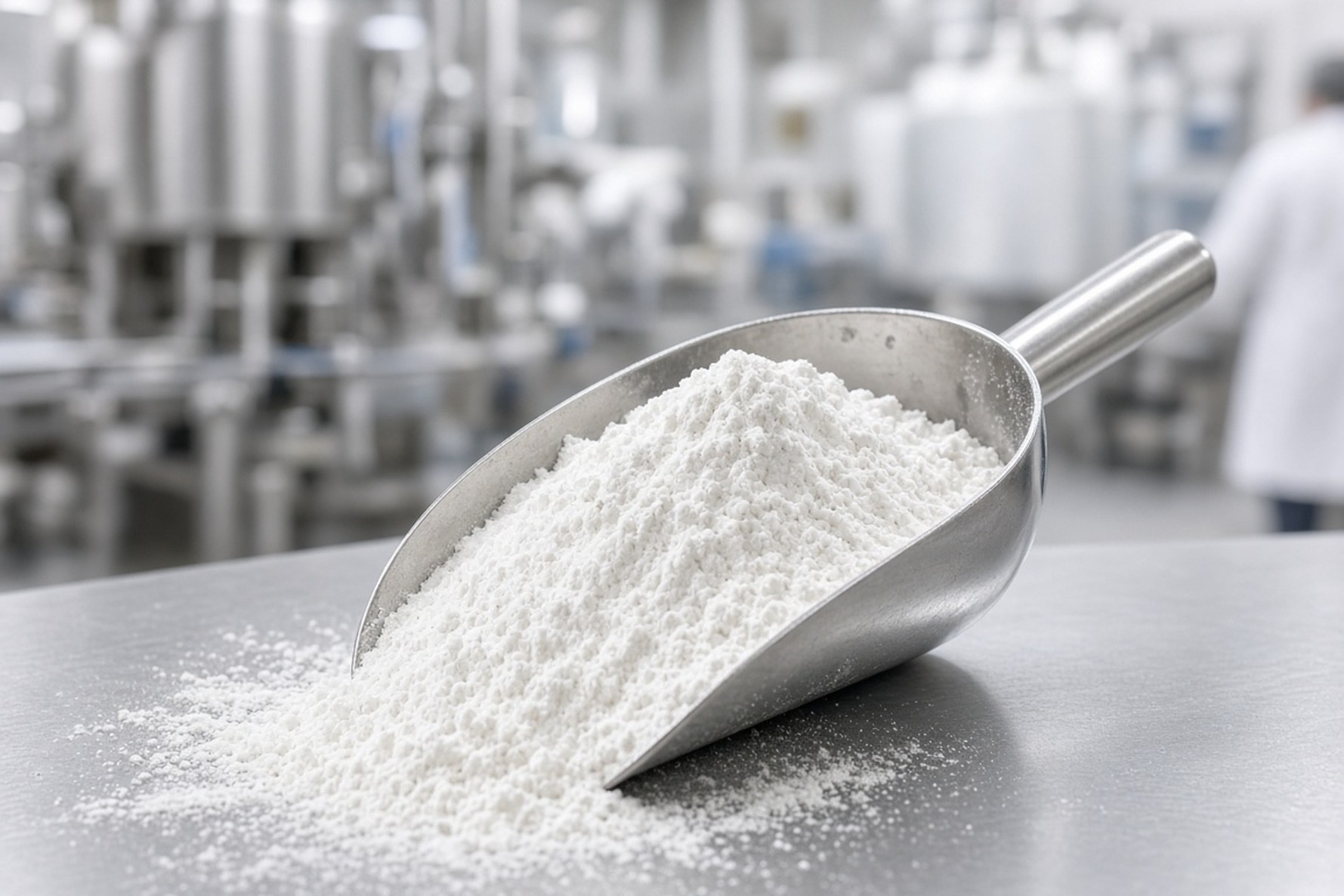
Corn starch is a core hydrocolloid and texturizer whose physicochemistry governs finished-product rheology, texture stability and shelf life. This guide helps procurement, R&D and QC teams interpret COAs, compare native vs modified grades, navigate INSO/Codex requirements, pricing drivers and structured RFQs.
Corn starch grade performance comparison
| Index | Native | Waxy | Pregel. | E1422/E1442 |
|---|---|---|---|---|
| Amylose | 24–28% | <2% | base | formula |
| Cold solubility | cook required | cook required | instant | heat process |
| Peak gel temp. | 62–72°C | 63–68°C | ambient | 68–80°C |
| Shear stability | poor | poor | moderate | excellent |
| pH <4 | unstable | unstable | sensitive | stable |
| Freeze–thaw | syneresis | excellent | fair | long-term |
1. Structure, amylose/amylopectin and grades
Starch is a D-glucose polymer: linear amylose (opaque, retrograding gels) vs branched amylopectin (clear, syneresis-resistant gels). Native wet-milled starch gelatinizes at 62–72°C but fails under acid and high shear. Waxy (>98% amylopectin) excels in freeze–thaw cycles. High-amylose (50–70%) suits films and resistant starch. Modified grades include pregelatinized cold-soluble, cross-linked (E1442) and acetylated adipate (E1422) for ketchup, retort and homogenizers.
2. COA parameters and RVA
Food moisture 11.5–13.5% (cap 14%); total ash ≤0.15%; acid-insoluble ash ≤0.05%; protein ≤0.35%; pH 4.5–6.5; SO₂ ≤30–50 ppm. RVA pasting temperature, peak viscosity, breakdown and setback predict line behaviour.
3. Standards, HS codes and certificates
INSO 381-2 and 2843; Codex Stan 152; JECFA for modified starches. HS 11081200 corn starch; 11081210 pharma; 35051000 modified. Phytosanitary, health and halal docs for customs.
4. Applications and grade selection
Meat emulsions: native or E1442 frozen; sauces: E1422 at pH 3.2–3.6; confectionery moulding: low-moisture native; dairy desserts: waxy modified; instant powders: pregelatinized; retort: heat-stable.
5. QC, microbiology and sampling
Whiteness ≥94; neutral odour; black specks ≤5/dm². INSO 2843 limits including Salmonella negative in 25 g. Aflatoxin B1 ≤5 ppb; heavy metals by ICP. Incoming inspection: spear sampling, quick moisture <13%, composite lab panel.
6. Iran industry and regional trade
Modern wet mills (Zar, Glucosean and regional complexes) import corn and export to Iraq, Afghanistan and Central Asia. Typical yield ~650–680 kg starch dry basis per tonne of 14% moisture corn plus gluten, germ oil and fibre.
7. Packaging, warehouse and containers
25 kg kraft/PE, laminated PP or 500–1200 kg FIBC. Store <25°C, RH <65%, explosion-proof electrics. Combat container rain with kraft liners and 8–10 desiccant bags; 18–22 t per 20 ft.
8. Pricing and contracts
60–70% of cost is corn with 2–4 month lag from CBOT; co-product credits from gluten/oil; modification reagents can triple cost vs native. Six-month indexed contracts; DAP, EXW or FOB Bandar Abbas.
9. Pre-contract checklist
Declare E-number; moisture cap with penalties; batch COA; pilot run; microbiological clause; SO₂; multilayer bags; pallet wrap; covered trucks; damage tolerance; referee lab.
10. RFQ and Iranco
Professional RFQs specify grade, delivery lots, RVA windows, bag type, Incoterms and certificates. Iranco validates suppliers, aligns COA to formulation, arranges pilot samples and seasonal continuity.
FAQ
Native vs modified?
Native suits moderate heat without acid; modified survives retort, homogenizers, acid and freeze–thaw.
Maximum moisture?
INSO 381-2 typically allows 12–14%; above 14% risks mould and caking.
Starch vs corn flour?
Corn flour is whole-kernel milled; starch is endosperm-only, white and neutral for gelling.
Ketchup grade?
Only E1422 or E1442 waxy bases; native starch breaks under acid and shear.
Weak COA signals?
Protein >0.4%, ash >0.15%, high SO₂ and excess black specks.
Container caking?
Container rain; use kraft bags, liners and industrial desiccants.
Featured Products


Related Articles



