 Iranco Magazine Team
Technical specs, quality requirements, packaging, commercial documents, transport and key points for Indian black bean importers
Export Guide · Pulses · India
Black Bean Import from Iran to India: A Practical Guide for Buyers and Importers
Technical specifications, quality requirements, packaging, commercial documents, transport and key points for Indian importers of Iranian export black beans.
Analytical Introduction
Black beans are a valuable pulse in international food trade, widely used in food manufacturing, restaurants, plant-based products and high-protein diets. While much global trade is dominated by North and Latin American producers, regional buyers continue to seek alternative origins with stable quality, competitive pricing and reliable supply.
India is one of the world’s largest pulse-consuming markets, with a complex structure spanning domestic production, imports, processing and distribution. Indian importers evaluate not only price but also product uniformity, impurity levels, breakage, shelf life, packaging and shipment traceability.
For Iranian exporters, entering the Indian market requires more than offering product alone. Success depends on aligning beans with buyer specifications: uniform colour, bean size, damaged kernels, moisture, cleanliness and overall product integrity.
1. Black Beans in Pulse Trade and the India Opportunity
Black beans belong to the dry bean category and are used mainly in specialty food channels, food industry, restaurants and plant-based or international cuisine segments. India supplements domestic supply with imports depending on production cycles, global prices and trade policy.
- Consistent quality across consecutive shipments
- Ability to supply required volumes
- Compliance with food standards
- Packaging suited to the transport route
- Complete documentation
- Fast response during sampling and ordering
Production Regions and Supply Capacity in Iran
Pulse production in Iran varies by climate, seed variety, cultivation and harvest practices. For dry beans, post-harvest management is critical. Key supply-chain factors include harvest timing, drying method, cleaning, removal of damaged kernels, storage pest control and warehouse conditions.
2. Technical Specifications Expected by Professional Buyers
| Parameter | Buyer relevance |
|---|---|
| Bean colour | Indicates uniformity and visual quality |
| Bean size | Affects cooking, packing and end use |
| Breakage rate | Reduces commercial value |
| Impurities | Reflects cleaning quality |
| Moisture | Affects shelf life and spoilage risk |
| Damaged kernels | Key QC criterion |
| Lot uniformity | Critical for repeat orders |
3. Quality Control and Pre-Purchase Sample Evaluation
Sample review before final order placement is one of the most important steps in black bean imports. The sample must represent the actual shipment, not only the best portion selected for display.
4. Key Laboratory Tests for Export Black Beans
- Moisture testing — a primary storage indicator for dry pulses.
- Impurity analysis — foreign matter must remain within market limits.
- Contaminant screening — residue, heavy metals or microbiological tests as required by the destination market.
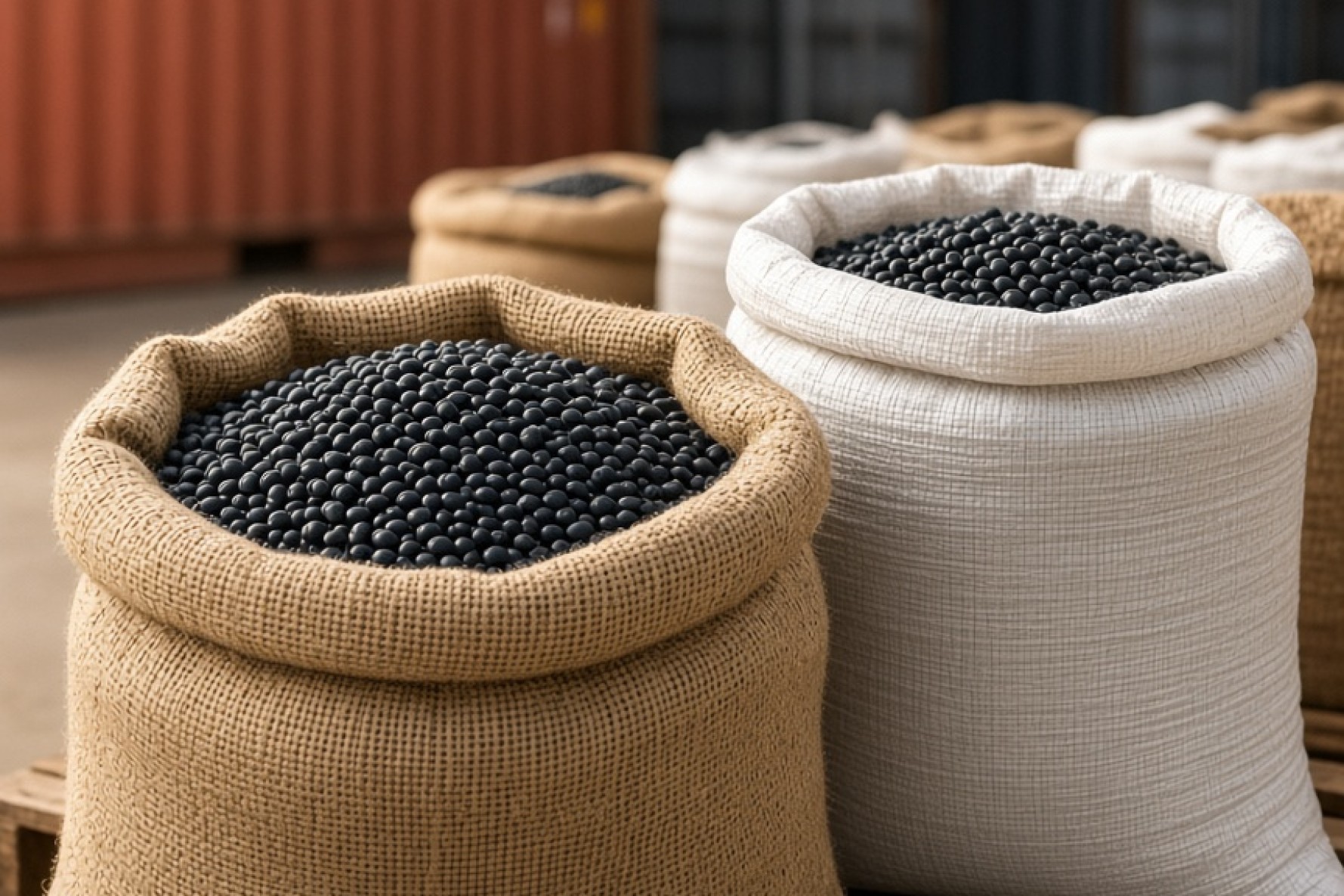
5. Packaging for Black Bean Exports to India
| Pack type | Use case |
|---|---|
| Large bulk bags | Importers and food processors |
| Multi-layer bags | Better transport and storage resistance |
| Retail packs | Supermarkets and specialty stores |
| Private-label packs | Brand-driven markets |
6. India Market Structure and Buyer Channels
| Sales channel | Primary buyer need |
|---|---|
| Food processors | High volume, stable quality, precise specs |
| Wholesalers | Competitive price, regular supply, bulk packs |
| Retail | Good appearance, consumer packs, full labelling |
| HORECA | Cooking quality, uniform beans and taste |
7. Documents Required for Black Bean Imports to India
- Commercial invoice, packing list and bill of lading
- Certificate of origin and health/quality certificates where required
- Product specification documents and quality test reports if agreed
A Certificate of Analysis (COA) summarises quality test results including moisture, appearance, impurity levels and physical characteristics.
8. Tariff Codes and Customs Considerations
Dry black beans fall under the pulses category, but the exact HS code must be confirmed based on product form, presentation and destination classification. Correct tariff coding affects import clearance, legal requirements, duty calculation and trade statistics.
9. Transport from Iran to India
Sea freight is the main option for large commercial lots. Dry pulses should be shipped with minimal moisture exposure. Container stowage must limit excessive pressure, maintain adequate airflow and reduce physical damage risk.
10. Export Price Drivers
- Product grade and quality consistency
- Order volume
- Packaging type
- Delivery terms (FOB, CIF, destination delivery)
11. Iran vs Global Suppliers
| Origin | Main advantage | Possible limitation |
|---|---|---|
| Latin America | Long bean trade history | Longer freight for some markets |
| USA | Standardised organised production | Higher production cost |
| China | Production scale and variety | Supplier-by-supplier QC needed |
| Iran | Regional supply and Asian trade links | Specialty market awareness still growing |
12. Importer Pre-Order Checklist
- Define end use and required specifications
- Obtain and test a representative sample
- Set defect tolerance, pack weight and packaging type
- Confirm order volume and supplier repeat capacity
- Agree delivery terms, freight mode and export documents
- Record reference sample specs in the contract
FAQ
Are Iranian black beans suitable for import to India?
Yes, when quality specs, packaging and buyer requirements are aligned.
What is the most important buying criterion?
Conformance to buyer specs: size, colour, moisture, breakage and quality consistency.
How is export price determined?
By grade, volume, packaging, freight, delivery point and requested specifications.
Conclusion
Importing black beans from Iran to India is a multi-step process where success depends on product quality, destination-market fit and disciplined supply-chain management. Defining purchase criteria, reviewing samples, choosing suitable packaging and coordinating freight are the four main risk-reduction factors.
Featured Products






Related Articles



