 Iranco Magazine Team
Biochemistry, purity assessment, lab standards, logistics and international grain-trade rules
Export Guide · Gilan Aromatic Grains
Ali-Kazemi Rice: Wholesale Buying, Authenticity Testing and Export from Iran
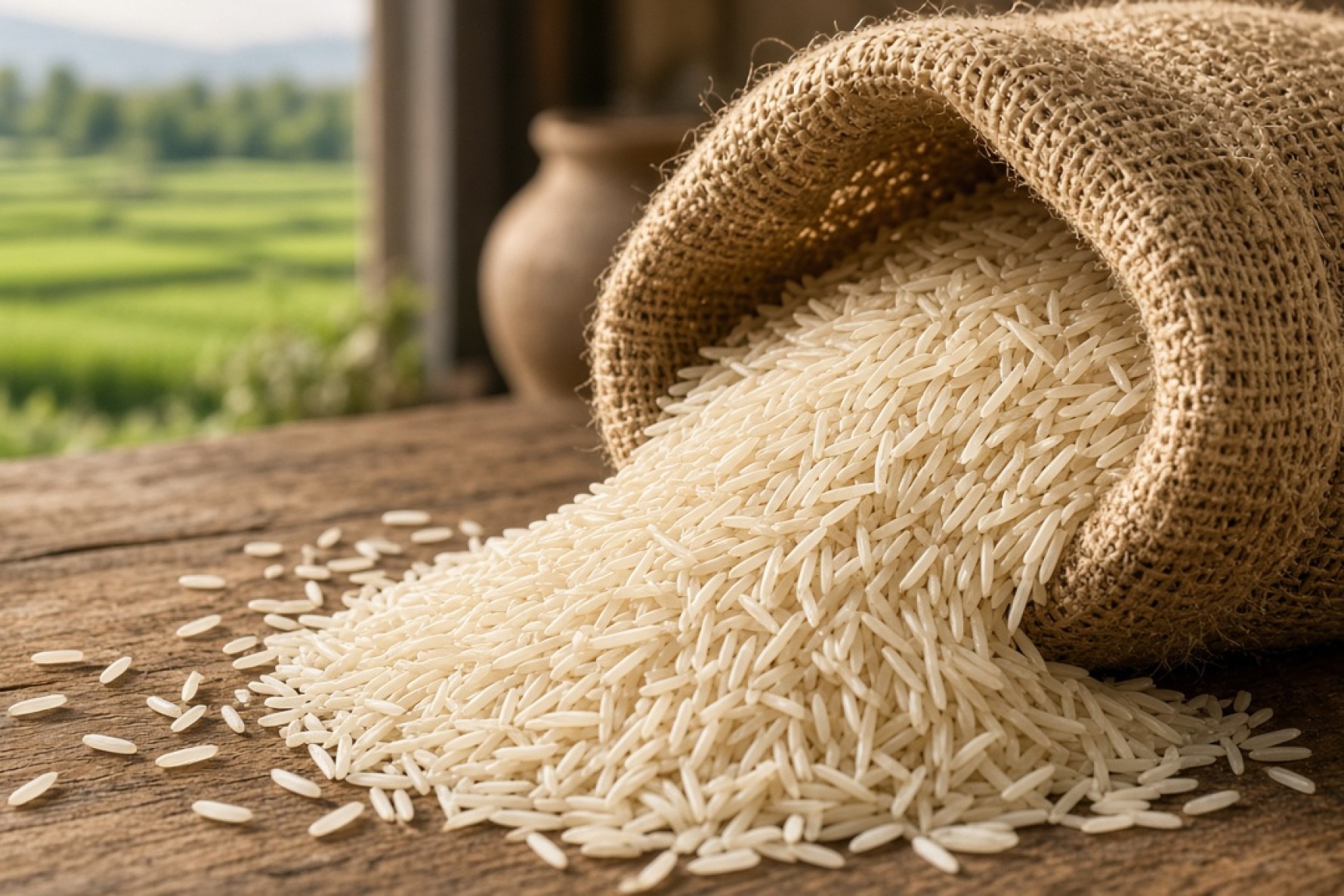
A comprehensive analysis of biochemistry, purity assessment methods, laboratory standards, logistics and international grain-trade rules. Ali-Kazemi rice is one of the finest crops of the Gilan plain, prized for soft texture after cooking and exceptional aroma in consumer baskets and grain trade.
Introduction: Grain trade and Ali-Kazemi’s place
Grain commerce rests on sensory traits, cooking behaviour, starch profile and conformity certificates. In Iran, native aromatic rices define the premium segment; Ali-Kazemi balances lasting aroma, soft texture, rich flavour and agronomic yield. For traders, distributors and exporters, knowing this grain means mastering molecular structure, milling conversion, health tests and fraud risk.
Look-alike milled grains expose bulk buyers to blending high-yielding varieties into authentic local lots. Weak grasp of amylose, gel consistency, gelatinization temperature and elongation after cooking invites heavy losses. Gulf, EU and Central Asian markets also demand strict pesticide MRLs, mycotoxins, heavy metals and MAP packaging.
To inquire about a lot with COA, sort grade and export packaging, submit specs via Iranco.
1. Origin, agroecology and geography
Ali-Kazemi arose from a spontaneous mutation and traditional selection in Gilan paddies. In 1981 (1360 SH), Ali Kazemi in Shikargurab Bala (Fouman) marked four distinct panicles and re-sowed them for seasons until a uniform landrace stabilized. From the late 1980s it carried his name and replaced many low-yielding types across western Gilan.
Origin: Core belt is western Gilan centred on Fouman and Sowme’eh Sara; Shaft, Talesh, Masuleh and Rasht environs also contribute. Limited trials in Mazandaran and western districts (Dorud, Borujerd, Mianeh) exist, but Gilan aroma and cooking quality remain distinct.
Soil and climate: Sandy to clay loam with organic matter above 2.5% and pH 6–6.8 is ideal. Growth cycle 115–125 days; transplanting mid-Ordibehesht; harvest mid-Mordad to early Shahrivar.
| Agronomic index | Value / status | Buyer relevance |
|---|---|---|
| Growth cycle | 115–125 days | New-crop arrival late summer |
| Plant height | 110–125 cm | Lodging risk with excess N |
| Thousand-grain weight (paddy) | 27–29 g | Maturity and bulk density |
| Paddy yield | 3800–4300 kg/ha | ~500 kg above traditional Sadri |
| Milling yield (white) | 64–67% | Modern mill economics |
| Blast sensitivity | Moderately susceptible–tolerant | Field health monitoring |
2. Physicochemistry, starch and cooking
Rice grain is mostly starch (85–90% of dry white weight); amylose and amylopectin drive cooking. Ali-Kazemi is medium-to-long grain: raw length 7.2 mm, width ~2.1 mm, L/W ~3.4. After standard cook length reaches 11.6 mm (elongation 1.61); its competitive edge is “full-bodied volume” and lateral swelling of chelo.
- Amylose 21–23%: Intermediate class; grains hold shape without waxy stickiness or fast retrogradation firmness.
- Gel consistency 65–75 mm: Soft to medium; high gel flexibility.
- Gelatinization temperature 70–74 °C: Balanced water ingress without outer bursting.
- Reheating: After 12–24 h cooling, soft texture and flavour return with steam, microwave or oven — a key HORECA differentiator.
3. Comparison with Hashemi, Sadri and high-yield types
Hashemi is narrower and longer when cooked (~12.5–13.1 mm) and looks more “ceremonial”; Ali-Kazemi is wider, meatier and superior in cold softness, usually priced below premium Hashemi. Shiroudi is glassy and low-aroma; Fajr has a sword tip; Khazar lacks natural aroma.
| Trait | Ali-Kazemi | Premium Hashemi | Sadri Dom-Siah | Shiroudi | Fajr |
|---|---|---|---|---|---|
| Raw length (mm) | 7.2 | 7.3–7.5 | 7.5–7.6 | 7.2 | 6.9–7.2 |
| Cooked length (mm) | 11.6 | 12.5–13.1 | 13.0–14.0 | 12.2–12.5 | 10.3–11.0 |
| Raw width (mm) | 2.1 | 1.8–1.9 | 1.8–1.9 | 2.0 | 1.9–2.0 |
| Amylose (%) | 21–23 | 22–23 | 22–24 | 23–25 | 22–24 |
| Gel consistency | 65–75 soft | 60–70 medium | 60–70 medium | 80–85 very soft | 65–75 medium |
| Aroma | Very strong | Strong | Strong, penetrating | Weak | Medium |
| Cold chelo softness | Excellent | Good–medium | Medium | Weak | Medium |
| Elongation ratio | 1.61 | 1.75 | 1.80 | 1.72 | 1.50 |
| Price tier | Premium-value | Premium-luxury | Top native | Mid economy | Mid economy |
4. Bulk buyer specs and quality grades
Apparent density of clean white Ali-Kazemi at equilibrium moisture is about 0.81–0.84 kg/L. Under-filled grains should stay ≤1%. Commercial grades: Super-sort (<1% broken), Premium (<2% broken), Commercial (up to 5% broken).
| Parameter | Acceptance range | Commercial impact |
|---|---|---|
| Moisture | 12.5–13.5% (max 14%) | Mould prevention and storage life |
| Variety purity | ≥ 98% | No blend with aroma-poor HYVs |
| Total broken (premium) | ≤ 2% | Appearance and even cooking |
| Small brokens | ≤ 0.5% | Less starch glaze |
| Chalky / white-belly | ≤ 3% | Fewer burst grains in cook |
| Yellow / heat-damaged | ≤ 0.5% | Uniform chelo colour |
| Red streak | ≤ 0.2% | Plate appearance |
| Mineral foreign matter | Zero | Safety and packing machines |
| Live insects / spores | Absolute zero | International quarantine |
5. Authenticity checks and common frauds
Common tricks: blending 20–40% Shiroudi or Fajr into Ali-Kazemi; selling aged crop as new; mineral-oil polish and synthetic aroma sprays.
- Use a grain loupe on tip angle; Fajr shows a sharp oblique tip.
- Cold water/salt soak: uneven hydration signals mixing.
- Cook 500 g side-by-side and score after cooling — decisive for contracts.
6. National standards, contaminants and lab tests
ISIRI 127 is the reference for white-rice appearance and sizing (moisture ≤14%; foreign matter ≤0.1%). ISIRI 12968 sets heavy-metal limits.
| Contaminant | Limit | Test method |
|---|---|---|
| Lead (Pb) | ≤ 0.15 mg/kg | ICP-MS |
| Cadmium (Cd) | ≤ 0.06 mg/kg | GFAAS / ICP-MS |
| Inorganic arsenic | ≤ 0.15 mg/kg | LC-ICP-MS |
| Aflatoxin B1 | ≤ 5 µg/kg | HPLC |
| Total aflatoxins | ≤ 10 µg/kg | HPLC-FLD |
For EU export, pesticide residues (tricyclazole, diazinon, chlorpyrifos, etc.) by GC-MS/MS and LC-MS/MS must sit under Codex and EU MRLs.
7. Milling, optical sorting and export packaging
- Controlled drying at 38–42 °C for 48–72 hours
- Rubber-roll husking without impact pressure
- Multi-pass abrasive whitening with cooling aspiration
- Water polish for glassy sheen
- Multi-channel optical sorting at ~99.9% accuracy
| Technology | Weight | Best use |
|---|---|---|
| Polymer vacuum | 1 / 2 / 5 kg | EU and Gulf retail shelves |
| MAP (nitrogen) | 5 / 10 kg | Premium air/sea freight |
| Laminated BOPP | 10 / 25 kg | Iraq, Oman, UAE wholesale |
| Cotton + liner | 5 / 10 kg | Luxury grocery and gifting |
8. Logistics, warehousing and HS codes
Warehouse: 15–18 °C, 55–60% RH, pallets 15 cm off floor and 60 cm from walls; max 10 bags high. In sea containers use liner bags, aluminium thermal liners and calcium-chloride desiccants against container rain. 20-ft capacity: ~21–22 t palletised or up to 24.5 t loose.
- 10.06.10 — Paddy / rice in the husk
- 10.06.20 — Husked / brown rice
- 10.06.30 — Semi-milled or wholly milled
- 10.06.30.20 — Premium aromatic polished white (export specialty code)
- 10.06.40 — Broken rice
9. Target export markets
| Destination | Buyer type | Best-selling pack | Key requirement |
|---|---|---|---|
| Iraq | Wholesale, restaurants, households | 10–25 kg BOPP | Arabic label + CoC |
| UAE | HORECA and chains | 5–10 kg / vacuum | GSO + health registration |
| Oman & Kuwait | Affluent households | 10 kg cloth | Certificate of origin & phytosanitary |
| Germany / EU | Ethnic supermarket | 1–2 kg vacuum | MRL and inorganic arsenic |
10. Wholesale pricing structure
New crop right after harvest holds unstable kernel moisture and may collapse in industrial pots. Resting 3–6 months stabilises protein–amylose networks and typically adds 10–20% value versus new crop. Super-sort optical lines add weight loss and line cost to landed price. Annual price floor is Mordad–Shahrivar; upward pressure builds from winter through Nowruz.
For live rates and Gilan mill sort comparisons, review options on Iranco.
11. Buyer checklist before firm order
- Exclusive name: Fouman/Sowme’eh Sara Ali-Kazemi with genetic purity guarantee
- Crop year and age (new / aged + minimum storage months)
- Broken tolerance: 1% super or 2% premium
- Moisture ceiling 13.5% for container export
- Sealed 5 kg reference sample
- Cook test and softness after 8 hours
- COA for heavy metals, pesticides and aflatoxin
- Pack material, micron thickness and stitch type
- Label language and destination regulations
- Third-party origin inspection and container seal
- Clear Incoterms (EXW / FOB / CIF …)
- Milling–loading timeline with late penalties
12. Data required for an accurate price quote
- Origin: authentic Gilan Ali-Kazemi
- Crop age: new or rested aged
- Sort grade and broken %
- Minimum purity (98 or 99%)
- Tonnage and number of lots
- Pack type, net weight and master carton
- Private label or supplier brand
- Destination and Incoterm
- Extra destination-customs tests
13. Direct supply from Gilan mills via Iranco
Offer gaps are not only about price per kilo; grain uniformity, chalk sort, crop age, optical tech, non-mixing and pack climate stability decide the deal. Iranco provides a transparent channel to register tonnage, broken %, grade, packaging and destination so modern west-Gilan mills can be screened with lab oversight and logistics timing.
Analytical summary
With 21–23% amylose and soft gel consistency, Ali-Kazemi keeps chelo tenderness after cooling — its main edge over many native and high-yield grains. Wholesale and export success depends on engineered QC, ISIRI 127 and 12968 compliance, and MAP or vacuum packaging.
FAQ
What is Ali-Kazemi’s main technical edge over Hashemi?
Softness retention after cooling and reheating; Hashemi is longer, but Ali-Kazemi stays plumper and smoother.
How do you spot HYV blends?
Broad cylindrical shape without sword tip, earthy hand-rub aroma, light uniformity and an 8–12 h cook test.
What is the maximum moisture?
ISIRI 127 caps at 14%; for container export 12.5–13.5% is optimal.
Which lab tests are required for export?
Moisture and broken (127), aflatoxin HPLC, heavy metals ICP-MS per 12968, and pesticide residue MS chromatography.
What is the customs HS code?
Heading 10.06.30, specialty code 10.06.30.20 for aromatic polished white rice.
Best packaging for tropical destinations?
Nitrogen MAP or multi-layer vacuum to retain aroma and block insect growth.
How to source directly from Gilan mills?
Register technical specs on Iranco so producer matching, sealed samples and export orders can be tracked.
Featured Products


Related Articles



