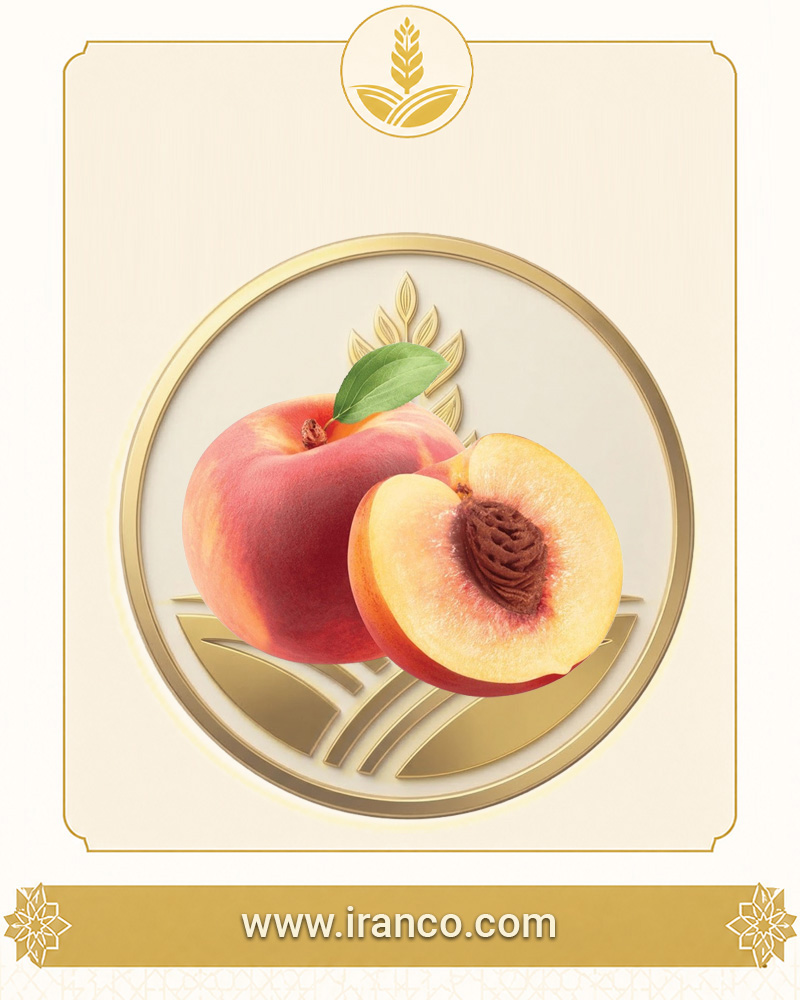
 Iranco 杂志团队
从出口采摘与分级到糖度、硬度、包装、冷链与农残控制
桃子与油桃出口 · FFV-26 · 冷链 · 伊拉克市场
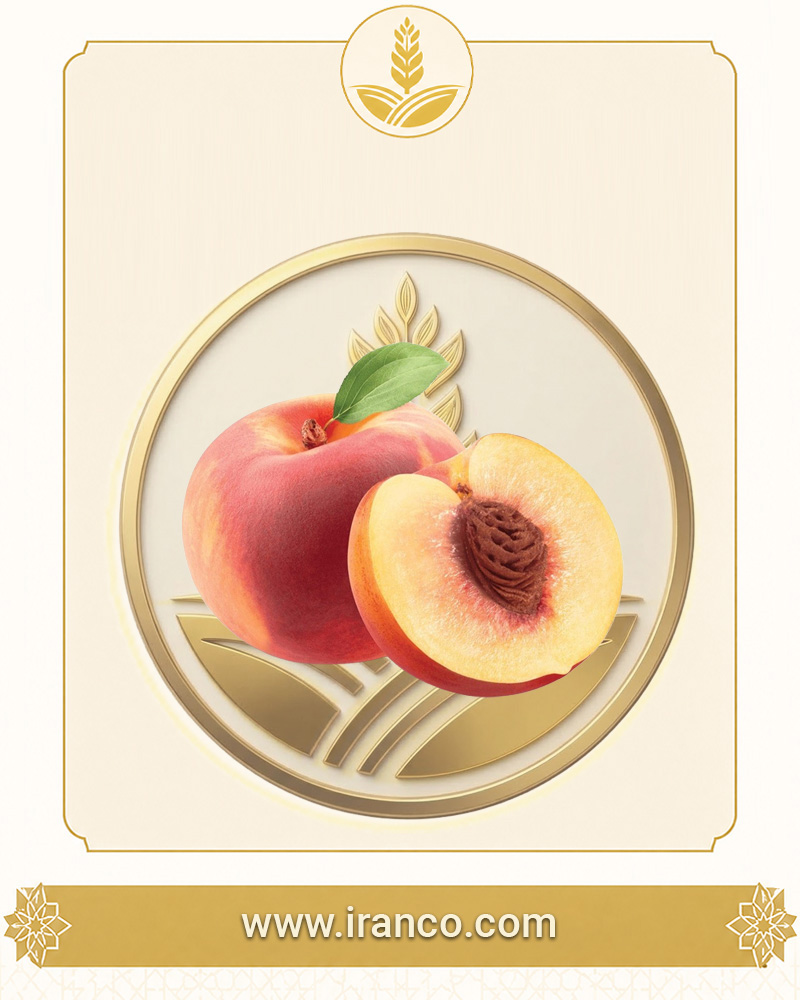
伊朗桃子与油桃出口:目标市场与鲜品标准
从果园选择与分级到糖度、硬度、包装、预冷、植物检疫证书与农残限量——专业采购指南。
Iranian peaches and nectarines benefit from diverse growing regions and a long harvest window. Export success depends on firmness, ripeness, size, skin quality, MRL compliance, pre-cooling and an unbroken cold chain — not appearance alone. With ~613,000 t global output (2023) and staged supply from Mazandaran through Azerbaijan and Qazvin, multi-region exporters can run longer sales programmes than single-orchard suppliers.
1. Iran's supply position
Mazandaran is the early-season hub: >12,000 ha and >275,000 t forecast in 1403; early nectarines can start in Ordibehesht.
West Azerbaijan continues mid- and late-season fruit into mid-Mehr; East Azerbaijan and Qazvin are other key origins.
Origin matters when combined with specs, harvest date, sorting capacity, time to the cold store and distance to border or port.
2. Commercial groups and export impact
| Group | Trait | Commercial note | Use |
|---|---|---|---|
| Standard peach | Fuzzy skin | Pressure sensitive | Fresh eating |
| Nectarine | Smooth skin | Mark & bruise sensitive | Retail |
| Flat peach | Distinct shape | Different sizing | Niche markets |
| Yellow / white flesh | Flesh colour | Flavour & appearance | Wholesale & retail |
Terms like 'export red nectarine' are too vague — skin colour %, diameter/weight, loading ripeness and defect limits must be numeric or photo-referenced.
Larger is not always better: oversized soft fruit suffers more on long hauls than slightly smaller, firmer fruit. FFV-26 sets 56 mm / 85 g (extra) and 51 mm / 65 g (class I & II).
3. Technical contract specifications
| Parameter | Define | Importance |
|---|---|---|
| Product | Peach, nectarine or flat | Avoid order mismatch |
| Size | Diameter/weight or count | Commercial uniformity |
| Grade | Extra, I, II or contract | Defect tolerance |
| Brix | Agreed minimum (8+) | Ripeness & sweetness |
| Firmness | At packing | Shipability |
| MRL | Destination rules | Clearance & safety |
FFV-26 defines three quality classes; fruit must be sound, clean, decay-free, largely pest-free and fit to travel.
Minimum 8° Brix is a baseline ripeness index — professional buyers also assess firmness, colour, internal cut tests and time to consumption.
4. Target export markets
| Market | Status | Note |
|---|---|---|
| Iraq | Large active market | Road freight; fast delivery |
| Oman | Recorded Iran origin | Pack & cold chain |
| Qatar | Multi-origin competition | Appearance & uniformity |
| Russia | High potential volume | Turkey & Central Asia rivals |
Iraq imported ~10.5 million kg fresh peaches/nectarines in 2024 trade data, with >7 million kg from Iran. Oman, Qatar, Kuwait and Armenia also show direct Iran origin.
Russia is large but crowded — Turkey, Uzbekistan, Azerbaijan and Georgia ship high volumes. Sustainable entry needs repeatable quality and quarantine compliance.
5. Standards and entry requirements
FFV-26 (2023) is a key commercial reference; EU marketing rules 2023/2429 apply from 2025 for peaches and nectarines.
Phytosanitary certificates (ISPM 12) are required for most destinations. EU MRLs sit under Regulation 396/2005 — orchard spray programmes must match the target market before harvest.
6. Quality control and defects
| Defect | Effect | Action |
|---|---|---|
| Decay | Reject | Remove entirely |
| Deep bruise | Fast breakdown | Drop from export lot |
| Over-soft fruit | Short shelf life | Near market or cull |
| Size mismatch | Lower pack value | Re-sort |
QC starts before picking. Key defects: bruising, stem cracks, marks, sunburn, decay, over-ripeness and shrivelling.
Cut tests reveal chilling injury and internal breakdown invisible on the skin until after arrival.
7. Shipment testing
MRL panels must cover actives actually used in the orchard. Brix (refractometer) and firmness (agreed method) should be contractually defined.
Sampling must span pallets and carton positions — top-carton samples do not represent multi-tonne lots.
8. Export packaging
| Method | Advantage | Limit | Use |
|---|---|---|---|
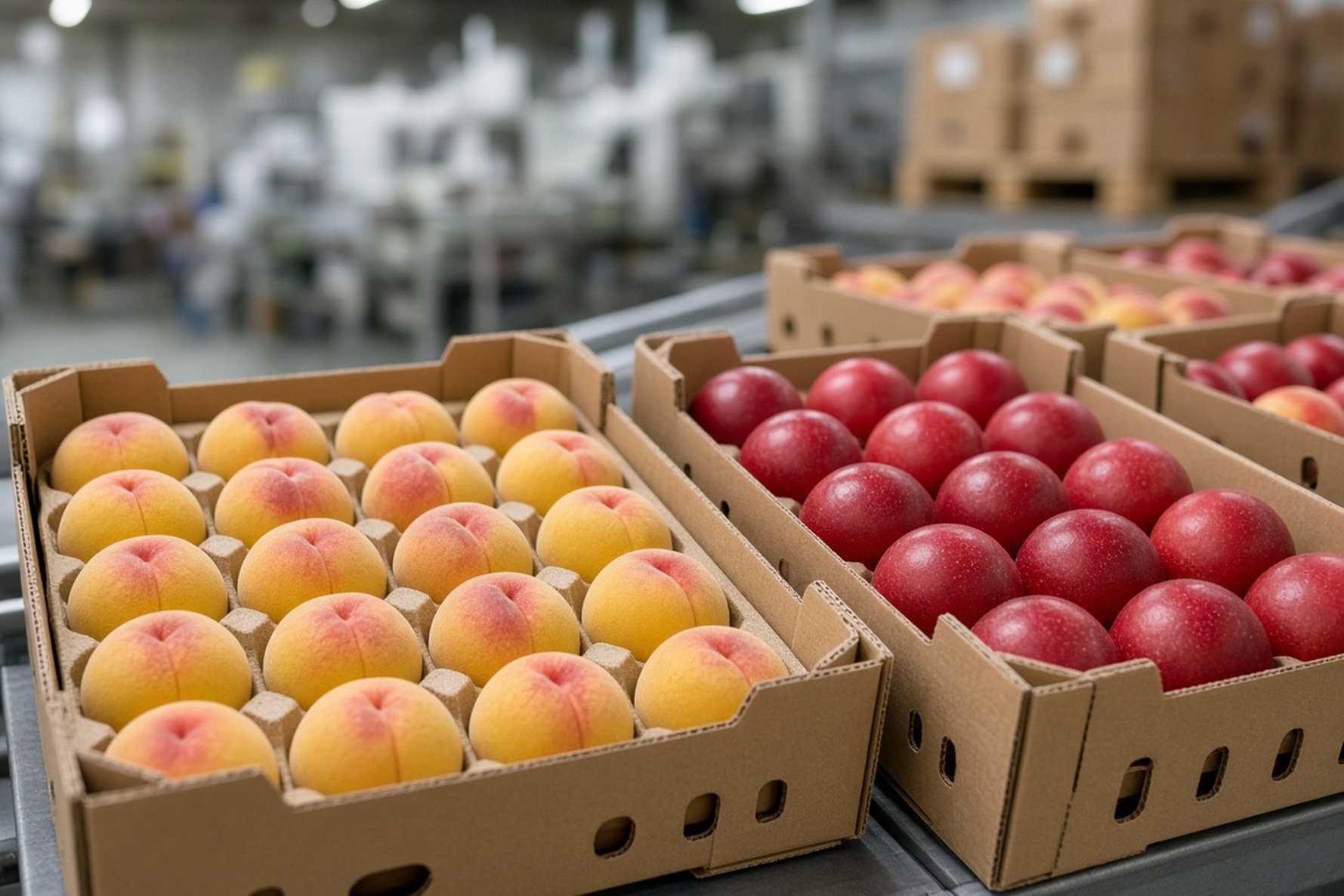
| Moulded tray | Less impact | Higher cost | Premium retail |
| Multi-layer carton | Economical | Careful stacking | Wholesale |
| Dividers | Less movement | More material | Medium/long haul |
Packs must protect against impact, allow cold air flow and avoid over-compression.
Poor vent holes slow cooling to pallet cores; contact materials must be food-grade without trapping excess moisture.
9. Cold chain and transport
Long holding at ~2–8°C can raise chilling injury and internal breakdown risk; near-zero but above freezing suits many commercial groups.
Loading warm field fruit into reefers is a common mistake. Flow: pick → rapid removal → sort → pack → pre-cool → load pre-chilled → temperature logging.
10. Competitors and Iran's edge
Spain, Turkey, Jordan, Chile and Italy lead global fresh exports. Iran's edges are volume, wide harvest windows and proximity to Iraq.
Mixed multi-orchard lots without firmness control and stable cold chain waste production scale.
11. Pricing and importer checklist
Price follows season, product type, size, colour, firmness, grade, sort-out, pack, pre-cool, testing, volume, routing and destination — quotes without specs mislead.
Before ordering: define product, flesh colour, numeric size, grade, minimum Brix, firmness, defect tolerances, MRL plan, carton type, loading temperature, loggers, phytosanitary rules and cold-chain accountability.
12. Purchase requests on Iranco
Foreign buyers need product that matches written specs and repeatable commercial supply. Iranco is the B2B path to register structured food and farm purchase requests.
Move from generic 'export peach' to measurable terms — size, Brix, firmness, pack, volume and destination.
Importer checklist (10 points)
- Define product (peach, nectarine, flat) and flesh colour.
- State size by diameter, weight or count per carton.
- Set grade and visible defect tolerances.
- Write minimum Brix and firmness at packing.
- Reject decay; align MRL testing with destination.
- Approve a reference sample before the main order.
- Specify carton type, net weight and tray/dividers.
- Contract real pre-cooling and loading temperature.
- Require temperature loggers and phytosanitary certificates.
- Document accept/reject criteria and cold-chain responsibility.
常见问题
What is the HS code for fresh peaches and nectarines?
Harmonized code 080930; align customs description and national subheadings with commercial documents.
What is Iran's main current market?
2024 data points to Iraq with >7 million kg recorded from Iran; Oman, Qatar, Kuwait and Armenia are smaller but active.
What minimum Brix is appropriate?
FFV-26 sets 8° Brix minimum for ripeness; contracts may require higher, but Brix alone is not acceptance.
What transport temperature is recommended?
About −1 to 0°C at 90–95% RH; fruit should be pre-cooled before loading and stay stable in transit.
Is holding at 5°C OK?
Long storage around 2–8°C can increase chilling injury and internal breakdown; near-zero above freezing is preferred.
Minimum export size?
Extra: 56 mm or 85 g; Class I & II: 51 mm or 65 g under FFV-26.
Most important tests?
MRLs, Brix, firmness if needed, visual QC, decay/pests and internal cut inspection.
Best nectarine pack for export?
Premium: strong cartons with trays/dividers; wholesale: multi-layer cartons with tight sizing and good vents.
总结
当从果园到目的市场作为统一链条管理时,伊朗桃与油桃出口才形成真正优势;2024年伊拉克是主要活跃市场。