 Iranco Magazine Team
A comprehensive guide to technical indicators, grading standards, quality-control requirements and the Kabkab date value chain for wholesale buyers and food processors
Export Guide · Kabkab Dates · Wholesale
Wholesale Kabkab Dates; Quality Recognition, Sizing and Commercial Applications
A comprehensive guide to technical indicators, grading standards, quality-control requirements and the Iranian Kabkab date value chain for wholesale buyers and food processors
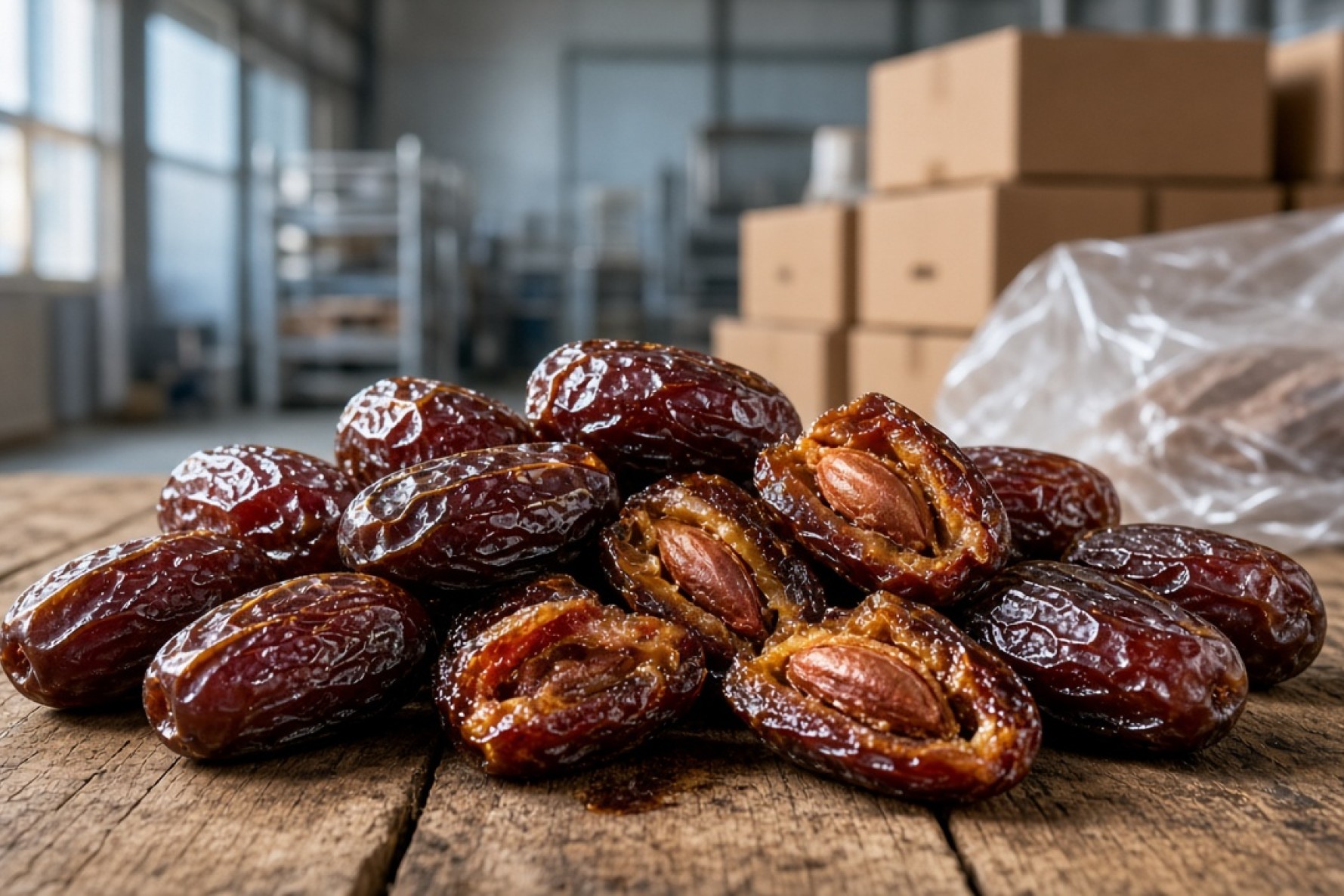
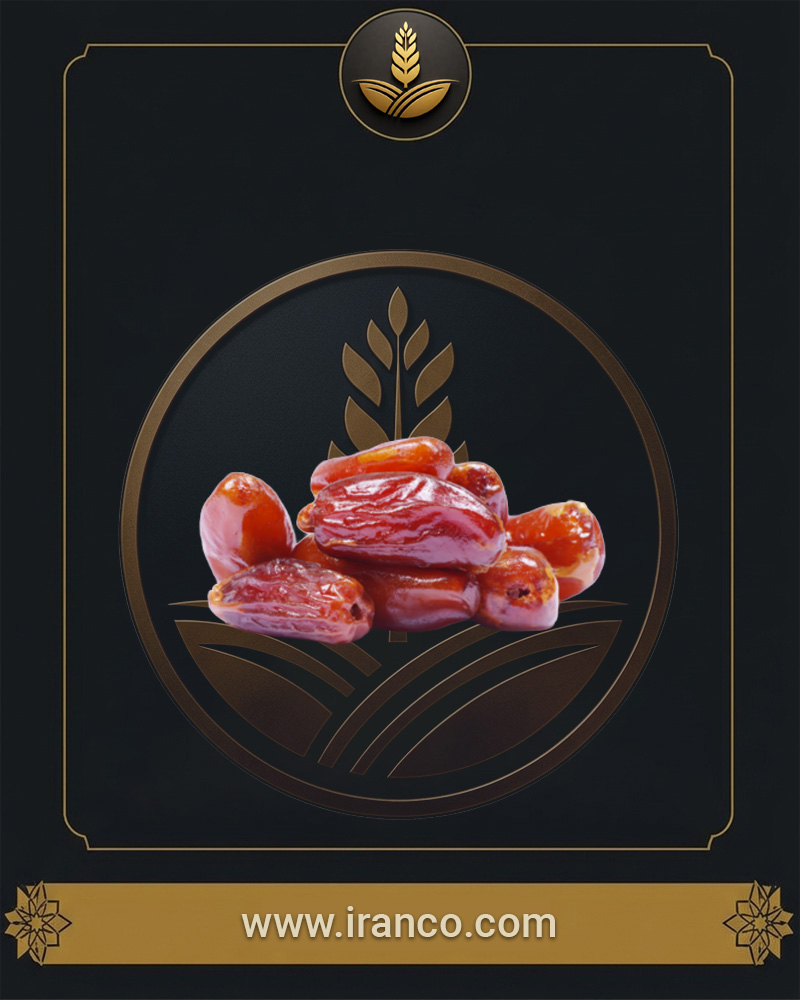
Kabkab is one of Iran’s most abundant, nutritious and economical plantation dates. Dense flesh, free-flowing natural syrup and full skin-to-flesh adhesion give it a strong position in international trade and processing lines. This report covers count-based sizing, quality validation, laboratory and hygiene requirements, packaging, pricing variables and cold-chain logistics for procurement managers, traders and processors.
- International HS Code: 08041020 (fresh or dried Kabkab dates)
- Commercial moisture: 16–18% for export semi-dry grade (up to 23% for rutab / pressed forms)
- Pulp yield: 88–92% of total fruit weight
- Long-term storage: 0–5°C at 65–70% relative humidity
After Mazafati, Kabkab is Iran’s second-largest date production and export stream, centered in Bushehr and Fars. Annual harvest in core zones exceeds 200,000 tonnes. Global demand splits between Eurasian, South Asian and Gulf retail, and processing industries (cookies, date paste, liquid sugar, dairy) in Europe and Asia.
1. Production geography, seasonal calendar and regional capacity
Dashtestan County (Borazjan), Bushehr, is the main hub. Bushehr’s more than 6 million bearing palms produce 160–170 thousand tonnes of dates yearly, over 75% Kabkab. Alluvial soils and regulated irrigation yield fleshy, syrup-rich, large fruits. The second pole is Khesht and Komarj (Kazerun, Fars), shipping 30–40 thousand tonnes of export-grade fruit annually. Other centers include Tangestan, Khormuj and Dashti (Bushehr); Qir & Karzin, Farashband and Jahrom (Fars); and Behbahan (Khuzestan).
Harvest stages
- Khalaal: August; golden-yellow, firm, astringent-sweet; mainly local early markets.
- Rutab: late August–mid September; caramel texture, high moisture; reefer at −5 to +4°C.
- Tamar: mid September–mid October; 16–18% moisture; standard for wholesale, long storage and distant export.
2. Physicochemical structure and texture advantages
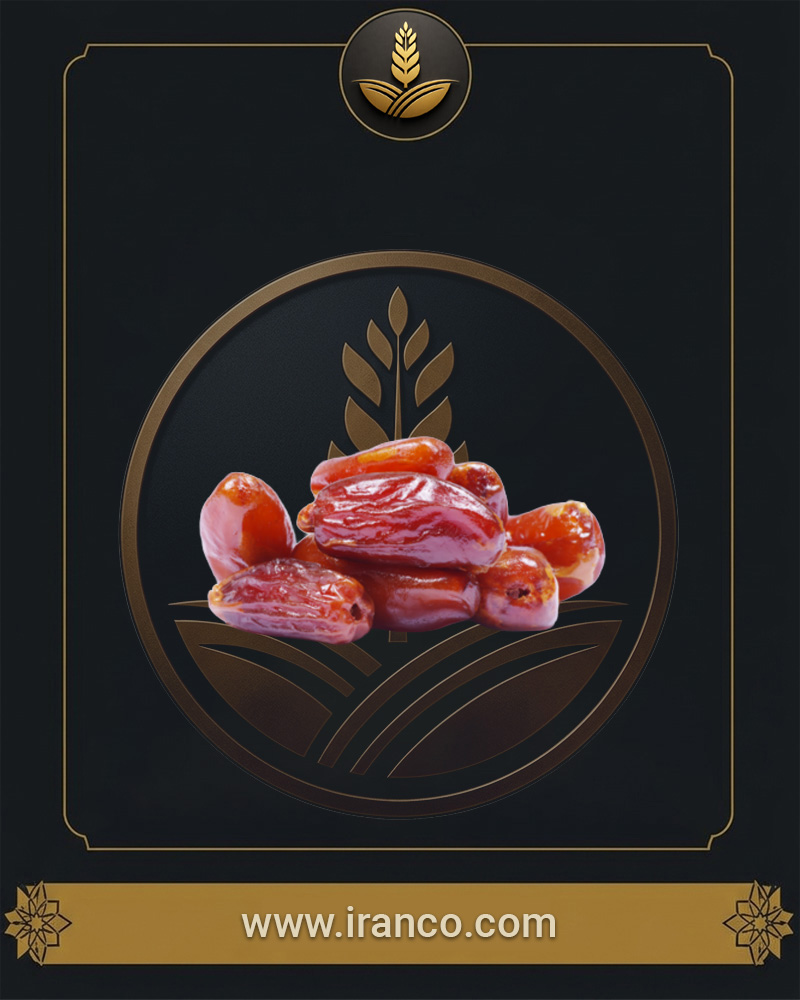
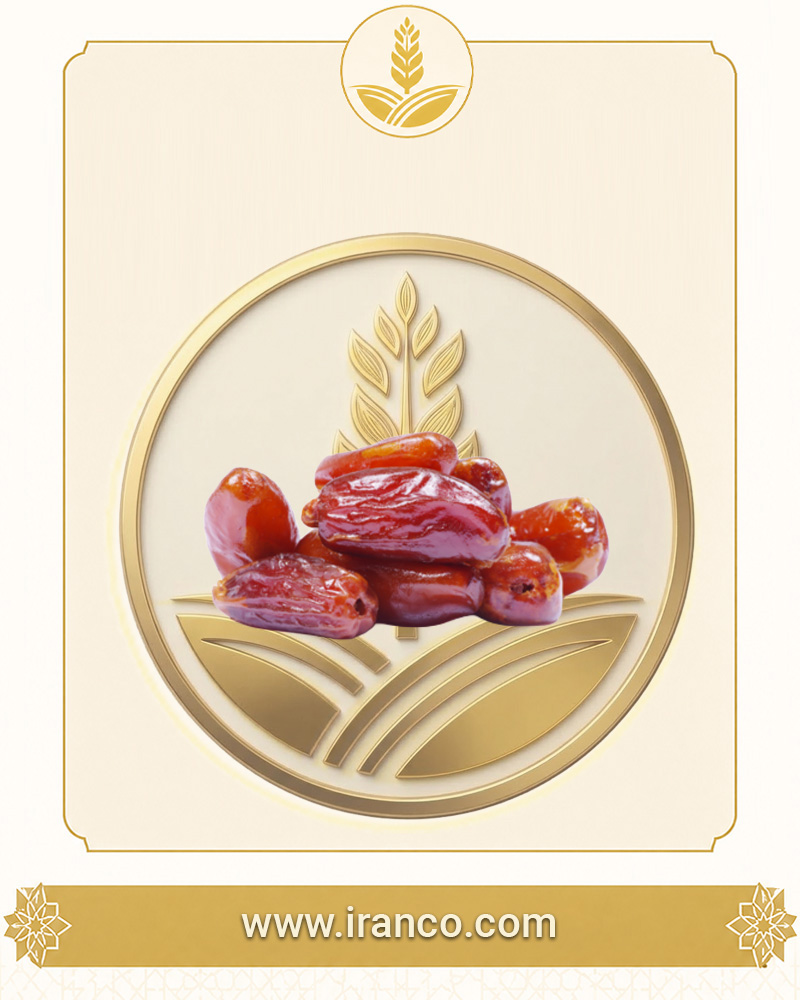
Commercially semi-dry yet perceived as soft and syrupy. Length 2.5–4 cm, diameter 1.5–2.5 cm, individual weight 9–14 g. Skin adhesion is continuous—unlike Piarom or Mazafati under heat stress—blocking fungal entry, resisting high-pressure wash/polish/press lines, and slowing surface drying in sea transit. Reducing sugars (fructose, glucose) dominate; Brix 72–78; potassium often exceeds 650 mg/100 g. Pit is 8–12% of weight and separates cleanly on industrial pitters, leaving 88–92% pulp.
3. Commercial grading and sizing table
Pricing follows count per kilogram: fewer pieces per kilo means larger fruit and higher value.
| Grade | Count / kg | Piece weight (g) | Moisture | Main channel |
|---|---|---|---|---|
| Super Select (Jumbo) | 70–80 | 12.5–14.5 | 16–18% | Luxury retail / premium export |
| Grade A (Select) | 85–100 | 10.0–12.0 | 16–19% | Chain stores / container export |
| Grade B (Economy) | 105–120 | 8.0–9.5 | 17–20% | Price-led bulk markets |
| Industrial | >120 | <8.0 | 17–22% | Paste, syrup, processing |
4. Technical specs and contract annex essentials
| Parameter | Acceptance range | Method |
|---|---|---|
| Moisture | 16.0–18.5% (max 20% pressed) | Vacuum oven 70°C |
| Brix | 72–78° | Digital refractometer 20°C |
| Sugar bloom | Max 2% wt (A) / 5% (B) | Visual count |
| Insect damage | Max 0.5% wt | Loop inspection |
| Foreign matter | Max 0.1% wt | Lab sieve |
| Fermentation | 0% | Odor / syrup pH |
| Severe crushing | Max 3% loose bulk | 100-piece sample |
| Pit weight loss | 8–12% | Weigh after separation |
5. Laboratory tests and microbial control
Export lots should comply with ISIRI 11305 (Kabkab characteristics) and ISIRI 15544 (dried-fruit microbiology), plus destination rules. Total aflatoxin typically max 10 ppb (Iran/Asia) and 4–8 ppb (EU); B1 max 5 ppb nationally and 2 ppb in the EU. TPC and yeast/mold commonly capped around 10⁴ and 10³ CFU/g respectively; E. coli negative in 1 g; Salmonella negative in 25 g. Pesticide residues via GC-MS under Codex MRLs; lead ≤0.1 mg/kg, cadmium ≤0.05 mg/kg.
6. Export target markets
| Market | Share | Typical grade | Packaging |
|---|---|---|---|
| Russia & Caucasus | 35–40% | Super & A | 5/10 kg cartons, crystal pots |
| India | 25–30% | A & B | 10 kg laminated bulk cartons |
| UAE & Oman | 15–20% | Super & pressed | Polymer tubs / vacuum |
| Turkey | 10–12% | A & industrial | 5 kg cartons / paste pallets |
7. Competitive position vs regional peers
| Metric | Kabkab (Iran) | Deglet Nour | Khalas | Siwi |
|---|---|---|---|---|
| Texture | Fleshy, elastic, syrupy | Glassy–rubbery | Soft oily | Fibrous semi-dry |
| Pulp ratio | 88–92% | 83–86% | 86–89% | 81–85% |
| Skin adhesion | Fully integrated | Good, brittle under stress | Medium | Medium |
| Wholesale price | Highly economical | Premium | Very high | Economical |
| Processing | Excellent paste/syrup | Harder to mill | Medium | Simple processing |
8. Packaging engineering
- 5 & 10 kg mother cartons: 5–7 ply kraft; ≥40 µm food-grade PE liner; vents for non-pressed loads.
- Pressed bricks: 500 g–2 kg blocks; lower oxidation risk; up to ~30% better container density.
- PP tubs: regional retail; protect geometry.
- MAP: typically 80% N₂ / 20% CO₂ to curb residual respiration and surface crystallization.
9. Cold chain and international logistics
- Long storage: 0–5°C; deep freeze −12 to −18°C for >18 months when needed.
- RH 65–70%; >75% raises souring risk; <60% risks shriveling.
- Pallets ≥15 cm off floor and ≥40 cm from walls.
- Reefer: +4 to +6°C; vents closed; silica gel on pallet tops.
| Mode | Equipment | Setpoint | Typical transit |
|---|---|---|---|
| Sea | 40' HC reefer | +4 to +6°C | 15–30 days |
| Road | Insulated reefer trailer | +2 to +8°C | 7–14 days |
| Coastal dhow | Covered vessel | Ambient (cool seasons) | 2–5 days |
10. Food-processing applications
High pulp ratio and adhered skin make Kabkab ideal for date paste (ISIRI 5720), syrup/liquid sugar (extraction often >85%, Brix 68–73) and gluten-free energy bars. Industrial or Grade B for paste; syrupy industrial for concentrate; Grade A (~15% moisture) for chips; late-dry Grade B for natural date sugar powder.
11. Importer checklist before firm order
- Define count range in the contract (e.g. 90–100 pcs/kg)
- Cap moisture at 18% with origin COA
- Seal a 5 kg reference sample
- Review microbiology, Salmonella, coliforms and aflatoxin from an ISO 17025 lab
- Validate 5-ply carton crush strength
- Match phytosanitary / phosphine fumigation to destination rules
- Independent loading inspection (e.g. SGS-type)
- Align labeling language, Halal, nutrition table, Made in Iran
- Record +4°C and closed vents on the reefer B/L
- Confirm seller cold-store capacity for year-round supply
12. Data required for accurate quotations
- Exact product form: standard Kabkab, with natural syrup, or semi-dry without free syrup
- Grade, count/kg, moisture band, packaging and total tonnage (20' ≈15–17 t; 40' ≈24–26 t)
- Incoterms: EXW Dashtestan/Kazerun, FOB Bushehr/Bandar Abbas, CFR/CIF destination
- Private label, pallet stretch, and requested lab certificates
13. Sourcing Kabkab through Iranco
Iranco connects wholesale buyers and food plants with growers and modern sort/cold-store terminals in Dashtestan (Bushehr) and Kazerun (Fars). Submit count, moisture, packaging, tonnage and delivery terms so reference sampling, destination lab tests and cold-chain loading controls can be coordinated.
14. Analytical summary
Kabkab balances large annual volumes, pulp ratios above 88% and competitive cost for dual markets: Eurasian/Indian retail and European, Turkish and Asian processors. Successful wholesale buying depends on contractual count specs, moisture under 18%, syrup-tight packaging and unbroken cold chain to final discharge.
15. FAQ for wholesale buyers
Where does the best Iranian Kabkab come from?
Dashtestan (Borazjan, Bushehr) and Khesht/Komarj (Kazerun, Fars). Dashtestan fruit is fleshy and large; Khesht tends toward lighter honey color and finer texture for premium retail packs.
How does Kabkab differ from Mazafati?
Kabkab is semi-dry to soft at 16–18% moisture with dark brown color and fully adhered skin. Mazafati is soft at 22–25% moisture, glossy black, peeling skin, and needs continuous refrigeration. Kabkab is typically 30–50% cheaper per kilo.
What is commercial shelf life?
At 0–5°C and ~65% RH, quality holds 12–18 months. Ambient storage in hot seasons is not acceptable.
Why is Kabkab ideal for date paste?
Full skin adhesion prevents coarse skins in the paste; ~90% pulp and reducing sugars yield a smooth, flexible paste for industrial dosing.
What causes sugar bloom and how to prevent it?
Surface glucose crystallization from temperature swings and moisture migration. Keep moisture 16–18%, avoid hot dry air, and stabilize the cold chain.
What is the typical MOQ?
Usually one 20' container (15–17 t) or 40' (24–26 t). Regional paste/pallet orders can be smaller under special terms.
How can buyers source directly from Iranian cold stores?
Submit grade, count, moisture, packaging and destination standards via Iranco so southern palm-belt options, sampling and loading can be coordinated.
What data is needed for a firm quote?
Grade, count/kg, moisture band, packaging, tonnage, Incoterms and required lab tests—Iranco prices on the same technical inputs.
Featured Products




Related Articles



