 Iranco Magazine Team
Physicochemical structure, wet-milling technology, quality standards, target markets and bulk procurement for processing industries
Specialist Guide · Quality & Standards
Wheat Starch: Technical Specifications and Industrial Applications
Physicochemical structure, wet-milling technology, quality standards, target markets and bulk procurement — published in Iranco Magazine.
This specialist article reviews wheat starch technical specifications, rheological behaviour, structural differences between commercial grades and laboratory indices against national and international standards. Food plant managers, QC specialists and traders can use it to identify variables that affect line efficiency and bulk shipment acceptance criteria.
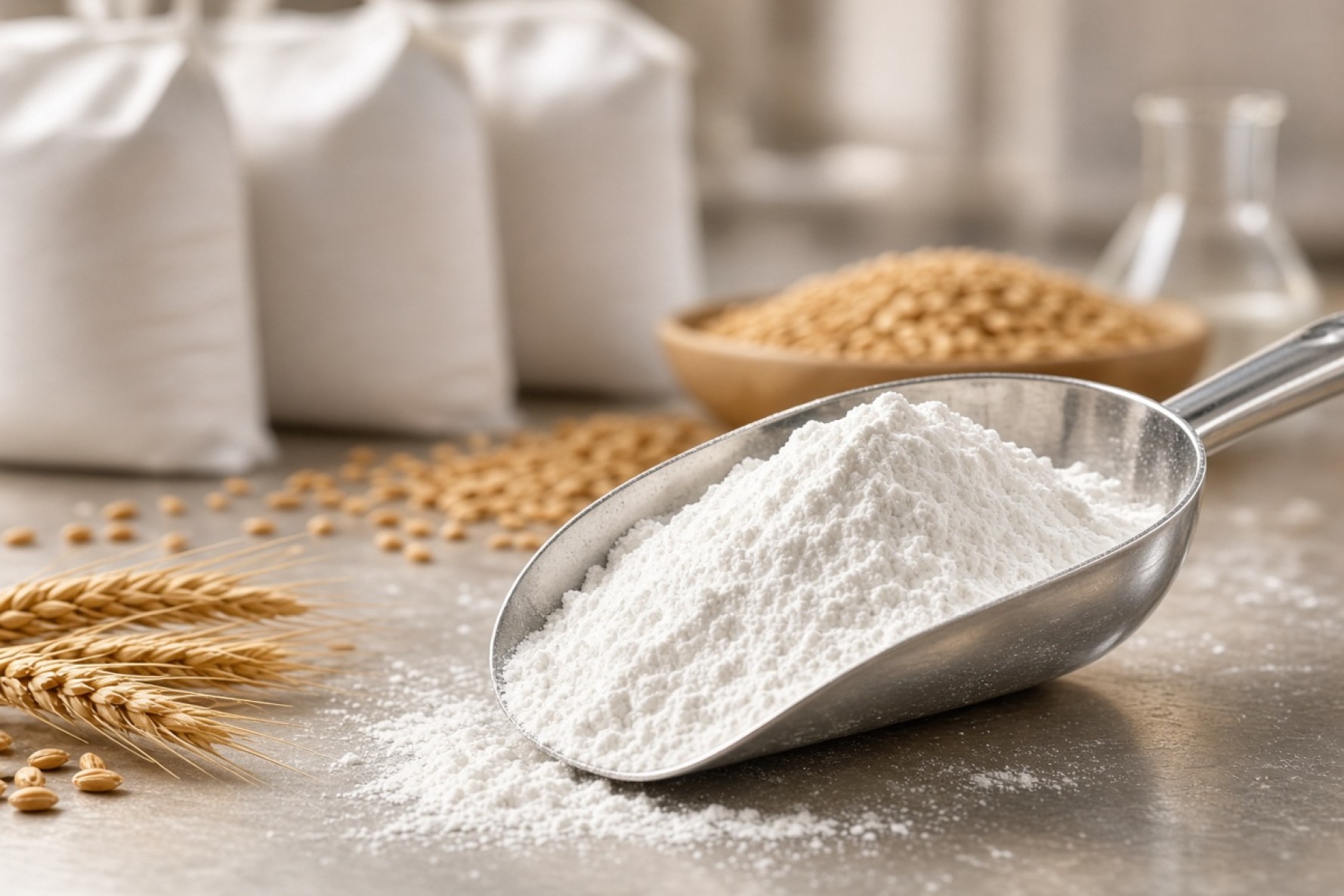
Wheat starch is a strategic natural hydrocolloid from wet wheat milling, co-produced with vital gluten. Its bimodal granule distribution enables soft, stable gels in bakery, meat, sauces, paper, corrugating and pharmaceutical systems.
Wheat starch grade comparison
| Index | Grade A | Grade B | Pregel. |
|---|---|---|---|
| Granule size | 15–35 µm | <10 µm | disrupted |
| Purity | >98.5% | 90–94% | >97.5% |
| Protein | <0.35% | 1.5–2.5% | <0.45% |
| Gel temp. | 58–62°C | 52–58°C | pre-cooked |
| Use | Premium food | Carton/ferment | Instant soup |
1. Global market and Iran production
The global wheat starch market reached about USD 4.5 billion in 2025 with steady CAGR toward 2035. Iran allocates roughly 49% of ~670 kt nameplate starch capacity to wheat starch, centred in Alborz, Qazvin, Isfahan, Fars, Khorasan Razavi and Hamadan, with exports to Iraq, Afghanistan and the Gulf.
2. Fraction A vs B
Fraction A: lenticular granules 15–35 µm, >98.5% purity, neutral gels for premium food and pharma. Fraction B: fine spheres 2–8 µm, higher protein, economical for carton glue, fermentation and feed. Pregelatinised and cationic grades extend process tolerance.
3. Technical specs and COA
Food grade: moisture <13%, protein <0.4% (A), ash <0.20%, pH 5–7 in 10% slurry, >99.5% through 100 mesh. These indices drive cook viscosity and storage stability.
4. National and international standards
ISIRI 381-1, hygienic code 5257 and 19623 for modified starch; Codex 118-1979 for gluten-free claims (<20 ppm); FCC and ISO 22000/FSSC 22000 in trade. Heavy metals and mycotoxins are routinely monitored.
5. Industrial wet milling
Dough hydration, three-phase decanter, gluten screening, 9–12 stage hydrocyclone washing for A-starch and flash drying below gelatinisation preserve native granule properties.
6. Food applications
Biscuits 5–20% flour replacement; sausages 3–7% water binder; confectionery gels 10–25%; acid-stable modified starch 1.5–3.5% in sauces; <20 ppm gluten starch for coeliac formulations.
7. Non-food uses
Cationic starch in wet-end paper; B-grade in corrugating adhesives; warp sizing in textiles; pharma grade as filler, binder and disintegrant.
8. Defects and adulteration
Hard lumps from >13.5% moisture; sour odour from delayed processing; viscosity swings from active amylase; mineral fillers via ash >0.2%; grade swapping via Kjeldahl protein; corn mislabel via granule microscopy.
9. Regional competition and pricing
Iran offers energy and logistics proximity; Turkey depends on imported wheat; Europe supplies premium grades; China offers volume with long sea lead times. Starch–vital gluten co-production (~5–6 t starch per t dry gluten) sets cost floors.
10. Packaging and container logistics
25 kg PE-lined kraft, FIBC for silos, storage <25°C and RH <65%, 24-month shelf life. Desiccants and kraft liners mitigate container rain in FCL.
11. Importer checklist
Define A/B/modified grade; cap moisture; protein/ash/SO₂; reference sample and tolerances; bilingual labels; health, origin, COA; pre-shipment inspection.
12. Price enquiry
Written RFQ must state grade, end use, volume, bag/pallet format, special tests and Incoterms delivery point.
13. Supply via Iranco
Iranco matches buyers to Iranian starch/gluten lines with spec alignment, samples, lab validation and loading oversight.
14. Conclusion
Dual granule morphology and tuned gelatinisation make wheat starch a core hydrocolloid; reliable procurement rests on COA discipline, moisture control and moisture-barrier packaging.
FAQ
How does wheat starch differ from corn in cooking?
Wheat gels are softer and less opaque, with lower gelatinisation temperature and a unique bimodal granule distribution.
Is it allowed in gluten-free products?
Regular wheat starch contains gluten; ultra-washed grades below 20 ppm meet Codex 118-1979 when ELISA-verified.
Grade A vs B?
A is white, low-protein for food/pharma; B is economical with higher protein for industrial uses.
What causes lumping?
Moisture above 13.5% or hygroscopic uptake in poor packaging or container rain.
Shelf life in storage?
At least 24 months in intact multi-layer bags below 25°C and 65% RH.
What to include in a price RFQ?
Grade, application, tonnage, packaging, delivery point and key lab tests.
Featured Products
Related Articles



