 Iranco Magazine Team
Physicochemical evaluation, lab standardization, export packaging and international market-entry strategy
Export Guide · Tarom Anbari Rice
Tarom Anbari Rice: From Quality Traits to Wholesale Buying and Export Market Selection
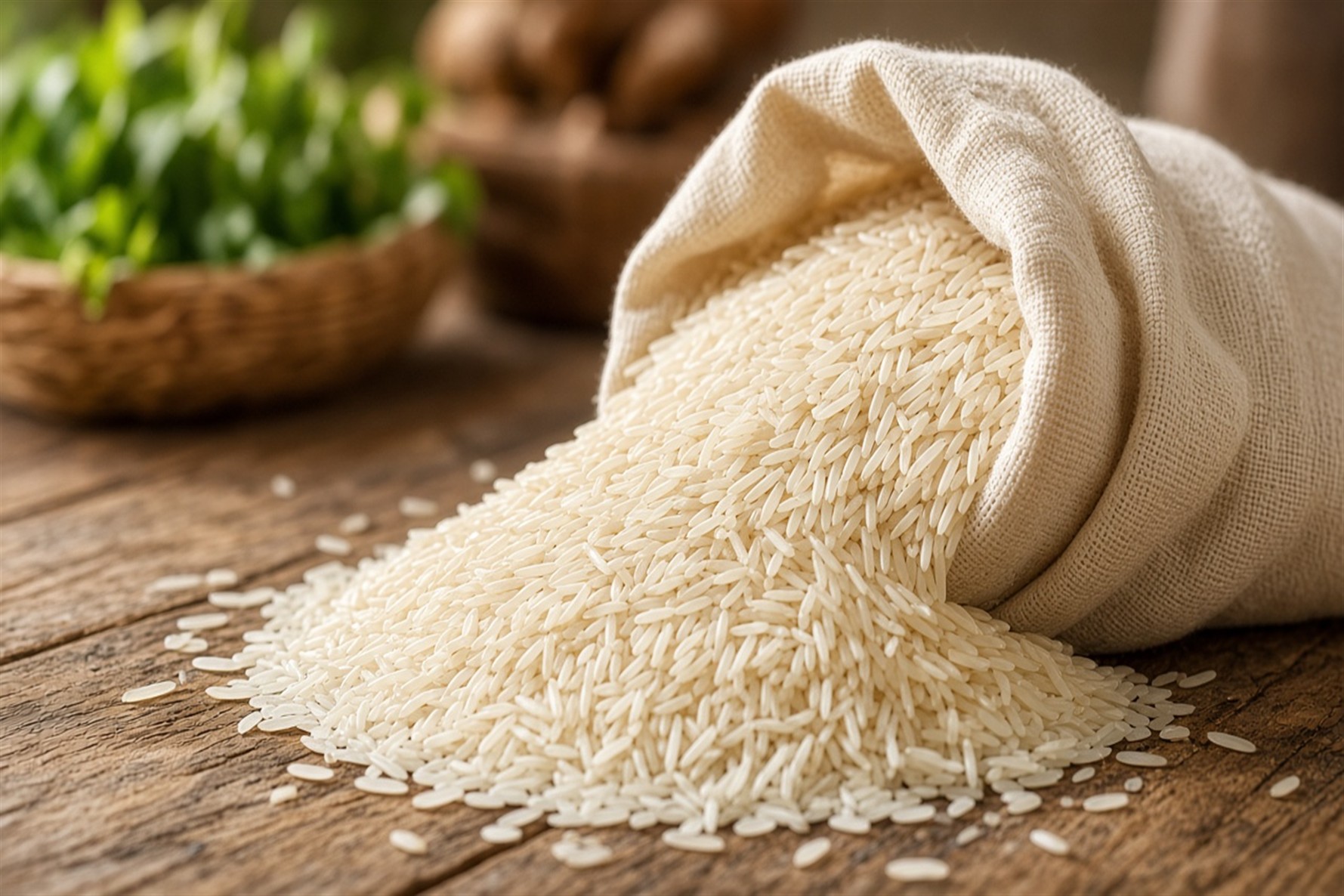
A comprehensive guide to physicochemical evaluation, laboratory standardization, export packaging and international market-entry strategy. Tarom Anbari rice is one of Iran’s flagship cereal products, linking grain elongation with the intensity of amber aromatic compounds.
Analytical overview
International trade in agricultural products demands precise knowledge of the commodity, physical uniformity and strict hygiene standards. Rice plays a strategic role in Middle Eastern diets, and consumers continually seek a fine balance between cooked grain length and lasting natural aroma. Northern Iran’s rice varieties hold a distinctive place in target markets thanks to unique organoleptic traits.
Tarom Anbari represents a rare combination of desirable grain attributes—the elongation of northern lowland rices with the warm, deep fragrance of traditional aromatic lines. Despite rising demand for premium, identity-backed cereals, much Iranian rice export still misses real value-add because of traditional handling, weak packaging and inconsistent lot uniformity.
Systematic market entry and successful contracts with major international buyers require moving beyond vague quality claims to laboratory parameters, genetic authenticity tests, physical defect tolerances and sea/land logistics cost modelling. This article is an independent specialist reference for selection, inspection, sorting, wholesale buying and marketing of Tarom Anbari rice to global standards. Register technical specifications via Iranco.
1. Agronomic position, main growing areas and production calendar
Iran’s rice farming structure splits broadly into northern and southern systems by climate, soil texture and water-flow patterns. The commercial name Tarom Anbari denotes authentic Tarom-family lines where field genetic selection under special ecological conditions has intensified volatile aromatic compounds in the endosperm.
Core basins and soil–water advantages
Primary Tarom cultivation hubs lie along the southern Caspian shore, especially Mazandaran counties such as Fereydunkenar, Babolsar, Babol, Mahmudabad and Juybar. Parts of Golestan’s fertile plains and the Tarom valley in Zanjan also suit this class thanks to favourable hydrology and fresh foothill water. Soils are mainly clay–silt rich in organic matter; combined with regional humidity and daylight, they stimulate metabolic pathways that build alkaloids and aromatic esters.
Seasonal calendar, harvest window and ratoon
The Tarom Anbari cycle starts with nursery preparation and sowing in the second half of Farvardin (April). Main transplanting is in Ordibehesht (May); first-crop harvest runs from late Tir to mid-Mordad (July–August). After first harvest, farms continue in two ways:
- Second transplant crop: focused re-planting with harvest in early Aban (October–November).
- Ratoon (donuj): stimulating remaining stubble to tiller again without transplanting—highly aromatic grain but limited volume.
Ratoon and second-crop grain fill during cool autumn nights, yielding denser aroma than first crop, though together they cover under 20% of regional tonnage.
Actual vs. potential markets
Today’s actual market is mainly domestic Iranian trade, fine restaurants, formal events and limited Gulf border flows. Potential reaches Western European chains, Canadian markets and luxury Middle Eastern hotels. The barrier to conversion has been weak modern sorting chains, uneven hygienic packaging and missing export-grade branding.
2. Physicochemical traits, texture and cooking mechanics
Morphology and elongation behaviour
Raw Tarom Anbari grain averages 7.1–7.4 mm length and about 1.8–1.9 mm width—slender and needle-like. Appearance is ivory-cream white with natural lustre. In a standard cooking test, length reaches 11.5–13.5 mm (1.6–1.8× elongation), so the steamed dish looks voluminous and separate-grained.
Starch chemistry: amylose, gelatinization and gel consistency
- Amylose: 19–22% (medium)—avoids Japanese-style stickiness and high-amylose hybrid dryness; softness holds after cooling.
- Gelatinization temperature (GT): 70–74 °C with alkali spreading value 4–5; cooking without wall cracking.
- Gel consistency: 60–80 mm—soft to medium gel confirming tenderness after cooling.
Aromatic chemistry
The amber scent comes from natural 2-acetyl-1-pyrroline plus controlled hexanal and pyrrole compounds bound to free lipids and under-pericarp layers. Repeated washing does not strip the aroma; it releases stably during heating and steaming.
| Index | Tarom Anbari | Tarom Hashemi | Southern Anbarbou | Classic Basmati |
|---|---|---|---|---|
| Raw length (mm) | 7.1–7.4 | 7.3–7.6 | 5.1–5.6 | 7.3–8.3 |
| Cooked length (mm) | 11.5–13.5 | 12.5–14.0 | 7.3–8.3 | 14.5–18.0 |
| Elongation ratio | 1.6–1.8× | 1.7–1.85× | 1.3–1.4× | 1.9–2.3× |
| Amylose (%) | 19.0–22.0 | 21.0–23.0 | 19.5–22.0 | 25.0–28.0 |
| Gel consistency | Soft (60–80 mm) | Soft (65–85 mm) | Soft (70–90 mm) | Hard (<45 mm) |
| Temperament & digestion | Mild–warm, light digestion | Mild, very light | Warm, fast clearance | Cooler, drier texture |
| Aroma intensity | Very high (deep amber) | High (mild meadow) | Very high (sharp herbal) | Medium–high (woody–nutty) |
3. Wholesale buyer specs and contract inquiry parameters
In container-scale and wholesale deals, vague wording is unacceptable. Professional buyers must sign a defect-tolerance table as a technical annex. Ignoring these tolerances risks delivery mismatch and costly disputes.
| Parameter | Export premium grade | Commercial grade one | Practical importance |
|---|---|---|---|
| Final moisture | 12.5–13.2% | max 14.0% | Storage stability; mould prevention |
| Broken grains | < 1.5% | max 3.0% | Avoids mushy cook appearance |
| Genetic purity | ≥ 97.0% | ≥ 94.0% | Uniform elongation |
| Chalky / opaque | < 2.0% | max 4.0% | Prevents grain breakup on drain |
| Yellow / heat-damaged | < 0.2% | max 0.5% | Blocks ferment odours |
| Red / streaked | 0–0.1% | max 0.3% | Clarity in transparent packs |
| Mineral foreign matter | Absolute zero | max 0.02% | Consumer & mill safety |
| Insects | Zero | Zero | Entry-port quarantine |
| Mean raw length | ≥ 7.2 mm | ≥ 7.0 mm | Justifies premium pricing |
4. Common grain defects, commercial fraud and field control
Common physical defects
- Checking and banded grains: from excessive dryer temperature or rapid paddy dehydration; heat stress predisposes breakage in boiling.
- Chalky / opaque grains: matte spongy white tissue from incomplete photosynthesis under field heat stress; low physical strength.
- Black belly / spotted: stem-borer attack or late heavy rain plus fungal activity.
Wholesale fraud patterns
- Planned blending with Fajr, Shiroudi or Neda at 10–30%—texture mismatch shows after cooking.
- Edible paraffin oils or synthetic essences to glaze old scentless rice and fake a sharp amber note.
Authentic Tarom Anbari has a mild natural matte look; aroma should recall fresh roasted cereal, not soap or cologne. Counter master-sample vs. shipment gaps with standard probe sampling across bag depths, lab weighing of broken %, blind cook of at least 500 g composite sample, and independent pre-seal inspection reports.
5. Laboratory tests, health control and standards
Iran’s legal reference for rice grain evaluation is National Standard 127 (“Rice — specifications and test methods”). Oven drying at 130 °C is the reference moisture method.
- Heavy metals (ISIRI 12968 & EU rules): ICP-MS; lead max 0.15, cadmium max 0.06, inorganic arsenic 0.15–0.20 mg/kg.
- Mycotoxins (ISIRI 5925): HPLC; aflatoxin B1 = 5 µg/kg; sum B1–G2 max 10 µg/kg.
- Pesticide residues (ISIRI 13120 & Codex MRL): tricyclazole and chlorpyrifos via GC-MS/MS.
- Genetic purity Real-Time PCR: Tarom-specific SSR markers; error under 1%; COA plus SGS-class confirmation eases EU and Gulf entry.
6. Export market structure and commercial entry strategy
Tarom Anbari does not compete on cheap commodity shelves; its commercial target is upper-middle consumers, Middle Eastern diaspora and specialty restaurants.
| Market | Demand type | Preferred pack | Sales channel | Technical barriers |
|---|---|---|---|---|
| UAE | Long grain, strong aroma | 5 & 10 kg laminated bags | Hypermarkets, catering, re-export | GSO Gulf standard |
| Germany | Health clearance, low residues | 1 & 2 kg vacuum | Ethnic & bio markets | Strict EU MRL |
| Canada | Ceremonial cook, 100% purity | 4.5 & 9 kg bags | Asian & Iranian supermarket | Long-haul freight cost |
| Iraq | High-volume cooking | 10 & 20 kg sacks | Baghdad, Basra, Erbil wholesale | Price sensitivity |
| Oman & Qatar | Luxury premium grade | Cotton bags with handles | 5-star hotel supply | Health & Halal certificates |
7. Customs rules, HS codes and entry requirements
- 1006.10 — Paddy / rice in the husk
- 1006.20 — Husked (brown) rice
- 1006.30 / 10063000 — Semi-milled or wholly milled rice; main commercial Tarom Anbari code
- 1006.40 — Broken rice
Gulf Arab entry requires GSO 1003:2022 (Rice Kernels): moisture max 13.5–14%, free of mould and rodent contamination, aflatoxin per Codex. Bilingual Arabic–English labels must cover product name, Product of Iran, net weight, processor ID, production/expiry (usually max 2 years), lot number and nutrition panel per 100 g.
Accompanying documents: bill of lading, commercial invoice, packing list, chamber certificate of origin, phytosanitary certificate, fumigation certificate, Halal certificate and third-party quality inspection report.
8. Packaging technology, aroma retention and stored-pest control
- Multi-layer PP with laminate & BOPP: 5, 10 and 20 kg; high-print clarity and moisture/dust barrier.
- Laminated cotton/linen: luxury look and controlled breathability; without an impermeable liner, not advised for humid sea routes.
- Vacuum MAP: 1–5 kg packs; residual O₂ under 0.5% with N₂ or CO₂; aroma retention and pest stop for 18–24 months.
Bags go into five-ply moisture-resistant master cartons or onto 120×100 cm ISPM 15 heat-treated pallets—typically 5–8 layers (800–1,000 kg) secured with corner boards, strapping and stretch wrap.
9. International logistics and transit risk control
Sea freight usually uses 20′ dry FCL containers; ~24–25 tonnes net fill makes 40′ uneconomic. The main hazard is cargo sweat (container dew), managed with ceiling/wall insulation, calcium-chloride desiccant bags (≥200% uptake) and pre-load moisture checks.
Quarantine fumigation with aluminium phosphide tablets and 48–72 h sealing eradicates larvae and weevils; after aeration an official Fumigation Certificate is issued.
| Corridor | Logistics method | Transit | Special measures | Dominant risk |
|---|---|---|---|---|
| Iran → Iraq | Curtain-side transit truck | 3–6 days | Palletizing, rain covers | Border delays |
| Iran → UAE | Truck + 20′ sea container | 5–9 days | Desiccants, fumigation | Yard heat |
| Iran → Germany | Ocean container liner | 25–35 days | Thermal insulation, RH sensors | Aden–Mediterranean thermal shock |
| Iran → Canada | FCL with transshipment | 40–50 days | Final vacuum, heavy stretch | Gradual aroma loss |
10. Cost structure and competitiveness analysis
- Base paddy purchase: rainfall, transplant/harvest labour, fuel and inputs.
- Milling recovery: paddy-to-white conversion about 55–65%; tighter broken caps raise unit price.
- Optical sorting: laser sorters remove spotted/yellow grains (2–5% weight drop).
- Buy timing: price floor in Mordad–Shahrivar (Aug–Sep); from Azar (Dec) storage cost and ageing value push prices up.
| Country / product | Competitive edge | Constraint | Price tier | Target markets |
|---|---|---|---|---|
| Iran (Tarom Anbari) | Lasting aroma, light digestion, soft cook | Limited production volume | Premium / high | Gulf, Europe, Canada |
| India (Basmati 1121) | Very high elongation, very long grain | Weaker aroma, drier texture | Mid–low | Mass markets |
| Pakistan (Super Basmati) | Elongated grain, traditional aroma, supply | Grade variance | Medium | Middle East, UK |
| Thailand (Jasmine) | Soft texture, floral aroma | Tendency to stick | Competitive | SE Asia, Americas, Europe |
Tarom Anbari need not fight cheap industrial rices on price; its edge is natural/organic positioning, light texture, easy digestion and rich amber aroma—marketed as a prestige grain.
11. Importer & wholesale buyer checklist
12. Information required for a price inquiry (RFQ)
- Exact product and line: 100% pure Tarom Anbari rice
- Requested broken % (under 1%, under 2%, or commercial)
- Crop year: new-crop or aged with stable moisture
- Total volume and shipment calendar (e.g. 100 t in 4×20′ monthly)
- Pack material, size and design (2.5, 5, 10 or 20 kg; laminate, BOPP or vacuum)
- Delivery point under Incoterms (FOB Bandar Abbas, CFR Hamburg, etc.)
- Required certificates (PCR, heavy metals, phytosanitary, SGS)
Register a supply request with Iranco
In long-grain aromatic cereal trade, deal success equals real shipment match to the proforma standard. Iranco provides a specialist platform to evaluate, manage supply chains and export quality Iranian rice. Bulk buyers, exporters and international trade managers can submit grade, broken index, packaging structure and delivery port so supplier screening, lab alignment, sealed samples and pre-load QC follow official grain-trade standards.
If your retail chain, distribution network or foodservice needs authentic Tarom Anbari, register technical specs and tonnage via an Iranco purchase request.
Summary
Tarom Anbari trade offers a rare path to high value-add in premium Middle Eastern and diaspora grain markets. With 1.6–1.8× elongation, 19–22% amylose and a natural aroma profile, it can hold a luxury shelf position. Sustainable export growth needs laser sorting, controlled drying below 14% moisture, compliance with ISIRI 127/12968 and GSO 1003:2022, and MAP packaging on container routes. Smart logistics plus scientific authenticity verification protect the exporter’s commercial credibility.
Frequently asked questions
1. How does Tarom Anbari cooking differ from southern Anbarbou?
Tarom Anbari is slender and long (raw >7 mm, cooked often above 12 mm). Southern Anbarbou is short and plump (~5 mm) with little longitudinal stretch, though both sit in the warm aromatic cereal class.
2. Why is 19–22% amylose a quality advantage?
This medium range prevents mushiness in the boil and, unlike high-amylose types, does not harden quickly on cooling—moisture and separate grains hold for hours after cooking.
3. What is the minimum export order tonnage?
A commercially justified minimum is one 20′ dry container with 20–25 tonnes net, spreading permit, fumigation, B/L and port costs.
4. What is the definitive genetic-purity method?
Molecular markers and Real-Time PCR in accredited labs; blends with high-yield varieties even below 5% are proven precisely.
5. Is new-crop or aged rice better for export?
Rice aged at least two to three months after milling is more stable; new-crop has unstable structural moisture, while aged grain absorbs more water and elongates better.
6. What data are required for an accurate price?
Exact broken %, pack type (laminate, BOPP or vacuum), pack weights, tonnage, destination country and Incoterms—same variables used on Iranco RFQs.
7. Best packaging for long sea routes?
Impermeable packs with oxygen removal and nitrogen injection (MAP)—blocks lipid oxidation, aroma ageing and insect activity in warm humid transit.
8. How does direct supply from Iranian producers work?
RFQ specs, master-sample evaluation, lab results, formal contract and load-out under independent inspection; international buyers can run these steps through Iranco.
Featured Products




Related Articles



