 Iranco Magazine Team
Technical review of physicochemical indices, ISIRI 127, optical sorting standards, international logistics and export markets
Export Guide · Iranian Sadri Rice
Sadri Rice: A Complete Guide to Varieties, Quality Assessment, Wholesale Buying and Export of Iran’s Sadri Rice
Specialist review of physicochemical indices, national standard 127, optical sorting norms, international logistics and export market channels.
Analytical introduction
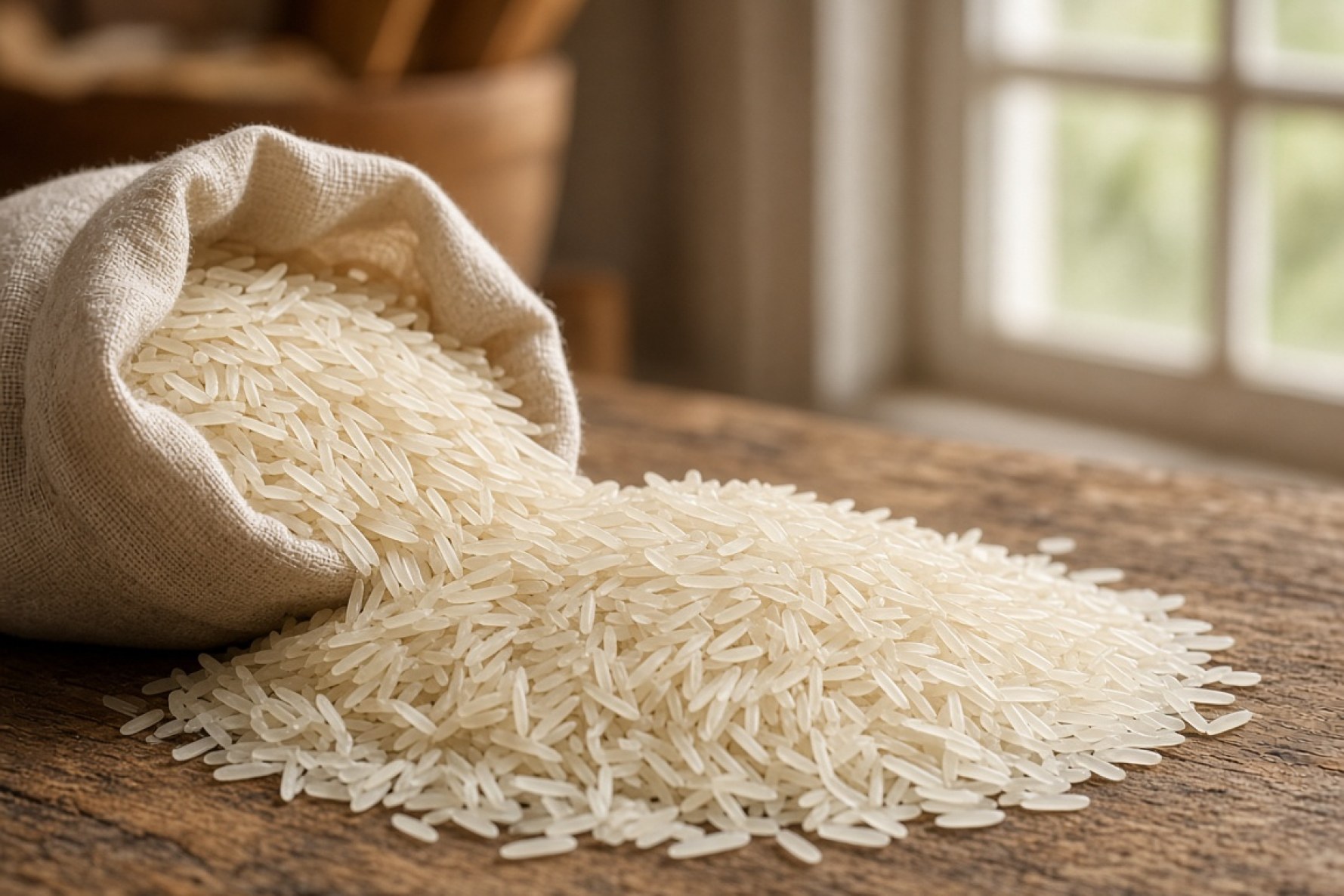
Sadri rice ranks among Iran’s finest native grains for organoleptic character, lasting aroma and exceptional elongation on cook. This guide analyses Sadri varieties, starch biochemistry, methods to detect commercial adulteration, Iran national standard No. 127, modern packaging technology and wholesale and export strategy for traders, distributors and food manufacturers.
International trade in aromatic cereals favours products that combine genetic authenticity, stable cook behaviour and a distinctive sensory identity. Iranian Sadri occupies the top tier of quality rice from paddies along the southern Caspian. Alluvial loam soils, reliable rainfall, balanced humidity and long, mild summer sunshine in Gilan and parts of Mazandaran create exceptional conditions for volatile aroma compounds such as 2-acetyl-1-pyrroline and for starch granule development.
Yet success in foreign supply chains depends on mastering complex technical and economic variables. Low field yields versus improved lines, acute stem lodging risk, late maturity and high breakage during milling and polishing make Sadri one of the costliest cereals on the market. That price premium intensifies fraud such as blending with cheaper varieties, aged stock or imported Indian and Pakistani rice.
Sustainable Sadri export rests on rigorous laboratory evaluation, compliance with Iran national standard No. 127, Codex Alimentarius requirements and processing lines equipped with advanced optical sorting and modified-atmosphere packaging. With sound quality-engineering protocols, businesses can realise this native product’s true added value as a premium export commodity. To register technical specifications and receive supply options, contact Iranco.
| Assessment index | Standard value and range | Commercial importance |
|---|---|---|
| Raw and cooked grain length | 7.5–8 mm raw / over 14–16 mm cooked | Quality grading; elongation index in ceremonial polo |
| Starch amylose (%) | 21–23% by weight | Intermediate amylose class; soft, separate grains and easy digestion |
| Customs tariff (HS code) | 10063000 | Export declarations, customs clearance and trade in fully milled white rice |
| Maximum permitted moisture | 13.5–14.0% | Microbial control, grain integrity and storage life |
1. Geographic origin, ecology and Sadri’s economic role in Iran
Sadri cultivation in Iran is tightly linked to the Caspian basin environment. Over 90% of commercial production is concentrated in Gilan paddies. Astaneh-ye Ashrafiyeh, Lahijan, Rasht, Langarud, Soume’eh Sara, Khamam and Fuman are the main Sadri origins. Continuous sediment from the Sefidrud and its irrigation network enriches soils with potassium, magnesium and micronutrients that underpin plant nutrition and albuminous endosperm texture.
Ecophysiologically, Sadri plants are tall, reaching 130–145 cm at maturity. From nursery sowing to physiological ripening, the crop needs 120–135 days, placing it among late-season cereals. The long cycle and slender stems increase vulnerability to late-summer wind and storms and raise lodging (verse) risk. These agronomic limits cap paddy yield at roughly 2.8–3.5 t/ha versus 6–8 t/ha for high-yield varieties.
The northern rice calendar starts with nursery preparation and seeding in the second half of Farvardin. Transplanting follows in Ordibehesht; grain filling occurs in Tir under intense sun. Harvest runs from early Mordad to early Shahrivar. Despite difficult farming and low milling recovery, experienced growers still allocate prime fields to Sadri. Export markets treat Sadri as a ceremonial product with high margins in specialist Middle Eastern and Western European retail.
2. Classification and physical traits of native Sadri varieties
The Sadri family includes multiple genetic types classified by paddy husk colour, awn colour, grain geometry and mechanical strength. These classes directly affect pricing and cook behaviour in professional kitchens.
Sadri Dom-Siah (black awn)
Dom-Siah is the most authentic, recognised and sought-after Sadri type domestically and abroad. The name refers to a slender black or burnt-brown awn at the paddy tip at field maturity. Milled kernels are ivory-cream and glassy. Raw grains are 7.5–8.0 mm long, very slender and pen-shaped. Dom-Siah commands top Iranian rice prices for stunning linear expansion (cooked length over 14–16 mm) and stable softness.
Sadri Zard-dom (yellow awn)
This type has a straw-coloured husk and a bright golden terminal awn. White grain shape differs only slightly from Dom-Siah, though Zard-dom is somewhat wider mid-grain. Breakage in milling is lower than Dom-Siah and physical abrasion resistance is better. Cooked texture feels noticeably buttery and is favoured by wholesale buyers for premium restaurants.
Sadri Dom-Sorkh and Dom-Sefid
Dom-Sorkh is identified by a reddish-brown awn on the paddy. High blast sensitivity and yield loss have restricted it to very small areas. Cooked texture is crisp and light. Dom-Sefid has a pale husk without dark pigments; milled grains are highly glassy, elongate well for formal service, but low volume makes multi-container lots dependent on advance paddy contracts with local growers.
Related landraces: Hasan Sarai and the Hashemi link
Hasan Sarai is grown along the Caspian coast in Rudsar and Chamkhaleh and shows elongation similar to Dom-Siah. Hashemi, selected from Sadri fields in the late 1980s, is slightly wider with higher field yield but is still traded alongside the Sadri family for aroma and elongation.
| Rice type | Paddy morphology and awn colour | Mean raw length (mm) | Mean cooked length (mm) | Length increase ratio | Sensory and organoleptic notes |
|---|---|---|---|---|---|
| Sadri Dom-Siah | Dark yellow paddy, long black or burnt-brown awn | 7.5 – 8.0 | 14.5 – 16.0 | 1.90 – 2.10 | Very strong lasting aroma, soft, non-sticky, light |
| Sadri Zard-dom | Golden paddy, clear light yellow awn | 7.2 – 7.6 | 13.8 – 15.0 | 1.85 – 1.95 | Strong pleasant aroma, buttery cohesive texture |
| Sadri Dom-Sefid | Light cream paddy, straw-white awn | 7.3 – 7.8 | 14.0 – 15.2 | 1.85 – 2.00 | Pleasant aroma, glassy grain, soft texture |
| Sadri Dom-Sorkh | Dark paddy with wine-red awn | 7.1 – 7.5 | 13.5 – 14.5 | 1.75 – 1.90 | Classic cereal note, firm crisp grains |
| Hasan Sarai | Elongated paddy with narrow amber awn | 7.3 – 7.7 | 14.0 – 15.3 | 1.80 – 2.00 | Formal cook, excellent keeping, rich aroma |
3. Biochemical structure, starch dynamics and cooking rheology
Food-industry rice quality rests on endosperm biochemistry. Sadri cook quality tracks three core indices: amylose content, starch gelatinization temperature and gel consistency from alkaline hydrolysis.
Amylose content and grain separation
Rice endosperm starch is built from amylose (linear α-1,4 chains) and amylopectin (branched α-1,6 structure). Amylose concentration sets stickiness versus separation after cooking. Low-amylose types (below 19%) yield soft sticky grains; high amylose (above 25%) dries and fractures after cooling.
Iranian Sadri at 21–23% amylose by weight sits in the intermediate class. In that band, grains hydrate strongly and linear amylose chains extend along the long axis without rupturing endosperm cell walls — delivering maximum elongation and fully separate grains after steaming.
Gelatinization temperature and alkali score
Gelatinization temperature (GT) is the point at which starch granules irreversibly absorb water and swell. Under the ISIRI 127 alkali dispersion test in 1.7% KOH, Sadri scores 4–5 — intermediate GT (70–74°C). The core and outer layers cook evenly without the periphery collapsing before the centre is done.
Gel consistency and cold-texture stability
Gel consistency describes rheology of gelatinized starch after cooling. Sadri falls in the soft-gel class (gel length over 60–80 mm in a horizontal tube). Retrogradation is slow, so polo keeps softness and freshness for up to 24 hours without drying or harshness.
Phytochemistry of volatile aroma compounds
Sadri’s distinctive aroma comes from high levels of 2-acetyl-1-pyrroline (2-AP) plus branched alkanes and aldehydes, formed via proline metabolism under Gilan’s day–night temperature swings late in grain filling. Because aroma concentrates in the aleurone under the bran, milling and polishing must use controlled mechanical pressure to protect innate fragrance.
4. National standard 127 and international Codex frameworks
Quality confirmation for domestic and export Sadri lots follows revised Iran national standard No. 127 (“Rice — specifications and test methods”) and Codex Stan 198-1995. These define geometry, physical defects, broken percentage, biosafety indices and pesticide residues.
Under ISIRI 127, whole-grain dimensional class uses length and length-to-width ratio. Sadri, with raw length above 7 mm and L/W greater than 3, is graded long-grain.
| Physical / chemical trait | Premium grade limit | Grade-one limit | Standard test method | Contract relevance |
|---|---|---|---|---|
| Moisture (w/w) | Max 13.5% | Max 14.0% | Electric oven 105°C | Mould control; weight stability in storage |
| Broken / fragmented grains | Max 2.0% | 2.0–5.0% | Standard sieving with defined aperture | Cook uniformity; commercial value; plate appearance |
| Chalky / opaque grains | Max 1.5% | Max 2.5% | Optical inspection and hand sorting | Prevent breakage and pasty cook |
| Damaged and yellow grains | Max 0.2% | Max 0.5% | Photometry and visual appraisal | Block stale odour and colour shift |
| Extraneous mineral matter | Zero | Max 0.05% | Gravity vibrating sieves and wash | Consumer safety; plant hygiene standards |
| Cadmium residue | Max 0.06 mg/kg | Max 0.06 mg/kg | Graphite-furnace AAS | Strictest export hygiene rules |
| Lead residue | Max 0.20 mg/kg | Max 0.20 mg/kg | ICP spectrometry | EU food-safety requirements |
| Total aflatoxin | < 4 µg/kg | < 4 µg/kg | HPLC | Sanitary clearance at destination ports |
Export shipments require a certificate of analysis (COA) and phytosanitary certificate based on MRL testing. Fungicides such as tricyclazole and herbicides such as butachlor must meet Codex and destination limits.
5. Specs wholesale buyers expect and commercial contract parameters
Bulk buyers, retail chain procurement and grain exporters must specify Sadri quality as numeric parameters. Vague labels such as “premium rice” invite disputes at delivery.
| Contract quality parameter | Accepted option / range | Buyer priority | QC basis |
|---|---|---|---|
| Genetic type | Pure Dom-Siah or Zard-dom Sadri | Critical | Genetic appraisal; native authenticity |
| Lot purity | Min 95–98% uniform grain | Critical | Prevent mixed-type cook behaviour |
| Mean raw length | Min 7.4 mm upward | High | Luxury long-grain appearance |
| Cook elongation index | At least 1.9× length gain | High | Ceremonial consumer expectations |
| Broken grains | Super-premium (<2%) or commercial (<5%) | High | Value deduction vs broken-rice market rate |
| Grain moisture | 12.5–13.5% | High | Limit respiration and mould; protect texture |
| Chalky / opaque grains | Max 2.0% | Medium | Crystal clarity; even cook |
| Polish / finish | Double optical sort + controlled water polish | High | Clean shine; no bran dust |
| Paddy resting age | Aged (min 90–120 days) | High | Starch stability; max elongation |
Explicit broken and chalky tolerances shrink commercial risk. Buyers sourcing from Iran can review options and submit purchase requests with their specs through Iranco.
6. Operational guide to authenticity, quality appraisal and fraud detection
The large price gap versus high-yield types (Shiroudi, Fajr, Neda) and cheaper Indian/Pakistani rice raises mechanical blending risk. Rapid field tests plus lab assays verify lots at delivery.
Rapid sensory and physical methods
- Clarity and structural curve: Dom-Siah shows a narrow longitudinal section, bony form, crystal clarity and a subtle lengthwise curve. High-yield types are wider at the tip with coarser edges and often a chalky mid-wall halo.
- Surface fat test: Rubbing grains between palms releases natural surface lipids as a pleasant slip. Poor or mixed lots feel chalky, dusty and rough.
- Warm-breath aroma test: A handful warmed with deep exhalation should smell mild, warm, sweet and natural. Essence-doped fakes smell soapy or cosmetic and fade after a few breaths.
Cook behaviour and cook heterogeneity
Authentic Sadri hydrates evenly and elongates without lateral swelling. Blended lots show early-cooking grains that split while Sadri cores remain underdone. After 24 hours, pure Sadri stays soft and aromatic; blends turn dry, brittle and rubbery.
Specialist laboratory tests
- Alkali digestion (KOH): Differentiates high-GT high-yield types from intermediate-GT Sadri and reveals blends.
- Iodometric amylose colorimetry: Deviation from 21–23% signals physical mixing.
- PCR genetic fingerprint: Matches sample DNA to Dom-Siah-specific markers to quantify purity to hundredths of a percent.
7. Milling engineering, industrial processing and advanced optical sorting
Converting Sadri paddy to export white rice is a technical process; poor control cuts commercial yield. Long, slender endosperm cracks under slight thermal or mechanical stress.
Dynamic drying and moisture-stress control
Fresh paddy holds about 21–24% moisture. Uneven sun-drying creates tensile stress and breakage. Modern plants use fluid-bed dryers with gentle airflow; inlet air must stay within 38–42°C. Multi-stage drying with tempering over 48–72 hours balances core-to-surface moisture toward a stable 13–13.5%.
Rubber-roll husking
Husking uses micrometer-adjustable rubber rolls calibrated to Sadri’s narrow width to avoid radial impact. Efficiency should reach at least 90% without crushing kernels.
Two-stage whitening and water polishing
Bran is removed in two to three gentle abrasion stages on vertical machines with cooled screens. Final water-mist polish washes bran flour from grooves and yields a crystalline surface without raising base moisture.
Length sorting and optoelectronic cleaning
Whitened rice passes cylindrical length graders then multi-channel optical sorters with InGaAs IR sensors and full-colour high-speed cameras. Yellow streaks, fungal spots, black tips, chalky grains, weed seeds and stones are ejected by compressed-air nozzles — targeting under 2% breakage and full colour purity.
8. Comparative analysis: Iranian Sadri vs Basmati and Jasmine
In premium grain trade, Iranian Dom-Siah Sadri competes with Indian/Pakistani Basmati and Thai Jasmine (Hom Mali). Structural comparison clarifies Sadri’s distinct position.
Traditional Basmati and commercial 1121 are known for raw length above 8.2 mm and dramatic cook elongation (sometimes double), but higher amylose (24–26%) leaves a drier cold texture. Jasmine’s floral aroma comes with low amylose (12–15%), producing sticky paste unsuitable for Middle Eastern ceremonial polo. Dom-Siah balances long grain with lasting buttery softness after hours of cooling.
| Parameter | Gilan Dom-Siah Sadri | Traditional / 1121 Basmati | Thai Jasmine (Hom Mali) |
|---|---|---|---|
| Mean raw length (mm) | 7.5 – 8.0 | 8.0 – 8.5 | 6.8 – 7.2 |
| Cooked length (mm) | 14.5 – 16.0 | 16.0 – 19.5 | 10.0 – 11.5 |
| Amylose | 21–23% (intermediate) | 24–26% (high) | 12–15% (low) |
| Mouthfeel / lipid feel | Buttery, very soft, digestible, lasting | Relatively dry; little natural fat feel | Moist, dense, highly sticky |
| Aroma profile | Warm, natural, lasting (2-AP) | Sharp, nutty, mild smoky | Floral / pandan-like |
| World price tier | Luxury premium (top) | Mid to high (by ageing grade) | Economy to mid |
| Supply scale | Small, traditional, northern Iran | Industrial multi-million tonnes | National mechanised scale |
9. Target export markets, consumer behaviour and clearance rules
High origin cost means Iranian rice is not a mass staple abroad; it serves luxury chains, top Middle Eastern restaurants, affluent diaspora markets and ceremonial hospitality.
GCC markets (UAE, Qatar, Oman, Kuwait)
Gulf states are the core traditional destinations. In UAE (especially Dubai) and Qatar, Iranian traders, local elites and fine restaurants are steady Dom-Siah buyers. Demand centres on 10–20 kg laminated jute-style bags with Arabic–English print. Entry relies on GSO hygiene approvals and absence of rice weevils and mycotoxins.
EU markets (Germany, Sweden, UK)
Germany then Sweden lead EU demand via Iranian restaurants and ethnic retail. EFSA rules on cadmium (max 0.06 mg/kg), inorganic arsenic and pesticides are sampled at Hamburg and Rotterdam. Preference is 1 / 2.5 / 5 kg vacuum packs with full nutrition labelling.
| Destination | Main distribution / use | Preferred packaging | Documentary / regulatory needs |
|---|---|---|---|
| UAE | Luxury hypermarkets, wholesalers, hospitality | 5 & 10 kg three-layer jute-look bags | Certificate of origin, phytosanitary, non-GMO, health |
| Qatar | Catering firms, 5-star hotels, premium households | 5 & 10 kg zip packs with air valve | MOPH hygiene + GSO |
| Germany | Specialty / organic chains, restaurants | 1 & 2.5 kg carton vacuum packs | MRL lab analysis; aflatoxin & heavy metals |
| Turkey | Istanbul & Antalya international foodservice | 10 kg impermeable laminate bags | Ag ministry quarantine; grain import duties |
| Canada & Australia | Middle Eastern / ethnic retail | 5 kg multi-layer tear-resistant packs | Strict port biosecurity against pest eggs |
10. Packaging technology, technical storage and container logistics
Sadri quality, aroma and safety are vulnerable to atmosphere, temperature and humidity swings in international transit. Correct packaging and cold-chain discipline protect end-buyer satisfaction.
MAP packaging and vacuum bags
Free surface lipids oxidise above 25°C in oxygen and develop stale odour. Best export practice uses multi-layer polyamide barrier bags with vacuum and 99.9% nitrogen flush, cutting residual O₂ below 0.5% — stopping aerobic respiration, fat oxidation, aroma loss and warehouse insect eggs without chemical insecticides.
Technical warehouse rules
Export warehouses must be cool, dark and force-ventilated. Hygienic plastic pallets sit ≥15 cm off the floor and ≥50 cm from walls. Ideal storage is 15–18°C with RH ≤55–60%. Keep away from fragrances, detergents or fertilisers — porous starch absorbs foreign odours.
Container logistics and sea-route moisture
Shipments move in 20 ft dry FCL containers (18–22 t palletised). Night temperature drops cause container rain. Line interiors with kraft thermal liners and hang high-capacity desiccant bags in corners to kill local humidity.
11. Price formation, milling economics and cost optimisation
Sadri pricing at origin combines agronomic, economic and processing factors. Understanding cost components strengthens buyer negotiations.
Low whole-grain milling yield
High-yield varieties convert 62–68% of paddy to commercial white rice; Sadri yields only 50–55% whole grain because of length and breakage sensitivity. Broken fractions sell at about one-third the whole-grain price, so paddy cost loads directly onto sound kernels.
Optical sorting and extra cleaning costs
Super-premium lots under 2% broken need tighter sorter settings and repeated sieving — adding 3–5% broken waste plus power, laser wear and labour per kilogram.
Ageing and capital tied in paddy
Fresh summer paddy cooks poorly (“does not elongate”). Aged stock rested 3–6 months hydrates evenly and elongates most. Storage cost, capital lock-up and evaporative weight loss justify a 10–20% premium for rested Sadri versus new crop.
For export RFQs, buyers can register broken %, packaging and resting age via Iranco so quotes reflect real northern sorting-plant capacity.
12. Practical importer / wholesale checklist before final order
Before locking a proforma, procurement teams should operationally review this checklist:
13. What information to send for an accurate price quote?
Per-tonne Sadri export pricing is impossible without full technical specs. Professional RFQs should include:
- Exact product: Dom-Siah, Zard-dom or sorted premium Hashemi.
- Sort grade: broken % (super-sort <2% or grade one to 5%).
- Total volume and delivery plan (trial tonnage + recurring container / multi-ten-tonne lots).
- Pack size: consumer (1 / 2.5 / 5 kg) or wholesale (10 / 20 kg).
- Pack technology: plain bag, muslin or nitrogen MAP vacuum.
- Age: new-milled vs rested aged stock.
- Private label vs producer standard artwork.
- Special tests: health COA, heavy metals, pesticides, molecular DNA.
- Final destination and Incoterms delivery point.
Importers can send grade, pack weight, order volume and destination via Iranco for matched supply options.
14. Sourcing export Sadri from Iranian paddies through Iranco
Continuous, uniform, authentic Sadri supply is hard because of traditional farming and inherent yield limits. Uniformity, anti-blend control, low breakage and export hygiene need direct oversight of milling and sorting at origin.
Iranco, as Iran’s agricultural and food-industry sourcing platform, lets international buyers and food manufacturers review processing lines, advanced sorting and leading Gilan plant capacity. Orders can specify broken %, moisture-barrier packaging and laboratory certificates.
Sourcing review starts by verifying pilot samples against standard 127 and comparing plant sorting capability — then technical visits, sealed commercial samples, formal contracts, quarantine documents and container loading at exit ports. Register purchase specs, quantity and destination with Iranco.
Conclusion
Sadri holds a premier place in Iran’s grain agriculture and food culture. Intermediate amylose (21–23%) and medium gelatinization temperature deliver exceptional elongation with lasting softness and natural lipid feel — distinguishing it from drier Basmati and sticky Jasmine types.
Wholesale and export success depends on clear contract parameters, ISIRI 127 tolerances, laser optical sorting and nitrogen MAP packaging. Laboratory QC plus organised supply chains secure safe, profitable, durable trade for domestic and export markets.
Frequently asked questions
1. What is the main cook and appearance difference between Dom-Siah Sadri and Hashemi?
Raw Dom-Siah is narrower and more elongated than Hashemi. After cooking it stretches further (often past 14–16 mm) while Hashemi is slightly wider. Dom-Siah also ranks higher for cold softness, lipid feel and market price.
2. What keeps Sadri soft for many hours after cooking?
Intermediate amylose (21–23%) and soft gel consistency slow starch retrogradation, so grains stay soft and fresh up to 24 hours without drying or brittleness.
3. What are typical raw and cooked length ranges for Sadri?
Under ISIRI 127 Sadri is premium long-grain. Dom-Siah raw length averages 7.5–8.0 mm and roughly doubles to over 14–16 mm in standard chelo cooking.
4. Why do wholesale buyers prefer aged (rested) Sadri?
Fresh grain has free surface moisture and unstable starch that pastes when boiled. After 3–6 months of paddy storage, proteins around starch hydrate and densify, enabling even water uptake and maximum elongation.
5. What is the best way to spot blending fraud in Sadri lots?
Field checks: uniform appearance under light, no chalky dorsal halo, tangible surface fat. Cook tests reveal early mushy impostors. Labs use amylose assay, KOH alkali score and PCR DNA when needed.
6. What packaging best protects Sadri on sea routes?
Multi-layer polymer vacuum packs with oxygen evacuation and nitrogen MAP stop respiration and fat rancidity, kill pest eggs and shield aroma from container humidity.
7. How can authentic Sadri be sourced directly from Iranian mills?
Define physical grade, broken %, packaging, tonnage and destination, then submit a purchase request via Iranco for matched Iranian supply options.
8. What must a formal Sadri proforma request include?
Tonnage, allowed broken % (<2% or <5%), packaging type, rice age (new vs rested), Incoterms and destination port. The same fields can be filed on Iranco to compare suitable suppliers.
Featured Products




Related Articles



