 Iranco Magazine Team
Quality assessment, physicochemical standards, packaging engineering, market analysis and commercial buying process
Export Guide · Mousa Tarom Rice
Mousa Tarom Rice: Identification, Wholesale Buying and Marketing for Domestic Sales and Export
A comprehensive guide to quality assessment, physicochemical standards, packaging engineering, market analysis and the commercial buying process. This specialist report supports purchasing managers, traders and exporters.
Analytical introduction
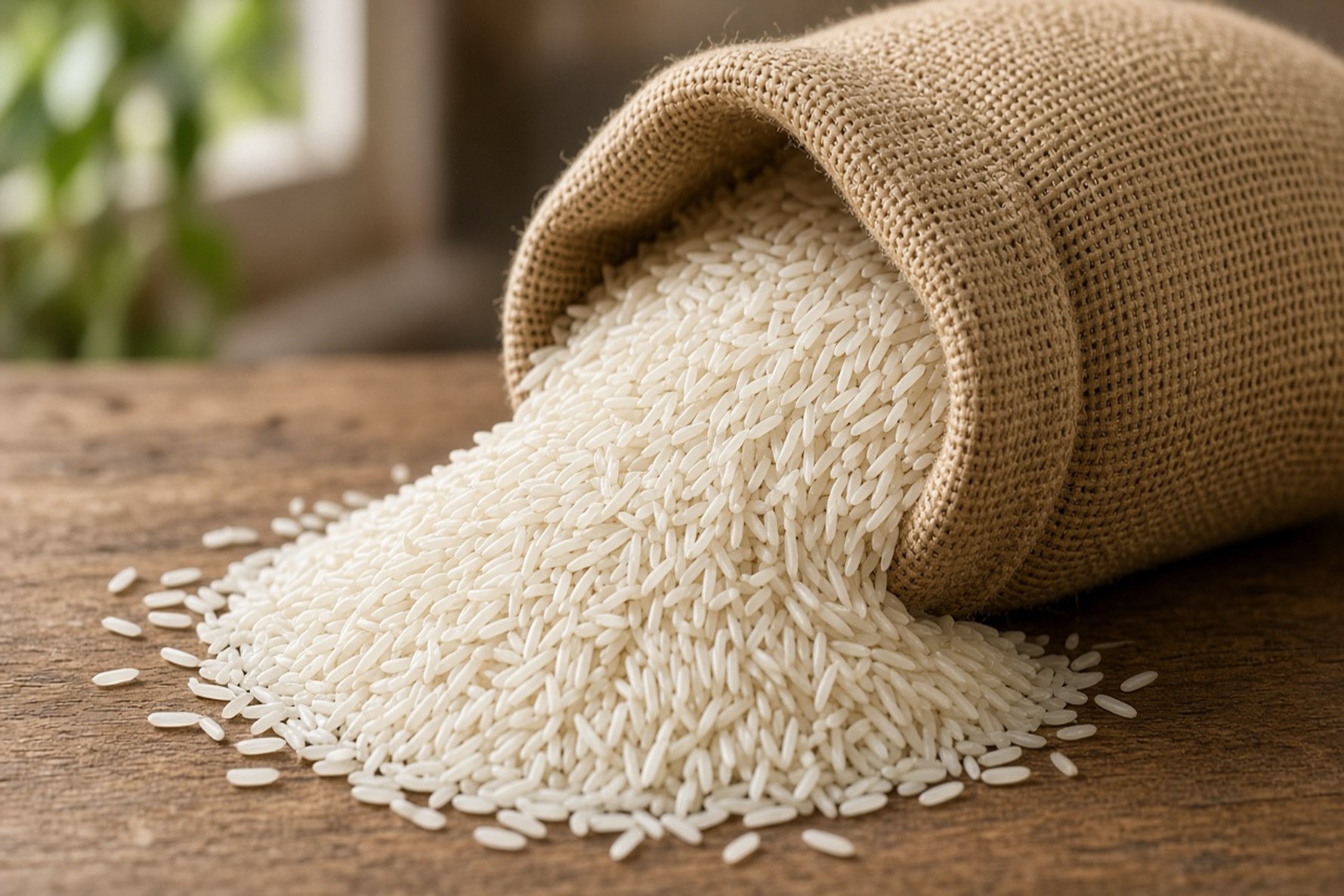
Mousa Tarom rice is one of northern Iran’s flagship landrace grains, valued in the grain trade for exceptional cooked elongation, stable aroma and lasting softness after cooking. Regional and cross-border markets for aromatic long-grain rice consistently judge lots by grain length, fragrance and cooking behaviour. Within the Tarom family, Mousa Tarom holds a dedicated position thanks to high volumetric expansion (ri) and a pleasant aroma profile.
Alignment with traditional and premium buyer preferences gives this grain strong potential in chain retail, banquet catering and nearby export destinations. Poor milling, blending with cheaper types and weak packaging raise risks of aroma loss and uneven lots. Wholesale buying requires precise understanding of amylose, gel consistency, moisture and destination quarantine rules.
1. Native origin, ecology and agronomic traits
Mousa Tarom is a flagship branch of the historic Tarom family. Its early genetic origin traces to Dram and Tarom in Zanjan, but full physiological adaptation is established in Mazandaran paddies — especially Babol, Fereydunkenar, Babolsar and Juybar — and parts of the Gilan plain. Soils are heavy clay-loam with high water-holding capacity and rich alluvial organic matter.
Climate and farm microclimate
- Optimal daily mean temperature 25–32 °C and relative humidity above 70%.
- Day–night swings in Tir–Mordad (July–August) increase 2-acetyl-1-pyrroline accumulation in the endosperm.
- Vegetative cycle 110–120 days; mid- to early-maturing northern type.
Plant morphology and production limits
Relatively tall, slender stems make plants prone to lodging in late-summer winds; growers therefore avoid heavy nitrogen fertiliser, so chemical residue loads are inherently lower than for high-yield improved varieties. Field yield averages 3.5–4 t paddy/ha versus 6–7 t for improved types — scarcity that supports premium pricing.
Harvest timing and paddy drying
Harvest runs early to late Mordad (August) at 20–24% paddy moisture. Drying must take 48–72 hours in indirect dryers at 38–42 °C with gentle airflow to avoid internal micro-cracks and protect milled whole-grain yield.
2. Physicochemistry, aroma and cooking behaviour
Raw Mousa Tarom grain is elongated, pen-like and slender, with a slightly convex cross-section and ivory-to-light-cream colour. High glassy transparency indicates uniform starch-granule density.
| Physicochemical index | Standard range | Functional outcome |
|---|---|---|
| Raw grain length | 7.1–7.5 mm | Premium commercial long-grain class |
| Cooked grain length | 12.5–13.0 mm | Exceptional elongation for formal banquets |
| Elongation ratio (ri) | 1.75–1.85 | Higher plate yield in catering |
| Amylose | 21.0–22.5% | Limits stickiness and excess paste |
| Gel consistency | 65–75 mm (soft) | Softness retained for hours after service |
| Gelatinization temperature | 69–74 °C | Balanced water uptake without wall collapse |
| Length-to-width ratio | 3.6–3.9 | Bony, elongated appearance |
Aroma and volatiles
Natural aroma comes mainly from heterocyclic volatiles, especially 2-acetyl-1-pyrroline bound to lipids and free fatty acids in the aleurone. Above 70 °C it volatilises as a warm fragrance; stability in Mousa Tarom starch keeps aroma largely intact even in aged rice.
Cooking behaviour and gel consistency
The amylose range resists mushiness in long drain-cooking. Soft gel consistency means hydrogen bonds after cooking do not harden the starch; finished polo stays fresh for hours and recovers texture after chilled storage and reheating.
3. Comparative analysis vs premium Iranian and international types
| Rice type | Raw length | Cooked length | Aroma & flavour | Texture retention | Price position |
|---|---|---|---|---|---|
| Mousa Tarom | 7.1–7.5 | 12.5–13.0 | Very desirable, warm, stable | Softness retained; not dry | Very high (luxury) |
| Tarom Hashemi | 7.1–7.4 | 12.0–12.5 | Aromatic, mild to strong | Soft and palatable | Northern market benchmark |
| Sadri Domsiah | 7.5–7.7 | 13.0–14.0 | Exceptionally strong | Very tender and rich | Highest price tier |
| Local Sangi Tarom | 7.0–7.2 | 11.5–12.0 | Aromatic and traditional | Dense and soft | High |
| Subcontinental Basmati | 7.8–8.4 | 14.0–16.5 | Sharp; little native fat | Tends to dry when cool | Mid to economy |
| East Asian Jasmine | 6.8–7.1 | 9.5–10.5 | Floral, light, sweet | Sticky with dense paste | Mid international |
Versus Hashemi, Mousa Tarom shows more uniform linear elongation and better resistance in large industrial pots. Versus Domsiah, higher whitening stability and lower breakage enable more uniform lots for wholesalers. Basmati above 25% amylose cooks separate but firm; Mousa Tarom retains natural grain lipids and minimises added fat in cooking.
4. Quality standards, contaminants and hygiene rules
Commercial supply depends on Iran National Standard 127 (“Rice — specifications and test methods”) and destination hygiene rules. QC covers spear sampling, physical tests (length, breakage, chalkiness, moisture), pilot cooking (elongation, water uptake, alkali, amylose) and chemical/toxicology assays.
| Physical quality parameter | Grade-1 limit (127) | Test method |
|---|---|---|
| Total moisture | Max 13.5% | Oven at 105 °C |
| Broken and half grains | Max 2.0–2.5% | Standard vibrating sieves |
| Chalky / belly-white | Max 2.0% | Visual and photoelectric |
| Yellow / discoloured | Max 0.5% | Weight count on 100 g |
| Mineral foreign matter | < 0.02% (near zero) | Gravity table and metal detector |
| Foreign odour / taste | Free of mould or sourness | Sensory panel |
Heavy metals and pesticide residues
- Under National Standard 12968: inorganic arsenic max 0.15, lead max 0.15, cadmium max 0.06 mg/kg.
- GCC / GSO markets: total aflatoxin max 10 µg/kg and aflatoxin B1 max 5 µg/kg; organophosphate and organochlorine residues below stated limits.
5. Authenticity tests, defect ID and anti-blending
High commercial value increases blending risk with Shiroudi, Khazar, Neda or odourless imports. Purity tests include:
- Field thermal rub: Rub 50 g between palms for 30 seconds; natural aroma releases. Artificial essences give a sharp transient smell that vanishes after airing.
- Alkali spreading: 1.7% KOH at 30 °C for 23 hours; Mousa Tarom opens uniformly, high-yield types more disrupted.
- Hardness: Authentic grain is bony and does not powder easily under a nail; unnatural brittleness signals rushed high-temperature drying.
- Pilot cook: 100 g sample; firm grains beside collapsed ones indicate genetic mixing.
| Commercial defect | Cause in processing | Premium lot limit | Effect on loading |
|---|---|---|---|
| Broken / half grains | Wrong whitener roll gap | < 2% | Stickiness and value loss |
| Yellow / heat-damaged | Wet paddy piled in silo | Zero | Stains appearance; bitter taste |
| Immature / chalky | Early harvest in shade | < 1% | Form loss in draining |
| Red bran line | Insufficient polish | < 0.5% | Clouded polo after steaming |
| Transverse checking | Moisture swings in storage | < 3% | Breakage during washing |
6. Packaging engineering and industrial warehousing
Oxygen and light oxidise free fatty acids and degrade aroma. Two main packaging routes:
- Three-layer spunbond composite (10 & 20 kg): woven PP inner, PE moisture barrier mid-film, printable spunbond outer; partial venting reduces road condensation.
- MAP vacuum (1, 2 & 5 kg): multilayer polyamide, air evacuated and nitrogen replaced; aroma retention up to 24 months and storage-pest suppression.
- Warehouse temperature 15–18 °C; relative humidity max 55%.
- Pallets at least 15 cm off the floor and 50 cm from walls.
- Maximum 8–10 bag layers so lower rows do not crush.
7. Domestic market, demand and HORECA yield
Demand concentrates in high-income households, traditional restaurants and international hotels. Year-end, Nowruz banquets and ritual occasions drive spikes; price sensitivity falls when quality is stable year-round.
One kilogram of standard aged Mousa Tarom yields about 7.5–8 dish portions of stretched polo, versus 5–6 portions for lower high-yield types — lowering cost per served plate despite a higher base price.
8. Export target markets and marketing strategy
| Destination | Demand hubs | Pack weights | Entry requirements | Positioning |
|---|---|---|---|---|
| UAE | Five-star hotels, international chains | 5 & 10 kg luxury | UAE standards; Arabic–English mark | Quality vs aged royal Basmati |
| Oman & Qatar | Affluent locals, ceremonial events | 10 & 20 kg | Gulf hygiene rules | High margin on aromatic grain |
| Iraq (Kurdistan) | Sulaymaniyah & Erbil | 10 & 25 kg | Quarantine at western borders | Traditional preference for northern cook quality |
| Germany & Scandinavia | MENA specialty retail, organic | 1 & 2 kg inert gas | EU MRL for metals and pesticides | Premium for low-residue lots |
In the Gulf, price competition with Indian/Pakistani Basmati is not viable; position as royal aromatic grain with Mazandaran geographic origin, harvest year, transparent windows and ergonomic handles. In Europe, farm identity, non-GMO documentation and contaminant lab results are entry requirements.
9. International logistics, HS codes and customs clearance
- 10.06.30.00 — Semi-milled or wholly milled rice, whether or not polished or glazed
- 10.06.20.00 — Husked (brown) rice
- 10.06.40.00 — Broken rice
- Dry 20-ft containers at 20–22 t net for destination axle-weight rules.
- Moisture liners and calcium chloride desiccant bags at roof corners against condensation.
- Five core documents: bill of lading, commercial invoice, certificate of origin, phytosanitary certificate, third-party analysis sheet.
10. Wholesale pricing structure and economic drivers
- Trading season: Late Mordad–Shahrivar (August–September) at annual lows; after autumn, storage costs lift the base rate.
- Ageing: Lots aged 3–6 months trade 10–15% above new crop and cook better.
- Guaranteed breakage: Double optical sort under 1% commands a large premium over semi-cleaned 5% lots.
11. Importer and wholesale buyer checklist
- State the official title “pure white Mousa Tarom rice”; avoid vague wording such as “grade-one Tarom”.
- Cap moisture at 13.5% in commercial documents.
- Breakage tolerance max 2% for top lots by sieve test.
- Require lab COA covering amylose, gel consistency and alkali test.
- Seal a 1,000 g reference sample before container loading.
- Define contaminant table per National Standard 12968.
- Specify bag layers, stitching, PP thickness and legal destination print.
- Require thick stretch-wrap and horizontal/vertical strapping on standard pallets.
- Appoint an independent international inspector at origin loading.
- Align customs permits, phytosanitary quarantine and destination health certificates.
12. Information needed for an accurate price quote
On Iranco, buyers can submit price requests on these technical parameters so mills with real supply capacity are screened accurately. Contact Iranco
Sourcing path from Iranian producers via Iranco
Commercial tonnage of scarce Mousa Tarom depends on direct access to main growers and mills with modern cleaning lines. Iranco’s grain-supply network connects wholesale buyers, retail chains and international traders with leading producers in Mazandaran and Gilan. Breakage caps, bag type and hygiene requirements are logged as controllable commercial procedures and lots are supplied on that basis.
Commercial summary
Mousa Tarom balances visual elongation after cooking, lasting natural aroma and retained softness. Medium amylose and soft gel consistency make it exceptional for premium consumers and professional kitchens. Economic advantage rests on slow paddy drying, optical impurity separation and multilayer packaging that limits essential-oil loss. Traders who document physical indices, follow National Standard 127 and avoid opaque sourcing can build durable domestic and export trade around this grain.
FAQ for wholesale buyers and traders
What mainly distinguishes Mousa Tarom from local Tarom?
Raw grain is narrower and more angular; after cooking it elongates up to 13 mm while keeping the traditional Tarom aroma profile.
Why do luxury hotels prefer it over improved varieties?
Besides lasting natural aroma, soft texture holds in restaurant warmers without drying or starch brittleness; most high-yield types firm up over time.
How long does natural aroma last under different storage?
In ordinary cloth packs aroma declines after six months; multilayer vacuum with inert gas and storage below 18 °C preserves it up to two years.
How can we confirm no blending with Shiroudi?
Shiroudi is duller, wider and odourless. Pilot cooking of random samples quickly reveals uneven elongation and softness.
What is the minimum order for private-label packaging?
Usually one container lot of about 20 t because of industrial print requirements on polymer composite layers.
What hygiene rules are mandatory for official customs exit?
Conformity with Standard 127, health and authenticity inspection certificate, absence of live storage pests, and official phytosanitary certificate.
How does direct supply from northern mills work?
Origin inspection, spear sampling, cook tests and purity checks. Register technical specs via Iranco so specialised mills can be identified.
On what criteria are wholesale price requests filed?
Breakage cap, rice age (new or aged), bag type, tonnage and Incoterms. Iranco also registers demand on these technical specs for valid quotations.
Featured Products




Related Articles



