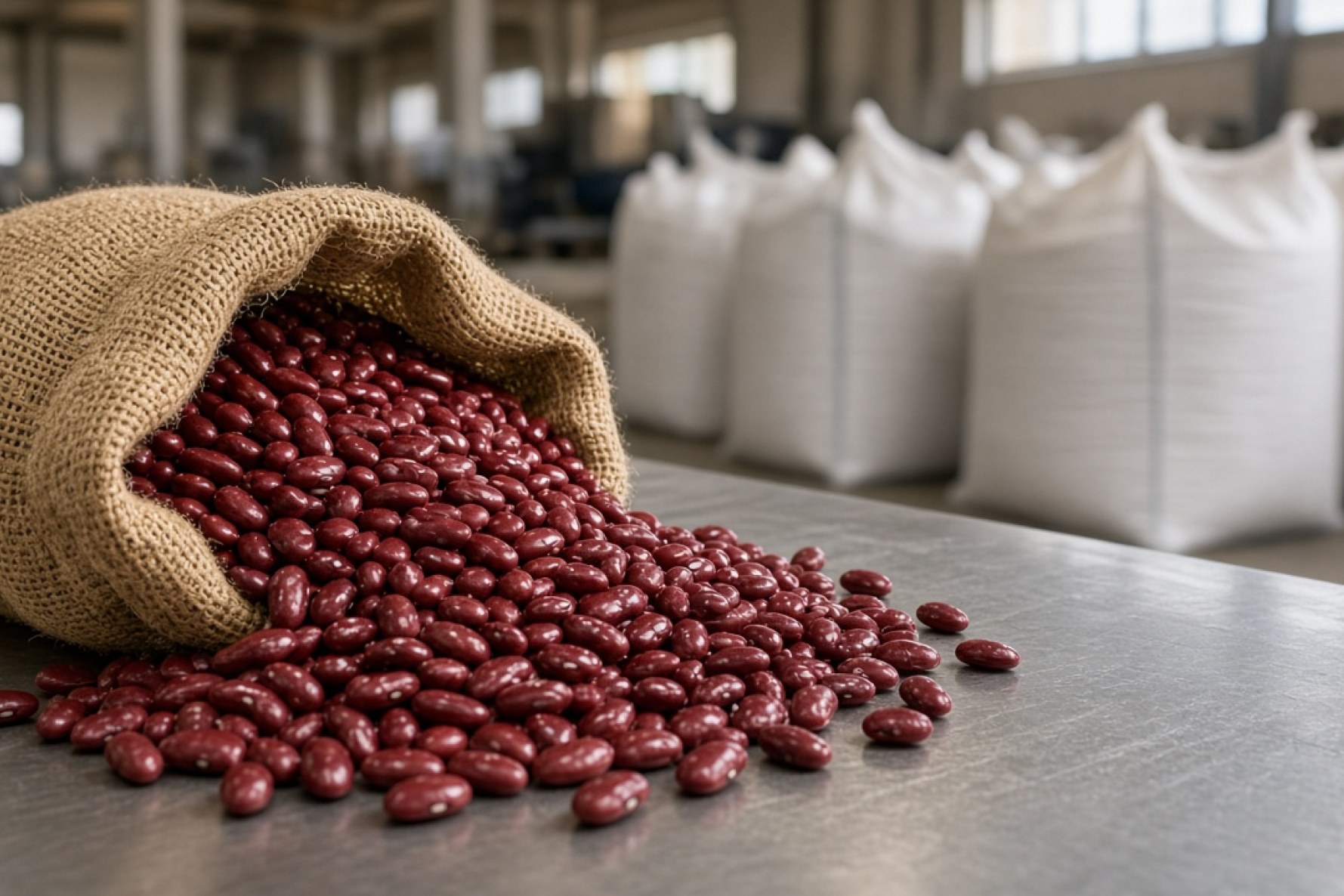
 Iranco Magazine Team
Specialist analysis of dimensional calibration, physicochemical traits, industrial optical sorting, QC tests and a complete commercial guide for bulk and export supply
Export Guide · Pulses
Iranian Red Kidney Beans; Quality Specs, Sizing and Wholesale Buying Guide
Specialist review of dimensional calibration, physicochemical traits, industrial sorting methods, quality-control tests and a full commercial guide to bulk and export procurement.
This technical guide covers the commercial and engineering criteria for bulk purchases of Iranian red kidney beans: calibration indices, impurity tolerances, optical-sorting requirements and pricing variables. Procurement managers in food-processing plants, traders and international importers can use it to minimise risks from weight shrinkage, inconsistent cook times and lots that fail official standards.
Among pulse categories, red kidney beans hold the largest share in household diets, cannery output and food-service ingredient supply. National crop data point to Lorestan — centred on Azna and Aligudarz — and Markazi, with the Khomeyn plain, as the two main strategic production bases. Foothill climate, fertile loam soils and wide day–night temperature swings in these zones produce seeds with firm tissue density, adequate protein and a heat-resistant seed coat.
Success in wholesale and export trade requires full command of laboratory variables and physical specs: separating current-crop from carry-over stock, measuring sieve-calibre uniformity, controlling split-seed percentage and removing hard-to-cook (hardseed) kernels directly affects industrial line yield. Mastery of these details is a prerequisite for margin protection and stable quality in bulk buying.
1. Market position of Iranian red kidney beans and production geography
With favourable cropping climates and alluvial plains of the Alborz and Zagros, Iran is a leading pulse producer in West Asia. Total annual output of bean types fluctuates between 230,000 and 260,000 tonnes, with a substantial share in red kidney beans. Production relies mainly on irrigated farming and modern local pressurised irrigation; it concentrates in two geographic hubs.
Khomeyn and Markazi plain production zone
Khomeyn is widely regarded in Iranian trade as the traditional capital of beans. Decades of work at the Khomeyn bean research and training campus have underpinned variety improvement, lower water demand and control of seed-borne diseases. Khomeyn field lots are prized in wholesale markets for integrated seed texture and favourable flavour. More than 40 active cleaning and sorting workshops and plants also make the county a central distribution hub in the country’s interior.
Azna and Aligudarz production zone (Lorestan)
Azna and Aligudarz in eastern Lorestan, with deep soils and fresh aquifers fed from Oshtoran Kuh, are the country’s main source of high-tonnage lots. Red seeds from this area typically have higher hundred-seed weights and, because of their elongated kidney shape, supply much of the capsule-type red kidney market.
Crop calendar, harvest and market supply window
- Sowing in temperate and cool regions: from late Ordibehesht to late Khordad (late May–June).
- Plants are highly sensitive to temperatures above 35°C at flowering; climates with cool nights achieve the highest pod set.
- Harvest: from mid-Shahrivar through Aban (September–November).
- Mehr through Dey: peak inflow of new crop and the best bulk-buy window for first-hand pricing and freshest seed.
2. Commercial red kidney bean types in the Iranian market
Market diversity rests on seed morphology, dimensional ratios, coat colour and cooking behaviour. The pulse industry divides the product into three main commercial classes.
| Technical trait | Capsule / kidney type | Dark red (round / Sayyad type) | Small local type |
|---|---|---|---|
| Seed geometry | Elongated kidney with lateral curve | Oval, compressed, near-spherical | Small, asymmetric, angular |
| Coat colour range | Bright red, clear crimson | Dark red, garnet to deep liver red | Matte red tending to brown |
| Hundred-seed weight | 35–42 g | 28–34 g | 22–26 g |
| Sieve calibre (mm) | 7–8.5 | 5.5–6.5 | 4.5–5.5 |
| Base cook time (minutes) | 65–80 | 75–95 | 85–110 |
| Cooked volume increase | 2.1–2.4× | 1.8–2.1× | 1.6–1.9× |
| Key industrial use | Premium packs, top-tier canning | Traditional stews, catering, restaurants | Pulse flour, processed pastes |
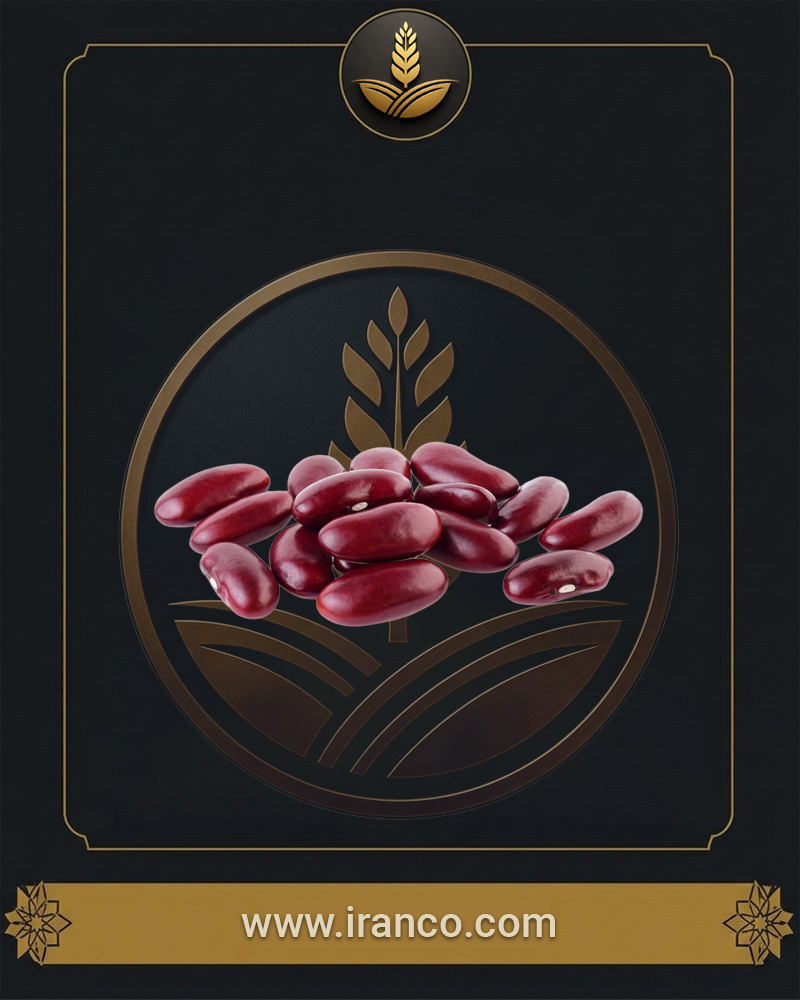
Capsule red kidney beans (kidney and almond types)
This class is defined by seed length of 10–15 mm, an elongated kidney outline and natural sheen. Large, uniform capsule seeds are the main priority for luxury cellophane packers and exporters to Gulf markets. Hundred-seed weight is usually above 35 g. Adequate coat elasticity after water uptake helps prevent wrinkling or rupture on industrial processing lines.
Dark red beans and Sayyad-type varieties
Seeds in this group range from very dark crimson to burnt cherry. Higher phenolics and anthocyanins in the coat support colour and glaze in traditional cooked dishes. The Sayyad variety with indeterminate growth habit falls in this group. Strong texture under extended cooking drives demand from industrial kitchens and institutions.
Small-seed and local landrace traits
In parts of western and central provinces, smaller local types are harvested. They lack the visual appeal of large calibres but soften quickly after cooking and are used mainly in traditional bulk markets or pulse-flour workshops.
3. Customs HS codes, regulatory framework and reference standards
Customs clearance, declaration review and import/export of beans require mastery of legal documentation, harmonised tariff codes and sanitary rules from supervisory bodies.
- 07133320: applies exclusively to “ordinary red kidney beans” (Phaseolus vulgaris), shelled and dried for human food.
- 07133300: used in the tariff structure for small red beans and certain commercial subdivisions.
- 07133310: assigned to pinto beans; misclassification instead of red kidney is a customs violation.
Standards framework
- Iran National Standard No. 38: baseline quality, moisture requirements, physical test methods and impurity limits.
- Codex Stan 171: global impurity limits, sanitary monitoring and pulse packaging rules in cross-border trade.
- National Standards 13116 and 5925: maximum pesticide residues and mycotoxin tolerances (total aflatoxin and B1).
4. Technical specifications, quality grades and tolerance limits
Formal bulk contracts must not rely on vague terms such as “hand-picked beans” or “export quality.” Quality should be fixed by numeric indices, percentage tolerances and standard test methods.
| Technical parameter | Premium export (laser) | Commercial grade 1 (cleaned) | Grade 2 (industrial) | Reference test method |
|---|---|---|---|---|
| Max moisture (wet basis) | 12.5% | 13.5% | 14.0% | 105°C oven |
| Min physical purity | 99.5% | 98.0% | 96.0% | Impurity separation and weighing |
| Mineral foreign matter | 0.0% | 0.05% | 0.2% | Gravity table and physical inspection |
| Organic foreign matter | 0.05% | 0.1% | 0.5% | Air aspiration and sieving |
| Insect-damaged seeds | < 0.1% | < 0.5% | < 1.5% | Seed-by-seed and cross-section check |
| Live storage pests | Zero | Zero | Zero | Visual assessment and separation sieve |
| Broken and split seeds | < 0.5% | < 1.5% | < 3.5% | Standard mesh sieves |
| Discoloured seeds | < 1.0% | < 2.5% | < 5.0% | Optical analysis |
| Hard-to-cook (hardseed) | < 1.0% | < 2.0% | < 4.0% | 24 h soak in water at 22°C |
| Calibre uniformity index | > 95% | > 85% | > 70% | Passage through successive mm sieves |
5. Industrial cleaning and processing: from pre-cleaning and polish to optical sort
Field-harvested product mixed with soil, straw, stone and defective seeds is not ready for food industry use and must pass through a structured process chain.
Stage 1: Primary pre-cleaning
Bulk product enters via a feed hopper into a pre-cleaning system. High-capacity centrifugal fans convey airborne dust, chaff and pod fragments to a cyclone collector. Seeds then pass over two vibrating screen decks: the upper screen removes oversize trash and the lower deck separates soil, sand and broken kernels.
Stage 2: Gravity-table stone removal
Gravel with a similar diameter to beans cannot be removed by sieving alone. A gravity table uses oscillating motion and gentle air flow to float lighter seeds while heavier stone exits from the upper discharge.
Stage 3: Mechanical polishing
Red kidney coat has microscopic porosity that traps fine dust. In polishing, product passes through industrial felt cylinders or rotating bristle brushes; without added oil or moisture, the dull dust layer is removed and natural glossy red colour is restored.
Stage 4: Optical sorting and sieve calibration
Cleaned lot enters laser/optical sorters. Advanced cameras image each seed in free fall and detect shrivelled, stained, frost-damaged, holed or faded kernels. Pneumatic ejectors with compressed-air pulses reject defects and deliver purity above 99.5%. A final sieve calibrator separates seeds into 6, 7 and 8 mm calibres.
6. Quality assessment indices, laboratory tests and identifying premium lots
Red kidney lot QC requires standard tests so buyers can rely on cook behaviour and lot integrity. Three key themes: telling current crop from carry-over stock, measuring hydration rate, and evaluating texture under heat stress.
Current crop vs carry-over (previous year)
- Coat colour: current crop — open crimson and fresh; carry-over — burnt brown and matte.
- Hilum colour: fully white in the current harvest; yellowish and dark in aged stock.
- Cook hardness: ageing re-bonds pectin with divalent cations and creates impermeable texture.
Hydration test and water absorption ratio
100 g of sound seed is held in 250 ml distilled water at 22°C for 16 hours. After draining and removing surface moisture, seeds are re-weighed. Good red kidney should show a hydration ratio of 1.9–2.2 — i.e. soaked weight at least 90–120% above dry weight.
Autoclave texture integrity test
On canning lines, seeds are blanched, placed in sauce-filled cans and sterilised at 121°C and 1.2 bar for 30–45 minutes. Industrial-grade beans must not disintegrate, split into double skins or release starch into the sauce. Maintaining kidney curvature and structure without slumping indicates strong pectin architecture.
7. Industrial uses in canneries and ready-meal plants
| Industrial segment | Preferred type | Special requirements | Technical reason |
|---|---|---|---|
| Canned bean products | Capsule grade 1 (7 mm+ calibre) | Laser purity, breakage under 1% | No burst at 121°C, sauce stays clear |
| Ready meals and frozen foods | Dark red and Sayyad type | Heat resistance and high glaze | Texture after freeze–thaw and reheat |
| Retail cellophane packs | Polished capsule | Bright red, uniformity above 95% | Visual preference in chain retail |
| Plant protein and flour | Cleaned small seed | Low moisture, controlled microbial load | Easier milling and economy |
Critical parameters on canning lines
- Coat stability in acidic sauce: sauce pH is typically 4.8–5.2; the coat must resist acid ingress so the outer layer does not turn black.
- Seed-to-seed cook uniformity: mixing current crop with old stock causes some seeds to mush while others stay firm and throws can fill weights off spec.
8. Value chain, wholesale price structure and seasonal supply swings
Bulk red kidney prices in Iran reflect supply–demand balance, cleaning costs and seasonal patterns. Final pricing has three main components: farm-gate cash price at harvest, weight loss from cleaning and sorting, and specialised warehousing plus packaging.
Seasonal price cycles
- Harvest season (Mehr–Azar): maximum supply; annual price lows — prime window for large plant purchases.
- Winter (Dey–Esfand): consumption demand rises and prices trend upward.
- Spring–summer (Ordibehesht–Mordad): warehouse stocks thin and product trades at peak levels.
Drivers of final cost
- Cleaning and laser shrinkage: raw farm lots often lose 2–6%; laser sort removes a further 2–3%.
- Packaging type: cost gap between plain PP woven bags and moisture-barrier laminate or 900 g retail weights.
9. Competitive advantages of Iranian red kidney vs rival origins
| Origin country | Main competitive edge | Limitation | Price tier | Main destination markets |
|---|---|---|---|---|
| Iran | Strong flavour, dense cook, thin adhesive coat | Packaging modernisation needed at some units | Mid to upper | Iraq, Afghanistan, Persian Gulf rim |
| Kyrgyzstan | High uniformity, very large calibre | Longer cook, relatively dry cotyledon | Upper tier | Iran, Turkey, Russia |
| Canada | Integrated industrial sort, lab compliance | Long transit, FX volatility | Upper tier | EU, Latin America |
| China | Precise colour sort, competitive price at heavy tonnage | Neutral flavour, lower glaze | Mid-market | Southeast Asia, Middle East |
| Ethiopia | Very low raw seed price | High stone and soil loss, poor calibre mix | Economy / low | Price-sensitive markets, flour processing |
Central Asian red kidneys are known for large, uniform seed; yet for eastern stew cookery and formulations, Iranian seed delivers higher satisfaction through balanced coat permeability, strong aroma and less water release during holding. Hardseed risk in fresh Khomeyn and Azna lots is materially lower than in cargo that has undergone long sea transit.
10. Bulk and export packaging, storage conditions and container logistics
Bulk and export packaging formats
- Woven PP bags: 25 and 50 kg with high weave density; enough strength for crane and forklift discharge.
- Laminate bags: thin inner polyethylene layer for long sea legs to hot, humid ports and to block coastal moisture ingress.
- MAP: for 500 g and 900 g retail packs, replacing headspace air with nitrogen and CO₂ stops seed respiration and drives pest risk toward zero.
Technical rules for storage and container haulage
- In-bag seed moisture must not exceed 13.5–14%.
- Best temperature band to suppress bean weevil: 10–15°C; above 25°C coat darkening accelerates.
- Bags on sound pallets 15 cm off the floor and at least 60 cm from walls.
- In a 20 ft container, optimal load is 22–24 tonnes in palletised 25 or 50 kg bags; hanging desiccant bags are essential against container rain.
11. Importer and bulk buyer checklist before firm order
- Define seed type and variety: capsule, dark red or Sayyad according to end use.
- Specify sieve calibre in millimetres (e.g. 6.5+ or 7+) with uniformity index.
- Fix processing technology: require laser-sort output, not traditional cleaning alone.
- Obtain a representative sample of at least 2 kg from several warehouse bag locations.
- Moisture control test: confirm not above 13.5%.
- Cap physical defects: broken max 1.5%, stained max 2%.
- Laboratory cook test (Mattson-type): softening time, hydration and coat stability.
- Verify crop year from hilum whiteness and coat brightness.
- Check biological clearance: standard fumigation and gas treatment certificates.
- Confirm bag spec and chain-stitch sealing without gaps.
- Third-party inspection clause (e.g. SGS) for quality, weighing and container seal sampling.
12. What information should you send for an accurate price quote?
- Target commercial type: kidney capsule, dark red, Sayyad or local
- Cleaning level: standard pre-clean or optical laser sort
- Seed size: sieve calibre in mm (6, 7 or 8)
- Total volume: shipment tonnage and delivery schedule (single lot or phased)
- Packaging type and spec: 25, 45 or 50 kg bags or MAP
- Exact delivery point under Incoterms (Khomeyn plant gate, Tehran warehouse or port on board)
- Special standards and certificates: mycotoxin analysis, non-GMO or pesticide residue certificates
Export red kidney supply from Iran via Iranco
Export tonnage sourcing always carries concerns such as inconsistent lot purity, blending from multiple farms and delivery timing volatility. Supply runs from initial enquiry to border delivery in three steps: receipt and validation of technical specs, coordination of a warehouse reference sample for laboratory analysis, and monitoring of mechanised sorting lines alongside export compliance.
Iranco lets buyers and importers register purchase requests against precise product specifications. Product type, grade, required quantity, packaging and destination country can be included so sourcing options in main hubs such as Khomeyn and Azna can be evaluated.
Conclusion
Iranian red kidney beans, grown on the favourable plains of Khomeyn and Azna, offer standout agronomic and physiological advantages: high tissue density, distinctive local flavour, good cooked volume gain and coat durability under industrial processing stress. Profitability in wholesale and export markets depends on moving beyond traditional appraisal and applying technical and laboratory controls. Key levers: smart choice between capsule and dark red types by end use, mandatory laser sorting for 99.5% purity, and holding moisture below 13.5% with warehouse temperature at 10–15°C to preserve coat colour and suppress storage pests.
FAQ
Which Iranian red kidney type is best for canning?
Capsule red kidney from the Khomeyn and Azna plains offers the best canning yield thanks to elastic coat and dense seed texture. It does not break down during 121°C autoclave sterilisation and helps keep canned sauce clear.
What is the main difference between laser sort and simple cleaning?
Simple cleaning only removes light waste, soil and gravel; same-size stained or holed seeds remain. Laser sorters analyse each seed and eject colour defects and hardseeds with air jets, reaching 99.5% purity.
How can you tell current crop from aged carry-over stock?
Current crop has fresh crimson-red coat, natural sheen and a fully white hilum. In aged lots, oxidation turns the coat dull burnt brown, the hilum darkens and cook time lengthens.
What information is needed for an accurate red kidney price from Iran?
Final price depends on seed type, sort grade, millimetre calibre, packaging, order tonnage and Incoterms delivery terms. On Iranco, price requests can be registered on the same basis.
What is the maximum permitted moisture under standard?
Under Iran National Standard No. 38, maximum permitted moisture is 14% by weight. For sea export, 12–13% is recommended.
What is the standard temperature for long-term storage?
Suitable warehouse temperature is 10–15°C with relative humidity below 60%. Above 25°C accelerates bean weevil reproduction and darkens seed colour.
How can red kidney beans be sourced directly from Iran?
A sound process covers drafting quality specs, obtaining a reference sample, laboratory sign-off and monitoring packing and loading. International buyers can send these details through Iranco as a purchase request.
How much red kidney fits in a 20 ft container?
A standard 20 ft container typically loads 22–24 tonnes of red kidney in palletised 25 or 50 kg bags.
Featured Products
Related Articles



