 Iranco Magazine Team
From Brix, colour and viscosity to process type, aseptic packaging, QC tests and real evidence of Iranian tomato paste in regional and European markets
Export Guide · Tomato Paste & Concentrate
Iranian Tomato Paste & Concentrate: Export Advantages and Quality
From Brix, color and viscosity to process type, aseptic packaging, quality-control tests and real evidence of Iranian tomato paste in regional and European markets.
The advantage of Iranian tomato paste and concentrate only becomes meaningful for an international buyer when we move beyond general claims and evaluate the product against indicators such as Brix, color, acidity, viscosity, process type, refining quality and actual export performance.
The appeal of Iranian tomato paste and concentrate on international markets cannot be explained by phrases such as "long production history," "good taste" or "Iranian quality." Industrial buyers purchase paste by the numbers. Brix, color, behaviour in viscosity tests, acidity, hot- or cold-break type, residual peel and seed content, microbiological status, packaging format and batch-to-batch consistency matter more than the general reputation of the origin.
At the same time, Iran is a genuinely visible player in this trade. The country's tomato processing sector directs a significant share of output to foreign markets, and in recent years destinations across the Middle East, Eurasia, Europe, South Asia and Africa have purchased Iranian paste and concentrate. Trade data from 2020 to 2024 show that the bulk of Iran's exports have been concentrated in the Middle East and Eurasia.
That commercial track record does not, by itself, guarantee the quality of every plant or every shipment. That distinction is precisely what matters to a professional buyer. "Iran is a recognised tomato paste exporter" is a commercial fact; but whether "this specific batch is suitable for ketchup, pizza sauce or retail repackaging" can only be answered after reviewing technical specifications and test results. The real advantage of Iranian paste should therefore be assessed at three levels: raw-material and processing capacity, ability to produce the commercial specifications required by the target market, and a genuine sales record across different markets.
1. What Exactly Is Iran's Advantage in Tomato Paste?
Iran's most important advantage is not that every paste produced in the country is necessarily higher quality than product from China, Italy, Turkey, Spain or other producers. The real advantage is a combination of access to substantial tomato volumes, a developed processing industry, the ability to supply several product types and an established presence in regional trade.
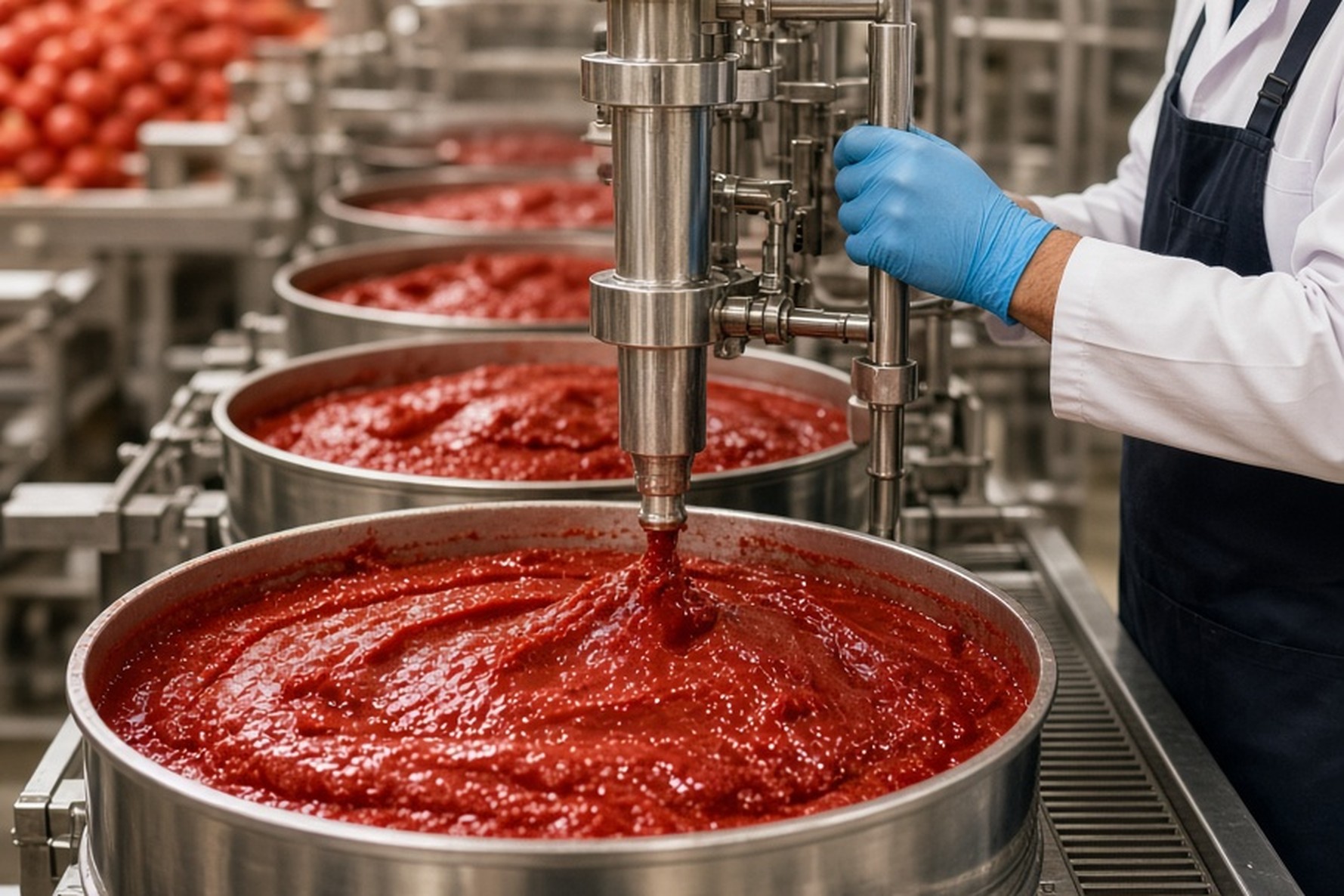
In the 2024 processing season, roughly 1.4 million tonnes of tomatoes were consumed by Iran's processing industry. The global processed-tomato sector also ranks Iran among countries with commercially significant output. Iran's harvest and processing season can begin in the south and continue as harvesting moves west and north. In 2024 season reports, the end of southern harvesting and continued processing in the west and north through around October have been documented.
- Industrial-scale volumes are available — not only small lots.
- The market supplies both retail paste and bulk industrial product.
- Different Brix specifications are seen in export trade.
- Aseptic bag-in-drum product can be supplied to food manufacturers.
- Canned formats for consumer and food-service markets also appear in real trade flows.
- Iran's land access to regional markets creates a logistics advantage for some destinations.
- Sea routes also allow sales to more distant markets.
Buyers must nevertheless distinguish between "Iran's potential industrial capacity" and "the capability of a specific plant." Line capacity, aseptic systems, raw-material quality, farm-to-factory transfer speed and heat control can differ significantly between two producers.
2. Paste, Purée and Concentrate — What Exactly Is the Buyer Purchasing?
One of the first points to clarify in commercial negotiation is product definition. The terms paste, purée and concentrate are sometimes used interchangeably in trade conversations, but from a standards and contract perspective the product is better defined by natural soluble solids content.
Codex Standard CXS 57-1981 for processed tomato concentrate defines the product as made from sound, ripe tomatoes that, after removal of peel, seeds and coarse material, have been concentrated and preserved by physical methods. Under this standard, tomato purée contains a minimum of 7% and less than 24% natural soluble solids; product with at least 24% falls in the tomato paste category. This definition carries an important commercial point: "paste" is not a single concentration grade.
In industrial trade, groups such as 28–30, 30–32 and 36–38 Brix are commonly seen. These ranges are routine commercial contract bands and should not be confused with the minimum standard threshold for product naming.
| Product group | Main characteristic | Typical application |
|---|---|---|
| Tomato purée | 7% to less than 24% natural soluble solids | Sauces, ready meals, some formulations |
| Medium-concentration paste | Minimum 24%; commonly grades near 28–30 | Repackaging, sauces, ketchup, industrial cooking |
| Higher concentrate | Grades such as 30–32 | Sauce industries and dense formulations |
| High-concentration paste | Grades such as 36–38 | Lower water freight cost, dilution and industrial formulation |
For an industrial buyer, writing "tomato paste" on a price request is not enough. The request must specify Brix, process type and the conditions under which the viscosity test must deliver the required result.
3. Technical Parameters That Determine the Real Value of Iranian Paste
The price per tonne of paste has limited meaning without technical specifications. Brix is only the starting point for comparison.
Brix
Brix indicates the concentration of soluble solids. For a plant converting paste into sauce, ketchup or a finished product, this number is directly linked to the water content of the shipment and formulation yield. Comparing 28–30 paste with 36–38 product on price per tonne alone can be misleading. Industrial buyers sometimes calculate cost on usable solid matter instead. It must also be clear at what temperature and by which method the reported Brix was determined.
Color
Color in tomato paste is not merely cosmetic. Raw-material ripeness, lycopene content and heat-treatment intensity all affect it. A common industrial method is the red-to-yellow component ratio, or a/b. For valid comparison, sample preparation must be identical between buyer and seller, because different dilution can change the result.
Acidity and pH
Acidity affects taste, formulation and processing behaviour; pH is a key control parameter. In contracts it must be clear how acidity is expressed — unit, test method and the acid basis used for reporting must all be defined.
Viscosity and the Bostwick test
Body is one of the main differentiators among industrial pastes. The Bostwick test measures product flow over a defined time and is highly important for sauce and ketchup purchases. A Bostwick number without test conditions is incomplete. Buyers should write in the purchase request: "Bostwick at 20°C, 30 seconds, sample standardised to agreed Brix."
Peel, seeds and foreign particles
Good industrial paste must be properly refined. Peel, seeds, coarse texture, black specks and foreign matter are undesirable for many applications. Noticeable particles can also create problems on the customer's production line, especially where uniform texture matters.
| Parameter | What must be defined? | Why it matters |
|---|---|---|
| Brix | Target value and tolerance | Concentration and usage yield |
| Process | Hot break or cold break | Body, color and application |
| Bostwick | Acceptance limit with test conditions | Viscosity control |
| Color | Index and measurement method | Uniformity and visual quality |
| pH | Contractual range | Process and formulation control |
| Acidity | Limit and reporting method | Taste and formula compatibility |
| Peel and seeds | Acceptance criteria | Refining quality |
| Black specks | Permitted count/size | Appearance and quality |
| Microbial load | Agreed limits | Safety and stability |
| Packaging | Aseptic, drum or can | Application and logistics |
| Net weight | Weight per unit | Delivery control |
| Shelf life | Per producer specification | Inventory planning |
4. Hot Break or Cold Break — Why Process Type Matters to the Buyer
In the tomato concentrate industry, the initial process before concentration directly affects product properties. The two main terms are hot break and cold break.
Hot break process
In hot break, crushed tomato is rapidly exposed to higher temperature. The main goal is faster inactivation of enzymes that break down pectin. Better preservation of pectin structure usually creates higher body. Hot-break product is therefore a common choice for formulations where thick texture matters, including many ketchups and sauces.
Cold break process
In cold break, break-stage temperature is lower and creates different aroma, color and viscosity behaviour. In many commercial specifications, cold-break product shows greater flow in the Bostwick test and suits applications that do not require very high viscosity. The 36–38 Brix grade is also widely supplied in this type.
| Characteristic | Hot break | Cold break |
|---|---|---|
| Main process effect | Greater pectin structure retention | Less thermal damage at break stage |
| Body | Usually higher | Usually more fluid |
| Common application | Ketchup, thick sauces, pizza sauce | Thinner sauces, some beverages and industrial formulas |
| Bostwick importance | Very high | Very high |
| Purchase decision | Based on final formula | Based on final formula |
Statements such as "hot break is better" or "cold break is higher quality" are not technically precise. Quality must be defined relative to application. A ketchup plant may want higher viscosity, while another manufacturer may prioritise color or pumpability.
5. Quality Control of Iranian Paste and Concentrate — Which Tests Matter?
For industrial purchasing, the seller's specification sheet is not enough. The buyer must define which results must appear on the certificate of analysis for each batch and which tests will be repeated in an independent laboratory.
Physicochemical tests
- Brix
- pH
- Acidity
- Body or Bostwick
- Color
- Salt, if present
- Solids and formulation-related characteristics
- Net weight
Visual and refining control
Laboratory testing should not replace physical sample inspection. Samples should be checked for peel, seeds, burnt particles, black specks, foreign matter, texture uniformity, burnt odour, abnormal taste, browning and signs of abnormal separation.
Mold and microbiological status
Mold counting using tomato-product-specific methods has a long history in this trade. Industrial specifications also reference the Howard Mold Count. Acceptable limits should not be copied from a generic online sample into a contract. For aseptic product, commercial sterilisation performance and packaging integrity are especially important.
Contaminants and residues
For markets with strict controls, the testing programme should be risk-based and may include pesticide residues, relevant heavy metals, chemical contaminants, packaging migration and destination-market microbiological requirements. For exports to the European Union, buyer and producer must review current limits for pesticide residues and contaminants.
6. What Does Foreign Trade Evidence Show About Iran's Position?
Market reputation and real trade evidence must be kept separate. Commercial data show that tomato paste and concentrate are genuinely export products for Iran. In 2020–2024 trade analysis, nearly 90% of Iran's paste export flows went to the Middle East and Eurasia, with combined annual volume averaging more than 170,000 tonnes.
More important for industrial buyers: Iranian entry into Europe is not merely a marketing claim. EU reported statistics for 2024 show roughly 19,600 tonnes of imports from Iran under HS 200290. Italy has held a significant share among European destinations for Iran.
| Market | Trade signal | Commercial takeaway for buyers |
|---|---|---|
| Iraq | More than 34,000 t recorded imports from Iran in 2024 | Large regional market with history of Iranian product consumption |
| European Union | Roughly 19,600 t in 2024 | Industrial demand exists; stronger compliance required |
| Italy | More than 10,000 t recorded imports from Iran in 2024 | Signal of use in industrial and processing chains |
| Turkey | More than 8,000 t reported in 2024 | Industrial trade between two major regional producers |
| Armenia | More than 8,000 t in 2024 statistics | Nearby market with land transport option |
| Oman | More than 8,000 t in 2024 statistics | Presence in the Persian Gulf market |
These figures are destination-reported import statistics under HS 200290 and do not necessarily match Iran's declared export figures. Actual market differs from potential market; Iran's advantage in Europe must be measured on the real competitive specification of each offer, not on assumed large market share.
7. How Does the Industrial Market Differ from Retail?
Iranian paste is sold in two distinct commercial channels. The industrial buyer is usually a plant that reprocesses the product; applications include ketchup, pizza sauce, pasta sauce, canned foods, ready meals, soups, sauce bases, meat products, frozen foods and food service.
In this market, the brand on the drum matters less than Brix, Bostwick, break type, color, acidity, pumpability and batch uniformity. In retail, canned or glass product enters distribution networks and additional criteria apply: brand, label design, consumer pack weight, ease of opening, internal can coating condition, date coding, nutritional information, ingredient compliance, master packaging, palletisation and shelf life.
Comparing an 800 g retail can with an industrial aseptic drum is not logical in terms of business model, price structure or quality-control requirements.
8. Packaging — Aseptic Drum or Can?
Packaging format should be part of the purchase specification from the start, not a decision taken after price agreement. For industrial buyers, one of the most important concentrate formats is aseptic bag-in-metal-drum.
In global trade, drums of roughly 220 litres and net product weights in the approximate range of 220–235 kg are very common. Multiple commercial specifications cite 80 drums per 20-foot container for product near 235 kg.
- Suited to industrial consumption
- Lower packaging cost per kilogram
- Better contamination control when the aseptic system is sound
- High-volume transport
- Suitable discharge on equipped industrial lines
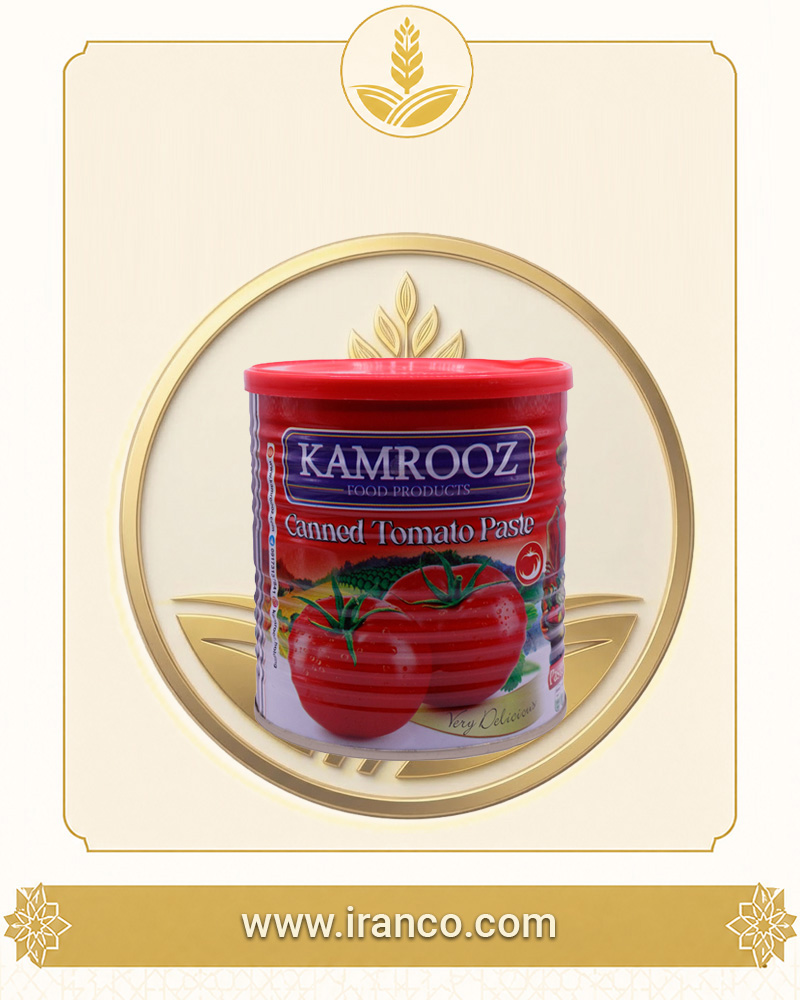
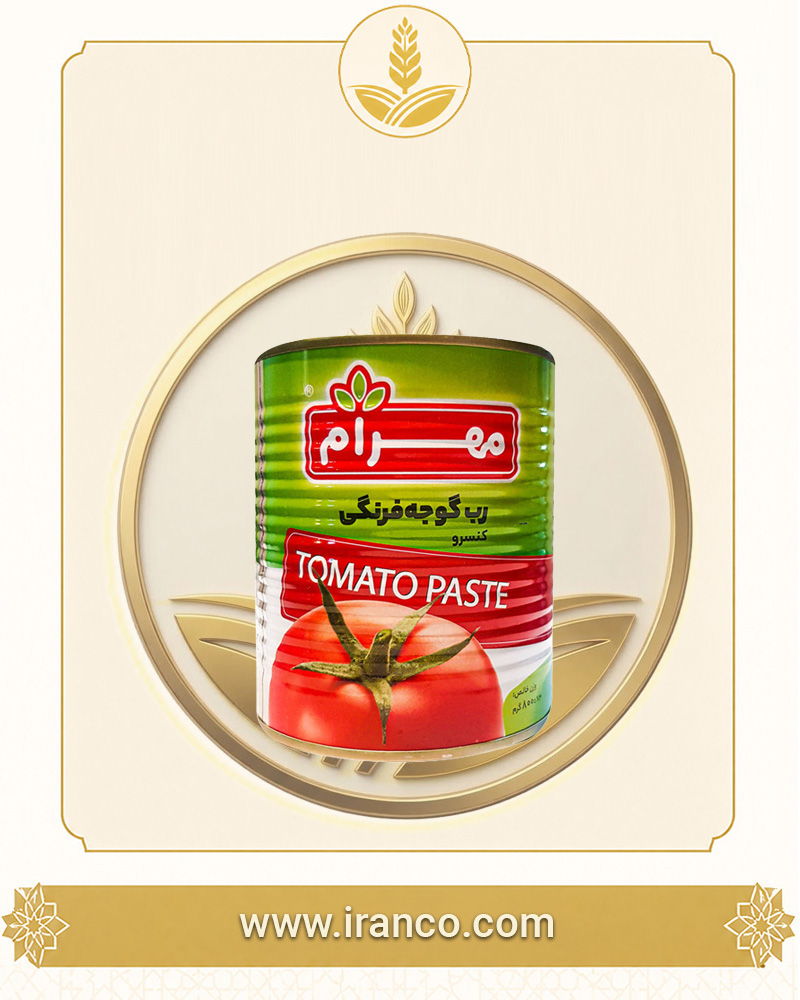
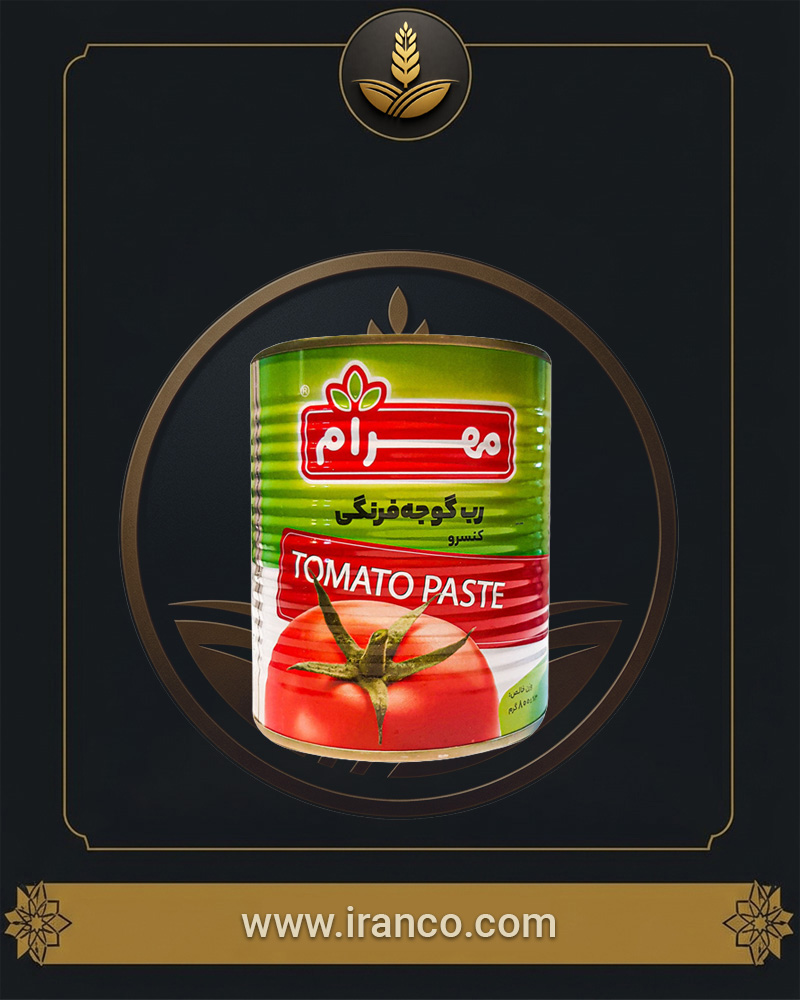
Cans suit retail and some food-service buyers. Weights such as 400 g and 800 g and multi-kilogram packs appear in regional trade, but there is no single "global standard weight" for all markets.
| Application | More suitable packaging | Reason |
|---|---|---|
| Large ketchup plant | Aseptic drum | High volume and industrial discharge |
| Sauce plant | Aseptic drum | Purchase on technical specification |
| Repackaging | Aseptic drum | Flexibility for final brand |
| Supermarket sales | Can or glass | Direct consumption |
| Restaurant and industrial kitchen | Large can or food-service pack | Ease of use |
| Importer private label | Custom consumer pack | Direct entry to retail network |
For aseptic orders, outwardly sound drums are not enough. Inner bag leakage, transport damage, severe body corrosion, impact and seam condition must be checked at inspection.
9. Tariff Code, Standards and Destination-Market Requirements
For tomato paste and concentrate, HS 200290 is used in international statistics for "tomatoes prepared or preserved otherwise than by vinegar or acetic acid, other than whole or in pieces." National classifications may subdivide the six-digit code further.
CXS 57-1981 is a key international reference for processed tomato concentrate. Besides product definition, it covers composition, quality, examination methods and labelling.
For retail packs, the destination market is decisive. Items usually reviewed include product name, net weight, ingredient list, production date or minimum durability per destination rules, storage conditions, manufacturer information, country of origin, nutritional information, batch number and importer information where required. Buyers should not reuse an Iraq-market label design for the EU or another market without review.
Bulk product does not eliminate document control. Industrial buyers may require a product specification sheet, certificate of analysis, certificate of origin, destination health documents, ingredient list, allergen declaration where applicable, food safety management certificates, packaging specifications and traceability information.
10. How to Compare the Real Price of Two Iranian Paste Offers
The lowest price per tonne is not necessarily the cheapest offer. Industrial buyers should compare price on usable matter, product specification, risk level and delivered cost.
- Brix: If two products have different Brix, nominal price comparison is incomplete.
- Process: Hot and cold break can have different value for different applications.
- Color: Paler or browner paste can have lower usable value even at correct Brix.
- Uniformity: One excellent batch and three borderline batches cost more control than four uniform batches for a plant with a fixed formula.
| Factor | Effect on comparison |
|---|---|
| Brix | Determines purchased solid matter |
| Break type | Affects body and application |
| Color | Affects finished-product quality |
| Bostwick | Determines formula compatibility |
| Acidity | Affects formula and taste |
| Pack type | Affects cost and operations |
| Order volume | Affects production and freight cost |
| Destination | Affects freight and documents |
| Number of tests | Affects QC cost |
| Delivery terms | Defines cost and risk transfer point |
Price should be compared for "product with defined specification at a defined delivery point."
11. Iran vs Major Competitors — Where Real Competition Occurs
The global tomato concentrate market is competitive. Italy, China, the United States, Spain, Portugal, Chile, Turkey and several other countries have significant export presence. 2024 trade data show China, Italy and the US operating at a much larger scale than Iran. Iran's strategy should therefore not rest on claiming to be the "largest producer."
China offers scale, broad bulk concentrate exports and strong presence in industrial raw-material markets. Turkey is both a major producer and exporter and geographically present in many markets around Iran. Italy has strong processing and brands and can also be an importer of raw material for industrial operations. Iranian concentrate entering Italy shows that part of Iran's export opportunity is not necessarily final canned sales but supply to industrial processors.
| Country | Standout competitive feature | Iran's challenge against it |
|---|---|---|
| China | Massive concentrate scale | Cost competition and supply continuity |
| Italy | Strong processing industry and brands | Documented quality and EU network access |
| Turkey | Proximity to Europe and the region | Logistics, quality and stable contracts |
| Spain and Portugal | European processing industry | Standards and direct EU access |
| Iran | Proximity to Middle East and Eurasia; regional export record | Batch stability, documentation, logistics and supply continuity |
Iran's advantage is defensible when a producer can deliver product with precise specifications, competitive total cost and appropriate documentation.
12. Importer Checklist Before Placing an Order
Before signing a contract for tomato paste or concentrate from Iran, the following should be clear:
- Define the product type precisely. Do not write only "paste"; specify target Brix.
- Specify hot break or cold break. This must align with your finished product.
- Define required Bostwick. Record test conditions including temperature, time and sample Brix.
- Set a numerical color limit. Define measurement method and sample preparation.
- Include pH and acidity in specifications. The acidity reporting basis must be clear.
- Obtain a sample before production or loading. The reference sample must be traceable.
- Define the final-batch testing programme. Do not rely only on the initial sales sample.
- Review refining quality. Record criteria for peel, seeds, black specks and foreign matter.
- Set microbiological requirements.
- Plan pesticide-residue and contaminant testing for the destination.
- Define packaging precisely. Drum, aseptic bag, net weight and pallet must be specified.
- Specify how many batches are permitted in one shipment.
- Require a certificate of analysis for each batch.
- Finalise destination documents before final production.
- Write acceptance and rejection criteria in the contract.
- Define destination-inspection sampling conditions.
- Clarify weight and technical tolerances.
- Set acceptable lead time and production date.
- Define commercial terms and delivery point.
- Compare price only after harmonising specifications.
Buyers who wish to review several Iranian supply options can submit these technical specifications through an Iranco purchase request so options are compared against one identical brief. This avoids comparing prices for unlike products.
What Information Should Be Sent for an Accurate Price?
A professional price request for tomato paste should include at minimum:
- Paste or purée
- Target Brix
- Hot break or cold break
- Required Bostwick
- Required color
- pH
- Acidity, if a specific characteristic applies
- Peel and seed criteria
- Microbiological tests
- Required contaminant or residue tests
- Packaging type
- Net weight per unit
- Pallet requirement or not
- Total order volume
- Number of containers
- Destination country
- Port or city of delivery
- Commercial delivery terms
- Private-label requirement on consumer packs or not
- Label language
- Required documents and certificates
If technical specifications are not yet final, it is better to state the application first — for example ketchup production, pizza sauce, repackaging or retail sales. The supplier can then suggest an available grade, but final specifications must be written before contract. At Iranco, purchase requests can be registered with this level of detail so sourcing review is based on Brix, process type, packaging, volume and destination.
Sourcing Iranian Tomato Paste and Concentrate to Buyer Specifications
In international tomato paste purchasing, the difference between two offers is usually far greater than the gap in price per tonne. One supplier may offer 36–38 Brix cold-break concentrate in aseptic drums while another offers 28–30 hot-break paste with completely different viscosity. Even if both are introduced as "export paste," they are not directly comparable.
Sound purchasing starts with defining the application: ketchup, sauce, ready meal, repackaging or direct consumer sale. Then Brix, body, color, acidity, microbiological specification, packaging type and order volume are set.
Iranco (iranco.com) enables buyers and importers to register purchase requests on this basis. Product grade, quantity, packaging, required tests and destination country can be included so available Iranian supply options are reviewed against real purchasing needs. For industrial orders, approximate annual requirement should accompany the price request.
Conclusion
The appeal of Iranian tomato paste and concentrate to international buyers is neither a purely historical claim nor a characteristic that can be generalised to all producers. Foreign trade evidence shows Iran has been active in exporting this product over many years and has had presence in Middle Eastern, Eurasian and even part of the European industrial market.
But the purchase decision must go one step further. The most important variables are Brix, hot- or cold-break process, body, color, pH, acidity, peel and seed content, microbiological status and packaging type. Each should be converted as far as possible into a measurable characteristic and a repeatable test method.
For food manufacturers, the right grade matters more than country name. Very high concentration is not necessarily better for every application; likewise, higher body or brighter color does not automatically create more economic value without regard to the final formula. The best way to evaluate Iranian paste is to compare suppliers on a single specification sheet, an approved sample, batch certificate of analysis and true delivered cost.
Frequently Asked Questions
Is Iranian tomato paste suitable for industrial use?
Yes. A significant share of Iran's export trade is industrial paste and concentrate, and bulk aseptic product is also supplied. Whether a specific shipment is suitable must be assessed against Brix, break type, Bostwick, color, acidity, microbiological tests and other criteria required by the buyer's production line.
What is the right Brix for export paste?
Under Codex, product from 24% natural soluble solids upward can fall in the paste category. In industrial trade, ranges of 28–30, 30–32 and 36–38 are common. Buyers should choose Brix based on the finished-product formula, freight cost and plant equipment.
For ketchup, is hot break or cold break better?
For many ketchup formulas, hot break is the common choice because it better preserves pectin structure and creates higher body. The final decision should nevertheless be based on required Bostwick and the plant formula.
How should tomato paste color be compared?
Color should be compared using the same instrumental method and sample preparation conditions. The a/b ratio is a recognised industry index. A color number without the measurement method is insufficient for a purchase contract.
Is 36–38 concentrate always better than 28–30?
No. 36–38 is more concentrated and can reduce water shipped for some plants, but "better" depends on application. Comparison should be on usable solid-matter cost and performance in the finished product.
Which packaging is more suitable for industrial purchase?
For high-volume factory use, aseptic bag-in-metal-drum is one of the most common options. Global trade often shows net weights near 220–235 kg per drum.
How is the price of Iranian tomato paste determined?
Brix, process type, color quality, body, production season, raw tomato cost, packaging type, order volume, testing, destination and delivery terms all affect price. Price per tonne without technical specification is therefore a poor comparison metric.
Is Iranian paste exported to the European Union?
Yes. Destination trade data for 2024 show roughly 19,600 tonnes of EU imports from Iran under HS 200290, with Italy among the most important recorded European destinations.
What information should be specified when requesting a sample from Iran?
A sample request should ideally include Brix, break type, Bostwick, target color, final application and the packaging format of the main order. The sample should carry a batch number or at least traceable production data. International buyers can submit this information to Iranco as a purchase request.
Featured Products


Related Articles



