 Iranco Magazine Team
Physicochemical specs, international standards, cost efficiency and bulk-import trade requirements
Export Guide · Pushal Saffron · Wholesale Procurement
Iranian Pushal Saffron: Specifications, Commercial Advantages and Wholesale Buying Guide
In-depth analysis of physicochemical specifications, international standards, cost efficiency and bulk import trade requirements — published in the Iranco magazine.
Iranian Pushal saffron is among the most credible indicators of structural authenticity and the most cost-effective raw material for food, pharmaceutical and international repackaging companies, thanks to the natural attachment of the stigma to a portion of the floral style. This strategic report supports importers, procurement managers and international traders with precise laboratory parameters, export market analysis, modified-atmosphere packaging requirements and pricing approaches.
International saffron trade has always oscillated between two fundamental challenges: verifying biological purity and optimizing raw-material cost for processing and repackaging industries. When premium commercial grades such as Negin and super Negin impose high costs on corporate buyers due to hand-sorting and strict visual standards, Pushal saffron emerges as a strategic choice in cross-border deals. Pushal retains one to three millimetres of the distal style (the white-to-yellow section joined to the stigma), preserving the flower’s biological structure. That natural connection eliminates the likelihood of dyeing unrelated fibres, blending with synthetic textures or mixing with degraded stigmas.
Iran supplies more than 90% of the world’s consumed saffron and is central to this product’s value chain. While much luxury retail demand focuses on all-red grades, food and pharmaceutical industries in Spain, the United Arab Emirates, China, India and Germany maintain steady demand for Pushal. Insufficient understanding of spectrophotometric traits, Pushal sub-grades, extraction yield and differences from the European Mancha standard can cause price volatility or deliveries that do not match factory needs. This article, grounded in reference standards including ISO 3632 and Iranian National Standard No. 259, physicochemical testing requirements, air-freight logistics and total-cost structure, offers a precise wholesale procurement perspective.
1. Macro market analysis and Iran’s saffron supply-chain ecosystem
Iran’s agricultural geography plays an irreplaceable role in global saffron pricing, supply capacity and supply stability. The arid and semi-arid climate of Iran’s central and eastern plateau—especially in Khorasan Razavi and South Khorasan—creates a unique environment for secondary metabolite synthesis in saffron.
Areas such as Torbat-e Heydariyeh, Qaen, Gonabad, Ferdows and Kashmar are major harvesting hubs. Their hallmark is cold autumn flowering nights and hot, dry summers. That sharp thermal swing induces mild environmental stress that drives corms to produce high levels of flavonoid and terpenoid compounds. Unlike greenhouse cultivars or emerging crops in other climates, Pushal harvested from these desert farms shows firmer fibre texture and more stable pigments, with favourable mechanical and thermal resistance during industrial extraction.
Iran’s saffron harvest calendar starts in mid-Mehr in cooler regions and continues through late Azar in warmer zones. Flowers are picked at sunrise and must be processed within 12 hours so stigmas do not lose quality through tissue fermentation. For Pushal, three-branched stigmas are separated with a short style segment attached; product is stabilized on airing screens or modern dryers. Large volumes of new Pushal enter Mashhad and Torbat-e Heydariyeh wholesale markets from early Azar each year. Through Bahman, this window is the best time for tonnage supply contracts, when buyers see maximum lot diversity from farms and peak freshness of aromatic compounds.
Iran’s foreign saffron trade faces two market layers: traditional intermediary hubs such as Spain and the UAE, and final industrial consumption in Europe, East Asia and North America. Spain, the EU’s largest repacking base, buys a significant share of Iranian Pushal imports and, after supplementary quality controls, re-exports in retail packs or industrial derivatives. The UAE redistributes saffron across the Middle East, the Indian subcontinent and Africa. Recently, food manufacturers in Germany, China and Vietnam have moved toward direct Pushal sourcing from Iran to minimize intermediary costs.
2. Physical fundamentals, flower anatomy and structural nature of Pushal saffron
Correct understanding of saffron grades requires knowledge of the reproductive morphology of the saffron flower. The plant comprises tepals, petals, yellow pollen-bearing stamens and a central pistil. The pistil consists of an inferior ovary, an elongated tubular style and, finally, three stigma branches in deep red to dark crimson.
| Plant part | Characteristic | Role in grading |
|---|---|---|
| Red stigma | Contains crocin and picrocrocin | Only this portion is kept in Negin and Sargol |
| Three-way junction | Natural union of three threads | Cut line in Pushal production |
| Yellow/white style (1 to 3 mm) | Section attached to stigma | Retaining this section confirms Pushal structural authenticity |
| Style continuing to corolla | Long style | In Dasteh saffron this entire section remains |
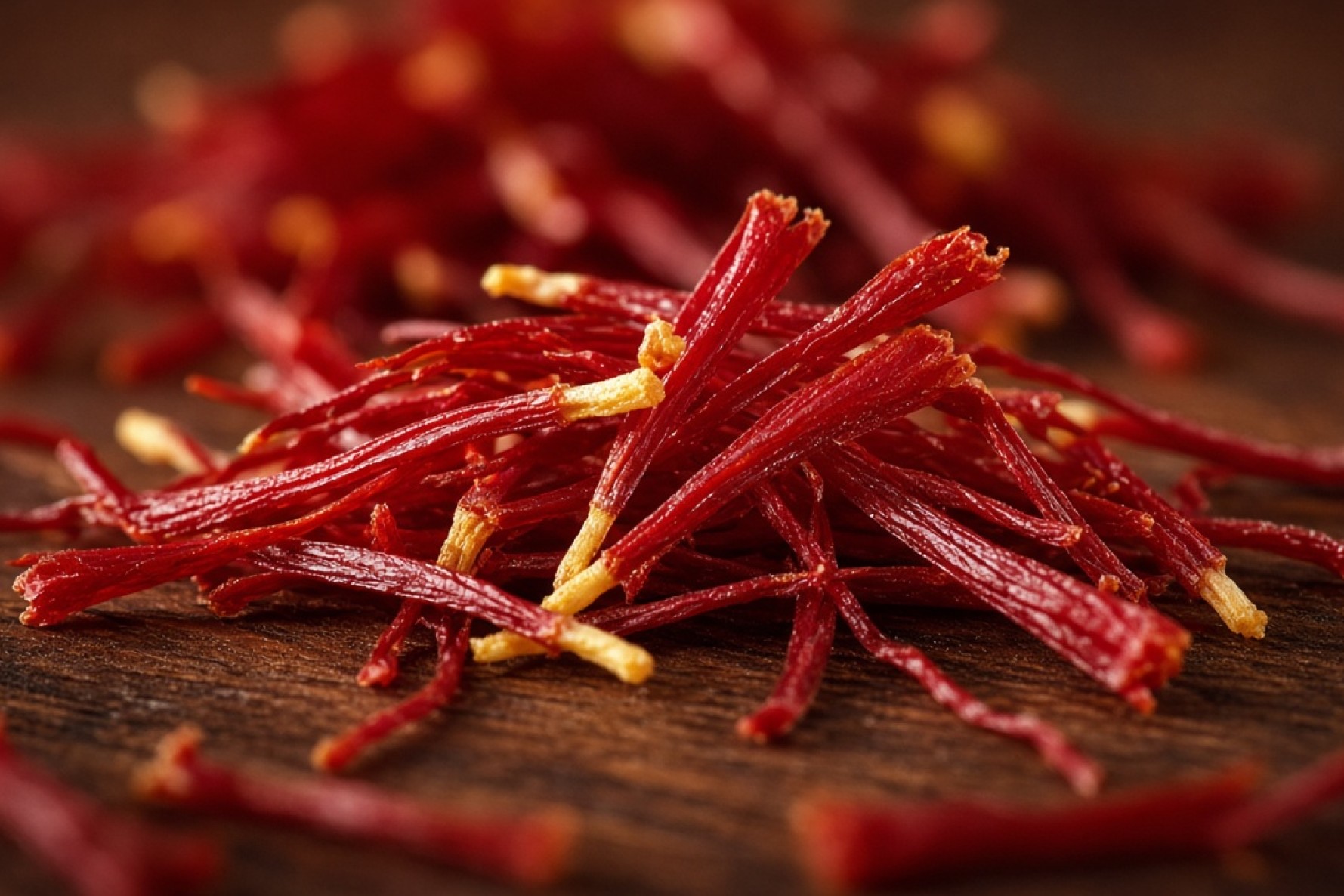
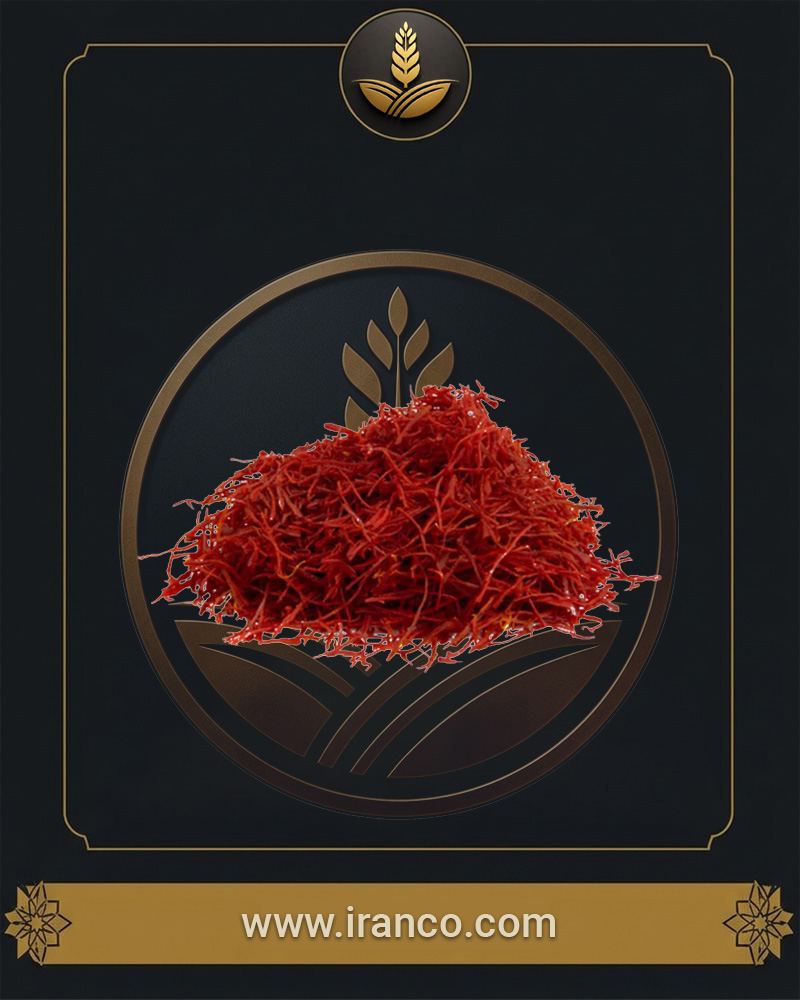
In Pushal preparation, stigmas are cut precisely below the three-way junction—the point where the red portion joins the yellow style. One to three millimetres of this yellow or whitish style at the end of the three red threads is the primary identifier of Pushal. That connected structure acts as a guarantor of biological authenticity. From a processing standpoint, keeping branches joined reduces rapid breakage of stigmas during bulk handling and transfer.
Many commercial buyers compare Pushal with other forms such as Sargol, Negin or Dasteh. The table below defines the geometric and textural differences:
| Saffron type | Red stigma length | Yellow style length | Thread attachment | Mechanical behaviour | Primary use |
|---|---|---|---|---|---|
| Pushal | 15 to 25 mm | 1 to 3 mm | Three-way base connected | High crush resistance | Extraction, pharmaceuticals, bulk repack |
| Sargol | 10 to 18 mm | Less than 0.5 mm | Separate, broken threads | Moderate friability | Household packs, general consumption |
| Negin | 20 to 30 mm | Zero (trimmed stigma) | Individual, straight threads | Brittle when fully dry | Gift market, luxury export |
| Dasteh (bunch) | 15 to 25 mm | 20 to 35 mm | Wound in string bundles | Very high strength | Traditional medicinal markets |
Another important difference between Pushal and grades such as Negin is aeration and apparent density in packaging. Pushal occupies more space in containers because of slight curvature in stigmas and the presence of style. That yields lower volumetric weight than tightly packed Negin—an advantage for industrial buyers, as it indicates minimally handled plant tissue and absence of destructive mechanical pressure on stigmas.
3. Types and commercial classification of export Pushal saffron
Pushal saffron is not a homogeneous commodity; it divides into three main categories by stigma fineness, stigma-to-style ratio and drying method. Understanding these distinctions prevents paying premium Pushal prices for lower tiers.
Export Qalamdar Pushal
This is the finest Pushal form produced in Iran. Red threads in Qalamdar Pushal are thick, elongated, intact and deeply pigmented. The yellow style portion is minimized—usually about one millimetre—to preserve only three-way continuity. Qalamdar Pushal is typically dried in uniform hot-air dryers, preventing shrinkage and excessive curling. It is the preferred grade for EU repacking and reprocessing plants.
Commercial regular Pushal
In regular Pushal, stigmas are of medium thickness and threads take on curved, somewhat curled shapes during traditional moisture removal (ambient air or mesh drying at room temperature). Yellow style length in this category ranges from 2 to 3 mm. It accounts for the largest trade volume among natural flavour and colour extractors, dairy and sauce manufacturers, with a more optimized base price than Qalamdar while retaining full physical authenticity markers.
Weak Pushal and secondary industrial grades
This grade includes thin, broken, dull stigmas with style length beyond 3 mm. It often comes from fields older than five or six years, water stress during the season or irregular flower separation. Although colouring power sits around 160 to 170 absorption units, lower pricing makes it suitable for some lines producing blended spice flavourings, economy confectionery or natural fibre dyeing.
| Index | Export Qalamdar Pushal | Commercial regular Pushal | Weak industrial Pushal |
|---|---|---|---|
| Red stigma length | Above 20 mm | 15 to 20 mm | Below 15 mm |
| Style length | Maximum 1 to 1.5 mm | 2 to 3 mm | Over 3 mm |
| Physical form | Straight, thick, without excessive curl | Semi-curled and wavy | Thin, wrinkled and brittle |
| Fines and breakage | Less than 2% | 3 to 6% | Over 10% |
| Appearance colour | Clear crimson with golden tips | Red tending to light brown | Dull red with yellow dominance |
| Crocin | 200 to 220 | 180 to 199 | 160 to 175 |
| Bulk use | European repack, pharmaceuticals | Food industry, flavourings | Economy blended industries |
4. Expected buyer specifications and contractual parameters
To avoid legal and commercial discrepancies, bulk buyers and trade managers must define precise physical, chemical and hygiene index ranges in their RFQ before finalizing import contracts. The table below documents this parameter framework:
| Technical parameter | Expected option or range | Contract priority | Application importance |
|---|---|---|---|
| Grade identifier | Qalamdar or regular Pushal | Critical | Fit with packaging equipment or extraction lines |
| Permitted style length | Below 1.5 to maximum 2.5 mm | Very high | Managing price paid vs. pure pigment weight |
| Moisture and volatiles | Maximum 8.5 to 10% by weight | Very high | Long storage and mould prevention |
| Crocin (440 nm) | Minimum 190 to 210 | Critical | Direct colour concentration in formulation |
| Picrocrocin (257 nm) | Minimum 70 to 80 | Medium | Impact on sensory profile |
| Safranal (330 nm) | Range 20 to 40 | High | Indicator of freshness and gentle drying |
| Acid-insoluble ash | Maximum 0.5 to 1.0% | High | Assurance of freedom from dust and silica |
| Extraneous plant matter | Maximum 0.5 to 1% | Very high | Purity from tepals, leaves and stamens |
| Heavy metals | Lead <5, cadmium <1 ppm | Very high | Condition for EU and East Asia entry |
| Pesticide residues (MRL) | Codex and EU aligned | Critical | Preventing rejection at destination quarantine |
5. National and international standards and quality laboratory analysis
Global quality validation of Pushal saffron rests on two reference documents: the ISO standard ISO 3632 (technical specifications and test methods) and Iranian National Standard No. 259. Compliance is a prerequisite for issuing an official analysis certificate (COA).
Spectrophotometric tests
- Crocin (colour at 440 nm)
- Safranal (aroma at 330 nm)
- Picrocrocin (taste at 257 nm)
Physicochemical purity
- Moisture and volatiles (below 10%)
- Total ash and acid-insoluble ash
- Identification of plant impurities
Biological safety
- Microbial loads (Salmonella, coliforms)
- Pesticide residues (MRL)
- Heavy metals (lead, arsenic, cadmium)
Crocin, picrocrocin and safranal
By UV-visible spectrophotometry, light absorption of aqueous saffron extract is read at characteristic wavelengths. Crocin, a water-soluble dicarboxylic carotenoid glycoside, defines colouring power. Under ISO 3632, thread saffron is classified into categories where Category I minimum crocin is 200. Premium Iranian Qalamdar Pushal typically scores 200 to 220—very strong for style-containing product. Picrocrocin, which creates saffron’s distinctive bitterness, should absorb above 70 to 80. Safranal reflects volatile oily aroma compounds. Safranal in the 20 to 50 range indicates freshness and proper drying; values above 50 suggest excessive heat or carotenoid degradation from age.
Moisture, volatiles and mineral content
Saffron stigmas are hygroscopic due to hydroxyl groups in glycosidic tissues. Standards cap moisture at 10% by mass. Higher moisture accelerates hydrolysis of crocin ester bonds and progressive colour loss in storage. Total ash is measured in a furnace at 550 to 600 °C and must not exceed 8%. Acid-insoluble ash in hydrochloric acid—an index of soil, clay or sand from fields—must stay strictly below 1%.
Chromatographic tests and rejection of synthetic dyes
Detecting non-natural chemical colours is among the most important parts of export quality control. Thin-layer chromatography (TLC) or high-performance liquid chromatography (HPLC) is performed to prove absence of permitted and non-permitted food yellows and reds such as tartrazine, Sunset Yellow, carmoisine, Ponceau 4R and azorubine. Any positive result means complete customs rejection of the shipment.
| Index | Test method | Category I | Category II | Regular Pushal |
|---|---|---|---|---|
| Crocin (440 nm) | ISO 3632-2 | Minimum 200 | Minimum 170 | 180 to 199 |
| Picrocrocin (257 nm) | ISO 3632-2 | Minimum 80 | Minimum 70 | Minimum 70 |
| Safranal (330 nm) | ISO 3632-2 | 20 to 50 | 20 to 50 | 20 to 50 |
| Moisture and volatiles | ISIRI 259 | Maximum 10% | Maximum 10% | Maximum 10% |
| Total ash | ISIRI 1197 | Maximum 6.5% | Maximum 7.5% | Maximum 8.0% |
| Acid-insoluble ash | ISIRI 1253 | Maximum 0.5% | Maximum 0.7% | Maximum 1.0% |
| Cold-water soluble extract | ISIRI 12158 | Maximum 65% | Maximum 65% | Maximum 65% |
| Synthetic colours | TLC / HPLC | Strictly negative | Strictly negative | Strictly negative |
6. Commercial advantages, total cost and economic yield analysis
Using Pushal saffron at scale transforms value-chain calculations and total-cost management for food industries and trading firms.
Economic efficiency in extraction and processing lines
The base price of one kilogram of export super Negin is consistently 15 to 25% higher than premium Pushal in the Iranian market. That gap reflects high labour for picking stigmas without style, style removal and moisture loss in ironing presses. Yet when Pushal enters grinding, milling and aqueous or alcoholic extraction, whole-batch colouring power is only 5 to 10% lower than Negin.
Consider a pharmaceutical plant or beverage manufacturer needing 100 kg of active saffron compounds annually. Replacing super Negin with premium Pushal achieves comparable colour and bioactive yield with significant raw-material savings. Where thread appearance is invisible to the end consumer, allocating budget to Negin lacks technical and economic justification.
Reduced fraud risk in capital deployment
Buying all-red grades such as Sargol or Negin requires repeated laboratory checks per pack because artificially dyed fibres can resemble broken stigmas. Pushal, with physical stigma-to-style continuity, is highly resistant to common fraud. An international importer can confirm flower-structure authenticity with quick visual inspection at warehouse or customs and limit lengthy lab work to standard parameters.
Sorting yield and repack potential in the destination country
Another standout commercial benefit is processing yield at destination repacking plants. Modern optical and pneumatic sorting lines in importing countries can separate style from Qalamdar Pushal with minimal weight loss. Buyers can pack red stigmas into high-value luxury retail formats while selling separated yellow styles to pharmaceuticals, herbal teas or economy industrial extracts.
| Factor | Qalamdar Pushal | Export Negin | Bulk Sargol |
|---|---|---|---|
| Base total cost | 15 to 25% below Negin | Highest price tier | 8 to 12% above Pushal |
| Active compound yield | Very high (best cost/colour ratio) | Moderate (costly for extraction) | High |
| Physical fraud risk | Very low (attached style) | Medium to high | High (when broken) |
| Target industry flexibility | Processing, extraction, repack | Luxury end retail | Stores, restaurants |
| Mechanical durability | Very high in bulk handling | Fragile and brittle | High friability and fines |
7. Industrial applications and formulation in processing industries
Pushal saffron’s biological and technological properties make it a critical input across international industries.
Pharmaceuticals, extract formulation and health supplements
In modern pharmacy, crocin and related carotenoids are recognized as potent antioxidants with free-radical scavenging and neuroprotective properties. Crocetin and related metabolites support coronary health, blood pressure management and adjunct therapy for mood and anxiety disorders. In capsule, tablet and syrup supplement lines, manufacturers prefer premium Pushal for high biological purity and zero synthetic dye contamination, while lower purchase price materially stabilizes pharmaceutical margins.
Dairy, ice cream and industrial desserts
Major flavoured dairy producers in Europe, the Persian Gulf and East Asia use saffron to fix amber-yellow colour and classic flavour in ice cream, flavoured milk, creams and frozen desserts. Binding of milk fat with saffron safranal and crocin in Pushal creates colour stability unmatched by synthetic food colours. Industrial plants typically dissolve Pushal powder in hot water or milk, filter coarse cellulose from style, and add homogeneous extract to formulation tanks.
Confectionery, industrial bakery and ready seasonings
In Mediterranean countries such as Spain and Italy, saffron is widely used in industrial bread, traditional cakes and food sauces. In ready-to-cook seafood such as paella in Spain or seasoned rice dishes in the Middle East, very fine Pushal threads in the final product signal artisan quality and boost consumer purchase intent.
Pharma and supplements
- Sleep and calming capsules
- Retinal protection supplements
- Pure crocetin extraction
Dairy and desserts
- Traditional and industrial ice cream
- Dairy desserts and puddings
- Flavoured milk and creams
Food, sauce and bakery
- Paella seasoning and rice dishes
- Cakes, pastries and industrial bread
- Premium salad and meal sauces
8. Target export markets and international buyer behaviour
Pushal import patterns and distribution channels worldwide reflect demand nature and destination hygiene regulations.
Spain: EU repacking and processing capital
Spain, with large sorting, quality control and international branding infrastructure, is the primary destination for much bulk Iranian Pushal. Plants in Catalonia and Castilla-La Mancha receive Iranian Pushal in 0.5 to 5 kg packs. Spanish traders align with the Mancha standard—saffron with short style (similar to Iranian Qalamdar Pushal) is cleaned after entry and sold in small glass or tin formats under European brands across the EU, Americas and Latin America. Spanish merchants focus on strict pesticide control, absence of heavy metals and transparent ISO 3632 analysis sheets.
United Arab Emirates: Middle East and North Africa trade hub
Dubai’s market—especially Deira and Jebel Ali Free Zone—is a financial and transit gateway for saffron. The UAE imports large volumes of regular and Qalamdar Pushal with fast clearance. Buyers combine international trading companies, spice wholesalers, hospitality chains and traditional confectionery producers. For bulk Dubai buyers, shipping speed, load uniformity and competitive price often rank above the strictest laboratory standards.
East Asian markets: China and Vietnam
- China: Official saffron imports are supervised by China Customs (GACC) under national pharmacopoeia rules because saffron is classified among high-value traditional medicine inputs. Chinese buyers want long, thick stigmas with minimal style, moisture below 8% and absence of fungal contamination.
- Vietnam: A hub for Iranian Pushal imports for beauty, skincare and premium herbal teas. Stigma integrity and gradual colour release in the cup are key purchase criteria.
India: spice and traditional fragrance industries
India’s vast traditional cuisine and spiced foods drive enormous saffron demand. Despite limited Kashmir production, import volume is substantial. Blended spice factories, traditional confectionery and heritage perfumeries are steady Pushal customers. For this market, regular Pushal with economic pricing and strong safranal aroma is far more attractive than decorative Negin grades.
| Country | Dominant grade | End use form | Distribution channel | Importer priority |
|---|---|---|---|---|
| Spain | Category I Qalamdar Pushal | Export repack and extract | Processing plants | MRL and ISO 3632 |
| UAE | Regular and Qalamdar Pushal | Transit, confectionery, hotels | Dubai traders and free zones | Competitive price and fast delivery |
| China | Ironed Qalamdar Pushal | Pharma and TCM | Pharmaceutical companies | Customs registration and microbiology |
| India | Industrial regular Pushal | Food and spice industry | Delhi and Mumbai wholesale | Colour yield and low price |
| Vietnam | Export Qalamdar Pushal | Herbal tea and wellness drinks | Online and beauty salons | Physical cleanliness and visual appeal |
9. Customs requirements, tariff codes and global market entry rules
Successful clearance of high-value saffron shipments depends on aligning documentation with origin customs and destination food safety authorities.
Commodity classification (HS Code)
Under the international harmonized system, saffron falls in Chapter 9 spices with six-digit code 091020. Iranian and destination customs often apply eight-digit splits by pack weight:
- 09102010: Unground, untrimmed saffron in small retail-ready packs (under 10 or 30 g).
- 09102090: Other saffron packaging including bulk export containers above 30 g (including 500 g to 5 kg Pushal packs). Wrong tariff selection on the export declaration can cause holds, currency penalties or unexpected duties.
Mandatory official export documents
- Phytosanitary Certificate: Issued by plant protection quarantine at origin customs confirming absence of live pests and quarantine plant diseases.
- Official quality analysis certificate (COA): From accredited national-standard partner laboratories, including crocin, safranal, picrocrocin, moisture and microbial loads.
- Certificate of Origin: Issued by the chamber of commerce confirming Iranian origin.
- Commercial invoice and packing list: Specifying gross weight, net weight, tin counts and air waybill details.
Alignment with EU pesticide residue limits (MRL)
The European Food Safety Authority (EFSA) applies strict residue rules for saffron imports. Saffron’s autumn growth cycle limits broad spraying during growth, yet summer herbicide residues migrating to corms and stigmas can exceed limits. Exporter and buyer should confirm organophosphate, chlorinated and pyrethroid screening by gas chromatography–mass spectrometry (GC-MS/MS) before shipment moves.
10. Export packaging engineering and product shelf-life requirements
Saffron is highly unstable to light, ambient humidity and free oxygen. Pushal packaging must ensure shelf life and act as a physical barrier against dynamic pressure and air-freight vibration.
Khatam metal tins and aluminium cans
For Pushal export, sturdy tin-plated metal cans with traditional Khatam patterns are Iran’s most common export format. Their core advantage is full blocking of visible and UV light. UV breaks double bonds in crocin’s tetra-terpenoid structure, bleaching colour. Metal cans also resist pressure and protect Pushal stigma tissue from breakage.
Modified atmosphere packaging (MAP) and nitrogen gas
For large corporate orders, Pushal is placed in laminated multi-layer aluminium bags with polyethylene and polyamide barriers. Vacuum equipment reduces oxygen below 1% and injects 99.9% nitrogen. This stops oxidation and preserves Pushal colouring power unchanged for over 24 months.
| Packaging method | Typical weights | Light barrier | Oxygen barrier | Impact protection | Typical use |
|---|---|---|---|---|---|
| Khatam metal tin | 250 to 1000 g | Complete | High (when sealed) | Very high | Exports to UAE, Spain and Europe |
| MAP vacuum bag | 1000 to 5000 g | Complete | Absolute barrier | Requires double-wall carton | Direct supply to industrial lines |
| Clear polycrystal jars | 5 to 50 g | Weak (light passes) | Medium | Fragile on impact | Retail display with dark storage |
| Kraft paper pouches | 100 to 500 g | Medium | Very weak | No mechanical strength | Local use and fast distribution |
Master cartons should be five-ply with high crush resistance. Filling void space with air pillows or sanitary foam prevents tins shifting during flight turbulence and loading impacts.
11. Logistics, air-freight chain and transit risk management
Because of very high value-to-weight ratio, saffron always moves by air; land and sea transport are avoided due to long transit and ocean humidity risk.
Origin stage
- Pack at humidity below 45%
- Mashhad or Imam Khomeini airport customs
- Inspection, air waybill and security seal
In-flight stage
- Hold temperature 15 to 20 °C
- Foil insulation against condensation
- Avoid long ramp dwell time
Destination stage
- Entry to bonded customs warehouse
- Clearance within 48 hours
- Handover to customer cold chain
Iranian air export gateways
Specialized customs at Mashhad Shahid Hasheminejad International Airport and Tehran Imam Khomeini International Airport are the country’s main saffron air export stations. Shipments must arrive at the airport palletized, wrapped in bubble plastic and strapped securely. Because airport storage delays expose cargo to humidity swings, finalizing the customs declaration on flight day is strategically important.
Dew point management and temperature swings
Aircraft cargo holds at cruise altitude are typically 4 to 8 °C. If saffron is unloaded suddenly at hot humid airports such as Dubai, Doha or Mumbai, sharp temperature difference between cartons and ambient air causes dew on packaging. Moisture ingress accelerates local spoilage and mould spore activation. Technical mitigation includes wrapping entire pallets in reflective thermal foil and placing standard food-grade silica gel desiccant sachets inside master cartons.
Delivery protocols and Incoterms
The most suitable Incoterms for Pushal imports are delivery at the buyer’s airport (CPT or CIP at destination airport). Under CIP, the seller must arrange all-risk air cargo insurance at 110% of declared value. International buyers thereby transfer risk of loss, loading fire and air incidents to reputable insurers.
12. Authenticity assessment, commercial fraud detection and shipment quality control
Protecting bulk saffron investment requires fast field tests alongside specialized diagnostic methods.
Common bulk-market fraud mechanisms
- Dyeing the style tip: Style or root lacks crocin; some suppliers dye yellow style industrial red to match stigma colour.
- Adding weighting agents: Spraying clear vegetable oils, glycerin, liquid glucose or concentrated salt or nitrate solutions to increase weight without visible change.
- Mixing multi-year and aged saffron: Blending current harvest Pushal with old stock restored with flavour compounds.
Field and rapid purity methods
- Absorption test on blotting paper: Press a few grams of stigma between white sheets; oily stains indicate organic adulteration. Pure saffron is fully dry and non-greasy.
- Water dissolution behaviour: Place five threads in cold or lukewarm water. Natural saffron releases colour as slow yellow-orange streaks; water turns golden yellow within about 20 minutes. Authentic stigma keeps three-way shape; instant red water and thread disintegration indicate fraud.
- Sodium bicarbonate test: Add baking soda solution to extract. Pure saffron keeps golden yellow; synthetic dyes or floral dyes shift to dull red or purple.
13. Importer checklist before placing an order
This practical checklist defines step-by-step commercial and technical controls for bulk buyers and trade managers before final contract and foreign exchange transfer:
- Define exact grade and stigma thickness: “export Qalamdar Pushal” or “regular Pushal” with stigma thickness and curl grade.
- Fix permitted style length tolerance (e.g. maximum 1.5 mm for Qalamdar grade).
- Require valid analysis certificate (COA) aligned with ISO 3632 showing crocin, picrocrocin, safranal and moisture percentage.
- Control microbiological and pathogen indices; definitive Salmonella negative in 25 g.
- Align pesticide residue (MRL) with destination requirements and attach to contract.
- Verify heavy metals: lead, arsenic, cadmium and mercury per destination law.
- Specify primary and secondary packaging: metal tin or nitrogen MAP at defined weights.
- Define master carton strength: five-ply shock-resistant carton with dew-point foil liner.
- State Incoterms (e.g. CIP at destination airport with all-risk insurance).
- Verify harvest crop year and absence of mixed aged saffron.
- Set breakage and fines ceiling (usually below 3% for Qalamdar).
- Appoint third-party inspection at origin for sampling, sealing and loading.
14. What information is required for an accurate price quote?
Export Pushal pricing depends on technical indices, daily FX swings and delivery terms. Buyers must send the details below for transparent quoting and viable commercial proforma issuance:
- Exact product grade: super Qalamdar, standard Qalamdar or industrial Pushal.
- Permitted style (white/yellow) length in millimetres.
- Key analysis targets: minimum crocin colouring power and maximum moisture percentage.
- Total order volume and delivery schedule (single shipment or monthly contract).
- Packaging type and specification: neutral-gas vacuum, Khatam metal tin or crystal jars.
- Labelling and label language; private brand or unbranded pack.
- Required specialty certificates (multi-residue testing, halal, China customs registration).
- Final destination airport and country for freight and insurance calculation.
- Payment terms and mechanism.
In export orders, precise product definition is critical. On Iranco you can register a purchase request with product, packaging and destination details so supplier review follows the same basis.
15. Sourcing Pushal saffron from Iranian producers through Iranco
In bulk saffron trade, success is not only the lowest price. Homogeneity across pallets, crocin stability over time, zero pesticide tolerance and timely customs clearance are pillars of supply-chain stability for factories and international brands. Direct links to benchmark farms in major Khorasan hubs require active origin oversight, processing-chain monitoring and strict hygiene standards.
Iranco, as a specialized platform for trade and export development of Iranian food products, provides a structured bridge between importers, international industry procurement managers and Iranian saffron producers. Industrial and commercial purchase requests can be received with technical details such as Pushal grade, style length, colouring level and packaging form, and the best supply options among leading farmers and ISO-certified packers are evaluated. Coordinating samples, aligning indices with laboratory sheets and tracking shipment preparation gives buyers a transparent process.
If you need Iranian Pushal saffron with fixed technical specifications for production lines or target-market distribution, you can register your requirements and demand volume on Iranco so supply and commercial proforma issuance can be reviewed.
16. Summary
Iranian Pushal saffron embodies balance between structural authenticity and commercial efficiency. By attaching red stigmas to yellow style, it enjoys a wide safety margin against fraudulent adulteration and keeps the flower’s biological structure intact. For international food, supplement and pharmaceutical industries, Qalamdar and regular Pushal maximize production economics through high colour and aroma at lower total cost than Negin grades.
Sustainable import success requires deep knowledge of physical grade separation, quality inspection under ISO 3632, strict pesticide residue control and light- and moisture-resistant packaging with inert gas. Air-freight lines with thermal insulation prevent dew-point damage at hot destinations. With clear contractual parameters and structured quote requests, international buyers can integrate this Iranian red gold into their value chains with maximum confidence.
17. Frequently asked questions
1. Why is Pushal saffron more economical than Negin for pharmaceutical and food industries?
Pushal saffron is 15 to 25% cheaper than Negin while crocin colouring power is only 8 to 12% lower. Industries that grind saffron for liquid or powder extract do not need hand-selected large Negin stigmas; buying Pushal delivers far more active compounds for the same budget.
2. What quality benefit does attached style provide in Pushal saffron?
The one to three millimetre yellow style encompasses the three-way stigma junction. Mechanical attachment or bonding of stray plant fibres to this natural base is impractical with current methods, so the structure acts as a botanical authenticity document and largely rules out fraud with dyed corn silk or floral dyes.
3. What is the technical difference between Qalamdar and regular Pushal?
In Qalamdar Pushal, stigmas are long, thick, straight and uniformly crimson with style under 1.5 mm. Regular Pushal threads are more wrinkled and curled with 2 to 3 mm style. Qalamdar colouring power exceeds 200; regular Pushal ranges 180 to 199 absorption units.
4. Which tests are mandatory for Pushal saffron clearance at international customs?
ISO 3632 spectrophotometry for crocin, picrocrocin and safranal; moisture and acid-insoluble ash; absence of synthetic added colours; heavy metals (lead and cadmium); pesticide residue limits (MRL); and microbiological control (Salmonella negative and E. coli limits) are required.
5. What is maximum shelf life of bulk-packaged Pushal saffron and how is it preserved?
In tin-plated metal cans or multi-layer vacuum bags under neutral nitrogen, stored below 20 °C and humidity under 45%, saffron fully preserves colour, aroma and taste for up to two years.
6. What information is needed for an accurate Pushal price quote from Iran?
Buyers should specify grade (Qalamdar or regular), permitted style length, target crocin, order volume, pack type, destination airport and Incoterms. Iranco accepts price requests on the same basis to match suppliers to purchase specs.
7. What is the main risk in saffron air freight and how is it prevented?
The primary risk is dew point and condensed moisture on cartons when cargo moves suddenly from cool flight holds to hot humid airports. Prevention includes full pallet wrapping in reflective thermal foil, robust multi-layer cartons and standard desiccant sachets inside packs.
8. How can Pushal saffron be sourced directly from Iranian farmers and producers?
Buyers can submit commercial needs—including volume, laboratory specifications, packaging and destination—through Iranco as a purchase request so supply evaluation, sampling, quality testing and export clearance proceed under a formal contract.
Featured Products



Related Articles



