 Iranco Magazine Team
From cultivar and size selection to aflatoxin control, China, India and EU markets, export packaging, logistics and Iran vs USA and Turkey
Export Guide · Iranian Pistachio · Markets & Standards
Professional Iran pistachio export: contract specs, aflatoxin and China, India & EU markets
Specialist guide for exporters, importers and procurement: commercial types, contract parameters, QC, target markets, HS codes, packaging, competitors and an 18-point pre-order checklist.
Analytical introduction
Iranian pistachio remains a flagship export crop, but professional sales no longer rely on origin name or appearance alone. International buyers ask about cultivar, size, open-shell percentage, moisture, aflatoxin, crop year, processing, packaging, traceability and delivery terms. Kerman, Rafsanjan, Khorasan Razavi, Yazd and Semnan anchor supply; globally Iran competes with the USA and Turkey, while Europe demands strict aflatoxin control, uniformity and traceability.
Iran’s strengths are cultivar diversity, long and jumbo in-shell nuts, green kernel for confectionery and ice cream, and established trade with China, India, Turkey and Europe. The key question is which type, with which specs, for which market and under which QC regime can compete.
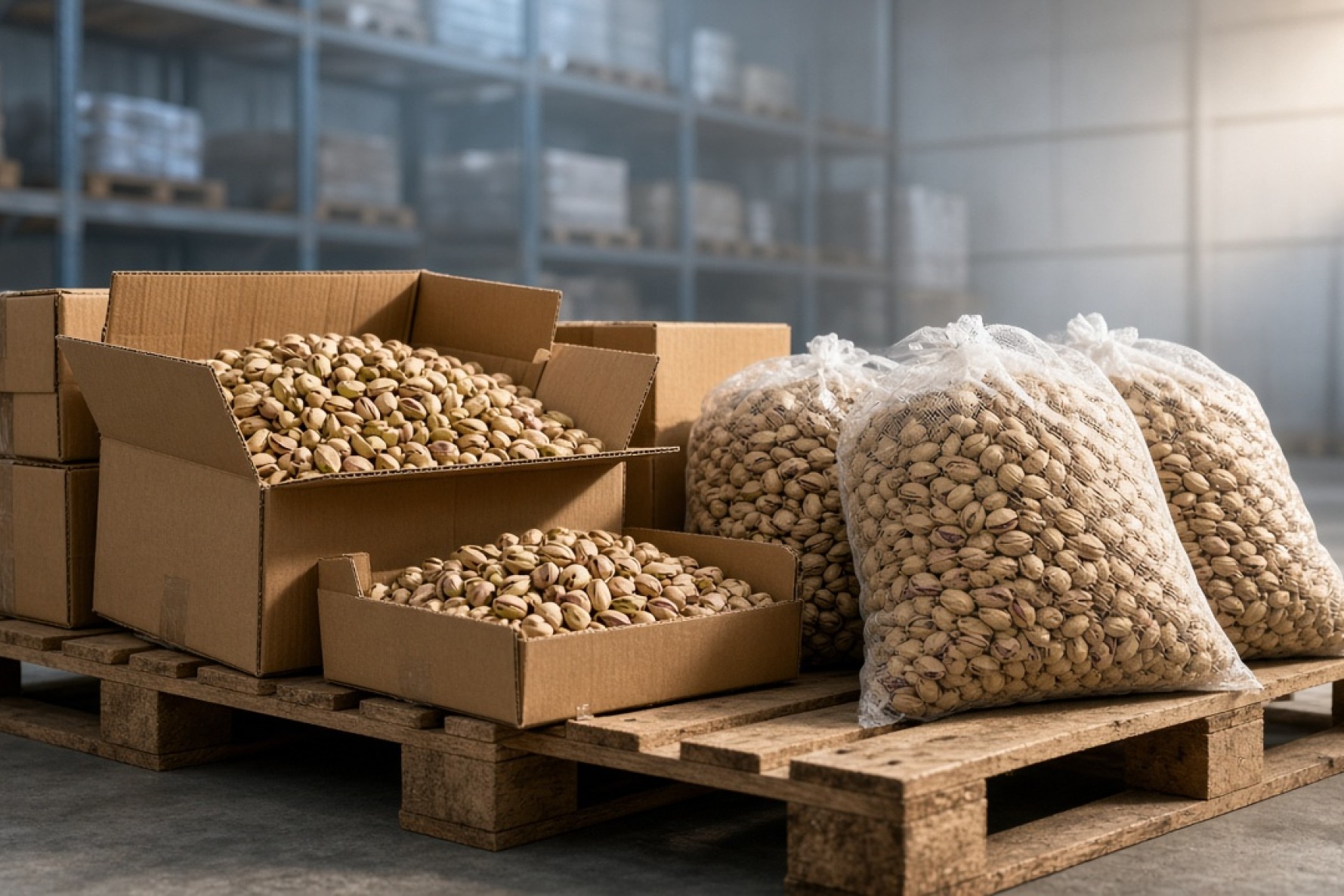
1. Iran’s global position and demand structure
Iran is among the world’s top three producers: about 316,000 t in 2024 alongside ~499,000 t USA and ~383,000 t Turkey. Alternate bearing, weather and orchard condition shift annual supply — long contracts must match real seasonal capacity.
The pistachio market is segmented: in-shell snacking, raw for roasting, roasted/salted, whole kernel, broken kernel, peeled green kernel and paste each need different specs. 2024 data shows China as largest direct buyer (>40,000 t), then India and Turkey; Germany leads Europe. Aggregated fresh/dry pistachio trade stats require explicit product form in contracts.
2. Commercial Iranian pistachio types
Four main cultivars — Akbari, Ahmad Aghaei, Kalleh Ghouchi and Fandoghi — differ in shape, size range and use. Size is expressed as count per ounce (~28.35 g); a lower number means larger nuts.
| Type | Shape | Common sizes | Use |
|---|---|---|---|
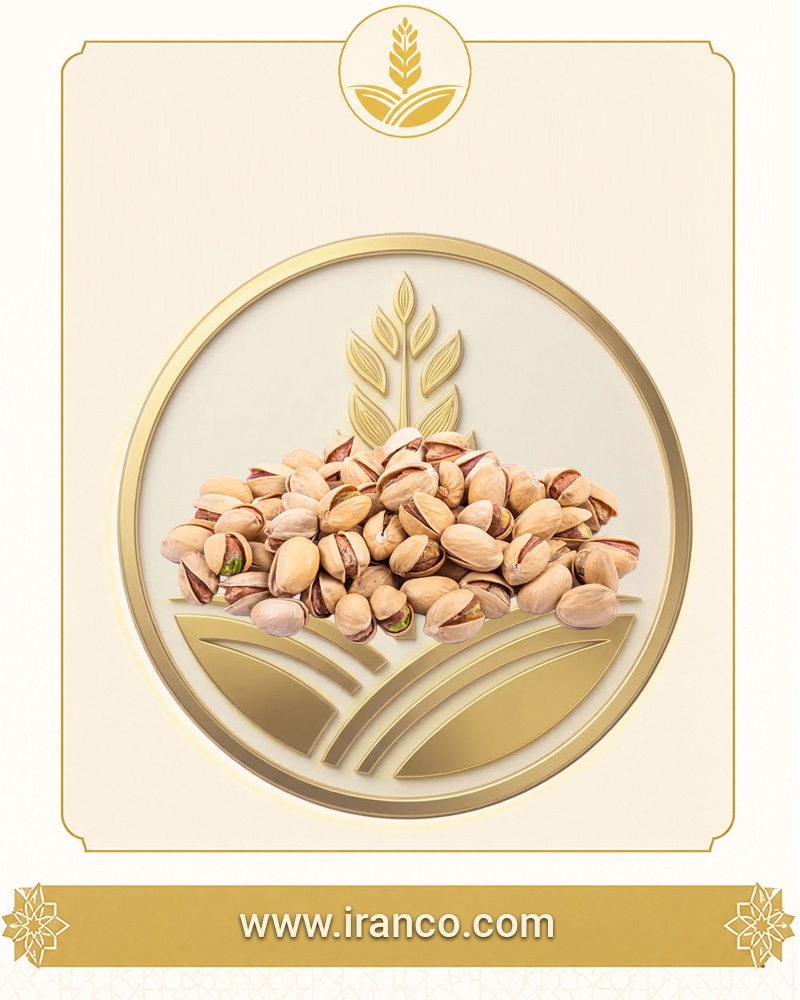
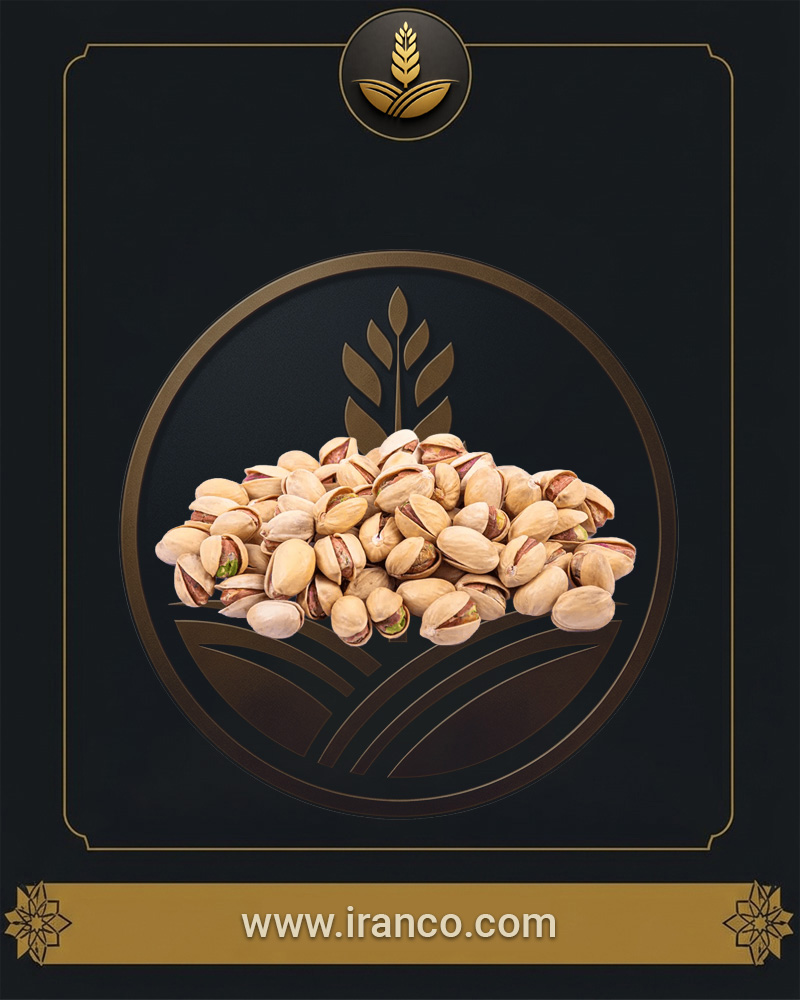
| Akbari | Very long | 18/20 – 24/26 | Premium packs, gifts, appearance-led retail |
| Ahmad Aghaei | Long | 22/24 – 30/32 | Retail, mixed nuts, general export |
| Kalleh Ghouchi | Large round | 18/20 – 24/26 | Markets favouring jumbo look |
| Fandoghi | Round, smaller | 26/28 – 32/34 | Volume, processing, price-led |
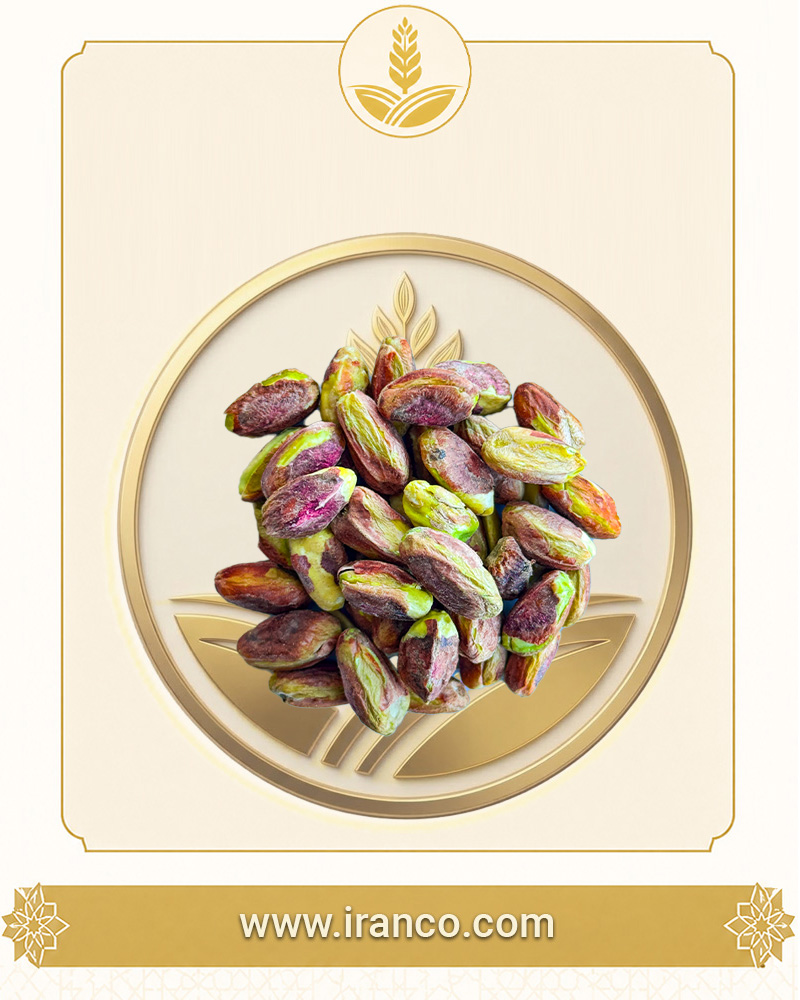
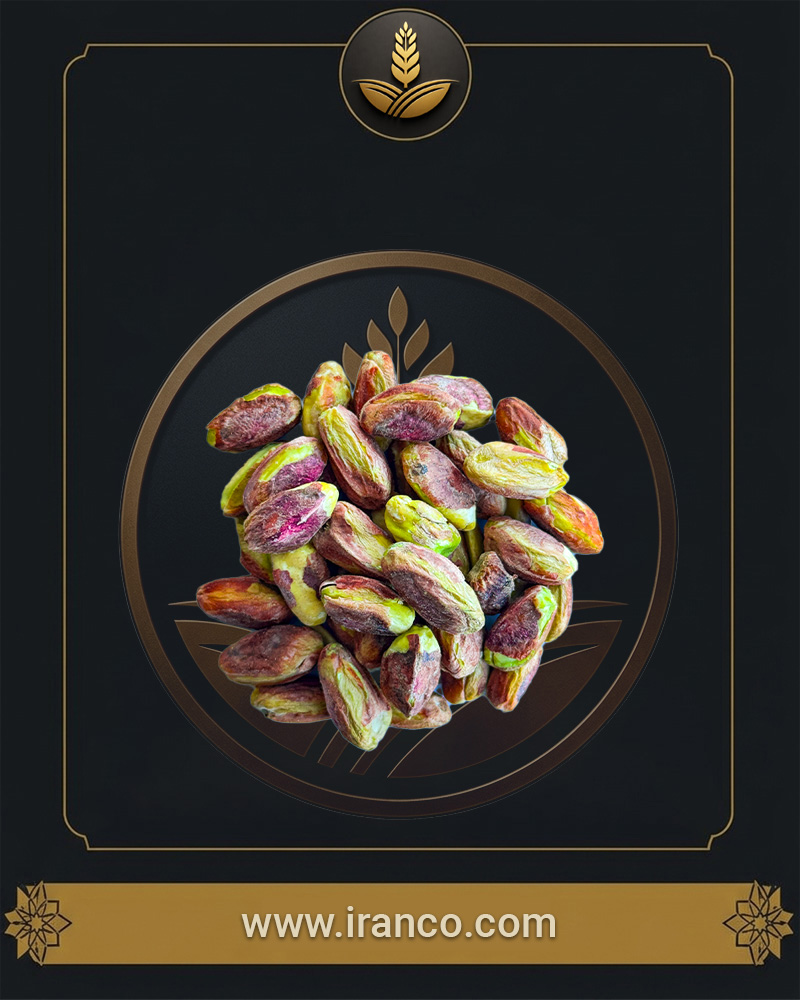
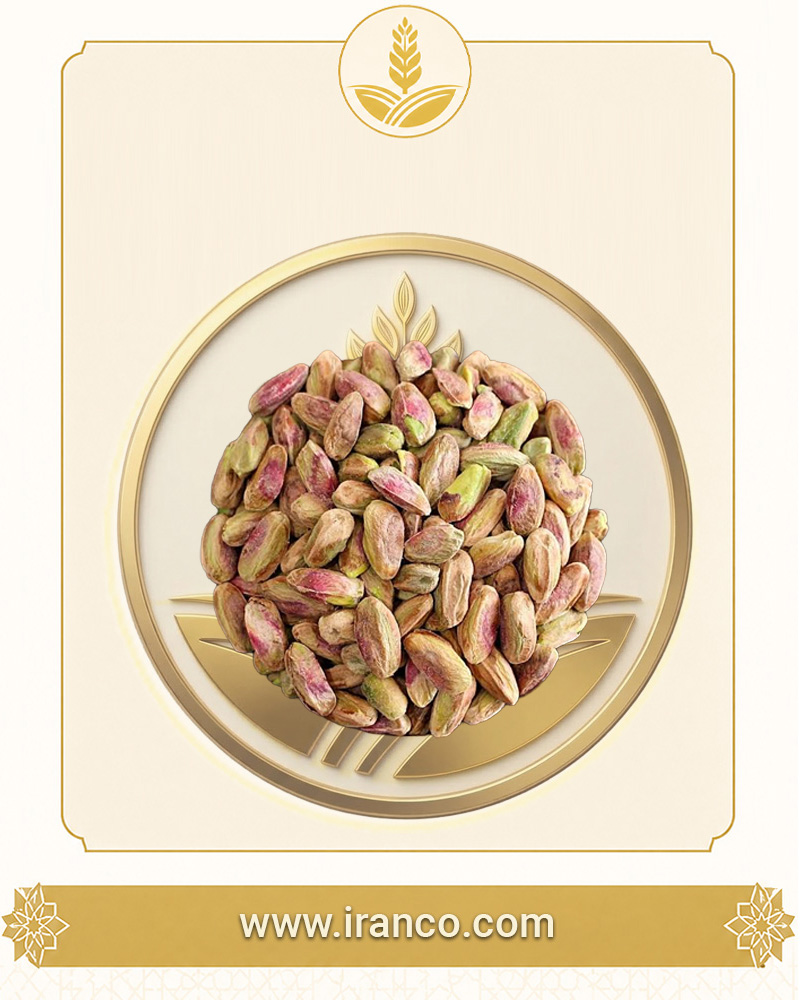
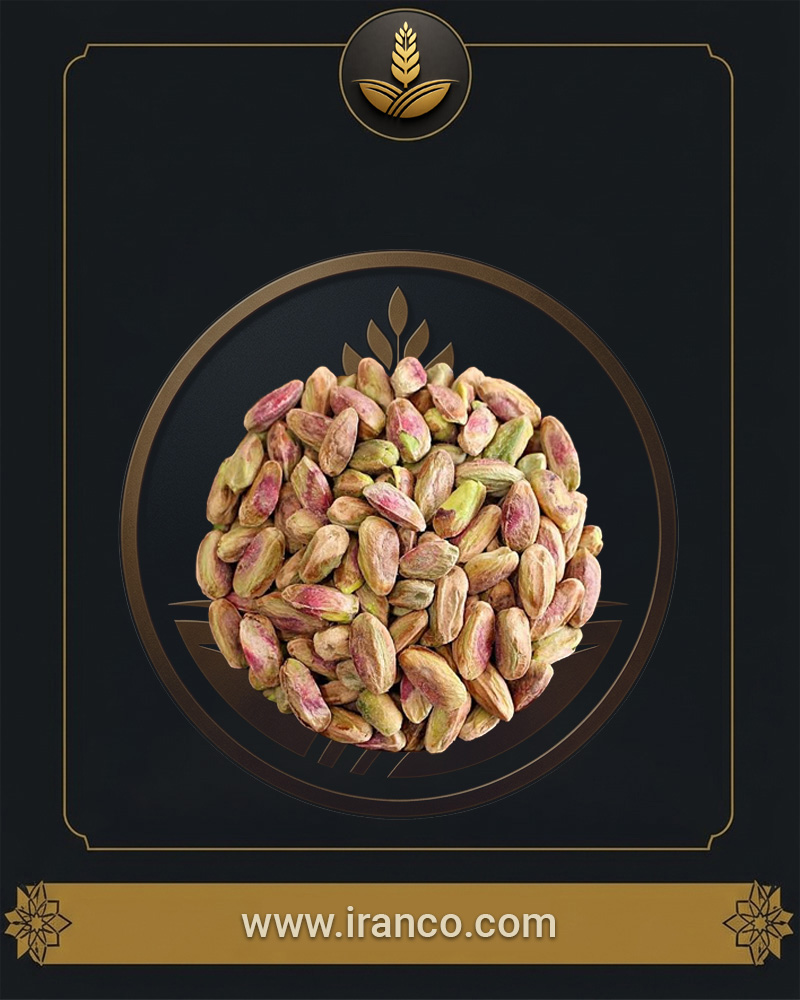
| Whole kernel | Without hard shell | Size and colour | Confectionery, chocolate, ice cream |
| Green kernel | Peeled | Colour intensity | Ice cream, premium pastry |
For each cultivar, contract size, open-shell rate, defect tolerances and crop year must be written — the trade name alone is not enough.
3. Contract technical specifications
Terms like “Grade 1” or “export quality” are insufficient. Standard UNECE DDP-09 (in-shell) and DDP-10 (kernel) define commercial quality; moisture cap is 6.5%, but contracts may be stricter.
| Parameter | Define | Importance |
|---|---|---|
| Product type | Cultivar or kernel/green kernel | Market fit |
| Size | e.g. 20/22 | Price and appearance |
| State | Raw, roasted, salted | Use and tariff |
| Open shell | Natural and closed-shell tolerance | Commercial value |
| Moisture | Numeric contract limit | Shelf life |
| Aflatoxin | Per destination | Customs clearance |
| Defects | Stain, breakage, insect | Lot acceptance |
| Packaging | Material, net weight | Protection and freight |
| Traceability | Lot/batch ID | QC and recall |
For green kernel, colour intensity and uniformity (DDP-10) directly drives raw-material value for ice cream and pastry — reference sample and colour acceptance range are required.
4. Quality control, testing and aflatoxin
Premium appearance does not guarantee food-safety clearance. Control starts in the orchard, at harvest, drying, sorting and storage. Aflatoxin is unevenly distributed — sampling design (points, composite, lot code, lab) matters as much as the test. For the EU, reports must link to the same commercial lot and labs must meet ISO/IEC 17025 requirements.
EU aflatoxin limits
| Supply type | B1 | Total B1+B2+G1+G2 |
|---|---|---|
| Ready-to-eat / food ingredient | 8 | 10 |
| Before sorting/physical processing | 12 | 15 |
Ochratoxin A limits are 5 and 10 µg/kg (RTD vs pre-sort). Iranian pistachio faces enhanced EU controls; identity and physical check frequency is 50%. Other common tests: moisture, pesticide residues, live insects, mould, off odour/taste, foreign matter and sensory.
5. Target markets — which country for which product?
China imported ~133.7k t pistachio in 2024; Iran supplied ~40.7k t (~USD 268.5M). India imported ~40.2k t, >20.3k t from Iran. Turkey is both producer and buyer (~13k t from Iran). The EU imported ~7.7k t directly from Iran — Germany is the hub; Italy matters for confectionery and ice cream.
| Market | Volume from Iran | Trait |
|---|---|---|
| China | ~40.7k t | Large volume; competes with USA |
| India | ~20.3k t | Nuts and wholesale |
| Turkey | ~13k t | Industry and re-export |
| European Union | ~7.7k t | Strict food safety |
| Germany | ~4.7k t | EU import hub |
| Jordan | ~1.9k t | Regional market |
6. Competitors — USA, Turkey and others
USA exports were ~348k t (>USD 2.5bn) and Turkey ~41k t in 2024. Germany and the Netherlands re-export and process — do not confuse with farm output.
| Origin | Advantage | Buyer challenge |
|---|---|---|
| Iran | Diversity, long types, green kernel | Supply swings, aflatoxin QC |
| USA | Volume, uniformity, mechanisation | Different visual types |
| Turkey | Food industry, EU access | Domestic demand |
| Spain | EU production | Smaller than USA |
Competing with the USA on price alone is not sustainable; Iran wins on luxury long/jumbo nuts, specified green kernel and custom sort/pack.
7. HS codes, UNECE and entry requirements
Main codes: HS 0802.51 in-shell pistachio; HS 0802.52 shelled. EU codes 0802 51 00 and 0802 52 00 for in-shell and kernel. Roasted, paste or mixed products may use other codes — classification must match the actual form.
UNECE DDP-09 classifies in-shell pistachio as Extra, Class I and Class II; DDP-10 covers kernels and peeled kernel for uniformity, moisture (6.5% cap) and colour class. These do not replace destination food law. Bulk labels need origin, net weight, crop year and lot; EU retail must declare pistachio allergen.
8. Packaging, storage and shipping
High kernel fat makes pistachios oxidation-sensitive. Metric packs of 10–50 kg, 10–12 kg cartons and large bags are common. Kernel and green kernel need moisture/O₂ barriers and optionally MAP/nitrogen.
| Use | Pack | Note |
|---|---|---|
| Bulk in-shell | Bag/carton with liner | Moisture control in transit |
| Kernel | Carton + food liner | Oxygen and odour |
| Green kernel | O₂, light, moisture barrier | Colour retention |
| Long route | Vacuum / N₂ | Less oxidation |
Storage: 0–10°C is recommended; below 10°C use ~65–70% RH with good packs. Reefer is not mandatory for every dry shipment — season, route and green-kernel sensitivity decide. Avoid prolonged heat, condensation and odour cross-loading.
9. Export pistachio pricing factors
- Type and size (jumbo Akbari vs medium Fandoghi are not directly comparable)
- Open-shell rate, defects and moisture
- Kernel colour — especially green kernel
- Crop year and test results (especially aflatoxin)
- Packaging: bag, carton, vacuum, private label
- Order volume and Incoterms (FCA, FOB, CIF, etc.)
- Season, stock and demand from major markets
Compare quotes only when specs, net weight, tests and delivery terms align.
10. 18-point importer checklist
- Define exact type (cultivar or kernel form) — “Iranian pistachio” is not enough.
- Product form: in-shell, kernel, green kernel; raw, roasted, salted.
- State numeric size and counting method (ounces).
- Representative lot sample — not a showcase premium only.
- Contract open-shell rate and closed-shell limit.
- Moisture limit and test method.
- Aflatoxin limits per destination, not seller’s domestic market.
- Test report for the same batch with matching lot ID.
- Crop year — “fresh” does not replace the year.
- Tolerance for breakage, stain, mould, insect and foreign matter.
- Pack type and net weight per unit.
- Storage conditions and lead time.
- Real supply capacity for specific size/kernel.
- Destination documents before loading.
- Lot rejection/acceptance criteria in the contract.
- Incoterms, delivery point and risk transfer.
- Pre-shipment inspection for sensitive deals.
- Match container seal, batch and shipping documents.
11. Export supply from Iran and procurement request
Two offers differ beyond price — align open-shell, crop year and packaging before comparing. Flow: define end use, type, size, volume, tests and destination; then sample, test and check capacity.
For pricing, send type, in-shell vs kernel, size, open-shell, moisture, aflatoxin standard, year, volume, pack weight, port and required certificates. Iranco (iranco.com) records purchase requests on that basis.
Summary
Iran pistachio export still has strong potential, but future advantage depends on measurable delivery. China, India, Turkey and Europe buy differently; the EU adds strict aflatoxin, documents and traceability. Cultivar names are only a start — type, size, moisture, open-shell, defects, tests, packaging and delivery must be numeric in contracts. Success rests on right product, documented QC and lots matching approved samples.
Frequently asked questions
Best Iranian pistachio type for export?
No single type fits all markets. Akbari and Kalleh Ghouchi for appearance; Ahmad Aghaei for retail; Fandoghi for volume and processing; in food industry, kernel, colour and yield beat cultivar name.
Size 20/22 what does it mean?
Approximate count per ounce (~28.35 g). 20/22 means about 20–22 nuts per ounce — lower number, larger nut.
Most important export pistachio test?
For many markets, especially the EU, aflatoxin is critical; moisture, pesticides, insects and sensory tests may also apply. Reports must tie to the same lot and sound sampling.
EU aflatoxin limits for pistachio?
RTD: B1 max 8 and total 10 µg/kg. Pre-sort: 12 and 15 µg/kg.
Where does Iran export pistachio most?
2024: China >40k t, India >20k t, Turkey >13k t; EU ~7.7k t with Germany as main gateway.
Suitable pistachio kernel packaging?
Carton with moisture/O₂ barrier liner; vacuum or N₂ for higher value. Green kernel also needs light and heat protection.
Storage temperature for export pistachio?
Range 0–10°C recommended; ~65–70% RH at low temperature with proper packs.
How is export pistachio price set?
Type, size, open-shell, defects, moisture, year, kernel colour, tests, packaging, volume and delivery — comparing price without aligned specs is misleading.
How to source pistachio from Iran?
Define specs, volume, QC and destination; review samples and capacity. Submit a purchase request via Iranco to review supply options.
Ready to request contract-spec pistachio?
Enter type, size, volume, packaging and destination in your Iranco purchase request.
Contact IrancoFeatured Products






Related Articles



