 Iranco Magazine Team
A guide to purchase specifications, grade and size, sampling, quality control, packaging and acceptance criteria for professional export-grade Iranian Piarom dates
Export Dates · Piarom · Grading · QC · Packaging
Ordering Iranian Piarom Dates: Purchase Specs, Grading, Sampling & Quality Control Guide
A professional guide to turning a Piarom date order from a general request into measurable purchase specifications — from grade and size to moisture, skin appearance, Codex sampling, acceptance criteria and export packaging.
Piarom is one of Iran's flagship commercial date cultivars for premium positioning; but the name alone is not enough for a professional order.
In premium date buying, most price gaps reflect real product differences, not the variety name alone. Two lots both labelled "export Piarom" can differ significantly in fruit length, uniformity, colour depth, skin adhesion, dryness, defect rate and packaging quality.
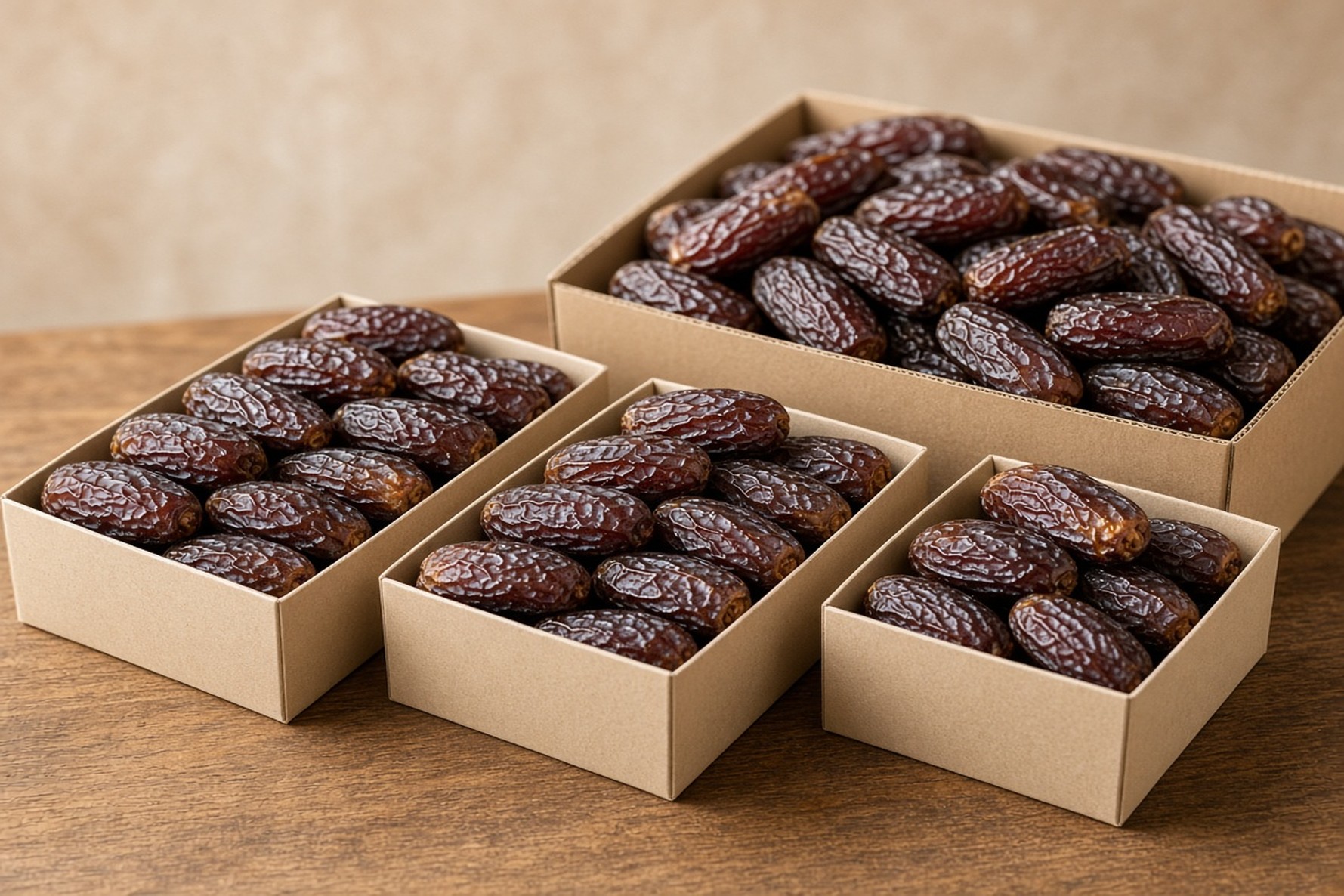
Piarom is known for elongated fruit, dark to very dark brown colour, relatively thin skin adhered to the flesh and a dry to semi-dry texture. Its recognised production centre is Hormozgan province, especially the Hajjiabad area.
These traits suit higher market positioning. Elongated relatively uniform shape, dark colour, adhered skin and consumer-pack potential distinguish Piarom from many high-volume dates.
That positioning is preserved only when the buyer converts "premium appearance" into measurable indicators.
For procurement managers, the main question should not be "What is the per-kilo Piarom price?" but "Exactly which specifications does this price cover?"
This article focuses on building a buying framework usable in inquiry, sampling, contract, pre-loading inspection and lot acceptance.
1. What Exactly Is Piarom and Why Does It Sit in the Premium Segment?
Piarom is a native Iranian date cultivar with strong geographic identity in southern Iran. Research sources identify Hormozgan and especially Hajjiabad as its main commercial origin.
The fruit is elongated; at final ripeness the colour reaches dark brown or near black, and the thin skin usually sits close to the flesh.
First, Piarom can be presented in premium packs where layout uniformity, fruit length and skin appearance directly shape consumer perception. Second, its drier texture versus soft dates creates a different distribution model. Third, Piarom sells more on cultivar identity and distinctive appearance than on the generic date label.
Mixed sizes, strong colour variation or high rates of separated skin quickly erode commercial value.
Do not confuse Piarom with any "dark date"
Dark colour alone does not prove cultivar identity. Professional buying should verify a combination of traits:
- Elongated shape, slimmer than many fleshy cultivars
- Dark to very dark brown at tamar stage
- Relatively thin skin
- Close skin-to-flesh adhesion in good product
- Dry or semi-dry texture
- Relatively uniform visual profile in premium grades
If cultivar authenticity matters to the buyer brand, supply from a recognised region, batch traceability and supplier consistency matter more than a few fruits in a photo.
2. Key Point in Piarom Orders: Turning "Premium Quality" into Measurable Specs
Terms like "grade one", "premium", "super", "luxury" or "export" are not technical specifications on their own.
A professional purchase request should translate every quality attribute into inspectable language wherever possible.
| Parameter | What to specify | Why it matters |
|---|---|---|
| Variety | Piarom | Prevents substitution with similar cultivars |
| Shape | Elongated, consistent with cultivar traits | Affects pack presentation |
| Colour | Agreed acceptable colour range | Prevents visual mixing |
| Size | Agreed sizing method | Main price and layout driver |
| Uniformity | Same grade within each pack | Critical for premium market |
| Moisture | Contract limit or test result | Affects texture and storage |
| Skin condition | Acceptable separation or damage | Key Piarom appearance index |
| Defects | Definition and tolerance | Basis for lot acceptance |
| Pests | No live insects | Fundamental quality requirement |
| Mould and decay | Defined acceptance criteria | Safety and quality risk |
| Foreign matter | Acceptance limit | Cleanliness control |
| Packaging | Material, net weight, arrangement | Protection and positioning |
| Label | Destination-required information | Avoids rework |
| Reference sample | Approved, coded sample | Shipment comparison benchmark |
The most common buying error is approving an excellent sample without transferring its specifications into the contract.
The reference sample should carry batch number, date, grade and storage conditions so its role is clear if a dispute arises.
3. Recommended Piarom Purchase Specification Pattern
Premium Piarom orders should be built in four layers: product identity, appearance traits, quality limits and packaging specifications.
Product identity
The product name should read "Piarom dates" and stone status must be stated. International tariff code for fresh or dried dates is HS 080410.
Shape, elongation and colour
Piarom studies report fruit length around 3 to 5 cm. Typical Piarom colour is dark to very dark brown.
Relative dryness and moisture
Codex sets a 30% moisture ceiling for invert-sugar date groups, but Piarom bought for premium positioning is usually selected for a drier texture.
Colour
Colour acceptance should be fixed against a reference sample, not a vague "dark" description.
Relative dryness
The buyer's contract limit can be stricter than general Codex; the figure should be set after commercial sample testing and mutual agreement.
4. Grade, Size and Uniformity: Three Direct Piarom Price Drivers
Piarom size should not be recorded only as "large" or "jumbo".
Codex optional size classes for dates with stone: fewer than 80 fruits per 500 g = large; 80–100 = medium; over 100 = small.
Three commercial methods are usable: count per weight unit, fruit length, and average weight with size distribution.
For display-led packs, length can be recorded together with count per kilogram.
In premium packs, uniformity matters more than a simple average.
| Method | Advantage | Limitation | Best for |
|---|---|---|---|
| Count per kilogram | Simple and controllable | Does not fully show fruit shape | Bulk purchase |
| Fruit length | Good for appearance control | Does not define weight or thickness | Premium retail pack |
| Average weight | Quick batch comparison | Can hide size spread | Initial screening |
| Size distribution | Most accurate uniformity check | More time-consuming | High-end brands |
For high-end Piarom, combining "count per weight + length or reference sample + uniformity" is safer than relying on a grade title alone.
5. Skin Appearance: A Major Gap Between Sample and Shipment
Piarom skin sits close to the flesh; that integrated look is a core commercial attraction of the cultivar.
The buyer should distinguish three conditions.
Natural wrinkling from cultivar structure
Dry and semi-dry dates do not have a perfectly smooth surface. Natural surface creases alone are not defects.
Skin separation from flesh
If skin lifts noticeably from flesh over a significant part of the fruit, pack appearance falls — especially in small transparent boxes.
Tearing and exposed flesh or stone
Codex "damage" in dates with stone includes crushing or flesh tearing to the point of exposing the stone.
In premium orders, skin condition on the approved sample should be recorded photographically.
6. Piarom Date Defects and Lot Acceptance Criteria
Acceptance criteria must be written before loading.
Codex standard CXS 143-1985 defines specific defect categories for dates.
| Defect group | Maximum allowed |
|---|---|
| Defined surface spots and blemishes | 7% |
| Damage, immature and unfertilised fruit | 6% |
| Foreign matter and insect/mite damage | 6% |
| Souring, mould and decay combined | 1% |
These figures are general Codex benchmarks, not a "premium Piarom grade".
Codex does not permit live insect infestation for lot acceptance.
Black mould: a defect to take seriously in Piarom
Research in commercial Piarom orchards in Hormozgan has reported black rot linked to Aspergillus niger.
Premium inspection should include random internal checks, odour assessment and fungal growth signs.
7. Sampling: Is the Sample Truly Representative?
One of the most common premium date buying risks is a non-representative sample.
For each 1000 kg lot section, at least two packages are selected at random. 300 g is taken from each package and the final composite sample must be at least 3000 g.
The composite sample is first used to check for live infestation and general cleanliness.
| Test | Subsample size |
|---|---|
| Moisture test | 500 g |
| Pit check in pitted dates | 100 fruits |
| Defect and size inspection | 100 fruits |
Checking only two or three boxes taken from the top of a pallet cannot match the validity of random sampling.
Pre-order sample and pre-loading sample are different
A pre-sale sample selects suitable product. A pre-loading sample checks whether the actual batch matches the contract.
In sensitive orders, these stages should be separate:
- Receive and approve the reference sample
- Record specifications of that sample
- Produce or sort the commercial batch
- Take random samples from the batch ready for loading
- Compare results with specifications and reference sample
- Issue loading approval
A reference sample without sampling from the final batch is not shipment control.
8. Tests and Quality Control in Piarom Date Orders
Not every Piarom order needs a large laboratory programme, but professional export must clarify which indicators are checked visually and which by measurement.
- Moisture: Codex 30% is a general ceiling; premium buyers should set a specific contract limit
- Pests: no live insects is a Codex requirement
- Mould and decay: sampling should include randomly opening some fruits
- Foreign matter: Codex allows maximum 1 g mineral impurity per kilogram
- Destination-market tests: pesticide residues, microbiology and other tests per destination country
For strict markets, the buyer should inform the seller of required tests and acceptable laboratories before label production and loading.
9. Piarom Packaging: Pack Quality Must Match Product Positioning
Piarom appearance is part of its selling value.
In export trade, ~500 g consumer packs and 5–10 kg bulk cartons are commonly seen for Piarom — not mandatory standards.
Premium retail pack
For specialist stores, premium nut shops or gifts, priority goes to product display, mechanical protection and brand printing.
Elongated Piarom under heavy pressure loses its neat appearance and skin tearing risk rises.
Bulk pack
Bulk orders should specify:
- Net weight per master carton
- Inner bag presence or absence
- Food-contact material properties
- Carton dimensions
- Cartons per pallet
- Closing method
- Batch mark
- Stacking conditions
Private-label packaging
If product is produced under the buyer brand, print-file approval must be a separate step.
Mass box production before final artwork approval can create high rework cost on private-label orders.
10. Storage, Transport and Post-Packaging Risks
Dry or semi-dry Piarom is not immune to poor warehouse conditions.
Some specialist suppliers recommend 4–8 °C chilled storage and commercial shelf life up to ~18 months — depending on initial moisture, processing and distribution chain.
More important than a fixed shelf-life number is documented warehouse conditions, pack date and storage history.
Sea or land transport
Lower moisture than very soft cultivars gives Piarom more flexibility in standard dried-fruit channels.
On hot or long routes, the phrase "dry container" alone does not guarantee quality retention.
Palletisation
Bottom cartons on a pallet must not exceed their load capacity.
Irregular stacking, carton overhang or weak strapping can deform boxes and compress product.
11. Piarom Export Markets and Premium Positioning Logic
The global date market is not only a volume market. Piarom keeps its edge best when sold as a distinctive cultivar-led product.
In 2024 India imported 526.6 million kg of dates; Morocco 138.5 million kg and France over 54 million kg — all dates under code 080410.
For Piarom, the right market is not necessarily the world's largest date market.
In 2024 Germany imported about 32.4 million kg of dates, of which over 2.6 million kg came from Iran.
| Market type | Opportunity | Note |
|---|---|---|
| Premium dried fruit | High | Uniformity and appearance are critical |
| Ethnic retail | Suitable | Iranian origin and cultivar matter |
| Health and natural food | To evaluate | Nutrition claims must meet regulations |
| Gift and premium pack | High | Pack design and sizing matter |
| General wholesale | Medium | Greater price pressure |
| Processing industry | Limited | Premium cultivar not always economical |
Piarom positioning works best on a true cultivar story, origin, appearance and controllable quality rather than competing with cheap industrial dates.
12. How to Compare Piarom Date Prices
A per-kilo Piarom price without full specifications is weak buying data.
Price comparison should cover at least the following factors:
| Factor | Impact |
|---|---|
| Size and count per kilogram | Large uniform grades command higher value |
| Uniformity | Tighter sorting raises cost and retail value |
| Skin appearance | Separation and damage reduce premium pack value |
| Colour | Colour consistency matters in display sales |
| Defect level | Stricter sorting costs more |
| Packaging | Retail packs and custom print add cost |
| Order volume | Affects packaging and logistics cost |
| Testing programme | Broader testing adds cost |
| Purchase timing | New-crop condition and stock levels matter |
| Delivery terms | Freight and seller responsibility differ |
To compare two offers, normalise to the same base: same grade, net weight, pack type, delivery terms and QC programme.
A common error is comparing bulk-carton price with private-label packed product and blaming "expensive supplier".
Importer Pre-Order Checklist
Before bulk purchase, importers should verify the following. Export disputes usually arise when technical criteria were not defined precisely from the start.
- Record the variety name exactly as "Piarom" in the purchase request.
- Specify pitted or with-stone product.
- Obtain the seller's grade and sizing basis.
- Define approximate fruit count per weight unit or agreed size index.
- Fix acceptable colour and appearance range with a reference sample.
- Write acceptable skin condition, separation and tearing limits in the spec.
- Measure sample moisture and set the contract limit for the order.
- Define defects and acceptance criteria before final production.
- Treat pre-sale sample separately from random final-batch sampling.
- Specify pre-loading sampling method from the outset.
- Record live pests, mould and decay as explicit control criteria.
- Confirm net weight, inner pack and master carton type.
- Approve label and print files before mass packaging.
- Define destination-country tests before loading.
- Review batch number and product traceability system.
- Record storage and transport conditions in purchase documents.
- Define commercial delivery terms precisely.
- Do not limit final inspection of the loading batch to the initial sample alone.
What Information Is Needed for an Accurate Price?
A comparable Piarom purchase request should include variety name, stone status, grade or size, expected uniformity index, moisture range if needed, acceptable skin condition, packaging type, net weight per pack, total volume, brand type, destination country, delivery port, required tests and delivery terms.
A short request like "price for one container grade-one Piarom" leaves too much room for interpretation.
Buyers can submit these specifications via an Iranco purchase request so sourcing is evaluated on the real product definition.
Export Supply of Piarom Dates to Buyer Specifications
In international Piarom buying, the key is matching supply options to destination-market specifications.
For premium-pack buyers, uniformity, fruit length and skin appearance are top priorities. Re-pack importers focus more on bulk batch quality and size stability.
Iranco can be used as a channel to submit structured purchase requests for Iranian products.
To reduce quote variance, initial requests should be as numeric and clear as possible, with sampling as part of selection.
Conclusion
Professional Piarom ordering starts when terms like "grade one" and "export" are replaced by controllable specifications.
Piarom's elongated shape, dark colour and relatively dry texture give it clear premium potential.
Four topics must be closed before final price: grade definition, sampling method, acceptance criteria and packaging.
Codex is a reliable base for general date traits, but premium Piarom buyers may need stricter specifications.
Final price is then compared for product with defined grade, appearance, defect tolerance and packaging — separating professional orders from name-only buying.
Frequently Asked Questions
Is Piarom a dry or semi-dry date?
Scientific sources classify Piarom as both dry and semi-dry. In practice it has lower moisture and a drier texture than soft cultivars such as Mazafati. For commercial buying, measure batch moisture and record it in the contract.
What should premium Piarom look like?
Premium Piarom shows elongated fruit, dark to very dark brown colour, thin skin and good skin-to-flesh adhesion. Uniformity among fruits is especially important in premium grade.
How is Piarom grade determined?
There is no single system used by all sellers. Best practice is to record the grade name with a numeric size index, reference sample and uniformity criterion.
How much sample is needed to order Piarom?
Codex requires a composite sample of at least 3000 g and at least two packages per 1000 kg lot section. Moisture testing uses a 500 g subsample.
What is the maximum acceptable date moisture?
Codex sets 30% maximum for invert-sugar date groups. Piarom buyers can contract a lower limit after reviewing the sample.
What are the main defects to check when buying Piarom?
Fruit damage and tearing, undesirable skin separation, severe spots, insect signs, foreign matter, souring, mould and decay are the main items.
Is Piarom suitable for high-end packaging?
Yes. Piarom's elongated shape, dark colour and distinctive appearance suit premium retail packs — provided sorting matches the packaging level.
What factors affect Piarom price?
Size, uniformity, skin appearance, colour, defect level, moisture, packaging type, order volume, testing cost, purchase season and delivery terms are the main drivers.
Featured Products




Related Articles



