 Iranco Magazine Team
From farm selection and ripeness control through sorting, packing, cold chain, target markets and requirements for an acceptable export shipment
Export Guide · Fresh Fruit · HS 080719
Iran Melon & Cantaloupe Export: From Farm Selection to Cold Chain
Practical guide for bulk importers: commercial types, buying specifications, target markets, tariffs, sorting, packaging, transport temperatures and export paperwork from Iran.
World melon and cantaloupe trade has expanded, with 2025 import value estimates above roughly USD 2.16 billion. Unlike dry or durable goods, fresh export loads live or die on correct temperature, minimal delay after harvest and disciplined logistics — one weak link can wipe out margin.
Introduction
Melon and cantaloupe export differs fundamentally from bulk dry commodities. Landed value is not farm gate price alone: impact sensitivity, flesh texture, aroma, ripeness, surface moisture and cold-chain length decide how much product remains sellable at destination.
Iran’s geography supports regional supply. Khorasan (netted and yellow types), Garmsar and Ivanki in Semnan (elongated and yellow melons), and southern provinces (Fars, Hormozgan, Kerman, Bushehr) offer staggered harvests and access to southern ports.
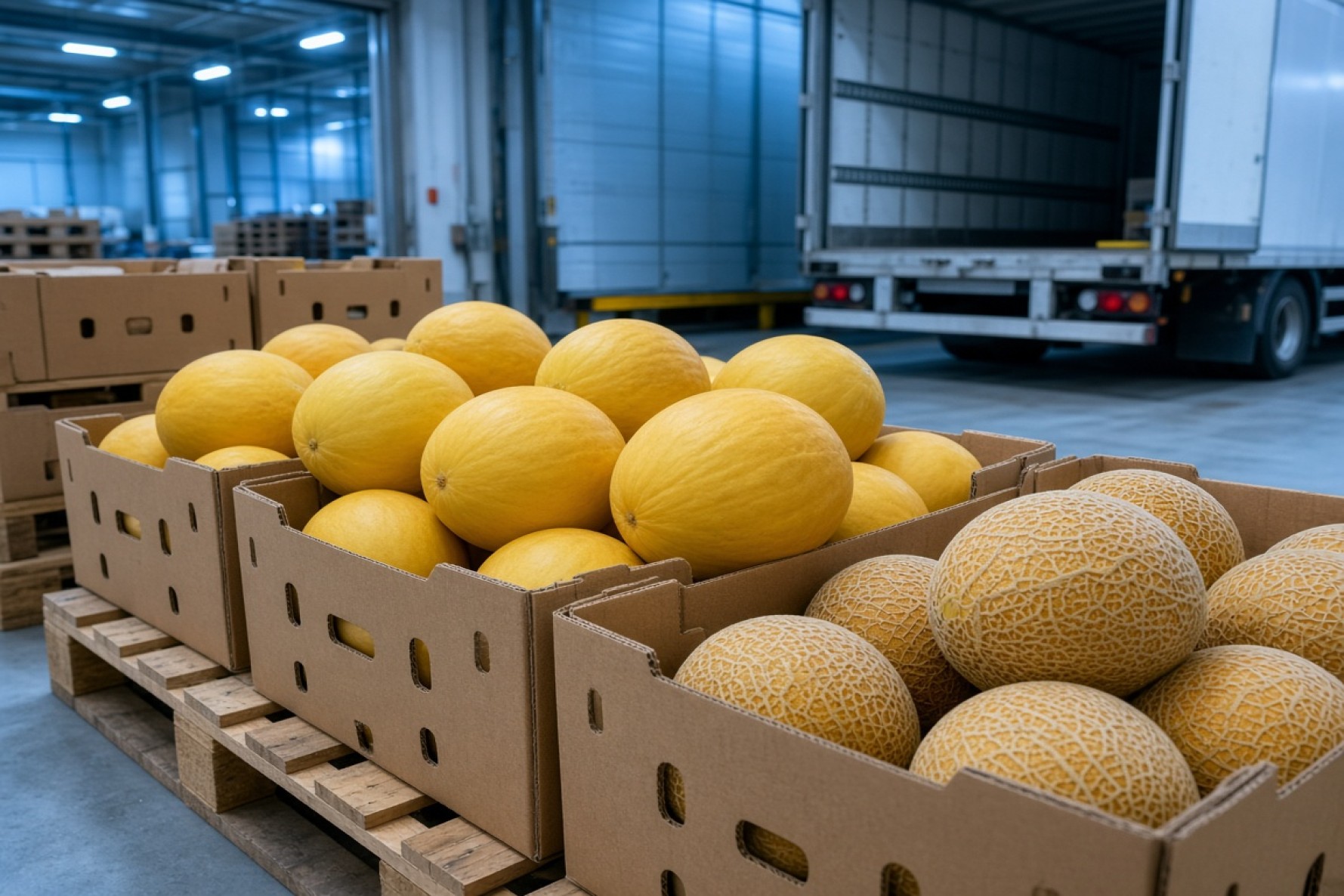
Professional importers should specify product type (netted cantaloupe, honeydew, yellow or round export melon), weight band, minimum Brix, pack and transport temperature — not only “Iran melon price per kg”.
1. Export advantages from Iran
Proximity to Iraq and Gulf markets, fresh-fruit export experience, climate diversity and local cultivars are practical strengths. Melons often carry higher unit value than watermelon but need stricter temperature control — they must not be hauled on a watermelon profile (10–15°C).
- Shorter haul to Iraq and Gulf states
- Southern ports for Oman and Qatar
- Product mix: netted cantaloupe, honeydew, yellow and round melons
- Export sorting and packing at origin
- Wide harvest window across northeast, central and south
- Competitive farm pricing vs some distant origins in peak season
These advantages convert to commercial value only with contract specs and cold chain discipline; poor quality or wrong temperature fails even on short routes.
2. Commercial types
Markets split melons by shape, rind colour, netting, flesh colour and weight. Fix the exact type before requesting prices — “export melon” alone is not contract-grade.
| Type | Appearance | Typical market | Transport note |
|---|---|---|---|
| Elongated melon | Light rind, sweet flesh, oblong | Iraq, regional wholesale | Layer pressure sensitive |
| Yellow melon | Yellow rind, aromatic flesh | Gulf, Russia | Control Brix and ripeness |
| Netted cantaloupe | Rind netting, high aroma | Retail and chains | 2.2–5°C |
| Honeydew | Smooth green rind | Europe, Gulf, Central Asia | 7–10°C |
| Round export melon | Uniform consumer size | Supermarkets, cartons | Mandatory size sort |
3. Buyer specifications
Export melons must be purchased against measurable parameters: sound, clean, firm fruit without rot, proper ripeness and agreed sweetness.
| Parameter | Define as | Why it matters |
|---|---|---|
| Type / cultivar | Trade name or approved sample | Prevents substitution |
| Fruit weight | Kg band | Sales uniformity |
| Brix | Agreed minimum (e.g. 11–13°) | Eating quality |
| Netting (cantaloupe) | Coverage and uniformity | Retail look |
| Rind soundness | No cracks or pest holes | Shelf life |
| Bruising | Tolerance cap | Shrink control |
| Surface moisture | Dry, clean fruit | Mould risk |
| Loading temperature | Per product type | Cold chain |
| Packaging | Carton, crate, count | Physical protection |
| Defect rate | Lot ceiling | Risk control |
Approve samples before the main order: cut fruit, measure Brix and check aroma. One perfect melon cannot represent a full truck.
4. Target markets
Regional demand differs: Iraq prioritises volume and price; Gulf buyers emphasise appearance and packs; Russia and Kazakhstan need shelf life; Europe requires phytosanitary certificates and MRL compliance.
Iraq
Main high-volume road market. Elongated and yellow melons dominate. Border time and reefer set-point are critical.
Oman and Qatar
Sea routes from southern ports; netted cantaloupe and round melons for retail. Labelling and origin matter more.
Russia and Kazakhstan
Longer road legs — slightly firmer fruit, strict sort and stable temperature. Phytosanitary papers and sometimes origin certificates gate entry.
Europe
EU and neighbouring markets expect phytosanitary clearance, traceability and pesticide MRL testing. Without a document and lab plan, export is not practical.
| Market | Route | Focus |
|---|---|---|
| Iraq | Road | Volume, price, freshness |
| Oman / Qatar | Sea | Look, size, packaging |
| Russia / Kazakhstan | Road | Shelf life, temperature |
| Europe | Road / sea / air | MRL, phytosanitary, traceability |
5. Tariff 080719 vs watermelon 080711 and documents
Fresh melons and cantaloupe are classified under 080719 (and related subheadings), while fresh watermelon is 080711. Wrong HS on invoices disrupts export files and destination clearance.
Typical documents: commercial invoice, packing list, CMR or bill of lading, certificate of origin when required, phytosanitary certificate and cargo insurance. European buyers may require entry notification, lot codes and MRL results.
- Match product description to HS on all papers
- Valid phytosanitary certificate for destination
- Gross and net weights aligned with packing list
- Record reefer temperature on transport docs when contracted
6. Sorting
Export sorting removes cracked, rotten, over-ripe, under-ripe and heavily pest-damaged fruit. Size grading is often mandatory for cartons and netted cantaloupe.
After sorting, fruit should not sit in sun for hours. Pre-cooling before loading into reefers is recommended for netted cantaloupe. Washing without full surface drying raises mould risk.
- Separate by type and cultivar
- Grade weight or count per carton
- Statistical Brix checks
- Reject off-flavour or sour fruit
- Batch numbers for traceability
7. Packaging
Pack choice follows destination and channel. Nearby wholesale may accept crates or simple boxes; Gulf retail and Europe usually want cartons with fixed counts and ventilation.
| Pack | Use | Note |
|---|---|---|
| 5–9 count carton | Cantaloupe, round melons | Uniform size, vent holes |
| Plastic crate / bin | Iraq, wholesale | Strong base, avoid overfill |
| Pallet + stretch | Warehouse and port | Secure container loads |
| Origin label | Gulf, Europe | Latin name, net weight |
8. Cold chain temperature table
A common mistake is one temperature for all melons. Netted cantaloupe needs roughly 2.2–5°C; honeydew is usually held at 7–10°C. Mixing types in one compartment without agreement damages the more sensitive fruit.
| Type | °C | RH | Warning |
|---|---|---|---|
| Netted cantaloupe | 2.2–5 | ~95% | Chilling below 2°C |
| Honeydew | 7–10 | 85–90% | Fast ripening in heat |
| Yellow / elongated | 7–10 | 85–90% | Keep separate from cantaloupe |
| Watermelon (comparison) | 10–15 | 85–90% | Different profile — do not copy |
On export lanes, record product temperature at loading, air flow in the container, border waiting time and reefer unit health in contract or transport papers.
9. Transport: road, sea and air
Road: Default for Iraq, transit via Turkey and Russia/Central Asia. Refrigerated trucks with agreed set-point and minimal heat stops are essential.
Sea: Oman, Qatar and some distant buyers from Bushehr, Bandar Abbas or Imam Khomeini port. Reefer containers cost more but improve control.
Air: Samples, high unit-value lots or tight retail windows — expensive, usually for premium cantaloupe or chain programmes.
10. Pricing factors and global competitors
Export price moves with Iran harvest timing, sort and carton cost, reefer freight, FX and competition from Spain, Brazil, Guatemala, India, Turkey and Egypt.
- Product type (cantaloupe often higher unit value than bulk elongated)
- Size uniformity and grade-one share
- Farm-to-border or port distance
- Order volume and load count in season
- Extra MRL or certificate requirements
- Spanish and Latin supply in European season
- Turkey and Egypt in Gulf and Russia lanes
Compare quotes at one Incoterm delivery point with identical quality specs.
11. Importer checklist (18 items)
Before bulk orders from Iran:
- Fix exact type (netted, honeydew, yellow, elongated, round).
- Obtain approved sample or reference photos.
- Write weight band per fruit.
- Put minimum Brix in contract.
- Set bruising and rind defect limits.
- Reject rot and open cracks.
- Confirm pack type and count per carton.
- Record transport temperature by type.
- Do not mix incompatible types in one load.
- Verify daily/weekly supplier capacity.
- Cap harvest-to-loading time.
- Check HS 080719 on all documents.
- Request destination phytosanitary certificate before loading.
- For Europe, plan MRL testing on the batch.
- Define Incoterms and delivery point.
- Assign border and port cost responsibility.
- Contract destination quality dispute process.
- Before dispatch, get loading photos and reefer temperature log.
Professional RFQ
A useful RFQ is short and precise: melon type, weight band, minimum Brix, volume (kg or cartons), packaging, destination city and country, transport mode, dates, Incoterms and required certificates. “Price of one truck of melon” is not comparable.
- Type or approved sample
- Weight and Brix
- Volume and load count
- Packaging
- Destination and delivery term
- Road / sea / air
- MRL or phytosanitary tests
Buyers can submit the same details in an Iranco purchase request for matching supply options.
Export melon supply with Iranco
Iranco accepts purchase requests with real order specs — type, size, Brix, packaging, destination and timing. For export loads, approve samples, transport temperature and acceptance criteria before loading so quotes stay comparable.
If you need Iranian melon or cantaloupe, state product type, volume, quality and destination in your request.
Summary
Iranian melon export works when product, market and cold chain align. Temperature difference between netted cantaloupe and honeydew is the top technical rule; ignoring it multiplies shrink and disputes at destination.
Iraq and the Gulf suit regional volume; Russia and Kazakhstan need longer road programmes; Europe needs sorted fruit with full paperwork. HS 080719, phytosanitary certificates and MRL where required belong in the plan from day one.
Best practice is spec-first buying: define type, weight, Brix, pack, temperature, volume, destination and delivery before pricing — then compare Iranian supplier offers fairly.
Frequently asked questions
What is the HS code for fresh melon and cantaloupe?
Fresh melons and cantaloupe are generally classified under 080719 (and related subheadings); fresh watermelon is 080711. Wrong codes on documents delay clearance.
What storage temperature for netted cantaloupe vs honeydew?
Netted cantaloupe about 2.2–5°C; honeydew about 7–10°C. Mixing without agreement harms the more sensitive fruit.
Main melon production areas in Iran?
Khorasan, Garmsar and Ivanki (Semnan), and southern provinces including Fars, Hormozgan and Kerman. Farm choice should match product type and distance to port or border.
Key export destinations for Iranian melon?
Iraq for road volume, Oman and Qatar by sea, Russia and Kazakhstan on longer road lanes, Europe for documented MRL and phytosanitary compliance.
Recommended minimum Brix for export?
Often 11–13° Brix minimum in contract, depending on cultivar and market. Use consistent sampling and cut fruit for measurement.
Which documents are required?
Invoice, packing list, transport papers, origin certificate when needed, phytosanitary certificate; Europe often adds MRL and traceability records. Destinations may add rules.
Can melon be shipped like watermelon?
No. Watermelon is typically held at 10–15°C; netted cantaloupe needs cooler storage. Using the watermelon profile risks chilling injury or quality loss on cantaloupe.
How to source export melon through Iranco?
Submit product type, weight, Brix, volume, packaging, destination and transport mode in an Iranco purchase request. Capacity, samples and loading conditions are reviewed against your specs.
Featured Products

Related Articles



