 Iranco Magazine Team
From romaine and cos to iceberg and leaf lettuce — commercial differences, export quality, destination markets, packaging and Iran's lettuce cold chain
Market Report · Lettuce · Export
What Types of Iranian Lettuce Exist, How Do They Differ, and Where Are They Exported?
Overview of Iran's main lettuce types, differences in use and quality, B2B buyer specifications, evaluation criteria, registered export markets, tariff codes, cold chain, packaging and a practical importer checklist.
Lettuce is one of Iran's highest-volume leafy vegetable export products. According to foreign trade statistics, Iran's exports of lettuce and leaf lettuce in 2022 under tariff codes HS 070511 and HS 070519 totalled roughly 187.7 thousand tonnes. That volume shows lettuce is not merely a seasonal domestic crop, but a logistics-driven commodity with steady demand in regional markets and beyond.
However, "lettuce" is not a single product for a professional buyer. The differences between romaine, iceberg, green leaf, red leaf, Batavia and butterhead in shape, texture, mechanical resistance, temperature sensitivity, shelf life and sales channel are substantial. Choosing the wrong type — even at a lower price — can lead to high destination waste, shipment rejection or loss of repeat orders.
Lettuce is a high-respiration product with severe sensitivity to temperature rise, ethylene response and a need for high humidity without free surface water. For procurement managers, lettuce type, head size, tip freshness, colour uniformity, rib health, product temperature at loading, packaging type and remaining shelf life must be defined before pricing.
1. Iran's lettuce position and seasonal production advantage
Iran's climatic diversity and wide cultivation areas enable lettuce supply in parts of the year when some neighbouring countries face seasonal limits or import dependence. Khuzestan province — especially the Dezful area and regions with hot, dry weather in the cool season — is one of the country's recognised lettuce production hubs. The advantage of these areas is production in months when regional demand for fresh lettuce rises and land export routes to Gulf destinations shorten.
Production across seasons does not mean "uniform quality all year". Field temperature, growth rate, irrigation schedule and harvest timing in each season affect head size, leaf density and mechanical resistance. A professional buyer should know that Iran's seasonal advantage has commercial value only when paired with cold chain, grading and appropriate packaging; otherwise, the timing advantage becomes waste in transit.
Dezful and other Khuzestan production areas are typically used to supply southern domestic markets and exports to the UAE, Iraq, Qatar and Oman in seasonal windows. For sustainable export, harvest planning must align with pre-cooling capacity, loading and time to reach customs or the border — not only field capacity.
2. Main types of Iranian lettuce
Iranian producers and exporters mainly supply five principal lettuce families. Each type has different customers, technical specifications and target markets. The table below provides a quick comparison; each type is then reviewed in detail.
| Type | Shape and appearance | Texture and flavour | Shelf life | Primary use |
|---|---|---|---|---|
| Romaine | Long leaves, elongated head, firm ribs | Dark green outer leaves, lighter interior; medium crunch | Medium to good with cold chain | Caesar salad, restaurants, retail |
| Iceberg | Round, compact, layered head | High crunch, juicy, mild flavour | 21–28 days near 0°C | Burgers, salads, chain retail |
| Green leaf | Softer leaves, no compact head | Mild flavour, delicate texture | Shorter than iceberg | Ready salads, sandwiches |
| Red leaf | Purple-red leaves, decorative appearance | Slightly bitter, soft texture | Short | Mixed salads, restaurants |
| Batavia | Relatively open head, wavy leaves | Good crunch, medium mechanical resistance | Medium | Fresh salads, retail |
| Butterhead | Round, soft head, crinkled leaves | Buttery texture, mild sweet flavour | Short to medium | Premium salads, restaurants |
2.1. Romaine (Cos)
Romaine is one of the most in-demand types in Middle Eastern and foodservice markets. Its elongated head, firm ribs and dark green outer leaves with a lighter core are identifying features. Romaine suits Caesar salad, sandwiches and direct-service plates. In export, uniformity of head height, healthy leaf tips (no burn or yellowing) and absence of rib breakage are highly important. Romaine is more sensitive to mechanical pressure than iceberg and requires packaging with lateral protection.
2.2. Iceberg
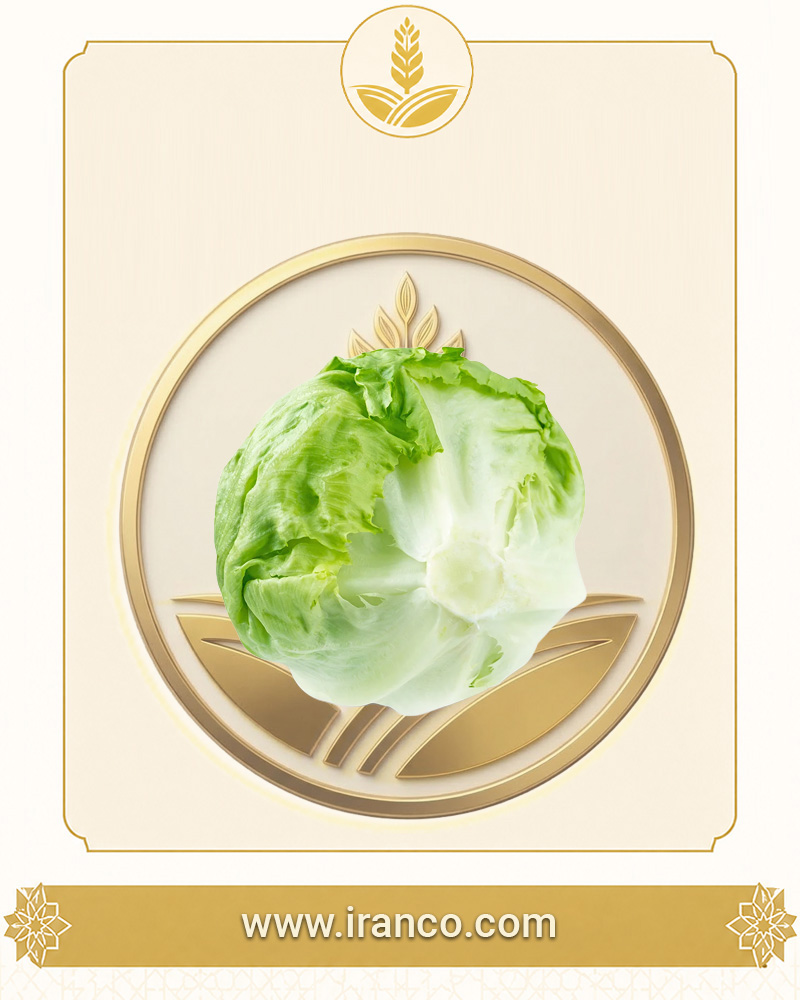
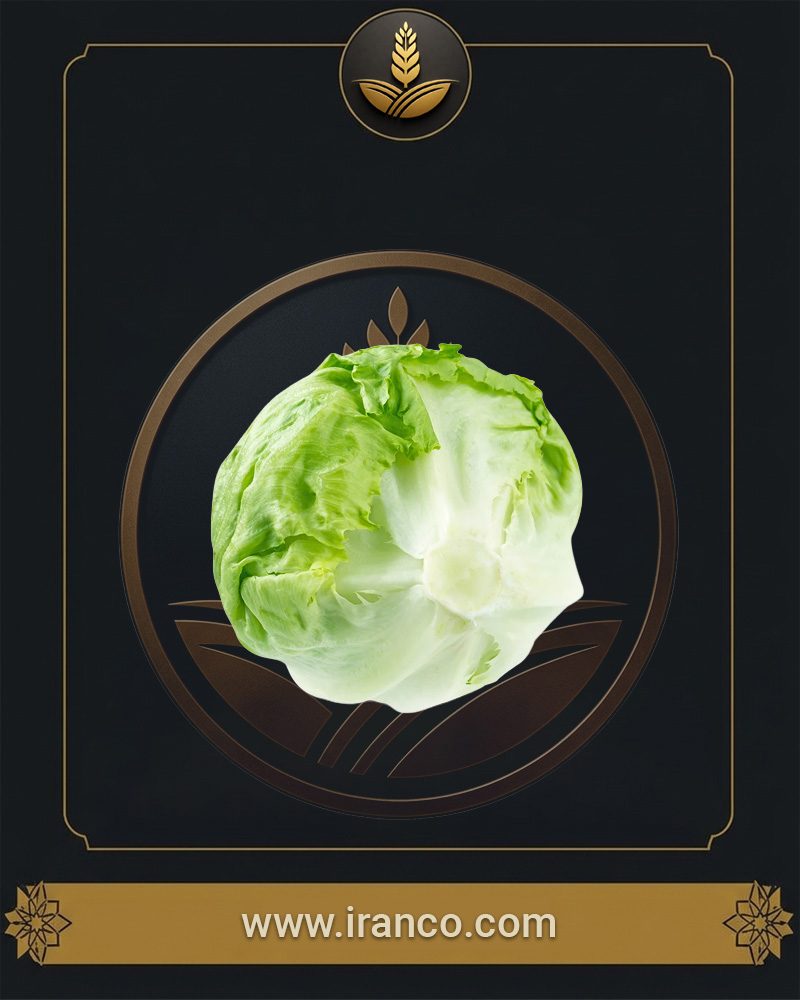
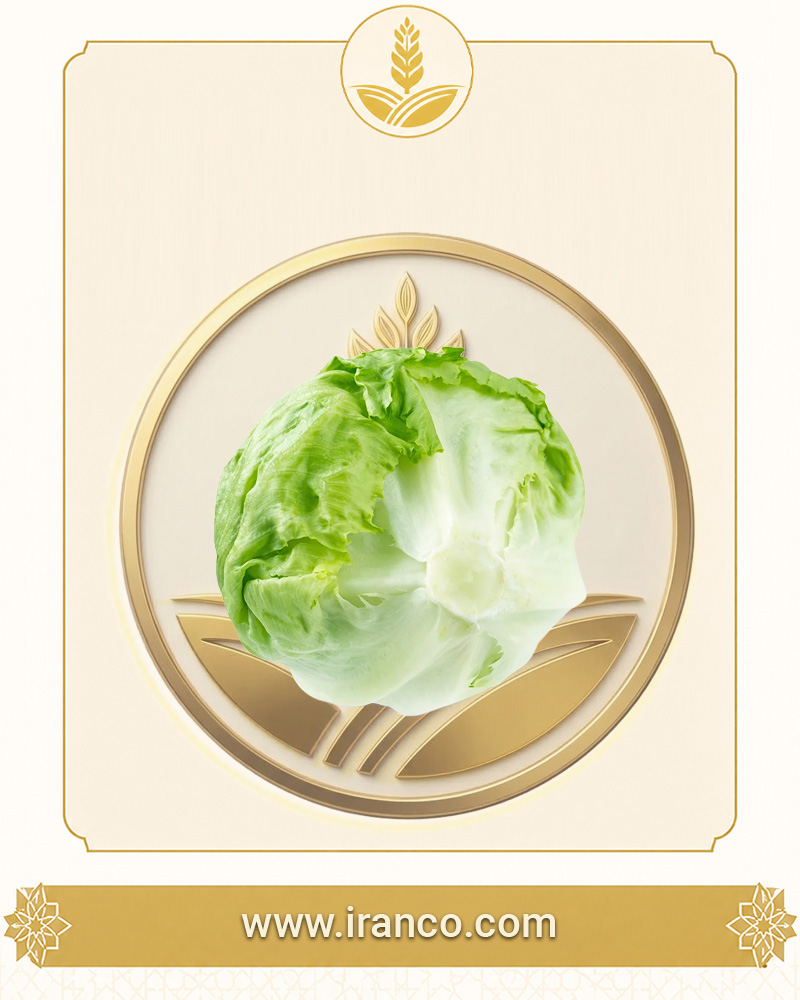
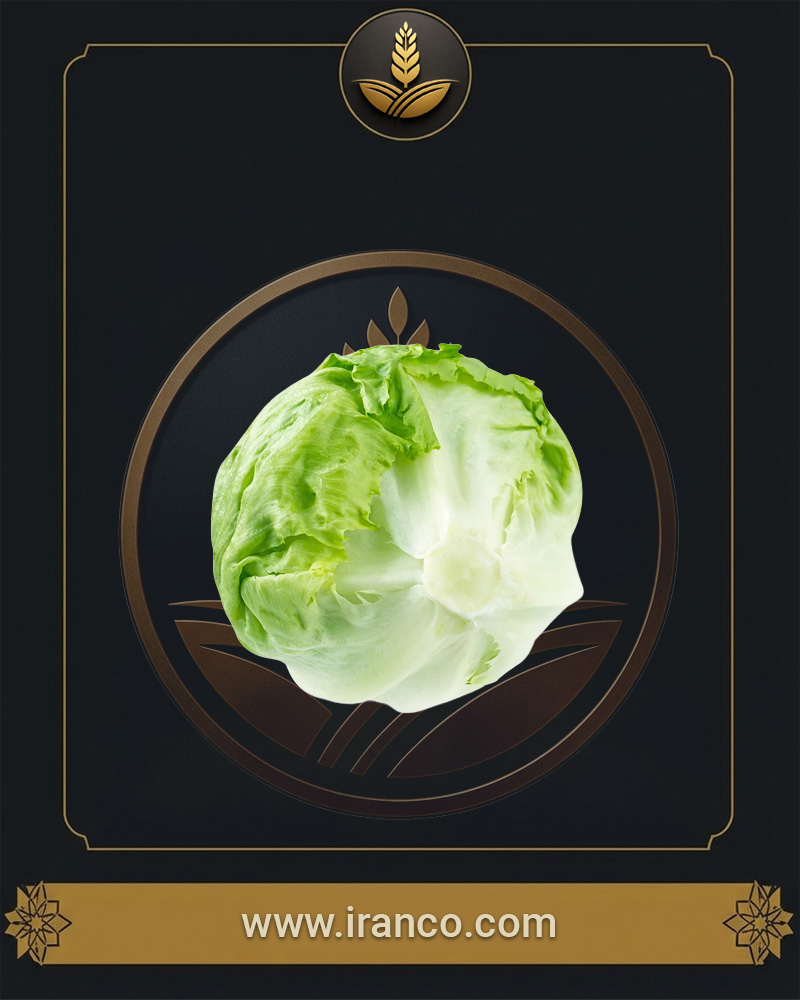
Iceberg is the most popular lettuce type in chain retail and fast food. A round, compact, heavy head with layered leaves and high crunch are its key traits. Under storage near 0°C with high humidity, iceberg shelf life can reach 21 to 28 days — though this depends on harvest quality, pre-cooling and temperature uniformity in transit. Iceberg suits high-volume export to regional markets, but any head that warms in transit puts the entire load at risk.
2.3. Green leaf and red leaf
Loose-leaf lettuces without a compact head are used for ready salads, mixed plates and fresh vegetable sections in retail. Green leaf has a softer texture and shorter life; red leaf adds decorative purple-red colour to salads but is more sensitive to ethylene, pressure and dryness. These types usually export in lower volume than iceberg and romaine, but can carry higher margins in restaurant and bagged salad markets — provided delivery is extremely fresh.
2.4. Batavia
Batavia sits between loose-leaf and head types: a relatively open head with wavy leaves and good crunch. It is supplied in domestic markets and some regional export destinations. Its mechanical resistance is lower than iceberg and higher than green leaf. It suits buyers seeking attractive appearance in fresh salad sections, but logistics planning should be shorter than for iceberg.
2.5. Butterhead (Boston)
Butterhead is recognised by its round, soft head and buttery leaf texture. Its mild flavour and premium appearance make it suitable for high-end restaurants and premium salads. Shorter shelf life and high sensitivity to pressure and temperature change are the main export limitations. Butterhead is less used for bulk volume export, but has a place in specialised orders with protective packaging and fast transit.
3. Which type for which buyer?
Lettuce type selection must align with the buyer's sales channel. A common mistake is shipping "whatever is ready in the field" without regard to order specifications. The table below is a quick guide to matching type with buyer category.
| Buyer type | Suggested type | Quality priority | Logistics note |
|---|---|---|---|
| Chain retail | Iceberg, romaine | Size uniformity, tip health, shelf life | Mandatory pre-cooling, 0–2°C |
| Restaurant and fast food | Iceberg, romaine, butterhead | Crunch, cutability, no spotting | Short delivery, protective packaging |
| Fresh-cut salad | Romaine, green/red leaf, Batavia | High freshness, MRL, microbial control | Maximum 24–48 hours harvest to processing |
| Regional wholesale | Iceberg, romaine | Head weight, count per carton | Cold transport, no stacking pressure |
| Hotel and catering | Butterhead, romaine, red leaf | Appearance, freshness, uniformity | Smaller packs, scheduled delivery |
For chain retail, iceberg is the primary choice due to longer shelf life and broad consumer acceptance. Restaurants often order a mix of iceberg (burgers and base salads) and romaine (Caesar and direct service). The fresh-cut salad industry is the most sensitive customer: lettuce must be fresh, defect-free and supported by an MRL report.
4. Technical specifications for purchase requests
Lettuce price without technical specifications has little analytical value. A B2B buyer should include the parameters below in a request for quotation (RFQ) to receive comparable offers.
| Parameter | Entry options | Importance |
|---|---|---|
| Variety | Iceberg, romaine, green leaf, red leaf, Batavia, butterhead | Product match, tariff code and use |
| Head size | Weight (g) or count per carton | Uniformity and pricing |
| Grade | Extra, Class I, Class II or defect tolerance | Destination acceptance |
| Loading temperature | Specific number (e.g. ≤2°C) | Cold chain control |
| Pack type | Carton, plastic crate, MAP pack | Mechanical protection and ventilation |
| Count per carton | e.g. 12, 15, 18 or 24 heads | Logistics calculation |
| Expected shelf life | Remaining days at delivery | Waste management |
| Certificates | Phytosanitary, MRL, microbial | Customs entry and acceptance |
| Incoterms | FOB, CIF, DAP and delivery point | Carriage risk allocation |
5. Quality assessment: from field to destination acceptance
Lettuce quality in B2B trade combines appearance, physical, chemical and sanitary indicators. A professional buyer should include each of the following in an inspection protocol before approving a shipment.
- Freshness: Leaves must be firm, turgid and free of wilting or shrivelling. Lettuce harvested late in the field will have short life even with a strong cold chain.
- Tipburn: Brown or black spots on leaf edges and tips — the most common defect in romaine and loose-leaf types. Tipburn tolerance must be specified in the contract.
- Rib breakage: In romaine and iceberg, broken ribs indicate mechanical pressure or poor harvest and disrupt water and nutrient pathways.
- Ethylene sensitivity: Lettuce is highly ethylene-sensitive. Storage or transport alongside apples, pears or melons can cause rapid yellowing and wilting. Separation in warehouse and truck is mandatory.
- Decay: Soft, watery spots or off-odour indicate fungal or bacterial contamination. Any affected head must be removed from the load.
- Pesticide residues (MRL): Maximum residue limits for active substances differ by destination country. A report from an accredited laboratory is mandatory for many buyers before loading.
- Microbial control: For fresh-cut salad and large retail, total plate count (TPC), E. coli and Salmonella are common acceptance protocol items.
An approved pre-shipment sample should be recorded with harvest date, type, head size, grade, defect percentage, net carton weight, product temperature and storage conditions. Destination inspection without route temperature records usually has little value for dispute resolution.
6. Export destinations: 2022 foreign trade data
Iran's lettuce exports are concentrated mainly in Persian Gulf regional markets, Iraq and Russia. The table below shows the main registered destinations in 2022. Figures are based on codes HS 070511 (head lettuce) and HS 070519 (other lettuce).
| Destination | Volume (tonnes) | Approx. share | Takeaway |
|---|---|---|---|
| United Arab Emirates | 62,700 | ~33% | Largest destination; regional distribution hub |
| Russia | 58,900 | ~31% | High volume; strong cold chain required |
| Iraq | 35,600 | ~19% | Short land route; steady demand |
| Qatar | 14,900 | ~8% | Higher quality standard market |
| Oman | 7,700 | ~4% | Growing Gulf destination |
*Figures based on reported foreign trade statistics and may be revised in subsequent database updates.
6.1. United Arab Emirates
The UAE is the largest destination for lettuce exports from Iran. Dubai and other emirates act as distribution hubs, routing part of imported lettuce to other regional countries. UAE buyers are typically sensitive to size uniformity, clean packaging, phytosanitary certificates and product temperature on entry. Iceberg and romaine account for the highest volume in this market.
6.2. Russia
Russia is the second-largest destination by volume. Whether by land from northwest Iran or by sea, the route is longer than Gulf destinations and stresses the cold chain. For this market, pre-cooling, container insulation and continuous temperature monitoring throughout transit are critical. Each degree of temperature rise on a multi-day route can sharply reduce shelf life.
6.3. Iraq
Iraq benefits from short land routes from Iran's western and southern borders. Demand in domestic Iraqi markets and Erbil for fresh lettuce is steady. However, border quality control and speed to the final market are decisive. Simpler packaging may be acceptable, but warm or crushed lettuce is not.
6.4. Qatar and Oman
Qatar and Oman are smaller markets but with higher quality and price standards. Buyers in these countries place greater emphasis on sanitary certificates, product appearance and supply repeatability. A good opportunity for exporters offering cold chain and uniform grading.
7. HS tariff codes and phytosanitary certificate
Two principal HS codes are used for lettuce export:
- HS 070511 — Head lettuce (Lactuca sativa, cabbage lettuce / head lettuce), including iceberg
- HS 070519 — Other lettuce, including romaine, green leaf, red leaf, Batavia and butterhead
Correct code selection in the customs declaration matters for alignment with destination regulations and duty calculation. A phytosanitary certificate issued by the plant protection organisation is mandatory for most destinations. The certificate must show the product is free of quarantine pests of concern to the importing country.
Some destinations additionally require a certificate of origin, commercial invoice, packing list and MRL report. Before the first shipment, obtain the destination document list from the importer or customs broker.
8. Packaging and cold chain
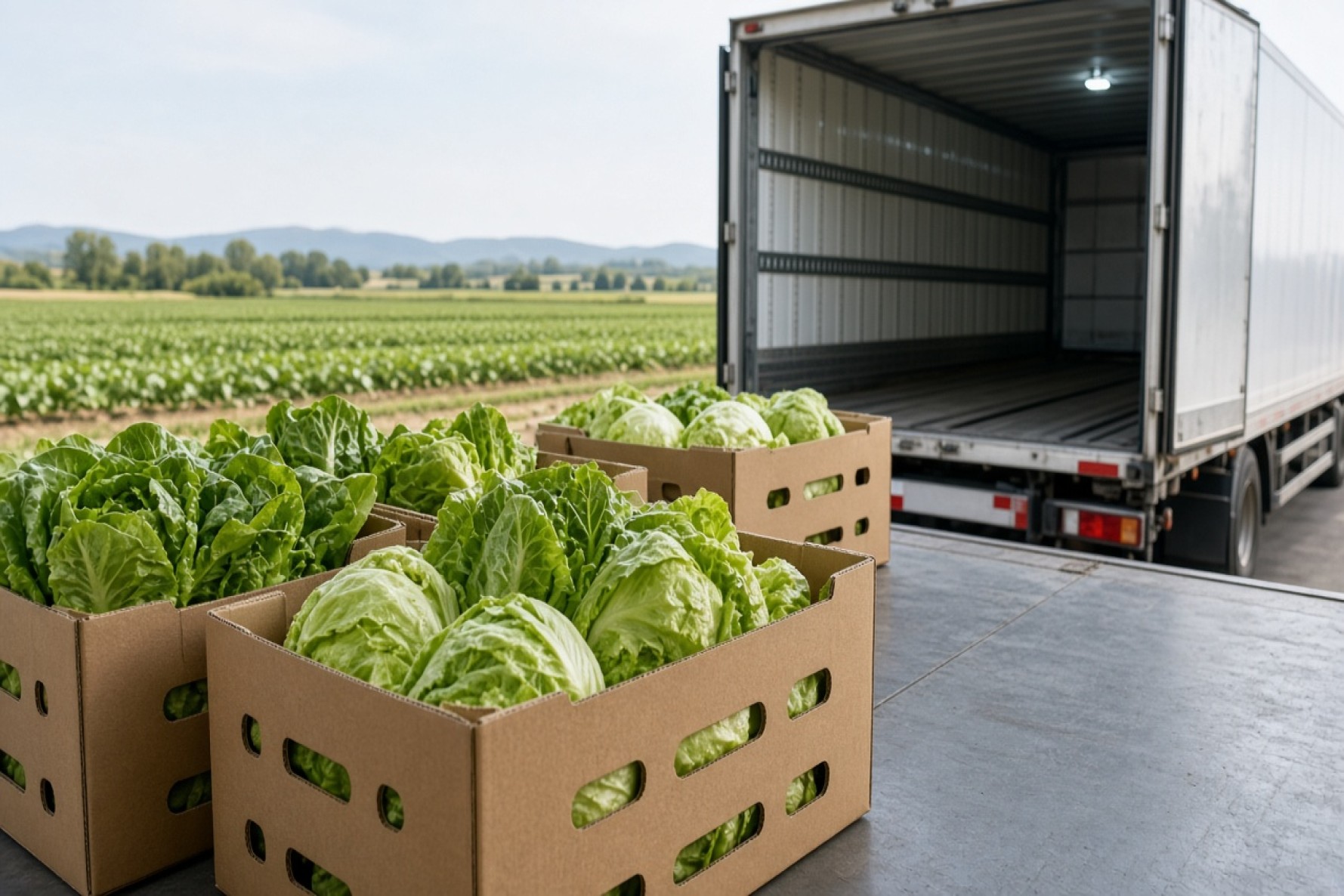
Lettuce without an appropriate cold chain is not an export product — it is waste in motion. Post-harvest guidance for leafy vegetables recommends optimal temperature near 0°C and relative humidity above 95%. Key points:
- Pre-cooling: Lettuce should reach target temperature (0–2°C) within hours of harvest. Room cooling is insufficient; forced-air cooling or hydrocooling is recommended for high volume.
- Storage temperature: 0 to 2°C. Above 5°C, shelf life drops sharply.
- Freezing injury: Lettuce is damaged below −0.2°C. Leaves become watery and translucent and are unsaleable after thawing.
- Humidity: RH above 95% to prevent wilting; but no free water on surfaces or inside cartons.
- Truck temperature is not enough: Set truck temperature differs from actual product temperature. Product must be pre-cooled before loading and core head temperature measured.
| Type | Count per carton | Approx. weight | Packaging note |
|---|---|---|---|
| Iceberg | 12–18 heads | 10–14 kg | Ventilated corrugated carton; no vertical pressure |
| Romaine | 12–24 heads | 8–12 kg | Vertical placement; lateral rib protection |
| Green / red leaf | 10–15 packs | 5–8 kg | Perforated polyethylene bag or plastic crate |
| Batavia | 10–12 heads | 6–10 kg | Carton with protective layer; careful horizontal handling |
| Butterhead | 8–12 heads | 4–7 kg | Plastic crate or carton with dividers |
9. Factors affecting export lettuce pricing
Export lettuce price depends on a set of variables; comparing two offers without aligning these variables is misleading:
- Type and grade: Class I iceberg is not comparable to Class II romaine.
- Production season: Seasonal supply in Khuzestan and other regions affects field price.
- Head size and uniformity: Uniform heads usually command a premium.
- Packaging: Export cartons, labels and MAP packs carry different costs.
- Order volume: Regular weekly orders typically achieve better pricing than one-off purchases.
- Incoterms and route: FOB Bandar Abbas and DAP Dubai are two different prices.
- Certificates and testing: MRL and microbial test costs must be reflected in final price.
- Expected waste rate: A cheaper offer with 15% destination waste costs more than a higher offer with 3% waste.
Customs data (value divided by weight) should not be used as "today's Iranian export lettuce price". Actual contract price must be derived from RFQs with identical technical specifications.
10. Importer checklist: 15 items before placing an order
- Specify lettuce type precisely — iceberg, romaine, green leaf, red leaf, Batavia or butterhead.
- Define head size (weight or count per carton) and grade (Class I / II).
- Write defect tolerances — tipburn, spotting, rib breakage — as percentage or count per carton.
- Obtain a pre-contract sample and compare it with actual order specifications.
- Include product temperature at loading (not only truck temperature) in the contract.
- Specify packaging type, count per carton and net weight per carton.
- Coordinate phytosanitary certificate and other destination documents before harvest.
- Plan MRL and microbial testing (if required) with an accredited laboratory.
- Define Incoterms, delivery point and carriage responsibility precisely.
- Agree destination acceptance conditions — inspection protocol and timing.
- Require route temperature logging (data logger) for dispute resolution.
- Confirm separation from ethylene-producing fruit in warehouse and transport.
- Assess continuous supply capacity separately from sample shipment ability.
- Review exporter pre-cooling programme and cold-store capacity.
- Specify expected remaining shelf life in days at delivery.
11. Information required for a price request
To receive a comparable price offer from a supplier or via Iranco, a purchase request (RFQ) should include at least the following:
| Field | Example |
|---|---|
| Lettuce type | Iceberg Class I |
| Size / count per carton | 15 heads, 400–500 g weight |
| Order volume | 5 tonnes per week, 12 weeks |
| Destination country / city | Dubai, UAE |
| Incoterms | FOB Bandar Abbas or CIF Jebel Ali |
| Required certificates | Phytosanitary + MRL |
| Delivery frequency | Weekly, twice per week |
The more precise the RFQ, the more realistic and comparable the offer received. Vague requests ("lettuce price to Dubai") usually receive vague or unreliable responses.
12. Supply pathway and working with Iranco
Sourcing export lettuce from Iran is a multi-stage process: identifying a producer or farm with suitable capacity and quality, field inspection and sampling, defining technical specifications and grade, coordinating pre-cooling and packaging, issuing the phytosanitary certificate, loading in the cold chain, customs clearance and delivery to the buyer at destination. Good sample production ability is not the same as regular, repeatable export execution.
Iranco enables international buyers to submit purchase requests based on lettuce type, quality grade, head size, packaging type, order volume and destination country so available supply options in Iran — from Khuzestan producers and other regions — are reviewed against real buyer needs.
Summary
Iranian lettuce comes in diverse types and the differences between romaine, iceberg, green leaf, red leaf, Batavia and butterhead are not merely cosmetic — they differ in shelf life, mechanical resistance, sales channel and logistics requirements. Iran's exports totalled roughly 187.7 thousand tonnes in 2022, concentrated mainly in the UAE, Russia, Iraq, Qatar and Oman. Sustainable export advantage lies not only in Khuzestan and Dezful seasonal production, but in the ability to deliver pre-cooled, uniform product with destination certificates. A professional buyer must define type, grade, loading temperature and acceptance protocol before pricing.
FAQ
Which lettuce type is best for export from Iran?
It depends on destination and buyer. For chain retail and high volume, iceberg is the primary choice due to longer shelf life. For restaurants and salads, romaine has steady demand. Selection should align with sales channel, logistics route and supplier pre-cooling capability.
What is the difference between romaine and iceberg in export?
Iceberg has a round, compact head with high crunch and 21–28 days shelf life near 0°C; suited to fast food and retail. Romaine has an elongated head with firm ribs, medium crunch and is used for Caesar salad and direct service. Romaine is more sensitive to mechanical pressure and needs more protective packaging.
Which countries does Iranian lettuce export to?
Based on 2022 statistics, the main destinations are: United Arab Emirates (~62.7 thousand tonnes), Russia (~58.9 thousand tonnes), Iraq (~35.6 thousand tonnes), Qatar (~14.9 thousand tonnes) and Oman (~7.7 thousand tonnes). Other regional destinations may hold smaller shares.
What is the best temperature for storing and transporting lettuce?
Optimal temperature is near 0°C (0–2°C) with relative humidity above 95%. Above 5°C, shelf life drops sharply. Watch for freezing injury below −0.2°C. Product must be pre-cooled before loading.
What is iceberg lettuce shelf life?
Under storage near 0°C with high humidity, iceberg shelf life is typically reported as 21 to 28 days. This range depends on harvest quality, pre-cooling speed, temperature uniformity in transit and absence of mechanical damage.
How do you identify low-quality lettuce before acceptance?
Signs of low quality include: tipburn, leaf yellowing or wilting, rib breakage, soft spots or decay, off-odour, shrivelling, free water in cartons, and product temperature above 5°C at delivery. Inspection should be supported by photo samples and route temperature records.
Is MRL testing mandatory for lettuce export?
For many destinations — especially chain retail, fresh-cut salad and some Gulf markets — an MRL report from an accredited laboratory is mandatory or strongly recommended. Limits differ by country and must be aligned with destination regulations before harvest.
What information should we send to receive a price?
Lettuce type, grade, head size, count per carton, order volume (tonnes or cartons per week), destination country and city, Incoterms (FOB/CIF/DAP), required certificates and delivery frequency. Without these specifications, a comparable price offer cannot be provided.
Is refrigerated truck set temperature enough for lettuce?
No. The temperature displayed on the truck is the air temperature inside the cargo area, not the core temperature of the lettuce head. Product must be pre-cooled to 0–2°C before loading. Loading warm lettuce into a cold truck takes hours for the core to reach target temperature — and quality is lost in that interval. Use of a data logger to record actual product temperature is recommended.
Featured Products
Related Articles



