 Iranco Magazine Team
Analysis of top product baskets, AQTA food safety rules, quality standards, tariff regime and supply-chain solutions
Export Guide · Azerbaijan · AQTA · Cold Chain · Meyveli
Iran Food Exports to Azerbaijan: High-Demand Products and Import Requirements
High-demand baskets, AQTA rules, quality standards, tariffs and supply-chain design for stable exports via Astara and Bilasuvar.
Azerbaijan is a strategic food trade partner through land borders and cultural proximity to northwest Iranian production. Much of the 10M+ consumer basket is imported; Law 523-VIQ (from 2023) ties entry to AQTİS pre-notification, origin audits and Azerbaijani labelling.
Iran competes strongly in greenhouse produce, fruit, 82% butter, tomato paste, biscuits and dates/nuts while Turkey and Russia dominate other shelves. Success needs Meyveli/Sederak/Araz-Bravo channels, cold chain, MRL compliance and landed-cost clarity.
Analytical introduction
Azerbaijan is a strategic food trade partner through land borders and cultural proximity to northwest Iranian production. Much of the 10M+ consumer basket is imported; Law 523-VIQ (from 2023) ties entry to AQTİS pre-notification, origin audits and Azerbaijani labelling.
Iran competes strongly in greenhouse produce, fruit, 82% butter, tomato paste, biscuits and dates/nuts while Turkey and Russia dominate other shelves. Success needs Meyveli/Sederak/Araz-Bravo channels, cold chain, MRL compliance and landed-cost clarity.
This guide maps the practical path from product choice to Meyveli clearance for traders, wholesale buyers and Iranian exporters.
- AQTA / AQTİS and Law 523-VIQ
- HS tables and 18% VAT
- MRL, aflatoxin and microbiology
- Astara, Bilasuvar and data loggers
- FX settlement: brokers, Meyveli cash, USDT
1. Trade geography and the food import market
Over 87% of Baku’s exports are hydrocarbons; agriculture covers roughly 6% of GDP and food imports run into billions of dollars annually. Purchasing power clusters in Baku and Absheron, boosting modern retail (Araz, Bravo) and wholesale at Sederak/Binə. Iranian winter greenhouse output overlaps Caucasus cold-season gaps.
Iran’s non-oil exports to Azerbaijan reached about USD 632M in FY1402, with agriculture and processing holding a large share. Gilan, Ardabil and East/West Azerbaijan provinces anchor logistics. Urban Baku buying shifts to chain retail, raising the bar on packs and technical dossiers.
Azerbaijan imports over USD 17B annually; food share keeps rising. Iran’s land border and winter greenhouse window partly offset Russian and Turkish supply gaps.
2. High-demand baskets for Iranian suppliers
Greenhouse vegetables
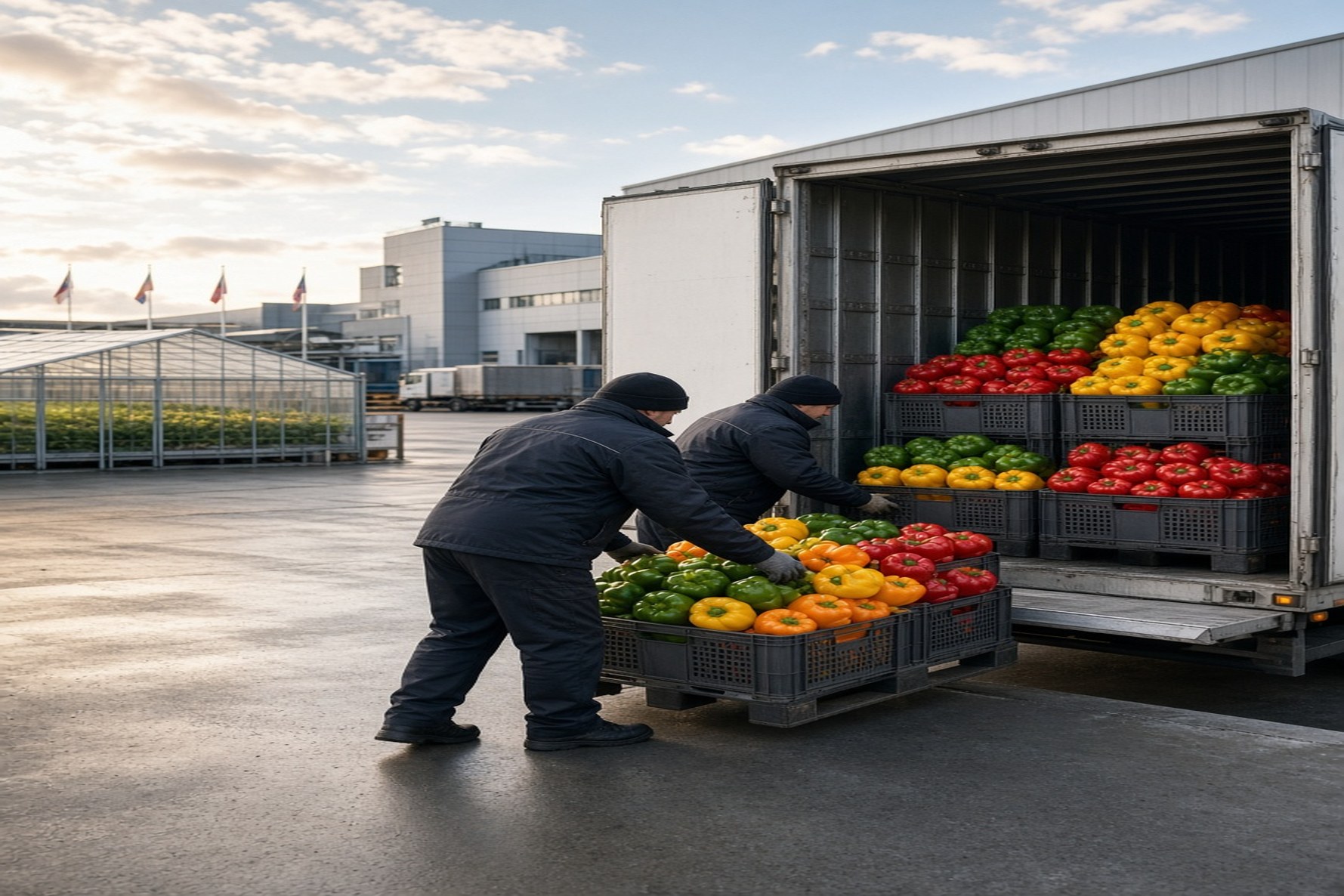
Cluster and vine tomatoes, coloured peppers, cucumbers, eggplant, leafy salads and potato/onion from Ardabil and East Azerbaijan stay in demand in H2.
Fruit
Hand-packed apples, Talesh kiwi, Thomson oranges, pomegranate and seasonal melon via short haul to Astara.
Dairy — 82% butter
Pasteurised 82% butter in 25 kg industrial cartons for bakeries and repack; plus UHT milk, brined feta and ayran.
Biscuits and bakery
Tabriz lines: biscuits, wafers, pasta competing with Turkish and Russian shelf offers.
Tomato paste and canned
400–1000 g cans and 36–38 Brix aseptic drums for Baku sauce plants; beans and pickles.
Dates and nuts
Mazafati, Kabkab, raisins, open-shell pistachios and barberry; Ramadan peaks at borders.
Demand is seasonal: fresh vegetables rose in 2024–2025 while some lines such as fresh fruit or butter softened. Each SKU needs its own trade-data review.
| Channel | Best fit | Note |
|---|---|---|
| Meyveli | Fresh veg & fruit | Daily wholesale |
| Sederak / Binə | Dates, biscuits, canned | High cash turnover |
| Araz | Paste, pasta, ayran | Fast-moving SKUs |
| Bravo | Butter, cheese, chocolate | Strict labels |
3. Technical specs buyers expect
Fixing parameters before proforma prevents border disputes.
| Product | Parameter | Limit | Commercial priority |
|---|---|---|---|
| Industrial butter | Milk fat | Min. 82% | Bakery formulation |
| Industrial butter | Moisture | Max. 16% | Frozen stability |
| Canned paste | Brix | 27–29% | Retail |
| Aseptic paste | Brix | 36–38% | Baku sauce plants |
| Greenhouse pepper | Caliper | 70–90 mm | Premium markets |
| Greenhouse tomato | Firmness | >6 kg/cm² | Less bruising |
| Export apple | Unit weight | 160–220 g | 2–3 row cartons |
| Mazafati dates | Moisture | 18–22% | Sugar bloom control |
| Pistachios | Open shell | >95% | Snack packs |
| Wafer | Moisture | <3.5% | Cream crispness |
4. HS codes, duty and VAT
18% VAT on CIF plus duty; customs processing fees roughly 15–30 AZN by value.
| HS | Product | Duty | VAT |
|---|---|---|---|
| 040510 | Butter | 15% | 18% |
| 040690 | Cheese | 15% | 18% |
| 040120 | Milk/cream | 15% | 18% |
| 070200 | Tomatoes | 15% | 18% |
| 070960 | Peppers | 15% | 18% |
| 070700 | Cucumbers | 15% | 18% |
| 070190 | Potatoes | 15% | 18% |
| 080810 | Apples | 15% | 18% |
| 081050 | Kiwi | 15% | 18% |
| 080410 | Dates | 15% | 18% |
| 080620 | Raisins | 15% | 18% |
| 080251 | Pistachios | 5–15% | 18% |
| 200290 | Tomato prep. | 15% | 18% |
| 190531 | Biscuits | 15% | 18% |
| 190532 | Wafers | 15% | 18% |
| 190219 | Pasta | 15% | 18% |
| 180690 | Chocolate | 15% | 18% |
5. AQTA framework and four-step clearance
Law 523-VIQ from January 2023 centralised sanitary powers in AQTA.
- Step 1: AQTİS pre-notification with health cert, proforma, plant ID and CMR — before Astara/Bilasuvar
- Step 2: AQTA registration/audit of high-risk plants (HACCP/ISO 22000)
- Step 3: Documentary, identity and temperature checks at customs
- Step 4: Sampling and issue of import food safety certificate
Cabinet decision 442 (December 2023) made four stages mandatory. Air freight needs at least 12 hours’ pre-notification before departure from the origin airport.
- Documentary control: plant ID, CMR, origin, phytosanitary/veterinary certificates
- Identity control: seal numbers and weight match to invoice
- Physical control: core temperature and visible spoilage
6. MRL, aflatoxin and microbiology
MRL limits on imidacloprid, malathion and potato nitrate; total aflatoxin up to 10 ppb in pistachios; Salmonella absent in 25 g; data loggers expected on reefer clearance.
- Aflatoxin B1 ≤5 ppb; milk/butter ≤0.05 ppb
- Listeria absent/25g in pasteurised dairy
- Pb, Cd, As, Hg per regional limits
Lab failure can mean return or destruction in front of authorities. Growers must respect pesticide pre-harvest intervals.
- Imidacloprid on pepper/tomato: max 0.5 ppm
- Diazinon/malathion: 0.01–0.02 ppm
- Potato nitrate: max 250 mg/kg
- Total aflatoxin pistachios: 10 ppb (direct food)
7. Azerbaijani labelling and packaging
Latin Azerbaijani labels: name, producer, Baku importer, dates, nutrition table, ingredients/allergens (14 groups mandatory from 2027).
- Shelf life: modern retail often requires ≥70% remaining life at delivery
- 5-ply cartons, ISPM 15 pallets, cross strapping
- Məhsulun adı — descriptive product name and grade
- İstehsalçı müəssisə — Iranian producer address
- İdxalçı şirkət — Baku importer details
- Production/expiry — DD/MM/YYYY
- Qida dəyəri — nutrition per 100 g
- Tərkibi — E-numbers and highlighted allergens
- Saxlama şəraiti — storage temperature
- Xalis çəki — net weight
- No unapproved “medicinal” claims
8. Iran vs Turkey and Russia
| Category | Iran | Turkey | Russia |
|---|---|---|---|
| Fresh veg | Iran dominant | Turkey seasonal | Limited winter |
| 82% butter | Top-3 supplier | EU brands | NZ/Belarus |
| Tomato paste | Iran >80% value | Turkey | Georgia/RU |
| Biscuits | Price leader | Strong brands | Shelf share |
9. Distribution: Meyveli, Sederak and modern retail
Meyveli (Lökbatan): wholesale produce hub — most Iranian veg is consolidated here first. Sederak & Binə: nuts, confectionery, canned. Araz: volume/value; Bravo: strict labelling; formal Baku distributors needed for chains.
Traditional wholesalers around Baku redistribute to Ganja, Sumgayit, Lankaran and Sheki. Araz and Bravo entry needs a licensed Baku distributor with tax ID and last-mile fleet. Iranco accepts RFQs on a single spec sheet to compare Iranian suppliers fairly.
10. Astara, Bilasuvar and cold chain
| Border | Distance | Typical loads |
|---|---|---|
| Astara | 310 km Baku | Pepper, tomato, kiwi, citrus |
| Bilasuvar | 210 km Baku | Potato, onion, Tabriz biscuits |
Butter −18°C; cheese 2–4°C; pepper 8–10°C; tomato 10–12°C; loggers at both ends of trailer.
Astara queues peak Nov–Jan; Bilasuvar is often smoother for Moghan potatoes and Tabriz biscuits. The Rasht–Astara rail project will add long-term capacity.
11. Payment settlement and pricing
Landed cost includes ~15% duty, 18% VAT and AQTA lab fees — roughly 35–36% on top of invoice value in Baku warehouse. Settlement: brokers, cash at Meyveli, USDT; AZN relatively stable.
| Price driver | Effect |
|---|---|
| Season & grade | Farm/factory base |
| 5-ply pack & pallet | +5–10% vs domestic |
| 15% duty + 18% VAT | ~35–36% landed in Baku |
| Reefer freight | Border demurrage risk |
| AQTA lab fees | Sensitive lines |
| Incoterms | FCA border or DAP Meyveli |
10-point importer checklist
- Proforma with Incoterms (border or Meyveli Baku)
- AQTA listing for dairy/meat/canned plants
- Elektron Bildiriş in AQTİS before moving to border
- Phytosanitary/veterinary match to weight and HS
- COA for MRL and mycotoxins
- Azerbaijani (Latin) label with nutrition and dates
- Certificate of origin from Iran Chamber of Commerce
- Working reefer unit and calibrated data loggers
- 5-ply cartons, ISPM 15 pallets and strapping
- Fix settlement channel (broker/cash/USDT) before loading
What information is needed for an accurate price quote?
- Product and process description (e.g. hydroponic pepper or 36–38 Brix paste)
- Grade: Brix, butter fat, fruit calibre, pistachio count
- Pack: can, aseptic bag, 5-ply carton, vacuum
- Net weight, units per case and lot size
- Delivery: EXW, FCA Astara/Bilasuvar or DAP Meyveli
- Custom AZ label and extra lab tests
Supply path — Iranian food for the Azerbaijani market
Iranco records purchase requests with grade, packaging, lab scope and reefer planning, supporting AQTA alignment and pre-loading document checks.
Winning in Baku is more than a cheap quote. Calibre drift, Azerbaijani labels, AQTİS data or health certificates can stop a load at the border. Iranco links Azerbaijani buyers to tier-one Iranian greenhouses and plants.
Summary
Azerbaijan remains an accessible, high-return market for Iranian food; Astara and Bilasuvar keep land logistics competitive. Law 523-VIQ and AQTA tighten quality, MRL and labelling rules. Exporters who align with Meyveli and modern chains such as Araz and Bravo while controlling cold chain and documents build durable trade.
Four success pillars: real SKU demand, written specs, full AQTA/AQTİS compliance and logistics matched to the product. Geography only becomes durable sales when paired with repeatable quality, correct documents and predictable delivery.
Frequently asked questions
What is AQTA’s main border requirement?
Digital pre-notification in AQTİS before arrival, AQTA listing of high-risk plants for sensitive lines, and the import food safety certificate after inspection and lab sampling.
Which lines see strongest demand in Baku?
Bell peppers, greenhouse tomatoes, kiwi, potatoes, 82% butter, UHT milk, tomato paste, biscuits, wafers and Mazafati dates.
Which language is mandatory on labels?
Azerbaijani Turkish in Latin script on pack or waterproof sticker: product name, ingredients, producer and importer, dates, nutrition table and net weight.
What are duty and VAT?
Most agri-food lines face 15% import duty; 18% VAT on CIF plus duty.
Transit time to Meyveli Baku?
Reefer trucks from northwest Iran typically need 24–48 hours to clearance and unloading at Meyveli logistics centre.
What is needed for an accurate quote?
Product type, grade (Brix, fat, calibre), packaging, net weight, volume, Incoterms and label rules — via an Iranco request.
How is payment usually settled?
With limited SWIFT linkage: licensed brokers in Baku and Tehran, cash settlement at Meyveli, and in some deals USDT against formal invoices.
How to source to Azerbaijani rules?
Submit detailed specs on Iranco; quality checks, AQTA alignment and reefer logistics from approved plants are coordinated.
For Azerbaijan food export advice and purchase requests from Iranian suppliers
Contact Irancoinfo@iranco.com · WhatsApp: +98 913 104 4182 · Telegram: @irancofood
Featured Products








Related Articles



