 Iranco Magazine Team
From eggs, dairy and milk powder to tomato paste and fresh produce — Dogharoon, Mahiroud and Milak crossings, tariffs, licences, packaging and quality control
Export Guide · Afghanistan · Food · Land Routes
Iran Food Export to Afghanistan: High-Demand Products & Trade Routes
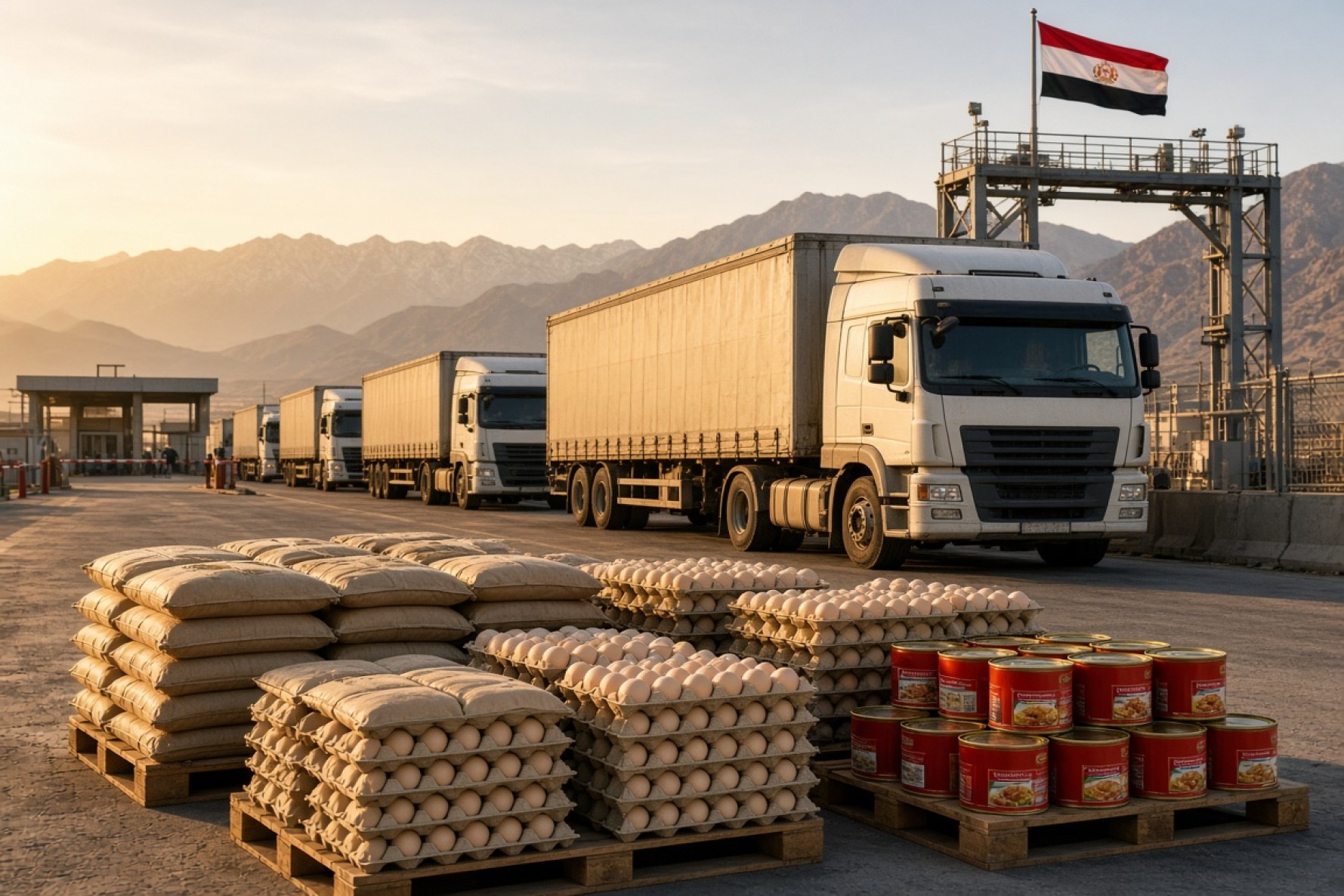
From eggs, dairy and milk powder to tomato paste and fresh produce — Dogharoon, Mahiroud and Milak crossings, tariffs, licences, packaging and quality control for exporters.
Afghanistan is one of the most accessible land markets for Iranian food industry, but success is not geography alone. Product choice, tariffs, remaining shelf life, border selection and order specs turn one-off sales into repeat trade — or end deals at the border.
Iran–Afghanistan food trade differs from many export markets: most movement is overland, Afghan buyers know Iranian brands and packs, and a large share of supply relies on imported processed foods and industrial inputs.
In 2024 Afghanistan imported about USD 10.8 billion in total goods and roughly USD 2.2 billion in food; food imports grew 28% and Iran supplied about 30% of all imports by value.
Protective duties on confectionery, biscuits, cakes and some dairy lines, plus purchasing-power gaps between Herat, Kabul and Kandahar, complicate SKU and pack-size decisions.
Iran’s practical edge is a long shared border, three official road corridors, direct access to Herat, smaller feasible shipment sizes and supply for both retail and factories. The real question is which product stays competitive after duty, haulage and distributor margin.
1. Afghanistan’s place in Iran’s food trade
Afghanistan is a large regional import market with a structure unlike the UAE or Europe: daily staples, inputs, value-priced processed foods and items that move through wholesale and traditional retail dominate.
2024 reports put Iran–Afghanistan trade above USD 3 billion, with Iran as the dominant exporter. Listed food lines include eggs, potatoes, tomatoes, apple, tomato paste and milk powder alongside industrial goods.
- Fresh agricultural products
- Protein and dairy lines
- Processed packaged foods
- Industrial food inputs
Why geography matters for west Afghanistan
For Herat and western buyers, overland supply from Iran can be far simpler than sea-based chains with containers and transshipment — especially for lower value-per-tonne goods where extra logistics erase margin.
Higher-value light goods such as saffron or premium nuts depend more on brand, quality and pack than on freight alone.
Actual vs potential demand
Production in Iran plus imports into Afghanistan does not automatically mean export opportunity. Exporters should answer four questions before committing volume.
- Is a similar product made domestically in Afghanistan?
- What is the import duty on the exact HS code?
- How does landed cost compare with Pakistan, Central Asia or local production?
- Will Afghan distribution accept the proposed pack size and outer cartons?
2. Which Iranian foods have commercial demand?
Fresh produce, eggs, milk powder, selected dairy, tomato paste and a range of processed lines matter — but competition differs by group. 2024 export lists confirm eggs, potato, tomato, apple, paste and milk powder among leading Iranian lines.
| Product group | Notable examples | Main buying factor | Top commercial risk |
|---|---|---|---|
| Fresh produce | Apple, potato, tomato, greens | Freshness, price, season | Quality loss, waste |
| Protein | Eggs | Regular supply, price | Breakage, spoilage, hygiene |
| Dairy & powder | Milk powder, selected lines | Shelf life, use case | Tariff and QC |
| Tomato | Tomato paste | Household & food service | Brix, net weight, pack |
| Bakery / flour | Pasta, biscuits, cake | Price, distribution | Protective tariffs |
| Confectionery | Chocolate, sweets | Retail | Tariff and price sensitivity |
| Food inputs | Powders, concentrates | Industrial use | Specs and COA |
Fresh produce
Potato, tomato, apple and seasonal fruit gain when Afghan domestic supply gaps appear. Farm-gate price alone is misleading: sort, pack, road bruising and sellable share at wholesale define value.
A cheap apple load with heavy bruising is not cheap for the importer if sell-through collapses.
Eggs
Eggs rank among notable exports. Shell integrity, weight uniformity, production date, tray type and master-carton strength matter. Supply swings with domestic production — successful deals usually use short contracts, price refresh at loading and tight haul coordination.
Milk powder and dairy
Distinguish household powder, infant grade, industrial skim and other dairy powders — composition, fat, pack and approvals differ. Afghanistan raised condensed-milk duty from 10% to 30% in a 1403 tariff decision.
Tomato paste
Iran has production scale and raw-material access; paste appears on export lists. “Tomato paste” is not enough for pricing — buyers need Brix, pack type, net weight, closure, storage and private-label requirements.
Biscuits, cake, chocolate and flour-based lines
Demand does not equal easy competition. Chocolate, biscuits and cake/cookies were set to 30% duty in 1403; some noodle lines rose to 20%. Calculate landed cost after duty before long negotiations or free samples.
3. Market structure — who is the real buyer?
Afghanistan is not one market: Herat, Kabul and smaller cities behave differently.
Herat — natural gateway for western Iran
Herat links Islam Qala to Dogharoon; producers in Razavi Khorasan, South Khorasan or central Iran often have a haulage logic for Herat. Buyers may redistribute beyond the city.
Kabul — larger but costlier inland distribution
Kabul concentrates wholesale, modern retail and import companies. Post-border distance matters; quotes must state border delivery vs inland city delivery — on low-margin goods the gap decides the deal.
Kandahar and the south
Nimroz and western corridors matter for some flows; southern pricing must reflect Pakistani and other supply routes.
Three buyer types
Licensed importer/wholesaler: landed cost, stock turn, brand trust and repeat orders.
Food distributor: retail-ready packs — units per carton, weight, carton strength and consumer price.
Industrial user: technical specs, batch stability, COA and unit cost beat shelf appeal. Do not send the same offer prepared for a supermarket chain to a food factory.
4. Three main land corridors (+ Khaf–Herat rail)
Official major crossings: Islam Qala (Herat), Zaranj (Nimroz) and Abu Nasr Farahi (Farah), matched on the Iranian side to Dogharoon, Milak and Mahiroud.
| Route | Iran side | Afghan entry | Commercial use |
|---|---|---|---|
| Dogharoon – Islam Qala | Razavi Khorasan | Herat | Main Herat / west corridor |
| Mahiroud – Abu Nasr Farahi | South Khorasan | Farah | West and south-west |
| Milak – Zaranj | Sistan & Baluchestan | Nimroz | South-west, Zaranj–Delaram |
| Khaf – Herat (rail) | Khaf | Herat | Bulky shelf-stable loads |
Dogharoon – Islam Qala
Core artery for Herat-bound food: dry groceries, biscuits, cans, paste, beverages, shelf-stable dairy and inputs. Check cold-chain feasibility and expected border dwell before loading perishables.
Mahiroud – Abu Nasr Farahi
Connects South Khorasan to Farah; customs emphasise quality control and expanded warehousing (2026 reports: four new sheds, nominal 8,000 t each) — relevant for dry shelf-stable lines.
Milak – Zaranj
Third official gate into Nimroz and south-west road networks. Choose Milak vs Mahiroud on final destination, cargo type, fleet availability and clearance capacity — not factory distance alone.
Khaf – Herat railway
Growing rail option; 2025 reports cited heavy daily tonnage though much was non-food. Not default for all food groups today, but strategic for bulky shelf-stable inputs over time.
5. Route choice by product type
Cheapest freight is not always cheapest delivered quality. Real haul cost must include spoilage, breakage and value loss.
| Product group | Logistics priority | Main risk | Key note |
|---|---|---|---|
| Fresh fruit & veg | Speed, ventilation | Spoilage, crushing | Final destination matters |
| Eggs | Stable movement | Breakage | Stacking and load restraint |
| Chilled dairy | Cold chain | Temperature swings | Contractual temp records |
| Milk powder | Moisture barrier | Caking, torn bags | Clean dry truck |
| Paste & cans | Pack protection | Dents | Pallets and cartons |
| Biscuits | Pressure & heat | Breakage | Avoid over-stacking |
| Chocolate | Temperature | Fat bloom, melt | Season of haul |
| Edible oil | Leak control | Quality loss | Seals and master cartons |
Border delivery vs city delivery
Identical ex-works prices can diverge sharply if one quote is Islam Qala and another is Kabul — inland Afghan haul, reload risk and time must be modelled.
State the delivery point in writing; avoid vague “price for Afghanistan”.
Transshipment and liability
Plate rules, convoy practices and reload policies affect eggs, fresh fruit and glass. Before booking haulage confirm:
- How many unload/reload events occur
- Who bears damage at each leg
- Where seals break
- Where quality inspection happens
- Who pays truck detention
6. Customs tariffs — similar products, different codes
Quoting without the correct HS code is a top export risk. Afghan chapters 17–23 span wide duty bands; two “sweets” SKUs can classify differently by recipe and form.
| Product | Previous duty | Duty set in 1403 |
|---|---|---|
| Chocolate | 20% | 30% |
| Biscuits | 16% | 30% |
| Cake & cookies | 20% | 30% |
| Condensed milk | 10% | 30% |
| Vermicelli / soup noodles | 10% | 20% |
| Pasta (other decision) | 20% | 25% |
| Potato chips (other) | 30% | 50% |
1403 committee examples (verify current code before invoicing):
- Chocolate: 20% → 30%
- Biscuits: 16% → 30%
- Cake/cookies: 20% → 30%
- Condensed milk: 10% → 30%
- Vermicelli: 10% → 20%
Other decisions raised pasta and potato-chip duties. Match description, ingredients and national subheading with the importer’s broker before final proforma.
- Chapter 04: dairy, eggs, honey
- Chapter 07–08: vegetables, fruit, nuts
- Chapter 17: sugar and confectionery
- Chapter 19–21: bakery, prepared foods
- Chapter 20: processed fruit/vegetable
- Chapter 22: beverages — exact code required
7. Licences and entry requirements
Carriers must not move food for importers lacking valid trade licence and food-import permission (2026 public-health rules). Pre-registration applies where ministries require product filing before entry.
- Valid commercial licence
- Food-import permission for the SKU group
- Product registration completed if mandatory
- Health ministry paperwork ready
- HS code checked with broker
Core shipment documents
- Commercial invoice
- Packing list
- Transport document
- Certificate of origin if required
- Health/quarantine papers when applicable
- Batch-specific certificate of analysis
- Production/expiry and batch IDs aligned with labels
If in-country lab testing is impossible, Afghan rules expect factory-issued analysis tied to the shipment — not an old COA from another SKU.
Expired or substandard food is actively destroyed at borders (2025 examples: 17.5 t at Islam Qala, 36 t at Abu Nasr Farahi). Afghanistan is not a clearance market for near-expiry stock.
8. Labelling and remaining shelf life
For consumer packs, label artwork must be approved before export production. Afghan food-labelling guidance expects product name, ingredients, net weight, manufacturer, country of origin, batch, dates, storage and use — with Dari/Pashto considerations in current rules.
- Product name and net weight
- Manufacturer and country of origin
- Ingredients and allergens
- Production and expiry dates
- Batch/lot number
- Storage and usage
- Languages accepted by importer and authority
- Importer details if required
Contracts should state minimum remaining shelf life at entry; some Afghan procurement references two-thirds of stated life at import.
Legally valid at factory exit can still be unsellable if distributors lack time after clearance and inland haul.
9. Quality control — measurable order specs
“Export quality” alone is weak contract language. Define measurable limits for sampling and delivery.
| Group | Contract parameters | Typical risk |
|---|---|---|
| Fresh fruit | Size, ripeness, defects | Sample vs shipment gap |
| Potato | Size, sprouting, damage | Size mixing |
| Eggs | Weight grade, shell, date | Breakage |
| Milk powder | Fat, moisture, micro | Batch drift |
| Paste | Brix, pH, net weight | Dilute or underweight |
| Oil | Type, peroxide, pack | Leaks |
| Biscuits | Moisture, breakage | Crushing |
| Nuts & dried fruit | Moisture, size, pests | Contamination |
Samples before bulk
- Batch number and production date
- Technical specification sheet
- Net weight and master-carton photo
- Units per carton
- COA when applicable
- Storage conditions
State that commercial production will match approved sample specs.
Pre-loading checks: random cartons, net weight, dates, batch, pallet condition and label match — many disputes are packing errors, not fraud.
10. Packaging for Afghan road haulage
Export packs must protect product, survive rough road legs and fit wholesale/retail channels.
Consumer unit
Smaller packs lower cash outlay per purchase — important in price-sensitive markets — but micro-packs raise wrap and carton cost per kilo; find balance.
Master cartons
Weak outers crush biscuits, eggs and glass in stacked trucks; road-test stacking before bulk export.
Fresh produce cartons
Ventilation, breathe and compression limits matter; overfilled cartons bruise bottom layers; nominal carton weight must match buyer norms.
Industrial bulk packs
- Strength and moisture barrier
- Batch traceability
- Easy discharge
- Uniform net weight
- Warehouse stackability
11. Competition with other suppliers
Iran is not the only food source: UAE, Pakistan and China lead other origins; Pakistan, Kazakhstan, Uzbekistan and Russia compete by category.
| Origin | Advantage | Limitation |
|---|---|---|
| Iran | Shared border, variety, west access | Tariffs on some processed lines |
| Pakistan | Trade networks south/east | Periodic border disruption |
| Central Asia | Grains and staples | Distance to some hubs |
| Russia | Grains and base goods | Better for large lots |
| China | Consumer packaged goods | Less suited to perishables |
Iran’s edge is rarely lowest ex-works price alone — it is product price + freight + lead time + order size + quality + repeatability.
A slightly higher per-kilo quote can win if the buyer restocks faster with smaller lots and less cash tied up in inventory.
12. How export pricing is built
There is no single “Afghan export price” without SKU and delivery terms.
- Product type, grade and season
- Order volume and pack weight
- Carton quality and branding
- Required tests and COA
- Factory location and border crossing
- Final Afghan city and truck type
- Cold chain need
- Payment terms and Afghan clearance costs
Compare tomato paste offers on net weight, Brix and damage rate — not headline carton price alone.
Specify border vs inland delivery, clearance responsibility and haul splits explicitly.
Importer checklist before placing an order (20 items)
- Define exact product name and processing form
- Verify HS code with Afghan customs broker
- Confirm pre-import registration requirement
- Validate importer licence and food-import permission
- Write measurable technical specs in the RFQ
- Obtain a sample matching intended quality
- Review COA for sample or production batch
- Fix net and gross weights
- Confirm units per master carton
- Approve label artwork and languages before print
- Contract minimum remaining shelf life at entry
- Define acceptance rules for damage, leakage or breakage
- Choose border crossing
- Name final delivery city inside Afghanistan
- Assign detention, transshipment and damage liability
- Record cold-chain requirements for chilled lines
- Check supplier’s realistic monthly capacity
- Require batch traceability on documents
- Align invoice, packing list and labels before dispatch
- Document payment terms and document release
RFQ fields for accurate pricing
Professional food RFQs must let two suppliers quote the same specification.
- Exact product and grade
- Technical parameters (Brix, fat, etc.)
- Pack weight and type
- Order volume and frequency
- Factory or private label
- Label language
- Required certificates
- Minimum shelf life
- Destination city and preferred border
- Transport mode and Incoterms/delivery point
“Milk powder for Afghanistan” is insufficient — state household vs industrial grade, composition, bag size, volume and delivery point. Buyers can submit the same detail via Iranco procurement requests.
Iranian food supply for Afghanistan via Iranco
Landed cost differs by SKU quality, carton, shelf life, delivery point and documents — not factory price alone.
Iranco accepts structured B2B purchase requests with product specs, volume, pack type and Afghan destination so Iranian supply options can be screened on like-for-like terms.
Summary
Afghan food imports near USD 2.2 billion (2024) and Iran was Afghanistan’s largest overall import source — land trade is structurally important, not accidental proximity.
Fresh produce, eggs, milk powder, tomato paste and selected processed lines are active; protective duties on biscuits, chocolate and some dairy show deliberate support for local processing.
Dogharoon–Islam Qala, Mahiroud–Abu Nasr Farahi and Milak–Zaranj are the main road arteries; most failures cluster around wrong HS codes, incomplete importer licences, short shelf life, vague QC and unclear delivery points — fix those before loading.
Frequently asked questions
Which Iranian foods see the strongest demand?
Trade data highlight eggs, potato, tomato, apple, tomato paste and milk powder among major Iranian exports; packaged foods can sell but high duties limit some lines.
Which border matters most for food exports?
Dogharoon–Islam Qala is the main Herat corridor; Mahiroud–Abu Nasr Farahi and Milak–Zaranj matter for Farah and Nimroz destinations — choose by final city and cargo type.
Do foods need import permission before entry?
Yes where Afghan law requires pre-registration or ministry approval; importers must hold valid trade and food-import licences.
Can near-expiry stock be exported to Afghanistan?
Commercially very risky — border destruction of expired food is documented; distributors need adequate remaining life after clearance.
What are Afghan food tariff levels?
No single rate — duty follows exact HS code; 1403 decisions raised chocolate, biscuits, cake and condensed milk to 30% among examples.
What specs matter for tomato paste exports?
Brix, pH, net weight, pack type, units per carton, storage, shelf life and label rules — not the phrase “export paste” alone.
When are samples essential?
When taste, colour, texture, size or concentration varies materially — tie samples to batch specs and COA.
How to source from Iranian producers?
Fix grade, volume, pack, destination and documents; compare quotes; Iranco purchase requests can carry the same structured fields.
Why do two Iranian suppliers quote different prices?
Raw material, formula, net weight, carton, tests, brand, volume and factory location all move price — compare on identical specs.
Featured Products


Related Articles



