 Iranco Magazine Team
Specialist guide to Iranian milk, yogurt, doogh, cheese, butter, cream and milk powder — from technical differences and quality control to export markets, packaging and bulk buying criteria
Export Guide · Dairy · Product Types · Destination Markets
What Types of Iranian Dairy Products Exist, How Do They Differ, and Which Countries Import Them?
Specialist guide to Iranian milk, yogurt, doogh, cheese, butter, cream and milk powder — from technical differences and quality control to export markets, packaging engineering and bulk procurement criteria.
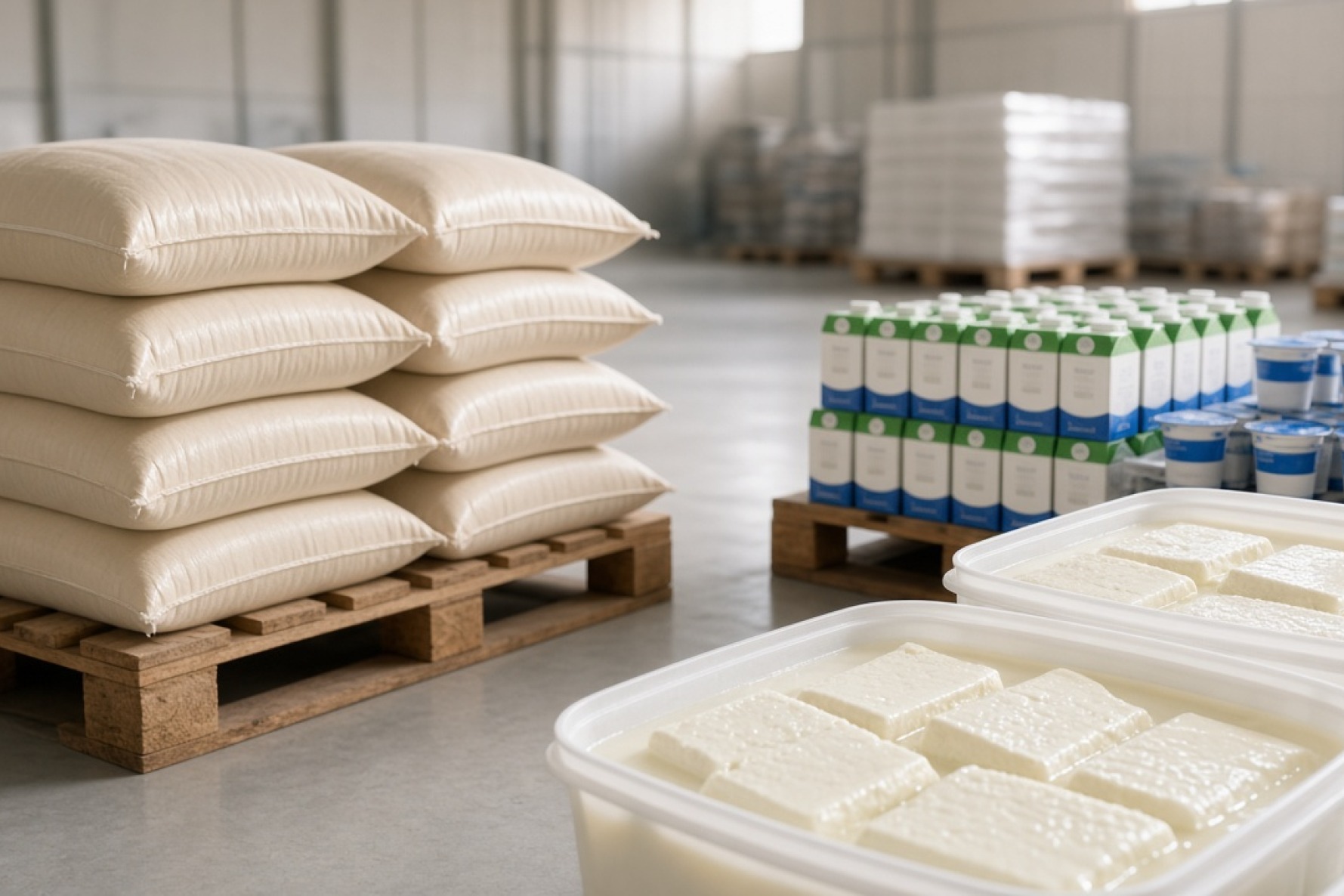
Iranian dairy products are not limited to consumer milk, yogurt and table cheese. A major share of the industry's commercial basket consists of industrial milk powder, fermented products, brined cheeses, butter, cream and ingredients suited to food manufacturing. For a foreign buyer, the main differences lie in fat and solids content, processing method, shelf life, cold-chain requirement, packaging type and end application.
Iran's dairy sector is one of the few food-industry segments with a relatively broad chain spanning raw milk production, industrial livestock farms, processing plants, drying lines, fermentation, cheese production, aseptic packaging and regional export networks. In FY 1405 the Minister of Agriculture put national raw milk production at approximately 13 million tonnes. Livestock census data also rank Isfahan, East Azerbaijan and Khorasan Razavi among the leading milk-producing provinces.
This raw-material base allows the Iranian dairy industry to produce fast-moving consumer goods such as pasteurised milk, yogurt and doogh, while also placing internationally tradable items — UHT milk, industrial milk powder, brined cheese, butter and selected fermented products — in its export basket.
From an importer's perspective, these products do not carry equal commercial value. Industrial milk powder, because of its sharply reduced water content, good shelf life and wide use in food manufacturing, is fundamentally different from chilled yogurt. White brined cheese cannot be compared with pizza cheese or cream cheese on dry matter, fat-in-dry-matter, saltiness or texture. Even two products sold under similar names may differ materially in fat percentage, protein source, heat treatment, packaging and shipping conditions.
Export geography is also concentrated. Iraq, Pakistan and Afghanistan remain the three main regional markets for Iranian dairy, while Russia, Azerbaijan, Kazakhstan, Oman, China and Georgia also appear among current destinations. For a professional buyer, therefore, the key question is not merely "what dairy products does Iran produce?" but which product, with which specifications, best fits the target market and application.
1. Iran's Dairy Industry Position and Export Basket Structure
The latest aggregate figures released by the Iranian Dairy Industries Association, citing customs data, show that in the first ten months of FY 1404 approximately 597,892 tonnes of dairy products were exported worth more than USD 960 million. Reports published in FY 1405 also indicate that industrial milk powder holds a prominent place among export product groups.
Q1 FY 1404 data provide finer detail on export structure. In that quarter Iran exported 171,868 tonnes of dairy products worth about USD 280.7 million. Industrial milk powder at 48,157 tonnes accounted for roughly 28% of export volume. Doogh and kefir followed with 32,108 tonnes, and cheese with 27,792 tonnes, among the leading groups.
This mix carries an important message for foreign buyers: Iranian dairy export is not only retail consumer goods. A large share consists of products that can be sold directly to food factories, packaging companies, wholesale distributors or final-product manufacturers.
Major Raw Milk Production Centres
According to the national livestock census published in FY 1403, Isfahan, East Azerbaijan and Khorasan Razavi recorded the highest cattle milk production in the survey period. Fars is also a major livestock and raw milk hub; FY 1405 provincial data put its annual milk output at more than one million tonnes.
For an importer, plant location does not necessarily equal raw milk origin. Many large factories operate multi-region milk collection networks. Supplier evaluation should therefore focus on milk intake control, input quality systems, formula stability and real production capacity rather than geography alone.
Established Markets vs. Expandable Markets
Iraq, Pakistan and Afghanistan are established, mature markets for Iranian dairy. Russia and Eurasian Economic Union markets also carry commercial weight, but technical, veterinary and product-compliance requirements are more demanding. Oman, the UAE, Kazakhstan, Azerbaijan and Georgia appear in Iran's current export basket for selected products.
As a result, the "right export product" is not the same for every country. A product that is economical on a short overland route to Iraq may require different packaging, shelf life and logistics design for a longer journey.
2. Types of Iranian Dairy Products and Their Main Differences
From a commercial standpoint, Iranian dairy products fall into several main families: liquid milk and cream, fermented products, cheese types, milk fats and dried products. The table below summarises the main differences among commonly traded groups in terms of processing, commercial traits and application.
| Product | Main processing | Commercial trait | Primary application |
|---|---|---|---|
| Pasteurised milk | Pasteurisation heat treatment | Limited shelf life; cold chain required | Direct consumption |
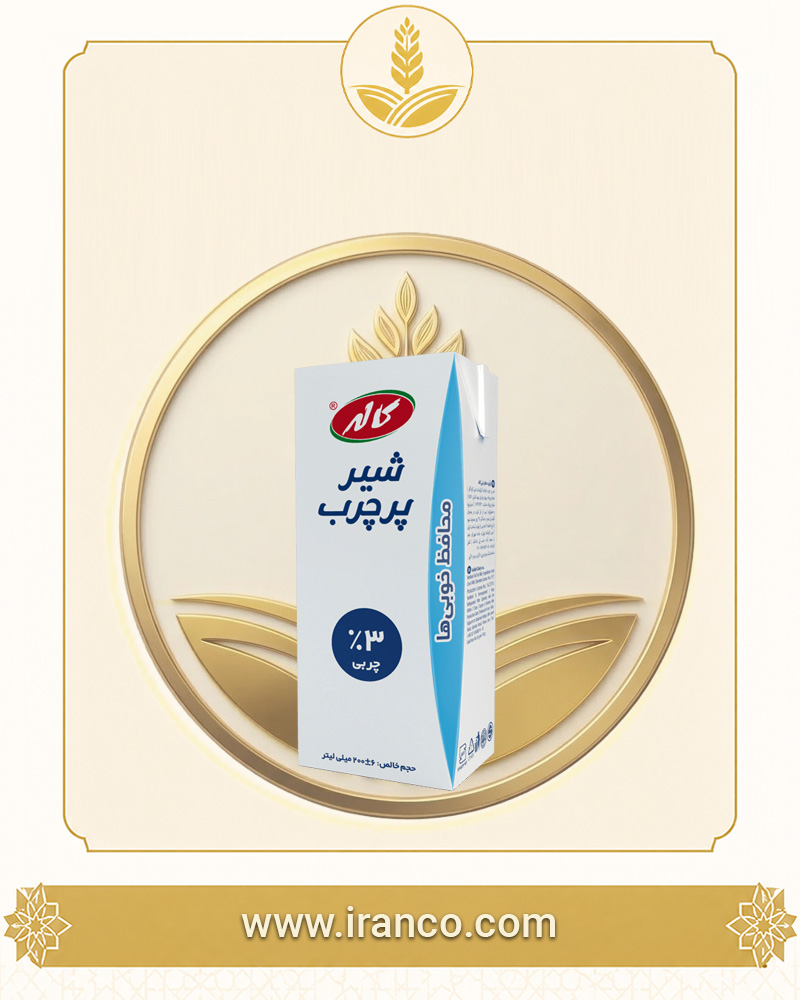
| UHT milk | Ultra-high heat treatment + aseptic pack | Ambient storage before opening per manufacturer conditions | Retail and food service |
| Yogurt | Milk fermentation | Temperature- and gel-structure sensitive | Retail and food service |
| Strained yogurt | Concentration of yogurt solids | Higher protein and dry matter | Retail and restaurant use |
| Doogh | Fermented milk-based beverage | Strong regional market | Direct consumption |
| Kefir | Fermentation with defined microflora | Specialised fermented product | Retail |
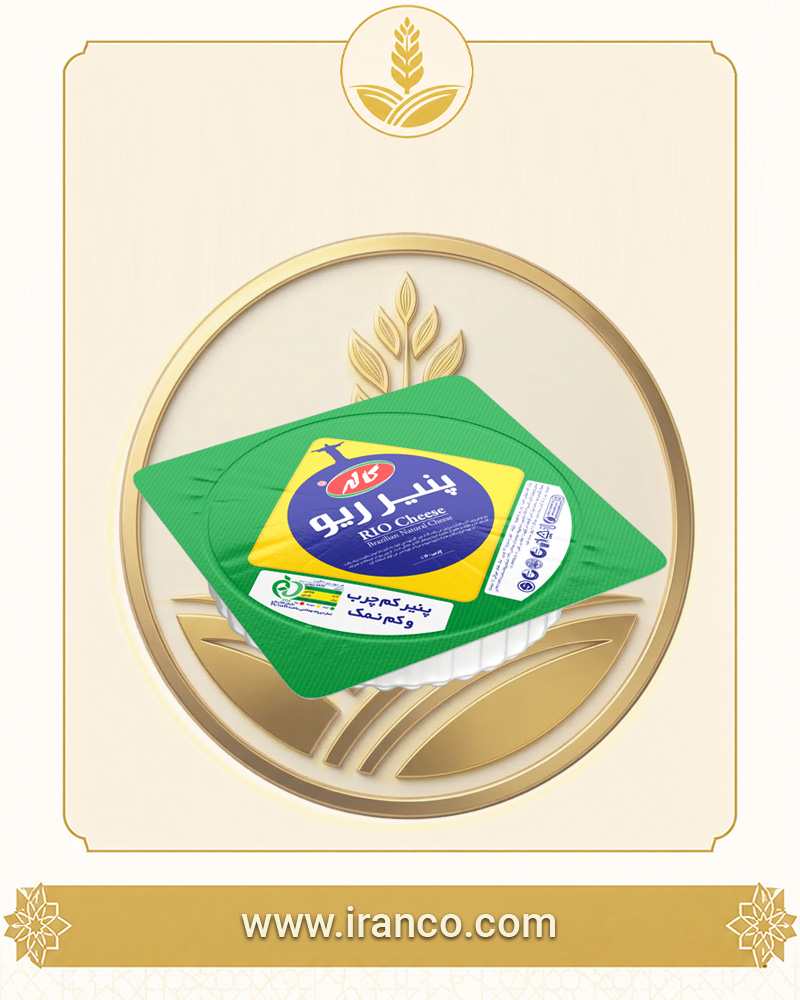
| White brined cheese | Coagulation, draining, brine maturation | Suited to regional markets | Direct consumption and food service |
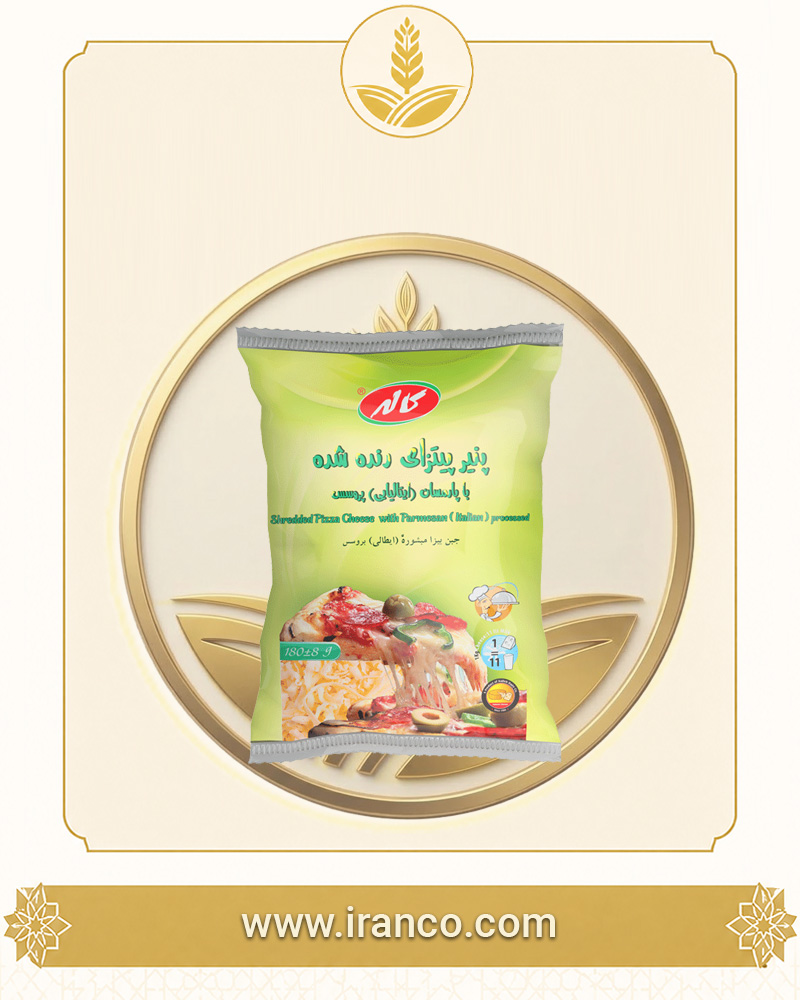
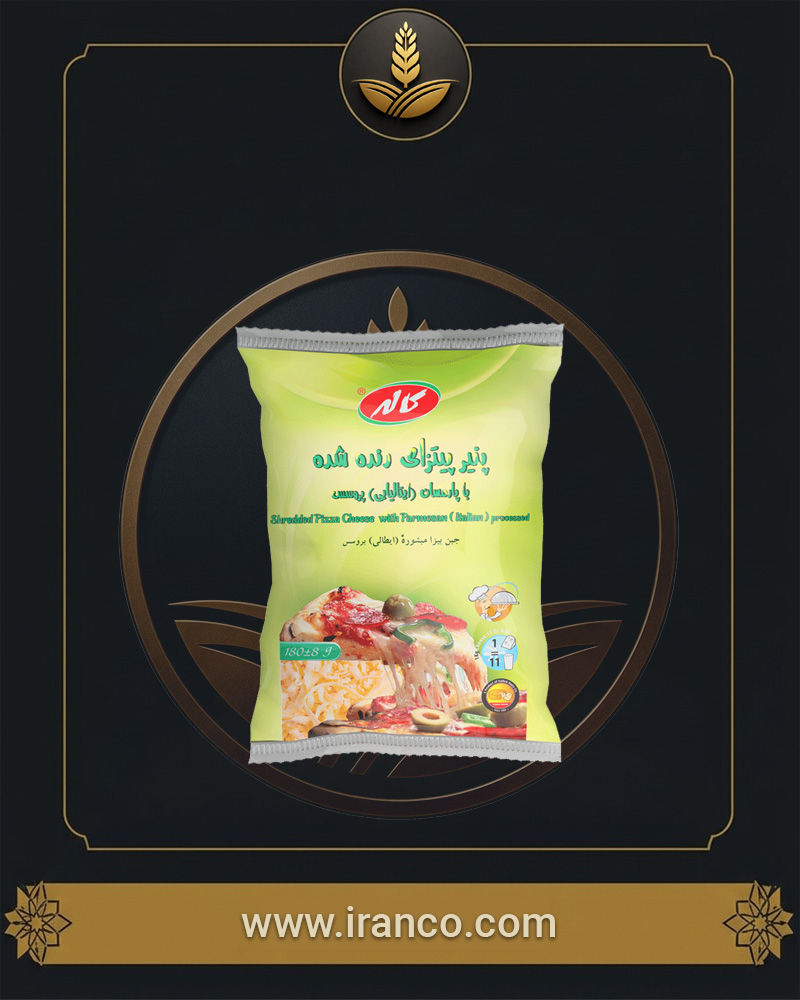
| Pizza cheese | Melt- and stretch-capable cheese | Industrial ingredient | Pizza and ready meals |
| Cream cheese | Soft high-moisture cheese | Higher added value but more sensitive | Breakfast and confectionery |
| Butter | Milk fat concentration | High-fat, high-value product | Direct consumption and food industry |
| Cream | Fat separation and standardisation | Fat percentage is the key purchase parameter | Confectionery and direct consumption |
| Whole milk powder | Water removal with milk fat retained | More economical to ship than liquid milk | Food industry and milk reconstitution |
| Skim milk powder | Drying of low-fat or fat-free milk | High protein relative to fat | Bakery, dairy and food industry |
| Whey powder | Drying of cheese whey | Industrial ingredient | Bakery, beverages and food formulation |
Pasteurised Milk vs. UHT Milk
Pasteurisation and UHT processing are not the same concept. A widely recognised pasteurisation combination for milk is 72°C for at least 15 seconds. By contrast, Codex hygienic codes for dairy products define UHT treatment typically in the range of 135–150°C with holding time adjusted to achieve commercial stability.
The commercial consequence matters. Pasteurised milk is usually a chilled product and long-distance export is more complex. UHT milk in aseptic packaging is better suited to wider distribution and longer export routes because, before the pack is opened and under conditions stated by the manufacturer, it has different cold-chain requirements than fresh pasteurised milk.
Yogurt, Strained Yogurt and Kefir
Under Codex Standard CXS 243-2003, yogurt is produced using a defined mixed starter culture. Minimum milk protein for standard yogurt is 2.7% and minimum titratable acidity expressed as lactic acid is 0.6%. For non-heat-treated fermented product after fermentation, active starter micro-organisms are part of the product definition.
Strained yogurt differs commercially from regular yogurt because removing part of the whey increases dry matter and protein concentration. Codex defines concentrated fermented milk with minimum 5.6% protein; products such as smooth strained yogurt and labneh fall in this group.
Kefir is not simply another name for yogurt. Its culture includes a defined set of lactic acid bacteria and yeasts, and the international standard assigns separate microbiological characteristics to it.
Iranian Doogh
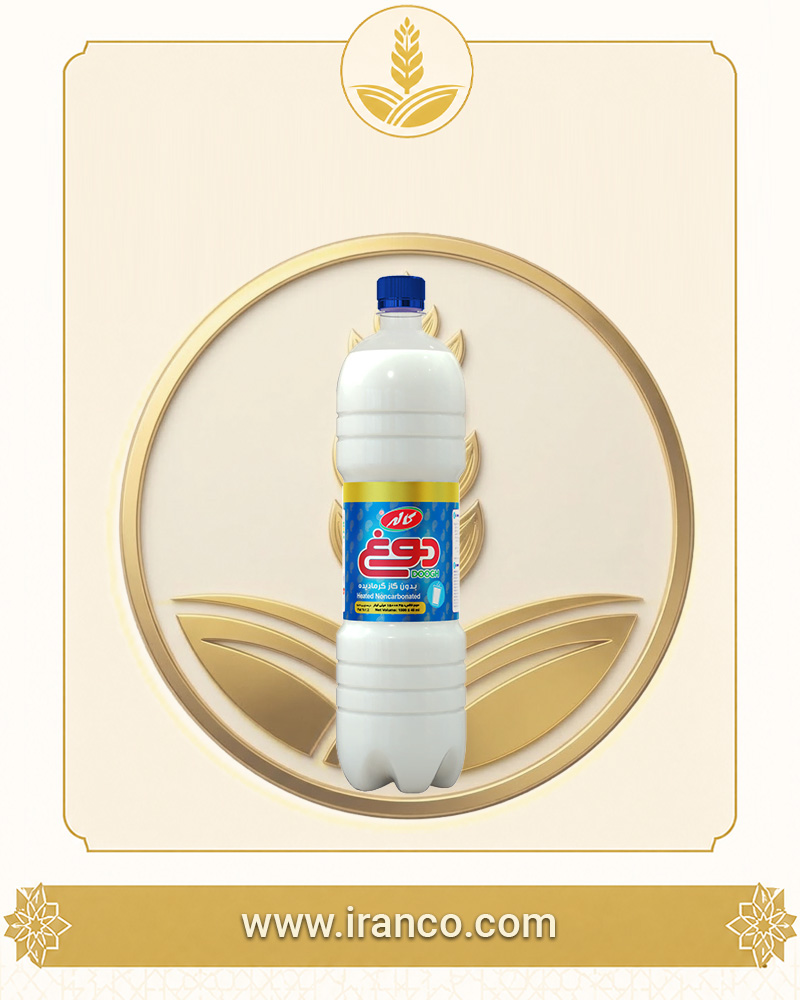
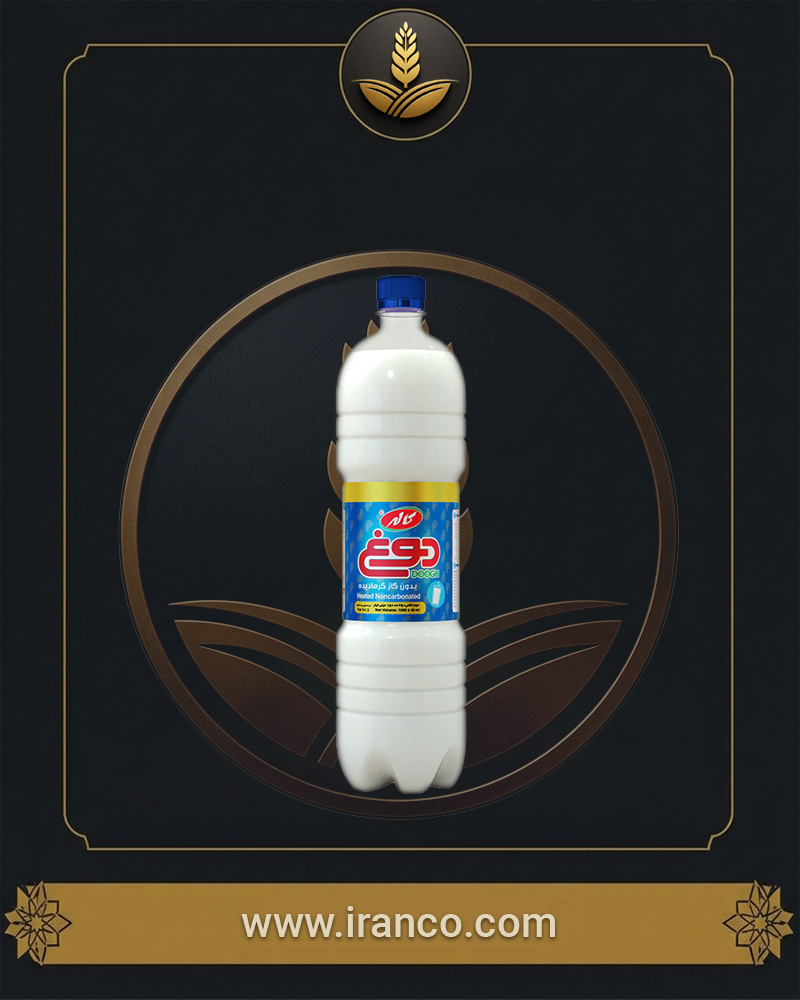
Doogh is one of the signature Iranian dairy products in regional markets. It may be plain, carbonated or still, and may contain permitted ingredients such as salt and aromatic herbs. For bulk buyers the key parameters are dairy solids percentage, salt level, acidity, post-fermentation heat treatment, carbonation, pack type and real shelf life. Doogh produced for domestic consumption may differ from export product in packaging, label language, shelf life and formulation.
White Cheese, Brined Cheese and Industrial Cheese
Iran has broad capacity to produce white breakfast cheese. This group can be made by different technologies and varies widely in moisture, fat, salt, texture and packaging method.
Codex CXS 208-1999 defines brined cheeses as soft to semi-hard products matured and stored in brine. Minimum fat-in-dry-matter for soft and semi-hard brined cheeses is 40%. Minimum dry matter is 40% for the soft group and 52% for semi-hard.
These indices show why comparing two cheese offers on price per kilogram alone is misleading. Higher moisture, higher dry matter or different fat-in-dry-matter are not economically equivalent products.
Whole and Skim Milk Powder
Milk powder has been the most important industrial product in Iran's recent dairy export basket. The difference between whole and skim powder is directly linked to fat content.
Under Codex CXS 207-1999:
- Whole milk powder must contain at least 26% and less than 42% milk fat.
- Semi-fat milk powder contains more than 1.5% and less than 26% fat.
- Skim milk powder contains a maximum of 1.5% fat.
- Maximum moisture for these groups is 5%.
- Minimum milk protein in the fat-free solids fraction is 34%.
This distinction is critical for ice cream plants, chocolate makers, bakeries, recombined dairy lines and beverage manufacturers.
Butter and Milk Fat
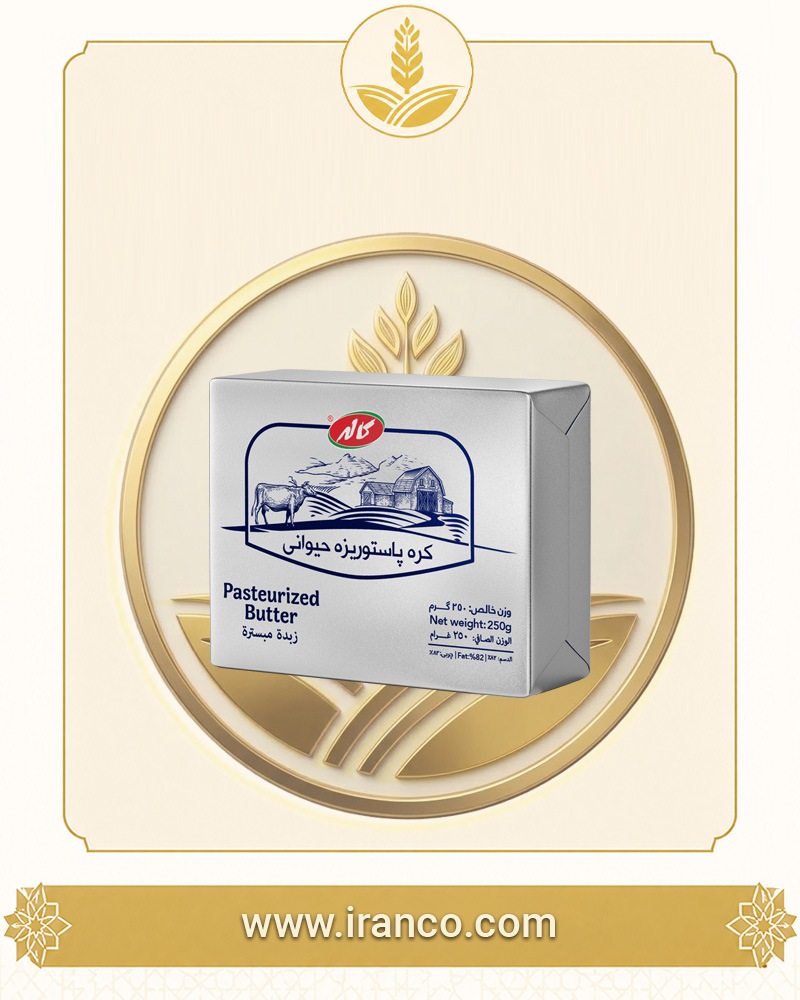
Under CXS 279-1971, standard butter must contain at least 80% milk fat and a maximum of 16% water. In export contracts for butter, fat percentage, salted or unsalted type, colour, flavour, storage conditions, pack type, block weight and end application must all be specified.
3. Technical Specifications and Quality Control Expected by Buyers
A professional importer should not order dairy products by trade name alone. Each product group has measurable parameters that must be agreed before contract.
| Product group | Important parameters | Why they matter |
|---|---|---|
| Liquid milk | Fat, protein, solids, heat treatment, microbiology | Defines quality and product class |
| Yogurt | Fat, protein, pH, acidity, texture, syneresis | Sensory quality and stability |
| Doogh | Dairy solids %, salt, pH, gas, viscosity | Market acceptance and stability |
| Cheese | Moisture, dry matter, FDM, salt, pH | Determines real product value |
| Butter | Fat, moisture, salt, oxidation | Quality and shelf life |
| Milk powder | Moisture, fat, protein, solubility, microbiology | Industrial performance |
| Whey powder | Moisture, protein, ash, lactose, solubility | Determines industrial application |
Why a COA Alone Is Not Enough
A certificate of analysis (COA) is essential for industrial orders, but it must match the sample and contractual specification. A common mistake is receiving a generic test sheet without defining which parameters are acceptance or rejection criteria for the shipment.
For milk powder purchases, moisture, fat, protein, microbiological profile and functional indices relevant to the end use should be specified. For cheese, beyond laboratory tests, texture, sliceability, behaviour in brine and flavour also matter.
Raw Milk Control and Drug Residues
Final product quality starts with raw milk quality. An export plant must operate intake control for microbiological load, milk composition, antibiotics and related safety parameters. Codex hygienic codes also treat incoming milk control, heat treatment, hygiene, packaging and finished-product monitoring as components of the dairy safety system.
Fermented Product Control
For yogurt and kefir, measuring fat alone is insufficient. Culture type, acidity, body, syneresis, microbiological status and, where claimed, counts of specific starter organisms matter. In CXS 243-2003, total starter micro-organisms for relevant products are set at a minimum of 107 colony-forming units per gram.
4. Important Tariff Codes for Dairy Products
Most dairy products fall under Chapter 04 of the Harmonized System. However, formulation and product form determine the final code. Ice cream, contrary to some buyers' assumptions, is not in Chapter 04.
| HS Code | Product group |
|---|---|
| 0401 | Milk and cream, not concentrated and without added sugar |
| 0402 | Milk and cream concentrated or with added sugar; includes many milk powders |
| 0403 | Yogurt, kefir and fermented or acidified milk or cream |
| 0404 | Whey and products consisting of natural milk constituents |
| 0405 | Butter and other fats and oils derived from milk |
| 0406 | Cheese and curd |
| 2105 | Ice cream and other edible ice |
For milk powder, the precise subheading depends on fat content and composition. For example, code 040210 applies to milk and cream in powder or other solid form with fat content not exceeding 1.5%.
A four-digit code on a proforma invoice is therefore not always sufficient. Buyer and seller must confirm the subheading matching the actual product composition and destination tariff before customs declaration.
5. Which Countries Import Iranian Dairy Products?
Iraq, Pakistan and Afghanistan are the three main regional markets for Iranian dairy. Alongside them, Russia, the UAE, Oman, Azerbaijan, Kazakhstan, Georgia and China appear in current industry reports as export destinations.
The table below separates two data categories so statistics from different periods are not mixed.
| Market | Recent commercial evidence | Market trait for Iranian exporters |
|---|---|---|
| Iraq | 93,000 t in Q1 FY 1404 | Largest volume market in that quarter |
| Pakistan | 25,587 t in Q1 FY 1404 | Large regional market for base dairy products |
| UAE | Approx. 8,000 t in Q1 FY 1404 | Import market with diverse distribution channels |
| Russia | Approx. USD 32M in Q1 FY 1404 | Market with stricter technical and veterinary rules |
| Afghanistan | One of three main regional destinations; third by weight in first five months FY 1403 | Overland route advantage and consumer products |
| Oman, Kazakhstan, Azerbaijan, Georgia | Present in current industry destination lists | Smaller but expandable markets for selected products |
Q1 FY 1404 data show Iraq received 93,000 tonnes of Iranian dairy worth about USD 110 million, accounting for 54% of export volume in the period. Pakistan followed with 25,587 tonnes worth about USD 34.8 million. Russia ranked among important destinations by value at approximately USD 32 million.
Iraq Market
Iraq is the largest volume market for Iranian dairy. Short overland distance, extensive trade links and regular truck dispatch are key factors behind this position.
White cheese, doogh, milk and cream, yogurt, milk powder and selected consumer products can all serve this market. However, Iraq is not a single uniform market. A product suited to a modern Baghdad supermarket may differ in pack weight, design and price from bulk product needed by a regional distributor.
Pakistan Market
In spring FY 1404 statistics Pakistan was the second-largest destination by weight for Iranian dairy exports. The significant share of milk powder and base products in Iran's dairy trade makes industrial and wholesale channels important in this country.
In such a market the buyer should focus on physicochemical specifications, supply stability and delivered price more than pack appearance alone.
Afghanistan Market
In the first five months of FY 1403 Afghanistan received about 19,000 tonnes of Iranian dairy, accounting for 7.9% of export weight in that period. In the same period Iraq held 55.2% and Pakistan 19.1%, and exports to neighbouring countries totalled 97% of reported volume.
These figures confirm that geographic proximity remains a foundational factor in the structure of Iran's dairy exports.
Russia and the Eurasian Economic Union
The Russian market differs from Iran's near neighbours in both value scale and quality-control requirements. Dairy products in the Eurasian Economic Union fall under technical food-safety regulations, labelling rules and specific milk and dairy safety requirements. TR CU 033/2013 is one of the main regulations governing milk and dairy safety in this market.
Demand alone is therefore not enough for market entry. The factory, veterinary documents, product compliance and labelling must be prepared to match destination regulations.
6. Packaging and Logistics — the Decisive Difference Between Products
One of the biggest mistakes in dairy export buying is treating packaging as appearance only. In dairy trade, the pack is part of the product preservation system.
| Product | Common export packaging | Main shipping issue |
|---|---|---|
| UHT milk | Multi-layer aseptic pack | Seal integrity and outer carton |
| Pasteurised milk | Bottle or food-grade pouch | Continuous cold chain |
| Yogurt | Cup, tub or polymer container | Temperature fluctuation and mechanical damage |
| Doogh | Polymer bottle or formula-matched aseptic pack | Internal pressure, temperature and leakage |
| Brined cheese | Retail tub, tin or bulk container | Product-to-brine ratio and seal integrity |
| Pizza cheese | Vacuum or industrial pack | Temperature control and texture change |
| Butter | Fat-resistant wrap and carton | Oxidation, off-flavour and temperature |
| Milk powder | Multi-layer bag with food-grade inner liner | Moisture ingress and bag damage |
Milk Powder — Where Moisture Control Is Critical
Milk powder is well suited to international shipping because of its low moisture, but that same trait makes moisture uptake from the environment a major risk. The pack must block moisture and contamination; inner-layer seal and bag integrity must be checked before loading.
In industrial orders, net weight per bag, inner liner material, bags per pallet and load-securing method should be fixed in advance.
Chilled Products
Yogurt, fresh cheese, pasteurised milk and many fermented products require continuous temperature control. Truck set-point alone is not enough; product temperature at loading, pre-cooling of cargo space, border dwell time and number of door openings also matter.
A product that leaves the factory in good condition can lose quality on an export route with long stops, temperature swings or weak packaging.
UHT Milk
The main export advantage of UHT milk is that after processing and aseptic filling it can be distributed without cold chain until the pack is opened, under conditions stated by the manufacturer. This changes logistics cost relative to chilled milk.
Pack integrity is critical in this group. Impact, layer puncture or seal damage can destroy the commercial sterility advantage of the process.
7. Standards, Safety and Export Documentation
In dairy trade three levels of requirement must be kept separate: product standard, hygienic requirements and destination-country regulations. Codex has dedicated standards for major dairy groups — including CXS 207-1999 for milk powder, CXS 243-2003 for fermented milks, CXS 208-1999 for brined cheeses, CXS 279-1971 for butter, CXS 283-1978 for cheese and CXS 288-1976 for cream.
The main Codex references by product group are:
- CXS 207-1999 for milk powder and cream powder
- CXS 243-2003 for fermented milks
- CXS 208-1999 for brined cheeses
- CXS 279-1971 for butter
- CXS 283-1978 for cheese
- CXS 288-1976 for cream and cream products
International standards do not replace the legal regulations of the importing country. The buyer must align the product with both commercial specification and destination market law.
What Should Be Checked on the Label?
- Product name, ingredients, milk allergen, net weight, nutrition information
- Production date, expiry date, storage conditions, batch number
- Country of origin and manufacturer or importer information
- In Eurasian Economic Union markets, general food labelling regulations apply alongside product-specific dairy rules
Commercial and Quality Documents
- Commercial invoice, packing list, certificate of origin, health or veterinary certificates required by the destination
- COA for each batch and product specification sheet
- Halal certificate from a body accepted in the destination market where required
- Goods name, weight, pack count, batch number and party details must be consistent across all documents
8. How Are Export Prices for Iranian Dairy Products Determined?
Export dairy pricing cannot be reduced to "price per tonne" alone. Two apparently similar offers may describe completely different products. Industry association spokespeople have also emphasised in FY 1405 that a fixed price gap between Iranian products and competitor countries cannot be declared, because quality, supply and demand, destination market and producing plant all affect final price.
| Factor | Effect on price |
|---|---|
| Raw milk price | Fundamental cost base for most products |
| Fat percentage | Especially important in butter, cream, milk powder and cheese |
| Protein and dry matter | Affects industrial product value |
| Processing type | Pasteurised, UHT, fermented or dried — different cost structures |
| Packaging | Consumer pack, aseptic or industrial bag changes price |
| Order volume | Affects production, packing and freight economics |
| Extra testing | Increases quality-control cost |
| Private label | Requires custom pack design and production |
| Delivery terms | Transfer point changes cost and risk allocation |
| Destination | Freight, documents and legal requirements differ by country |
How to Compare Milk Powder
First define whether the product is whole, semi-fat or skim. Then review moisture, protein, microbiological profile and functional properties. Comparing two powders on price without aligning these parameters has limited value.
How to Compare Cheese
In brined cheese, real net cheese weight versus total container weight, moisture, dry matter and fat-in-dry-matter are critical. Two tins with similar nominal weight may deliver very different usable food value.
Freight Cost and Product Type
A dry product such as milk powder has a different value-to-weight and value-to-volume ratio than liquid milk. In liquid milk a large share of what is shipped is water. Greater geographic distance therefore usually increases the relative appeal of dry, shelf-stable products.
9. Importer Checklist Before Placing an Order
Before confirming an order for Iranian dairy products, the following items should be finalised in writing. In export orders, the more precisely specifications are defined at the start of negotiation, the more realistic supplier comparison becomes.
- Exact product name: e.g. whole milk powder, skim milk powder, white brined cheese or doogh.
- Composition specification: fat, protein, dry matter, moisture, salt or other relevant indices.
- End application: direct consumption, confectionery, ice cream, bakery, beverage production or reprocessing.
- Sample receipt: sample should match export formula and packaging as closely as possible.
- COA: parameters on the certificate must match contract acceptance criteria.
- Specification tolerance: acceptable ranges for key parameters must be agreed in advance.
- Microbiological control: required tests must match product and destination market.
- Net weight: especially for brined cheese, separate cheese net weight from total pack weight.
- Packaging type: material, unit weight, outer carton, pallet and load securing.
- Required shelf life at delivery: production date alone is not enough; remaining shelf life at destination matters.
- Shipping conditions: define dry, chilled or ambient-shippable product correctly.
- Continuous supply capacity: match factory's real monthly capacity to purchase programme.
- Destination-market documents: review before final label and pack production.
- Delivery terms: delivery point, freight responsibility and insurance must be clear in contract.
- Reference sample: for important orders, retaining a reference sample from the loaded batch can reduce later disputes.
The more precisely specifications are defined at the start of negotiation, the more realistic supplier comparison becomes. Buyers can include this information in an Iranco purchase request so supply options are reviewed against actual product and specification.
10. What Information Should Be Sent to Receive an Accurate Price?
A request for "Iran dairy price" without product definition does not generate comparable offers. A professional purchase request can be organised as follows:
Product + technical specification + unit pack weight + packaging type + total order volume + destination + shipping mode + laboratory requirements + private-label need + delivery terms.
Milk Powder
- Powder type (whole, semi-fat or skim)
- Fat percentage, desired protein and moisture limits
- Microbiological standard, bag weight, order quantity, destination country and delivery point
Cheese
- Cheese type, fat or fat-in-dry-matter, dry matter or moisture, saltiness
- Net weight, container type, unit pack weight and destination market
Doogh and Yogurt
- Fat level, product form, desired flavour or additive, pack weight
- Packaging type, private-label requirement, order volume and shipping conditions
UHT Milk
- Fat percentage, unit volume, aseptic pack format, units per carton
- Order quantity, label language and destination
This structure makes differences between offers visible. On Iranco, dairy price requests can also be submitted on this basis so supply options are reviewed against actual buying criteria.
11. Supply Route for Dairy Products from Iranian Producers
In international dairy purchasing, the gap between two offers is usually more than price. One milk powder may have a different fat and protein profile; one cheese may offer higher dry matter; doogh from two factories may differ in composition, shelf life and packaging. Even plant location and shipping route can affect order economics.
The right starting point is technical product definition. The buyer must first specify what product, for what application, in what packaging and for which country is needed. Suppliers can then be compared on production capacity, sample, product specification, COA, packaging conditions and delivery schedule.
- Major plants: Kalleh, Mihan, Pegah, Sabah, Ramak, Damdarān and specialised milk powder units
- For milk powder: composition and bag weight are key purchase request data
- For cheese: dry matter, fat, net weight and pack are determining factors
- For consumer products: pack size, shelf life and label type matter
- The sample stage must be separate from the commercial order; once technical specification is approved, the same spec should govern production
If your goal is export supply of Iranian dairy products, define technical specification, approximate order volume, packaging and destination from the outset so supplier comparison is based on genuinely similar goods.
Conclusion
Iranian dairy products cover a highly diverse range of consumer and industrial goods — from pasteurised and UHT milk to yogurt, doogh, brined cheese, industrial cheese, cream, butter, milk powder and whey powder. The differences are not only taste or pack shape. Fat, protein, dry matter, moisture, processing method, starter culture, shelf life and cold-chain requirement directly affect commercial value.
In export terms, Iraq has been the largest volume market in recent statistics, with Pakistan and Afghanistan holding important positions in regional trade. Russia, Azerbaijan, Kazakhstan, Oman, China, Georgia and the UAE also appear in this industry's export geography.
For importers, the main rule is not to buy by generic name. "Cheese", "milk powder" or "doogh" is not sufficient for a purchase contract. Technical specification, composition, acceptance limits, net weight, packaging, tests, required shelf life and shipping conditions must be clear before price comparison. In industrial milk powder, a small composition difference can change buyer factory performance. In cheese, moisture and dry matter directly affect real value per kilogram. In yogurt and doogh, temperature management and packaging determine quality retention to destination. Professional buying from Iran starts with precise product definition.
Frequently Asked Questions
What is the most important exported Iranian dairy product?
Export structure varies by period, but in Q1 FY 1404 industrial milk powder at 48,157 tonnes and about 28% of total volume was the largest reported product group. Doogh and kefir, then cheese, also held high shares.
Which countries receive most Iranian dairy exports?
Iraq, Pakistan and Afghanistan are the three main regional destinations. In Q1 FY 1404 Iraq was the largest destination at 93,000 tonnes. Russia, the UAE, Azerbaijan, Kazakhstan, Oman, China and Georgia also appear among export markets.
What is the difference between whole and skim milk powder?
The main difference is milk fat content. Under Codex CXS 207-1999, whole milk powder contains at least 26% and less than 42% fat, while skim milk powder contains a maximum of 1.5% fat. Industrial application and price depend on this compositional difference.
What specifications should be requested when buying Iranian cheese?
Cheese type, dry matter or moisture, fat-in-dry-matter, salt, pH, real net weight, brine quantity, packaging type and storage conditions should be specified. For bulk purchase, sensory criteria such as texture, sliceability and flavour should be confirmed alongside the COA.
Is UHT milk more suitable for export than pasteurised milk?
For many long routes UHT milk has a logistics advantage because intense heat treatment combined with aseptic packaging allows sealed product distribution under manufacturer-stated conditions without cold chain. Pasteurised milk usually depends much more heavily on chilled transport and distribution.
What are the most important tests for export milk powder?
Moisture, fat, protein, microbiological profile and functional properties matched to the buyer's application matter. For a factory using powder in another product, solubility and process behaviour can be as important as chemical composition.
How is export dairy price determined?
Raw milk price, fat and dry matter, product type, processing technology, packaging, order volume, testing cost, destination, freight and delivery terms are main factors. Comparing price without aligning technical specification can produce misleading results.
How can dairy products be sourced directly from Iran?
First define product type, technical specification, order volume, packaging and destination. Then review sample and COA and finalise shipping and documents. International buyers can submit these details through Iranco as a purchase request so available supply options are reviewed on the same basis.
Are all dairy products classified under HS Chapter 04?
No. Most milk, cream, fermented products, whey, butter and cheese fall in Chapter 04, but ice cream is classified under HS 2105. Even within Chapter 04, composition, fat percentage and product form can change the tariff subheading.
B2B Supply of Iranian Dairy Products
The iranco.com B2B portal connects Iranian dairy producers and brands with importers, distributors and industrial buyers across the region — from product definition and technical specification to RFQ pricing, COA, halal certification and chilled-chain or powder logistics coordination.
- UHT milk, yogurt, doogh, brined cheese and butter
- SMP, WMP, whey powder and industrial dairy ingredients
- Coordination with Kalleh, Pegah, Mihan, Ramak and specialist producers
- Export documentation, destination labelling and trial shipment planning
Featured Products
Related Articles



