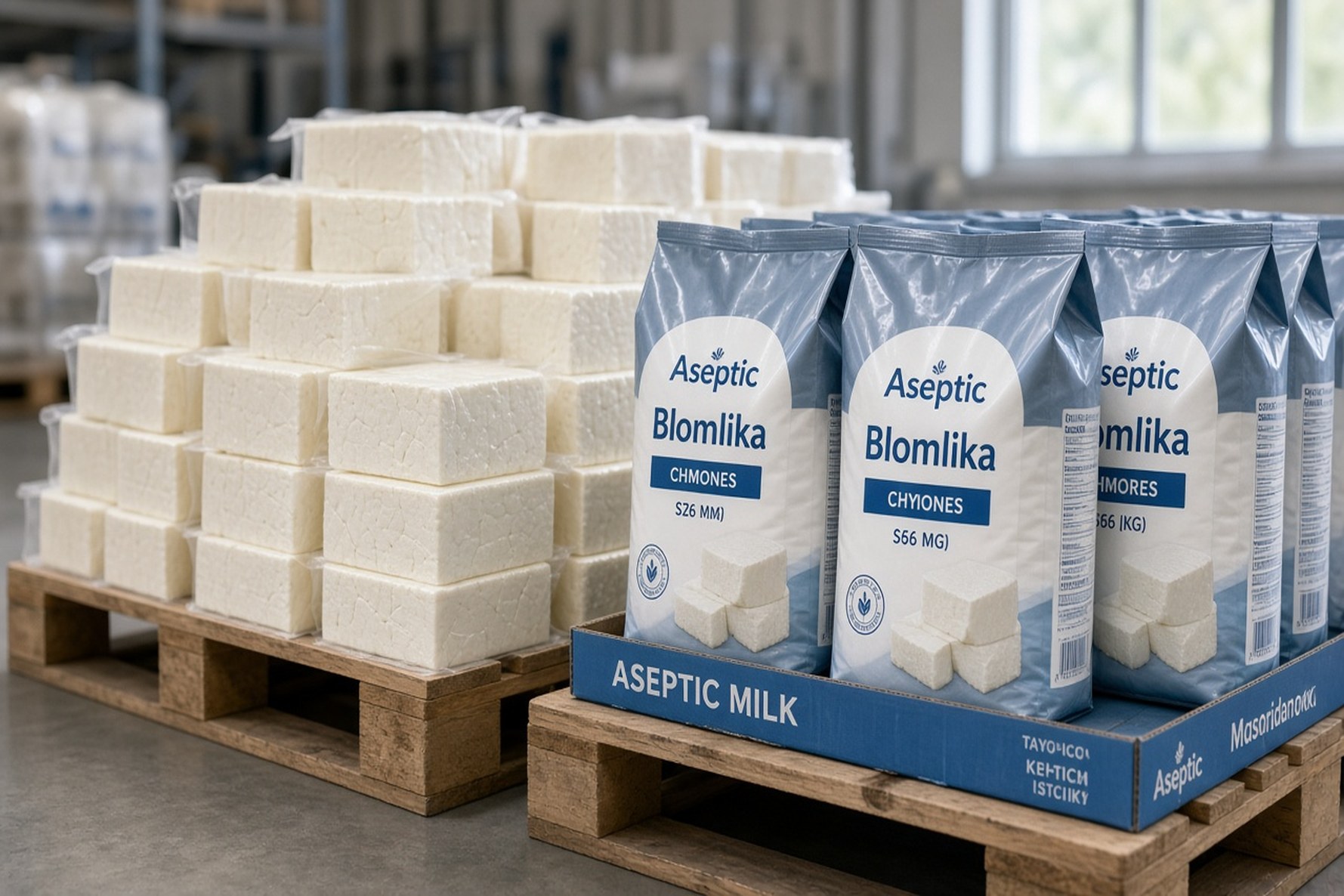
 Iranco Magazine Team
From white cheese and pastry cream to SMP, whey and brands from Kalleh to Choupan — a durable B2B export path
Export Guide · Dairy · Industrial Powder · Brands
Export of Iranian Dairy Products, Milk and Industrial Powders; A Comprehensive Guide to Products, Brands and International Trade
From white cheese for Iraq to milk powder for chocolate factories and confectionery cream — understanding the product, market, technical specifications, Iranian brands and supply chain for sustainable B2B export.
Dairy export from Iran is a business in which success depends on understanding product, market and supply chain at the same time. A white-cheese shipment for Iraqi retail stores, a milk-powder order for a chocolate factory and a cream supply contract for confectionery groups are three entirely different deals. Each has its own technical specifications, packaging, pricing method, documentation and shipping plan.
Production diversity in Iran’s dairy industry creates the opportunity to operate across several markets — from consumer milk, yogurt and doogh to specialty cheeses, industrial butter, milk powder and powdered ingredients. That diversity becomes a commercial advantage only when the exporter offers the right product to the right buyer and maintains the agreed quality across every shipment.
A foreign buyer is not purchasing a brand name or a low price alone. They look for a supplier that prepares the order with a stable composition, sound packaging, orderly documents and a clear delivery schedule. In the ingredients market, the real value of the goods is measured by performance on the customer’s production line — where differences in solubility, protein, flavour or heat stability change the production outcome.
Knowing Iran’s leading brands is the starting point of this path. To turn that knowledge into sustainable export, product selection, plant evaluation, order placement, quality control, shipping and destination sales must also be managed correctly. Iranco’s B2B platform smooths this path for buyers and exporters.
1. How does Iran’s dairy industry create value for export?
Raw milk is a combination of water, fat, protein, lactose and minerals. A dairy plant converts these components — through separation, fermentation, concentration and drying — into products with different uses and values. Therefore, the economics of dairy export depend not only on the volume of milk received, but also on how milk components are used and on the ability to sell each product.
Cheese production creates a whey stream. Separating cream leaves the plant with low-fat milk. Butter-making also has its own by-products. A factory that has markets and suitable processing technology for these streams uses raw materials better and builds a more diversified sales basket.
Conversely, producing a more complex product does not necessarily mean higher profit. Specialty protein powder requires equipment, technical know-how, quality control and a specific industrial customer. Consumer cheese also carries brand, distribution and storage costs. Profitability takes shape when production capability is aligned with real market demand.
2. Three main markets for dairy products
The first market is retail — where the consumer buys packs of milk, yogurt, cheese or doogh from a store. In this segment, taste, pack appearance, size, price and brand recognition have a direct effect on the purchase decision.
The second market covers restaurants, hotels, cafés, confectioneries and industrial kitchens. These customers place greater weight on yield in use, ease of handling and performance consistency. For example, a restaurant watches how much cheese is used per pizza, while a pastry chef assesses the volume and stability of whipped cream.
The third market is ingredient purchasing for food factories. Milk powder, whey powder, permeate powder, bulk butter and protein concentrates fall into this group. These customers usually evaluate samples in their laboratory and on their production line before placing a commercial order.
| Market segment | Primary buyer | Key purchase criteria | Suitable supply format |
|---|---|---|---|
| Retail | Importer and distribution company | Taste, price, packaging and sales velocity | Household consumer packs |
| Foodservice | Restaurant, hotel and confectionery | Yield in use and performance consistency | Large and professional packs |
| Food industry | Manufacturing plant | Technical specifications and quality repeatability | Bag, carton or industrial container |
| Iranian specialty stores | Specialist distribution and ethnic retail | Authenticity of taste and product recognition | Retail packs suited to the destination |
3. UF white cheese; export specifications
Ultrafiltered white cheese is an important product for the consumer market. In its production, a membrane allows some water and smaller compounds to pass while retaining proteins in the concentrated stream. The composition of that stream, heat treatment, starter culture and production conditions affect final texture and flavour.
For white-cheese export, the word “ultrafiltered” alone does not create sufficient specification. The buyer needs to know fat percentage, dry matter, salt, acidity, net weight and texture characteristics. Two cheeses made with similar technology do not deliver the same eating experience if formula and process differ.
Breakfast and restaurant market criteria
- In the breakfast market: sliceability, softness, balanced saltiness and compatibility with local bread
- For restaurant use: pack size and waste after opening
- A small pack makes consumer sales easier; a large pack reduces packaging cost per kilogram
4. Pizza cheese, mozzarella and performance testing
Pizza cheese, mozzarella and similar products need application testing. In this group, product composition and behaviour during baking are decisive. Natural mozzarella, processed cheese and products containing vegetable fat do not share the same identity or behaviour. The title on the pack must match the real formula of the goods.
A professional buyer checks stretch, melt, oil release, surface browning and post-bake flavour. The results of these tests depend on oven type, baking time, baking temperature and usage quantity. Therefore, the sample should be tested under the customer’s real kitchen conditions.
Block versus shredded
- Block is suitable for customers with shredding equipment and continuous usage
- Shredded cheese speeds up work, but strand uniformity, stickiness and anti-caking composition become more important
- The true cost of these two supply formats should be compared together with labour and waste
Modified-atmosphere packaging is not a substitute for temperature control. Pack type, chilled or frozen state and storage life must be defined based on the specific product. Loading several cheese types with incompatible conditions complicates the shipping plan and leaves quality vulnerable.
5. Cream cheese, labneh and spreadable cheeses
Cream cheese, labneh and spreadable cheeses serve a diverse market. These products are used both at breakfast and as snacks, and also in cooking and baking. Soft texture, balanced flavour and spreadability are the main consumer-market criteria; in industrial use, stability during mixing and processing also becomes important.
- For confectionery sales: texture stability after mixing with sugar, cream or other ingredients
- For the household market: pack size and shelf life after opening
- A product that succeeds in retail is not necessarily the best choice for high-volume cake and dessert production
6. Traditional cheeses, kashk and qareh-qurut
Traditional cheeses, kashk and qareh-qurut are sold on the strength of their flavour identity. Well-known cheeses such as Lighvan appeal to customers who value the aroma, texture and character of traditional dairy. In exporting these products, origin of production, milk type, processing method and quality uniformity must be clear.
Cheese ripening time should not be assumed identical for all producers. Ripening duration depends on product type, production process and storage conditions. Moreover, long ripening alone does not replace milk hygiene control and process safety validation.
Liquid kashk and qareh-qurut
- They have potential for Iranian and regional specialty stores
- Success depends on explaining product use, suitable packaging and preserving a familiar taste
- For a consumer who does not know kashk, introducing how to use it in ash or similar dishes is part of marketing
- A small pack makes initial market entry easier; Iranian restaurants are suitable customers for larger packs
7. Sterilised and UHT milk; flavoured milk
Sterilised and UHT milk create more flexibility for longer routes. Appropriate heat processing combined with aseptic packaging allows unopened product to be stored under defined conditions without refrigeration. That same feature simplifies milk distribution in markets with more limited cold infrastructure.
- Distinguish pasteurised milk, extended-shelf-life milk and UHT milk separately; similar pack appearance does not create identical storage conditions
- In flavoured milks: sweetness level, flavour intensity, pack size and consumer price play an important role
- Small packs for individual consumption and large packs for households — size selection must align with purchasing power and consumption habits in the target market
8. Yogurt, doogh and kefir; managing freshness
Yogurt, doogh and kefir depend on precise freshness management. In these products, flavour changes over time and under the influence of temperature. Acidity, whey separation, viscosity and, in some products, gas formation are characteristics that must be checked in shelf-life testing.
Yogurt and doogh
- Set yogurt and stirred yogurt do not behave the same in transit; unsuitable shaking and pressure damage the structure of some products
- In strained yogurt, protein and dry-matter levels matter; a firm texture alone is not a sign of higher protein
- Plain doogh, carbonated doogh and other fermented drinks must be offered in appropriate packs
- For carbonated products, bottle and cap resistance to pressure is important
- Stabiliser type is part of the formula and the presence of a specific ingredient cannot be generalised to all dooghs
Kefir or yogurt with live cultures also should not be presented as a therapeutic product without supporting evidence. A probiotic claim is linked to strain, viable count and product documentation. In trade, a precise, substantiable claim builds more credibility than broad promotional wording.
9. Breakfast cream versus confectionery cream
Breakfast cream and confectionery cream meet two different needs. In breakfast cream, flavour, consistency and fit with everyday use matter. Confectionery cream must perform well when whipped and, after forming, hold its shape and texture.
Confectionery cream contract specifications
- Fat percentage, fat origin, sweetness level
- Time required to whip and volume increase (overrun)
- Stability in display-case refrigeration and behaviour under the customer’s working conditions
Fully dairy products, products containing vegetable fat and blended formulas should not be sold under a single vague title. That difference affects price as well as labelling, customer expectation and end use. UHT cream, chilled cream and frozen cream also require separate shipping plans. For frozen cream, the thawing method and usable life after thawing must be provided with the product specification. Product quality is not judged only up to the moment of truck delivery; the result of use in the confectionery is the final measure of satisfaction.
10. Butter, butter oil and animal ghee
Butter, butter oil and animal ghee must be bought and sold with precise definitions. Butter is a combination of milk fat, water and a limited amount of non-fat solids. In butter oil, most of the water and non-fat solids are removed. Traditional animal ghee is also recognised by its aroma and production process.
- Key criteria: fat percentage, moisture, flavour, oxidation status and fat origin
- The phrase “fatty-acid purity” is not a suitable substitute for milk-fat percentage; dairy fat is a set of fat compounds
- Bulk butter for the food industry differs commercially from packaged consumer butter
- A buying plant looks at cuttability, texture, behaviour in dough and composition stability
- Home consumers place more weight on flavour, appearance and pack size
Packaging for this group must provide adequate protection against light, oxygen and odour absorption. Fats are sensitive to ambient odours; proximity to fragrant materials in the warehouse or vehicle threatens sensory quality.
11. Industrial milk powder; Codex SMP and WMP specifications
Industrial milk powder is an ingredient with measurable specifications. Its production usually includes milk preparation, heat treatment, concentration and drying. In a spray dryer, the feed is converted into fine droplets and controlled contact with hot air reduces moisture.
Codex standard
- Skim milk powder (SMP): maximum fat 1.5%
- Whole milk powder (WMP): fat from 26% to less than 42%
- Moisture: moisture ceiling for both groups is 5%
- Protein: a minimum of 34% relates to milk solids-non-fat (SNF), not necessarily to total powder weight
Industrial buyer criteria
- Bulk density, scorched particles, colour, odour, wettability and dispersibility
- The general phrase “high solubility” without a test method is not a sufficient criterion for shipment acceptance
- Heat-treatment type must match the application; heat affects the state of the proteins
- For beverage reconstitution: dispersibility and sediment; in baking: interaction with other ingredients and bake result; in fermented products: effect on texture and fermentation process
- Whole milk powder, because of higher fat, has particular oxidation sensitivity
- The approved sample must be comparable with the commercial shipment; sending a premium sample and delivering a different product destroys the commercial relationship
12. Whey powder, permeate and protein concentrate
Whey powder, permeate powder and protein concentrate are different goods. Whey comes from cheesemaking and its composition depends on the cheese production method. Sweet whey and acid whey differ in chemical characteristics and industrial use.
Permeate powder is obtained by drying the stream that passes through a membrane, and a large share of its composition is lactose and minerals. This product should not be introduced as a high-protein powder. By contrast, whey protein concentrate is produced to increase the protein share. Demineralised whey powder is also defined by mineral reduction; demineralisation percentage is not protein percentage.
| Powder product | Main characteristic | Industrial use to evaluate | Key purchase criterion |
|---|---|---|---|
| Skim milk powder | Milk solids with limited fat | Dairy, ice cream and confectionery | Protein, moisture and heat behaviour |
| Whole milk powder | Milk protein, lactose and fat composition | Chocolate, beverages and ice cream | Fat, flavour and stability |
| Whey powder | Soluble compounds from cheesemaking | Confectionery and food formulations | Whey type, ash and acidity |
| Permeate powder | High share of lactose and minerals | Adjusting solids composition | Lactose, ash and flavour |
| Whey protein concentrate | Concentrated whey protein | Protein and specialty products | Protein level and functionality |
| Milk protein concentrate | Concentration of milk proteins | Beverages and dairy products | Protein, dispersibility and stability |
| Buttermilk powder | Compounds from butter-making | Bakery and food industry | Composition, flavour and functionality |
13. Specialty protein powders; technical selling
Specialty protein powders require technical selling. Customers for these products are usually not looking merely to raise the protein number on a label; they need to produce a product with acceptable flavour, texture and stability. For that reason, selling protein concentrate is not completed by sending a price list.
- In protein beverages: dissolution, sediment and heat stability
- In semi-solid products: texture formation and water holding
- In dry formulas: flavour, flowability and mixing uniformity
- Price can be compared on a delivered-protein basis, but that calculation alone is not enough
- A powder with cheaper protein will not be the more economical choice if it creates waste or production problems
The exporter must assess the plant’s ability to produce a defined grade, consistency across consecutive batches and technical support. The presence of a product name on a sales list does not replace reviewing real capacity and repeatable quality.
14. Liquid concentrated milk versus powder
Liquid concentrated milk also differs from powder. In this group, some water is removed, but the product remains liquid or viscous. Presence or absence of sugar, type of heat treatment and packaging method determine identity and storage conditions.
- In purchasing: solids percentage, fat, protein, viscosity and behaviour in the customer’s formula
- The cost of shipping remaining water must be compared with the advantage of direct use in production
- For a plant with continuous consumption, suitable unloading equipment and a coordinated production schedule are attractive
- For small orders or long routes, powder offers more flexibility in storage and shipping
Choosing between these two forms is a technical and economic decision.
15. Infant formula; a separate category
Infant formula is an independent category of food products. Industrial milk powder cannot be turned into infant formula merely by packing it in a tin or adding a few nutrients. This product needs formula design, ingredient control, contamination management and its own dedicated requirements.
- Age group, nutritional composition, ingredient origin, microbial control and product registration must be clear from the outset
- The ability to produce ordinary milk powder is not, by itself, equivalent to competence to produce and supply infant formula
- Negotiation must be conducted with a producer qualified for that product and an importer familiar with its requirements
- Documents and advertising must relate precisely to the registered product
16. Export ice cream and the frozen chain
Export ice cream requires a complete frozen chain. Ice-cream quality depends on preserving the structure of ice, air and fat. Warming and refreezing change texture and create coarser crystals. A product that has hardened again does not necessarily have its original quality.
- Minus 18°C or colder is a common storage basis for many industrial ice creams
- Control must continue from the plant cold store to the store freezer
- The distributor’s ability to maintain freezers, fulfil orders and handle equipment failures matters
- Choosing a buyer solely on initial order volume does not give a full picture of their market-building capacity
- Bulk, family and single-serve ice cream have different distribution economics; number of delivery points, freezer space and order frequency affect true cost
17. Leading Iranian dairy brands; negotiation map
Iran’s leading brands should be selected based on product fit. A brand’s general reputation is an important signal for understanding the market, but the export purchasing decision must be made at product and plant level. Producer company name, production site, product number, technical specifications and supply plan must be clear in the documents.
Domestic sales strength should not be equated with export readiness for every product. Export packaging, label language, destination documents and minimum order are independent topics. The list below is for identifying a negotiation path; it is not a market-share ranking or a guarantee of access to every product.
| Brand or group | Recognised area | Suitable starting point for commercial review |
|---|---|---|
| Kalleh | Cheese, diverse dairy and specialty products | Basket breadth and professional applications |
| Pegah | Dairy products and factory production | Identify producing company and exact grade |
| Mihan | Ice cream and consumer dairy | Product fit with distribution network |
| Pak | Milk, cheese, cream, butter and ice cream | Consumer basket and bulk products |
| Ramak | Cheese, dairy and powder products | Review consumer goods and ingredients together |
| Haraz | Everyday dairy | Freshness and sales velocity |
| Domino | Ice cream and dairy products | Cold-chain capacity and consumer sales |
| Choupan | Consumer dairy | Flavour, pack size and price positioning |
| Pegah Golpayegan and other named units | Products tied to each plant | Negotiate on the basis of that unit’s product |
| Specialist regional producers | Traditional cheese or specialty products | Authenticity, uniformity and supply scale |
Kalleh
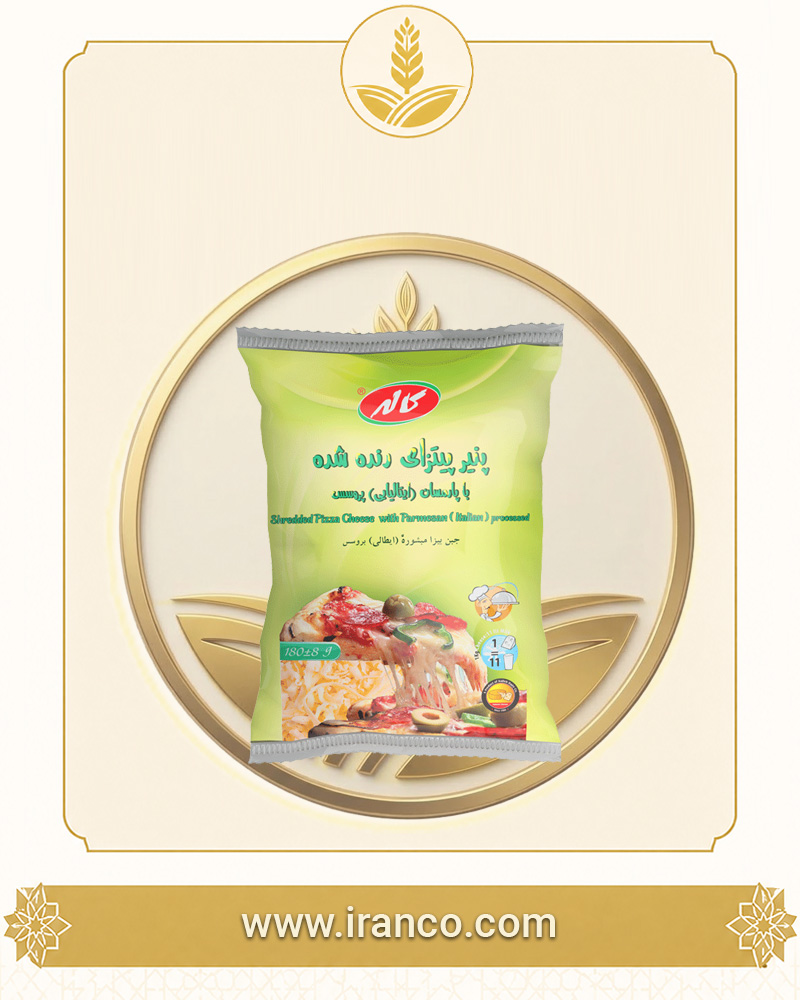
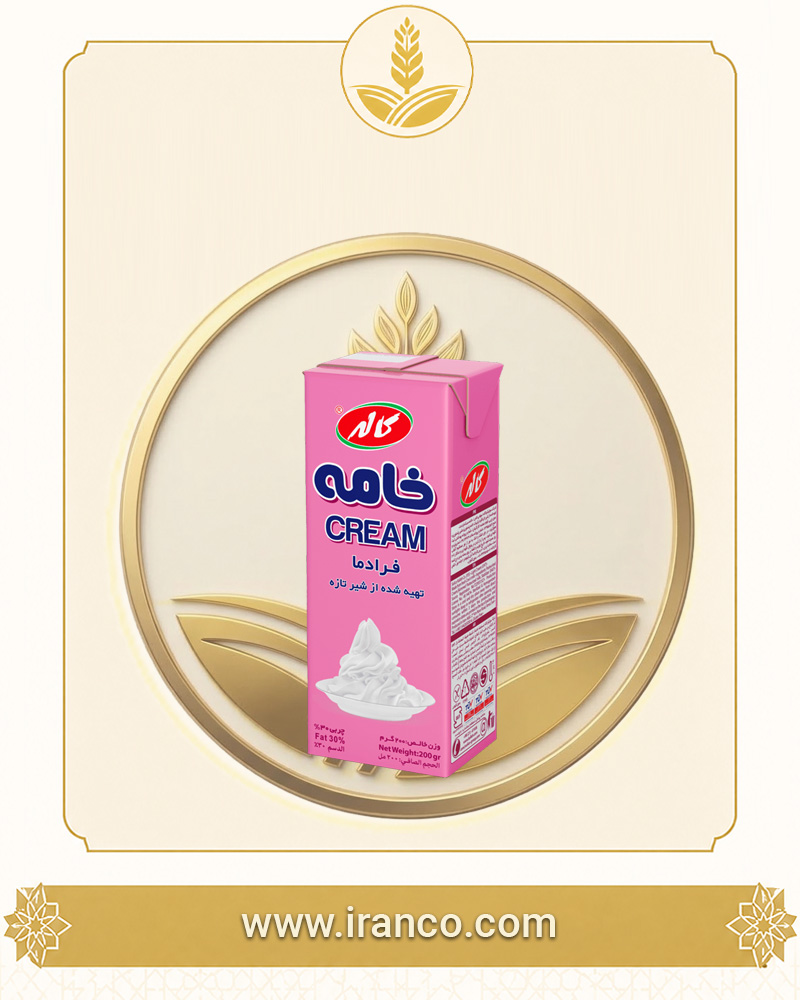
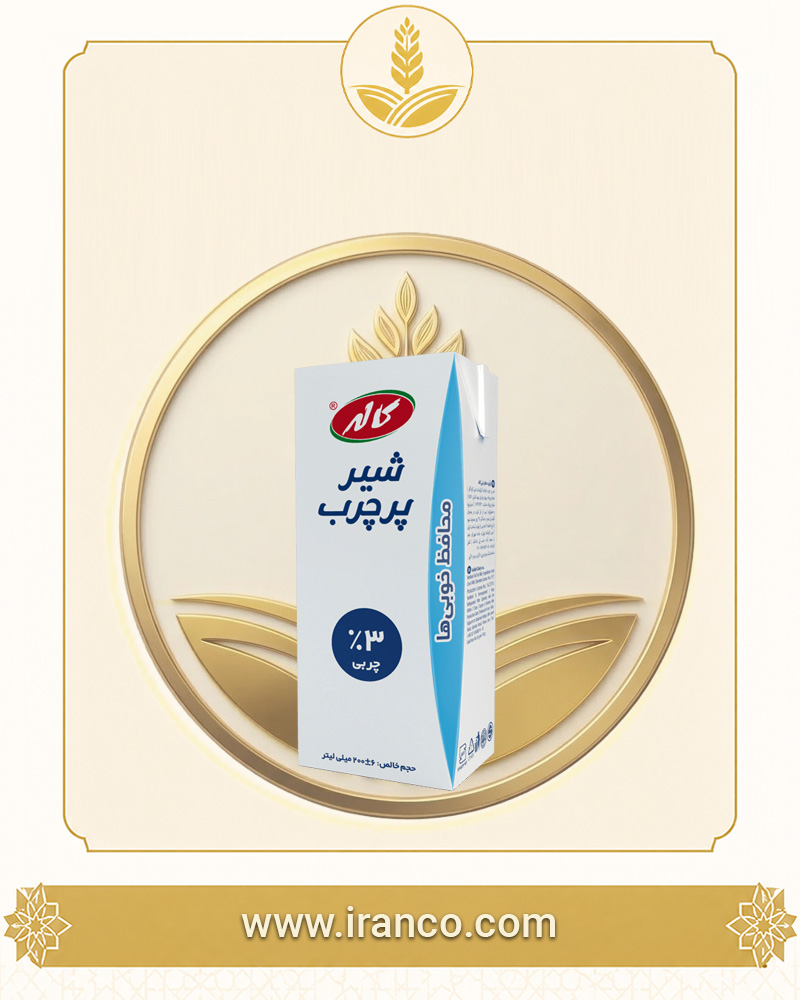
Kalleh holds an important position for reviewing a diverse dairy basket. Products introduced under this brand cover groups such as cheese, milk, cream, yogurt, butter and kashk. The presence of cream cheese, sliced cheeses, UHT cream and pizza-specific products makes it possible to review several consumer and professional applications. In negotiation it must be clarified exactly what type of product the customer wants; natural cheese and a product containing vegetable fat are not the same goods. For restaurants and confectioneries, sending an application sample has high value; for retail distribution, units per carton and the supply plan become more important.
Pegah
Pegah should be reviewed at company and plant level. The Pegah name is associated with a group of dairy production units. In export purchasing, identifying the supplying unit matters, because product, capacity, packaging and production schedule relate to a specific plant. For milk powder or ingredient purchasing, the analysis sheet for that grade and that unit must be obtained. Extending one plant’s characteristics to the entire group is not a sound basis for a contract.
Mihan and Domino
Mihan and Domino are relevant when reviewing the ice-cream and consumer dairy market. The exporter must assess destination sales infrastructure as well as the product. Ice cream needs freezers, frozen distribution and continuous care. Starting with a limited number and suitable sizes makes market learning easier. Introducing many flavours and packs at once fragments inventory. The buyer should show how many active stores they have and what information they provide on final sales.
Pak
Pak offers a diverse basket of consumer and bulk products: milk, cream, butter, cheese, yogurt, doogh, ice cream, kashk, pizza cheese and animal ghee. That diversity makes it an option for reviewing several product groups within one supply programme. Even so, the order basket should be aligned on shipping conditions. Combining chilled, frozen and shelf-stable products without a clear logistics plan creates cost and complexity. It is better to group products by storage temperature and end customer.
Ramak
Ramak is also important for reviewing powdered ingredients. In this brand’s official product list, in addition to cheese and consumer dairy, skim milk powder, whole milk powder, sweet and acid whey powder, demineralised permeate powder, buttermilk powder and instant-soluble milk powder are introduced. A permeate-powder buyer should not treat it as a direct substitute for milk powder. In an industrial order, end use should be sent with the price request; then the sample of that grade, analysis and test method should be reviewed.
Haraz, Choupan and regional producers
In everyday dairy, flavour quality, freshness, access to production and pack fit with the market matter greatly. A recognised brand creates export value when regular supply and destination-product preparation are also available. For traditional cheeses and local products, a specialist producer can offer distinctive flavour character; batch-to-batch consistency, origin identity and process documentation must be examined more carefully. Plant visits, laboratory assessment and review of samples produced at different times give a clearer picture of the supplier.
18. Target markets; from Iraq to the Persian Gulf
Target-country selection should start from the product. The right market for breakfast cheese is not the same as the right market for protein powder. Before choosing a destination, it must be clear whether the product is offered for household consumption, foodservice or a manufacturing plant.
Iraq
Iraq is important for reviewing sales of Iranian consumer dairy. In this market, knowledge of the city, distribution network, taste and price level is required. Baghdad, Basra and cities in the Kurdistan Region should not be assumed to be entirely identical markets. Entry route, pack language and cooperation with the distributor must be designed for the specific region.
Afghanistan
Afghanistan is also worth reviewing for consumer goods and ingredients. In each region, purchasing power, warehouse conditions and distribution speed affect product choice. Shelf-stable products and products that need refrigeration require different sales plans.
Pakistan
In Pakistan, separating industrial from consumer customers matters. For ingredients, competition is based on specifications and delivered cost. Reviewing the buying plant’s real consumption is more useful than a broad estimate of national population.
The Caucasus, Central Asia and the Persian Gulf
Armenia, Azerbaijan, Georgia, Kazakhstan, Uzbekistan and other regional markets are not identical in shipping route, language, rules or taste. An entry plan must be drafted separately for each country. On longer routes, remaining shelf life at delivery becomes more important. For powder products, freight cost and dry warehousing are decisive; for fresh dairy, transit days and cold-distribution capacity define the economic sales range.
In Persian Gulf countries, packaging, labelling, supply discipline and cooperation with a professional importer carry special weight. Hotels and restaurants can also create a path independent of retail. Sales to more distant markets likewise start with understanding demand and entry requirements; the presence of an Iranian community or interest in Iranian food does not, by itself, create a licence to enter with animal products.
19. Executing export; from product definition to sustainable growth
Defining product and customer
The first operational step is defining one clear product and one clear customer. The phrase “dairy export” is too broad to start operations. A more practical definition is: selling white cheese in household packs to a distribution company in one city, or supplying skim milk powder to an ice-cream plant. After that choice, the customer’s monthly consumption, order size, target price, preferred pack and delivery time must be known. A vague request produces a vague answer; the exporter should prepare a shared request form before collecting offers. The next stage is reviewing product entry feasibility and producer acceptance at destination — before producing a private label and placing a large order.
Supplier evaluation
- Technical: licences, traceability system, ingredient control, laboratory, warehouse conditions and complaint handling
- Commercial: allocatable capacity, minimum order, production lead time and validity of the price offer
- Nominal plant capacity differs from capacity that can be committed under a new contract
- A retail sample is useful for tasting; an industrial contract needs a sample of the same production grade
- Evaluation outcome: primary supplier, reserve capacity and substitution terms — a second supplier should be pre-approved
Technical specification sheet
The technical specification sheet is the common language of the deal. It must define exact product name, composition, chemical limits, microbial criteria, sensory characteristics, packaging and storage conditions. For industrial products, functional characteristics are added as well.
| Specification section | Required information |
|---|---|
| Product identity | Name, processing type, application and producer |
| Composition | Ingredients and fat origin |
| Chemical indices | Fat, protein, moisture, salt or relevant ash |
| Microbial quality | Acceptance limits and test method |
| Functional characteristics | Melt, solubility, stability or whipability |
| Packaging | Net weight, units per carton and protective layer type |
| Storage | Temperature, humidity and shipping limitations |
| Acceptance | Sampling method and how disputes are handled |
Certificate of analysis and permits
A certificate of analysis (COA) must belong to a specific batch. A generic promotional table does not replace shipment test results. Batch numbers on packs and documents must allow the goods to be linked to production records. In sensitive contracts, test method and reference laboratory should be agreed.
- Commercial invoice, packing list, transport document and certificate of origin are among common documents
- For dairy: related health and veterinary certificates, test results and product registration or acceptance documents
- Product name, weight, number of packs, batch number and party details must be consistent across documents
- The status of restrictions, duties and FX requirements should be checked at the time of executing the deal
Customs classification — HS Chapter 4
Chapter 4 of the Harmonized System covers an important part of milk and dairy products. Unconcentrated milk, concentrated milk and powder, fermented products, whey, butter and cheese fall into different groups. Ice cream, infant formula and some composite products also have different classification paths. For protein powders, protein content and precise product definition affect heading selection. Adding vegetable fat, sugar or other compounds must also appear in the goods description. A wrong code is not only a tariff-calculation issue; it can affect permits, document review and product naming.
Export labelling
- Product name, ingredients, milk allergen, net weight, dates, batch number, storage conditions and producer information must be legible
- Product-name translation must match composition; a product containing vegetable fat should not mislead the consumer about dairy nature
- Claims such as lactose-free, high-protein or probiotic need product substantiation
- Before bulk printing, the final artwork should be checked for language, date format and importer details
- In private-label supply: design ownership, claim responsibility, minimum print run and disposition of remaining packs should be set in the contract
Cold chain and powder logistics
The cold chain must begin from the product’s own temperature. A refrigerated truck is not a substitute for initial product cooling. For many chilled dairy products, a range such as 2 to 6°C is seen; the definitive temperature must be taken from that product’s instructions. Pallet stacking must not block airflow. Temperature loggers, door-open times and delivery records are important quality-control documents.
Shipping dairy powders needs a dry, clean environment. Moisture, bag tears, contamination and odour absorption are the main risks. Multi-layer bags must have a suitable inner barrier. Before loading, the container floor, walls, ceiling and odour are checked. Bags should sit on suitable pallets and stay away from direct contact with wet floors and walls. At destination, moving goods quickly into an appropriate warehouse matters.
Pricing and Incoterms
Pricing must be based on delivered and in-use cost. Ex-works price is only the starting point. Export packaging, testing, documents, domestic haulage, formalities, international freight, insurance, demurrage and financing cost must enter the calculation. In chilled sales, waste and remaining shelf life also have economic value.
- Delivery and payment terms must be written without ambiguity; place of delivery, party responsible for carriage, risk-transfer timing and insurance cover
- Phrases such as “delivery at border” without a named place and responsibility description create grounds for dispute
- Payment should be linked to verifiable stages; advance amount, settlement timing and deadline for reporting discrepancies
- FX-rate changes, freight cost and raw-material prices during the offer validity period should be considered
Agent, first shipment and growth map
- Evaluate the agent on suitable warehousing, distribution network, payment history and access to target customers
- Tie exclusivity to sales targets, territory coverage, payment discipline and reporting
- The first shipment is a full test of the trade path; volume should be enough to evaluate and controllable for error management
- After delivery: pack integrity, temperature conditions, remaining shelf life and — for ingredients — result of use on the production line
- Build the growth plan on repeat orders: one core product, one sales channel, then supplier confirmation and shipping route
- Sustainable profit is built from regular repetition; a product with clear identity, measurable quality and delivery the buyer can rely on
20. Supply network and order placement on Iranco
Iranco’s B2B platform connects Iran’s dairy plants and brands with importers, distribution companies, hotels, confectioneries and industrial buyers in the region. From product definition and specification sheets to price inquiries, Incoterms, certificates of analysis, health permits and coordination of cold chain or powder logistics — the path to sustainable export is managed from one point.
- Inquiries for white cheese, pizza cheese, confectionery cream, bulk butter and UHT milk
- Supply of SMP, WMP, whey powder, permeate and protein concentrates
- Coordination with Kalleh, Pegah, Mihan, Pak, Ramak, Haraz, Domino and Choupan
- Support for export documents, destination labelling and trial-shipment planning
Featured Products




Related Articles



