 Iranco Magazine Team
From colour and grade selection to pesticide residues, sorting, packaging, cold chain and evaluation of export markets for Iranian bell peppers
Bell pepper export · Markets · Colour grading · FFV-28
Iran Bell Pepper Exports: Foreign Markets, Colour Grading and Quality Standards
From colour and size to UNECE FFV-28, HS 070960, a 7.5°C cold chain and Gulf phytosanitary certificates — what professional buyers define before price.
Introduction
Iranian bell pepper competes in fresh produce trade where appearance, colour uniformity, skin firmness and cold-chain integrity directly drive invoice value. Greenhouse production in Isfahan, Yazd, Fars and Hormozgan supports supply planning, but durable access to Russia, Azerbaijan, Iraq, Kazakhstan, Qatar and Oman requires numeric specs, FFV-28 alignment, residue control and correct quarantine paperwork.
1. Export basket and colour grading
| Colour | Trait | Export note |
|---|---|---|
| Green | Pre-full colour break | Wholesale & foodservice |
| Red | Sweetness, retail appeal | Agreed colour coverage % |
| Yellow | Mixed packs | Strict uniformity |
| Orange | Lower volume, premium | Skin defect sensitive |
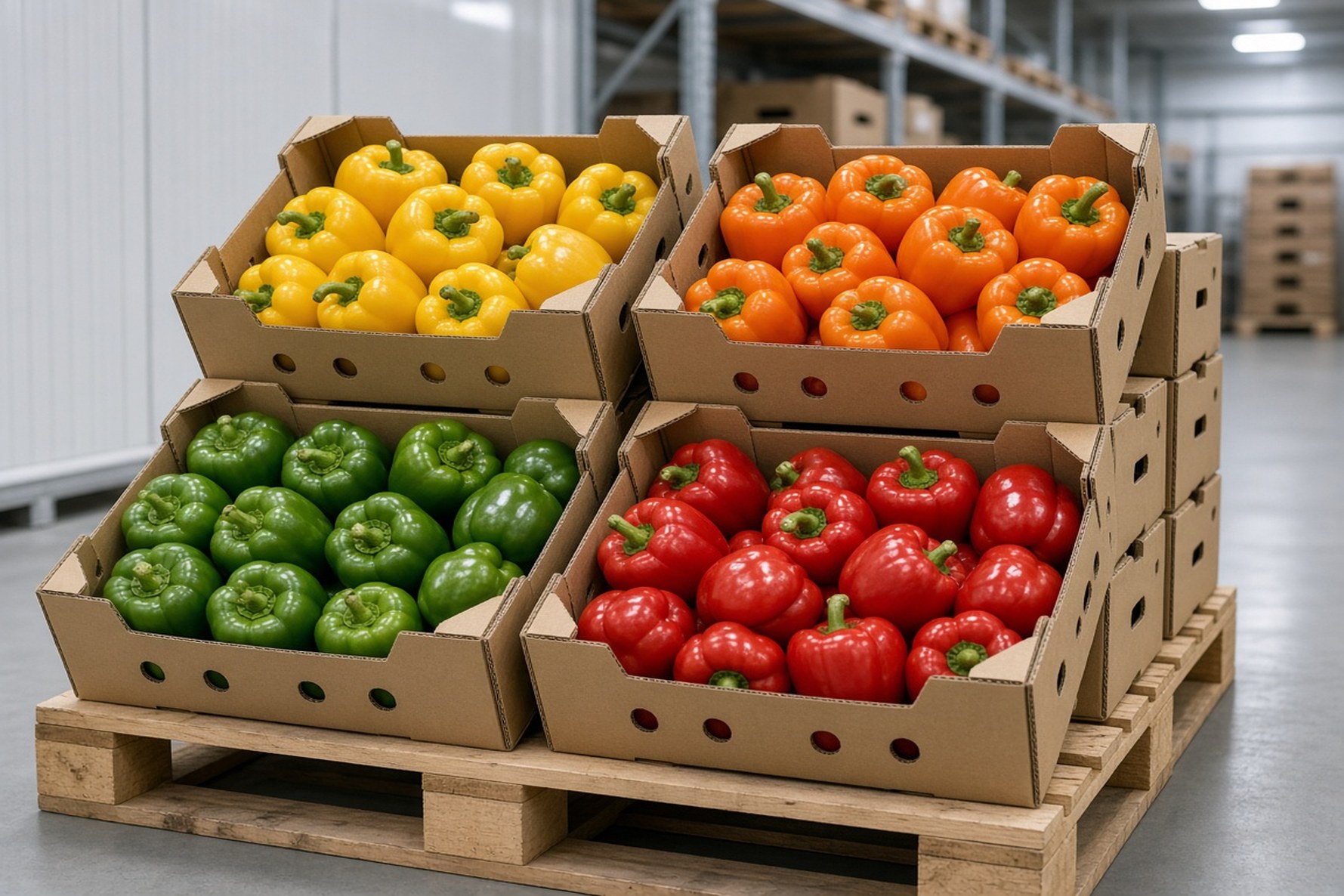
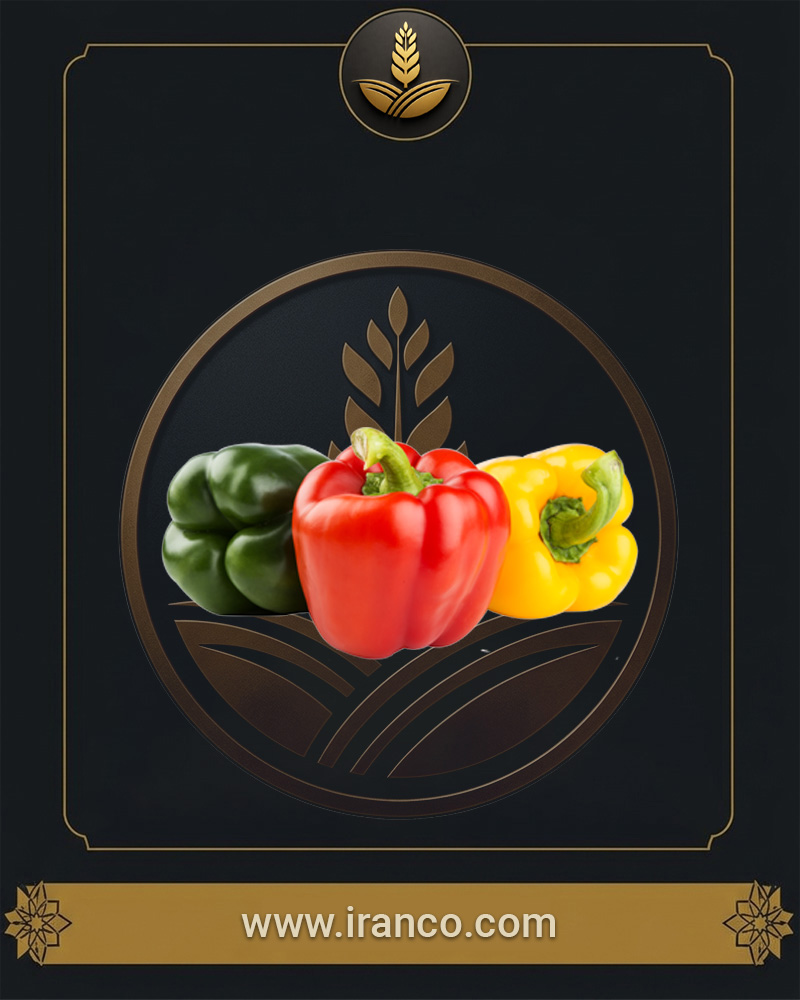
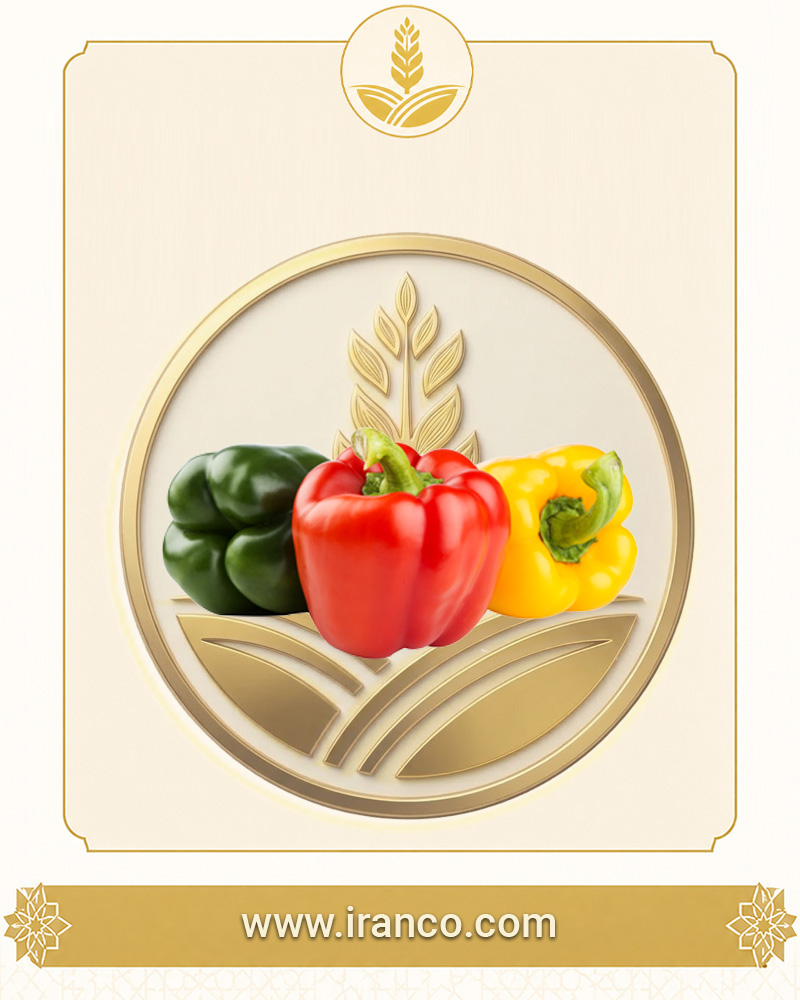
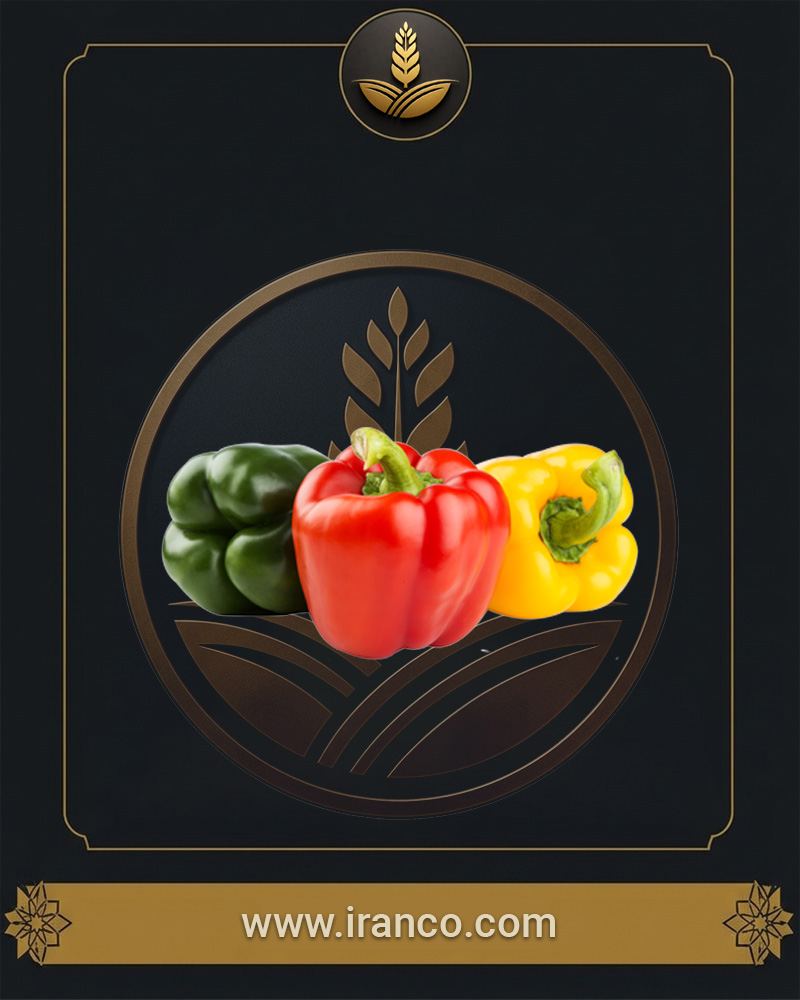
Export bell peppers are traded by colour (green, red, yellow, orange), commercial shape, size, weight, lobes and wall thickness. 'Export grade' without defined colour and colour coverage is not a contract term.
Colour grading means coverage percentage, carton uniformity and allowed remaining green on ripe fruit must be numeric. Mixed harvest lots without re-sorting face steep discounts in retail-oriented markets.
2. Target export markets
| Market | Position | Focus |
|---|---|---|
| Russia | High volume, competitive | Cold chain, MRL |
| Azerbaijan | Active neighbour | Speed & uniformity |
| Iraq | Road access | Price & appearance |
| Kazakhstan | Regional potential | Quality consistency |
| Qatar | Gulf retail/wholesale | Phyto & packaging |
| Oman | Gulf | Transit temp & pack |
Russia and Kazakhstan are large, competitive destinations where Turkish, Central Asian and European supply sets the bar; acceptance depends on repeatable quality and cold chain. Azerbaijan and Iraq benefit from proximity and road freight, but colour uniformity and trade packaging still decide the deal.
Qatar and Oman are Gulf markets with phytosanitary certificates, clean packs and stable transit temperatures. Each destination needs its own colour mix, carton size and Incoterms — one basket rarely fits all.
3. Professional order specifications
| Parameter | Example | Why it matters |
|---|---|---|
| Colour | Red 90%+ coverage | Retail pricing |
| Size | Class L ±20 mm | Uniformity |
| Grade | Extra / Class I | Defect tolerance |
| Firmness | At packing limit | Shelf life |
| MRL | EU 396/2005 | Clearance |
| Pack | 5 kg vented carton | Cold chain |
Contracts need measurable parameters: size class, 20 mm tolerance, FFV-28 grade, firmness, skin defects, carton net weight and pack type.
Start with a product spec sheet tied to an approved sample. Importers can register colour, size, grade, volume and destination in an Iranco purchase request.
4. UNECE FFV-28 and export quality control
| Defect | Status | Action |
|---|---|---|
| Decay | Reject | Remove entirely |
| Deep bruise | Fast breakdown | Drop from export |
| Mark/crack | Grade dependent | Re-sort |
| Softening | Shorter life | Near market or cull |
| Colour mismatch | Lower value | Colour sort |
UNECE Standard FFV-28 for fresh peppers defines Extra and Class I with minimum sizes and a 20 mm size tolerance. Fruit must be sound, clean, free from decay, practically free from pests and fit for transport.
Critical defects include decay, live pest, deep bruising, skin cracks, serious marks, wilting and over-soft fruit. Checks should run at farm/greenhouse, after sorting, before packing and before loading.
5. HS tariff code 070960
Fresh bell peppers fall under HS 070960 in the harmonised system. Customs declaration, invoice and carton labels must match the actual product (fresh bell pepper, not chilli or processed pepper).
Mismatched origin/destination HS treatment or vague descriptions delay clearance — code and product description must be consistent across documents.
6. Cold chain: 7.5°C and 95% RH
Storage at about 7.5°C with roughly 95% relative humidity helps maintain turgor and limit wilting. Prolonged holding at lower temperatures (e.g. around 5°C) can increase chilling injury, skin pitting and internal colour change.
Correct sequence: harvest at suitable firmness → fast transfer → sort and grade → pack → pre-cool → load into pre-chilled equipment → temperature records until delivery. Loading warm fruit into a refrigerated truck is a common failure point.
7. MRL and EU Regulation 396/2005
Greenhouse crop protection must align with destination residue limits before harvest. In the European Union, Regulation (EC) No 396/2005 sets the pesticide MRL framework — laboratory panels must cover actives actually used in production.
Beyond the EU, Russia, Kazakhstan and Gulf markets also enforce entry rules. Valid COA, sampling date and batch linkage are essential for clearance.
8. Phytosanitary certificates and the Gulf
For Qatar, Oman and other Gulf destinations, phytosanitary certificates (ISPM 12-based) and compliance with the importing NPPO are typically mandatory. Documents should be issued before loading and match seals and routing.
Destination inspection focuses on pack integrity, fruit health, signs of live pest and sometimes origin labelling. Errors in plant name or origin can hold shipments at customs.
9. Export packaging
| Format | Use | Risk |
|---|---|---|
| 5 kg carton | Retail & wholesale | Pallet crush |
| 10 kg carton | Wholesale | Local heat |
| EUR pallet | International haul | Wrong stacking |
| PL label | Destination retail | HS/weight errors |
Cartons must resist stacking pressure while allowing cold air flow through vents. Food-contact materials should not add excess moisture.
Agreed net weights (e.g. 5 or 10 kg) must stay fixed in the contract. Standard pallets, even layers, strapping and sometimes shrink wrap matter on long road or sea legs.
10. Importer checklist (18 items)
Before signing and loading, document the following in your spec sheet or contract annex:
- Define exact colour(s) and commercial ripeness stage.
- State size class and FFV-28 20 mm tolerance numerically.
- Set Extra, Class I or contract grade and defect ceilings.
- Record shape, lobes, wall thickness and minimum unit weight.
- Agree firmness at packing and maximum acceptable softening.
- Set skin defects, cracks, marks and allowed green blush on coloured fruit.
- Clarify carton and pallet uniformity and expected reject rate.
- Approve a reference sample from the same production before the main contract.
- Attach a spec sheet based on UNECE FFV-28 or an equivalent contract standard.
- Use HS code 070960 consistently on invoice, packing list and carton label.
- Align MRL laboratory testing with destination rules (e.g. EU Regulation 396/2005).
- Verify phytosanitary certificate and Gulf/destination quarantine requirements before loading.
- Require pre-loading storage at about 7.5°C and ~95% relative humidity.
- Include genuine pre-cooling, pre-chilled equipment and temperature records in transit.
- Specify carton type, net weight, ventilation holes and food-contact materials.
- Define pallet pattern, stack height, strapping and data logger placement.
- Document accept/reject criteria at destination port or warehouse and cold-chain responsibility.
- Retain a witness sample from the same batch for colour/size disputes after delivery.
FAQ
What is the HS code for fresh bell pepper?
070960 in the harmonised system — use it consistently on invoice, packing list and carton label.
What storage temperature is recommended?
About 7.5°C at ~95% RH; long holding at much lower temperatures increases chilling injury risk.
What is the FFV-28 size tolerance?
Commercial classes under FFV-28 typically use a 20 mm size tolerance — state it numerically in the contract.
Which EU regulation covers pesticide MRLs?
Regulation (EC) No 396/2005 — testing must match actives used and the destination list.
What documents do Qatar and Oman require?
Phytosanitary certificate plus importing NPPO rules — confirm details with your broker before ordering.
Why keep a witness sample?
It is the technical reference for colour, size or firmness disputes after delivery from the same batch.
Do all colours share one spec?
No — coverage, defect limits and target markets differ for green, red, yellow and orange.
How to source via Iranco?
Submit colour, size, FFV-28 grade, packaging, volume and destination in a structured purchase request.
Summary
Iranian bell pepper exports become sustainable when each colour and each market is sold with FFV-28 specs, a 7.5°C chain, destination MRL compliance and correct phytosanitary documents — not as a vague 'export grade' commodity. Professional deals start with a written spec, approved sample and the 18-point importer checklist.
Featured Products


Related Articles



