 Iranco Magazine Team
Specialist guide to industrial milk powder for Pakistan — protein and fat specs, microbiological tests, 25 kg multi-layer bags, tariff codes, halal requirements and pre-export shipment control
Export Guide · Industrial Milk Powder · Pakistan
Industrial Milk Powder Export to Pakistan; Protein & Fat Standards, Multi-Layer Laminated Bags & Customs Duties
Specialist guide to selecting industrial milk powder for the Pakistan market — PSQCA standard analysis, B2B procurement parameters, comparison of European and Iranian suppliers, laminated packaging engineering, and overland transit routes from Iran.
Pakistan's industrial milk powder market has become one of the region's strategic export destinations for dairy raw materials, driven by growth in processed foods, confectionery, bakery, powdered beverages, and recombined dairy products. Annual imports of skim milk powder under tariff code 040210 reached approximately 11,775 tonnes in 2024, and demand for whole and semi-fat milk powder is also rising in chocolate, ice cream, and high-fat formulations. For Iranian exporters, geographic proximity, competitive logistics costs, and surplus industrial milk powder capacity at major domestic plants create a genuine advantage — but acceptance at Pakistan customs and entry into local factory supply chains require strict compliance with PSQCA standards, halal certification, PS 363-2011 microbiological specifications, and moisture-resistant packaging suited to South Asian heat and humidity.
1. Pakistan Industrial Milk Powder Market Structure and Iran's Position
With a population exceeding 240 million and expanding food industries in Karachi, Lahore, Faisalabad, and Rawalpindi, Pakistan ranks among South Asia's largest milk powder importers. Domestic milk powder production is largely limited in scale and tied to seasonal raw milk availability; processing industries therefore depend on imports for stable raw material supply. Europe (the Netherlands, Germany, Ireland) and the United States retain share in premium and instant milk powder segments, but higher CIF pricing and payment challenges have opened space for regional suppliers including Iran, Turkey, and India.
Iran's Practical Market Presence
Iran's industrial milk powder exports to Pakistan are primarily routed overland via the Mirjaveh–Taftan border and, to a lesser extent, Rimdan–Gabbed. Major Iranian dairy plants with spray-drying lines and surplus capacity supply skim milk powder with 34–36% protein and whole milk powder with 26–28% fat in 25 kg bags. Iran's advantages include short transit (5–8 days to Quetta and Karachi), rapid sample dispatch, and competitive FOB pricing relative to Europe. The main challenge is customs acceptance on the first shipment and demonstrating PSQCA compliance.
End-Use Industries
- Confectionery and bakery: Medium Heat skim milk powder for creams, biscuits, and wafers
- Powdered beverages: Instant milk powder with high solubility for masala tea, cocoa, and protein supplements
- Recombined dairy: Skim milk powder and WPC for UHT recombined liquid milk production
- Chocolate and ice cream: Whole milk powder (WMP) with 26–28% fat
- Infant formula: Limited demand but higher standard — predominantly European imports
2. Skim, Semi-Fat, and Whole Milk Powder
Industrial milk powder is divided into three main groups by fat percentage and processing application. Choosing the correct grade directly affects formulation yield, final product texture, and total production cost.
| Group | Fat | Protein | Primary Application | HS Code |
|---|---|---|---|---|
| Skim (SMP) | Maximum 1.5% | Minimum 34% | Confectionery, powdered beverages, recombined dairy | 040210 |
| Semi-fat | 10–15% | 24–28% | Food creams, sauces, blended formulations | 040221 |
| Whole / full cream (WMP) | Minimum 26% | 24–26% | Chocolate, ice cream, high-fat products | 040221 |
Skim milk powder is Pakistan's highest-demand import item and is classified by WPNI (Whey Protein Nitrogen Index) into three heat grades: Low Heat (WPNI > 6), Medium Heat (1.51–5.99), and High Heat (< 1.5). Pakistani confectionery plants typically order Medium Heat, while instant powdered beverage producers require Low Heat or Instant Grade.
3. Protein and Fat Percentage Standards
PSQCA (Pakistan Standards and Quality Control Authority) defines national milk powder standards based on Codex Alimentarius and domestic regulations. Deviation from permitted ranges — even by a few tenths of a percent — can result in customs rejection or cargo return.
| Parameter | Skim SMP | Whole WMP | Test Method |
|---|---|---|---|
| Fat | Maximum 1.5% | 26–28% | Gerber / Rose-Gottlieb |
| Protein | Minimum 34% | 24–26% | Kjeldahl × 6.38 |
| Moisture | Maximum 5% | Maximum 5% | Oven @ 102°C |
| Ash | Maximum 8% | Maximum 8% | Gravimetric |
| Solubility | Minimum 98% (Spray) | Minimum 95% | IDF Standard |
| WPNI Index | Per order grade | — | ISO 5537 |
| Scorched Particles | Disc B or better | Disc B or better | ADPI Visual |
| Colour | Light cream to white | Cream yellow | Hunter Lab / Visual |
4. Quality Specifications and Microbiological Testing
The PSQCA reference laboratory and Pakistan customs compare each shipment's certificate of analysis (COA) against PS 363-2011. Sampling at port/border follows AQL principles; non-conforming batches are quarantined in full.
| Test | Limit | Method |
|---|---|---|
| Total Plate Count (TPC) | Maximum 50,000 CFU/g | ISO 4833 |
| Coliform | Maximum 10 CFU/g | ISO 4832 |
| E. coli | Negative in 1 g | ISO 16649 |
| Salmonella | Negative in 25 g | ISO 6579 |
| Staphylococcus aureus | Maximum 10 CFU/g | ISO 6888 |
| Yeast and mould | Maximum 50 CFU/g | ISO 7954 |
| Listeria monocytogenes | Negative in 25 g | ISO 11290 |
Beyond microbiology, antibiotic residue testing (β-lactam, tetracycline) and aflatoxin M1 may be mandatory for major importers. The COA must be issued by an accredited ISO 17025 laboratory and match the shipment batch/lot number.
5. Mandatory Standard, Halal, and Labelling
PSQCA's Compulsory Certification Scheme applies to imported milk powder. Every shipment must carry the PS conformity mark and a valid halal certificate from PHA (Pakistan Halal Authority) or an equivalent recognised body.
- Label in English or Urdu — product name, manufacturer name, country of origin, production and expiry dates
- Fat and protein percentages and storage instructions (below 25°C, away from moisture)
- Batch number and PSQCA registration number on each bag
- Halal certificate — confirmation of no prohibited enzymes and source of gelatin/additives
- Veterinary Health Certificate from the country of origin
- Importer registration with FBR and NTN for formal clearance
6. Multi-Layer Laminated Bags
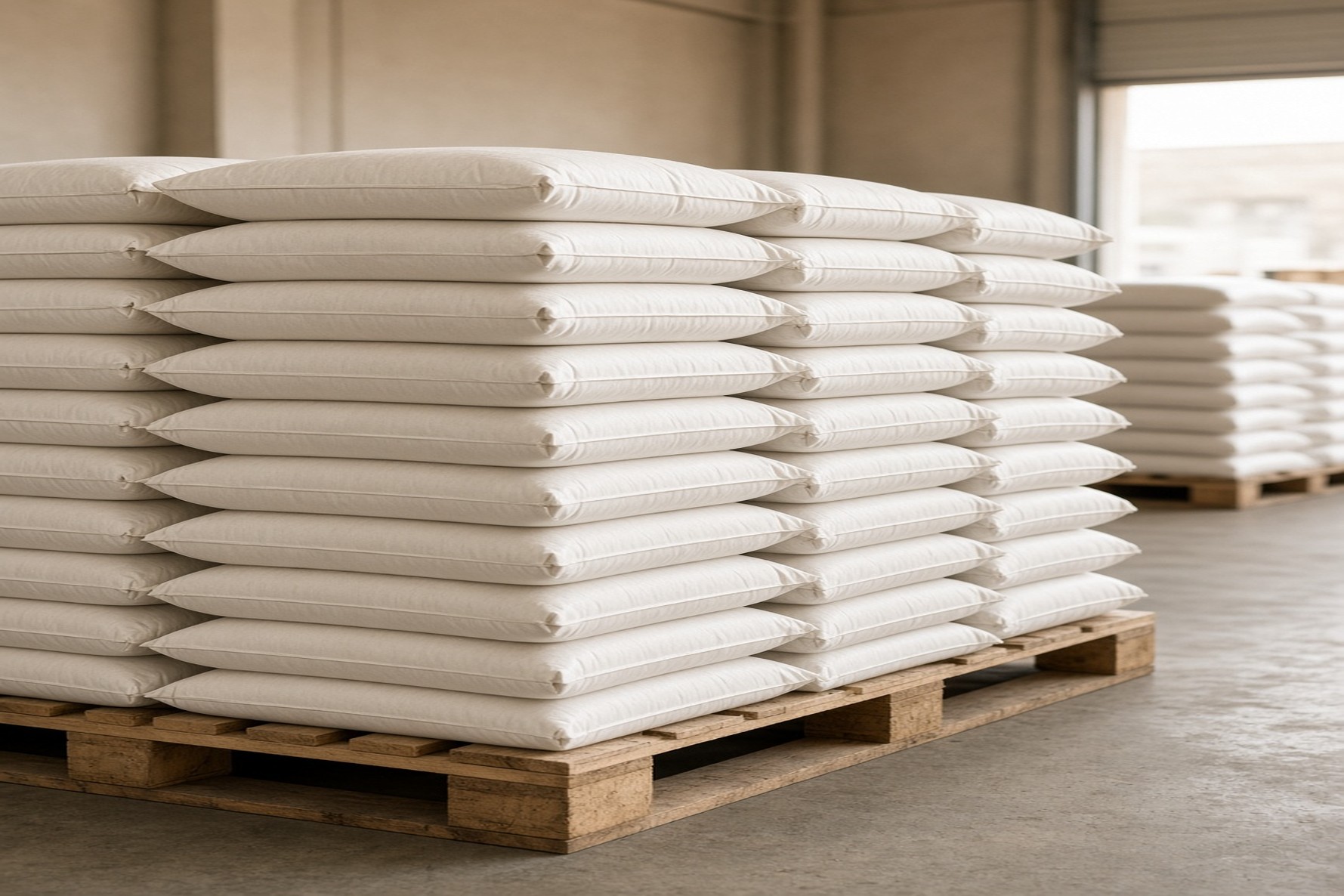
Industrial milk powder packaging for export to Pakistan must withstand 70–90% relative humidity, 40–50°C heat in border warehouses, and road transport impacts. The industry standard is a multi-layer laminated bag with nitrogen gas flushing.
| Pack Type | Layer Structure | Net Weight | Shelf Life | Recommendation |
|---|---|---|---|---|
| 4-layer laminated bag | PE/PE/Al/PE | 25 kg | 18–24 months | Export standard |
| 3-layer laminated bag | PET/Al/PE | 25 kg | 12–18 months | Economical, short route |
| Kraft bag with PE liner | Kraft + PE | 25 kg | 6–12 months | Fast consumption only |
| Big Bag (FIBC) | PP woven + PE liner | 500–1,000 kg | 12 months | Large factories |
| Carton inner + pallet | 4 × 25 kg bags per carton | 100 kg/pallet | — | Palletised shipment recommended |
- Heat-sealed seam with minimum 10 mm width and leak testing
- N₂ gas flushing to 99.5% to reduce fat oxidation
- Palletising with stretch film and corner boards — maximum 1 tonne per pallet
- GS1-128 label with batch, production date, and net weight
7. Tariff Code and Customs Duties
Milk powder is classified under Chapter 04 (Dairy). Duty calculation is based on CIF value; in addition to import duty, regulatory duty and GST apply.
| HS Code | Product Description | Import Duty | Regulatory Duty | GST |
|---|---|---|---|---|
| 04021000 | Skim milk powder (Fat ≤ 1.5%) | 20% | 0–5% | 18% |
| 04022100 | Whole / full cream powder (Fat > 1.5%) | 25% | 0–5% | 18% |
Imports from Iran may qualify for reduced import duty under the PTA (Preferential Trade Agreement), subject to a Certificate of Origin from the Chamber of Commerce. Additional costs include PSQCA inspection fees, customs brokerage, cargo insurance, and border warehouse demurrage.
8. Transport from Iran to Pakistan
The primary route for Iranian milk powder exports to Pakistan is the overland crossing at Mirjaveh (Iran) — Taftan (Pakistan). Cargo moves in enclosed dry vans or 20-foot containers; refrigeration is not required, but temperature and humidity control inside the container is recommended.
- Mirjaveh → Taftan → Quetta/Karachi: 5–8 days, freight approximately USD 85–120/tonne
- Rimdan → Gabbed → Karachi: 3–5 days, shorter route through Balochistan
- Documents: Invoice, Packing List, COA, COO, B/L or CMR, veterinary certificate
- Insurance: ICC (A) covering moisture, theft, and accident
- Incoterms: CPT Quetta or DAP Karachi for experienced importers
9. Sample and Shipment Quality
Before placing a commercial order, sending a 1–2 kg sample with a complete COA matching the purchase specification is essential. Pakistani importers typically test samples in-house or at PSQCA laboratories.
- Sample must be from the same production batch as the main shipment (pre-shipment sample)
- Solubility, WPNI, colour, and flavour testing by importer QA
- Pre-shipment inspection by SGS/Bureau Veritas on commercial shipments (if requested)
- Retention sample held by exporter for at least 6 months
- Never mix different batches in one shipment without prior agreement
10. Iran's Competition with European Suppliers
| Country | SMP FOB ($/ton) | Freight to Karachi | Delivery Time | Advantage |
|---|---|---|---|---|
| Iran | 2,800–3,200 | Overland 5–8 days | 2–3 weeks | Price, proximity, rapid sampling |
| Netherlands | 3,400–3,800 | Sea 3–4 weeks | 5–7 weeks | Brand (Friesland, DOC) |
| Germany | 3,350–3,750 | Sea 3–4 weeks | 5–7 weeks | Consistent quality, Instant Grade |
| Ireland | 3,300–3,700 | Sea 3–4 weeks | 5–7 weeks | Grass-fed, rotational grazing |
| United States | 3,200–3,600 | Sea 4–5 weeks | 6–8 weeks | High volume, CME benchmark |
| Turkey | 3,000–3,400 | Overland/sea | 2–4 weeks | Direct regional competitor |
Iran is competitive in Medium Heat and High Heat skim milk powder for confectionery and food processing; however, European brands retain advantage in Instant Grade and infant formula. The key to success is batch-to-batch quality consistency and building trust through flawless initial shipments.
11. Price Determination Factors
- Global SMP rate: GDT (Global Dairy Trade) and CME indices — pricing benchmark
- Heat grade: Low Heat and Instant cost more than Medium/High Heat
- Order volume: FCL (Full Container Load) discount versus LCL
- Milk production season: Spring (stock-building) cheaper than summer
- Packaging type: 4-layer laminate + gas flush adds approximately USD 0.15–0.25/kg
- Exchange rate: PKR/USD and IRR/USD — affects importer margin
- Payment terms: 30-day LC versus 10–15% advance payment discount
Information Required for Price Inquiry
- Milk powder type (SMP / WMP / heat grade)
- Order quantity (tonnes) and approximate annual tonnage
- Delivery point (FOB Bandar Abbas / CPT Quetta / DAP Karachi)
- Packaging type (25 kg laminate / Big Bag)
- Need for COA, pre-shipment inspection, and halal certificate
- Payment terms (LC, TT, advance payment)
12. Sourcing from Iranian Producers
Major Iranian dairy plants including Kalleh, Mihan, Pegah, Sabah, Ramak, Damdarān, and several specialised milk powder units in Alborz, Isfahan, Khorasan, and Fars provinces have annual production capacity of hundreds of thousands of tonnes. Direct B2B purchase from the factory or through trade platforms such as Iranco eliminates intermediaries and provides transparent EXW/FOB pricing.
- Minimum export order: typically 20–25 tonnes (one container)
- Lead time: 7–14 days after LC confirmation or advance payment
- Standard certifications: ISO 22000, HACCP, domestic HALAL
- Private label and importer brand printing on bags available
Importer Checklist (20 Items)
- Register NTN and HS code in Pakistan FBR system
- Obtain Purchase Specification from the consuming factory
- Request 1–2 kg sample with valid COA
- Test sample in in-house laboratory or at PSQCA
- Confirm heat grade (Low / Medium / High Heat)
- Verify solubility (minimum 98% for spray-dried SMP)
- Confirm maximum 1.5% fat for SMP
- Confirm minimum 34% protein for SMP
- Review microbiological results per PS 363-2011
- Obtain PHA halal certificate or equivalent
- Obtain veterinary health certificate from country of origin
- Confirm packaging type (4-layer laminate + gas flush)
- Review labelling (English/Urdu, batch, dates)
- Calculate customs duties (040210 / 040221 + GST)
- Prepare PTA Certificate of Origin (if tariff discount applies)
- Select Incoterms (CPT/DAP) and ICC (A) insurance
- Coordinate pre-shipment inspection (optional)
- Book customs agent at Taftan/Karachi
- Plan dry warehouse with temperature and humidity control
- Retain sample and documentation for 2 years
Frequently Asked Questions
What is the maximum permitted fat in skim milk powder under Pakistan standards?
Under PSQCA and Codex, the maximum fat in skim milk powder (SMP) is 1.5%. Higher values reclassify the shipment under HS 040221 (whole milk powder) with a higher duty rate.
What is the minimum solubility for spray-dried milk powder accepted in Pakistan?
Minimum 98% for spray-dried milk powder. For Instant Grade, solubility of 99%+ and dissolution time under 15 seconds is expected.
What is the tariff code for skim milk powder imports to Pakistan?
HS code 04021000 — 20% import duty on CIF plus 18% GST. 2024 imports totalled approximately 11,775 tonnes.
Is a halal certificate mandatory for milk powder imports?
Yes. A PHA (Pakistan Halal Authority) certificate or internationally recognised halal certificate accepted by PHA is required for formal clearance.
What is the best transport route for milk powder from Iran to Pakistan?
Mirjaveh–Taftan–Quetta/Karachi by dry van or 20-foot container. Transit time 5–8 days at approximately USD 85–120/tonne freight.
What is WPNI and how does it affect application?
WPNI is the Whey Protein Nitrogen Index. Low Heat (WPNI > 6) suits recombined milk and instant products; Medium Heat for confectionery; High Heat (WPNI < 1.5) for baked goods with high water binding.
What is the minimum export order quantity from Iran?
Typically 20–25 tonnes equivalent to one 20-foot container. Some plants accept lower MOQ (10 tonnes) for established customers.
Is Iranian milk powder compatible with PSQCA standards?
Yes, provided the COA complies with PS 363-2011 and fat/protein/moisture parameters. The first shipment must be inspected and approved at Taftan customs.
How do I request a current industrial milk powder price quote?
Via the Iranco B2B platform or direct contact with factory export departments. Specify product type, tonnage, Incoterms, and payment terms to receive an FOB/CPT proforma invoice.
Conclusion
Industrial milk powder export from Iran to Pakistan is a genuine opportunity with logistics and pricing advantages, provided PSQCA standards, fat and protein parameters, PS 363-2011 microbiological testing, moisture-resistant laminated packaging, and halal and veterinary documentation are strictly observed. Importers using the 20-item checklist, pre-order sample testing, and suppliers with proven export track records minimise clearance risk. Compared with the Netherlands, Germany, and the United States, Iran is competitive in SMP Medium/High Heat segments and can build sustainable share in Pakistan's 11,000+ tonne market through consistent quality.
B2B Industrial Milk Powder Supply from Iran
The iranco.com B2B portal connects Iranian industrial milk powder producers with Pakistan importers — RFQ pricing, test samples, COA, halal certification, pre-shipment inspection, and overland transport coordination to Taftan border and Karachi.
- Skim SMP (Medium / High Heat) and whole WMP
- 25 kg 4-layer laminated bags with nitrogen gas flushing
- FOB / CPT Quetta / DAP Karachi delivery
- Export and customs documentation support
Featured Products
Related Articles



