 Iranco Magazine Team
Expert guide to product selection, technical specs, quality control, packaging, documents, transport and order management for the Uzbekistan market
Import Guide · Uzbekistan · Cherry · Sour Cherry
Importing Cherries and Sour Cherries from Iran to Uzbekistan: A Practical Guide for Buyers and Importers
A specialist guide to product selection, technical specifications, quality control, packaging, documentation, cold-chain transport and order management for the Uzbekistan market — from cultivar and grade selection through cold chain and delivery coordination.
Analytical Introduction
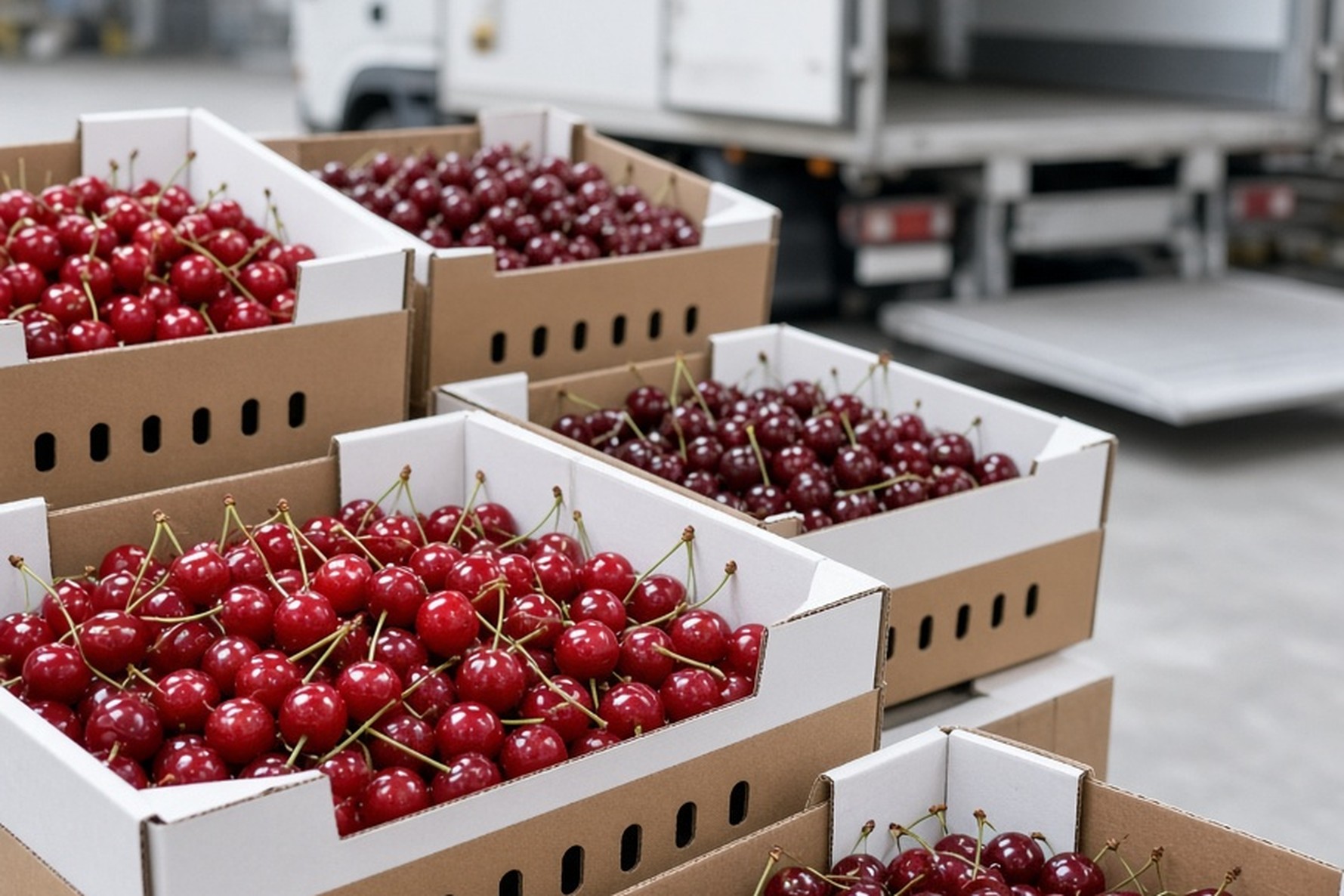
Cherries and sour cherries are orchard crops whose export value depends less on production volume than on post-harvest quality, cold-chain management and the ability to supply at the right time. Unlike many dry or processed agricultural commodities, in fresh-fruit trade the distance between orchard and destination market plays a decisive role in preserving economic value.
Iran's climatic diversity, mountainous production zones and staggered harvest windows across regions give it the capacity to grow a wide range of sweet cherry and sour cherry cultivars. This allows supply across different calendar periods — a factor of major importance to foreign buyers, because arrival timing can materially affect demand and selling price.
Uzbekistan, by virtue of its geography, proximity to Iran, expanding food-distribution networks and growing regional trade links, is a market where importers actively seek agricultural products of reliable quality. Here, low price alone is not the deciding factor; product uniformity, transportability, appropriate packaging and supply consistency carry equal weight.
For a professional importer, sourcing cherries and sour cherries from Iran requires precise product specification before any order is placed. Terms such as "export-grade cherry" or "premium sour cherry" are not sufficient for a commercial contract on their own. The buyer must know exactly which cultivar, size, colour, ripeness level and pack type will be delivered.
This guide walks through the practical import path from Iran to Uzbekistan — from product characteristics and quality standards through packaging choice, required documents, transport and the steps that reduce order risk.
1. The Regional Position of Iranian Cherries and Sour Cherries in Trade
Cherry and sour-cherry production in Iran is concentrated in areas whose climate suits temperate fruit trees. East Azerbaijan, West Azerbaijan, Ardabil, Khorasan Razavi, Tehran, Qazvin and other upland regions are well-known production centres for these crops.
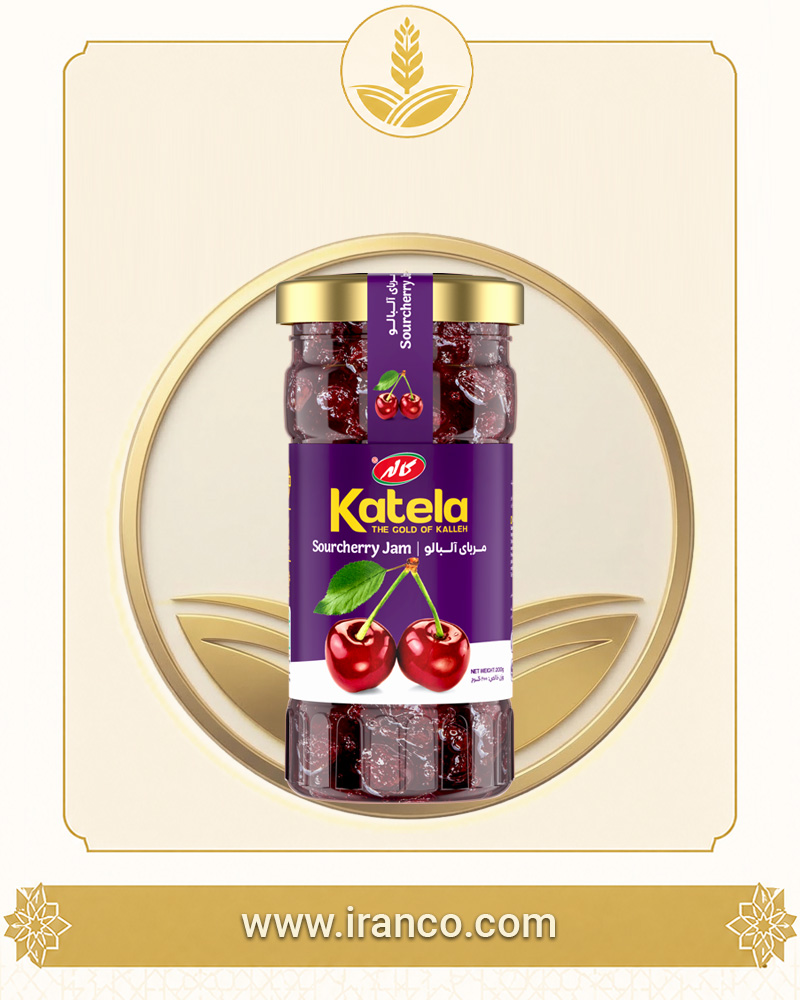
Sweet cherry generally commands higher economic value because fresh consumption channels are broader and large, well-coloured, firm cultivars attract export-market attention. Sour cherry, in addition to fresh use, has strong demand in food processing — concentrate, jam, syrup, fruit preparations and confectionery applications.
For the Uzbekistan market, Iran's geographic proximity is a significant advantage. In fresh fruit, a shorter transport route can reduce time to market and help preserve quality.
Export success, however, depends on more than production alone. The exporter must manage the full chain:
- Harvest at the correct maturity stage
- Pre-cooling immediately after picking
- Accurate size and grade sorting
- Removal of damaged fruit
- Selection of appropriate cartons or crates
- Temperature control throughout transport
- Alignment of arrival timing with the importer's sales plan
In fresh-fruit trade, the quality the buyer receives is the outcome of the entire supply chain — not orchard quality alone.
2. Understanding Cherry and Sour Cherry Types Suitable for Export
Cultivar selection is one of the first critical decisions in an export order. Each variety differs in size, colour, firmness, flavour, ripening window and transport tolerance.
Before ordering, an Uzbek buyer should define the primary sales channel:
- Fresh fruit market
- Modern retail chains
- Wholesale distribution
- Food processing industry
- Food-service and catering
Product destined for fresh retail must offer attractive appearance, uniform colour and adequate transport resistance. For processing, flavour, natural colour and soluble solids content often matter more than visual perfection.
Export Cherry vs Export Sour Cherry — Key Comparison
| Attribute | Export Cherry | Export Sour Cherry |
|---|---|---|
| Primary use | Fresh consumption and retail | Fresh consumption and processing |
| Colour importance | Very high | High |
| Flesh firmness | Critical for transport | Important, application-dependent |
| Impact sensitivity | High | High |
| Cold chain required | Essential | Essential |
| Main buying criteria | Size, appearance and shelf life | Colour, flavour and product integrity |
Parameters to Specify in a Professional Purchase Request
A professional enquiry should include:
- Product name and type (sour cherry or sweet cherry)
- Requested cultivar, final destination and intended application
- Fruit size, expected colour and packaging type
- Net weight per pack, order volume and required delivery date
Defining these items makes supplier quotations directly comparable.
3. Technical Specifications Expected by Uzbek Buyers
In professional trade, quality must be expressed as measurable criteria. A general agreement on "good product" usually leads to disputes at delivery. The buyer should define which parameters govern acceptance or rejection of the shipment.
| Parameter | Option or criterion | Importance |
|---|---|---|
| Fruit size | Uniform size aligned with target market | Determines appearance and price |
| Colour | Uniform colour and appropriate ripeness | Affects consumer acceptance |
| Firmness | Flesh resistance during transport | Reduces bruising and crushing |
| Skin condition | No cracks, wounds or rot | Reduces waste |
| Stem condition | Fresh, intact stems | Freshness indicator |
| Sort uniformity | Close match in size and quality | Increases resale value |
A frequent error in fresh-fruit imports is approving an excellent initial sample without recording its specifications in the contract. The final shipment may then differ in size, colour or defect percentage. Product specs should be agreed and confirmed before loading.
4. Quality Control of Cherries and Sour Cherries Before Export
Quality control for these products begins at harvest. Delayed picking or improper holding can degrade even the best cultivars.
Characteristics of Export-Grade Fruit
- Sound appearance with no mechanical damage
- Uniform colour and relatively firm flesh
- Consistent size within the lot and no signs of decay
- No severe skin cracking and fresh, intact stems
- Packaging without excessive compression
Defects That Reduce Shipment Value
| Defect | Effect on product |
|---|---|
| Bruising / crushing | Reduces fresh-market salability |
| Skin cracking | Increases spoilage risk |
| Surface blemishes | Lowers market appeal |
| Rot | Creates risk for the entire pack |
| Size inconsistency | Reduces export value |
In professional orders, buyers typically review samples, real product photos, sort specifications and packaging details before loading.
5. The Uzbekistan Market for Cherry and Sour Cherry Imports
Uzbekistan is a major Central Asian market for fresh agricultural products. Its market structure combines domestic production, seasonal imports and distribution through wholesalers, local markets and modern retail chains.
For fresh orchard fruit, importers typically need product that can reach the market shortly after harvest. Iran's proximity enables road-transport planning and shorter transit times — a critical factor for cherries and sour cherries.
Consumption in Uzbekistan is not limited to fresh fruit alone. Demand also comes from food processors, fruit-product manufacturers, confectionery producers and food-service operators.
Buyer Groups for Cherries and Sour Cherries in Uzbekistan
| Buyer group | Primary need | Expected characteristics |
|---|---|---|
| Fruit wholesalers | High volume and fast turnover | Competitive price and stable quality |
| Modern retail chains | Appearance and uniformity | Proper packaging and precise sorting |
| Processing industry | Continuous supply | Consistent product specifications |
| Food-service operators | Quality and availability | Regular delivery |
Wholesale vs Retail Market Differences
In wholesale channels, price and supply volume carry greater weight. Wholesale buyers seek lots they can distribute quickly with low waste rates.
Modern retail chains are more sensitive to product appearance. Uniform size, appropriate colour, clean packaging and complete product information matter more in this segment. For Iranian exporters, understanding this distinction is important: one pack type or grade may suit one sales channel but lack appeal in another.
6. Import Requirements for Cherries and Sour Cherries into Uzbekistan
Importing fresh agricultural products typically requires coordination among exporter, importer, freight carrier and border-control authorities. For a cherry or sour-cherry shipment, standard documentation may include:
- Commercial invoice and packing list
- Transport documents, certificate of origin and phytosanitary certificate
- Product specifications and packaging information
- Importer registration documents in the destination country
Exact document requirements may vary by transaction type, transport route, current regulations and importer status.
Information Recommended on Packaging
| Information | Importance |
|---|---|
| Product name | Product identification |
| Country of origin | Customs and trade compliance |
| Net weight | Transaction control |
| Packing date | Sales and inventory management |
| Exporter details | Shipment traceability |
| Storage conditions | Quality preservation |
For fresh products, transparent shipment information before dispatch is essential. Discrepancies between declared and actual specifications can erode commercial trust.
7. Appropriate Packaging for Cherry and Sour Cherry Exports to Uzbekistan
Packaging in fresh-fruit export is not merely a protective cover — it is part of quality management throughout transport and sale. Because cherries and sour cherries are highly sensitive to pressure, impact and temperature change, packaging must provide adequate ventilation, mechanical protection and easy handling.
Common Packaging Options
| Pack type | Application |
|---|---|
| Specialised plastic fruit crates | Bulk transport and reduced mechanical damage |
| Export cartons | Retail and supermarket channels |
| Small consumer packs | Direct supply to end customers |
| Standard palletisation | Organised transport and damage reduction |
Features of Suitable Packaging
- Adequate crush resistance and air circulation capability
- Prevention of moisture build-up and appropriate weight for handling
- Protection of fruit surfaces and compatibility with the chosen transport method
In cherry exports, unsuitable packaging can increase bruising and reduce visual quality even when fruit quality at harvest was excellent. For accurate pricing, the buyer should specify packaging type from the outset — a cherry lot in small retail cartons is not priced the same as a bulk shipment in large crates.
8. Transport and Cold Chain for Cherries and Sour Cherries from Iran to Uzbekistan
The single most important success factor in fresh-fruit export is maintaining the cold chain from harvest to destination. After picking, cherries and sour cherries continue biological processes. Rising temperature accelerates respiration, reduces flesh firmness and shortens shelf life.
Key Transport Management Stages
Harvest at the correct stage: Early harvest can reduce colour and flavour development; late harvest increases sensitivity to damage and decay.
Pre-cooling: Rapid temperature reduction immediately after harvest is one of the most important steps for quality preservation.
Controlled transport: Throughout the export route, transport environment temperature, stopover duration, ventilation, stacking arrangement and prevention of excessive compression must be managed.
Transport Mode Comparison
| Transport mode | Advantage | Limitation |
|---|---|---|
| Road | Suited to regional routes | Dependent on route conditions |
| Air | Very high speed | Higher cost |
| Sea | Suited to long routes | Usually less suitable for highly perishable fruit |
For the Iran–Uzbekistan corridor, road transport plays a special role in many regional transactions because it enables faster delivery compared with long-distance alternatives. Before contracting, the buyer should agree estimated delivery time, holding conditions and responsibility for in-transit quality control.
9. Price Drivers for Export Cherries and Sour Cherries
Export prices for cherries and sour cherries are not fixed figures. They shift according to cultivar, timing within the harvest season, fruit size, colour and appearance, percentage of first-grade fruit, packaging type, order volume, transport conditions, final destination and export preparation costs.
Factors Affecting Price
| Factor | Effect |
|---|---|
| Larger size | Usually increases market value |
| Product uniformity | Improves salability |
| Professional packaging | Raises cost but improves presentation |
| Volume orders | Enables better negotiation |
| Time from harvest | Direct impact on quality |
In professional trade, comparing price without comparing technical specifications can be misleading. Two offers with different prices may not be truly comparable if they differ in cultivar, size, packaging or delivery terms.
10. Competitive Comparison: Iran vs Regional Suppliers
The regional cherry and sour-cherry market is competitive. Countries compete on production season, quality, freight cost and export capacity.
| Country | Main advantage | Possible limitation |
|---|---|---|
| Iran | Geographic proximity, climatic diversity and access to growers | Cold-chain development still needed on some routes |
| Turkey | Extensive orchard export experience | Strong price competition |
| European producers | Advanced packaging and logistics standards | Higher cost for some markets |
Iran's advantage in the Uzbekistan market rests on a combination of geographic distance, regional supply capability, diverse production zones and flexibility to coordinate varied order types. Sustaining a commercial position, however, requires continuous quality control and delivery in line with agreed specifications.
11. Importer Checklist Before Placing a Cherry or Sour Cherry Order
Before placing an order, the buyer should define the following:
- Product type: sour cherry or sweet cherry
- Requested cultivar
- Product application: fresh consumption, wholesale, retail or processing
- Expected size and calibre
- Acceptable colour range
- Permitted percentage of visual defects
- Packaging type
- Net weight per pack
- Total order volume
- Required delivery date
- Transport conditions
- Required documents
- Acceptance criteria at delivery
Defining these items before purchase reduces the likelihood of disputes between buyer and seller.
Information Required for Accurate Pricing
Cherry and sour-cherry prices cannot be assessed accurately without complete product specifications. A professional purchase request should include:
- Product type and requested cultivar
- Size and colour
- Order volume and packaging type
- Pack weight, destination country and delivery city
- Required timing and preferred transport mode
The more precise the initial information, the more realistic the supplier quotations will be. On Iranco, buyers can register purchase specifications including product type, order volume, packaging and destination so that available supply options in Iran can be reviewed against their requirements.
Sourcing Cherries and Sour Cherries from Iran with Defined Purchase Specifications
The Iranco B2B platform (iranco.com) provides a specialist channel for international importers and buyers:
- Submit purchase requests by cultivar, size, grade and packaging type
- Coordinate supply from cherry and sour-cherry production regions across Iran
- Advisory on cold chain, road transport and export documentation
In international fresh-fruit purchasing, choosing a supplier on price alone rarely produces satisfactory results. The difference between two offers may relate to cultivar, size, sort quality, packaging type, harvest timing, transport conditions or the supplier's ability to deliver consistently.
Importers planning to buy cherries and sour cherries from Iran for the Uzbekistan market should define their expected technical specifications before requesting quotations. Product type, size, packaging, order volume, destination and delivery timing form the basis of precise commercial negotiation.
Iranco enables buyers and importers to submit purchase requests based on their required specifications. Product grade, order quantity, packaging and target market can all be included so that available supply options in Iran are reviewed on that basis.
Practical Import Process: Cherries and Sour Cherries from Iran to Uzbekistan
A successful import of these products typically follows four stages:
Step 1 — Define product specifications
Before any negotiation, clarify: sour cherry or sweet cherry? Fresh consumption or processing? What size is required? What packaging suits the destination market? What order volume is needed?
Step 2 — Review samples
Samples should be evaluated for appearance, colour, size, firmness, uniformity and packaging integrity.
Step 3 — Commercial agreement
The contract should specify product specifications, order quantity, delivery terms, transport responsibility, required documents and quality acceptance criteria.
Step 4 — Preparation and dispatch
After order confirmation, preparation includes harvest, sorting, packaging, final inspection, loading and dispatch.
Conclusion
Importing cherries and sour cherries from Iran to Uzbekistan is not a simple buy-and-sell transaction — it is a full chain spanning cultivar selection, quality control, harvest timing, packaging and transport. In this market, a product succeeds when it preserves its initial quality all the way to the buyer.
For an Uzbek importer, the most important pre-order decision is precise product specification. The gap between a routine shipment and a professional export lot usually shows up in details such as size uniformity, percentage of sound fruit, packaging type, temperature management and delivery coordination.
Iran's diverse production regions and staggered harvest seasons allow supply of cherries and sour cherries across different periods. Commercial success in foreign markets, however, depends on the supplier's ability to deliver product that matches agreed specifications.
Professional buyers should define their criteria for product type, grade, packaging, volume, transport conditions and required documents before placing an order. This makes quotation comparison more accurate and reduces delivery disputes. To explore sourcing options for Iranian cherries and sour cherries, buyers can register their requirements — product type, order volume, packaging and destination — through a purchase request so that available supply can be reviewed against target market needs.
Frequently Asked Questions About Importing Cherries and Sour Cherries from Iran to Uzbekistan
Which cherry type is best for export to Uzbekistan?
The best choice depends on the target market, sales channel and transport conditions. For fresh consumption, cherries with uniform size, attractive colour, firm flesh and adequate transport tolerance are usually preferred. Cultivar selection should align with delivery timing, transport distance and end-customer requirements.
How is the export price of Iranian cherries and sour cherries determined?
Price depends on cultivar, size, quality, harvest timing, packaging type, order volume, transport conditions and destination. Two shipments with similar labels may carry different prices due to differences in size, quality or packaging.
Is a cold chain necessary for importing fresh cherries?
Yes. Cherries and sour cherries are highly sensitive products. Rising temperature can reduce firmness, degrade appearance and shorten shelf life. Temperature management from harvest to destination plays a critical role in quality preservation.
What packaging is most suitable for exporting cherries and sour cherries?
Packaging depends on the sales channel. Bulk shipments typically use packs with strong mechanical resistance, while supermarkets favour smaller, visually appealing packs. Packaging must prevent compression, moisture build-up and product damage.
What is the minimum information needed to request a price quotation?
Buyers should specify product type, cultivar, size, order volume, packaging type, destination, delivery timing and preferred transport mode. Without this information, price comparisons will not be accurate.
How is product quality verified before shipment?
Quality verification typically involves sample review, real product photos and checks against criteria such as size, colour, visual condition and uniformity. Agreeing acceptance criteria before loading is essential.
How can cherries and sour cherries be sourced directly from Iran?
Professional sourcing begins with defining product specifications. Buyers should specify fruit type, grade, volume, packaging and destination. International buyers can submit these details through Iranco as a purchase request so that matching supply options in Iran can be reviewed.
What information is needed for an accurate price quote from Iran?
Accurate pricing requires cultivar, size, packaging type, order quantity, destination and delivery terms. On Iranco, price requests can be registered with these details so that supply review is based on actual purchase specifications.
Featured Products


Related Articles



