 Iranco Magazine Team
From fresh fruit to industrial raw material — grape requirements for different markets, processing, export and food manufacturing
Grape · Raisin · Concentrate · B2B
Specialized Grape Applications in Food Industry and Consumer Markets
From fresh fruit to industrial raw material — required grape characteristics for different markets, processing, export and food manufacturing.
Analytical Introduction
Grapes are one of the few agricultural products where nearly every segment of the value chain has economic use. They can be sold fresh, dried into raisins, used as a beverage raw material, or processed into concentrate, molasses, extract and ingredients for food manufacturing.
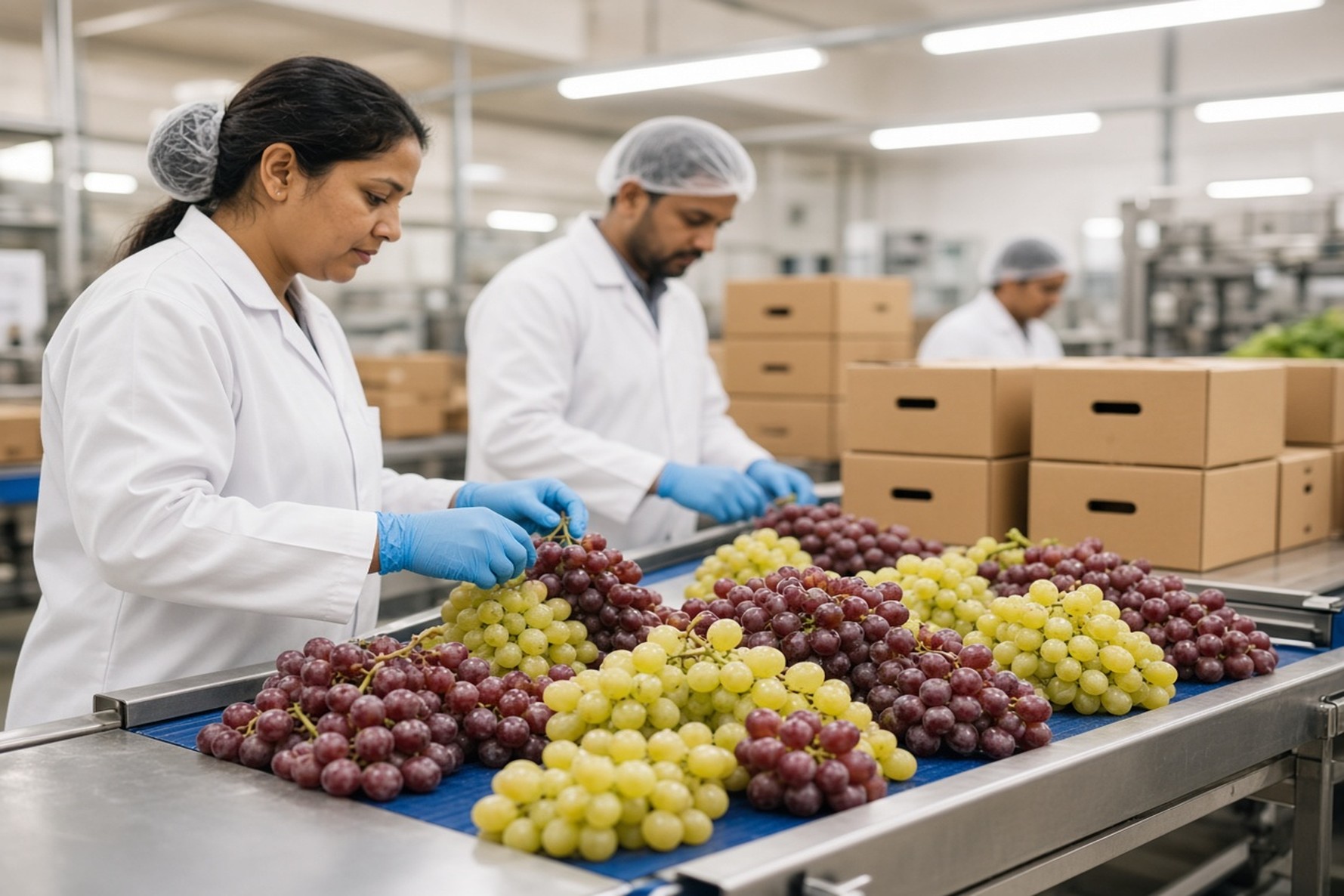
Global grape trade is not defined by volume alone. Each application requires specific product characteristics. Table grapes for retail chains need attractive appearance, uniformity, firm texture and good transportability; grapes for raisin production are evaluated mainly on sugar content, drying capacity, color, berry size and processing traits.
Iran, with climatic diversity, long cultivation history and many varieties, is a major regional producer. Provinces such as West Azerbaijan, Qazvin, Fars, Khorasan Razavi, Hamadan and Zanjan are well-known grape regions. Understanding specialized applications helps producers and buyers select product by real industry need rather than weight and price alone.
1. Grapes in the Food Industry Value Chain
Grapes are a base product moving from farm production through multiple conversion paths: fresh consumption, raisins, grape juice, concentrate, molasses, confectionery, breakfast and snack products, and extraction of valuable compounds from skins and seeds.
| Application | Key purchase criteria |
|---|---|
| Fresh consumption | Appearance, color, berry size, firmness, taste, shelf life |
| Raisins | Sugar, berry size, color, drying capacity |
| Grape juice | Juice yield, flavor, color, acidity |
| Concentrate | Brix, purity, product stability |
| Confectionery | Flavor, color, uniformity, compatibility with final product |
2. Grape Varieties and Application Matching
Grapes for raisins
- Adequate sugar and color/flavor retention after drying
- Uniform berry size and skin not excessively thick
- Good drying yield
Grapes for fresh market
- Attractive clusters, uniform berries and transport resistance
- Pleasant taste, balanced sweetness and low post-harvest damage
| Target market | Priority trait | Why it matters |
|---|---|---|
| Fresh export | Appearance and shelf life | Quality until consumption |
| Raisin production | Sugar and drying capacity | Processing yield |
| Concentrate | Brix and juice yield | Lower production cost |
| Food industry | Quality consistency | Uniform final product |
3. Technical Specifications Expected by Buyers
| Parameter | Range or option | Importance |
|---|---|---|
| Variety | Per end use | Market fit |
| Color | Green, red, dark | Application and sales |
| Berry size | Uniformity and grading | Direct value impact |
| Brix | Soluble solids | Sugar and ripeness indicator |
| Cluster condition | Sound, undamaged | Waste reduction |
| Packaging type | Per destination market | Quality in transit |
Brix is a common index for soluble solids in fruit. For concentrate and sweetened products, appropriate Brix improves process economics.
4. Quality Assessment
Premium grape traits
- Sound clusters, uniform berries, natural color and good flavor
- Proper texture, no severe mechanical damage, balanced ripeness
| Defect | Commercial impact |
|---|---|
| Crushed berries | Higher waste, shorter shelf life |
| Mold | Part of lot becomes unusable |
| Size inconsistency | Lower fresh-market appeal |
| Early harvest | Reduced flavor and sugar |
5. Testing and Quality Control
| Test | Primary use |
|---|---|
| Brix measurement | Soluble solids and sugar level |
| Acidity measurement | Flavor balance and processing quality |
| Visual inspection | Damage, rot and uniformity |
| Pesticide residues | Destination market compliance |
| Microbial contamination | Critical for processed products |
Export orders should define sampling method, sample count, acceptance/rejection criteria, required tests and quality approval responsibility upfront.
6. Industrial Applications
Different food sectors need different grape traits: raisins require sugar and drying capacity; concentrate needs Brix and juice yield; juice needs flavor and color; molasses needs natural sweetness; fresh market needs appearance and shelf life.
| Industry | Key trait |
|---|---|
| Raisins | Sugar, color, drying capacity |
| Concentrate | Brix, juice yield |
| Juice | Flavor, color, natural compounds |
| Molasses | Natural sweetness and density |
| Fresh market | Appearance and shelf life |
7. Markets and Trade Opportunities
Fresh markets focus on appearance, cluster uniformity, shelf life and retail packaging; industrial markets on quality consistency, supply volume, fixed technical specs and long-term contracts.
| Factor | Impact |
|---|---|
| Right variety selection | Better target market fit |
| Professional packaging | Less transit damage |
| Quality control | Fewer trade disputes |
| Harvest timing | Product quality retention |
8. Packaging for Different Markets
Fresh grape packaging aims to prevent mechanical pressure, reduce moisture exchange, preserve appearance and allow adequate ventilation. Common formats include cartons, consumer packs, retail clamshells and bulk multi-kilo packs.
| Product | Common packaging |
|---|---|
| Raisins | Bags, boxes, retail packs |
| Grape molasses | Glass or food-grade plastic containers |
| Concentrate | Industrial tanks or food-grade bulk packs |
9. Transport and Storage
- Short transit time, proper temperature and adequate ventilation
- Prevent mechanical pressure and correct stack arrangement
- Pre-cooling after harvest to slow quality loss
| Problem | Consequence |
|---|---|
| Temperature rise | Reduced shelf life |
| Excessive pressure | Berry crushing |
| Poor ventilation | Increased spoilage |
10. Pricing and Accurate Quotes
- Variety, quality, berry size, sugar, processing type and packaging
- Order volume, export destination, transport method and purchase timing
Buyers can submit purchase specifications — product type, volume, packaging and destination — through Iranco for matching supply options.
11. Global Market Competition
| Country | Advantage | Challenge |
|---|---|---|
| Iran | Variety diversity and processed products | Packaging and international marketing development |
| Turkey | Strong raisin market presence | High competition |
| China | High production volume | Quality variation |
| USA | Advanced cold chain | Higher production cost |
| Chile | Fresh export to distant markets | Export market dependency |
12. How Professional Buyers Select Suppliers
| Mistake | Consequence |
|---|---|
| Price-only buying | Likely quality reduction |
| Undefined end use | Wrong variety selection |
| No acceptance criteria | Delivery disputes |
Importer Checklist Before Ordering
- End use — fresh or industrial
- Required variety and expected traits
- Order volume, delivery time and destination country
- Packaging type, unit weight and pack count
- Quality criteria such as size, color, Brix or defect limits
- QC testing needs and transport/delivery conditions
- Entry documents and pre-shipment sample approval method
13. Standards and Market Entry Requirements
| Product type | Control focus |
|---|---|
| Fresh grapes | Visual soundness, storage, residues |
| Raisins | Moisture, appearance, product safety |
| Concentrate | Chemical composition, purity, specs |
| Molasses | Raw material quality and processing conditions |
14. Future Food Industry Applications
Emerging trends include grape extracts from skins and seeds, natural colorants, packaged raisins, dried fruit blends and breakfast products. Economic value can extend well beyond raw grape sales.
15. Export Supply Based on Buyer Specifications
Iranco allows buyers to submit grape purchase requests with precise specifications. Application type, required volume, packaging and destination can be included so available Iranian supply is reviewed against actual buyer needs.
Frequently Asked Questions
Which grape type is best for export?
It depends on target market and application. Fresh markets prioritize appearance and shelf life; processing industries prioritize sugar, processing yield and quality consistency.
Are raisin grapes different from table grapes?
Yes. Raisin grapes need adequate sugar, drying capacity and post-processing quality retention; table grapes are evaluated mainly on appearance, texture and shelf life.
What is the top quality criterion for industrial buyers?
Brix, quality uniformity, product soundness, processing yield and reliable supply are primary criteria.
How can I source grapes directly from Iran?
Define product type, application, quantity, packaging and destination, then submit a purchase request through Iranco.
How is export grape price determined?
Price depends on variety, quality, season, packaging, order volume, destination and transport conditions.
Conclusion
Grape commercial value depends on selection, grading, processing and supply strategy — not production volume alone. A grape suited for fresh export is not necessarily best for concentrate or raisins. For professional buyers, defining precise specifications before trade is the most critical step. Submitting a detailed purchase request on Iranco enables better-matched supply options across markets.
Featured Products
Related Articles



