 Iranco Magazine Team
Expert guide to physicochemical specs, standards, aseptic packaging, laboratory tests, and supply-chain management for food processors
Cold break · Bostwick · Aseptic · Industrial B2B
Cold-Break Tomato Paste: Industrial Procurement Guide
Expert guide to physicochemical specs, standards, aseptic packaging, laboratory tests, and supply-chain management for food processors — for procurement managers, international traders, and QC specialists.
Analytical introduction
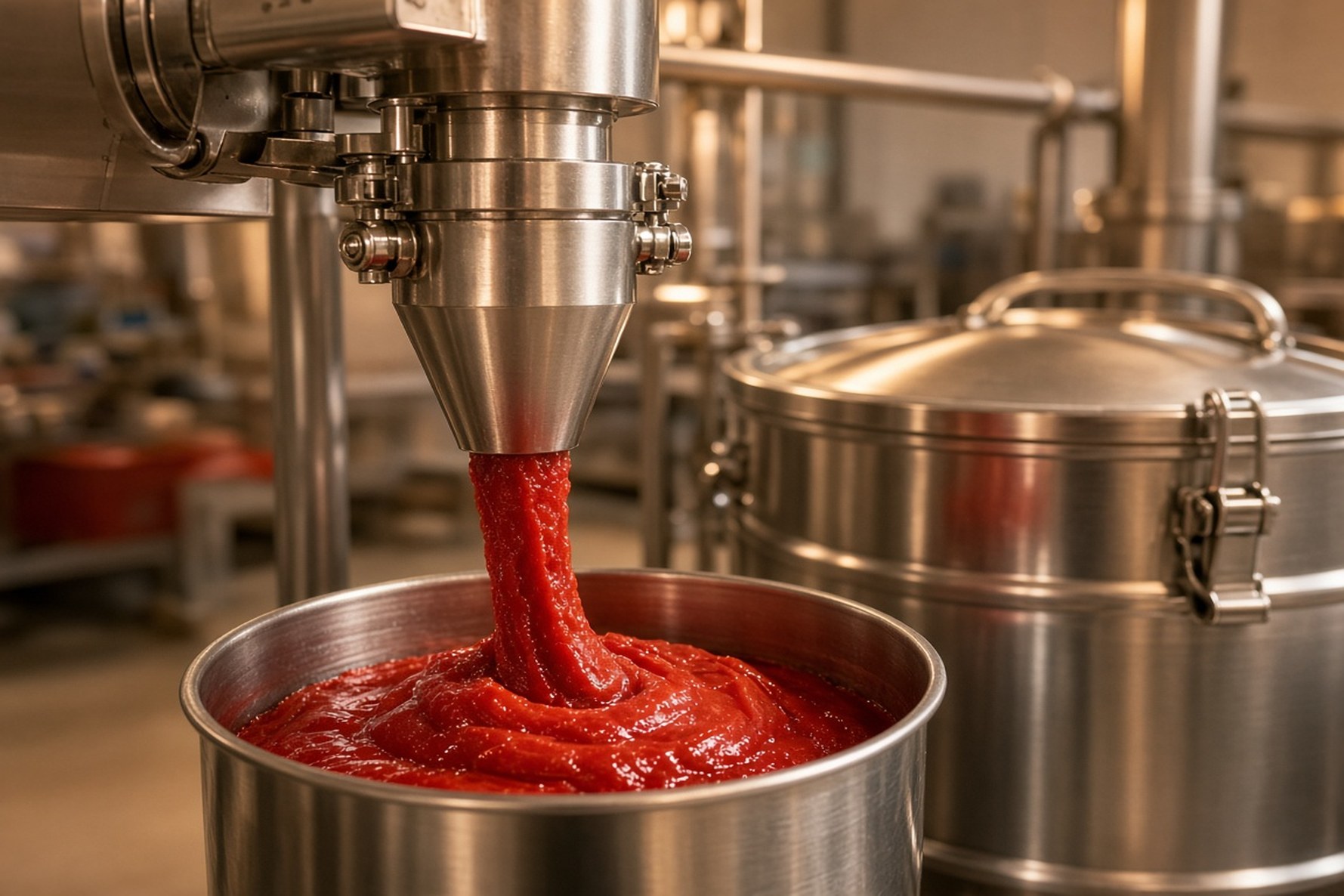
International trade in processed tomato products is a dynamic food-industry value chain. Hot Break vs. Cold Break defines pectin structure, rheology, color, and aroma. Cold break at 60–75°C allows controlled pectin hydrolysis — fluid paste, bright red color — ideal for tomato juice, soups, spray-dried powder, and low-viscosity sauces.
Iran operates vacuum evaporation and 220 L aseptic drums for EAEU and GCC markets. Procurement without rigorous COA (Bostwick, HMC, a/b) raises plant and customs risk.
1. Biochemistry: cold vs. hot break
PME and PG release on crushing. Hot break at 90–98°C preserves pectin networks; cold break lowers structural viscosity and protects lycopene and fresh aroma.
| Index | Cold break | Hot break |
|---|---|---|
| Pre-heater | 60–75°C | 90–98°C |
| Bostwick | 6–10 cm | 3–6 cm |
| a/b | > 2.1 | 1.9–2.1 |
| Evaporator Brix | 36–38% | 28–32% |
2. COA and physicochemical specs
NTSS 28–30 or 36–38%; Bostwick 6–10 cm @ 12.5 Brix; a/b ≥ 2.1; lycopene ≥ 50 mg/100 g; pH 4.0–4.4; HMC < 40%; burnt specks ≤ 5–7/10 g; heavy metals per destination.
3. Downstream applications
- Tomato juice and nectars
- Soups and consommés
- Fish in tomato sauce
- Spray-dried tomato powder
4. Iran production and exports
Southern, northwestern, and northeastern basins with complementary seasons; exports to Russia, Iraq, UAE, and CIS. Iranco aligns RFQs with export-grade plants.
5. Aseptic pack and storage
Multilayer bag in 220 L drum; ~240 kg net; up to 24 months; store at 4–15°C.
6. 20 ft logistics
80 drums, ~19.2 t net; dunnage, bracing, thermal liner on hot routes.
7. Tariffs and regulations
HS 20029010; TR CU 021/023/022; GSO 1057; matching batch on drum, label, and COA.
8. Pricing and competitors
6.8–7.2 kg fresh tomato per kg 36–38 paste; cost per Brix unit; Iran: energy and regional logistics.
9. Defects and fraud
- Caramelization, low a/b
- Black specks from evaporator
- Starch — iodine test
- Blown drum
10. Buyer checklist
- “Cold Break Process” in contract
- Brix ±0.5%
- Bostwick 6–10 cm
- HMC and a/b
- Third-party inspection and pre-shipment sample
11. Price inquiry data
Brix, Bostwick, 220 L pack, FCL, Incoterms, EAC/halal documents.
Summary
Cold break at 60–75°C with Bostwick 6–10 cm and high a/b is essential for juice and powder lines; risk is managed via COA and standard aseptic drums.
FAQ
1. Structural difference cold vs. hot break?
Pre-heat at 60–75°C keeps pectolytic enzymes active in cold break; above 90°C in hot break for thick ketchup-grade paste.
2. Why cold break for tomato juice?
Hot break retains pectin and gels on dilution; cold break reconstitutes smoothly with bright color.
3. Standard Bostwick?
6–10 cm in 30 s @ 12.5 Brix and 20°C.
4. Aseptic shelf life?
Up to 24 months in intact bag; 4–15°C storage preserves a/b.
5. HMC and customs?
Max 40% under TR CU 021/2011 for EAEU clearance.
6. Starch detection?
Lugol iodine drop — instant blue-purple; Codex forbids added starch.
7. Direct supply from Iran?
Submit Brix, Bostwick, color, and volume via Iranco procurement request.
8. Proforma data?
Brix, Cold Break, Bostwick, 220 L drum, FCL count, port, Incoterms 2020.
Featured Products


Related Articles



