 Iranco Magazine Team
Registered export markets, destination selection logic and premium Akbari positioning in luxury segments
Export Guide · Akbari Pistachio · Real Buyer Markets
Real Buyer Markets for Akbari Pistachio from Iran: What Does Foreign Trade Data Say?
Registered export destinations, destination selection logic, and the position of premium Akbari pistachio in luxury markets — from trade data and quality criteria to packaging, pricing and importer checklists.
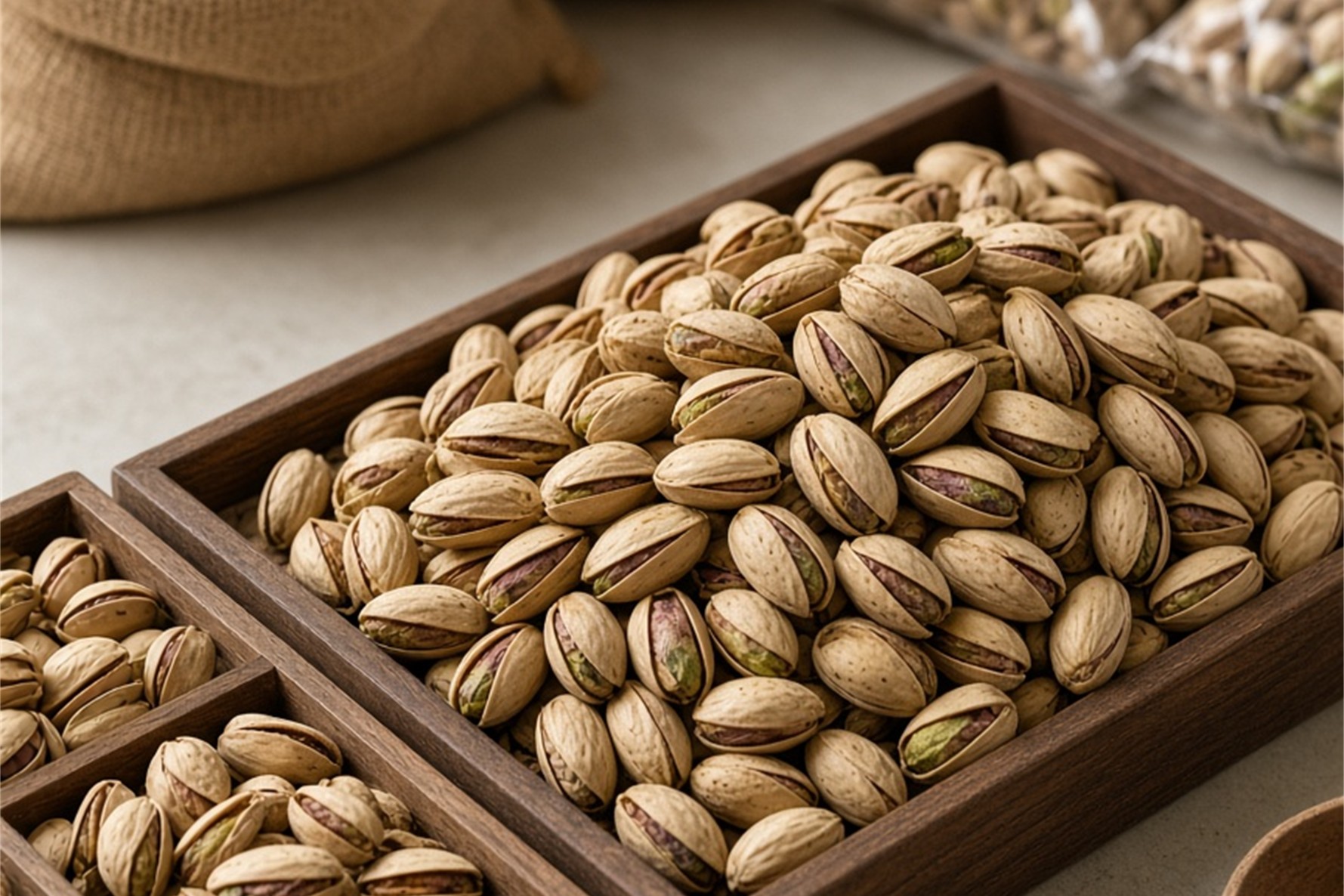
Akbari pistachio, one of Iran's elongated premium cultivars, is valued internationally primarily on quality attributes — elongated appearance, natural split rate, uniformity, kernel-to-shell ratio and suitability for high-value market segments. This guide focuses on real buyer markets, export destination selection criteria, quality control requirements and the commercial factors that define this cultivar's export value.
In global pistachio trade, the gap between an ordinary lot and a premium lot is defined by details: kernel elongation, size uniformity, natural split percentage, kernel integrity, ivory shell colour, breakage level, storage conditions and food safety test results. Akbari holds a distinctive position among buyers sourcing for premium retail, gift packaging, luxury nut counters or customers highly sensitive to product appearance.
Appearance alone, however, is not enough for export success. Professional markets seek suppliers who can guarantee consistent quality, required documentation, appropriate packaging and repeat order capability. Analysing real Akbari buyer markets requires separating two concepts: actual markets (countries and customers with a documented presence in trade or existing supply chains) and potential markets (countries with consumption, income, food culture or distribution capacity but not yet major export destinations for this cultivar).
1. Akbari pistachio in Iran's pistachio export structure
Iran is one of the world's best-known pistachio producers and the crop ranks among the country's most important agricultural export commodities. Cultivar diversity, long cultivation history, processing experience and historical presence in global markets all underpin Iran's position in pistachio trade.
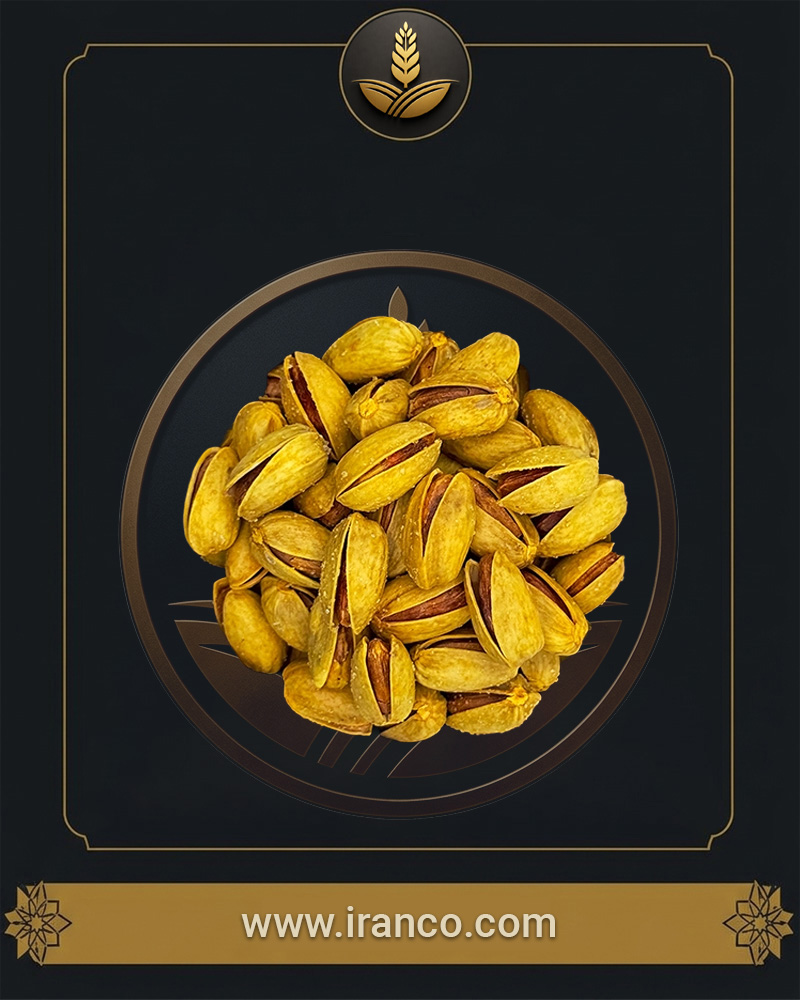
Among cultivars, Akbari is widely recognised as an elongated, large-kernel type — attributes that align it with products designed for direct consumption, luxury packaging and premium retail. In professional trade, however, cultivar name alone is not the purchase criterion. A wholesale buyer typically evaluates a bundle of parameters:
- Kernel size and grading
- Natural split percentage
- Empty-shell rate
- Lot uniformity
- Breakage percentage
- Shell colour and appearance
- Kernel quality
- Flavour and freshness
- Storage conditions
- Food safety test results
Two lots labelled identically as "Akbari pistachio" can therefore carry very different commercial value.
Standard Akbari vs premium export grade
In export markets, premium grade is defined by a set of attributes, not simply larger size. Akbari suitable for quality-sensitive markets must create visual uniformity on retail shelves, in consumer packs or gift products.
| Attribute | Importance for buyer |
|---|---|
| Kernel elongation | Enhances visual appeal |
| Uniform size | Delivers consistent consumption experience |
| Natural split | Suitable for direct retail sale |
| Kernel-to-shell ratio | Affects economic value |
| Appropriate colour | Influences first customer impression |
| Kernel integrity | Reduces return risk |
Professional buyers are not looking for a product that looks good only at sampling — they need consistent quality across the entire shipment.
2. Real Akbari buyer markets: how export destinations are chosen
Export destination selection for Akbari must be based on actual purchasing behaviour. Countries that import pistachio are not all equally suited to this cultivar. Consumption type, purchasing power, distribution structure and competitor presence determine how well a market aligns with Akbari's positioning.
Real market analysis requires examining several factors simultaneously:
- Pistachio import volume: High import volume does not automatically mean premium Akbari demand — much demand may be for processed pistachio, food industry inputs or economy grades.
- Consumption structure: Markets where end consumers place greater weight on appearance, packaging and quality typically have more capacity for premium cultivars.
- Distribution network: Specialist nut importers, premium retailers, packaging companies and food distributors play a critical role in successful market entry.
- Supplier competition: Iranian pistachio competes with other major producers, especially the United States. Iran's advantage must be defined through quality, cultivar, flavour, trade history and supply reliability.
3. Actual vs potential Akbari markets
A common export analysis error is treating a country's theoretical capacity as its real market. An actual market shows clear signs of product purchase — recorded imports, specialist importers, commercial orders, active distribution channels or a history of buying from Iran.
A potential market may not yet have converted for reasons including:
- Insufficient product cultivar awareness
- Intense competition from existing suppliers
- Trade restrictions
- Different consumer preferences
- Freight cost
- Need to build sales networks
| Market type | Characteristic | Export decision |
|---|---|---|
| Actual market | Recorded purchases and existing customers | Focus on quality retention and sales growth |
| Potential market | Consumption capacity without strong presence | Requires careful entry assessment |
For Akbari exporters, understanding this distinction concentrates sales and marketing resources on destinations with the highest probability of converting into real orders.
4. Technical specifications professional buyers evaluate
In export transactions, technical specifications must be defined before order placement. Terms like "first grade" or "excellent quality" are insufficient for professional contracts. The buyer must know exactly what product they will receive.
| Parameter | Importance |
|---|---|
| Cultivar | Defines appearance and target market |
| Size | Affects price and application |
| Natural split % | Critical for direct retail |
| Empty-shell % | Reduces economic value |
| Breakage % | Affects appearance and use |
| Moisture | Linked to storage and quality |
| Aflatoxin | Food safety criterion |
| Uniformity | Essential for premium packaging |
Kernel elongation
One of Akbari's best-known attributes is its elongated form. In markets where product appearance matters, this is a clear commercial advantage.
Kernel-to-shell ratio
A favourable kernel-to-shell ratio has economic importance because it increases the edible portion. Comparing lots on this basis can materially affect purchase value.
Uniformity
A premium export lot should show minimal size and appearance variation between kernels. Uniformity makes final packaging look more professional and delivers a more consistent customer experience.
Colour
Ivory shell colour and kernel appearance — especially in direct retail — influence first customer impression. Discolouration, stains or signs of poor storage can reduce product value.
5. Akbari quality control — from approved sample to export shipment
In international dried-fruit trade, the gap between an approved sample and the final shipment is one of the buyer's greatest risks. Pistachio is a natural product and harvest year, orchard conditions, processing, storage and transport can all cause quality variation. Professional buyers therefore define acceptance criteria explicitly before bulk purchase.
Aflatoxin
Aflatoxin is among the most important food safety topics in pistachio trade. These toxic compounds can develop when certain fungi grow under poor harvest, drying or storage conditions. For export markets, aflatoxin control is critical because many importing countries set strict maximum levels for tree nuts. Control must begin at harvest and continue through export preparation with proper sampling.
Moisture
Inappropriate moisture reduces storage quality and creates conditions for quality decline. Professional buyers typically specify expected moisture parameters before purchase.
Visual inspection
Visual control covers broken kernels, discolouration, mould signs, abnormal stains, empty shells, size variation and foreign matter.
Sensory evaluation
Taste, freshness, natural aroma and absence of off-flavours also matter — especially in premium markets where end-consumer experience is paramount.
| Criterion | Why it matters |
|---|---|
| Exact cultivar | Prevents product-type disputes |
| Size or ounce grade | Defines quality tier |
| Natural split % | Controls product appearance |
| Breakage level | Maintains presentation quality |
| Aflatoxin limit | Safety compliance |
| Packaging type | Aligns with destination market |
| Net weight | Prevents commercial disputes |
Buyers sourcing Akbari from Iran should define these items before requesting prices so commercial offers are comparable. On Iranco, purchase requests for this product can be structured by technical specifications — cultivar, grade, order volume, packaging type and destination — so supply options in Iran are reviewed against the buyer's actual requirements.
6. Real export markets for Iranian Akbari pistachio
Iranian pistachio is exported to many countries, but not all destinations are equally suited to premium Akbari. Destination selection must follow demand type. Markets where end consumers pay more attention to product appearance, premium packaging and consistent quality typically align better with elongated, high-value cultivars.
Suitable markets for Akbari usually share these characteristics:
- Adequate consumer purchasing power
- Presence of specialist nut importers
- Demand for premium products
- Capacity for packaged retail sale
- Attention to product origin
- Ability to sell through higher value-added retail channels
| Market type | Primary buyer need | Akbari fit |
|---|---|---|
| Premium nut retail | Appearance, size, uniformity | High |
| Food industry | Price, supply stability, processing suitability | Specification-dependent |
| General wholesale | Volume and competitive price | Moderate |
| Gift packaging | High appearance and quality | High |
Akbari finds its best commercial position when marketed as a premium product, not merely a bulk commodity.
7. Iran's competition in the global pistachio market
The global pistachio market is shaped by several major producers. Iran and the United States are the leading players, each with distinct production and trade characteristics. Competition is not based on volume alone — cultivar, target market, production cost, export conditions, trade history and buyer responsiveness all matter.
| Country | Main advantage | Limitation or challenge |
|---|---|---|
| Iran | Cultivar diversity, export history, premium grades | Requires strong uniformity and QC management |
| United States | Industrial production and organised supply chain | Greater focus on certain commercial cultivars |
| Turkey | Proximity to regional markets | More limited capacity vs major producers |
Iran's recommended positioning for Akbari in this competition is as a premium cultivar with distinctive visual characteristics — reinforced through consistent quality, appropriate packaging and direct relationships with specialist buyers.
8. Appropriate packaging for Akbari pistachio export
Packaging in pistachio export is not only a transport issue — it is part of the product's commercial value. Package type should be chosen based on destination market, sales channel and storage duration.
| Package type | Application |
|---|---|
| Bulk bags | Industrial and wholesale sale |
| Small consumer packs | Retail and supermarket |
| Vacuum packs | Enhanced storage protection |
| Premium retail / gift packaging | Luxury and gift markets |
In quality-sensitive markets, packaging must simultaneously:
- Preserve freshness
- Prevent moisture uptake
- Reduce physical damage
- Communicate quality perception
- Provide complete product information
Product name, country of origin, net weight, production or packing date and destination-market labelling requirements must comply with the regulations of the target country.
9. Transport and storage of Akbari pistachio in the export chain
Unlike fresh produce, pistachio does not require a cold chain, but storage conditions matter greatly. Heat, humidity and prolonged exposure to adverse environments can reduce product quality.
Important factors in transport:
- Environmental humidity control
- Avoiding contact with odour sources
- Using appropriate packaging
- Protection against impact
- Proper stacking and stowage
For sea freight, route duration planning is important. Product must be packed so that initial quality is preserved throughout transit. International buyers should evaluate delivery terms, preparation time, packaging type and transport route alongside product price when placing orders.
10. Factors determining export Akbari pistachio price
Akbari pistachio price is not a fixed number — it depends on a combination of factors. Even within a single harvest season, quality differences can cause significant variation between lots.
| Factor | Effect |
|---|---|
| Kernel size | Larger kernels typically command higher value |
| Natural split % | Increases appeal for direct consumption |
| Uniformity | Suitable for premium packaging |
| QC test results | Affects market acceptance |
| Packaging type | Changes final cost |
| Order volume | Affects commercial terms |
What information is needed for an accurate quote?
To receive a realistic price, the purchase request should include complete information. Simply stating "export Akbari pistachio" is usually insufficient for comparing offers. Buyers should specify:
- Exact product type: Akbari pistachio
- Desired size or grade
- Order quantity
- Packaging type
- Destination country
- Delivery city or port
- Laboratory testing requirements
- Preferred payment or delivery terms
This information helps ensure received offers are evaluated against a common specification.
11. Importer checklist before placing an Akbari order
Before bulk purchase, importers should review the following:
- Define the exact product cultivar.
- Specify required size or ounce grade.
- Obtain a sample before the main order.
- Inspect sample appearance, flavour and uniformity.
- Define shipment acceptance criteria.
- Review quality control test results.
- Set acceptable limits for breakage and defects.
- Choose packaging appropriate for the destination market.
- Specify net weight per package.
- Verify supplier supply capacity.
- Confirm order preparation lead time.
- Align transport and delivery terms.
- Review destination-country documentation requirements.
In export orders, gaps between buyer expectations and actual product specifications usually arise when technical criteria were not defined precisely from the outset.
12. Sourcing Akbari pistachio from Iranian producers by market need
Successful Akbari procurement is not limited to choosing the right product — alignment between technical specifications, order volume, packaging and destination market is equally important. Importers seeking this cultivar should submit requests with details such as size, natural split percentage, packaging type, required quantity, destination and quality control requirements.
Iranco can help international buyers structure purchase requests based on precise product specifications and review available supply options in Iran matched to market requirements.
- Specification-based sourcing: Requests structured by cultivar, grade, volume, packaging and destination.
- Quality alignment: Supply options reviewed against aflatoxin, moisture and appearance criteria.
- Export support: Connections to Iranian processors and exporters for repeat B2B supply.
Conclusion
Iranian Akbari pistachio delivers its greatest commercial value in global markets when positioned as a premium cultivar with defined characteristics. Kernel elongation, uniform appearance, favourable kernel-to-shell ratio, natural split, colour and rigorous aflatoxin control are the factors that determine this product's place in professional markets.
Analysis of real buyer markets shows that export destination selection should not rely on market size or purchasing power alone. Actual markets matter when trade data, importer networks and real purchasing behaviour are examined together. Potential markets require deeper understanding, commercial relationship development and careful entry assessment.
For Iranian exporters, Akbari growth depends more on improving value per shipment than on increasing volume alone. Precise grade definition, technical specification disclosure, continuous quality control and packaging matched to the customer are the main factors in converting an agricultural product into a premium export commodity.
Professional buyers must evaluate the product beyond cultivar name. A successful transaction forms when product specifications, destination market needs and supplier capability are aligned within a clear framework.
FAQ
Is Akbari pistachio suitable for luxury markets?
Yes. Akbari's elongated form and distinctive appearance make it suitable for market segments where product appearance carries high weight. Success in luxury channels, however, depends on uniformity, kernel quality, packaging and strict lot specification control.
What is the most important criterion when buying export Akbari pistachio?
The key criterion is a combination of physical and quality attributes. Cultivar, size, natural split percentage, uniformity, product integrity and food safety test results should all be evaluated together — not in isolation.
Does larger size always mean better quality?
No. Size is one valuation factor, but final quality depends on freshness, uniformity, kernel integrity and storage conditions. A smaller but uniform, fresh lot can outperform a large but inconsistent one.
Why does aflatoxin matter in export pistachio purchases?
Many importing countries set legal maximum levels for this contaminant. Aflatoxin control is part of ensuring export product safety and avoiding border rejection, return costs and loss of market access.
How can Akbari pistachio be sourced directly from Iran?
The process typically begins with defining product specifications, order quantity, packaging type, destination and quality criteria. Buyers can submit this information through Iranco as a structured purchase request so available supply options in Iran are reviewed against their requirements.
What information is needed to receive an Akbari pistachio price quote?
Cultivar, size, order volume, packaging type, destination, delivery terms and quality control requirements are the core inputs. Without these specifications, price comparison may not be accurate.
Is Akbari pistachio suitable for the food industry?
Depending on grade and specifications, it can be used in various food applications. However, many buyers choose this cultivar specifically for its distinctive appearance in direct consumption and premium product lines rather than bulk industrial processing.
Featured Products






Related Articles



