 Iranco 杂志团队
从杰贝阿里与苏哈尔到土耳其、高加索与南北走廊——为伊朗商品在区域及国际市场的再分销选择合适路线
出口物流 · 过境 · 再出口
对伊朗出口重要的过境与再出口枢纽
从杰贝阿里、苏哈尔到土耳其、高加索与南北走廊——为伊朗商品在区域及国际市场的再分销选择合适路线。
导言
Moving cargo to the border is not the same as having the best export structure. The decisive stage often starts after exit from Iran: which port, direct to buyer or free zone, consolidation economics and line connectivity.
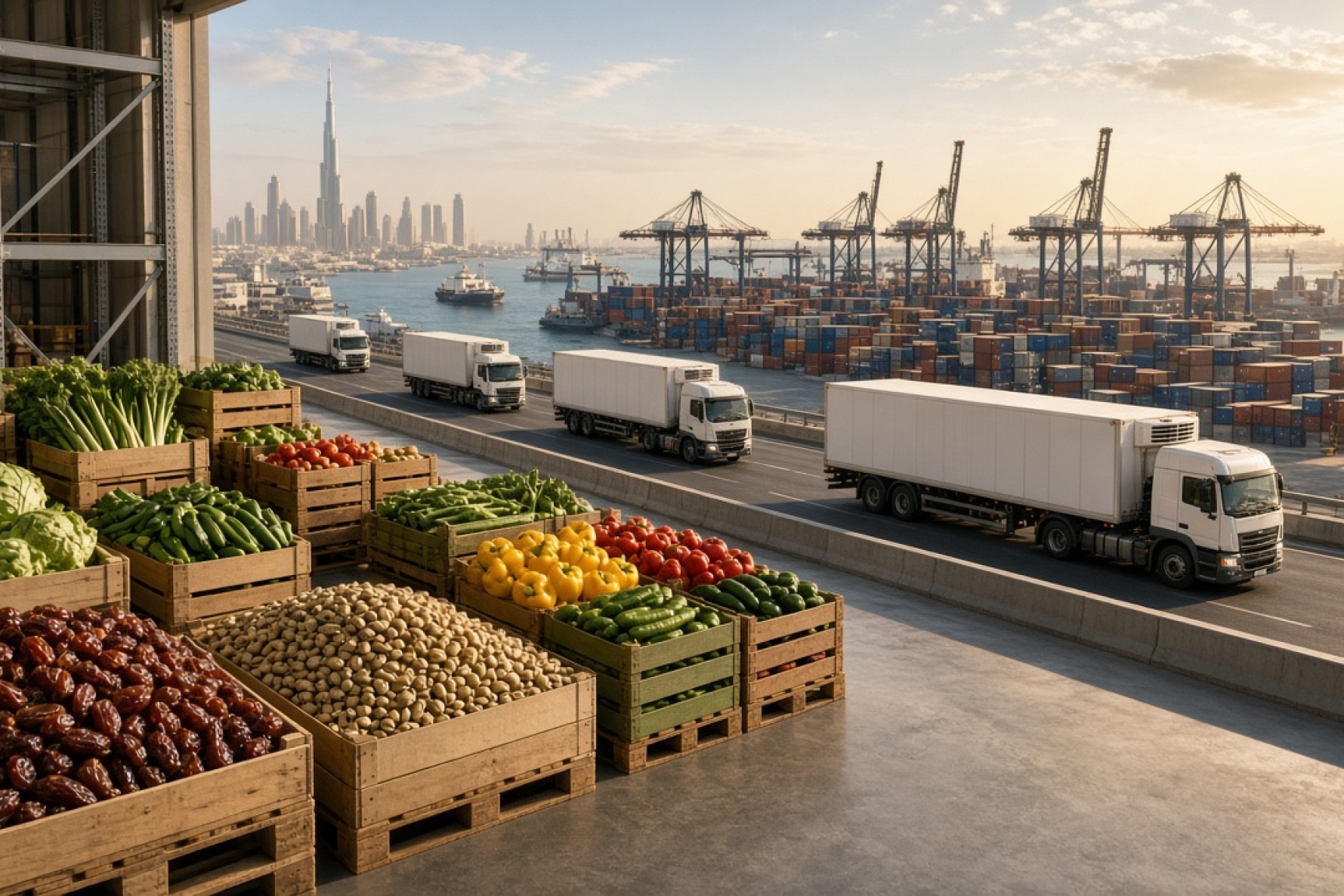
The UAE (Dubai/Jebel Ali) is the best-known re-export hub around Iran. Oman (Sohar, Salalah, Duqm) links to the Indian Ocean. Turkey connects via Bazargan–Gürbulak to Europe. Azerbaijan and Caspian ports open Russia and Central Asia.
No single route suits all cargoes — fresh, temperature-controlled, petrochemical, construction, nuts and retail all differ. Transit, transshipment, free-zone entry and re-export are four distinct operations.
Hub choice should be designed into the export chain, not decided after the shipment is ready.
1. 过境枢纽与再出口枢纽有何区别?
In international trade, not every port a cargo passes through is a re-export hub. The actual customs operation must be defined first.
In transit, goods move through a country's territory under customs control without necessarily entering its domestic market — e.g. an Iranian truck via Bazargan into Turkey under transit to Mersin or an exit route to Europe.
Transshipment is mainly maritime: a container is discharged from one vessel and loaded onto another. In re-export, foreign goods enter a customs territory or free zone and are exported again without becoming local production.
Critical point: re-export from Dubai or Sohar does not change origin. Relabelling or invoicing through an intermediary does not make Iranian goods UAE/Omani origin unless substantial transformation criteria are met.
| 操作 | 进入枢纽国内市场 | 仓储 | 可再发运 | 自动改变原产地 |
|---|---|---|---|---|
| 过境 | 否 | 有限且受控 | 是 | 否 |
| 转运 | 否 | 通常短期 | 是 | 否 |
| 自贸区 | 不一定 | 是 | 是 | 否 |
| 再出口 | 特殊程序下 | 是 | 是 | 否 |
| 确定进口 | 是 | 是 | 可后续出口 | 否 |
This distinction determines when to account for import duty, customs bond, warehouse, declarations and tax.
2. 伊朗货物主要出口通道
Before choosing a foreign hub, define which Iranian gateway the cargo will use. Factory-to-border distance, container access, cold capacity and truck return routes affect final cost.
Shahid Rajaee and Bandar Abbas connect southern container trade to the Gulf and onward ocean lines. In 11 months of FY 1403, Shahid Rajaee special zone reported ~5.3 million tonnes — the highest external transit among Iranian origins.
Bazargan is the main road gate to Turkey (Gürbulak). Astara is key on the western North–South branch. Anzali and Amirabad serve the Caspian; Sarakhs and Incheh Borun serve Central Asia.
| 伊朗出口门 | 后续路线 | 主要用途 |
|---|---|---|
| 沙希德·拉贾伊/阿巴斯港 | 阿联酋、阿曼、印度及远洋航线 | 集装箱海运 |
| 巴扎尔甘 | 土耳其及欧洲 | 公路运输 |
| 阿斯塔拉 | 阿塞拜疆及俄罗斯 | 南北走廊 |
| 安扎利/阿米拉巴德 | 俄罗斯及哈萨克斯坦 | 里海海运 |
| 萨拉赫斯 | 土库曼斯坦及中亚 | 铁路公路 |
| 因切博伦 | 土库曼斯坦、哈萨克斯坦及俄罗斯 | 铁路走廊 |
The exit point should not be chosen only by nearest border — truck waiting or mode change can erase a shorter route's advantage.
3. 阿联酋与杰贝阿里
In the first nine months of 2025 the UAE recorded ~597.7 billion AED in non-oil re-exports. Jebel Ali handled ~15.5 million TEU in 2024 with declared capacity near 19 million TEU.
Jebel Ali's real advantage appears after arrival: shipping lines, specialised warehouses, consolidation/splitting and sales to multiple countries. Regional inventory models suit exporters with several regional buyers.
A UAE free zone is not the same as the UAE domestic market. Dubai Customs runs separate procedures for export, transit, transfer, temporary admission and re-export; VAT treatment in designated zones is conditional.
- Nuts and shelf-stable foods
- Food-industry inputs and packed consumer goods
- Industrial parts and non-bulky petrochemicals
- Goods with scattered buyers or container consolidation/splitting needs
For low-value bulky cargo, an extra port and warehouse leg may not fit the margin.
4. 阿曼:苏哈尔、塞拉莱与杜库姆
Oman is not a copy of Dubai; its value is geography, free zones and direct access to the Arabian Sea and Indian Ocean. Oman reported ~512.1 million Omani rials bilateral trade with Iran in 2024.
Sohar in northern Oman offers zero import/re-export duty in-zone per official incentives; inter–free-zone moves use the Bayan customs system.
Salalah in the south suits East Africa, the Red Sea and Indian Ocean networks. Duqm is an emerging industrial/logistics hub (~2,000 km²) for large projects.
| 阿曼枢纽 | 主要优势 | 更适合 |
|---|---|---|
| 苏哈尔 | 更靠近阿曼北部及工业网络 | 海湾分销与工业 |
| 塞拉莱 | 远洋连接 | 东非、南亚及远程航线 |
| 杜库姆 | 大型工业物流空间 | 工业项目及大宗供应链 |
Compare Oman and UAE on real line freight, sailing frequency, next destination, warehouse cost and dwell time.
5. 土耳其——通往欧洲与地中海的过境通道
Turkey's role differs from Dubai: extensive road network, Europe links, Mediterranean and Black Sea ports and transit customs infrastructure via Bazargan–Gürbulak.
Official Gürbulak data show ~80% of gateway activity is passenger movement and commercial vehicle transit.
Turkey uses the Common Transit Convention and NCTS; as of late 2025, 39 countries were in the common system — this does not 'Europeanise' Iranian goods but eases customs flow after entry into transit.
Next routes in Turkey
Bazargan–Gürbulak–European road network for trucks or multimodal moves.
Bazargan–Mersin for Mediterranean port leg and onward sea freight.
Bazargan–Turkish logistics centres–domestic market if Turkey is the buyer.
Border queues, inspections, tractor changes, holidays and document delays can stretch real transit time beyond map distance.
6. 阿塞拜疆与南北走廊
The western North–South corridor runs Iran–Astara–Azerbaijan–Russia with road, rail and multimodal options.
Full rail continuity in Iran still depends on completing Rasht–Astara (~167 km remaining); each mode change adds terminal and waiting cost.
Azerbaijan cites ~20–25 days for a sample long northbound corridor move vs 45–60 days by long sea — target estimates, not guarantees.
The Iran–EAEU FTA took full effect 15 May 2025; preferential rates require tariff coverage and origin rules; sanitary, technical and labelling rules remain.
7. 里海、哈萨克斯坦与中亚
Central Asian markets are close geographically but routes differ by destination. Caspian sailings link northern Iran to Russian, Kazakh or Turkmen ports.
Sarakhs connects to Turkmenistan and regional rail; gauge change at borders adds technical time. Incheh Borun is on the eastern North–South branch.
Kazakhstan can be a regional distribution link only when buyers span several Central Asian markets.
8. 伊朗出口主要枢纽对比
No hub wins absolutely — choice depends on final destination and cargo nature.
| 枢纽/路线 | 角色 | 优势 | 主要限制 | 可达市场 |
|---|---|---|---|---|
| 杰贝阿里 | 再出口与分销 | 庞大海运与仓储网络 | 额外物流环节成本 | 海湾、非洲、印度、亚洲 |
| 苏哈尔 | 自贸区与分销 | 近距与海运通道 | 网络小于迪拜 | 阿曼、海湾、印度 |
| 塞拉莱 | 远洋转运 | 阿拉伯海位置 | 距伊朗北部较远 | 东非与印度洋 |
| 土耳其 | 陆路过境 | 连接欧洲 | 边境排队风险 | 土耳其、欧盟、地中海 |
| 阿塞拜疆 | 陆路走廊 | 南北通道 | 拉什特–阿斯塔拉铁路未贯通 | 俄罗斯与高加索 |
| 里海 | 区域海运 | 伊朗北部直连 | 依赖船期 | 俄罗斯、哈萨克斯坦、土库曼斯坦 |
| 萨拉赫斯/因切博伦 | 铁路走廊 | 中亚通达 | 边境换轨作业 | 土库曼斯坦、哈萨克斯坦 |
- Perishables: minimise handling — cheap hub cost cannot offset shelf-life loss.
- Nuts and shelf-stable foods: regional warehouse and split distribution help multi-country sales.
- Heavy low-unit-value cargo: every extra leg matters — direct or shortest land route deserves priority.
- Industrial parts: distribution network and local stock may outweigh lowest initial freight.
9. 如何计算过境/再出口枢纽的真实成本
The biggest mistake is comparing routes on first-leg freight only. Hub cost must be total delivered cost.
- Layer 1 — Iran origin: factory to port/border, container/truck, terminal, loading, documents and inspection.
- Layer 2 — international leg to hub: freight by route, season, equipment and contract terms.
- Layer 3 — hub cost: discharge, terminal, warehouse, demurrage/detention, split/consolidation, declarations, broker, inspection, repalletising and cold storage.
- Layer 4 — hub to final destination: sea, road, air or multimodal.
- Layer 5 — capital cost: each day in hub ties up inventory capital.
| 因素 | 直达路线 | 经枢纽 |
|---|---|---|
| 运输环节数 | 更少 | 更多 |
| 多目的地分销 | 更受限 | 更灵活 |
| 仓储成本 | 通常更低 | 可能显著 |
| 订单灵活性 | 较低 | 较高 |
| 物理搬运风险 | 较低 | 较高 |
| 区域库存 | 有限 | 较高 |
| 多笔小订单 | 不太适合 | 更适合 |
The right question is not 'freight Iran to Dubai?' but 'delivered cost per unit to the end customer via Dubai?'
10. 单证、原产地与海关
A hub pays off when documents flow without disruption: commercial invoice, packing list, contract, B/L, specs, weights and correct HS code.
Re-export from another hub must preserve true Iranian origin — a UAE reseller is not automatic UAE origin.
Food, agri, animal, chemical and equipment cargoes may need special permits; transit rules differ from definitive import.
- Transit only
- Transshipment
- Storage in a free zone
- Entry to a customs warehouse
- Definitive import then re-export
This decision must be taken before issuing the B/L and shipping documents.
11. 按产品、目的地与销售模式选枢纽
The best hub supports your sales model.
Single buyer/single destination: test direct first. Several regional buyers: re-export hub adds value. Ready-stock model: lead time matters more than cheapest freight.
Limited ocean services to distant markets: Jebel Ali or Salalah widen options. Russia/EAEU: compare Azerbaijan, Caspian and eastern corridor branches.
| 交易结构 | 可评估路线 |
|---|---|
| 海湾与非洲多个买家 | 杰贝阿里 |
| 经阿曼向印度洋市场分销 | 苏哈尔或塞拉莱 |
| 陆运至欧洲 | 土耳其 |
| 俄罗斯西部与高加索 | 阿斯塔拉–阿塞拜疆 |
| 俄罗斯南部与里海港口 | 里海海运 |
| 哈萨克斯坦与中亚 | 里海、萨拉赫斯或因切博伦 |
| 阿曼工业项目 | 苏哈尔或杜库姆 |
12. 哪些市场不应仅因邻近而称为枢纽?
Iraq is mainly a consumption market, not a Dubai-scale re-export hub. Afghanistan is largely a final market. Kuwait and Qatar are important importers but not UAE-style re-export platforms.
China is a major destination but more a global trade centre than a typical third-country distribution hub for Iranian exporters.
- Multiple transport mode connections
- Storage under suitable customs structure
- Consolidation and splitting
- Access to several destination markets
- Forwarder network and high movement frequency
High export value to a country does not make it a hub.
13. 使用枢纽前须控制的风险
A hub adds risk: cargo stops, unexpected port charges, document mismatch, product regulation, banking compliance and cold chain.
Re-export routes must not hide origin or evade law. For fruit, dairy and frozen goods, container swaps need temperature and power logging.
14. 出口商选枢纽前检查清单
Before booking freight, these points need clear answers:
- What is the exact final destination?
- Is the end customer known upfront or is stock being positioned regionally?
- Is direct delivery possible?
- Have direct and hub routes been compared on the same time basis?
- Will cargo only transship or enter warehouse?
- Is a re-export declaration required?
- Who is the customs broker at the hub?
- How many free days on the container?
- How is storage charged after free time?
- Are sanitary, quarantine or technical permits needed?
- Is packaging suitable for two transport legs?
- Are origin documents consistent across the chain?
- Does the buyer require a certificate of origin or special document?
- Does insurance run to final destination or stop at the hub?
- If the second vessel is missed, what is the cost and delay?
- Who pays extra inspection or handling?
- Do Incoterms match the real movement structure?
- Does the quote show total delivered cost or only first-leg freight?
15. 精确报价需要哪些信息?
Quotes without route detail have little comparative value. Two offers compare only when service scope matches.
One forwarder may quote only to the hub port while another includes terminal, transfer, documents and second leg — comparing headline numbers alone misleads.
- Exact product name and HS code if confirmed
- Net/gross weight, carton/pallet count and dimensions
- Loading origin in Iran and proposed exit port/border
- Final country/city and intended hub if known
- FCL or LCL; dry or reefer and required temperature
- Warehousing need, duration, split/consolidation or allowed repacking
- Cargo value for insurance, Incoterms and cargo-ready date
Buyers and exporters submitting requests on Iranco should include final destination, volume, packing and delivery method so routing is reviewed against the real deal.
16. 如何在迪拜、阿曼、土耳其与走廊间决策
Score routes on lead time, total cost, service frequency, warehouse capacity, multi-destination reach, customs complexity, traceability and route stability.
Professional export networks often mix hubs: Gulf stock in Dubai, Europe via Turkey, Russia via Astara.
17. 兼顾出口路线的伊朗货源采购
International sourcing from Iran is incomplete without the transport path. Factory location, distance to port/border and preparation time change landed cost.
Iranco accepts sourcing requests with product specs, volume, packing and destination. For regional-hub flows, declare the final destination upfront.
常见问题
Does shipping Iran → Dubai → another country change origin?
No. Entry, storage or re-export from the UAE does not change origin unless substantial transformation occurs. Documents must show true origin.
When is Jebel Ali cheaper than direct export?
When serving several buyers/countries, holding regional stock or lacking a suitable direct service. For one container to one buyer, compare direct first.
Oman or UAE for re-export?
Depends on cargo and destination. UAE has the larger network; Oman can win on some Indian Ocean routes and industrial projects. Compare full freight, sailings and warehouse cost.
Best land route from Iran to Europe?
Turkey via Bazargan–Gürbulak is the main road axis; onward moves under transit to Europe or a Turkish port depend on destination.
Azerbaijan or Caspian for Russia?
Both apply: Astara–Azerbaijan for road/corridor; Caspian for southern Russian ports. Destination city and vessel schedule decide.
Did the Iran–EAEU FTA remove all duties?
Effective May 2025 but preferences need tariff coverage and origin rules. Technical and sanitary requirements remain.
Which goods benefit most from re-export hubs?
Regional multi-buyer, shelf-stable, industrial parts, storable inputs and many small orders. Perishables and bulky low-value goods less so.
What is needed for an Iran freight quote?
Product, weight/volume, origin, destination, packing, mode, reefer needs, warehousing, value, Incoterms, ready date — and hub operations if used.
总结
Transit and re-export hubs add value when they solve a real problem: better lines, multi-country distribution, regional stock or access to wider land/rail networks.
Jebel Ali leads on re-export scale; Oman's Sohar and Salalah complement; Turkey is the land bridge to Europe; Azerbaijan, Caspian and Sarakhs/Incheh Borun serve Russia and Central Asia.
Choose after total-cost calculation. Re-export must not be confused with origin change. Exporters who design hubs into the chain build scalable export networks.