 Iranco Dergisi Ekibi
Fizikokimyasal özellikler, ulusal standartlar, özgünlük testleri, ihracat ambalajı ve Mazandaran Tarom Amiri toplu ticaret mekanizması
Export Guide · Tarom Amiri Rice
Tarom Amiri Rice: Bulk Buying Guide for Wholesalers, Bank Dealers and Export Buyers
Full guide to physicochemical specs, INSO 127, authenticity tests, export packaging, logistics and bulk trading of Mazandaran Tarom Amiri for wholesalers and exporters
| Assessment index | Tarom Amiri reference value | Commercial note |
|---|---|---|
| Customs tariff code (HS) | 100630 | Fully milled, polished or glazed white rice |
| Cooked grain length | 12.9 to 14 mm | Elongation ratio about 1.85–1.95× raw grain |
| Amylose content | 21 to 23% | Separate polo grains with stable softness after cooling |
| Commercial moisture | Max 14.2% | Ceiling under Iranian National Standard 127 (INSO 127) |
Introduction
Tarom Amiri is a high-yield, aromatic, well-cooking Tarom cultivar in Mazandaran that balances pleasant aroma, standard elongation, stable separate-grain texture and economical farm output — giving it a clear place in commercial grain supply chains. This guide explains technical, physicochemical and laboratory criteria for purchasing managers, bank dealers and export traders so blending risk, cook-quality swings and customs mismatches can be reduced.
Bulk rice trade at home and abroad rests on continuous alignment of physical and chemical specs with official standards. Tarom Amiri combines authentic Tarom sensory traits with higher productivity than some landraces — a practical answer for large corporate orders, distribution chains and Gulf and northern European markets. Professional buyers must manage genetic purity, cook stability through distribution and destination-aligned COA in parallel.
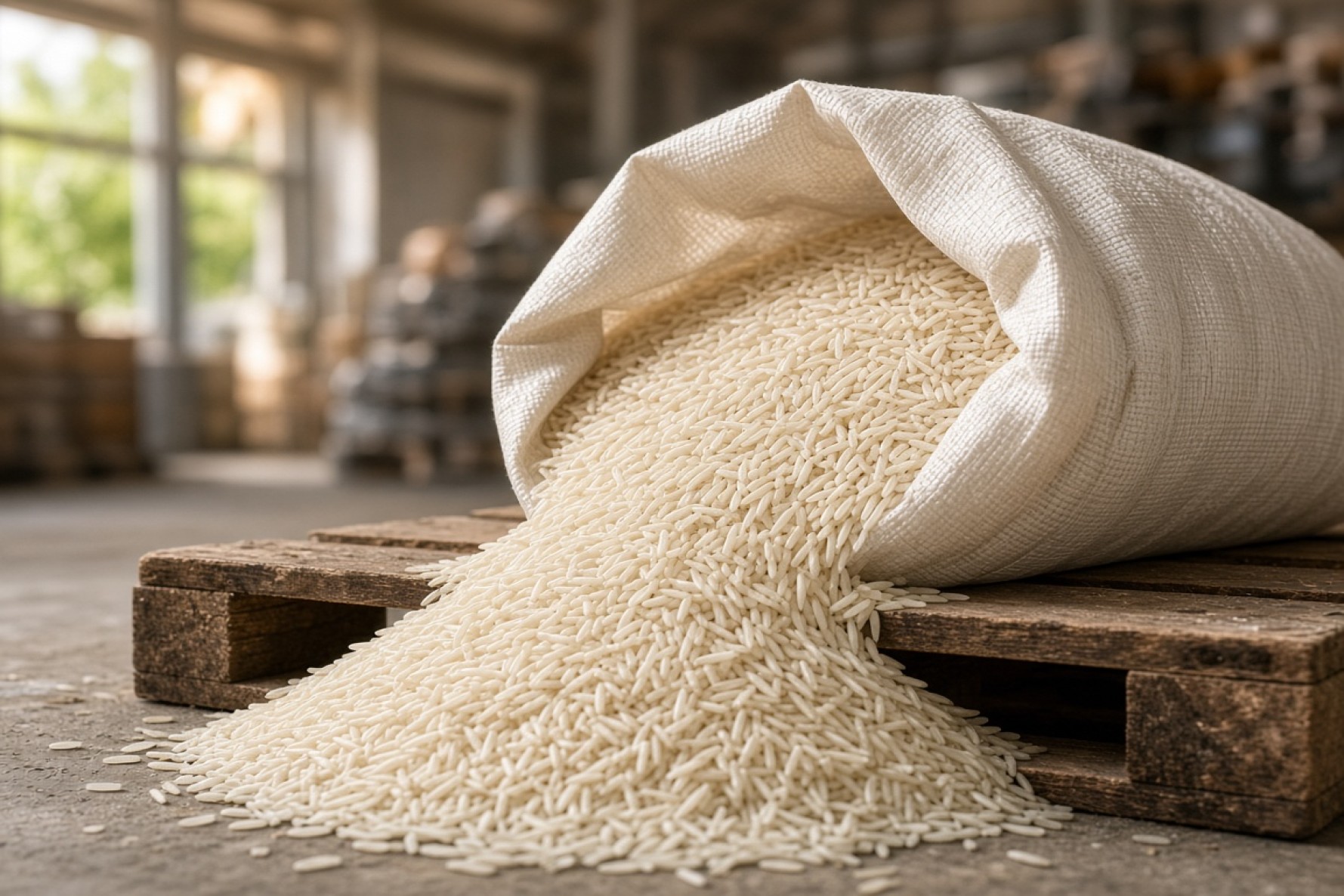
Tarom Amiri grain is bony and light cream; after cooking it reaches 12.9–14 mm with soft, non-sticky texture. To register technical specs, tonnage and delivery destination, contact Iranco.
1. Agronomy, ecology and Mazandaran production hubs
Main Tarom Amiri growing areas cluster in the fertile plains of Fereydunkenar, Babol, Juybar, Babolsar, Miandorud and Mahmudabad. Silty-loam soils with controlled drainage, surface water from the Haraz basin and Fereydunkenar lagoon systems, and stable humidity on the northern Alborz foothills support organic matter accumulation in the endosperm and fixation of 2-acetyl-1-pyrroline aroma.
Crop calendar and plant traits
- Nursery and transplanting from late April to early June; paddy harvest from late July to mid-August.
- Stronger culms than some traditional local Tarom types; less panicle lodging in muddy water.
- Higher hectare yield than authentic Sangi landraces while keeping an aroma profile acceptable for bulk trade.
- Industrial mills in Fereydunkenar and Babol are recognised hubs for high-tonnage contract supply.
Bank dealers who understand microclimate differences quote mill origin and crop year on proforma invoices; grain from the Fereydunkenar plain usually shows the most uniform dimensions and mechanical stability on the sorting line.
2. Physicochemistry, cooking indices and reference table
Tarom Amiri sits in the premium long- and medium-long grain class. Raw grain length is typically 7.0–7.5 mm and width about 2.0 mm; matte bony form with light cream undertone. Amylose at 21–23% limits heavy mushiness; gel consistency 68–76 mm and gelatinisation temperature 71–75 °C suit pot and industrial steam cooking.
- Elongation ratio: 1.85–1.95; cooked length 12.9–14 mm after standard rinsing and draining.
- Milling mechanical stability: 65–68% — sound kernel recovery in husking and polishing.
- Aroma: Pleasant and stable; 2-ACP concentration in the range of high-yield aromatic Tarom types.
| Trait | Tarom Amiri | Tarom Hashemi | Tarom Sangi (local) | Fereydunkenar line (average) |
|---|---|---|---|---|
| Raw grain length (mm) | 7.0–7.5 | 7.3–7.6 | 6.9–7.2 | 7.1–7.4 |
| Cooked grain length (mm) | 12.9–14.0 | 13.0–14.1 | 11.8–12.8 | 12.8–13.6 |
| Amylose | 21–23% | 21–22.5% | 20–21.5% | 21.5–22% |
| Elongation ratio | 1.85–1.95 | 1.80–1.86 | 1.70–1.78 | 1.82–1.90 |
| Hectare yield | High (high-yield) | Medium | Low | High with uniform grain |
| Aroma intensity | Desirable and stable | Very strong | Exceptional | Suited to bulk trade |
| Stability after cooling | Soft, separate grains | Soft with good separation | Soft and creamy | Suited to HORECA |
3. Commercial comparison with Hashemi, Sangi and Fereydunkenar production
Tarom Hashemi trades in the domestic luxury segment with penetrating aroma; Tarom Sangi (local) has traditional aroma and texture but lower yield and mechanical stability. Tarom Amiri is the optimal middle option for wholesalers and exporters who need stable tonnage, controlled landed cost and uniform catering cooks. Fereydunkenar lines with laser sorting deliver the dimensional uniformity GSO contracts expect.
Compared with non-aromatic high-yield Shirudi or Fajr, Tarom Amiri shows parallel elongation and lasting aroma in comparative cook tests; even 15% blending with those cultivars in a bulk basket is detectable with 100-grain image analysis.
4. Commercial grades, contract grading and wholesale terms
In bulk trade, white Tarom Amiri rice is usually split into super (supersort), grade one, grade two and head-rice tailings from the husker. Supersort: breakage under 1%, chalky grains under 1.5%, full laser sort. Grade one: breakage up to 2% per INSO 127. Tailings: for processing industries and some Iraqi markets at lower price.
- Variety purity: minimum 98% in standard bulk; premium export above 99%.
- Colour uniformity: consistent ivory grain; reject glassy or burnt-yellow kernels.
- Aging: 3–6 months resting for peak elongation; contracts must state crop year and aged vs fresh status.
5. National Standard 127 (INSO 127) and quality limits
Iranian National Standard 127 “Rice — characteristics and test methods” is the grading basis in formal trade. Free moisture maximum 14.2%; broken and fragments in grade one maximum 2%; damaged and discoloured kernels jointly limited. Export lots often trade on contractual ceiling 13.5% moisture and breakage under 1%.
| Parameter | INSO 127 limit | Preferred export range | Test method |
|---|---|---|---|
| Moisture | ≤ 14.2% | 12.5–13.5% | Oven 105 °C |
| Broken and fragments | ≤ 2% (grade one) | < 1% | Rotary sieve |
| Chalky grains | ≤ 3% | < 1.5% | Optical sort |
| Foreign matter | ≤ 0.2% | Practical zero | Manual / screen |
| Live pests | Prohibited | Prohibited | Quarantine inspection |
6. Authenticity tests, blending detection and master sample
The main bulk-buy risk is blending with Shirudi, Fajr, Neda or imported rice. Operational methods include light-reflection assessment (Amiri is matte bony vs glassy high-yield), 30-second palm-rub aroma test, 50 g comparative cook, and at high tonnage PCR / genetic barcoding.
- Composite sampling from three bag layers; minimum 5 kg for an independent lab.
- Length standard deviation above 0.25 mm or bimodal distribution — sign of varietal blending.
- Mutually sealed master sample before loading; settlement tied to COA matching the witness lot.
7. Contaminants, residues and laboratory limit table
Export requires compliance with INSO 12968 for heavy metals and destination-country pesticide MRLs. COA from an accredited lab before sea shipment is mandatory.
| Chemical index | INSO 12968 limit | Preferred export range | Method |
|---|---|---|---|
| Lead (Pb) | ≤ 0.15 mg/kg | < 0.08 | ICP-MS |
| Cadmium (Cd) | ≤ 0.06 mg/kg | < 0.03 | GFAAS |
| Inorganic arsenic | ≤ 0.15 mg/kg | < 0.10 | LC-MS |
| Aflatoxin B1 | ≤ 5 µg/kg | < 2 | HPLC-FLD |
| Tricyclazole | ≤ 0.01 mg/kg | Below EU limit | LC-MS/MS |
| Diazinon | ≤ 0.02 mg/kg | Below destination MRL | GC-MS |
8. Seasonal pricing, supply cycle and value-chain analysis
Tarom Amiri price depends on base paddy, milling recovery (about 66–70% grade-one white rice), laser sorting pass, aging and packaging grade. From every 100 kg paddy, roughly 46–52 kg premium white rice is obtained; paddy swings affect final price with a factor of about 2.1.
- August–October: post-harvest supply peak — opportunity to buy tonnage at the year’s lower band.
- January–March: Nowruz and Ramadan demand — upward trend.
- Summer: warehouse tightness; aged rice at premium for HORECA.
| Price driver | Base level | Premium / export level | Approximate effect |
|---|---|---|---|
| Breakage | 2% | < 1% | 6–9% value |
| Variety purity | 96% | > 99% | 10–18% |
| Packaging | Plain PP sack | Vacuum + carton | 5–12% |
9. Export markets: Iraq, UAE, Qatar and Oman, EU, Canada
Tarom Amiri has a defined role where aroma, elongation and landed cost must balance. Iraq (Baghdad, Erbil, Sulaymaniyah) uses 20–25 kg sack channels; UAE Dubai hub for HORECA and premium retail; Qatar and Oman for ceremonial and affluent household demand; EU (Germany, Sweden) Middle Eastern communities with strict residue rules; Canada long sea lane needing moisture under 13% and vacuum packs.
| Destination | Consumption pattern | Common packaging | Channel |
|---|---|---|---|
| Iraq | Feasts, luxury restaurants, bank trade | 20–25 kg PP sack | Baghdad wholesale, regional traders |
| UAE | Hotels, catering, Iranian restaurants | 5–10 kg laminate | Dubai distributors |
| Qatar and Oman | Official hospitality, premium households | 2–10 kg spunbond | Co-ops, Muscat bank dealers |
| EU | Ethnic retail, organic niche | 1–2 kg vacuum | International supermarkets |
| Canada | Diaspora, Asian communities | Vacuum in carton | Ethnic retail |
Gulf import peaks before Ramadan; cargo should clear destination at least four weeks ahead.
10. HS codes, customs formalities and documents
- 100630 — polished white rice (processed Tarom Amiri declaration)
- 100610 — paddy / rough rice
- 100620 — brown rice
- 100640 — broken rice and tailings
Documents: phytosanitary certificate, physicochemical COA, certificate of origin, commercial invoice, packing list, and where required phosphine fumigation certificate and third-party inspection (SGS / IEI). GSO 150 label for GCC: cultivar name, grade, net weight, product of Iran, storage conditions.
11. Export packaging and aroma shelf life
- PP sack + BOPP: 10, 20, 25 kg — Iraq and Gulf bank trade.
- Laminated spunbond: 5 and 10 kg — retail and HORECA.
- PA/PE vacuum + N₂: 1–5 kg — EU and Canada.
- MAP: aroma retention up to 24 months without additives.
| Structure | Weight (kg) | Moisture barrier | Target market |
|---|---|---|---|
| Woven PP + BOPP | 20–25 | Very high | Iraq, Gulf bulk |
| Double-layer spunbond | 5–10 | Good | UAE, Oman |
| Metallised vacuum | 1–5 | Maximum | EU, Canada |
12. Logistics, warehousing and container sweat prevention
A 20-foot container is economical for rice; allowable net load about 21.6–22 tonnes. Loading moisture 12.5–13.5%; desiccants in the roof space; ISPM 15 pallets; kraft interlayer on pallets. Warehouse: 15–20 °C, 55–60% RH; clearance from walls and floor.
- Pallet loading: about 10 pallets 100×120 — near 20 tonnes.
- Phosphine or CO₂ in sealed silos — methyl bromide alternative.
- Control rice weevil (Sitophilus oryzae) with origin quarantine inspection.
13. HORECA and food-service uses
Tarom Amiri suits 4- and 5-star hotels, institutional catering, airport lounge lines and Iranian–Arab restaurants: 12.9–14 mm elongation, soft texture after cold service, stable aroma in pot and industrial steamers. Portion economy with 21–23% amylose and low breakage in 5 and 10 kg packs suits high-volume kitchens.
- Standard pot cook: adjustable water ratio for softer texture than dry basmati.
- Banquet service: grains stay separate up to 4 hours after steam in a hot holding vessel.
- Private label for hotel chains in UAE and Qatar.
14. Wholesale buyer and bank-dealer checklist
Price inquiry table (RFQ)
| Request field | Sample value / description | Relevance for proforma |
|---|---|---|
| Grade | Premium / grade one / tailings | Sorting line selection |
| Tonnage | 22 t / container or monthly | Mill production schedule |
| Breakage | < 1% or 2% | Direct price impact |
| Packaging | 20 kg PP / 10 kg laminate | Material cost |
| Destination | FOB / CIF + city | Logistics and insurance |
| Certificates | COA, phytosanitary, origin | Testing timeline |
Enter the fields above on Iranco’s contact form for a unified quote follow-up.
Tarom Amiri supply through Iranco
Iranco connects professional buyers with industrial Mazandaran mills (laser sorting, automatic packing, standard COA). Technical specs, master sample, loading inspection and contract alignment are handled transparently on the Iranco platform.
For steady export-grade Tarom Amiri supply, send volume and quality indices via contact Iranco.
Analytical summary
Tarom Amiri balances Tarom aroma, farm yield and uniform cooking for bank trade and export. Deal success rests on three axes: varietal purity and authenticity testing, INSO 127 and 12968 compliance, and packaging–logistics engineering to control moisture and container sweat. COA- and master-sample-based contracts protect working capital in Iraq, Gulf, European and Canadian markets.
Frequently asked questions
1. What is the main bulk-buy difference between Tarom Amiri and Tarom Hashemi?
Amiri offers higher yield and mechanical stability with more controlled landed cost; Hashemi has stronger aroma but tighter supply. For high tonnage and HORECA, Amiri is often the more practical choice.
2. What is the moisture ceiling under Standard 127?
Maximum 14.2%; for sea export specify 12.5–13.5% in contract to limit container sweat and mould.
3. What is the reference cooked grain length for Tarom Amiri?
12.9–14 mm with 21–23% amylose; large deviation in trial cooks suggests blending.
4. Which HS code is used for export declaration?
Polished white rice under 100630 (or 10063000 in eight-digit systems); paddy 100610 and broken 100640 are declared separately.
5. Best packaging for Iraq and the Gulf?
Woven PP with BOPP coating for 20–25 kg; for UAE premium retail use laminated spunbond 5–10 kg.
6. How to confirm authenticity on a bank-dealer lot?
Master sample, 100-grain dimension analysis, aroma and cook tests, and on sensitive contracts genetic COA or 21–23% amylose confirmation.
7. What is 20-foot container capacity?
About 21.6–22 tonnes net in bags; pallet layout near 20 tonnes reduces bag damage.
8. What does Iranco need for a price inquiry?
Grade, tonnage, breakage ceiling, pack type and weight, destination and Incoterms, crop year and destination certificate list.
Öne Çıkan Ürünler




İlgili Yazılar



