 Iranco Dergisi Ekibi
İran gıdasının Rusya pazarına ürün seçimi, kalite kontrolü, AEÖ gereklilikleri, tercihli tarife, ambalaj ve taşıma rotaları için pratik rehber
İhracat Rehberi · Rusya · Gıda Pazarı
İran Gıda İhracatı Rusya’ya: Talep Gören Ürünler, Standartlar ve Lojistik
Rus pazarına yönelik ürün seçimi, kalite kontrolü, AEUM gereklilikleri, tercihli tarife, ambalaj ve taşıma rotaları için pratik rehber.
Rusya yalnızca büyük bir tüketim pazarı değildir. Başarı; doğru ürün, sezon, hijyen uyumu, izlenebilir belgeler ve disiplinli lojistiğe bağlıdır. Bu rehber, İran’dan gerçek ihracat geçmişi olan ürünleri inceler ve Rus alıcının sipariş öncesi kontrol etmesi gerekenleri açıklar.
Giriş
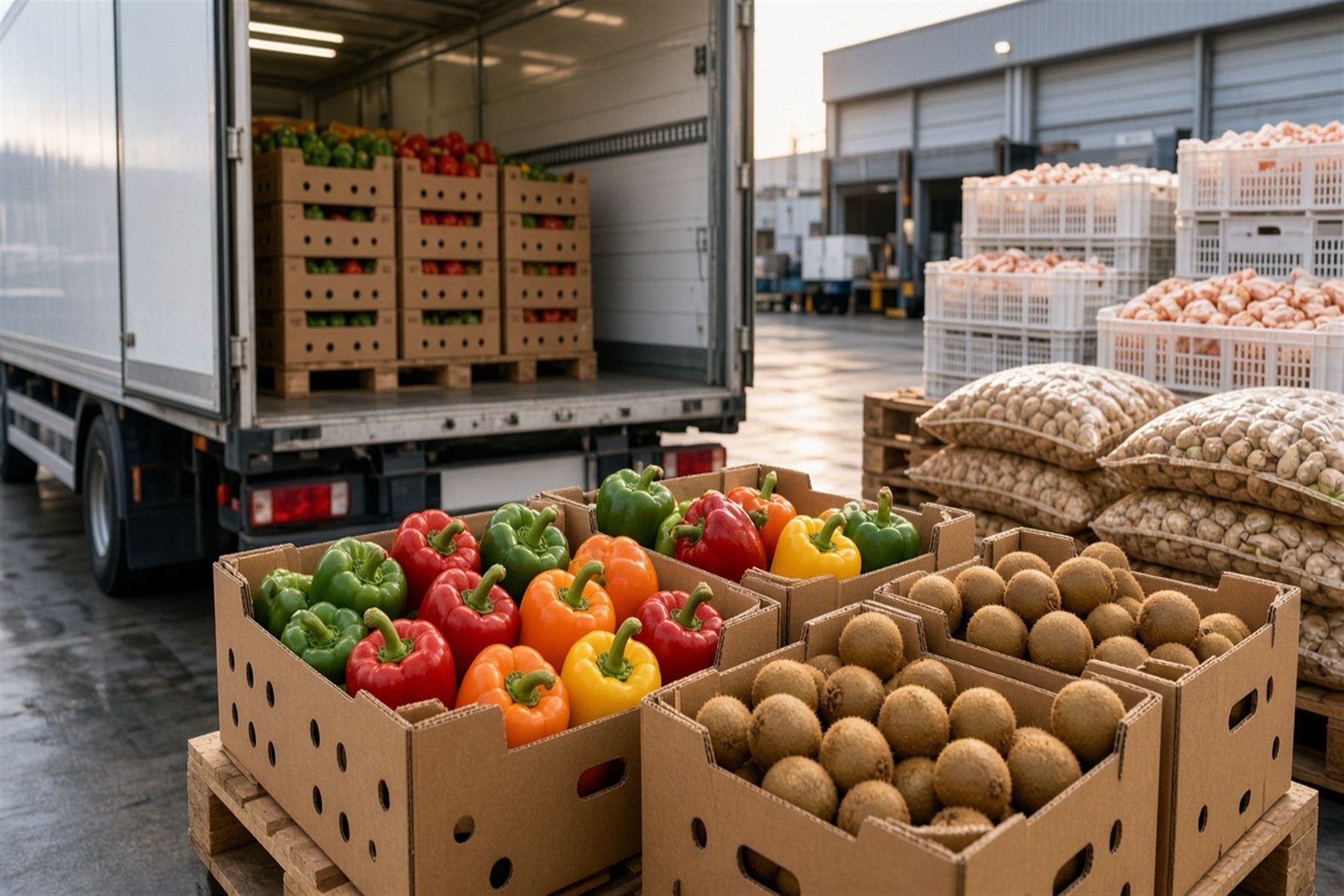
Son yıllarda İran’ın Rusya’ya gıda ihracatı taze meyve-sebze, sera ürünleri, kuru yemiş, deniz ürünleri ve bazı işlenmiş gıdalara odaklanmıştır. Sera biberi, antep fıstığı, kivi, mandalina, domates, karides, kuru üzüm ve meyve suları ikili ticaret raporlarında gerçek ihracat kalemleri olarak görülür.
1403’ün ilk yarısında sera biberi tek başına %5,9, kabuklu fıstık %4,9 ihracat değerini oluşturdu. 19 Ocak 2025’e kadar on ayda ihracat yaklaşık 2,1 milyon ton ve 889 milyon ABD doları olarak raporlandı.
Pazar büyük olsa da Rusya basit bir hedef değildir. Pestisit kalıntıları, bitki sağlığı, hayvansal ürünlerde veteriner belgeleri, etiketleme, AEUM teknik uyumu ve sevkiyat izlenebilirliği her anlaşmanın parçasıdır.
İran–AEUM serbest ticaret anlaşması 15 Mayıs 2025’te yürürlüğe girdi; tarife satırlarının yaklaşık %90’ında gümrük kaldırımı öngörülür — ancak bu her üründe otomatik sıfır tarife anlamına gelmez. HS kodu, menşe kuralları ve kotalar fiyatlandırmadan önce kontrol edilmelidir.
Kalıcı avantaj; pazara uygun ürün, savunulabilir teknik dosya ve kontrol edilebilir lojistik zincirini aynı anda yönetebilen ihracatçıya aittir.
1. Rusya pazarı için hangi İran gıda ürünleri daha cazip?
Demand for Iranian products in Russia should be analysed at product-group level. Russia is a major producer of grains, oilseeds, meat and several food categories; geographic proximity alone is not enough for an Iranian item to be competitive.
Iran’s edge appears where off-season supply, climatic diversity, greenhouse production, orchards, dried fruit and relatively short northern routes combine.
Fresh and greenhouse vegetables
Greenhouse bell pepper is one of the clearest examples of Iran’s real presence in Russia. Tomatoes, lettuce, eggplant, cucumber and some herbs also have export history.
In this group, price is only one buying criterion. Russian buyers usually focus heavily on size uniformity, colour, firmness, absence of breaks and stains, remaining commercial life and supply stability.
For modern retail, a load that is healthy but heterogeneous may still receive a lower commercial grade. For wholesale, post-arrival waste at the distribution hub matters greatly.
Fresh fruit
Kiwi, mandarins and other citrus, apples and some seasonal Iranian fruit can enter Russia in the right time windows.
For fresh fruit, “ripe enough for transport” is not the same as “ripe enough for consumption”. Fruit fully ready to eat at loading may lose market appeal after several days in transit.
Pistachios, dried fruit and raisins
Pistachio has been an important Iranian export to Russia. Raisins and other dried fruit carry different logistics risk because of longer shelf life versus fresh produce.
For pistachio and dried fruit, aflatoxin control, moisture, insect contamination, off-odours, foreign matter and pack quality matter more than the outer carton appearance.
Shrimp and seafood
Shrimp appears among notable Iran–Russia export lines. Unlike fresh fruit and vegetables, seafood falls under veterinary control.
Commercial size, processing form, glaze percentage, true net weight, product temperature, freezing conditions and microbiological status should be stated in the purchase specification.
Processed foods
Juice, concentrate, confectionery, fruit products, packed dried fruit and some Iranian processed foods can enter Russia, but entry depends more on correct labelling, composition, nutrition data, permitted additives and pack compliance than fresh produce does.
| Product group | Items with export track record | Top buying factor | Main risk |
|---|---|---|---|
| Fresh vegetables | Pepper, tomato, lettuce | Uniformity and shelf life | MRL and transit quality loss |
| Fresh fruit | Kiwi, citrus, others | Ripeness, size, appearance | Spoilage, pressure, temperature |
| Dried fruit & nuts | Pistachio, raisin | Safety, moisture, purity | Aflatoxin and storage pests |
| Seafood | Shrimp and fisheries | Size, processing, net weight | Veterinary control and cold chain |
| Processed | Juice and retail packs | Composition and label | Technical regulation mismatch |
2. Rusya pazarı tipik bir ihracat pazarından nasıl farklıdır?
Food purchasing in Russia is multi-layered. An importer may supply retail chains directly, sell to wholesalers, repack at a distribution centre or supply food factories. Product specs must match the channel.
Wholesale channel
Wholesalers often allow more flexibility in carton weight and presentation but are sensitive to weight loss, waste percentage and load uniformity.
Retail chains
Here, matching the approved sample matters more. Calibration, pack appearance, barcode, Russian label, net weight and lot traceability become critical.
Food industry
For factories, consumer appearance is not always the first priority; numerical specifications matter more.
Destination city
Much imported food distribution runs through major Russian commercial and logistics hubs. Final destination Moscow is not the same as southern Russia or the Volga region.
For exporters, a vague “delivered to Russia” price is insufficient—the final city or warehouse must be defined.
3. Rus alıcı sipariş öncesi hangi spesifikasyonları tanımlamalı?
بسیاری از اختلافات صادرات مواد غذایی به دلیل ناقص بودن مشخصات خرید ایجاد میشوند. عبارتهایی مانند «پسته صادراتی»، «فلفل درجه یک» یا «کیوی ممتاز» معیار قراردادی دقیقی نیستند.
یک درخواست حرفهای باید تا حد امکان قابل اندازهگیری باشد.
Taze ürünlerde tolerans tanımlanmadan fotoğraf veya referans numune üzerinde anlaşmak yeterli değildir. Alıcı, numunenin yanında kabul edilebilir asgari kalite ve azami hata yüzdesini tanımlamalıdır.
| Parameter | Example requirement | Why it matters |
|---|---|---|
| Exact product name | Fresh, frozen, dried or processed | Rules and HS code |
| Variety / trade attribute | Colour, shape, seedless | Market fit |
| Size | mm, g, count per kg | Order uniformity |
| Grade | Contract-defined specs | Dispute prevention |
| Ripeness | For fresh fruit and veg | Commercial life |
| Moisture | For dried goods | Shelf life |
| Allowed defects | Breakage, stains, FM | Acceptance criteria |
| Packaging | Material, unit weight, carton count | Sales and transport |
| Tests | Chemical, micro, MRL, aflatoxin | Safety and compliance |
| Transport mode | Ambient, chilled or frozen | Quality retention |
| Destination | Border, port, city, warehouse | True pricing |
4. Kalite kontrol — birçok sevkiyatın başarısız olduğu nokta
کنترل کیفیت برای بازار روسیه باید قبل از بارگیری انجام شود، نه پس از رسیدن کامیون به مرز.
A certificate of analysis is valuable only when its lot number matches the actual shipment.
Pesticide residues in crops
For fruit and vegetables, a residue monitoring programme is one of the most important export actions. The product must align with limits and permitted substances in the destination market.
The exporter should record farm or greenhouse data, spray programmes, last application date and pre-harvest interval. Laboratory samples must truly represent the export lot.
Aflatoxin in pistachio and dried fruit
For dried fruit, especially sensitive lines, aflatoxin testing must be part of lot release. Correct sampling matters as much as the test result because contamination may be uneven.
Microbiological control
For processed foods, dairy, seafood and ready-to-eat products, microbiological indicators must match the applicable regulations.
Net weight and glaze
For frozen products, gross weight, net weight and glaze percentage must be separated in the contract.
- Number of cartons to open
- Sampling points on pallets
- Random selection method
- Measured parameters
- Loading photos and report
- Lot number
- Seal number on the vehicle
- Product temperature at loading for cold cargo
5. Rusya'ya gıda girişi standartları ve düzenlemeleri
Russia is an EAEU member; much of food safety law is set at union level.
Core regulations include TR CU 021/2011 on food safety and TR CU 022/2011 on food labelling.
TR CU 021/2011 — food safety
This regulation sets baseline requirements for production, storage, transport and sale. Producers must implement and maintain HACCP-based procedures.
A certificate on the wall is not enough—a professional buyer may request system records, cleaning programmes, pest control, traceability and test results.
TR CU 022/2011 — Russian label
For prepacked food, mandatory information for the Russian market must meet language requirements.
Labels should be approved by the importer or a compliance consultant in Russia before mass printing.
6. Karantina ve veteriner gereklilikleri
Food is not checked at the border in one single way.
Plant products
Plant goods subject to quarantine follow EAEU unified rules. High-risk quarantine loads must be accompanied by a phytosanitary certificate issued by the exporter’s national plant protection organisation.
Animal and seafood products
Seafood, dairy and other veterinary goods follow a different path. Before contracting shrimp or dairy, the buyer must verify the production site status in relevant registers.
| Group | Main control | Key document |
|---|---|---|
| Fresh fruit & vegetables | Plant quarantine | Phytosanitary certificate |
| Plant-based dried goods | Safety + quarantine | Tests and origin papers |
| Seafood | Veterinary control | Veterinary cert. and facility status |
| Dairy | Veterinary + specific rules | Facility approval and health docs |
| Processed food | Technical regs & conformity | Declaration or product-specific doc |
7. Gümrük, HS kodu ve İran–AEAÜ serbest ticaret anlaşması
From 15 May 2025 the full Iran–EAEU FTA is in force. That does not mean every food item enters Russia duty-free.
Each product needs its ten-digit code, preferential rate and rules of origin checked separately.
Tariff quotas
Some agricultural lines have tariff quotas in the agreement—for example certain tomato codes from Iran have an annual quota of 33,000 tonnes at 0% in-quota duty.
Proof of origin
To use preferential duty, goods must meet FTA rules of origin. The updated agreement foresees CT-3 origin certificates.
| Product | Base HS code | Note |
|---|---|---|
| Fresh or chilled tomatoes | 0702 | Final subheading may be seasonal |
| Fresh peppers Capsicum | 070960 | Exact classification must be verified |
| Pistachios in shell | 080251 | Dry or fresh in shell |
| Pistachio kernels | 080252 | Without hard shell |
| Kiwi | 081050 | Fresh kiwi |
| Raisins | 080620 | Dried grapes |
| Juice and vegetable juice | 2009 | Subheading by ingredient |
| Crustaceans | 0306 | Subheading by species and processing |
8. Rusya için ambalaj ve etiketleme
Export packaging must simultaneously protect the product to destination, simplify warehouse handling and meet legal requirements.
Fresh fruit and vegetables
Taze ürünlerde karton ezilme direnci, havalandırma, kutu boyutları ve palet düzeni belirleyicidir.
Dried fruit
For pistachio and raisins, the pack must block moisture ingress, contamination, excess oxygen and warehouse damage.
Russia digital marking
Russia runs the Chestny ZNAK digital traceability system for several categories. Before printing consumer packs, check whether the tariff code falls under mandatory marking.
- Product name
- Ingredients
- Net quantity
- Production date
- Shelf life
- Storage conditions
- Manufacturer and importer details
- Nutrition information
- EAC mark after conformity procedures
9. İran'dan Rusya'ya lojistik rotaları
No single route suits all foods. Route choice follows product life, cost, season, loading point and final Russian destination.
Road via Astara and Azerbaijan
Taze ürünlerde asıl avantaj daha az aktarma operasyonudur; asıl kısıt sınır kuyrukları ve transit süresindeki dalgalanmadır.
Caspian Sea
Northern Iranian ports such as Anzali and Amirabad connect to Russian Caspian ports. This suits bulkier loads or less time-critical cargo.
Rasht–Astara rail status
The Rasht–Astara link remains under construction as the missing western rail segment of the North–South corridor.
| Route | Best for | Advantage | Operational risk |
|---|---|---|---|
| Truck Astara–Azerbaijan | Fresh fruit and vegetables | Door-to-door | Queues and border delay |
| Caspian Sea | Dried fruit, processed | Higher capacity | Sailing and port schedule |
| Eastern rail | Containers, planned cargo | Large volumes | Multiple borders and handlings |
| Air freight | High-value sensitive loads | Speed | High cost |
- Product temperature at loading
- Set transport temperature
- Airflow-friendly stacking
- Temperature logging en route
- Product temperature at delivery
10. Rusya'ya ihracat fiyatları nasıl karşılaştırılır?
Comparing two sellers is valid only when specifications and delivery point are identical.
Greenhouse gate pepper price is not the same as sorted, pre-cooled, packed pepper delivered to a Moscow warehouse.
Seasonality
In fruit and vegetables, farm price and reefer freight can both be seasonal. Fixed long-term prices without freight adjustment clauses can hurt one party.
Delivery terms and payment
Incoterms must name the exact geographic point. Payment routing for Iran–Russia trade should be finalised before production starts.
- Product price
- Sorting and grading
- Packaging and pallets
- Pre-cooling or freezing
- Tests and export certificates
- Domestic haulage and international freight
- Import duty and conformity/label costs
- Warehousing and distribution in Russia
11. Sipariş öncesi ithalatçı kontrol listesi
پیش از صدور سفارش خرید مواد غذایی از ایران، این موارد باید بررسی شوند:
- Define exact product name and supply form.
- Align the tariff code with your Russian broker.
- Check preferential FTA rate—do not assume zero duty.
- Verify rules of origin and CT-3 before shipment.
- Confirm phytosanitary certificate requirements for plant goods.
- For seafood and dairy, verify facility approval before ordering.
- Make technical specs numerical.
- Obtain and record an approved sample.
- Define tests for that specific product.
- Write acceptance criteria into the contract.
- Approve the Russian label before mass printing.
- Check Chestny ZNAK marking obligations.
- Specify consumer pack, master carton and pallet pattern.
- Match transport mode to real product life.
- For cold cargo, state temperature and data logging in shipping instructions.
- Assign responsibility for border delay, demurrage or extra inspection.
- Keep lot numbers consistent on docs, packs and COA.
- State delivery terms and exact destination in the contract.
- Fix payment method and currency before final production.
- Align supplier lead time with harvest season or plant capacity.
Doğru fiyat için hangi bilgiler gönderilmeli?
A quote for “food exports to Russia” without product specs cannot be compared. The buyer should provide at least:
- Exact product name and form: fresh, dried, frozen or processed
- Variety, grade, size and technical parameters such as moisture
- Required standards or test results
- Unit weight and wholesale or consumer packaging
- Order quantity and destination city or port in Russia
- Preferred transport, delivery terms and first shipment date
Taze ürünlerde hedef sezon ve haftalık teslim penceresi çok önemlidir. Alıcılar aynı bilgileri Iranco satın alma talebiyle iletebilir.
Rusya pazarı için İran gıda tedariki
When buying food from Iran, two offers often differ by more than price per kilo. A lower quote may omit sorting, testing, export packing or haulage to your delivery point.
Sound sourcing starts with defined specs: product, grade, size, volume, packaging, tests, destination city and delivery terms.
Iranco, alıcıların ve ticaret şirketlerinin bu temelde talep göndermesini sağlar; böylece İran’daki mevcut tedarik seçenekleri tutarlı biçimde incelenir.
To explore sourcing for Russia, include product specs, approximate volume, packaging and destination city in your purchase request.
Özet
Iranian food exports to Russia create real advantage when product choice follows proven demand and practical supply capability.
Commercial opportunity is not the same as export capacity. Fresh produce without MRL control, dried fruit without contaminant control, seafood without valid veterinary files or packed goods without compliant labels are not reliable options for a professional importer.
After the May 2025 FTA, tariff and origin checks matter more. Logistics must be designed into the product from the start.
Sustainable advantage in Russia comes from uniform quality, clear technical files, regulatory compliance, appropriate packaging and predictable delivery.
Sık sorulan sorular
Which Iranian foods have the strongest demand history in Russia?
In recent years greenhouse pepper, pistachio, kiwi, mandarin, tomato, shrimp, raisin and juice appear on Iran–Russia export lists—but season, competitors, quarantine and uniform supply capacity must also be assessed.
After the FTA, is food export to Russia duty-free?
Wide preferences apply to much trade, but zero duty cannot be assumed for every product. The ten-digit code, origin rules and tariff quotas decide the rate.
Which document is critical for fruit and vegetable exports?
High-risk plant goods need valid phytosanitary certificates. MRL programmes and traceability to the production site are also commercially essential.
What must a food label for Russia include?
Depending on the product: name, ingredients, net quantity, dates, storage, manufacturer and importer, nutrition and conformity marks—in the language required by Russian rules.
What is the best route for fresh fruit from Iran to Russia?
For many fresh loads, refrigerated trucks via northern Iran, Azerbaijan and southern Russia reduce transloading—but final choice depends on destination city, season, border queues and shelf life.
Is direct rail via Rasht–Astara already active?
The western rail network still lacks the Rasht–Astara segment. Current North–South corridor moves use a mix of modes.
Which tests matter for pistachio exports to Russia?
Aflatoxin is central. Moisture, insects, foreign matter, pack condition and sampling method matter strongly.
How can two Iranian sellers be compared on price?
Align product, grade, size, tests, packaging, delivery terms and destination first—then compare price.
What should buyers tell suppliers when sourcing from Iran?
Exact product name, quality specs, order volume, pack type, tests, destination city, transport mode and delivery terms—and for fresh goods, buying season and delivery timing.
Rusya gıda ihracatı danışmanlığı ve İran tedarikçilerinden satın alma talebi için
Iranco ile iletişiminfo@iranco.com · WhatsApp: +98 913 104 4182 · Telegram: @irancofood
Öne Çıkan Ürünler












İlgili Yazılar



