 Команда журнала Iranco
Стратегический анализ рынка, стандарты GCC, цифровая предрегистрация (FIRS/ZAD), экономика дистрибуции и рефрижераторная цепь
Export Guide · UAE · GSO · FIRS · ZAD
Iran Food Export to the UAE: Market Structure, Standards and Entry Path
Strategic market analysis, Gulf standard compliance, digital inspection pre-registration, distribution costs and reefer cold-chain logistics.
Introduction
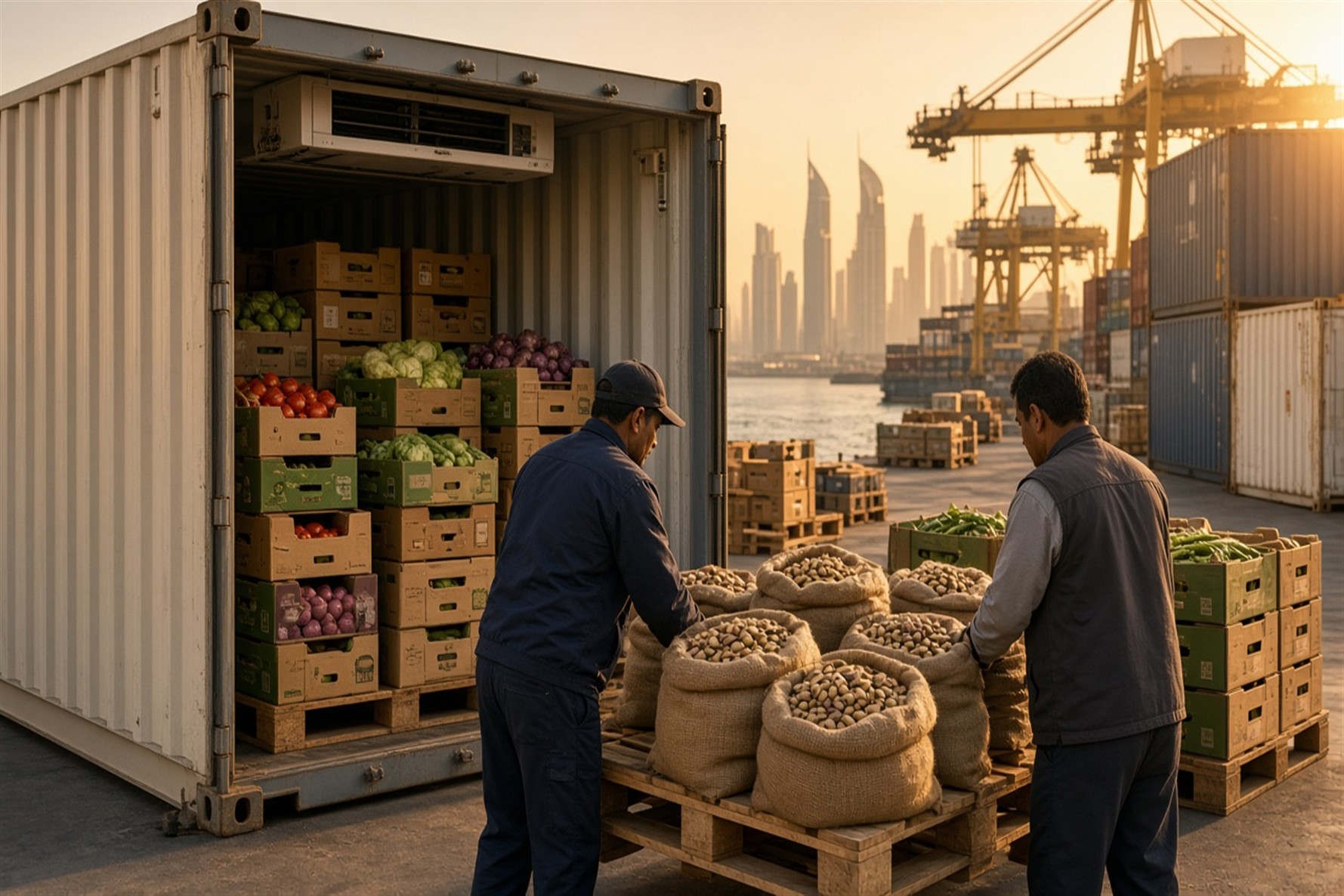
A multinational population and heavy tourism drive demand for premium, organic and ethnic foods. Hundreds of thousands of tonnes of Iranian produce, nuts, saffron and processed foods reach UAE ports — yet smart regulation, strict standards and multinational retail chains challenge the traditional dhow-wharf model.
The core issue is structured entry into value-added channels instead of dhow bulk. Neglecting GSO, FIRS, Arabic labelling and cold-chain breaks leads to returns and heavy FX losses.
1. Strategic UAE role and Iranian export lines
UAE annual food imports exceed USD 15 billion. The UAE is among Iran’s top three non-oil export destinations; agri-food holds a strategic share.
- Fresh fruit & vegetables: 250k+ t fruit and 120k+ t vegetables per year
- Nuts & dried fruit: ~45k t centred on Akbari and Ahmad Aghaei pistachios
- Dates: Mazafati, Piarom, Zahidi for domestic and re-export
- Saffron & herbs: Negin and Super Negin with high crocin
- Dairy & canned: Feta, aseptic and canned tomato paste
Iran’s cool season (Nov–Apr) favours fresh fruit; higher-margin potential sits on hypermarket shelves and HORECA, not only Deira dhow markets.
2. Quality specs of major export lines
| Group | Grade | Index |
|---|---|---|
| Pistachio | 18–22 count luxury; 28–32 industrial | Moisture <5%, open shell >95% |
| Dates | Piarom super jumbo; hand-picked Mazafati | Piarom moisture <16%; Mazafati 28–32% |
| Saffron | Super Negin ISO 3632 | Crocin ≥240 |
| Produce | Export calibre | Tomato Brix >4.5; compression strength |
| Tomato paste | Aseptic 36–38%; cans 28–30% | Bostwick <7 |
3. Laboratory parameters and COA
| Parameter | Limit | Outcome |
|---|---|---|
| Total aflatoxin | ≤10 ppb (B1<4) | Destruction or return |
| Pesticide MRL | UAE.S MRL 1/2024 | Container hold at Jebel Ali |
| TPC | <10⁵ CFU/g | Clearance delay |
| Pathogens | No Salmonella/E.coli in 25 g | Hygiene rejection |
ISO 2859 sampling at origin and technical specs on Iranco reduce sample–shipment mismatch risk.
4. Legal requirements, labelling and halal
- Arabic or bilingual labels; stickers only if applied at origin, durable and not covering mandatory fields (UAE.S 9:2017 / GSO 9:2022)
- Nutrition table GSO 2233; Nutri-Mark A–E for selected categories
- Production/expiry on pack — date stickers prohibited (GSO 150-1)
- MoIAT-accepted halal for animal-origin products (GSO 1931)
5. FIRS, ZAD, Foodwatch and Jebel Ali inspection
ZAD/MOCCAE: Pre-shipment permit for raw produce and seed. FIRS: Food pre-registration with Dubai Municipality — not Montaji (cosmetics). Foodwatch: Traceability after clearance.
Green/yellow/red risk in Mirsal II; cold terminal for red-line sampling.
6. HS codes and import duty
| HS | Product | Rate |
|---|---|---|
| 0802.51 | Pistachios in shell | 5% CIF |
| 0804.10 | Dates | Zero / 5% seasonal |
| 0910.20 | Saffron | 5% CIF |
| 0702.00 | Fresh tomatoes | Duty-free |
| 2002.90 | Tomato paste | 5% CIF |
7. Distribution chain and shelf economics
Over 85% of grocery sales in Dubai/Abu Dhabi flow through Carrefour, Lulu, Spinneys and similar chains.
| Layer | Range |
|---|---|
| VAT | 5% |
| Retail margin | 20–35% |
| Distributor | 15–25% |
| Customs + FIRS | 3–5% CIF |
| Factory FOB ceiling | 35–45% of shelf price |
| Listing fee | 5k–15k AED/SKU |
8. Sea logistics and cold chain
| Origin | Destination | Time |
|---|---|---|
| Bandar Lengeh | Dubai/Sharjah | 8–10 hours |
| Bandar Abbas | Jebel Ali | 24–48 hours |
| IKA | DXB | Air cargo ~2 hours |
- Pre-cooling 6–12 hours before reefer loading
- Two independent data loggers; ventilated reefer for produce
- 5-ply moisture-resistant cartons against port condensation
9. Iran’s competitive position
Proximity and authenticity in pistachio, saffron and fresh produce; challenges in grade consistency and branding. Rivals: USA (pistachio/almond), Turkey (dairy/paste), India (rice/onion), Egypt (citrus).
10. Industrial use in JAFZA/DIC
36–38% paste, industrial pistachio kernels, date paste, concentrates and skim milk powder for UAE sauce, confectionery and beverage lines.
11. Twelve-step pre-loading checklist
- Validate importer DED trade licence
- Active FIRS/ZAD portal access
- Label Assessment approval before print run
- MRL sampling for fresh produce
- Aflatoxin and moisture COA for nuts
- Embossed dates — no sticker
- 5-ply cartons and 8-high pallets
- Incoterms (CIF Jebel Ali / CFR Sharjah)
- Reefer inspection and temperature on B/L
- Phytosanitary certificate matching seal
- Chamber of Commerce COO
- Resident customs broker at destination port
12. Price inquiry (RFQ)
- Variety, grade, moisture/Brix/crocin
- Packaging, monthly tonnage, 20/40 ft containers
- Incoterms and discharge port
- Brand or private label; COA, halal, phytosanitary
Summary
Success in the UAE = UAE.S 9 + MRL + FIRS + cold chain + retail margin math. Exporters aligning pack and logistics with climate and shelf rules build durable Gulf hub advantage.
Frequently asked questions
Why are Iranian fruit and vegetables returned in the UAE?
MRL breaches, missing ZAD permit, broken cold chain and date stickers.
Is Montaji required for food?
No — food is registered only in FIRS.
Expiry date rules?
DD/MM/YYYY under 3 months shelf life; MM/YYYY above — printed on pack, not sticker.
Carrefour/Lulu listing costs?
Listing AED 5–15k, rebates 5–10%, retail margin 20–35%.
Jebel Ali advantage?
Labs, reefer and re-export; Deira/Hamriya remain traditional bulk.
Which products need halal?
Meat, gelatin, enzymes and animal fats — MoIAT-accepted certificate.
Reefer vs traditional dhow?
Controlled temperature/ventilation vs open air and humidity.
Sourcing to UAE standards?
Submit an RFQ with technical specs on Iranco.
Supply path with Iranco
Iranco (iranco.com) connects UAE importers with Iranian producers offering grades, COA and packaging aligned with UAE port standards.
Избранное Продуктs






Related Статьи



