 Iranco Magazine Team
Biochemical and cooking evaluation, national physicochemical standards, adulteration detection and tonnage-scale logistics
Quality & Standards · Nobari Tarom Rice
What Is Nobari Tarom Rice? Buying Guide, Quality Assessment and Wholesale Market Supply
Biochemical and cooking evaluation, national physicochemical standards, adulteration detection methods and logistics management for tonnage-scale procurement — written for distributors, institutions and food-industry traders.
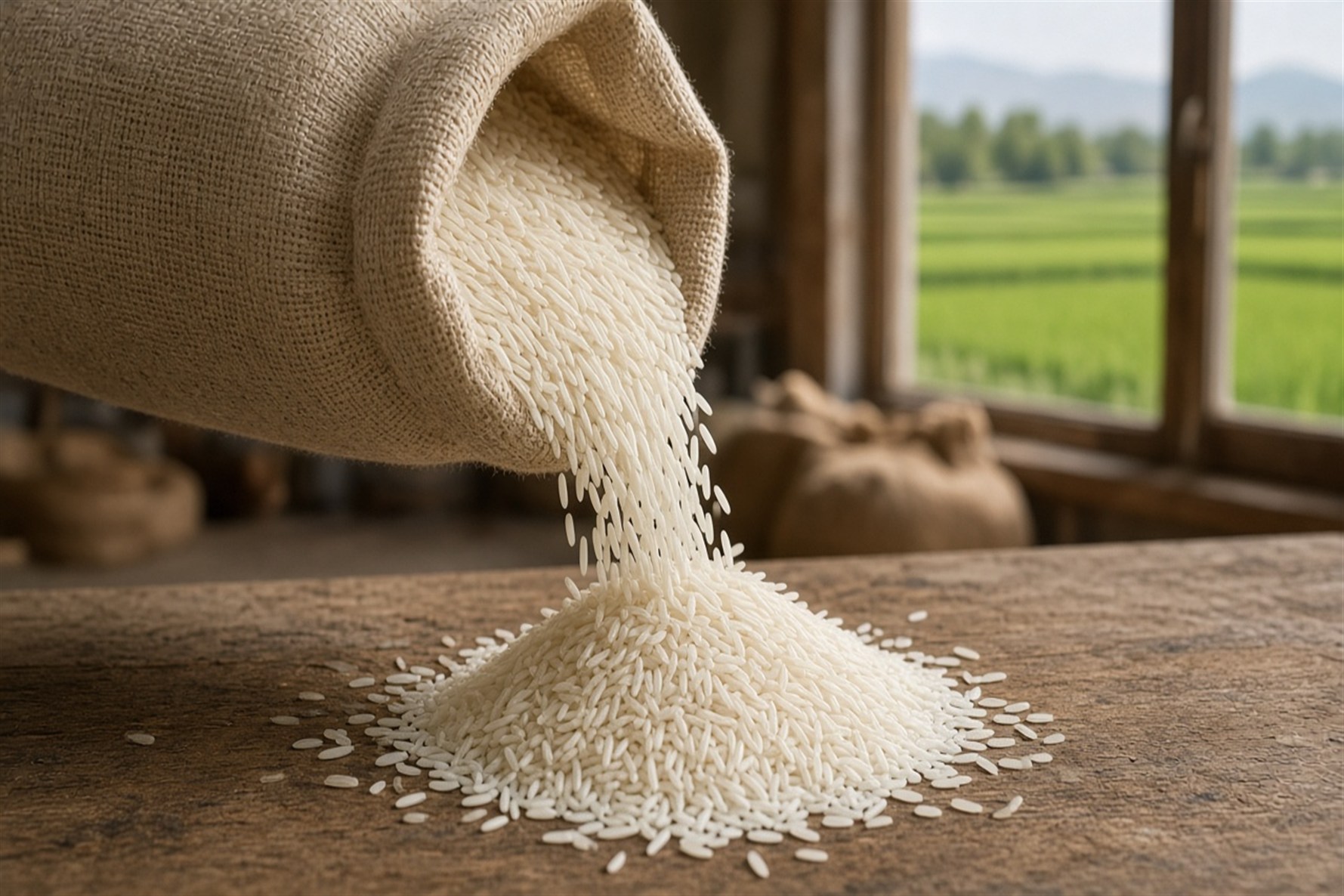
Nobari Tarom rice is the first harvest from northern Iran’s most productive paddies — especially Mazandaran’s coastal belt and fertile plains. Peak concentrations of volatile aromatic compounds, a soft texture and distinctive interstitial moisture give it a strategic place in grain trade. This guide covers cooking chemistry, purity indices, industrial storage rules and large-contract management.
Caspian lowland paddies, especially the Haraz and Babolrud watersheds in Mazandaran, produce some of the Middle East’s finest cereals. Nobari Tarom — the first cutting of golden stems from late July through August — draws wholesalers, food-holding procurement managers and major packers. Early-season demand reflects unique sensory traits, maximum germ freshness and high plant essential-oil levels — not tradition alone.
For bulk buyers and chain operators, entering the Nobari market still brings heavy technical challenges: water-uptake behaviour, immature starch structure and high breakage risk during whitening demand scientific milling and storage discipline. Distinguishing Nobari from aged lots, detecting blends with non-aromatic cultivars and writing purchase specs to national standards are prerequisites for protecting capital and margin.
1. Production ecosystem and commercial nature of Nobari Tarom
Nobari Tarom marks the opening of the northern rice trading year. In grain commerce, “Nobari” means lots processed from the first days of mechanised harvest and shipped from mills within about 30 days. After a 110–120 day growth cycle in humid Mazandaran, mild coastal weather and humus-rich soils watered from the central Alborz, the grain stores a distinctive balance of minerals and carbohydrates.
Geographic origin and soil distinction
The finest Nobari Tarom types come from Fereydunkenar, Dabudasht (Amol), Babol and Babolsar. Rich aquifers, alluvial deposits, migratory-bird nutrient cycles and July sunshine during heading drive peak biological yield. Grain from these zones shows noticeable natural surface lipid, minimal chalkiness and high micronutrient density.
Market timing and grower liquidity
Nobari supply coincides with peak farmer cash needs for loan repayments, combine hire and wages. From late July to early September, paddy and white-rice volumes peak in local exchanges. Smart bulk buyers who concentrate purchases and source straight from mills lock in cost advantages before intermediaries and storage charges inflate final price.
2. Biochemical change and cooking physiology: Nobari vs aged rice
The core difference between Nobari and aged (depot) rice lies in endosperm biochemistry, matrix proteins and bound moisture — and those traits change behaviour in restaurant and catering cookers. Physiological ripening gradually turns a hydrated, fragile kernel into a crystalline, resilient structure.
Aroma chemistry and volatile organics
Signature Nobari Tarom aroma comes from high levels of 2-acetyl-1-pyrroline (2AP) plus short-chain aldehydes and alcohols. Fresh grain holds 2AP at its highest natural stability. Over time, oxygen and storage heat drive lipid oxidation and free fatty acids, gradually stripping Tarom’s aroma. Authentic Nobari after heating fills space with a pleasant popcorn-like, herbal scent.
Starch recrystallisation and gel behaviour
Nobari has uneven structural moisture across the endosperm; starch granules are not fully stabilised. During cooking, water races to the centre, granules swell and amylose leaches — so Nobari tends to glaze and stick (mushiness). After at least 3–6 months, disulfide cross-links form in the protein matrix, water uptake slows, kernels resist boiling and elongate lengthwise for ceremonial “majlesi” elongation.
| Physicochemical / cooking parameter | Nobari Tarom (fresh) | Aged depot (3–6 months) | Buyer / kitchen implication |
|---|---|---|---|
| Internal moisture | 13.0–14.5% | 11.0–12.5% | Nobari needs ventilation; aged lots lose little weight |
| Aroma compound (2AP) | Very high | Medium to mild | Nobari suits premium home aroma and flavour |
| Optimal soak time | 20–45 min | 2–4 hours | Long soaking disintegrates Nobari texture |
| Cooking water volume | 1–1.2× rice | 1.8–2× rice | Less water prevents mushiness in fresh grain |
| Elongation factor | 1.4–1.6× | 1.8–2.2× | Aged rice yields more banquet portions |
| Texture after steaming | Very soft, oily, tender | Separate, firm, ceremonial | Nobari softness stays pleasant even cold |
| Storage risk | Prone to sweating / weight loss | Stabilised and moisture-resistant | Nobari needs breathable bags and temperature control |
3. Tarom family cultivars and organoleptic identifiers
The Tarom family includes several native genetic branches fixed in Mazandaran soils. Each differs in grain dimensions, tip and base form, endosperm colour and mill conversion behaviour.
Local Tarom (Sangi / bony)
Local Tarom — also called Tarom Sangi in parts of Mazandaran — is the family’s most authentic branch. Medium length, very dense texture, matte white leaning candy-cream. Slightly conical tip; thick cell walls resist rapid powdering in the mill. Nobari lots show a sharper aroma than other strains, with oily extract detectable by hand feel.
Tarom Hashemi
Tarom Hashemi is a natural cross combining Tarom and Hashemi traits. Grains are slightly longer and fuller than Local Tarom, crystalline bone-white with less curvature. At the Nobari stage it balances aroma and cooking well: with careful industrial cooking it resists deformation and elongates nicely on the plate.
Tarom Domsiah and Tarom Sadri
More common in eastern Gilan and parts of Mazandaran, both sit commercially under the Tarom umbrella. Domsiah shows a black tip on paddy before husking and milky-cream grain. Sadri can exceed 8 mm raw length, needle-like and higher-protein — ideal for banquets — but Nobari Sadri is more breakage-prone in whitening than other types.
| Genetic strain | Raw length (mm) | Cooked length (mm) | L/W ratio | Colour / appearance | Aroma intensity |
|---|---|---|---|---|---|
| Local Tarom (Sangi) | 6.8–7.1 | 10.5–12.0 | 2.8–3.1 | Matte white, creamy, semi-oily | Very strong |
| Tarom Hashemi | 7.2–7.5 | 12.2–13.5 | 3.2–3.5 | Bone-white to light cream | Strong and appealing |
| Tarom Domsiah | 7.4–7.7 | 12.5–14.0 | 3.3–3.6 | Uniform milky white | Pleasant and mild-sweet |
| Tarom Sadri | 8.0–8.5 | 13.5–15.0 | 3.8–4.2 | Ivory translucent, tapered tip | Mild to medium |
4. National Standard of Iran No. 127 for bulk lot assessment
In formal Iranian wholesale rice trade, the final conformity reference is National Standard No. 127, “Rice — Specifications and test methods.” Government contracts, institutional buying and distribution waybills rest on these criteria. Nobari lots need precise lab matching to avoid legal claims and rejection at inspection points.
Moisture limits on fresh lots
Revised Standard 127 caps milled white rice moisture at 13.5% by weight nationwide. Because Nobari is rushed to market, lots often leave dryers at 14–15%. Any delivery above 13.5% breaches commercial standards and, via moisture migration and sweating in closed packs, risks irreversible mould, Aspergillus toxins and spoilage.
Broken kernels and sizing
A broken kernel is any fragment shorter than three-quarters of a sound whole grain — split into “half-grain” (½–¾) and “fines/brokens” (<½). Super-premium Nobari allows max 2% brokens; Grade One typically 5–8%. Poor trieur and cleaning management spikes fines and ruins appearance.
Chalky, stained grains and foreign matter
Chalky grains have porous, opaque starch from immaturity or field heat stress. Over 2–3% chalk in authentic Nobari signals premature harvest. They shatter in whitening and turn sticky in the pot. Red grains, heat-damaged kernels, mould and animal filth have very low hygienic tolerances in Food & Drug partner labs.
| QC index | Super premium | Commercial Grade 1 | Commercial Grade 2 | Standard 127 limit |
|---|---|---|---|---|
| Moisture (max) | 12.5–13.0% | 13.5% | 14.0% | 13.5% |
| Total brokens | < 2% | 3–5% | 6–10% | Max 8% Grade 1 |
| Fines / small brokens | 0–0.5% | 1–1.5% | 2–3% | Max 2% |
| Chalky / immature | < 1.5% | 2.5% | 4–5% | Max 3% top grades |
| Damaged / stained / black tip | Max 0.2% | 0.5% | 1% | Max 1–1.5% |
| Red-streaked grains | 0–0.1% | 0.5% | 1.5% | Max 2% |
| Mineral foreign matter | Absolute zero | Zero | Max 0.05% | Max 0.1% |
| Live insects / larvae | Absolute zero | Absolute zero | Absolute zero | Forbidden (full reject) |
5. Modern milling lines and Nobari shelf life
Converting Nobari Tarom paddy to polished grain is heat- and moisture-sensitive; mistakes permanently damage quality. Farm-gate paddy arrives at 18–25% free and bound moisture with a brittle kernel.
Gradual industrial drying kinetics
A common early-season error is rushing paddy dry above 45°C to hit the market. Thermal shock creates a steep moisture gradient and microscopic cracks (“checking”). Modern plants use indirect air at 38–42°C over 48–72 hours until moisture settles near 13%.
Husking, multi-stage abrasion, polishing and optical sorting
- Vibratory screens remove straw and stalks
- Rubber-roll huskers with micrometric gap protect the germ
- Three to four light abrasion stages (not one heavy pass) avoid melting bran-surface lipids
- Mist polishers rinse emery dust and add gloss
- Colour and NIR sorters eject brown, yellow, chalky, damaged glassy grains and stone of grain size
6. Laboratory authenticity protocols and blend tracing
A serious trade risk is blending authentic Tarom with high-yield low-aroma types (Shiroodi, Fajr, Neda) or cheap imports. Visual, sensory and chemical tools are required before physical delivery.
On-site sensory and physical checks
Fist-rubbing with warm breath is first: authentic Nobari releases a sharp sweet herbal scent; Shiroodi or import blends smell stale, earthy or neutral. Tarom has a slight natural curve; Fajr is glassier and dagger-like; Shiroodi is more cylindrical with a flatter tip and greater width.
Alkaline test, GC-MS and DNA barcoding
Alkaline digestion in 1.7% KOH (gelatinisation score) after 23 hours at 30°C softens Local Tarom into a cheese-like mass while high-yield or imported grains stay intact or disperse unevenly. For high tonnage, GC-MS quantifies 2AP (ruling out chemical aroma sprays) and DNA barcoding measures blend ratios below 1% error.
Five operational steps for tonnage inspection
- Random composite sampling across pallet bags per sampling standards
- Initial physical/appearance check: colour, crystal, warm-breath aroma
- Micrometric length/width scatter recording
- Quick pilot cook for stickiness and water uptake
- Refer suspect samples to accredited labs for alkaline gelatinisation and genetic analysis
| Key differentiator | Authentic Local Tarom | Shiroodi | Fajr | Imported long-grain |
|---|---|---|---|---|
| Colour / light reflectance | Matte white, creamy lean | Clearer, chalkier white | Glassy crystalline white | Matte bony or aged yellow |
| Tip & symmetry | Tapered tip, mild arc | Flat tip, cylindrical | Sharp dagger tip | Fully parallel industrial cut |
| Raw aroma (fist test) | Burst of fresh paddy herbals | Little, neutral or earthy | Mild light aroma | No natural aroma |
| Cold cooked texture | Soft and oily for hours | Dries and hardens fast | Semi-soft, loses moisture | Hard and fibrous |
| Nominal amylose | 19–21% | 23–25% | 22–24% | > 26% |
7. Industrial storage, breathable packaging and climate control
Nobari grain keeps physiological respiration after packing; wrong film or warehouse layout can destroy commercial capital quickly.
Bag and sack engineering
Impermeable nylon or thick PE is a logistics error for Nobari: night-wall cooling condensates free water droplets that drive toxin fungi and starch souring. Use only cotton muslin (breathable) or unlaminated woven PP with air vents; for retail, multi-layer spunbond nonwovens that release excess moisture gradually.
Climate regime and pest control
- Cool 15–18°C and relative humidity max 55–60%
- Continuous air circulation with industrial intake/exhaust fans
- Phosphine fumigation only in sealed spaces by licensed staff; modern sites prefer CO₂ or modified-atmosphere silos
- Pallets ≥15 cm off floor, ≥60 cm from walls, ≥1 m from ceiling
- Max 8–10 bags per pallet stack to avoid Nobari clumping
8. Wholesale market economics, seasonality and cost model
Nobari Tarom follows high price-elasticity seasonal supply and demand. In the first ~45 harvest days, price discovery tracks daily cutting volume, northern rainfall and big-buyer liquidity. Paddy-to-sound white conversion for native Tarom averages 62–65%; of that, about 50–54% is sound whole grain, with the rest half-grain, bran and husk.
Demand clusters
- Premium home consumers: prioritise strong aroma, natural lipid and flavour over elongation.
- Traditional catering and restaurants: use Nobari aroma for menu differentiation.
- Wholesalers and depot traders: buy at harvest and age into ceremonial aged rice over months.
| Financial parameter | Buy Nobari at peak harvest | Buy aged off-season | Procurement notes |
|---|---|---|---|
| Nominal price level | Annual seasonal minimum | 15–30% higher | Lower cash outlay in Jul–Sep |
| Capital lock-up | Yes (storage to improve cook) | None | Compare to bank interest |
| Warehouse moisture loss | 1–2.5% weight loss | Negligible | Factor shortage into final cost |
| Industrial cook safety | Needs skilled cooks | Easy, consistent | Cuts catering kitchen error |
| Marketing pull | Highest premium retail stretch | Preferred by banquet halls | Match order type to market |
9. Logistics, container transit and HS classification
Moving large Nobari Tarom lots from northern cities to central plateaus or export terminals needs dry, breakage-safe haulage. Prefer covered tarped trucks with sound dry wooden floors for domestic moves. For export, inspect 20′ and 40′ containers for dry floors, no diesel odour, rust or moisture gaps; place industrial desiccants at four corners.
Harmonised System tariff codes
- 100630 — Semi-milled or wholly milled rice, whether or not polished or glazed
- 10063020 — Wholly milled, polished or glazed (main export packaged Tarom code)
- 10063010 — Semi-milled rice
- 10064000 — Broken rice (half-grain and tips)
Exporters should attach a precise customs declaration, phytosanitary certificate, laboratory COA, chamber of commerce certificate of origin and fumigation certificate. Buyers sourcing from Iran can review options and submit purchase requests via Iranco.
10. Industrial cooking for catering and banquet halls
Tonnage cooking of Nobari Tarom needs a different formula than aged rice; kitchen staff who ignore this can make premium lots look poor to managers.
- No mechanical scrubbing: rinse only with gentle cold-water swirling.
- Short soak: max 30–45 minutes in lukewarm water with moderate salt.
- Refined salt in soak water: strengthens surface starch bonds.
- Shorter boil: drain 2–3 minutes earlier than aged rice, while the core is still slightly firm.
- Gentle steaming: even heat (preferably industrial convection) with excess steam vented.
11. Procurement manager checklist before a bulk contract
- Name the exact genetic strain in the contract (authentic Local Tarom or Tarom Hashemi)
- Confirm crop year and mill exit date — first cutting of the current season
- Seal two 1 kg witness samples signed by both parties
- Hard-cap moisture at 13.5% with price deduction for excess
- Set half-grain ceiling (max 2% super-premium / max 5% Grade 1)
- Audit chalky/immature grains at max 2%
- No-blend clause with alkaline or genetic acceptance tests vs Shiroodi/Fajr
- Require spunbond or breathable PP bags with industrial double stitch
- Hygiene inspection: no pests, live insects, larvae, rodent filth or over-limit residues
- Right to reject/return if shipment mismatches sealed sample, at supplier cost
- Agree net weight excluding bags on official digital weighbridges origin and destination
- Staged settlement — at least 20% final payment after destination QC and pilot cook
12. What information must be sent for an accurate price?
Vague messages such as “What is the tonnage price of Nobari Tarom?” rarely get precise replies from serious suppliers. A formal RFQ should include:
- Strain: Mazandaran Local Tarom or Tarom Hashemi
- Crop year: current-season Nobari (first cutting)
- Quality grade: laser sort, dual cleaning, physical purity
- Max moisture (e.g. 13.2%)
- Broken half-grain ceiling (e.g. < 2.5%)
- Acceptable chalky/immature share
- Order volume: exact tonnage (one lot or weekly parts)
- Pack type/weight: 10, 20 or 50 kg spunbond or unlaminated PP
- Delivery terms: EXW Mazandaran mill or DAP buyer warehouse
- Inspection docs: COA and phytosanitary certificate
Importers and wholesalers can send these specs via Iranco so matching supply options are reviewed.
Sourcing Nobari Tarom from Mazandaran mills via Iranco
In large grain buys — especially premium Nobari Tarom — the gap between a profitable deal and a commercial loss sits in quality detail: moisture deltas, subtle breakage shifts or cheap-cultivar blends that traditional channels struggle to catch.
Iranco, as a specialised food-industry trade platform, connects bulk buyers, distributors and traders directly with modern mills in Mazandaran hubs (Fereydunkenar and Dabudasht). Buyers can register requests with technical and physical indices; supervisory coordination supports Standard 127 conformity and purity testing, simplifying a reliable purchase path.
If your distribution network, organisation or export programme needs authentic Mazandaran Nobari Tarom, register quality specs, tonnage and pack type as a formal request through Iranco.
Analytical summary
Nobari Tarom is the richest aroma-and-quality symbol in Iran’s cereal chain. Harvest-season investment captures peak natural aromatics and seasonal base price — but commercial success needs scientific moisture management, dryer/cleaning oversight and anti-blend controls.
Purchase specs under National Standard 127, milling audits and industrial breathable packaging protect quality along the distribution chain. With laboratory evaluation and industrial cook protocols tuned to fresh grain, traders can deliver this premium product at maximum productivity and value-add to domestic and export markets.
Frequently asked questions
1. What is the main behavioural difference between Nobari Tarom and aged rice?
Nobari holds peak volatile aromatics (especially 2AP) and a very soft tender texture. Aged rice loses some initial moisture but protein matrix and starch crystals stabilise, resisting boiling heat and increasing lengthwise elongation.
2. How do you prevent mushiness when cooking Nobari Tarom?
Keep soak short (max 30–45 minutes) in cool salted water. Drain 2–3 minutes earlier than aged rice while the core is still slightly firm; steam gently with excess vapour vented.
3. Does Nobari Tarom age and elongate in storage after purchase?
Yes. With proper ventilation, no direct sun and RH below 60%, excess moisture evaporates and starch/protein enter structural stability. After 3–4 months of correct storage it behaves like aged rice with ceremonial elongation.
4. What is the maximum standard moisture for Nobari delivery?
Under National Standard of Iran No. 127, milled white rice moisture must not exceed 13.5% by weight. Higher moisture risks bag sweating, weevil attack and starch souring.
5. How can Shiroodi blending in Nobari Tarom be detected?
Local Tarom is more elongated, narrower and matte creamy white with a signature warm-breath aroma. Shiroodi is wider, flatter-tipped, clearer and lacks clear natural aroma; it firms and dries quickly when cold. Alkaline stability or DNA tests are definitive when unsure.
6. Why do some Nobari lots smell like damp mould?
Usually poor paddy drying, bagging while hot, or impermeable nylon storage causing sweating and microbial growth. Sound Nobari should smell only of paddy and plant freshness.
7. What specs should be declared for an accurate Nobari price?
Exact strain, crop year, allowed breakage, chalky share, bag type/weight, tonnage and delivery place. The same fields can be registered for a price request on Iranco.
8. How can Nobari Tarom be sourced directly from Mazandaran with QC oversight?
Reliable supply needs modern mills in Fereydunkenar and Dabudasht, line-end moisture checks and sealed witness samples. International buyers and wholesalers can send these specs as a purchase request through Iranco for matching Mazandaran options.
Featured Products




Related Articles



